Search Header Logo
Cell Structure, Transport and Homeostasis

Cell Structure, Transport and Homeostasis

Assessment

Presentation

Biology

9th Grade

Hard

Created by

Joseph Anderson

FREE Resource

21 Slides • 22 Questions

1

Cell Transport & Homeostasis, with support in Energy, Cell Types, and Cell Structures : 11A, 5C (5B), 5D

media

2

media

3

media

4

media

Objective: By the end of this lesson, I'll be able to explain how diffusion, osmosis, and active transport work, and predict how molecules move in and out of cells in various situations.

Note: Please skip to "Homeostasis" slide for class, but review all previous slides

5

media

6

media

7

Multiple Choice

Question image

All cells -----

1

come from other dead cells

2

come from other living cells

3

crystallize out of the air

8

Multiple Choice

Question image

What is the basic structural and functional unit of all living things?

1

atom

2

cell

3

bacteria

4

animalcules

9

Multiple Choice

Question image

All living things are made up of...

1

cells

2

tissues

3

organ

4

organ systems

10

media

11

Multiple Choice

Question image

What type of cell has a nucleus?

1

eukaryotic

2

prokaryotic

12

Multiple Choice

Question image

Plants and animal cells are examples of ___ cells

1

prokaryotic cells

2

eukaryotic cells

13

Multiple Choice

Question image

A single-celled organism that lacks a membrane-bound nucleus, mitochondria, or any other membrane -bound organelle .

1

Prokaryote

2

Eukaryote

3

Nucleus

4

Single-celled organism

14

media

15

media

16

Multiple Choice

Question image

A rigid layer that lies outside the cell's membrane is...

1

Cytoskeleton

2

Cilia

3

Cell Wall

17

Multiple Choice

Question image

I am the outer most layer of an animal cell. What am I?

1

cell wall

2

nucleus

3

cell membrane

18

Multiple Choice

Question image

Directs all cell activities through the DNA located there.

1

Endomembrane System

2

Nucleus

3

Ribosomes

4

Mitochondria

19

Multiple Choice

Question image

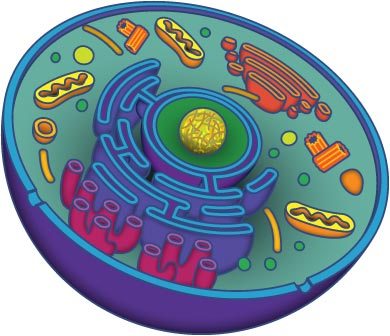
Name structure #5.

1

rough ER

2

nucleus

3

vesicle

20

media

21

22

media

23

media

24

media

25

Multiple Choice

Question image
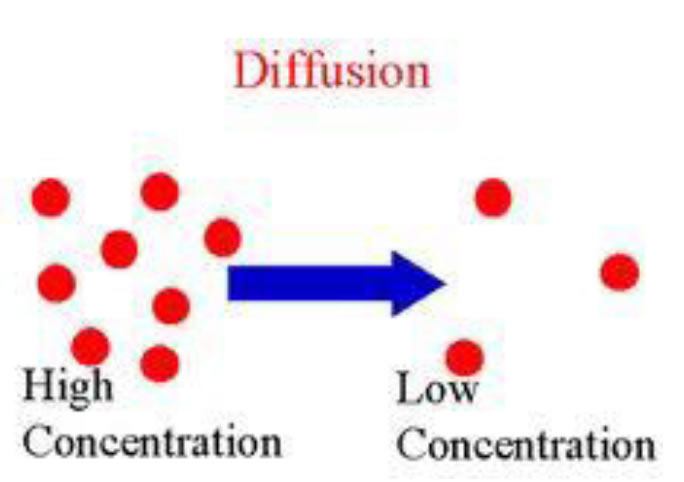
Movement of particles from high to low concentration. 
1
Passive Transport
2
Active Transport

26

Multiple Choice

Question image

Why are diffusion and osmosis important to cells?

1

It allows them to take in materials/substances without using energy.

2

It allows them to reproduce.

3

It allows them to absorb sunlight.

27

Multiple Choice

Question image

Which diagram best shows the end result of diffusion?

1

F

2

G

3

H

4

J

28

media

29

Multiple Choice

Question image

Active transport requires _____ to move materials across the cell membrane.

1

proteins

2

sunlight

3

oxygen

4

energy

30

Multiple Choice

Question image

Solutes move against the concentration gradient, therefore energy is needed.

1

Passive Transport

2

Active Transport

31

media
media
media

32

media

33

Multiple Choice

Question image

How do organisms get the energy they need?

1

Plants get energy from fertilizers and animals get energy from drinking water.

2

Plants get energy from glucose produced in the soil, and animals get energy directly from sunlight.

3

Plants break down the glucose they produced in photosynthesis, and animals get energy from eating other organisms.

34

Multiple Choice

Question image

What organelle is called the "powerhouse" of a cell?

1

Endoplasmic Reticulum

2

Nucleus

3

Mitochondria

4

Nucleolus

35

Multiple Choice

Question image

In what way is photosynthesis and respiration related to each other?

1

The reactants of photosynthesis are the reactants of respiration.

2

The products of photosynthesis are the reactants of respiration.

3

The products of photosynthesis are the products of respiration.

36

Multiple Choice

Question image

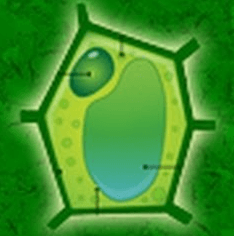
I am only found in a plant cell. What am I?

1

cell wall

2

mitochondria

3

cytoplasm

4

chloroplast

37

media

38

media

39

media

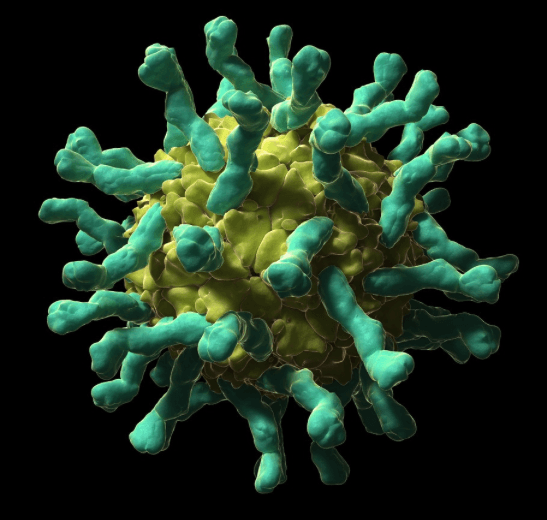
​Each structure allows the virus to attach or protect itself to better implant and infect a cell.

40

media

41

Multiple Choice

Question image
The reason that viruses are considered to be nonliving is because
1
They are not cellular
2
They cannot reproduce on their own
3
They cannot make proteins
4
all of the above

42

Multiple Choice

Question image

What do all viruses need to reproduce?

1

They need host genetic material

2

They need a host cell

3

They need bacteria

43

Multiple Choice

Question image

The projections on the surface of this virus allow the virus to —

1

move inside a host cell

2

attach to a host cell

3

control a host cell’s DNA

4

signal other viruses to infect a host cell

Cell Transport & Homeostasis, with support in Energy, Cell Types, and Cell Structures : 11A, 5C (5B), 5D

media

Show answer

Auto Play

Slide 1 / 43

SLIDE