Earth's Motion Review
Presentation
•
Science
•
9th - 12th Grade
•
Hard

Joseph Anderson
FREE Resource
19 Slides • 37 Questions
1
2
3
4
5
6
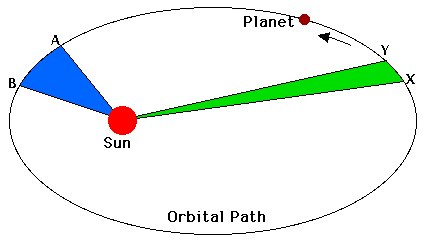
Sun is at one FOCUS - not the center
PERIHELION is the near side
APHELION is the far side
Orbit is an ELLIPSE
Kepler's 1st law of planetary motion
7
​What causes Seasons?
Some text here about the topic of discussion
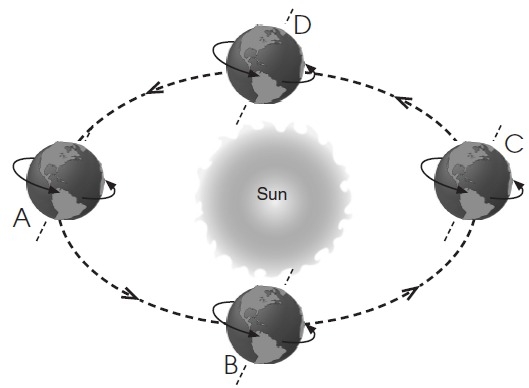
​Why is it summer in Florida but Winter in Australia?
​When does the tilt change?
Earth's Tilt
Earth's Revolution​
8
Solstice
Happens in June and December
During the summer solstice, the hemisphere tilted toward the sun will see the longest day of the year.
During the winter solstice, the hemisphere tilted away from the sun will see the shortest day of the year.
9
Equinox
Occurs in March and September
Halfway between the solstices
Day and night are each about 12 hours long
Neither hemisphere is tilted toward or away from the Sun
10
Solar Eclipse and Lunar Eclipse
Solar: occurs when the moon passes directly between Earth and the sun, blocking the suns light. Only happens during daylight hours.
Lunar: occurs during a full moon when Earth is directly between the moon and the sun. Earth blocks sunlight from reaching the moon. Only happens during a full moon and only at night.
11
Types of Tides
There are two types of tides
Spring tide: This is when the moon and sun are in direct line of each other. This pull from both objects create higher than normal high tides called Spring Tides.
Neap tide: these are the normal tides that we have when the moon and sun are out of line with each other.
12
​Neap Tide
​Spring Tide
​Tides: Effect of the Moon's Gravity on Earth's Sea levels
Some text here about the topic of discussion
13
Order of the Lunar Cycle
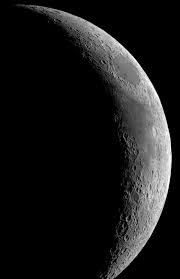
New Moon: the near side of the moon is unlit and there appears to be no moon in the sky
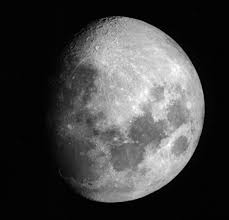
Waxing: the moon at any time after a new moon and before a full moon
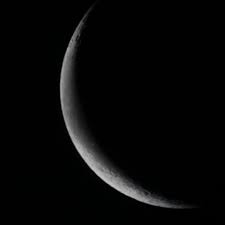
Waning: the moon at any time after a full moon and before a new moon
Crescent: the figure of the moon in it first or last quarter, resembling a segment of a ring or croissant, tapering at the ends
Gibbous: having the illuminated part of the moon greater
than a semicircle and less than a circle
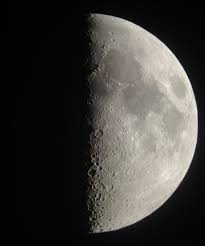
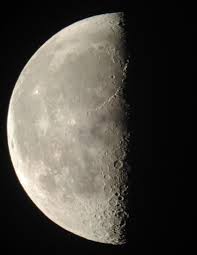
Quarter: 50% of the moon illumination is visible
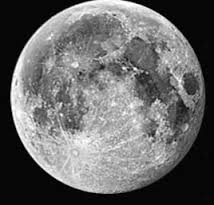
Full: occurs when the moon is completely illuminated
14
How we see the Moon
From Earth
15
16
Percentage of Illumination
How much of the side of the moon that we see
17
•
It takes the moon 27.3 days to revolve around
the Earth one time
•
The lunar cycle (from new moon back to new
moon) takes 29.5 days
•
The phases of the moon are a reflection of the
Sun’s light bouncing off of the moon’s surface
•
The moon appears to change shape because
only certain portions of its illuminated side are
seen as the moon revolves around Earth
18
19
20
Multiple Choice
clockwise
counterclockwise
21
Multiple Choice
22
Multiple Choice
The diagram shows an arrangement of Earth, the Sun, and the Moon. Which MOST likely occurs at Point X due to the positions of the illustrated bodies?
shorter hours of daylight
stronger magnetic field
early snowfall
high tide
23
Multiple Choice
The small "Wobble" that occurs as the Earth's axis goes around in a circle is called:
Nutation
Precession
Orbit
Revolution
24
Multiple Choice
The height of an ocean tide is variable throughout the month, depending on the alignment of the Sun, the Moon, and Earth. The diagram shows some phases of the moon. During which phase of the moon would Earth experience the highest tides at Point X?
Phase 1
Phase 2
Phase 3
Phase 4
25
Multiple Choice
What is the name of the rotation where Earth's axis slowly goes in a circle (spinning like a top)?
Precession
Nutation
Barycenter
Revolution
26
Multiple Choice
What does Perigee describe?
When the Earth is closest to the Sun
When the Moon is closest to the Earth
When the Sun is farthest from the Earth
When the Moon is farthest from the Sun
27
Multiple Choice
Even though the Sun is much larger than the Moon, the Moon is much closer to the Earth than the Sun. It’s ________________ is stronger due to it being closer.
gravitational pull
neap tide
rate of rotation
illumination
28
Multiple Choice
Which body has the greater effect on Earth's tides?
Sun
Saturn
Moon
Venus
29
Multiple Choice
rotation
revolution
30
Multiple Choice
Rotation
Revolution
31
Multiple Choice
25.3 degrees
32.5 degrees
28.5 degrees
23.5 degrees
32
Multiple Choice
wind
gravitational pull of moon
waves gravitation toward land
rain
33
Multiple Choice
Neap
Spring
Neither
34
Multiple Choice
Higher than normal
Lower than normal
Indifferent
Unaffected
35
Multiple Choice
Winter
Spring
Fall
Summer
36
Multiple Choice
Neap
Spring
Neither
37
Multiple Choice
Earth's tilt and rotation.
Earth's rotation and revolution.
Earth's tilt and revolution.
Earth's tilt and resolution
38
Multiple Choice
New Moon
Full Moon
First Quarter
Third Quarter
39
Multiple Choice
Growing
Dying
Losing light
Moving
40
Multiple Choice
waning crescent
waxing crescent
waning gibbous
waxing gibbous
41
Multiple Choice
waning crescent
waxing crescent
waning gibbous
waxing gibbous
42
Multiple Choice
waning crescent
waxing crescent
waning gibbous
waxing gibbous
43
Multiple Choice
First Quarter
Last Quarter
New Moon
Full Moon
44
Multiple Choice
First Quarter
Last Quarter
New Moon
Full Moon
45
Multiple Choice
First Quarter
Last Quarter
New Moon
Full Moon
46
Multiple Choice
Winter
Summer
Spring
Fall
47
Multiple Choice
Winter
Spring
Summer
Fall
48
Multiple Choice
gravity tide
wind tide
spring tide
neap tide
49
Multiple Choice
full moon
new moon
lunar eclipse
solar eclipse
50
Multiple Choice
Winter
Spring
Summer
Fall
51
Multiple Choice
neap tide
spring tide
new moon tide
full moon tide
52
Multiple Choice
full moon tide
new moon tide
neap tide
spring tide
53
Multiple Choice
full moon
new moon
lunar eclipse
solar eclipse
54
Multiple Choice
equal amount of day light and equal amount of night
Equal amount of winter and summer
Equal amounts of hot dogs for everyone
The longest day of the year
55
Multiple Choice
winter solstice
summer solstice
fall equinox
spring equinox
56
Multiple Choice
Picture A
Picture B
Picture C
Picture D
Show answer
Auto Play
Slide 1 / 56
SLIDE

Similar Resources on Wayground
53 questions
science crashcourse
Lesson
•
9th - 12th Grade
51 questions
Human Impact on Earth
Lesson
•
9th - 12th Grade
51 questions
Science Knowledge Survey
Lesson
•
9th - 12th Grade
52 questions
Atoms and Periodicity SWP
Lesson
•
9th - 12th Grade
50 questions
Climate Feedback
Lesson
•
9th - 12th Grade
53 questions
Nuclear Fusion
Lesson
•
9th - 12th Grade
53 questions
DNA Structure and Replication
Lesson
•
9th - 12th Grade
49 questions
Ch 11 - Cell Reproduction and Cancer (Abrev.)
Lesson
•
9th - 12th Grade
Popular Resources on Wayground
15 questions
Fractions on a Number Line
Quiz
•
3rd Grade
14 questions
Boundaries & Healthy Relationships
Lesson
•
6th - 8th Grade
13 questions
SMS Cafeteria Expectations Quiz
Quiz
•
6th - 8th Grade
20 questions
Equivalent Fractions
Quiz
•
3rd Grade
25 questions
Multiplication Facts
Quiz
•
5th Grade
12 questions
SMS Restroom Expectations Quiz
Quiz
•
6th - 8th Grade
20 questions
Main Idea and Details
Quiz
•
5th Grade
10 questions
Pi Day Trivia!
Quiz
•
6th - 9th Grade
Discover more resources for Science
10 questions
Exploring the Layers of the Earth
Interactive video
•
6th - 10th Grade
25 questions
Naming Ionic and Covalent Compounds
Quiz
•
9th Grade
35 questions
DNA Structure and Replication
Quiz
•
10th Grade
33 questions
Unit 5 Chemical Reactions Review
Quiz
•
9th - 12th Grade
24 questions
U8 Respiratory System Review
Quiz
•
12th Grade
20 questions
The Cell Cycle and Mitosis
Quiz
•
9th Grade
9 questions
Explore Homeostasis and Feedback Mechanisms
Quiz
•
9th - 12th Grade
10 questions
Exploring the Human Respiratory System
Interactive video
•
6th - 10th Grade