Search Header Logo
Genetic STAAR

Genetic STAAR

Assessment

Presentation

Biology

10th - 12th Grade

Hard

Created by

Joseph Anderson

FREE Resource

38 Slides • 35 Questions

1

Multiple Choice

Question image

Observe the diagram of the two viruses.

Part C is the ______________

1

Genetic material

2

Capsid

3

Ligand

4

Envelope

2

media

3

media

4

media

5

media

6

Multiple Choice

What do viruses need to reproduce?
1
they need genetic material
2
They need a host cell
3
They need  bacteria
4
They need insulin

7

Multiple Choice

Question image
What is the main function of the projections on the surface of a virus?
1
They aid in respiration
2
They help the virus grow
3
They help the virus invade its host by attaching to specific sites on the host
4
They help the virus digest food molecules

8

Multiple Choice

What is one way that a lysogenic infection differs from a lytic infection?
1
A lysogenic virus does not act on bacteria as a lytic virus does.
2
A lysogenic virus can remain in the host DNA for a longer period without becoming active.
3
A lysogenic virus contains RNA instead of DNA.
4
A lysogenic virus directs the production of new viruses right away.

9

Multiple Choice

Question image
During which part of the cell cycle is DNA copied?
1
Mitosis
2
Cytokinesis
3
S phase
4

Prophase

10

media

11

media

12

media

13

media

14

media

15

media
media

16

media

17

Match

Match the following pictures to the name of the phases.

Prophase

Metaphase

Anaphase

Telophase

Cytokinesis

18

Labelling

Place the following phases where they belong on the blank cell cycle diagram.

Drag labels to their correct position on the image

Cytokinesis

G1

S

Prophase

G2

Anaphase

19

Labelling

Sort the following statements based on if the statement is talking about prokaryotes or eukaryotes

Drag labels to their correct position on the image

Ribosomes are found in the cell

Unicellular organisms

DNA is found in the cell

DNA is found in the nucleus

more complex structure

20

  • Eukaryotes are either unicellular or multicellular.

  • Prokaryotes are unicellular.

Eukaryote vs Prokaryote

media

21

media

22

media

23

media

24

media

25

media

26

media

27

Multiple Choice

Prokaryotic cells do not have…….

1

membrane bound organelles

2

cell membrane

3

DNA or RNA

4

life

28

Multiple Choice

How does the cell membrane help maintain homeostasis in each cell?

1

The cell membrane allows all substances to pass through freely

2

The cell membrane controls the movement of substances in and out of the cell

3

The cell membrane provides energy for the cell

4

The cell membrane produces proteins necessary for cell function

29

Multiple Choice

In passive transport, .............

1

energy is required

2

energy is not required

30

Multiple Choice

In active transport, .............

1

energy is required

2

energy is not required

31

Multiple Choice

Question image
The diagram shows the base sequence of a strand of DNA.
From left to right, what is the sequence of the complementary strand of DNA in this molecule?
1
T G A A C
2
A C T  T G
3
T G U U C
4
U C T T G

32

media

Process of making a, hopefully, identical copy of DNA.

What is DNA Replication

33

For the DNA to fit together the nitrogenous bases will fit together with their complimentary pair. The DNA strands run antiparellel, which is opposite directions. They are labeled 31 and 51, named for the carbons in the structure. So they run five prime to three prime and three prime to five prime.

Complementary and Antiparallel

media

34

media

Nitrogenous bases "clip" together with HYDROGEN BONDS.

But they can't bond randomly.

Thymine must bond with Adenine

Cytosine must bond with Guanine​

Until RNA has to copy... then Adenine bonds with Uracil (HOW AM I SUPPOSED TO REMEMBER THIS!!!!!)

Remember:

G-CAT!​

What's up with the double strand, and how does it effect coding?​

NOVELA

TIME!!!!!

​I'm the G-CAT! The Groovy CAT!

35

media

Each nucleotide contains a Phosphate, sugar, and nitrogenous base.

Some text here about the topic of discussion.

What is a nucleotide?

36

Multiple Choice

Which 2 molecules forms the sides (backbone) of the DNA ladder?
1
deoxyribose and adenine
2
deoxyribose and a hydrogen bond
3
sugar and the nucleus
4
deoxyribose (sugar) and phosphate

37

Multiple Choice

DNA molecule segment is : TTACGCAAG
The mutated DNA segment is TTCGCAAG. This is an example of ___ mutation.
1
Substitution
2
Deletion
3
Insertion
4
Inversion

38

Match

Question image

Match the amino acid with the following codons.

GGG

AAG

UUU

AUC

CGU

Glycine

Lysine

Phenylalanine

Isoleucine

Arginine

39

Those 8 Levels Are...

Make sure to draw the inverted pyramid with the labels

Why do scientists use the inverted pyramid?

media

40

media

41

Multiple Choice

Which of the following is the correct definition of natural selection?

1

The idea that organisms less equipped for their environment tend to survive longer

2

The idea that organisms more well equipped for their environment tend to survive longer

3

The idea that organisms more well equipped for their environment tend to not survive

4

None.

42

Multiple Choice

Question image

What is most likely to happen to moth populations in the picture shown?

1

Light moths--hunted easily, dark moths--population increase

2

Dark moths--hunted easily, dark moths--population increase

3

Light moths--hunted easily, light moths--population increase

4

Lights moths will change their color to match dark moths.

43

Multiple Choice

Question image

Which animal is most closely related to birds?

1

shark

2

Primate

3

rabbit

4

crocodile

44

Multiple Choice

Question image

Which animal is most distantly related to the bird?

1

shark

2

rabbit

3

primate

4

crocodile

45

Multiple Choice

Question image

What is the order of the taxonomic levels from least specific to most specific?

1

Kingdom, Family, Species, Order, Class, Phylum, Genus

2

Kingdom, Phylum, Class, Order, Family, Genus, Species

3

Species, Order, Kingdom, Family, Genus, Phylum, Class

4

Species, Genus, Family, Order, Class, Phylum, Kingdom

46

Multiple Choice

Question image
A student discovers an arachnid with a segmented abdomen, long legs, and a tail with no stinger. The student uses the dichotomous key below to identify it. Which arachnid has the student found?
1
Whip Scorpion
2
Wind Scorpion
3
Daddy long legs
4
Scorpion

47

media

48

media

49

media

50

media

51

media

52

media

53

Multiple Choice

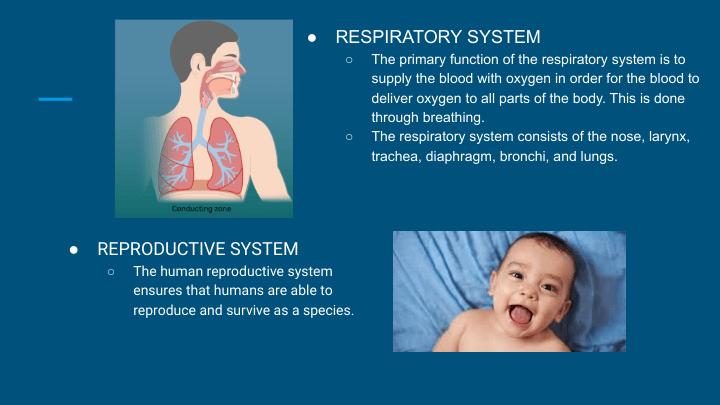
Which two body systems are interacting in this scenario:


Kidneys filter water from the body and waste from the blood.

1

digestive and excretory

2

digestive and circulatory

3

excretory and endocrine

4

excretory and circulatory

54

Multiple Select

Last night Jane began to feel like she had a stopped up nose. Today she thinks she has come down with a cold. She went to the doctor and her temperature was 102 degrees and her white blood cell count determined she has an infection. Which organ systems (2) are mainly interacting in this scenario

1

lymphatic

2

integumentary

3

circulatory

4

muscular

55

Multiple Choice

You are running and start to feel light headed. Your brain is receiving messages that your body needs more oxygen. What systems would give your body more oxygen?

1

Respiratory and Nervous

2

Nervous and Cardiovascular

3

Circulatory and Respiratory

4

Excretory and Respiratory

56

Labelling

Place the systems above or under their correct body organ diagrams. The box is over or under the center of the body it belongs too.

Drag labels to their correct position on the image

Circulatory

Muscular

Nervous

Respiratory

Digestive

Skeletal

57

media
media
media

Photosynthesis

Sunlight and CO2 are absorbed into the
leaf. Sugar/Glucose is made to feed the
plant and O2 is released for us humans
to breathe.

58

media
media

Phloem

Takes sugar/glucose from leaves to rest
of the plant

59

media
media

Xylem

Takes water from the roots up to rest of
the plant

60

media
media

Leaves

Location of photosynthesis

Stomata (stoma): pores in leaf where
water/gases move in/out of leaf

Guard cells: control the opening/closing
of stomata

61

media
media

Roots

Soaks up water from the ground,
keeps plant grounded

Tap Root: single root, spreads
horizontally (carrot)

Fibrous Root: small, thick roots
anchor plant to ground (grass)

62

Multiple Choice

Question image

Phototropism is a plant response to...

1

water

2

gravity

3

light

4

friction

63

Multiple Choice

Question image

How does water affect the roots of plants?

1

roots grow away from water

2

roots grow towards water

3

roots are not affected by water

64

Match

Match the following parts of the plant to their functions.

Flower

Stem

Leaves

Roots

In charge of reproduction for the plant.

Transports water and nutrients / support

Absorb sunlight for photosynthesis

Absorb water and nutrients from soil

65

media

66

media

67

media

Food Web vs. Food Chain

​A food chain outlines who eats whom. A food web is all of the food chains in an ecosystem. Each organism in an ecosystem occupies a specific trophic level or position in the food chain or web.

68

Multiple Choice

Question image

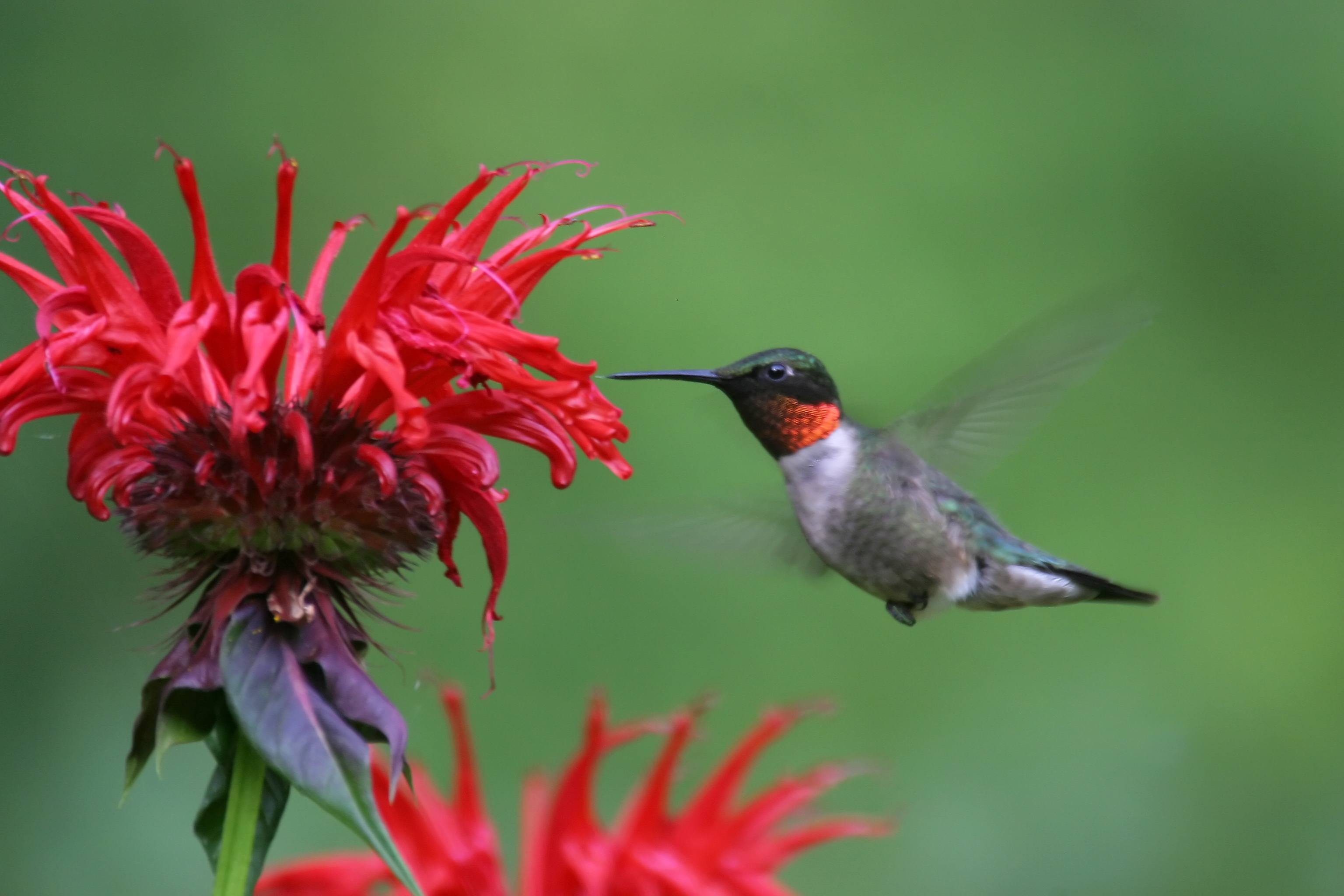
Hummingbirds feed on nectar from flowers. The flowers are pollinated by hummingbirds as they move from flower to flower. This is an example of

1

commensalism

2

mutualism

3

parasitism

4

predation

69

Multiple Choice

Which term best describes two predators living in the same habitat who feed on the same prey?

1

coexistence

2

competition

3

mutualism

4

predatory

70

Multiple Choice

Question image

Read the following scenario and determine which ecological relationship is depicted -


Mistle toe plants are common house decorations around the holidays. Mistle toes are plants that attach themselves to hosts such as a tree. Once attached, the mistletoes begin to tap into the vascular system of trees and draws out vital nutrients and water from the host tree. The host tree is harmed over time and may result in stunted growth.

1

Predator-Prey

2

Parasitism

3

Commensalism

4

Mutualism

71

Multiple Choice

Question image
Cattle egrets forage (feed) in fields among cattle. The egret gets easy access to flying insects stirred up by the cattle, and the cattle don't care if they are there or not.
1
mutualism
2
commensalism
3
competition
4
parasitism

72

Multiple Choice

Question image
Use the diagram to answer the question.
The Mayfly is a food source for which 3 organisms?
1
Frog, Dragon Fly and snake
2
Frog, trout and dragon fly
3
Frog, salamander and trout
4
Frog and phytoplankton

73

Multiple Choice

Question image
What may happen if the snowshoe hare was removed from the food web pictured?
1
The insects in the habitat would increase.
2
The shrew population would decrease due to being only hawk food source.
3
The willow tree population would decrease.
4
Foxes would dies due to no food source. 
Question image

Observe the diagram of the two viruses.

Part C is the ______________

1

Genetic material

2

Capsid

3

Ligand

4

Envelope

Show answer

Auto Play

Slide 1 / 73

MULTIPLE CHOICE