

Introduction to Kinetic Potential Energy

Presentation
•
Science
•
6th Grade
•
Hard

Joseph Anderson
FREE Resource
13 Slides • 9 Questions
1
Kinetic and Potential Energy
2
3
4
5
6
7
8
9
10
Multiple Choice
11
Multiple Choice

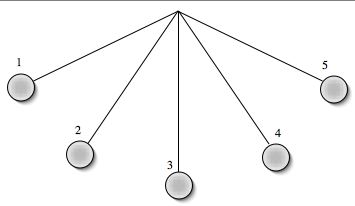
You throw a ball into the air as shown in the diagram. At what point does the ball have the most potential energy?
12
Multiple Choice
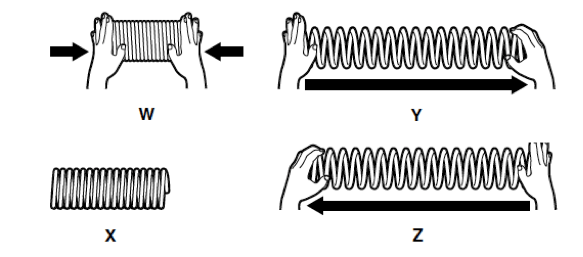
Elastic potential energy is energy stored in an object, such as a spring, due to the object being stretched or compressed. In which position is it most likely that the spring has lost its elastic potential energy?
13
14
15
16
Multiple Choice
17
Multiple Choice
18
Multiple Choice
19
Multiple Choice
20
21
Poll
22
Poll
Kinetic and Potential Energy
Show answer
Auto Play
Slide 1 / 22
SLIDE
Similar Resources on Wayground

18 questions
Energy Transfer
Lesson
•
6th Grade
16 questions
Electricity
Lesson
•
6th Grade
19 questions
Elements, Compounds, and Mixtures
Lesson
•
6th Grade
19 questions
Weather and Climate
Lesson
•
6th Grade
16 questions
Change of state of matter
Lesson
•
6th Grade
16 questions
Matter and Its Interactions LC1 Review
Lesson
•
6th Grade
18 questions
Plate Tectonics Review
Lesson
•
6th Grade
18 questions
Land and Sea Breezes
Lesson
•
6th Grade
Popular Resources on Wayground
15 questions
Fractions on a Number Line

Quiz
•
3rd Grade
20 questions
Equivalent Fractions
Quiz
•
3rd Grade
25 questions
Multiplication Facts
Quiz
•
5th Grade
29 questions
Alg. 1 Section 5.1 Coordinate Plane
Quiz
•
9th Grade
22 questions
fractions
Quiz
•
3rd Grade
11 questions
FOREST Effective communication
Lesson
•
KG
20 questions
Main Idea and Details
Quiz
•
5th Grade
20 questions
Context Clues
Quiz
•
6th Grade
Discover more resources for Science
20 questions
Rocks and The Rock Cycle
Quiz
•
6th Grade
15 questions
Rock Cycle
Quiz
•
6th Grade
10 questions
Exploring the Rock Cycle

Interactive video
•
6th - 8th Grade
20 questions
Waves and Wave Properties
Quiz
•
6th - 8th Grade
10 questions
Understand Ecosystem Roles and Energy Flow
Interactive video
•
6th - 8th Grade
20 questions
Thermal Energy - Heat Transfer
Quiz
•
6th Grade
10 questions
Exploring the Rock Cycle: Types and Formation
Interactive video
•
6th - 8th Grade
22 questions
Layers of the Atmosphere
Quiz
•
6th Grade