Biology Lesson
Presentation
•
Biology
•
9th - 12th Grade
•
Hard
Standards-aligned

Joseph Anderson
FREE Resource
6 Slides • 36 Questions
1
Multiple Choice
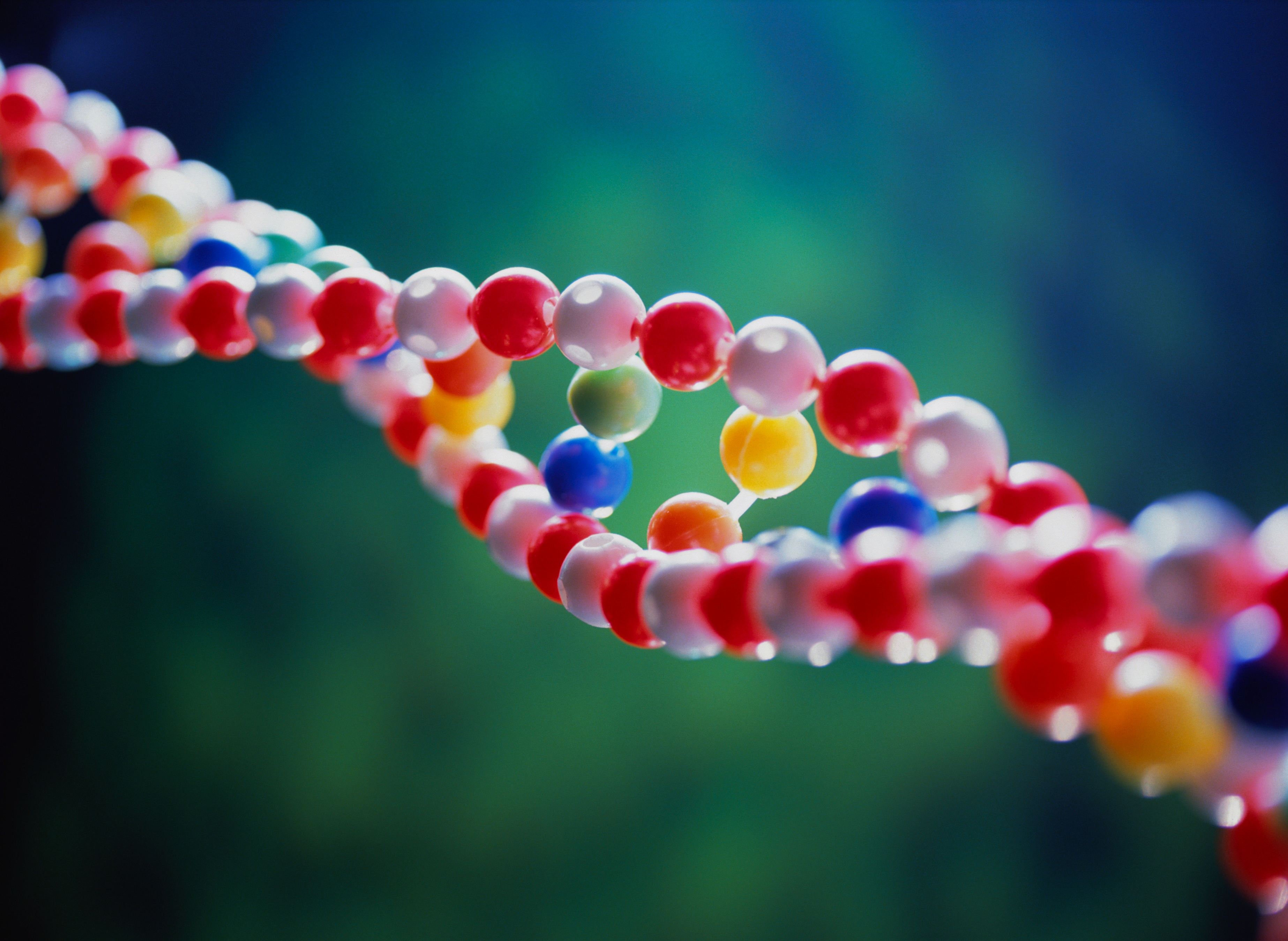
chromosome
gene
DNA
ACTG
2
Multiple Choice
3
Multiple Choice
4
Multiple Choice
5
Multiple Choice
6
Multiple Choice
7
Multiple Choice
Little pieces of DNA that code for our traits are called
cells
chromosomes
genes
8
Multiple Choice
9
Multiple Choice
Why is DNA important?
It is very small and very complicated.
It is in everything.
It serves as the blueprint for traits of all living things.
We eat it every day for energy.
10
Multiple Choice
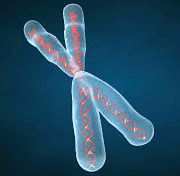
A chromosome is made of coiled up ___________.
cells
nuclei
DNA
11
Multiple Choice
Little pieces of DNA that code for our traits are called
cells
chromosomes
genes
12
Multiple Choice
chromosome
DNA
genes
heredity
13
Multiple Choice
Segments of DNA are called _______________________
Genes
Alleles
Traits
Chromosomes
14
Multiple Choice
The passing of traits from parents to offspring is known as....
hierarchy
heredity
traits
genetics
15
Multiple Choice
16
Multiple Choice
The 2 exact copies of DNA in a chromosome are called ________.
chromatids
genes
mutations
pathogens
17
Multiple Choice
The number of human chromosomes is
23
46
92
64
18
Multiple Choice
19
Multiple Choice
20
Multiple Choice
21
Multiple Select
Which statements are TRUE (more than one answer is correct!)
Different species have different chromosome numbers
The cells of larger organisms have more DNA than the cells of smaller organisms
Within a species, individuals will have the same chromosome number but have different genes
Offspring can inherit chromosomes from relatives other than the parent (s)
22
Multiple Choice
Different forms of genes
Allele
Genotype
Phenotype
Trait
23
24
Duplication
Part of the chromosome is "copied & pasted" back into itself.
25
Inversion
Part of the chromosome is flipped so that the genes are reversed in order.
26
Deletion
Part of the chromosome is removed and lost.
27
Translocation
Section of two non-homologous chromosomes are switched.
This is not like crossing over because the pieces are not equivalent!
28
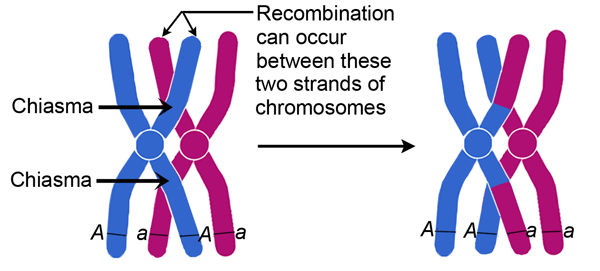
Crossing Over
Crossing over is not considered to be a mutation.
During crossing over, homologous chromosomes exchange equivalent sections of their genes.
This process naturally occurs in Prophase I.
29
Multiple Choice
What type of mutation is this?
Duplication
Inversion
Deletion
Translocation
none
30
Multiple Choice
What type of mutation is this?
Duplication
Inversion
Deletion
Translocation
none
31
Match
Allele
Homozygous
Recessive
Heterozygous
Homozygous
Dominant
Genotype
variation of a gene
hh
Hh
HH
allele combination
variation of a gene
hh
Hh
HH
allele combination
32
Multiple Choice
Long hair is a dominant trait. Choose the BEST statement.
This guinea pig received two dominant traits. (HH)
This guinea pig cannot have a recessive allele. (h)
This guinea pig could be homozygous dominant (HH) or heterozygous (Hh)
This guinea pig is homozygous recessive (hh)
33
Multiple Choice
Genome maps provide the DNA sequences of chromosomes. Some scientists have compared the genome maps of a hedgehog and a sloth. What do these genome maps allow the scientists to determine?
The color patterns of the offspring of each species
How much the size ranges of the two species differ
The methods of protein synthesis that each species uses
How closely related the two species are to each other
34
Multiple Choice
The opossum, which is native to North America, and the kangaroo, which is native to Australia, are marsupials.
The fact that both these mammals incubate their immature offspring in a pouch provides evidence that they —
belong to the same species
must range great distances to eat
have very similar skeletal structures
are descended from a common ancestor
35
Multiple Choice
Bb + bb
36
Multiple Choice
In plants, tall (T) is dominant to short (t). Perform the following cross: Tt x Tt. What is the probability of producing a short plant?
0%
25%
50%
75%
37
Multiple Choice
You create a punnett square to determine the probability of hair color being passed to offspring. Brown hair is dominant. Blond hair is recessive. Both parents have brown hair. Both parents are heterozygous. What is the probability that the offspring will also have brown hair?
100%
75%
50%
25%
38
Multiple Choice
The different forms of a gene.
Genes
Allele
Phenotype
Pedigree
39
Multiple Choice
A number that describes how likely it is that an event will occur.
Probability
Punnett square
Pedigree
Genotype
40
Multiple Choice
41
Multiple Choice
What is the probability of having BB?
0%
25%
50%
75%
100%
42
Multiple Choice
What does a Punnett Square do?
tell you exactly what your offspring will look like
predict genotypes and phenotypes in offspring
It has no purpose
chromosome
gene
DNA
ACTG
Show answer
Auto Play
Slide 1 / 42
MULTIPLE CHOICE

Similar Resources on Wayground
38 questions
Unit 7.1: Evidence for Evolution Notes
Lesson
•
9th - 12th Grade
39 questions
Evolution Terms part 2
Lesson
•
9th - 12th Grade
38 questions
Chemistry Test Review
Lesson
•
9th - 12th Grade
34 questions
Biology EOC Reporting Category 1 Review
Lesson
•
9th - 12th Grade
37 questions
graphing Lesson
Lesson
•
9th - 12th Grade
38 questions
Enzymes Lesson & Biomolecules Review
Lesson
•
9th - 12th Grade
37 questions
Balancing Chemical Equations
Lesson
•
9th - 12th Grade
Popular Resources on Wayground
10 questions
5.P.1.3 Distance/Time Graphs
Quiz
•
5th Grade
10 questions
Fire Drill
Quiz
•
2nd - 5th Grade
20 questions
Equivalent Fractions
Quiz
•
3rd Grade
15 questions
Hargrett House Quiz: Community & Service
Quiz
•
5th Grade
20 questions
Main Idea and Details
Quiz
•
5th Grade
20 questions
Context Clues
Quiz
•
6th Grade
20 questions
Inferences
Quiz
•
4th Grade
15 questions
Equivalent Fractions
Quiz
•
4th Grade
Discover more resources for Biology
14 questions
Ecological Succession: Primary and Secondary
Quiz
•
9th Grade
20 questions
Cladogram Practice
Quiz
•
10th Grade
20 questions
Evolution and Natural Selection
Quiz
•
9th Grade
21 questions
Cell Cycle and mitosis
Quiz
•
9th - 10th Grade
45 questions
Unit 9 Review: Biosphere
Quiz
•
9th Grade
20 questions
Food Chains and Food Webs
Quiz
•
7th - 12th Grade
20 questions
Sex-Linked Traits
Quiz
•
9th - 12th Grade
22 questions
AP Biology: Unit 7 Review (CED)
Quiz
•
9th - 12th Grade