
Search Header Logo
Lewis Electron Dot Structures

Lewis Electron Dot Structures

Assessment

Presentation

Chemistry

9th Grade

Hard

Created by

Joseph Anderson

FREE Resource

9 Slides • 7 Questions

1

Lewis Electron Dot Structure

Mrs. Perlita V. Sanchez

Grade 9 Science
Slide image

2

I. OBJECTIVES

  • Illustrate Lewis Electron Dot Structure of some elements.

  • Understand the Octet Rule

  • Identify which element or atom will more likely give or accept electrons

3

Lewis Electron Dot Structure

  • Proposed by Gilbert Lewis

  • A model used to illustrate the electrons in the outermost energy level of an atom

  • It helps picture out the Octet Rule and how chemical bonding takes place between elements

4

Lewis Electron Dot Structure

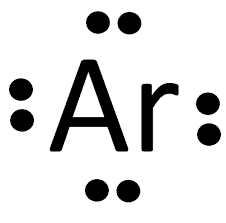
The chemical symbol of an element is surrounded by a number of dots which are the valence electrons.

Slide image

5

Multiple Choice

The outermost electrons of an atom are __________.

1

outermost electron

2

Lewis electrons

3

valence electrons

4

octet electrons

6

Octet Rule or Rule of Eight

  • Elements with with complete number of electron are those with 8 valence electrons and they are described as STABLE ELEMENTS

  • Example: 18Ar 2) 8) 8) valence electron is 8 therefore 18Ar is stable.

  • Elements with incomplete number of valence electrons are those with less than 8 valence electrons and they are described as UNSTABLE ELEMENTS

  • Example: 11Na 2) 8) 1) valence electron is 1, its is less than 8 therefore 11Na is unstable.

7

Octet Rule Exemption

The element Helium (2He) is exemption to this rule. Since helium has 2 electrons, its energy level is complete with 2 valence electrons making it a stable element.

Slide image

8

Multiple Choice

Identify if this element 19K 2) 8) 8) 1) is stable or unstable?

1

Stable

2

Unstable

9

Multiple Choice

Identify if the element 10Ne 2) 8) is stable or unstable?

1

Stable

2

Unstable

10

Multiple Choice

How many valence electrons should an element have for it to be considered as a STABLE element?

1

2

2

10

3

6

4

8

11

Accept, Lose or Share?

  • Elements with fewer electrons tend to lose electrons rather than keeping them because in this way they can achieve a stable condition.

  • On the other hand, elements with more valence electrons will ten to accept electrons from other elements because they only need fewer electrons to complete their valence electrons.

  • In the case of carbon atom with 4 valence electrons, it will either lose or accept electron but it will enter into sharing of electrons.

12

Stable Elements

  • Stable elements DOES NOT accept, lose or share electron because their valence shell is already complete.

13

Multiple Choice

Which of the elements will share electrons?

1

12Mg 2) 8) 2)

2

14Si 2) 8) 4)

3

17Cl 2) 8) 7)

4

15P 2) 8) 5)

14

Multiple Choice

Which element will most likely lose its electrons?

1

Na 2)8)1)

2

N 2)5)

3

O 2) 6)

4

F 2)7)

15

Multiple Choice

Which element will prefer to accept electrons from another element?

1

11Na 2) 8) 1)

2

20Ca 2) 8) 2)

3

16S 2) 8) 6)

4

10Ne 2) 8)

16

Key Concepts

  • Stability of an element can be identified by knowing how many electrons can be found in its outermost energy level.

  • The Octet Rule or Rule of Eight, states that for an element to become stable it should have eight valence electrons in its outermost energy level; if not then, it is unstable. With the exemption of Helium.

  • The Lewis Electron Dot Structure is used to show the valence electron of an element or atom helps us visualize the Octet Rule.

pattern-tertiary

Lewis Electron Dot Structure

Mrs. Perlita V. Sanchez

Grade 9 Science

Slide image

Show answer

Auto Play

Slide 1 / 16

SLIDE

