

Marine Phyla

Presentation
•
Science
•
6th - 7th Grade
•
Hard

Joseph Anderson
FREE Resource
12 Slides • 25 Questions
1
Animalia Phyla
Oh the Diversity we shall see!

2
Multiple Choice
3
Multiple Choice
4
Multiple Select

Select all of the following characteristics that apply to mammals: (select 3 choices)
5
Kingdom Animalia
This kingdom has many different phyla but we are going to go indepth with Cnidaria, Arthorpod, Annelida,Mollusca, Echinderm, and Chordata.

6
Let's get onething straight. Ha Ha get it?
You need to know the difference between invertbrate animals and vertbrate animals. Be ready to explain what you see here!

7
Open Ended
8
Vertebrates
Less than 5% of all described animals
An animal of a large group distinguished by the possession of a backbone or spinal column, including mammals, birds, reptiles, amphibians, and fishes

9
Chroadata
Noral or spinal chord
Segmented body, including segmented muscles
Bilateral symmetry
Bony or cartilaginous endoskeleton usually present

10
Multiple Choice
11
Invertebrate
More than 90 percent of all living animal species are invertebrates
Any animal that lacks a vertebral column, or backbone

12
Multiple Choice
13
Cnidaria Phyla
Fun Fact: Over 11,000 species found only in aquatic and mostly marine environments.
Radial symmetrical
Tentacles, stingy things
The name Cnidaria comes from the Greek word "cnidos," which means stinging nettle.

14
Multiple Choice
15
Multiple Choice
16
Multiple Choice

17
Multiple Choice

18
Arthropoda
Has an exoskeleton
Has a segmented body
Has paired jointed appendages
Bilateral symmetry
84 percent of all known species of animals are members of this phylum.
Arthropod means “jointed feet”

19
Multiple Choice

What phylum is this crab in?
20
Multiple Choice
21
Multiple Choice

Which Phylum does the Black Widow belong to?
22
Open Ended

What makes an arthopod, well, an arthropd? Describe the characteristics.
23
Annelida
Also called segmented worm
Has a body cavity (or coelom)
Use movable bristles (or setae) to move around
Over 22,000
Excretion of s slimy or sticky substance on their body

24
Multiple Choice
25
Multiple Choice
26
Multiple Choice
27
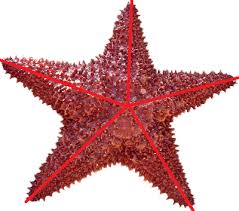
Echinodermata
Radial symmetry, without distinct head or brain
Endoskeleton
Tube-feet projecting out of the body
Spiney "Pokey"
Around 7,000

28
Multiple Choice

What phylum does this animal belong to?
29
Multiple Choice
30
Multiple Choice

31
Multiple Choice
32
Multiple Choice

Which of the following refers to sea stars and sea cucumbers?
33
Mollusca
Soft bodies which typically have a "head" and a "foot" regio
Muscular foot to move around
Ove 100,000 described
Bilaterally symmetrical
The foot is variously modified for creeping, burrowing and swimming.

34
Multiple Choice
35
Multiple Choice

36
Multiple Choice

Which phyla has a soft unsegmented body and can be protected by a shell?
37
Congrats. You now know the 6 main animal Phyla
Cnidaria, Arthropoda, Annelida, Mollusca, Echinodermata, Chordata

Animalia Phyla
Oh the Diversity we shall see!
Show answer
Auto Play
Slide 1 / 37
SLIDE


