Matter and Their Properties Review
Presentation
•
Science
•
8th - 9th Grade
•
Hard

Joseph Anderson
FREE Resource
4 Slides • 20 Questions
1
Multiple Choice
When is the Unit 1 Test?
Never
Wednesday, Sept. 14
Thursday, Sept. 14
Friday, Sept. 16
2
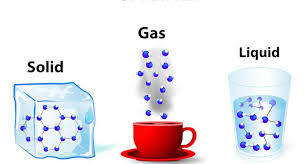
Matter is made up of particles, called atoms.
These particles are in constant, random motion.
The state of matter depends on the kinetic energy (temperature) of the particles.
Kinetic Molecular Theory
As you increase in temperature, the substance goes from a solid, to a liquid, to a gas, and then a plasma (if it is hot enough).
3
Multiple Choice
Which of the following best represents three states (solid, liquid and gas) of matter?
Picture A
Picture B
Picture C
Picture D
4
Multiple Choice
As matter changes state from liquid to solid, the atoms slow down and move ______ .
CLOSER together
FARTHER apart
stay the SAME
5
Multiple Choice
6
Multiple Choice
If I heat a liquid and its temperature increases, what change occurs to motion of the molecules?
The molecules move at the SAME rate.
The molecules move at a SLOWER rate.
The molecules move at a FASTER rate.
7
Multiple Choice
As matter changes state from gas to solid, the atoms have ____ kinetic energy.
more
less
the same
8
Physical properties of matter are properties that can be measured or observed without matter changing to an entirely different substance.
Physical properties
9
Chemical properties describe how a substance interacts with other substances to produce new substances.
Chemical properties
10
Multiple Choice
Physical properties are properties that can be observed
without changing the matter's identity.
that change the matter into new matter with new properties.
11
Multiple Choice
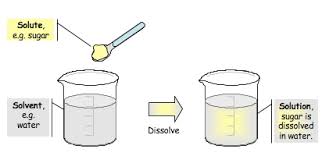
The ability of sugar to dissolve in water is called
malleability.
density.
state.
solubility.
12
Multiple Choice
Alkali earth metals react with hydrochloric acid.
chemical property
physical property
13
Multiple Choice
All of the following objects are attracted to magnets EXCEPT _________.
Iron nail
Plastic button
Steel scissors
Iron screw
14
Multiple Choice
A chemical property is a characteristic of a particular substance that can be observed in a chemical reaction.
True
False
15
Multiple Choice
Which of these objects is an insulator?
Copper Wire
Oven Mitt
Paper Clip
Soda Can
16
Multiple Choice
Which group of things will maintain their physical properties when mixed together?
copper wire, rubber ball and aluminum washer
Lemon juice, water and sugar
17
Multiple Choice
Identify which item below best completes the table.
Glass Window
Gold Ring
Paper Bag
Styrofoam Cup
18
Density is an important physical property of matter as it reflects how closely packed the particles of matter are. When particles are packed together more tightly, matter has greater density.
Density
19
Multiple Choice
The amount of matter in a given space of volume is
density.
state.
volume.
mass.
20
Multiple Choice
A sample of glass has a mass of 25 g and a volume of 10 cm3. What is the density of the sample?
1 g/cm3
2.5 g/cm3
25 g/cm3
250 g/cm3
21
Multiple Choice
A glass marble and a piece of cork of the same shape and size are dropped in water. Which of the following explains correctly why the glass marble sinks while the cork piece floats on water?
The glass marble is denser than water. The cork is less dense than water.
The glass marble is less dense than water. The cork is denser than water.
The glass marble and the cork are both denser than water.
The glass marble and the cork have the same density as water.
22
Multiple Choice
An unknown liquid has a mass of 10 gram and a volume of 10 mL. What is the density of the substance?
1 g/mL
10 g/mL
20 g/mL
100 g/mL
23
Multiple Choice
What is the least dense liquid in this container?
honey
vegetable oil
lamp oil
water
24
Match
Vocabulary Review - MATCH the following
mass
density
volume
matter
kinetic
amount of matter
mass per unit volume
amount of space an object occupies
anything that has volume and mass
relating to or resulting from motion
amount of matter
mass per unit volume
amount of space an object occupies
anything that has volume and mass
relating to or resulting from motion
When is the Unit 1 Test?
Never
Wednesday, Sept. 14
Thursday, Sept. 14
Friday, Sept. 16
Show answer
Auto Play
Slide 1 / 24
MULTIPLE CHOICE

Similar Resources on Wayground
19 questions
Types of energy
Presentation
•
8th Grade
19 questions
Earth Science
Presentation
•
8th Grade
19 questions
Intrusive vs Extrusive Igneous Rocks
Presentation
•
8th Grade
19 questions
Plate Tectonics & Plate Boundaries
Presentation
•
8th Grade
20 questions
States of Matter Review
Presentation
•
3rd Grade
21 questions
acids and bases
Presentation
•
8th - 9th Grade
21 questions
Sound Waves
Presentation
•
8th - 9th Grade
19 questions
Black Holes
Presentation
•
8th Grade
Popular Resources on Wayground
10 questions
How much do you know about our Portrait of an Eagle?
Quiz
•
10th Grade
10 questions
Fast Food Slogans
Quiz
•
6th - 8th Grade
21 questions
Continents and Oceans
Quiz
•
6th Grade
20 questions
Parts of Speech
Quiz
•
5th Grade
16 questions
Subject & Predicate
Quiz
•
5th Grade
25 questions
Multiplication Facts
Quiz
•
5th Grade
12 questions
Map Skills
Quiz
•
3rd Grade
22 questions
Continents and Oceans
Quiz
•
5th Grade
Discover more resources for Science
20 questions
Scientific Method and Variables
Quiz
•
8th Grade
20 questions
Scientific method and variables
Quiz
•
8th Grade
27 questions
Counting Atoms - Subscripts
Quiz
•
8th Grade
20 questions
Claim, Evidence and Reasoning (CER)
Quiz
•
6th - 8th Grade
18 questions
Counting Atoms
Quiz
•
7th - 8th Grade
20 questions
Elements, Compounds and Mixtures
Quiz
•
8th Grade
10 questions
Exploring Chemical and Physical Changes
Interactive video
•
6th - 10th Grade
20 questions
Atomic Structure
Quiz
•
9th Grade