

Mesozoic

Presentation
•
Biology
•
University
•
Hard

Joseph Anderson
FREE Resource
11 Slides • 5 Questions
1
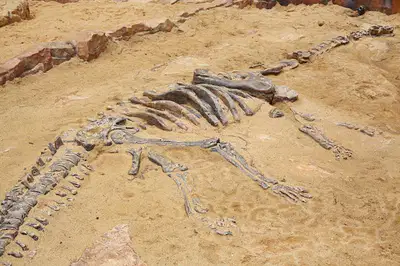
Exploring the ancient world of dinosaurs, reptiles, and the rise of flowering plants during the Mesozoic Era.

2
Introduction to Dinosaurs
3
Multiple Choice
Which group of dinosaurs dominated the Earth during the Mesozoic Era?
Saurischia
Ornithischia
Pterosaurs
Mammals
4
Ornithischia Dominated the Mesozoic Era
Ornithischia were a diverse group of herbivorous dinosaurs that thrived during the Mesozoic Era. They included famous dinosaurs like Triceratops and Stegosaurus. Unlike their carnivorous counterparts, Saurischia, Ornithischia had a bird-like hip structure. They were not the only dominant group, but their unique characteristics make them fascinating creatures of the past.
5
Types of Dinosaurs
6
Multiple Choice
Which type of dinosaur had rows of bony plates and spikes on their backs?
Theropods
Sauropods
Ornithopods
Stegosaurs
7
Stegosaurs
Trivia: Stegosaurs were herbivorous dinosaurs that lived during the Late Jurassic period. They had rows of bony plates and spikes on their backs, which were likely used for defense and display. These unique features make them easily recognizable and popular among dinosaur enthusiasts.
8
Discovering Dinosaur Diets
The Mesozoic Era was dominated by dinosaurs, and understanding their diets is crucial to understanding their ecology. Fossil evidence, such as tooth shape and stomach contents, provide insights into their food preferences. Dinosaurs had diverse diets, including herbivorous, carnivorous, and omnivorous species. Some notable examples include the Triceratops (herbivore), Tyrannosaurus rex (carnivore), and Velociraptor (omnivore).
9
Multiple Choice
What type of diet did dinosaurs have?
Herbivorous
Carnivorous
Omnivorous
Insectivorous
10
Omnivorous Dinosaurs
Omnivorous dinosaurs had a diverse diet, feasting on both plants and meat. They could enjoy a leafy salad one day and a juicy steak the next! Some examples of omnivorous dinosaurs include the famous Velociraptor and the mighty Tyrannosaurus Rex. They truly had a taste for everything!
11
Discovering the Mesozoic Era
Explore the diverse habitats of dinosaurs during the Mesozoic Era. From lush forests to vast deserts, dinosaurs adapted to various environments. Learn about their preferred habitats, including swamps, plains, and mountains. Discover how these habitats influenced dinosaur behavior and evolution. Uncover the secrets of the Mesozoic world!
12
Multiple Choice
What did dinosaurs adapt to during the Mesozoic Era?
Different types of food
Various habitats
Different types of predators
Different types of weather
13
Dinosaur Adaptations
Trivia: Dinosaurs adapted to various habitats during the Mesozoic Era. They lived in different types of weather, which included extreme heat and cold. Some dinosaurs even adapted to live in water, while others were well-suited for life on land. Their adaptations allowed them to thrive in diverse environments.
14
The Mesozoic Era:
15
Multiple Choice
What event led to the rise of mammals and eventually paved the way for the dominance of humans on Earth?
Volcanic activity
Asteroid impact
Climate change
Dinosaur extinction
16
Dinosaur Extinction
Dinosaur extinction paved the way for the rise of mammals and the eventual dominance of humans on Earth. This cataclysmic event, believed to be caused by an asteroid impact, led to the extinction of dinosaurs and created opportunities for mammals to thrive and evolve into diverse species. Without this event, the course of evolution and the emergence of humans may have been drastically different.
Exploring the ancient world of dinosaurs, reptiles, and the rise of flowering plants during the Mesozoic Era.
Show answer
Auto Play
Slide 1 / 16
SLIDE
Similar Resources on Wayground

13 questions
HOSA 2024-2025
Presentation
•
University
10 questions
Topic 9: REPRODUCTION & DEVELOPMENT (Part 1)
Presentation
•
University
12 questions
Health problems
Presentation
•
University
11 questions
Logarithms Review
Presentation
•
University
10 questions
PRESENT CONTINUOUS
Presentation
•
University
10 questions
Exxon vs Trustee Harlequin Duck
Presentation
•
University
14 questions
Literature Review
Presentation
•
University
13 questions
Present perfect continuous
Presentation
•
University
Popular Resources on Wayground
10 questions
Safety Day 2026 – Student Review

Quiz
•
9th Grade
21 questions
Continents and Oceans
Quiz
•
6th Grade
20 questions
Parts of Speech
Quiz
•
5th Grade
16 questions
Subject & Predicate
Quiz
•
5th Grade
25 questions
Multiplication Facts
Quiz
•
5th Grade
12 questions
Map Skills
Quiz
•
3rd Grade
22 questions
Continents and Oceans
Quiz
•
5th Grade
15 questions
Rounding Decimals
Quiz
•
5th Grade