Rock Dating
Presentation
•
Science
•
8th Grade
•
Easy
+1
Standards-aligned

Joseph Anderson
Used 1+ times
FREE Resource
9 Slides • 19 Questions
1
Unit 7.2
Dating Methods
2
Fossil Dating
●There are two types of dating for rock layers and fossils.
○If the age of a rock is known, then the age of the fossil will be the
same
■Absolute dating
○Sometimes all we can say is whether something is older or younger
■Relative dating
3
Relative Dating
●Relative dating is the process of determining if one rock or geologic event
is older or younger than another, without knowing their specific ages
●Relative dating is how the majority of fossils are dated, but scientists can
also use absolute dating.
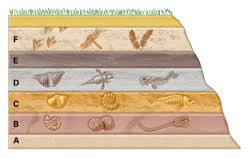
●Law of Superposition
○
Oldest rocks are at the bottom and youngest are at the top
4
Multiple Choice
Which layer is the oldest?
E
D
C
A
5
Multiple Choice
Which of the following layers is the youngest?
Q
G
X
A
6
Absolute Dating
●Absolute dating, also called radiometric dating or radioactive dating,
measures the amount of radioactive material in a rock with a fossil.
●Radioactive elements such as uranium or potassium
●Each radioactive atom will release energy and change into a different type
of atom (decay). PARENT → DAUGHTER
7
Absolute Dating
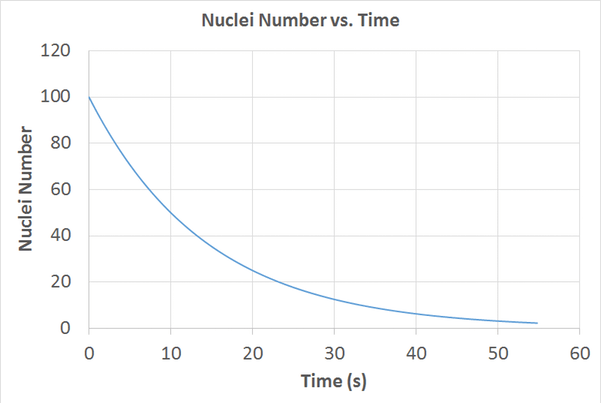
● A rock starts with a certain number of radioactive
atoms (parent material), after a period of time it will
only have half that number of atoms.
● This length of time is known as the atom’s half-life.
● The half-life is always the same for each element.
● By comparing the amount of parent material to
daughter material, you can determine how much time
has passed.
● This gives an absolute age to the rock and the fossils
near it.
8
Multiple Choice
What percent of parent isotopes (parent material) remain after 1 half-life?
87.5%
75%
50%
25%
9
Absolute Age of Fossils
If we know that the rock layer
above a fossil is 505 mya and the
rock layer below is 520 mya, then
we know that the fossil is between
505-520 mya.
10
Multiple Choice
What is the age of the green rock layer in Location A that is located between the clam and the trilobite fossils?
Younger than 200 million years
Between 200-400 million years
Older than 400 million years
Cannot be determined
11
Index Fossils
Characteristics of Index Fossils:
1. Easily Recognizable
2. Widespread- large
geographic area
3. Short Lived- found
in only a few layers
12
Index Fossils
Which of the fossil would
make a good index fossil?
13
Multiple Choice
Which of the following would make a good index fossil?
14
Review Time!
Answer the following questions based on the previous lesson.
15
Multiple Choice
Describes a group of living things that are no longer living.
fossil
extinct
endangered
dinosaur
16
Multiple Choice
The top layer
The middle layer
They are all the same age
The bottom layer
17
Multiple Choice
Layer A
Layer B
Layer C
Layer D
18
Multiple Choice
The absolute age of rock layers
The age of fossils
The relative age of rock layers
the super powers of rocks
19
Multiple Choice
Look at the diagram, what layer did animal E first show up in? (Hint: Layer 1 is at the bottom)
Layer 4
Layer 5
Layer 6
Layer 7
20
Multiple Choice
F
E
B
C
21
Multiple Choice
Rock Layer W
Rock Layer X
Rock Layer Y
Rock Layer Z
22
Multiple Choice
relative age
absolute age
half-lives
time of day
23
Multiple Choice
era
age
half-life
eon
24
Multiple Choice
only absolute dating indicates which rock is older than another
only absolute dating finds the age in years
only relative dating finds the age in years
25
Multiple Choice
25 years
200 years
400 years
800 years
26
Multiple Choice
daughter material
half-life
parent material
carbon-14
27
Multiple Choice
The element that is the product of radioactive decay is known as the...
daughter material
half-life
parent material
carbon-14
28
Multiple Choice
What is the half-life of this radioactive isotope?
5 seconds
10 seconds
15 seconds
20 seconds
Unit 7.2
Dating Methods
Show answer
Auto Play
Slide 1 / 28
SLIDE

Similar Resources on Wayground
21 questions
8.8A Components of the Universe, H-R Diagram Review
Presentation
•
8th Grade
22 questions
Earth/Space Review 4. Earth' Spheres & Earth's Layers
Presentation
•
8th Grade
21 questions
Motion, Forces, Electricity & Magnetism
Presentation
•
8th Grade
20 questions
Biotechnology
Presentation
•
8th Grade
20 questions
Newton's Laws Extended Day
Presentation
•
8th Grade
20 questions
Light-years and the Milky Way Galaxy
Presentation
•
8th Grade
23 questions
Chapter 8, Lesson 2
Presentation
•
8th Grade
21 questions
8.L.5 Review
Presentation
•
8th Grade
Popular Resources on Wayground
10 questions
Factors 4th grade
Quiz
•
4th Grade
10 questions
Cinco de Mayo Trivia Questions
Interactive video
•
3rd - 5th Grade
13 questions
Cinco de mayo
Interactive video
•
6th - 8th Grade
20 questions
Math Review
Quiz
•
3rd Grade
20 questions
Main Idea and Details
Quiz
•
5th Grade
20 questions
Context Clues
Quiz
•
6th Grade
20 questions
Inferences
Quiz
•
4th Grade
19 questions
Classifying Quadrilaterals
Quiz
•
3rd Grade
Discover more resources for Science
16 questions
Interactions within Ecosystems
Presentation
•
6th - 8th Grade
20 questions
Moon Phases and Eclipses
Quiz
•
6th - 8th Grade
45 questions
8th Grade Science - EOG Review
Quiz
•
8th Grade
49 questions
NC Released EOG 8 Science (2024)
Quiz
•
8th Grade
48 questions
8th Grade NC Science EOG Review 2
Quiz
•
8th Grade
10 questions
Exploring Earth's Seasons and Their Causes
Interactive video
•
6th - 8th Grade
10 questions
The Ocean's Role in Weather and Climate
Interactive video
•
6th - 8th Grade
10 questions
Evidence of Evolution
Presentation
•
6th - 8th Grade