Search Header Logo
3/11 Nitrogen and carbon cycles

3/11 Nitrogen and carbon cycles

Assessment

Presentation

Biology

9th - 12th Grade

Medium

NGSS
MS-LS2-3, MS-LS2-4, MS-LS2-2

+6

Standards-aligned

Created by

Aleyah Lyles

Used 10+ times

FREE Resource

15 Slides • 16 Questions

1

media

2

media

3

media

4

media

5

Multiple Choice

Question image

Which type of human impact is shown in the picture below?

1

Desertification

2

Deforestation

3

Urban sprawl

4

Land pollution

6

Multiple Choice

Question image
Which of the following would be the most likely effect, if there were a sudden increase in the cricket population?
1
There would be a decrease in the small bird population.
2
There would be a decrease in the grass/flowers population.
3
There would be a decrease in the mice population.
4
There would be an increase in the grass/flowers population.

7

Multiple Choice

Question image
In the energy pyramid here, how much of the energy in each level gets lost as heat or used by the organism for survival?
1
80%
2
90%
3
10%
4
20%

8

Multiple Choice

Examples of how humans negatively affect local ecosystems are
1
Building dams, deforestation (cutting down trees), adding point sources to nearby streams to allow for run-off, building roads and structures, and salting roads.
2
Creating laws to prohibit fishing from local streams.
3
Planting trees and other plants to attract native species.
4
Removing non-native species from the environment.

9

Multiple Choice

Question image
How would the biodiversity of this ecosystem be affected if the lantern fish disappeared?
1
The ocean sunfish population would increase.
2
The large shark population would die out.
3
The squid would die out.
4
There would be no change.

10

Multiple Choice

Question image

In which organism would biomagnification be the most concentrated? (Remember the lab: Rabbits eat the grass, the snake eats the rabbit, the hawk eats the snake--the hawk is the apex predator)

1

grass

2

rabbit

3

snake

4

hawk

11

Multiple Choice

Question image
Which organism do the owl and the weasel compete for in the food web?
1
Hawk
2
Spider
3
Grasshopper
4
Shrew

12

media

13

media

14

media

15

media

16

media

17

media

18

media

19

Multiple Choice

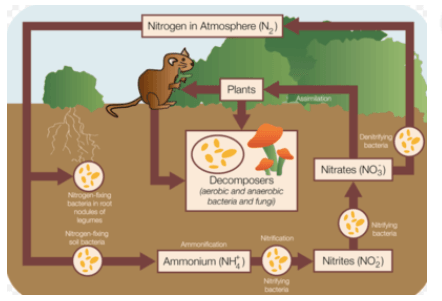
How animals get the nitrogen they need
1
from the air they breathe
2
from the water they drink
3
from the food they eat
4
from the Sun

20

Multiple Choice

Question image

What process is represented by D?

1

nitrification

2

assimilation

3

decomposition

4

denitrification

21

Multiple Select

Question image

How is Nitrogen fixed naturally?

1

plants

2

Lighting

3

Greenhouse gases

4

bacteria

5

Fungs

22

Multiple Choice

Question image
What converts some atmospheric nitrogen into nitrates that organisms can use?
1
Sun
2
Rain
3
Thunder
4
Lighting

23

media

24

media

25

media

26

media

27

Multiple Choice

Question image
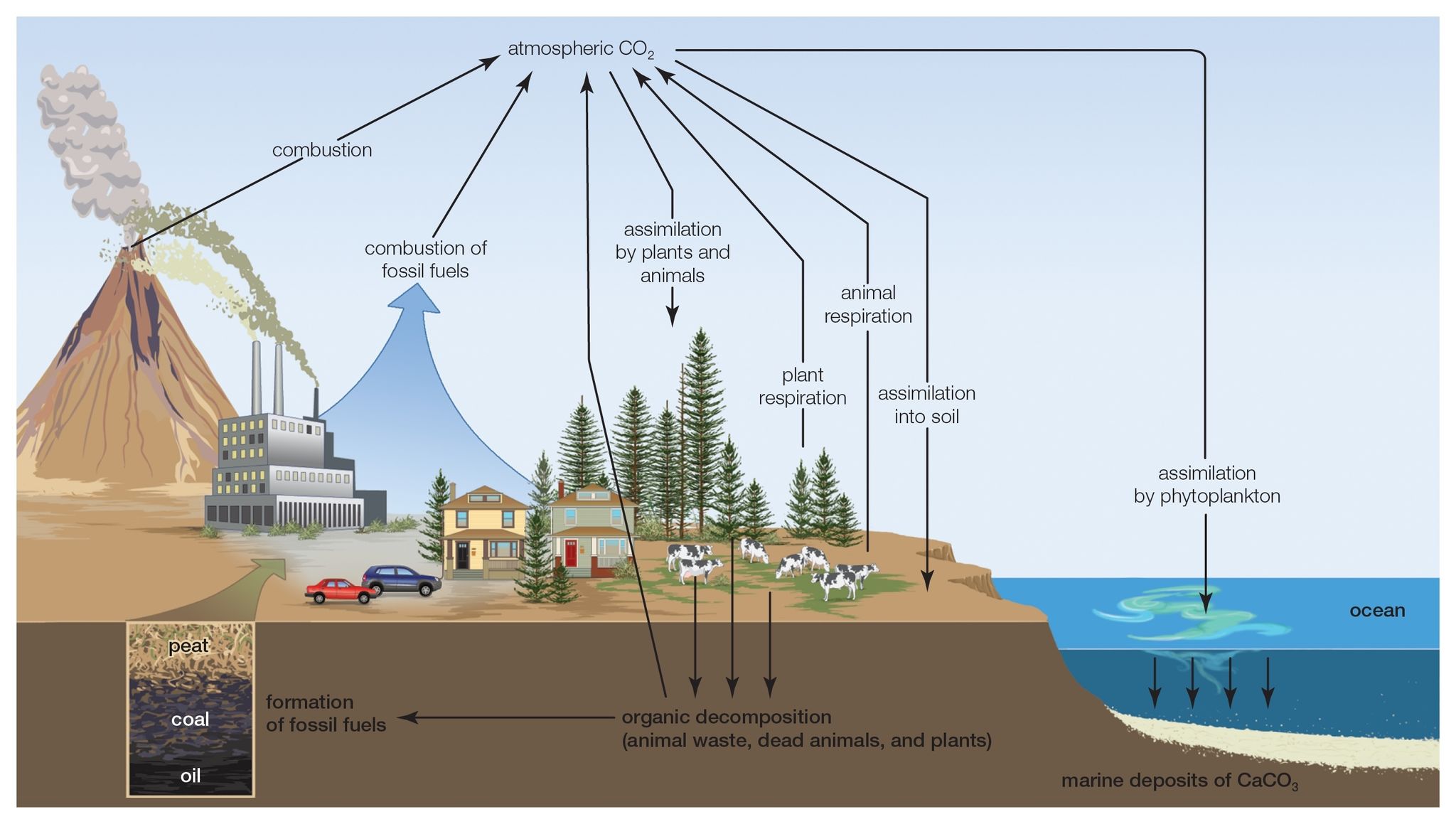
Which of the following add carbon dioxide to the atmosphere?
1
volcanoes
2
combustion of fossil fuels
3
animal and plant respiration
4
all of these

28

Multiple Choice

Question image

A correct path that nitrogen could take would be

1

air -> animals -> plants -> bacteria

2

animals -> air -> bacteria -> plants

3

bacteria -> air -> plants -> animals

4

air -> bacteria -> plants -> animals

29

Multiple Choice

Question image
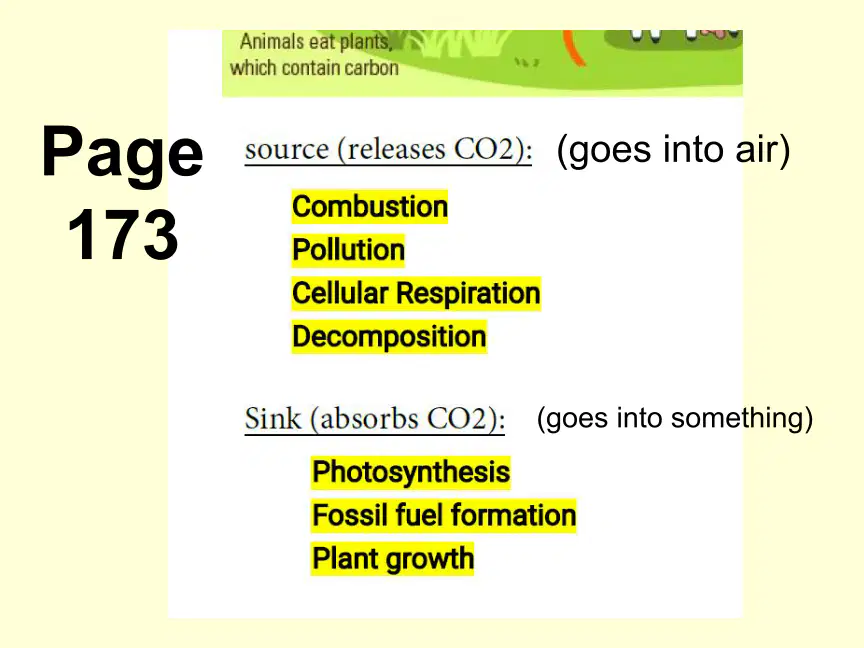
A carbon "sink" is best described as:
1
a reservoir that readily releases carbon to another reservoir
2
a carbon reservoir that stores more carbon that it is releasing
3
something that causes carbon to leak out to the atmosphere
4
a carbon reservoir that is releasing more carbon than it is taking in

30

Labelling

Label the following Carbon cycle.

Drag labels to their correct position on the image

sunlight

photosynthesis

animals breathing (respiration)

fossil fuels

31

Multiple Choice

Question image

Where does the SKY get its carbon from?

1

The sun

2

Animals breathing

3

Water

4

The sun

media

Show answer

Auto Play

Slide 1 / 31

SLIDE