

Level Up: Climbing the Ladder of Life's Classifications

Presentation
•
Science
•
6th - 8th Grade
•
Easy

Apple joy
Used 7+ times
FREE Resource
23 Slides • 11 Questions
1

A Strategic Intervention Material for Science 8
(S8LT-lVh-20)
2
Overview
3
Classify Organisms Using The Hierarchical System
4
a. identify the levels of the taxonomic hierarchy.
By the end of the intervention, learners should be able to:

b. arrange the classification levels from the broadest to the most specific
c. classify an organism based on the given characteristics
5
Objective: Active your prior knowledge!
6
Open Ended

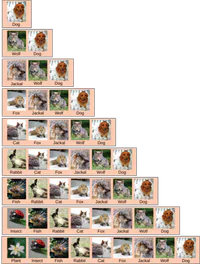
Do you think these animals are related? Why or why not?
7
8
Fill in the Blanks

Match the organism to its kingdom:
Mushroom →
Type answer...
9
Fill in the Blanks

Dog →
Type answer...
10
Fill in the Blanks

Mango tree →
Type answer...
11
Objective: Clarify key concepts!
A mini lesson.
12

The Hierarchy of classification refers to the grouping of organisms based on their similarities and dissimilarities. The hierarchical levels help in the categorization of the organisms which is essential to study the vast number of organisms in a defined manner. The hierarchy of classification groups aids in the identification of different species.
13
In biology, classification is the process of arranging organisms, both living and extinct, into groups based on similar characteristics. The science of naming and classifying organisms is called taxonomy. The term is derived from the Greek taxis (“arrangement”) and nomos (“law”).
Taxonomists classify organisms into a structural hierarchy—a multi-level system in which each group is nested, or contained, within a larger group. Groups at the highest level are the largest and most general and contain a wide variety of living things. These groups are divided into smaller groups of similar organisms. Each smaller group is split into even smaller groups, which contain organisms with even more similar features: For example, a large group that includes all plants would contain smaller groups of that contain similar types of plants, such as trees, bushes, mosses, flowering plants, and so forth. Each of these groups would contain still smaller groups; for example, the tree group might be divided into conifers and broadleaf trees.
Each group in biological classification—that is, each level in the hierarchy—is called a taxon (plural, taxa).The most basic taxon is the species, a group of closely related organisms that can breed and produce offspring that in turn can reproduce.
14
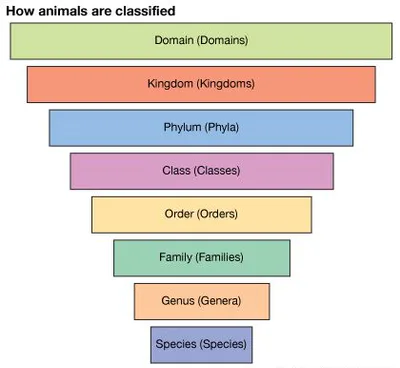
The Linnean system is a widely used classification system with eight levels of taxa: domain, kingdom, phylum, class, order, family, genus, and species. Each level is nested within the next, with the domain being the highest organization level.
15
The highest rank in biological classification is the domain, consisting of Archaea, Bacteria, and Eukarya, each containing prokaryotes and eukaryotes with distinct characteristics.
DOMAIN
16
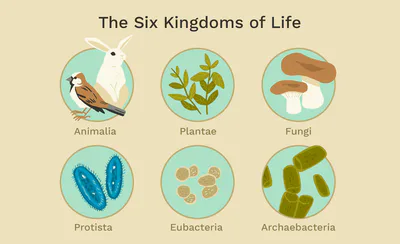
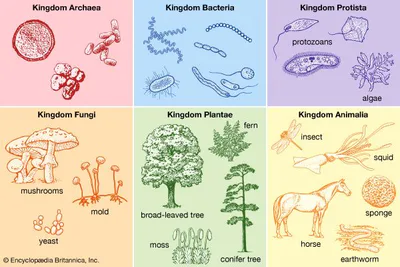
Before the domain taxon was introduced during the 1990s, the kingdom ranked as the highest taxonomic level in classification. Most scientists today recognize six kingdoms: Archaea (prokaryotes with distinct cellular characteristics that adapt them to extreme environments, such as deep-sea vents and hot springs); Bacteria (prokaryotes that are not archaeans); Protista (chiefly protozoa and algae); Fungi (mushrooms, molds, and yeasts); Plantae (plants); and Animalia (animals). The kingdoms Archaea and the Bacteria each constitute a separate domain. The Protista, Fungi, Plantae, and Animalia all belong to the domain Eukarya
KINGDOM
17
The phylum, a taxonomy classification, ranks below the kingdom and above the class. It is used for archaea, bacteria, protists, fungi, and animals, but is sometimes substituted for plants. Organisms are classified based on their general body plan, such as arthropods with external skeletons, mollusks with muscular feet, and Chordata with an internal skeleton and backbone. Examples include insects, crabs, arachnids, mussels, snails, and clams.
PHYLUM
18
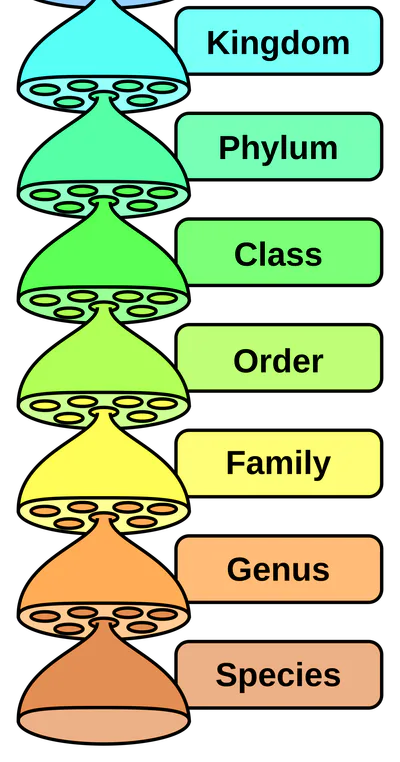
The class ranks below the phylum and above the order in taxonomy. Members of a class share more characteristics with each other than they do with other organisms in the same phylum. Amphibians and reptiles both belong to the Phylum Chordata, but each belongs to a different class. Members of the Class Amphibia (chiefly frogs, toads, and salamanders) have moist, smooth skin and reproduce by laying large quantities of jellylike eggs in water. Members of the Class Reptilia (snakes, lizards, turtles, and tortoises) reptiles have dry scaly skin and reproduce by laying small clutches of leathery eggs on land
CLASS
19
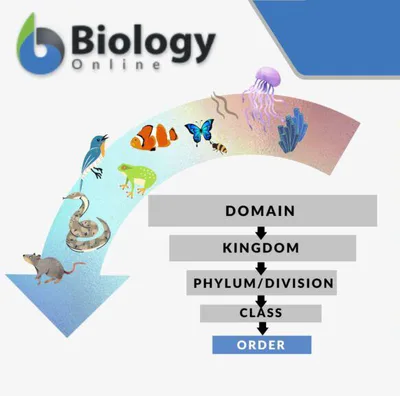
The order ranks below the class and above the family in the taxonomic hierarchy. The groups in an order have more in common with each other than they do with other members of the same class. Because reindeer (caribou) and whales both belong to the Class Mammalia, they share the basic traits of mammals, such as feeding milk to their young; however, each belongs to a different order. Reindeer are part of the Order Artiodactyla, which includes cloven-hoofed mammals; cows, pigs, antelope, and giraffes are fellow artiodactyls. Whales belong the Order Cetacea, a marine mammal order that counts porpoises and dolphins as members.
ORDER
20
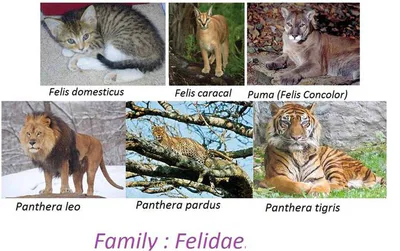
In taxonomy, the family ranks below the order and above the genus. Members of the same taxonomic family are more closely related to each other than they are to other members of the same order. For example, foxes, coyotes, lions, cats, otters, and weasels all belong to the Order Carnivora. However, foxes and coyotes belong to the family Canidae. Lions and cats belong to the family Felidae; otters and weasels are part of the family Mustelidae.
FAMILY
21
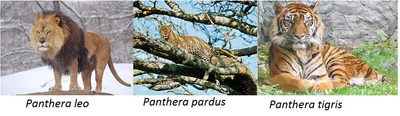
The genus (plural, genera) is the taxonomic rank between family and species. The groups of organisms in a genus share many structural similarities and are very closely related. Members of a genus are more closely related to each other than they are to other genera in the same family. The cat family, Felidae, includes lions, tigers, ocelots, domestic cats, bobcats, and lynx. However, lions and tigers belong to the genus Panthera, ocelots and domestic cats are part of the genus Felis, and lynx and bobcats are in the genus Lynx.
GENUS
22
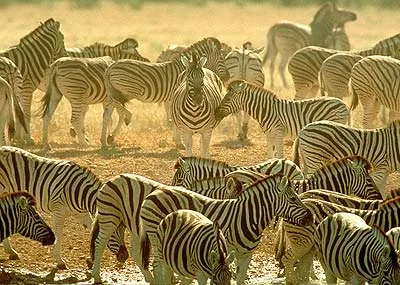
A species is the most fundamental unit in taxonomy and is at the base of the biological classification hierarchy. Members of the same species share the same evolutionary history and are more closely related to each other than to other organisms. Organisms are grouped into species based on physical and genetic similarities. The most important factor in species classification is the ability of members to successfully interbreed, producing viable offspring. Individuals of the same species can successfully interbreed with one another but rarely with members of other species. Each species has its own scientific name, composed of the genus name and species epithet. Some species include groups with distinctive traits that are classified as subspecies, such as the Siberian tiger and the Indian tiger.
SPECIES
23
24
Open Ended
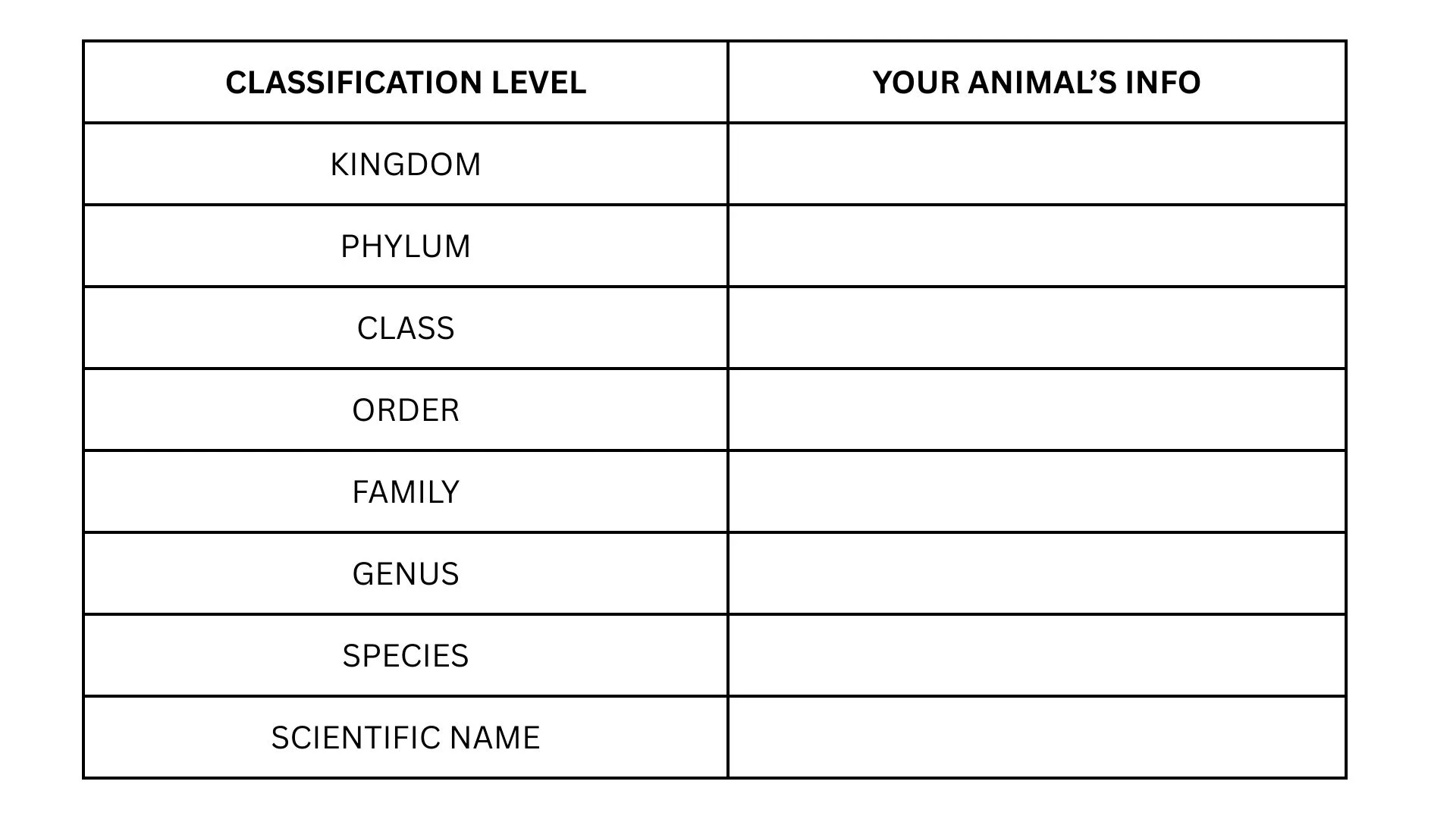
Instructions:
1. Choose any animal that interests you.
2. Fill out the table using the information you find.
(10 mins only)
25
Objective: Assess Learning.
26
Multiple Choice
1. Which of the following is the correct order of classification from broadest to most specific?
Kingdom, Order, Class, Species, Family, Genus, Phylum
Domain, Kingdom, Phylum, Class, Order, Family, Genus, Species
Domain, Kingdom, Phylum, Family, Class, Genus, Species
Kingdom, Domain, Phylum, Class, Order, Family, Species
27
Multiple Choice
2. Organisms in the same _______ share the most recent common ancestor and can typically interbreed to produce viable offspring.
Species
Genus
Family
Class
28
Multiple Choice
3. Which classification level comes directly before “Genus”?
Order
Class
Family
Species
29
Multiple Choice
4. An organism belongs to Kingdom Plantae. What does this tell you?
It eats other organisms.
It moves freely.
It produces its own food through photosynthesis.
It lives only in water.
30
Multiple Choice
5. Why do scientists use scientific names instead of common names?
Scientific names are easier to pronounce.
Common names can be used for multiple organisms.
Scientific names are used only in English.
Scientists don't like common names.
31
Reinforce Understanding: To solidify the learner's comprehension of the hierarchical structure of biological classification.
32
Draw
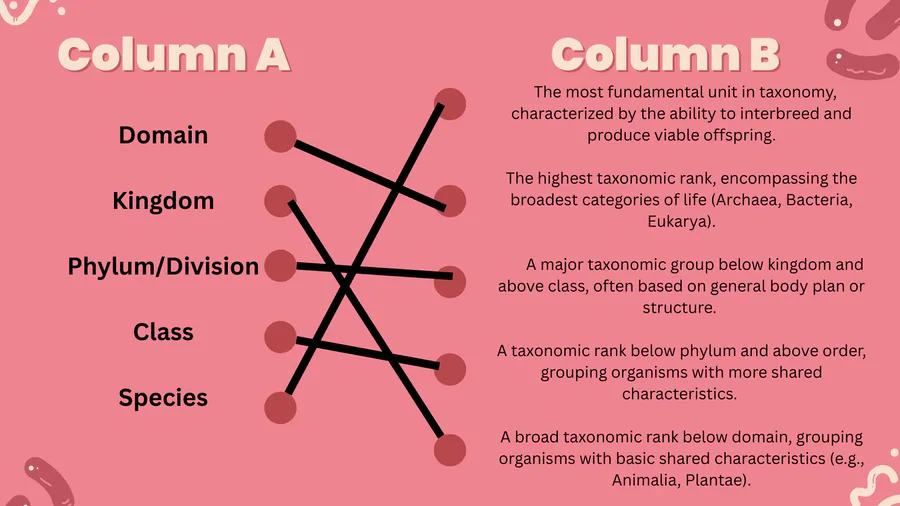
Instructions: Match the term in Column A with the correct description in Column B.
(5 mins only)
33
34
A Strategic Intervention Material for Science 8
(S8LT-lVh-20)
Show answer
Auto Play
Slide 1 / 34
SLIDE
Similar Resources on Wayground

31 questions
Properties of Visible Light
Presentation
•
6th - 8th Grade
24 questions
Circulatory and Respiratory Systems
Presentation
•
6th - 8th Grade
24 questions
Digestive System
Presentation
•
6th - 8th Grade
28 questions
Temperature and Thermal Energy
Presentation
•
6th - 8th Grade
26 questions
The Hydrologic/Water Cycle Lesson
Presentation
•
6th - 8th Grade
29 questions
Electromagnetic Waves & the Electromagnetic Spectrum
Presentation
•
5th - 8th Grade
26 questions
Ecosystems
Presentation
•
6th - 8th Grade
31 questions
Natural Selection
Presentation
•
6th - 8th Grade
Popular Resources on Wayground
10 questions
Safety Day 2026 – Student Review

Quiz
•
9th Grade
21 questions
Continents and Oceans
Quiz
•
6th Grade
20 questions
Parts of Speech
Quiz
•
5th Grade
16 questions
Subject & Predicate
Quiz
•
5th Grade
25 questions
Multiplication Facts
Quiz
•
5th Grade
12 questions
Map Skills
Quiz
•
3rd Grade
22 questions
Continents and Oceans
Quiz
•
5th Grade
15 questions
Rounding Decimals
Quiz
•
5th Grade
Discover more resources for Science
20 questions
Newton's Laws of Motion
Quiz
•
8th Grade
20 questions
Elements, compounds, and mixtures
Quiz
•
6th Grade
10 questions
6.6D - Relative Density Review
Quiz
•
6th Grade
15 questions
potential and kinetic energy
Quiz
•
8th Grade
21 questions
Newton's Laws of Motion
Quiz
•
8th Grade
20 questions
Elements, Compounds and Mixtures
Quiz
•
8th Grade
10 questions
Exploring Chemical and Physical Changes

Interactive video
•
6th - 10th Grade
20 questions
CONDUCTION,CONVECTION AND RADIATION
Quiz
•
6th Grade