
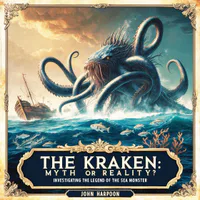
Reteach: RI 7.5 & 7.6

Presentation
•
English
•
6th Grade
•
Hard

Paul Turner II
Used 7+ times
FREE Resource
5 Slides • 12 Questions
1

2
3
4
Multiple Choice
1. How does the author's choice to introduce the Kraken with ancient sailor tales and then transition to scientific investigations contribute to the reader's comprehension of the Kraken concept? (Paragraphs 1-3)
It endeavors to establish a literal, consistent basis for the Kraken's existence by merging mythical accounts with scientific evidence.
It emphasizes the purely mythical nature of the Kraken by contrasting ancient folklore with modern scientific evidence.
It dismisses the significance of ancient lore in understanding the Kraken, favoring modern scientific explanations.
It showcases the evolving cultural anxieties that have influenced the Kraken’s portrayal through successive periods of history. and evidence.
5
Multiple Choice
2. How does the author's decision to differentiate between early Scandinavian stories and later scientific interpretations of the Kraken impact the reader's understanding? (Paragraphs 2-3)
It suggests that Kraken narratives remained static and fundamentally unchanged throughout the course of history.
It articulates how the Kraken archetype transitioned from a folkloric monster to a subject of scientific inquiry.
It generates a sense of historical continuity, indicating all Kraken tales are inherently similar in their depictions.
It diverts the reader from the primary focus on scientific explanations by introducing irrelevant historical details.
6
Multiple Choice
3: How does the author's choice to explore the symbolic interpretations of the Kraken, such as its connection to the fear of the unknown ocean, refine the reader's grasp of the Kraken phenomenon? (Paragraph 4)
It reduces the Kraken idea to a mere metaphorical device, dismissing its literal horror and impact on culture.
It emphasizes the purely entertainment value of Kraken stories, ignoring their deeper thematic and symbolic implications.
It argues that the Kraken is a direct, literal representation of real-world oceanic dangers, minimizing its fictional quality.
It illustrates the complex layers of the Kraken, showing how it mirrors intricate psychological and cultural fears.
7
Multiple Choice
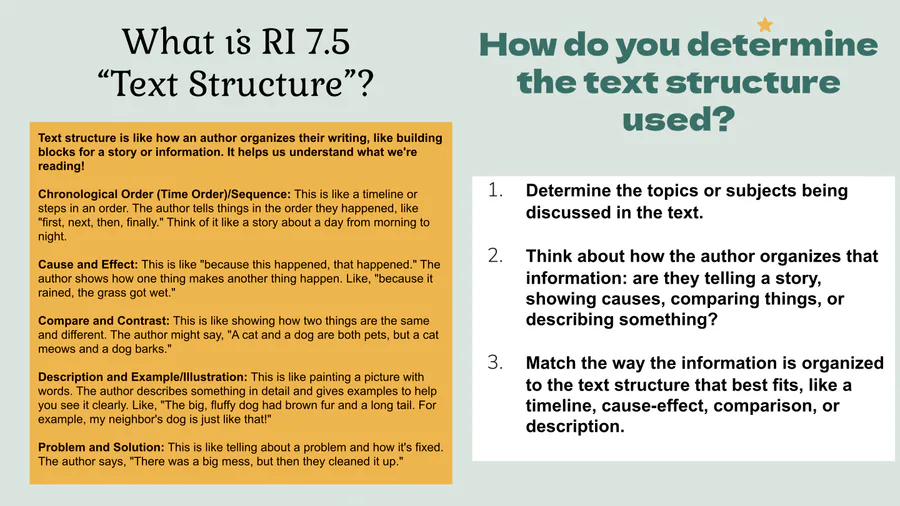
4. Which organizational pattern is chiefly utilized in Paragraphs 1 & 3 to depict the developmental path of the Kraken concept from ancient lore to modern scientific understanding?
Sequence: The author organizes the Kraken concept along a timeline, charting its evolution through various eras.
Cause & Effect: The author establishes direct causal links between ancient myths and the resulting scientific findings.
Compare & Contrast: The author contrasts ancient Kraken figures with modern scientific interpretations to highlight their differences.
Description: The author offers detailed characterizations of Kraken traits across different historical periods.
8
Multiple Choice
5. Which organizational pattern is predominantly employed in Paragraph 2 to aid the reader's understanding of the early historical interpretations of the Kraken? (Paragraph 2)
Sequence: The author sequences events chronologically to explain the evolution of early Kraken beliefs.
Cause & Effect: The author elucidates the direct connection between historical events and the formation of the Kraken concept.
Description: The author details the characteristics of early Kraken beliefs and provides specific instances.
Compare & Contrast: The author compares and contrasts early Kraken beliefs with modern Kraken depictions.
9
Multiple Choice
6. Which organizational pattern is chiefly used in Paragraph 4 to help the reader understand the symbolic interpretations of the Kraken? (Paragraph 4)
Sequence: The author organizes symbolic interpretations in a time sequence to show their historical development.]
Cause & Effect: The author explains the direct relationships between oceanic anxieties and the resulting Kraken symbolism.
Description: The author provides detailed examples of different symbolic interpretations of the Kraken.
Compare & Contrast: The author highlights the distinctions between various symbolic interpretations of the Kraken.
10
11
Multiple Choice
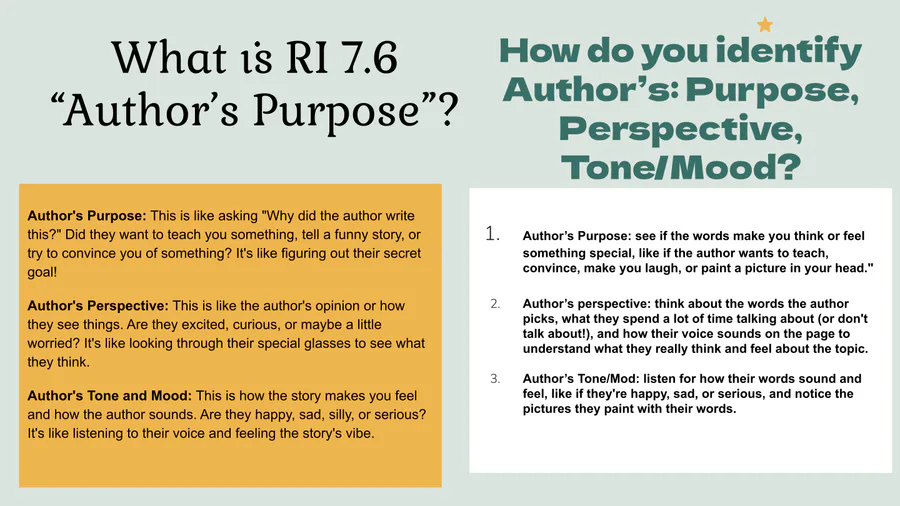
7. What is the author's overarching stance on the Kraken phenomenon, as conveyed in the text? (Paragraphs 1-5)
The author regards the Kraken phenomenon as primarily modern entertainment, highlighting a lack of historical and cultural depth.
The author interprets the Kraken phenomenon as solely rooted in ancient superstitions, discounting modern scientific interpretations.
The author presents the Kraken phenomenon as literal accounts of real sea creatures that directly influenced ancient and modern societies.
The author perceives the Kraken phenomenon as a reflection of evolving human fears and understandings, evidenced by historical and scientific instances.
12
Multiple Choice
8. What is the author's principal opinion regarding the function of literature and science in shaping the contemporary Kraken archetype? (Paragraph 3)
The author considers literary and scientific works irrelevant and inconsequential to the progression of the Kraken myth.
The author construes literary and scientific works as merely reflecting pre-existing folklore without introducing fresh elements.
The author regards literary and scientific works as factual proof of genuine Kraken encounters and experiences.
The author views literary and scientific works as primary catalysts in shaping the modern Kraken archetype.
13
Multiple Choice
9. What is the author's rationale for emphasizing the link between ancient sailor tales and modern scientific discoveries of giant squids? (Paragraph 3)
To persuade the reader that ancient tales directly and literally caused the creation of modern scientific discoveries.
To detail how ancient observations and anxieties influenced the development of scientific theories.
To entertain the reader with sensationalized reports of ancient myths and alleged modern squid sightings.
To critique historical interpretations of sea creatures, highlighting their perceived lack of scientific understanding.
14
Multiple Choice
10. What is the author's objective in addressing the Kraken's adaptation in current cultural contexts? (Paragraph 5)
To show the enduring adaptability of the Kraken myth to reflect changing cultural anxieties.
To convince the reader that modern Kraken interpretations are superior and more accurate than ancient ones.
To engage the audience with sensationalized accounts of modern Kraken adaptations in popular culture.
To critique contemporary depictions of the Kraken for deviating from the original, traditional archetype.
15
Multiple Choice
11. Which of the following best represents the contrasting perspectives presented in the text regarding the genesis of the Kraken legend? (Paragraphs 1-3)
The Kraken legend was either based on genuine giant squid encounters or fabricated by ancient storytellers.
The Kraken legend was either a consequence of ancient myths or misinterpretations of natural phenomena.
The Kraken legend was either a form of religious persecution or a product of social exclusion.
The Kraken legend was either a scientific observation or a complete invention by the accused.
16
Multiple Choice
12. Which of the following most accurately describes the author's prevailing attitude when discussing the literary and scientific transformations of the Kraken? (Paragraph 3)
Lighthearted and satirical, mocking the romanticized and scientific depictions of the Kraken in literature.
Somber and critical, emphasizing the negative influence of literary and scientific interpretations on the Kraken myth.
Neutral and informative, detailing the literary and scientific evolution of the Kraken archetype through time.
Exaggerated and sensational, aiming to incite fear and excitement about literary and scientifically described Krakens.
17
Show answer
Auto Play
Slide 1 / 17
SLIDE
Similar Resources on Wayground

15 questions
ELPAC Speech Functions
Presentation
•
6th Grade
12 questions
Memory Moment
Presentation
•
6th Grade
13 questions
Recuperação - 6° Ano (2024)
Presentation
•
6th Grade
9 questions
Author's Purpose
Presentation
•
6th Grade
12 questions
Anne Frank Character Change
Presentation
•
6th - 9th Grade
13 questions
Point of View and Perspective
Presentation
•
6th Grade
13 questions
Nouns and Pronouns
Presentation
•
6th Grade
11 questions
English Year 6 unit 1 ( pg 1)
Presentation
•
6th Grade
Popular Resources on Wayground
6 questions
Secondary Safety Quiz
Presentation
•
9th - 12th Grade
10 questions
Afterschool Activities & Sports

Quiz
•
6th - 8th Grade
19 questions
ROAR Week 2026
Quiz
•
9th - 12th Grade
20 questions
Lab Safety Quiz
Quiz
•
6th Grade
15 questions
Cool Tool:Chromebook
Quiz
•
6th - 8th Grade
22 questions
would you rather
Quiz
•
3rd - 11th Grade
21 questions
Continents and Oceans
Quiz
•
6th Grade
20 questions
Parts of Speech
Quiz
•
5th Grade
Discover more resources for English
20 questions
Context Clues
Quiz
•
6th Grade
20 questions
Figurative Language Review
Quiz
•
6th Grade
18 questions
ADJECTIVES and ADVERBS
Presentation
•
5th - 7th Grade
20 questions
Common & Proper Nouns Review
Quiz
•
3rd - 6th Grade
13 questions
SUMMARIZING AND CENTRAL IDEA
Quiz
•
6th - 8th Grade
18 questions
Franklin Junior High 8th Grade Schedules
Quiz
•
6th - 8th Grade
10 questions
Differentiating Primary and Secondary Sources in History

Interactive video
•
6th - 10th Grade
10 questions
Understanding Parts of Speech
Interactive video
•
6th - 8th Grade