
Unit 9 Mid-Unit Exam retest

Presentation
•
Science
•
7th Grade
•
Practice Problem
•
Medium

Bryan Carter
Used 9+ times
FREE Resource
11 Slides • 10 Questions
1
Unit 9 Mid-Unit Exam retest
By Bryan Carter
2
Circulatory - Transport Oxygen and nutrients throughout the body
Respiratory - Gas Exchange (in alveoli); bring in O2 and remove CO2
Skeletal - Protect vital organs, support, and provide framework for the body
Muscular - Helps many parts of the body move
Nervous - Send signals to the body and receive signals from the body
3
Multiple Choice

Look at the chart above. Which organ system is being mentioned in column A and Column C?
Column A- Respiratory Column C- Skeletal
Column A -Respiratory System. Column C- Digestive System
Column A- Circulatory Column C- Skeletal
Column A- Nervous Column C- Circulatory
4
Organism -> Organ System -> Organ -> Tissue -> Cells
List the levels of organization from largest to most simple
5
Dropdown
6
Circulatory - Transport Oxygen and nutrients throughout the body
Respiratory - Gas Exchange (in alveoli); bring in O2 and remove CO2
Skeletal - Protect vital organs, support, and provide framework for the body
Muscular - Helps many parts of the body move
Nervous - Send signals to the body and receive signals from the body
7
Match
Determine which fact is associated with the information below. Drag the correct answer next to the correct information below.
Skeletal System
Circulatory System
Respiratory System
Nervous System
A rigid supportive or protective structu
Circulates Oxygen and nutrients
Responsible for gas exchange
Sends and receives signals
A rigid supportive or protective structu
Circulates Oxygen and nutrients
Responsible for gas exchange
Sends and receives signals
8
9
Multiple Choice
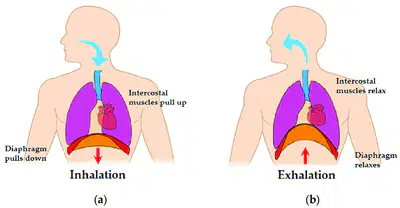
Which statement correctly describes a relationship between the muscular and respiratory systems?
The lungs are composed of smooth muscle tissue.
Muscles in the nostrils filter air before the air enters the lungs.
Oxygen diffuses from the lungs directly to the muscles.
Contraction of the diaphragm expands the lungs during inspiration.
10
Circulatory - Transport Oxygen and nutrients throughout the body
Respiratory - Gas Exchange (in alveoli); bring in O2 and remove CO2
Skeletal - Protect vital organs, support, and provide framework for the body
Muscular - Helps many parts of the body move
Nervous - Send signals to the body and receive signals from the body
11
Multiple Choice
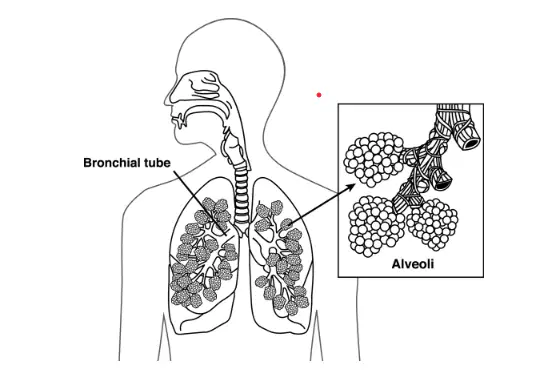
Look at the diagram modeling a person’s lungs.
What part do the alveoli play in the respiratory system?
They store gases not needed by the body.
They exchange gases with the circulatory system.
They keep any gases from entering the bloodstream.
They convert carbon dioxide to oxygen for use by cells.
12
Circulatory - Transport Oxygen and nutrients throughout the body
Respiratory - Gas Exchange (in alveoli); bring in O2 and remove CO2
Skeletal - Protect vital organs, support, and provide framework for the body
Muscular - Helps many parts of the body move
Nervous - Send signals to the body and receive signals from the body
13
Dropdown
14
Circulatory - Transport Oxygen and nutrients throughout the body
Respiratory - Gas Exchange (in alveoli); bring in O2 and remove CO2
Skeletal - Protect vital organs, support, and provide framework for the body
Muscular - Helps many parts of the body move
Nervous - Send signals to the body and receive signals from the body
15
Hotspot
Students in Mrs. Garcia's class were placed into groups of five and asked to list one function of the circulatory system.
Which students correctly identified the function of this system?
Choose the correct students by clicking the appropriate boxes.
There will be 2 answers
16
Circulatory - Transport Oxygen and nutrients throughout the body
Respiratory - Gas Exchange (in alveoli); bring in O2 and remove CO2
Skeletal - Protect vital organs, support, and provide framework for the body
Muscular - Helps many parts of the body move
Nervous - Send signals to the body and receive signals from the body
17
Hotspot
Students are studying the functions of the eleven body systems.
Students in Mrs. Garcia's class were placed into groups of five and asked to list one function of the respiratory system.
Which students correctly identified the function of this system?
Choose the correct students by clicking the appropriate boxes.
There are 2 answers
18
Circulatory - Transport Oxygen and nutrients throughout the body
Respiratory - Gas Exchange (in alveoli); bring in O2 and remove CO2
Skeletal - Protect vital organs, support, and provide framework for the body
Muscular - Helps many parts of the body move
Nervous - Send signals to the body and receive signals from the body
19
Multiple Select
Which two body systems work together to provide the body with oxygen and to rid the body of carbon dioxide?
Select TWO correct answers.
circulatory
digestive
skeletal
respiratory
20
Circulatory - Transport Oxygen and nutrients throughout the body
Respiratory - Gas Exchange (in alveoli); bring in O2 and remove CO2
Skeletal - Protect vital organs, support, and provide framework for the body
Muscular - Helps many parts of the body move
Nervous - Send signals to the body and receive signals from the body
21
Open Ended
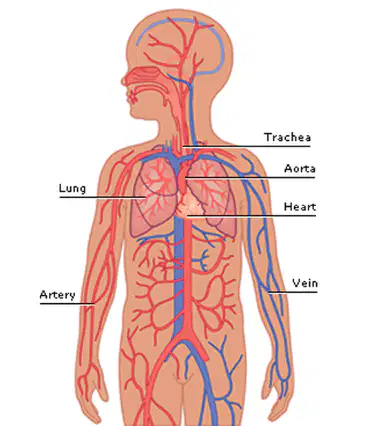
Directions: Look at the diagram of the systems shown. Then, answer the following questions:
Identify the two organ systems shown in the diagram.
Explain how these two organ systems work together to supply oxygen to the body and remove carbon dioxide.
Unit 9 Mid-Unit Exam retest
By Bryan Carter
Show answer
Auto Play
Slide 1 / 21
SLIDE
Similar Resources on Wayground

18 questions
Classification and Hierarchy of Organisms
Presentation
•
6th - 8th Grade
16 questions
Context Clues (Synonyms and Antonyms)
Presentation
•
7th Grade
15 questions
Adaptation
Presentation
•
KG
14 questions
Africa Geography Regions Review
Presentation
•
7th Grade
17 questions
Evolution
Presentation
•
7th Grade
16 questions
Food Labels
Presentation
•
6th - 8th Grade
16 questions
Forces
Presentation
•
6th Grade
14 questions
The Universe Unit Launch
Presentation
•
6th - 8th Grade
Popular Resources on Wayground
6 questions
Secondary Safety Quiz
Presentation
•
9th - 12th Grade
10 questions
Afterschool Activities & Sports

Quiz
•
6th - 8th Grade
19 questions
ROAR Week 2026
Quiz
•
9th - 12th Grade
20 questions
Lab Safety Quiz
Quiz
•
6th Grade
15 questions
Cool Tool:Chromebook
Quiz
•
6th - 8th Grade
22 questions
would you rather
Quiz
•
3rd - 11th Grade
21 questions
Continents and Oceans
Quiz
•
6th Grade
20 questions
Parts of Speech
Quiz
•
5th Grade
Discover more resources for Science
20 questions
💯4. Quiz: Safety in the Science Lab
Quiz
•
7th Grade
20 questions
Lab Safety
Quiz
•
5th - 8th Grade
15 questions
Lab Safety
Quiz
•
7th Grade
17 questions
Variables in Science Experiments: Practice!
Quiz
•
7th Grade
10 questions
Lab Safety Essentials

Interactive video
•
6th - 10th Grade
20 questions
Semester 1: Unit 1: Characteristics of Life
Quiz
•
6th - 8th Grade
20 questions
Lab Safety
Quiz
•
7th Grade
14 questions
Science Variables
Quiz
•
7th Grade