

Cell Origins

Presentation
•
Science
•
1st Grade
•
Practice Problem
•
Hard

Wayground Resources
FREE Resource
24 Slides • 25 Questions
1
2
3
Multiple Choice
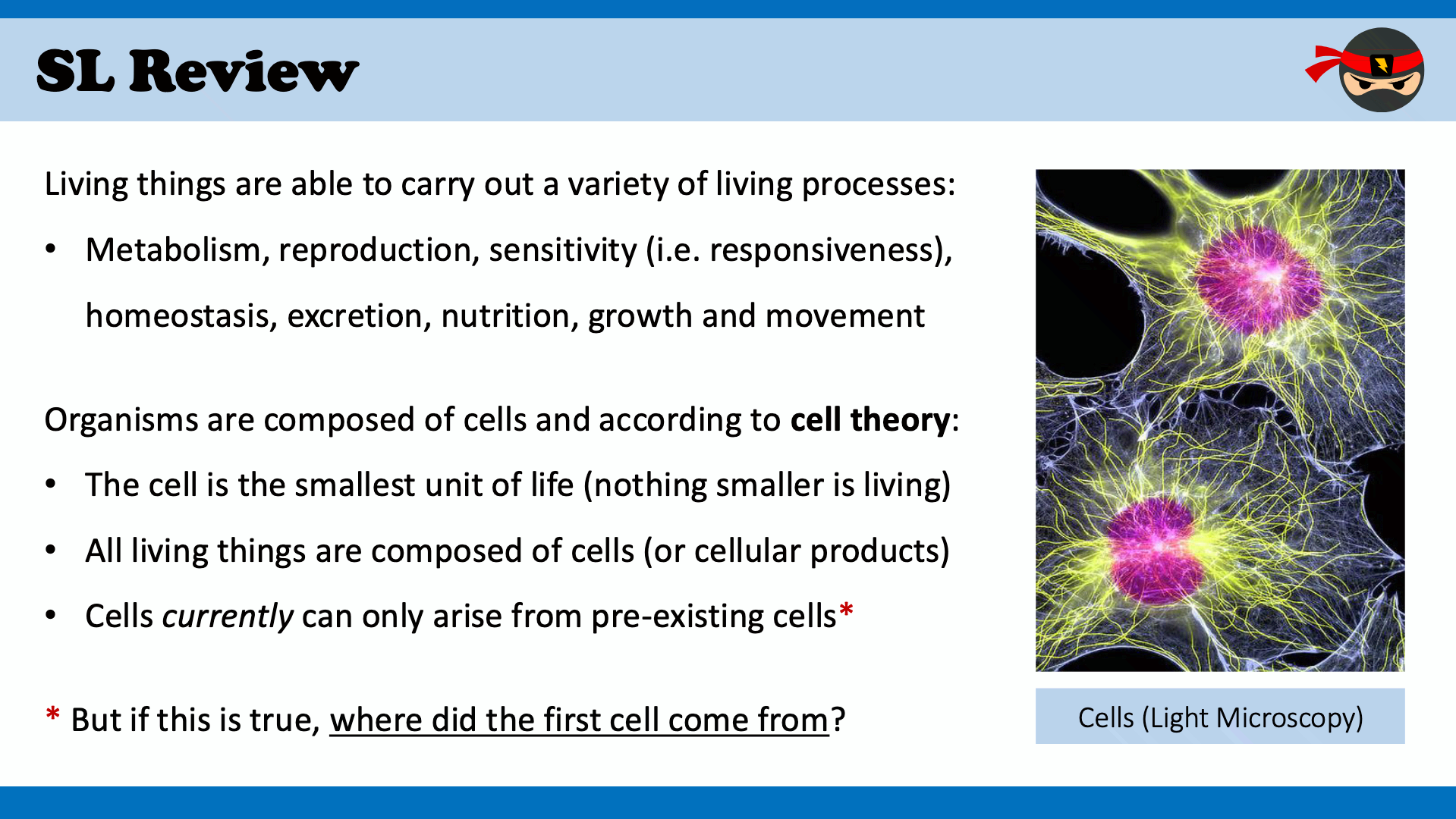
Which of the following is NOT a process carried out by living things according to cell theory?
Metabolism
Photosynthesis
Reproduction
Homeostasis
4
5
Multiple Choice
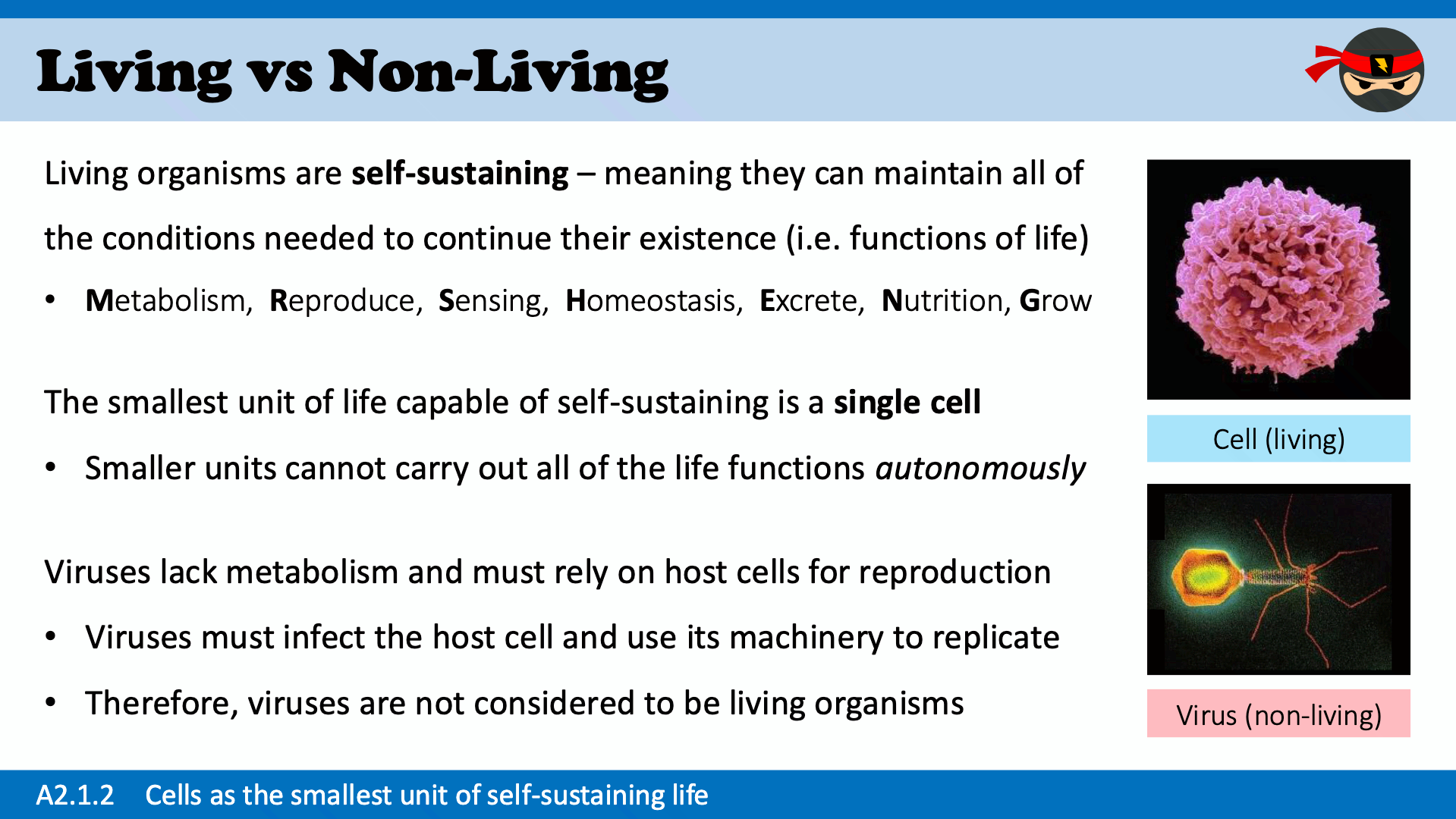
Which of the following best explains why viruses are not considered living organisms?
They lack metabolism and cannot reproduce on their own.
They are too small to be seen with a microscope.
They contain DNA and RNA.
They can cause diseases in living things.
6
7
Open Ended
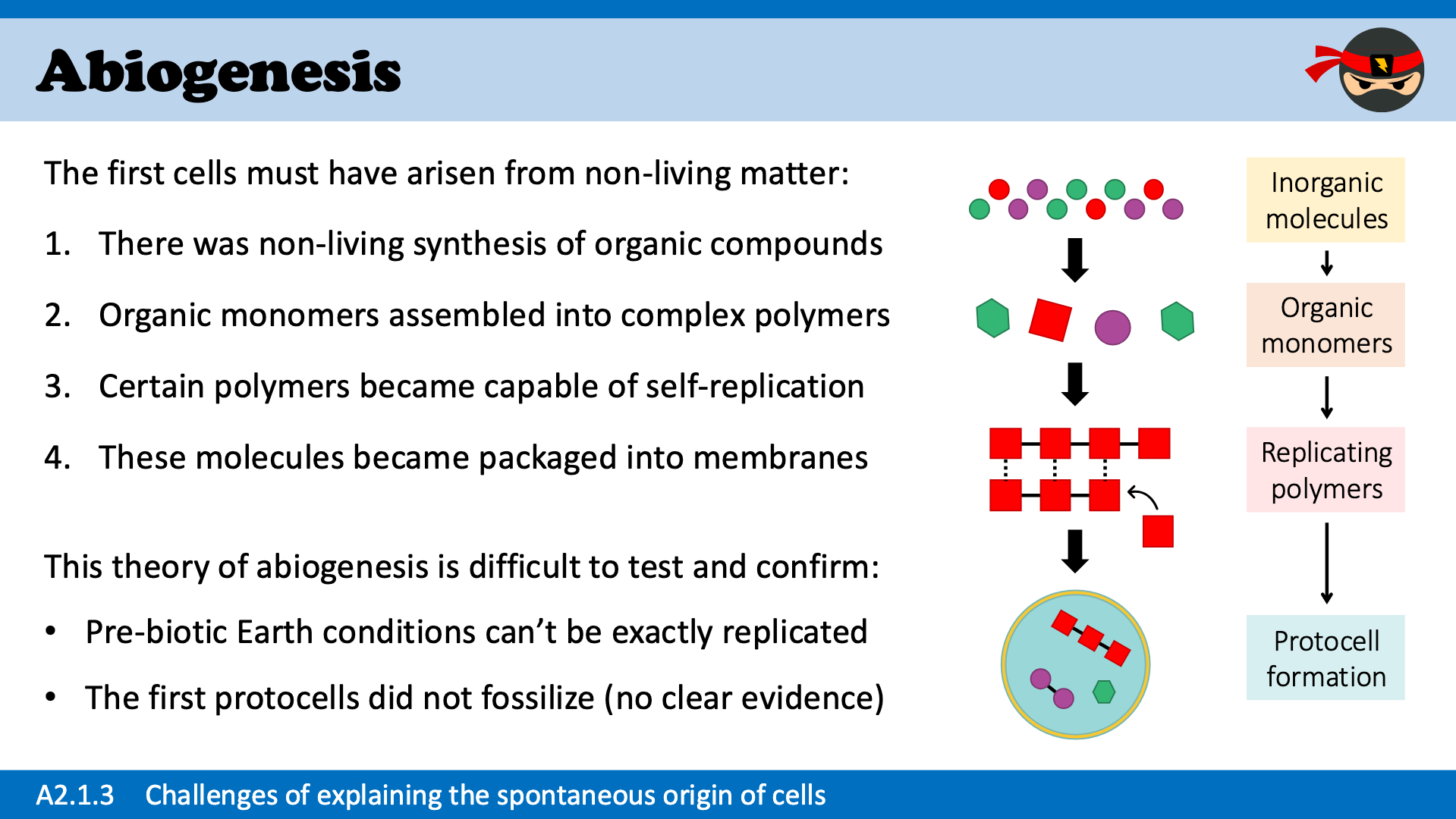
Explain the main steps involved in the process of abiogenesis as described in the images.
8
9
Multiple Select
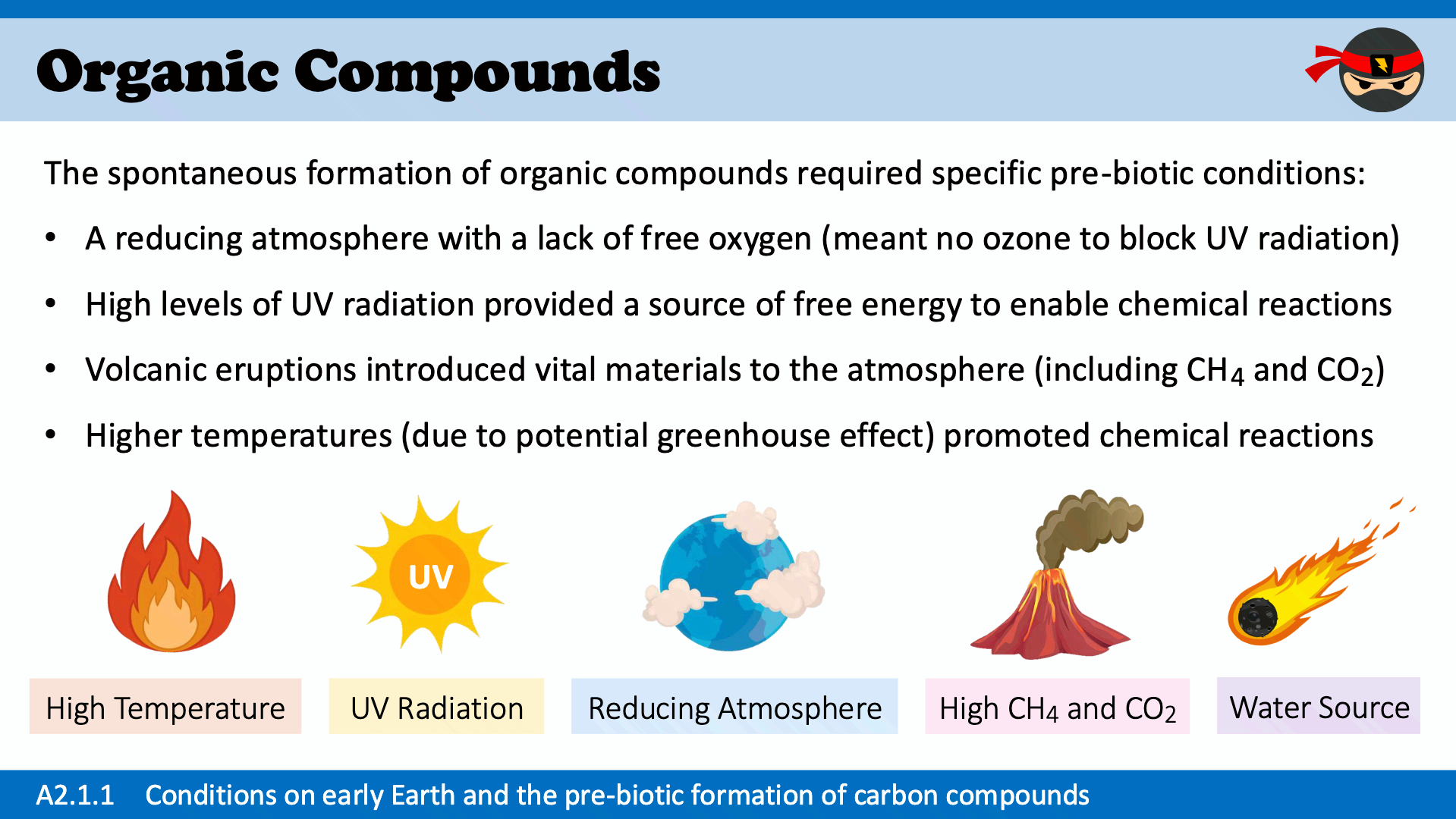
Which of the following were necessary conditions for the spontaneous formation of organic compounds on early Earth?
High temperature
Reducing atmosphere
Presence of free oxygen
High levels of UV radiation
10
11
Fill in the Blanks
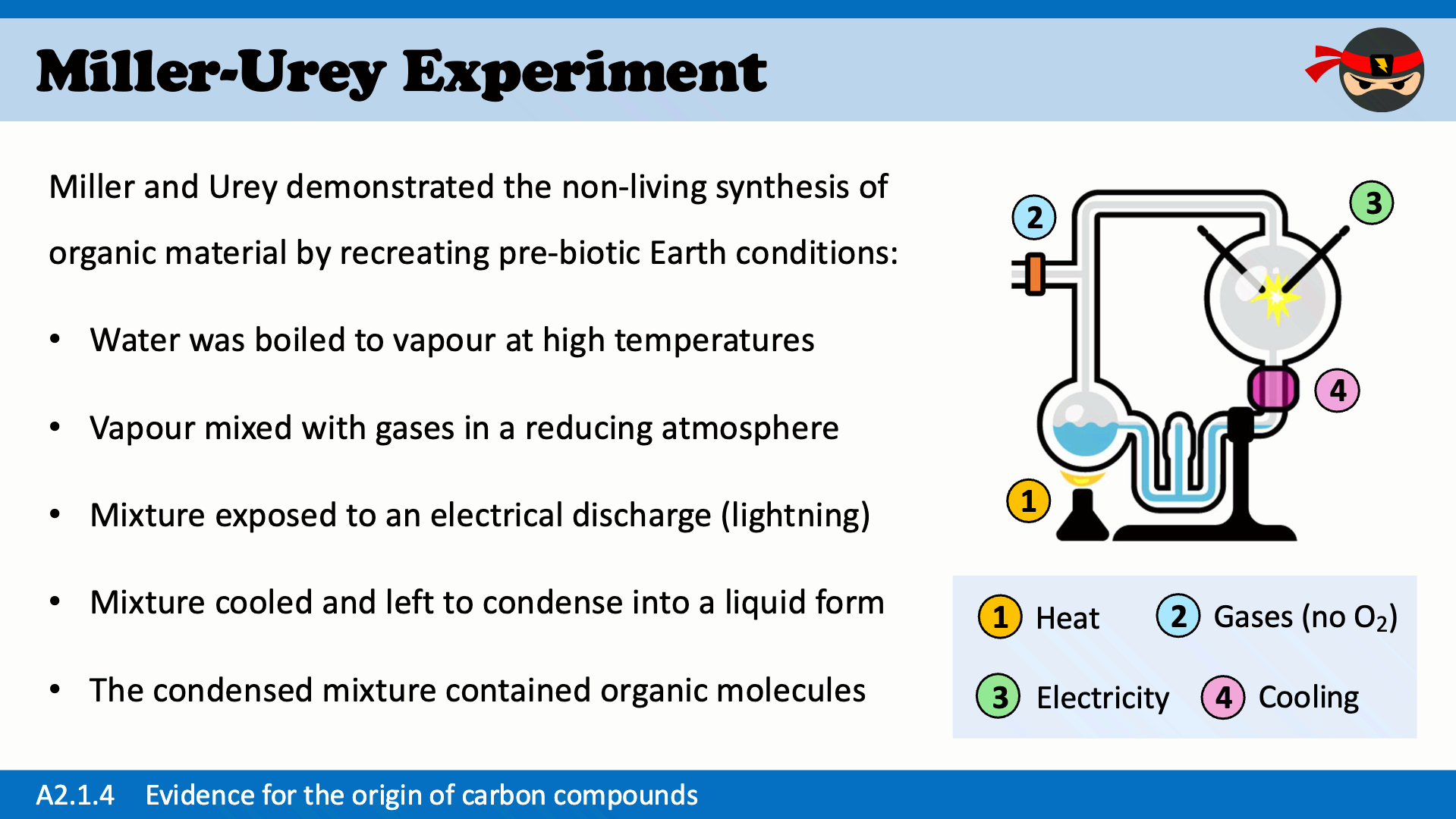
The Miller-Urey experiment demonstrated the non-living synthesis of organic molecules by recreating pre-biotic Earth conditions, including exposure to
Type answer...
12
13
Multiple Choice
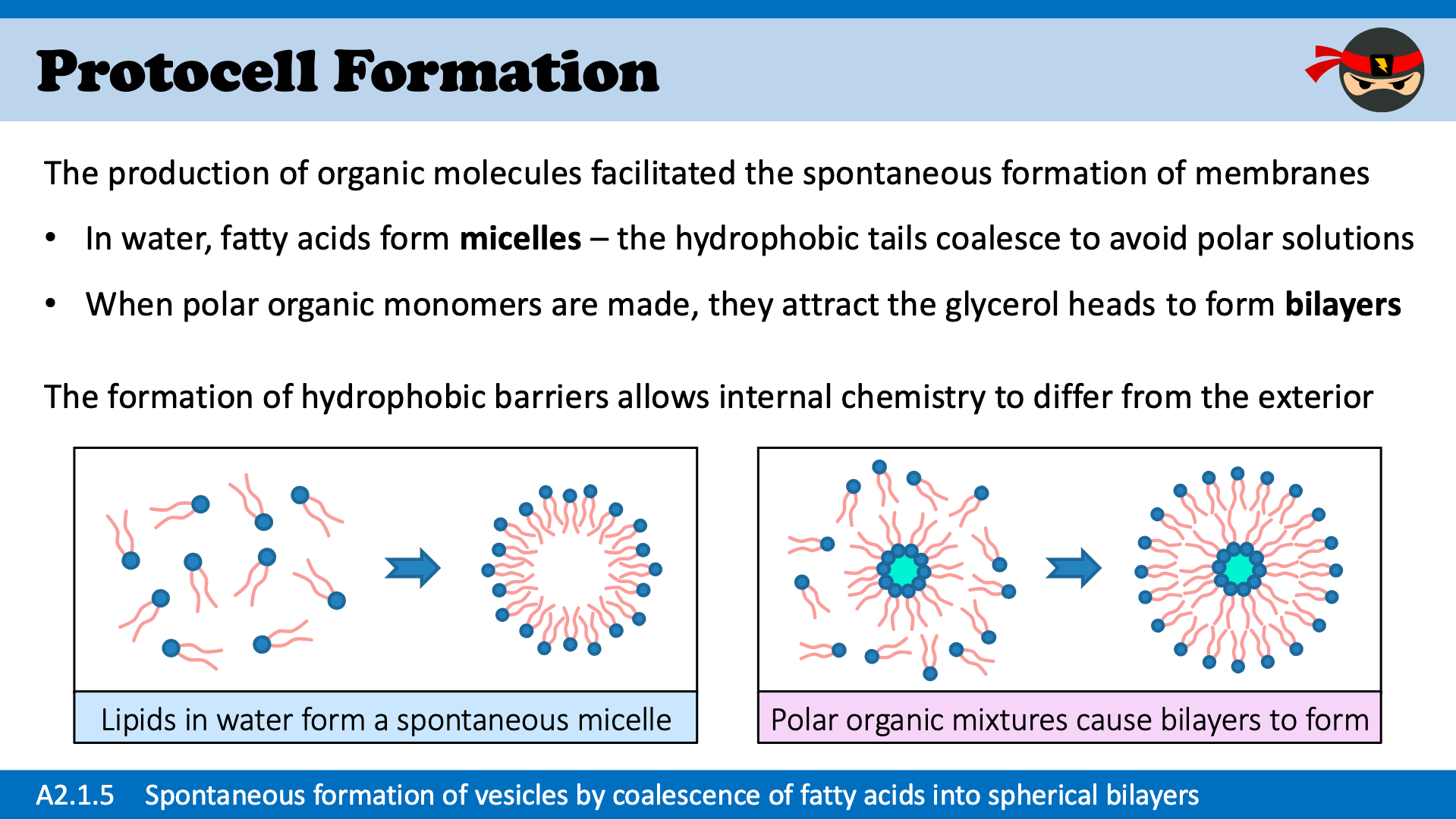
What is the significance of the spontaneous formation of micelles and bilayers in water?
They allow the formation of hydrophobic barriers, enabling internal chemistry to differ from the exterior.
They increase the temperature of the solution.
They prevent the formation of organic molecules.
They provide energy for chemical reactions.
14
15
Multiple Choice
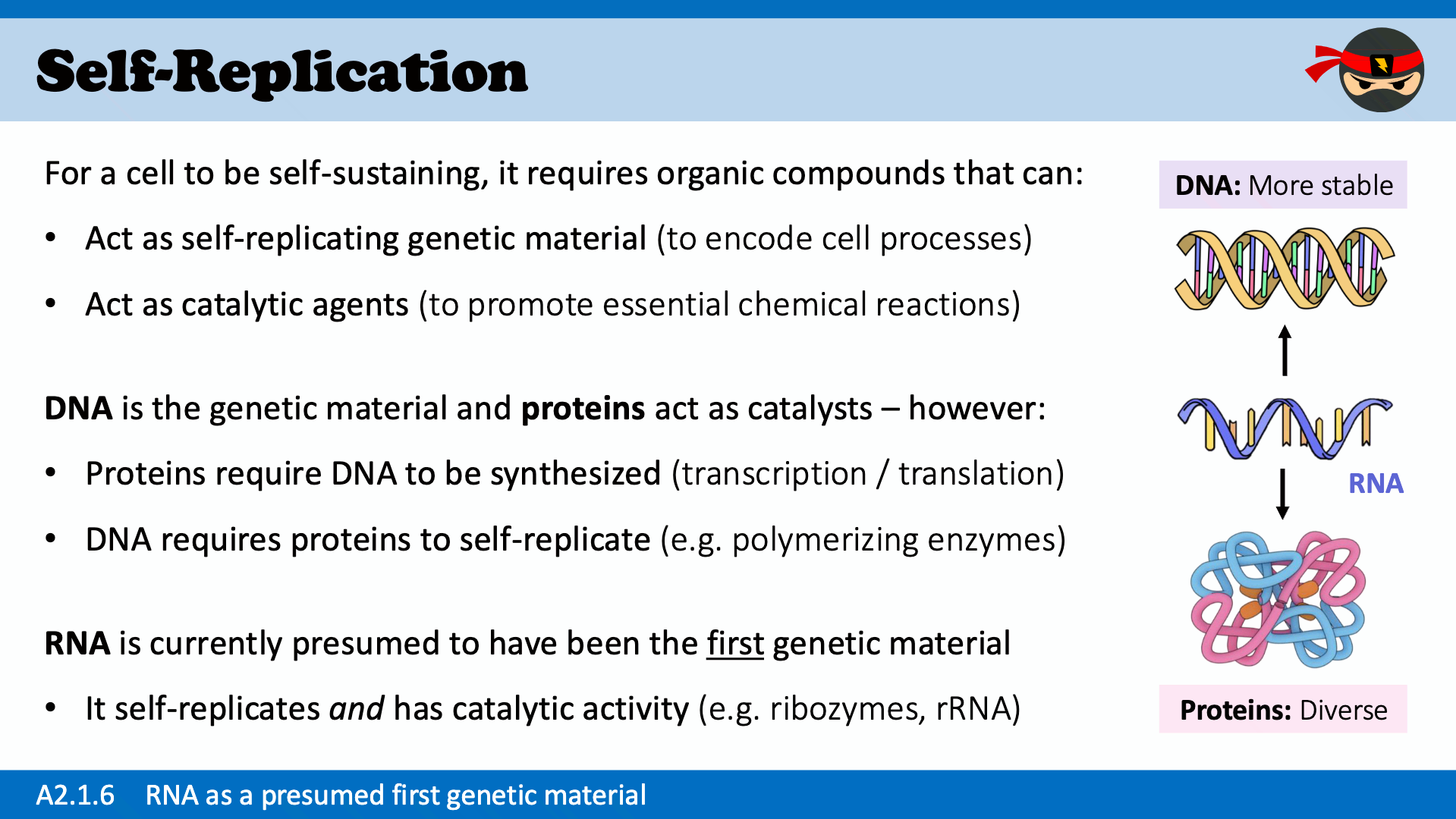
Why is RNA presumed to have been the first genetic material in early cells?
It can self-replicate and has catalytic activity.
It is more stable than DNA.
It is found in all living organisms.
It is required for protein synthesis.
16
17
Multiple Choice
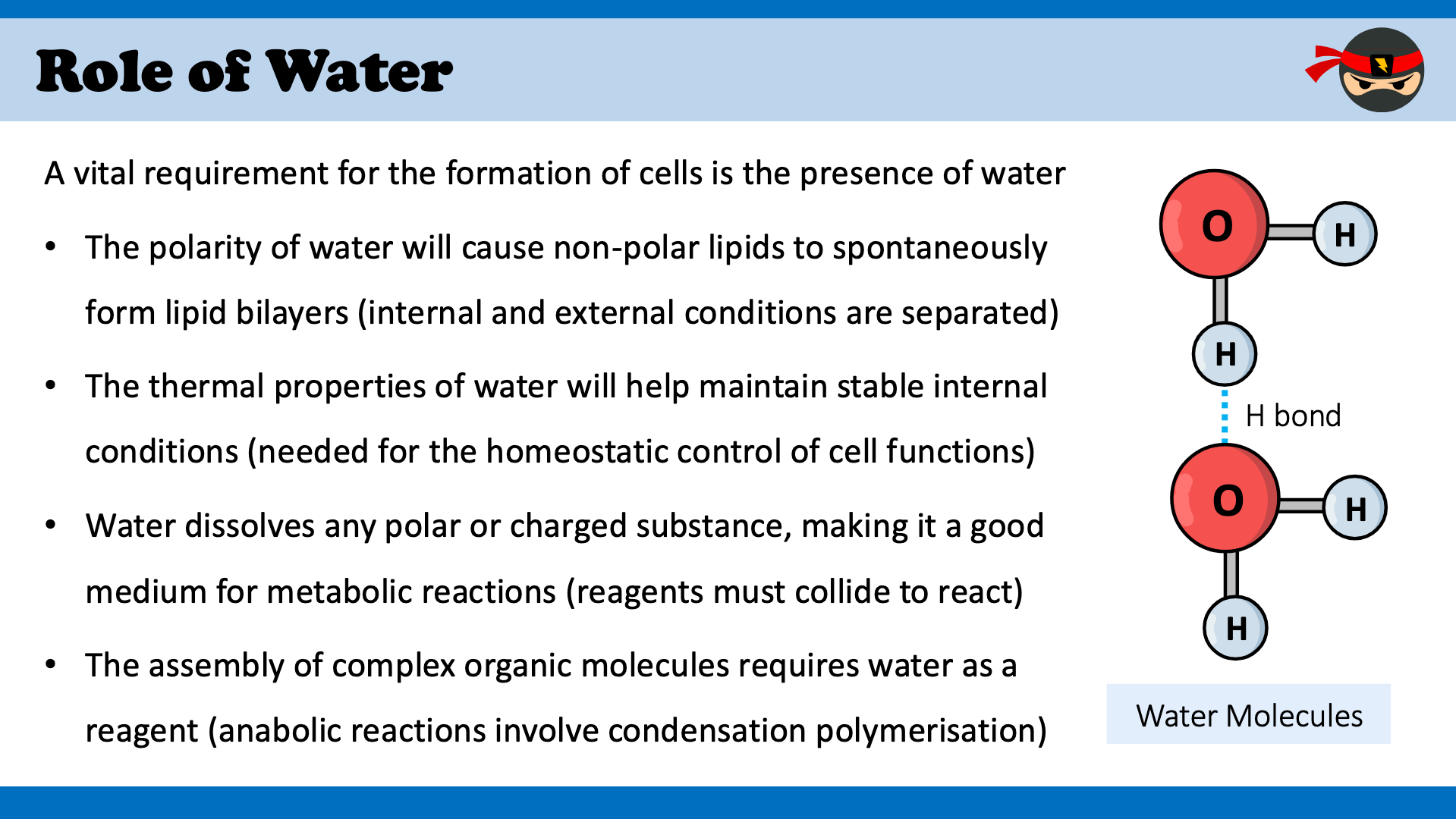
Which of the following is NOT a reason why water is vital for the formation and function of cells?
Water dissolves polar or charged substances, enabling metabolic reactions.
Water's polarity helps form lipid bilayers, separating internal and external conditions.
Water's thermal properties help maintain stable internal conditions.
Water prevents the assembly of complex organic molecules.
18
19
Multiple Select
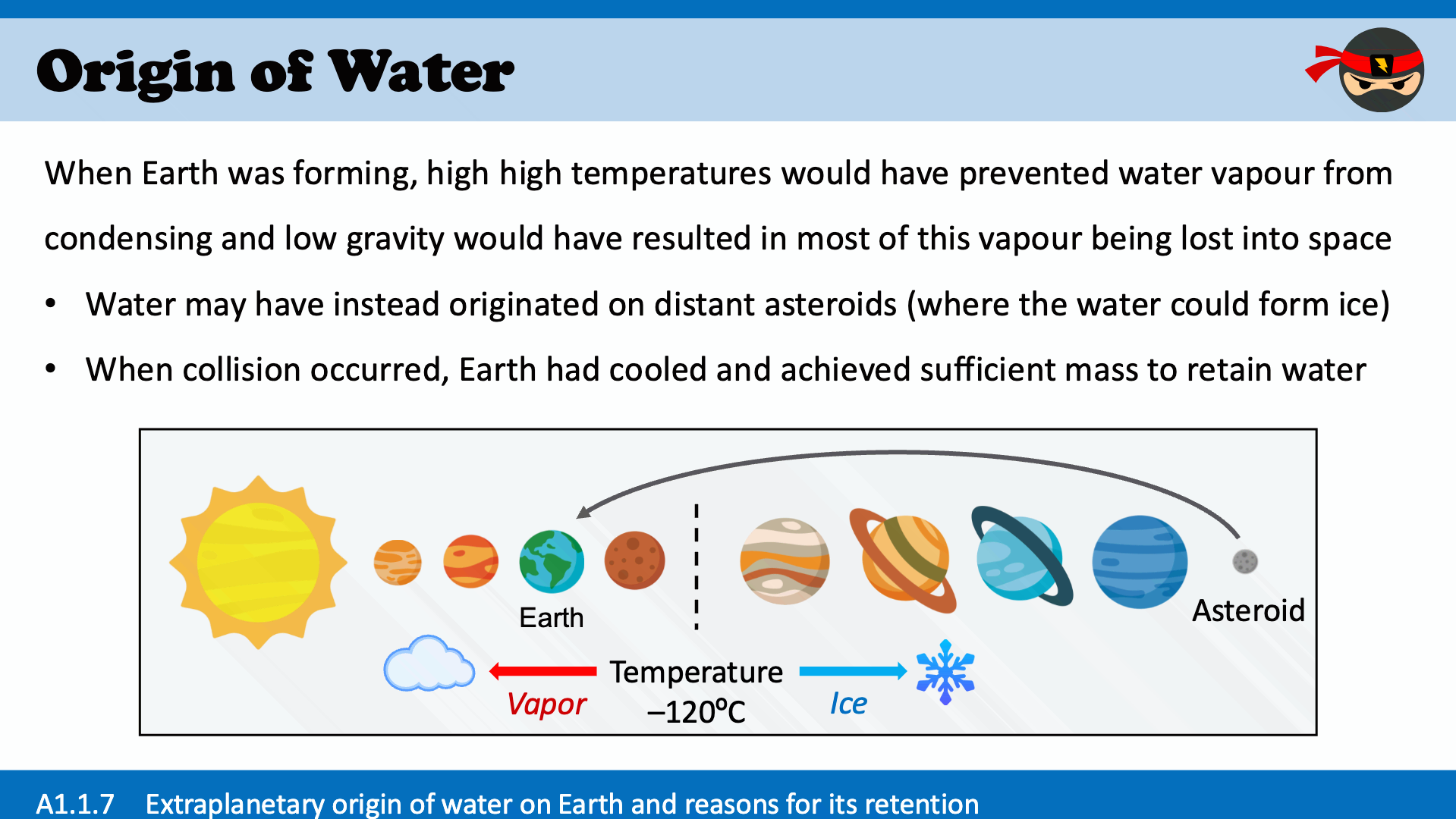
Which of the following statements about the origin of water on Earth are correct?
High temperatures during Earth's formation prevented water vapor from condensing.
Water may have originated from distant asteroids where it could form ice.
Earth's low gravity allowed it to retain all water vapor during formation.
Collisions with asteroids contributed to Earth's ability to retain water.
20
21
Open Ended
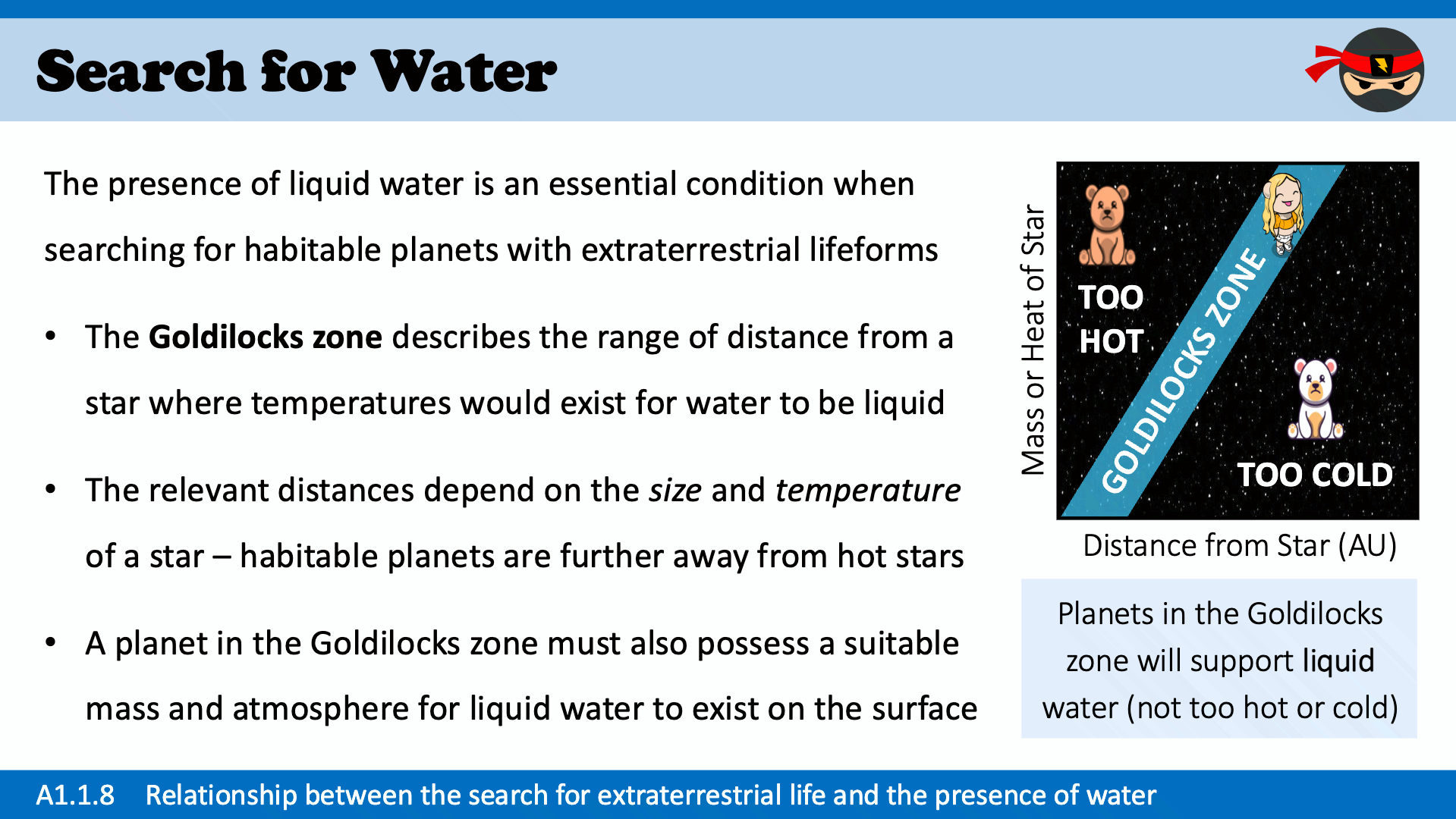
Explain how the Goldilocks zone is related to the search for habitable planets with extraterrestrial life.
22
23
Fill in the Blanks
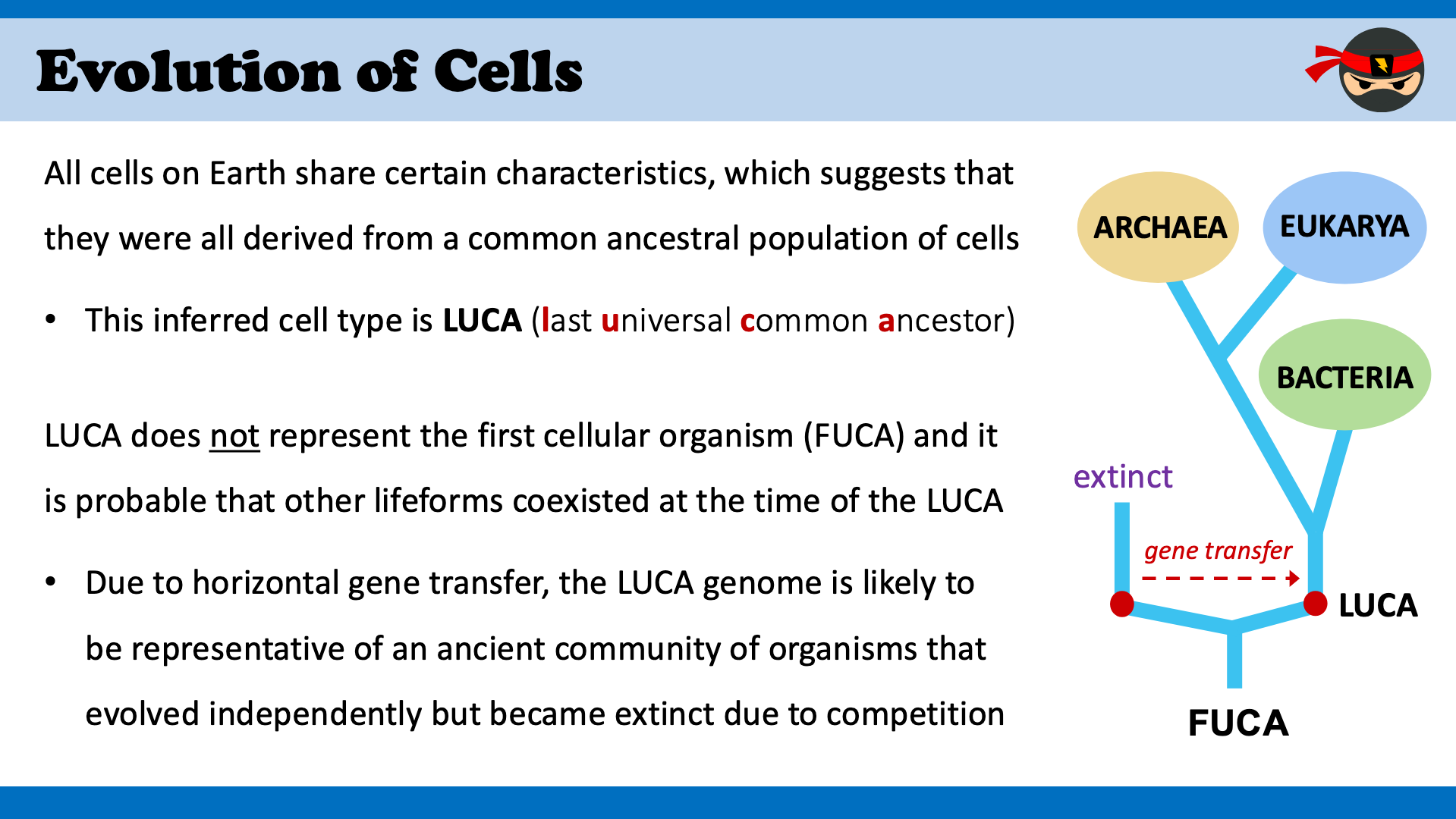
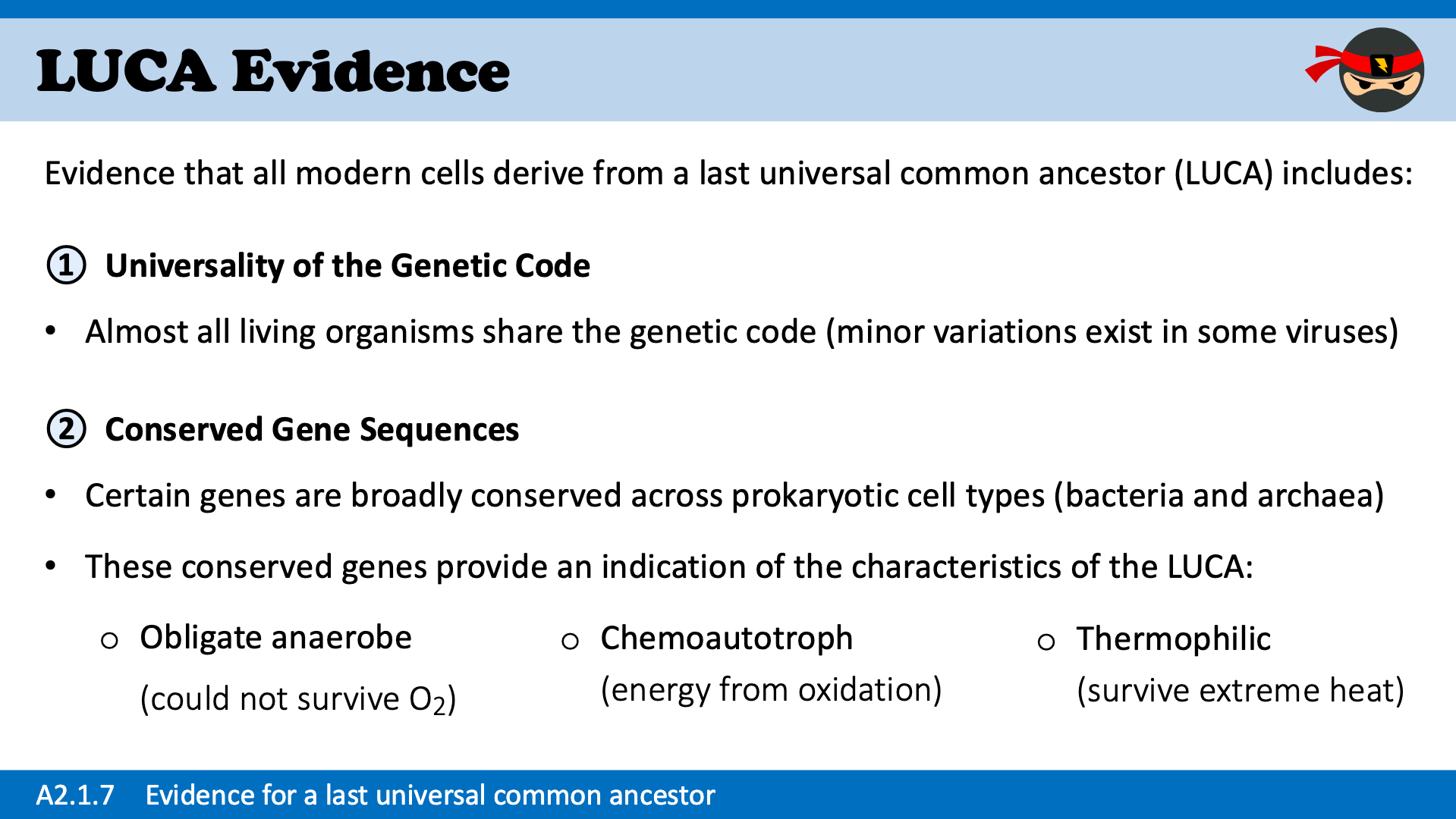
The inferred cell type from which all modern cells are derived is called
Type answer...
24
25
Open Ended
Describe two types of evidence that support the existence of a last universal common ancestor (LUCA).
26
27
Fill in the Blanks
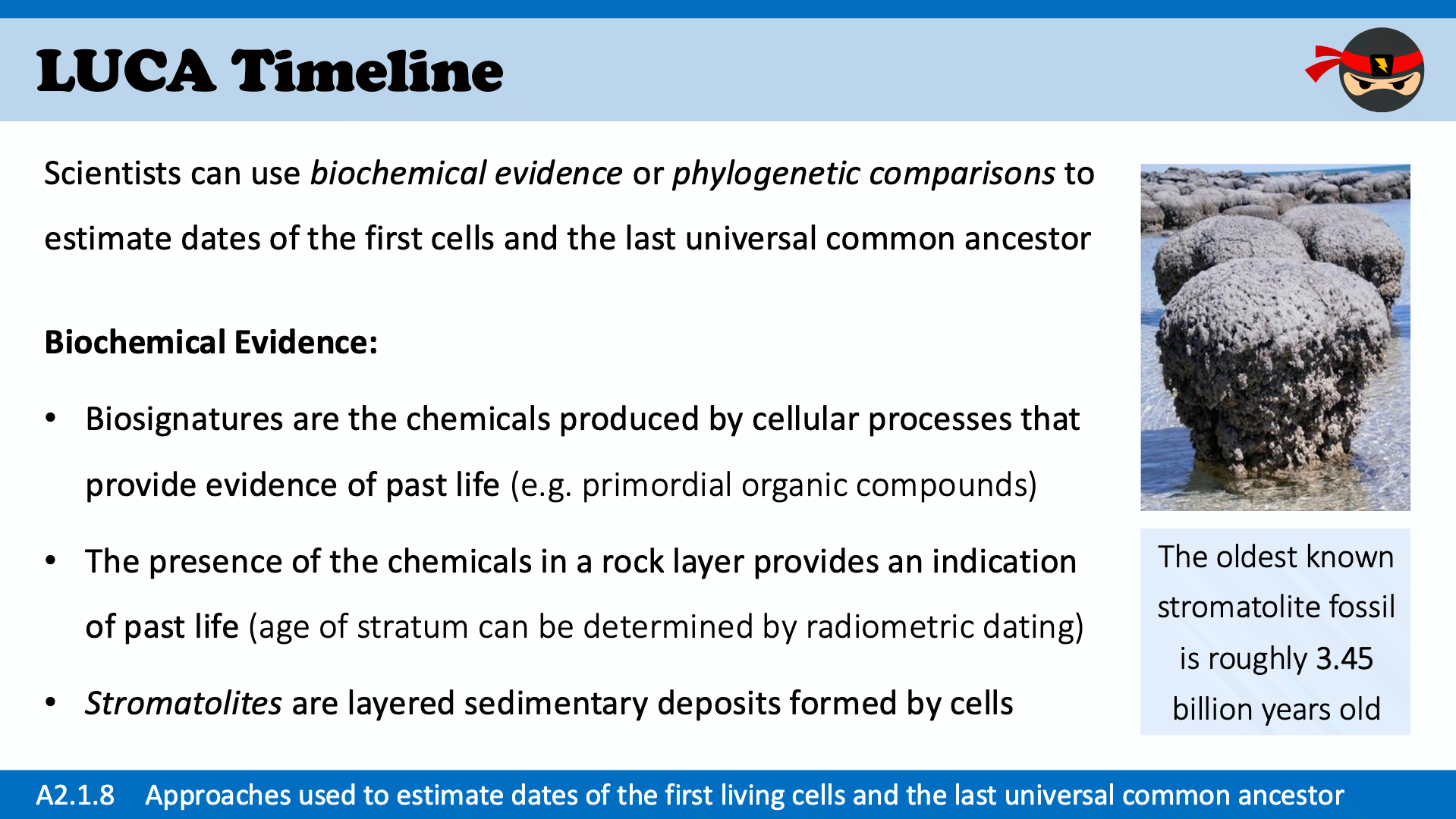
Stromatolites are layered
Type answer...
28
29
Open Ended
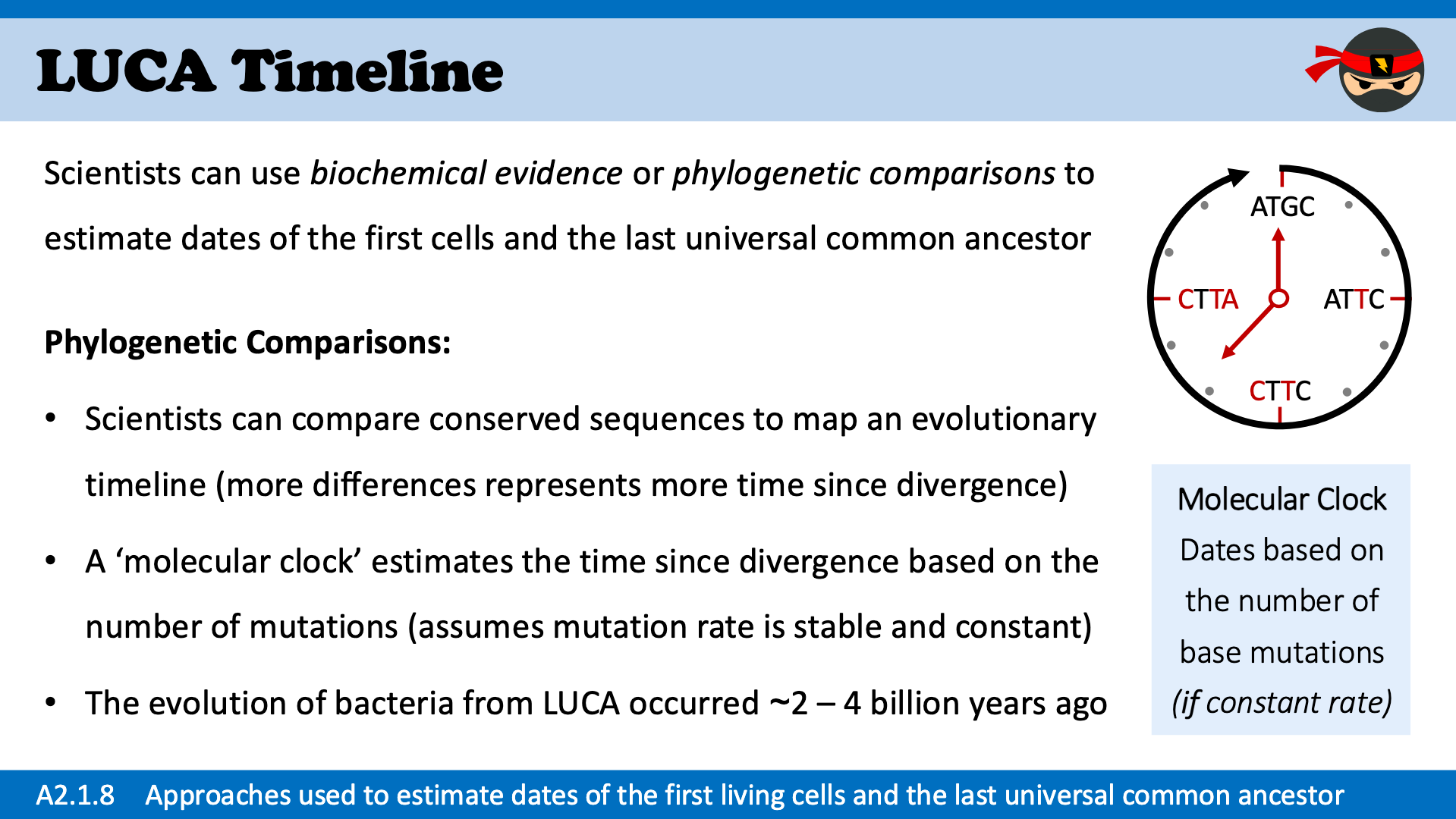
Explain how the molecular clock is used to estimate evolutionary timelines and what assumption it relies on.
30
Multiple Choice
Which method do scientists use to estimate the dates of the first cells and the last universal common ancestor?
Radiometric dating
Biochemical evidence or phylogenetic comparisons
Fossil record analysis
Geological strata examination
31
32
Multiple Choice
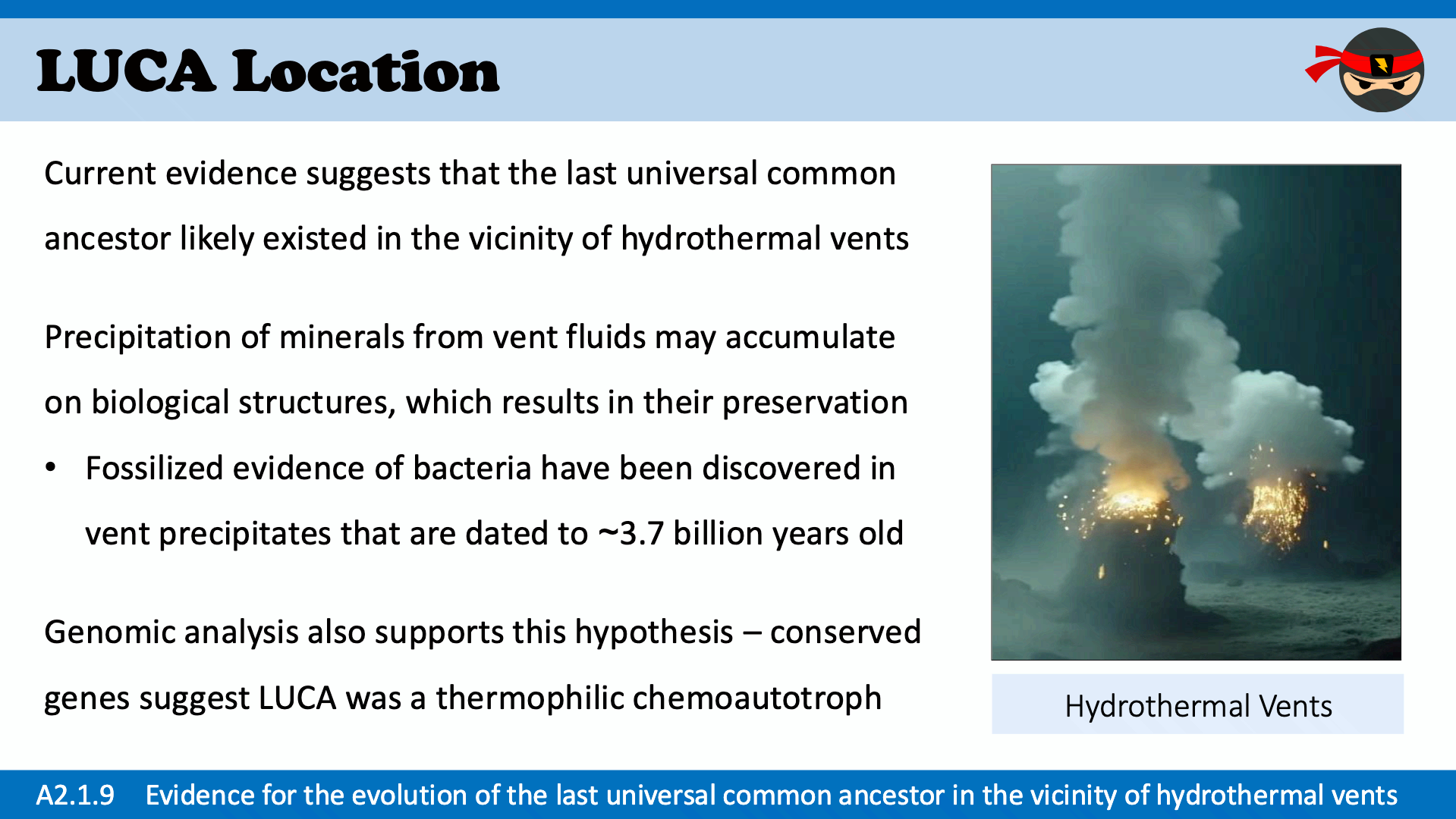
What evidence supports the hypothesis that the last universal common ancestor (LUCA) existed near hydrothermal vents?
Presence of oxygen in ancient rocks
Fossilized bacteria in vent precipitates and genomic analysis
Discovery of multicellular fossils
High levels of atmospheric carbon dioxide
33

34
35
Multiple Choice
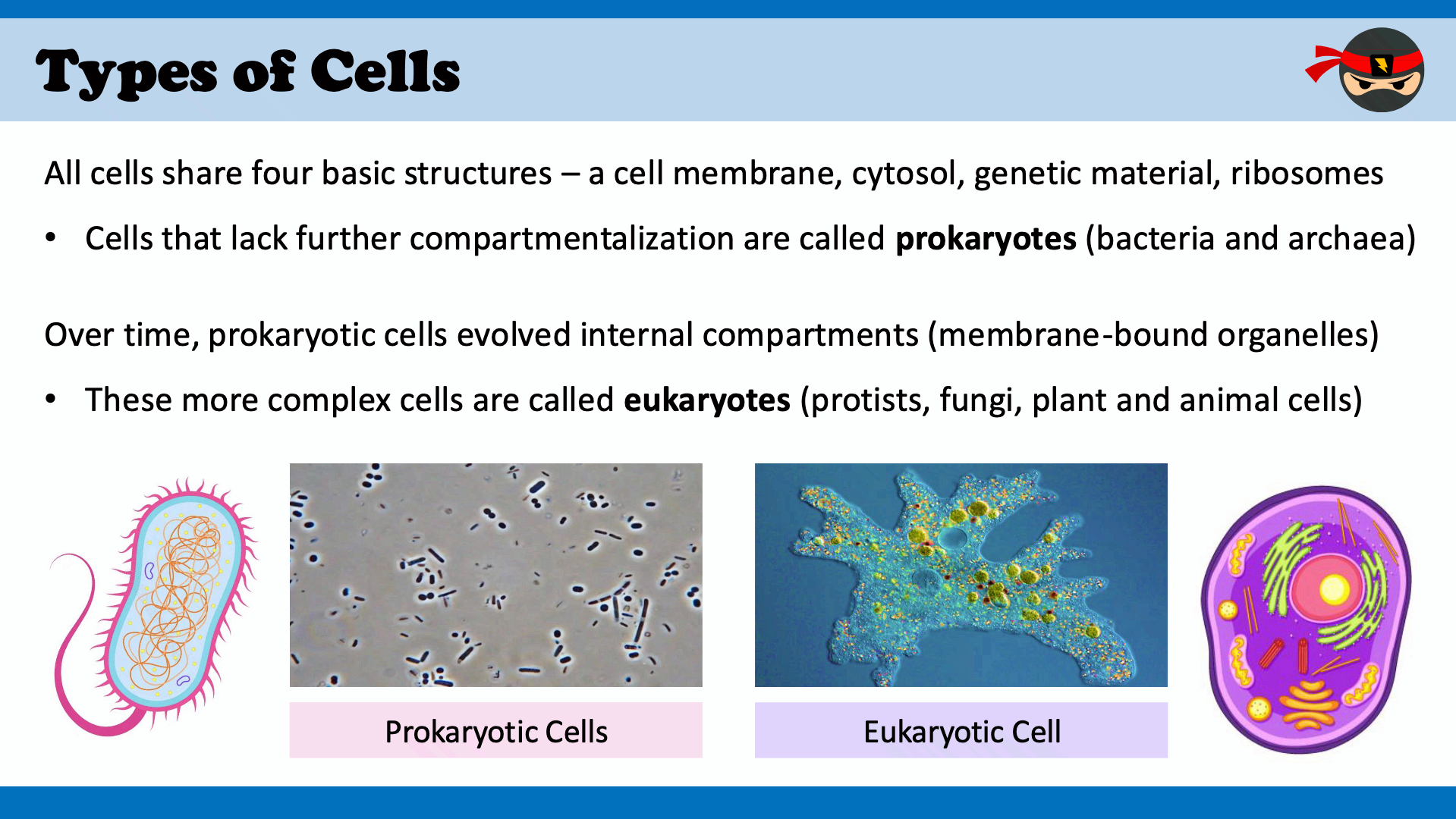
Which of the following are shared structures found in all cells?
Cell wall, cytosol, mitochondria, ribosomes
Cell membrane, cytosol, genetic material, ribosomes
Nucleus, cytosol, ribosomes, chloroplasts
Cell membrane, mitochondria, ribosomes, lysosomes
36
Fill in the Blanks
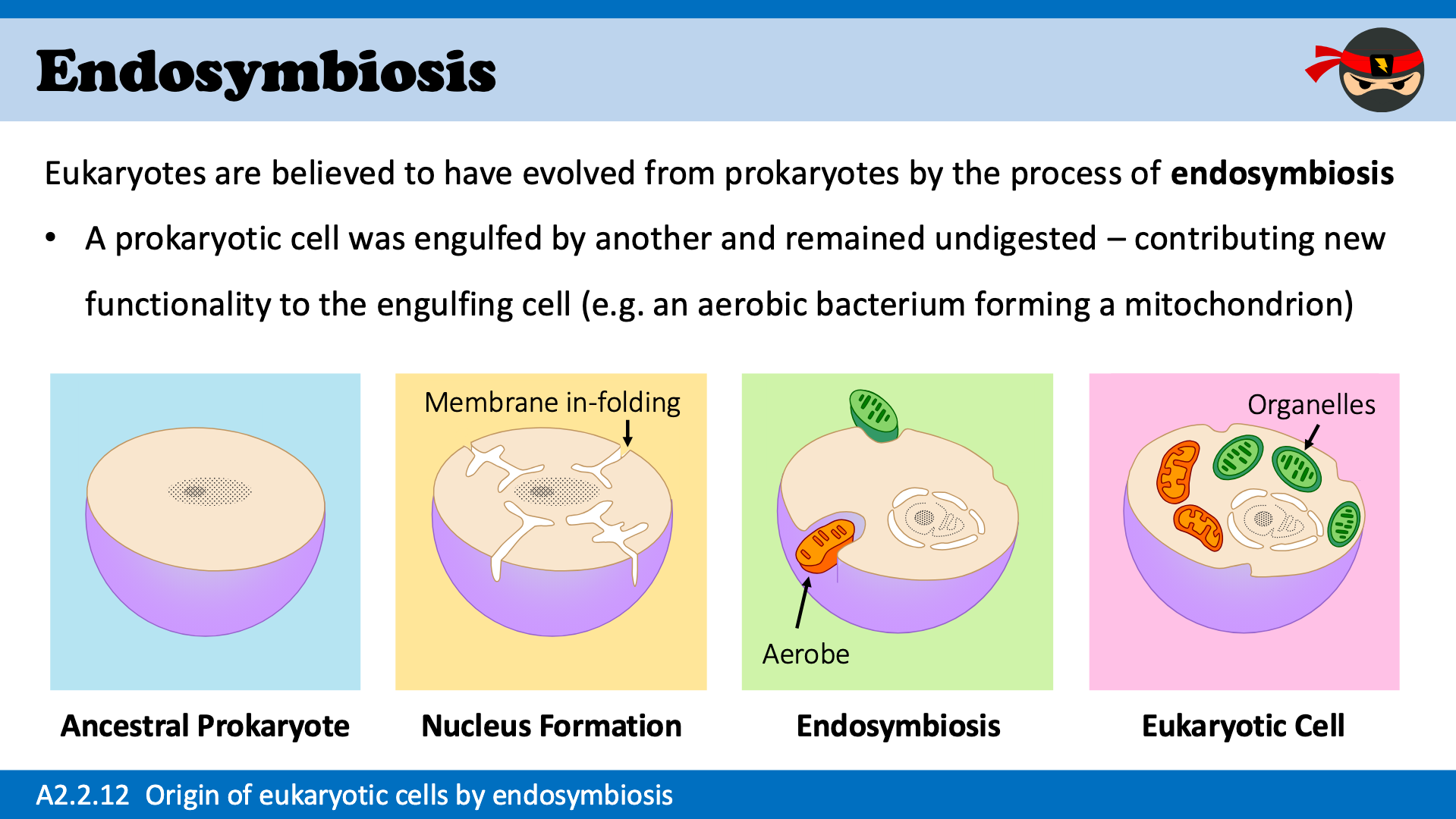
Over time, prokaryotic cells evolved internal compartments, leading to the formation of
Type answer...
37
38
39
Open Ended
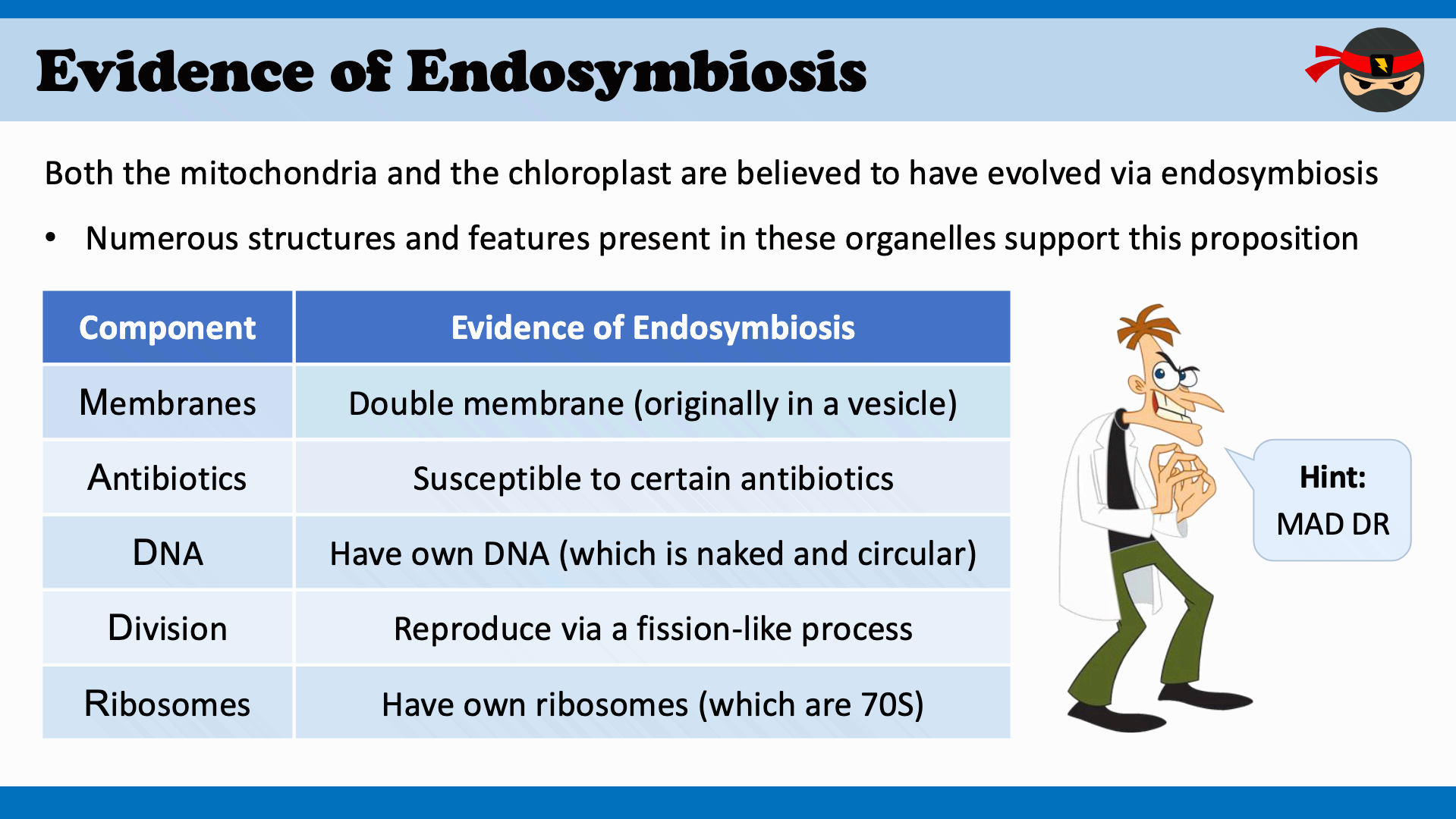
List and describe two pieces of evidence that support the endosymbiotic origin of mitochondria and chloroplasts.
40
41
Multiple Choice
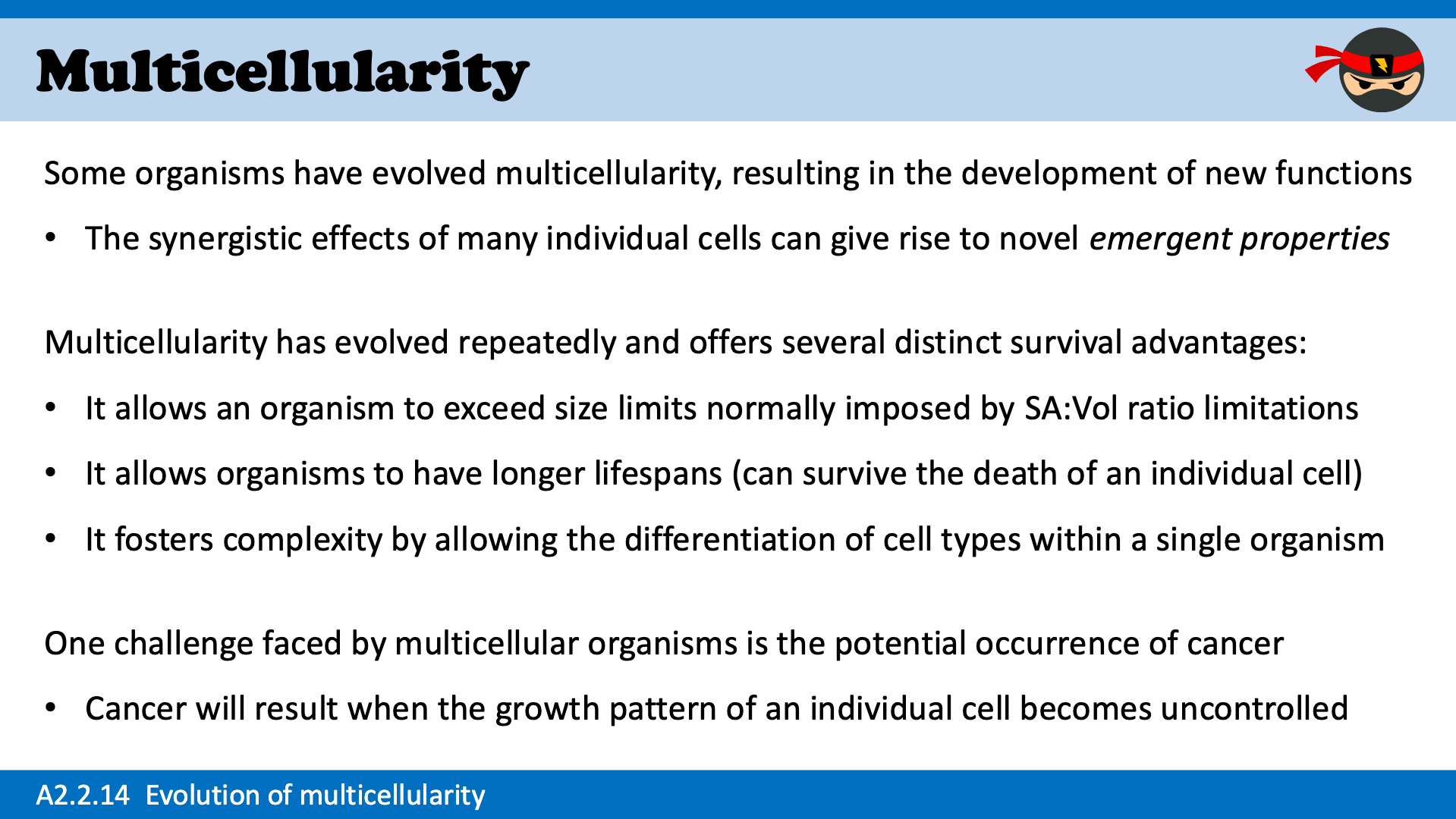
Which of the following is NOT a survival advantage of multicellularity?
Allows organisms to exceed size limits imposed by SA:Vol ratio
Allows organisms to have longer lifespans
Fosters complexity by allowing differentiation of cell types
Prevents the occurrence of cancer
42
43
Open Ended
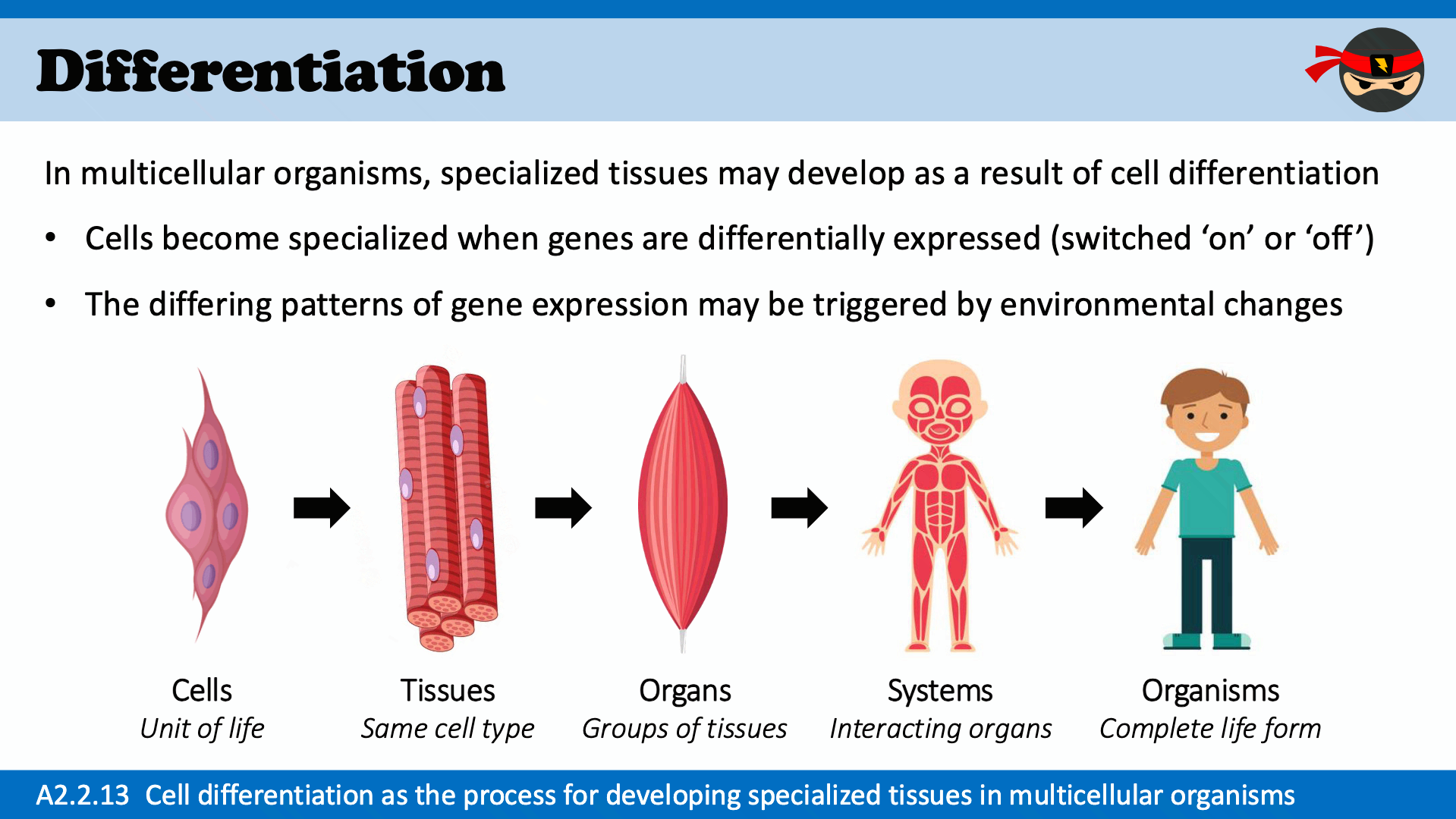
Explain how gene expression leads to cell differentiation in multicellular organisms.
44
45
Multiple Select
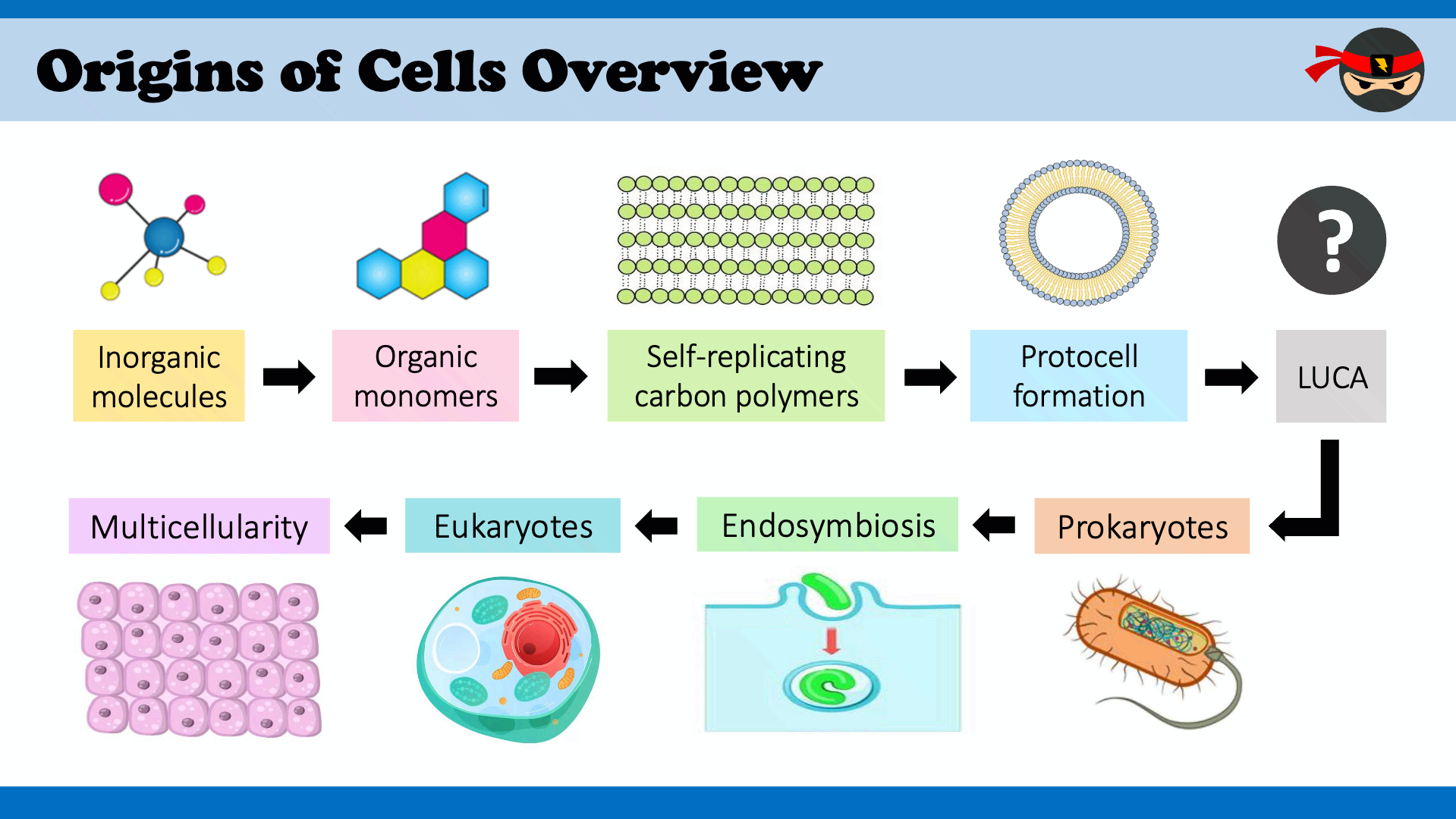
Which of the following steps are part of the origins of cells according to the overview diagram?
Inorganic molecules
Self-replicating carbon polymers
Endosymbiosis
Photosynthesis
46
47
Fill in the Blanks
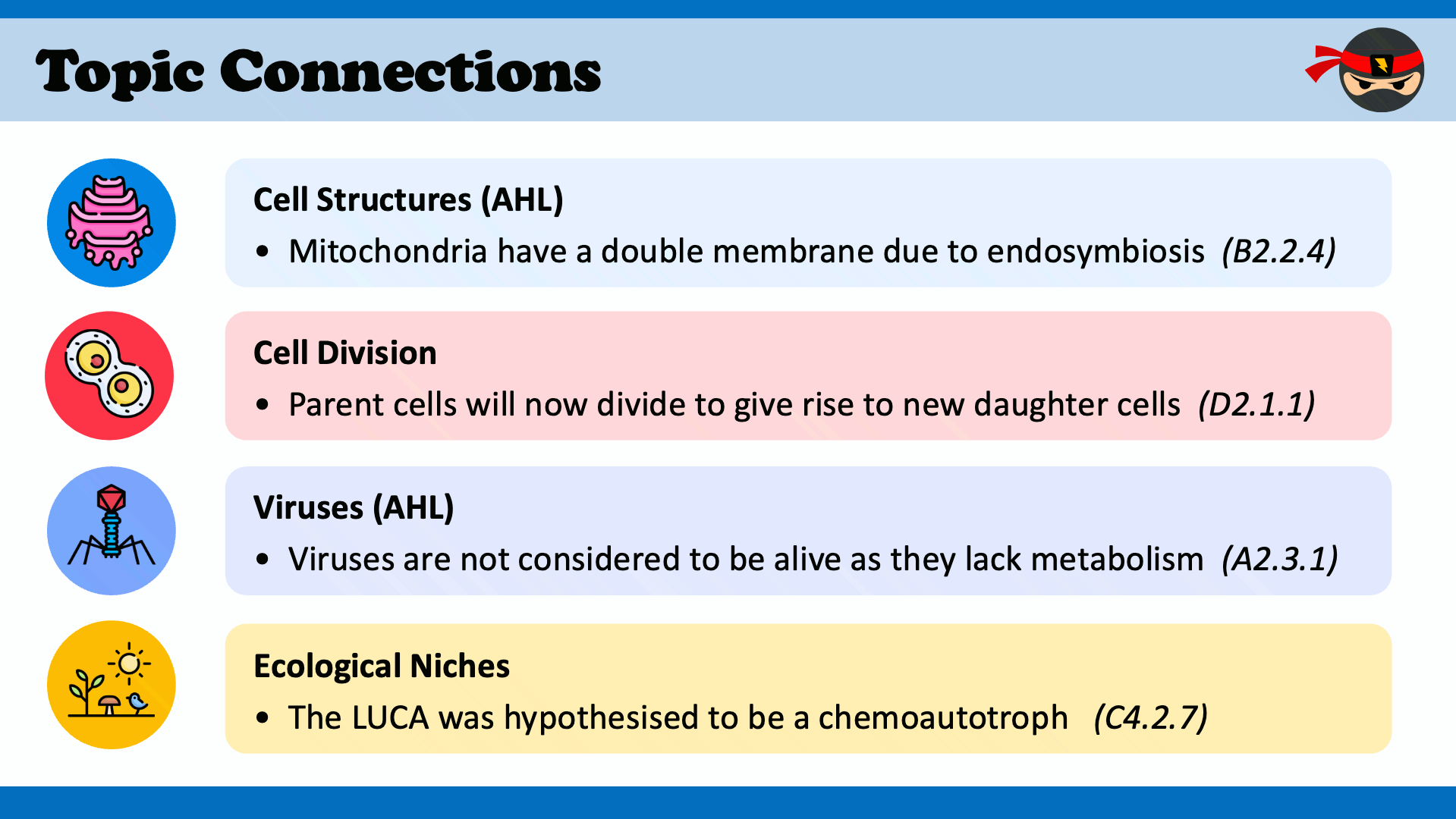
Mitochondria have a double membrane due to
Type answer...
48
Open Ended
What is one question you still have about the origins of cells after this lesson?
49
Open Ended
Where did the first cell come from?
Show answer
Auto Play
Slide 1 / 49
SLIDE
Similar Resources on Wayground

43 questions
Africa Facts
Presentation
•
KG
47 questions
Elkhorn History Images
Presentation
•
KG
42 questions
Introduction to Plant Parts
Presentation
•
1st Grade
42 questions
Parts of a Plant
Presentation
•
1st Grade
46 questions
Animal Kingdom
Presentation
•
1st - 2nd Grade
45 questions
Life Vision Digital Detox
Presentation
•
KG
46 questions
Homeostasis & Feedback
Presentation
•
9th Grade
43 questions
G1 - English Quiz #1 (4th grading)
Presentation
•
1st Grade
Popular Resources on Wayground
10 questions
Safety Day 2026 – Student Review

Quiz
•
9th Grade
21 questions
Continents and Oceans
Quiz
•
6th Grade
20 questions
Parts of Speech
Quiz
•
5th Grade
16 questions
Subject & Predicate
Quiz
•
5th Grade
25 questions
Multiplication Facts
Quiz
•
5th Grade
12 questions
Map Skills
Quiz
•
3rd Grade
22 questions
Continents and Oceans
Quiz
•
5th Grade
15 questions
Rounding Decimals
Quiz
•
5th Grade
Discover more resources for Science
4 questions
K-2 Force and Motion Lesson
Presentation
•
KG - 2nd Grade
10 questions
Identifying Physical and Chemical Changes

Interactive video
•
1st - 5th Grade
7 questions
Human Body Pausing Point Quiz
Quiz
•
1st Grade
5 questions
All About Maps
Presentation
•
1st - 5th Grade
10 questions
Exploring the Conservation of Mass in Everyday Life
Interactive video
•
1st - 5th Grade
8 questions
Water Cycle
Presentation
•
1st - 5th Grade
6 questions
Gravity
Quiz
•
1st Grade
12 questions
Energy Quiz 1 (Forms/Transformations)
Quiz
•
1st - 5th Grade