

Informational Text

Presentation
•
English
•
5th Grade
•
Practice Problem
•
Easy
+13
Standards-aligned

Pauline Harvey
Used 12+ times
FREE Resource
10 Slides • 6 Questions
1
Informational Text
By Pauline Harvey
2
Central Idea
The main message or point that an author is trying to make about a text
3
Multiple Choice
What is the central idea of a text?
4
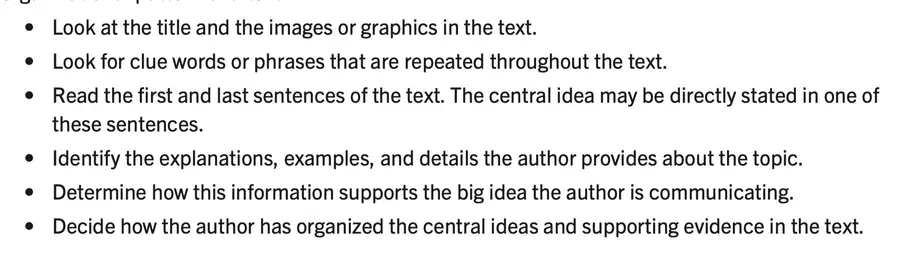
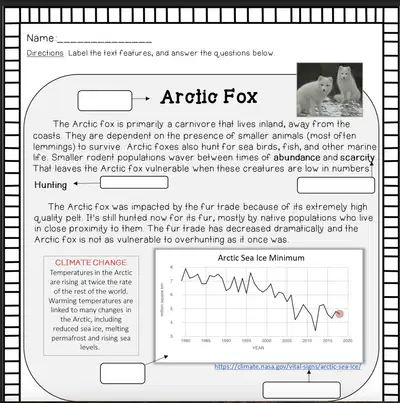
Always look at the title and the images or graphics in the text (text features)
5
Title
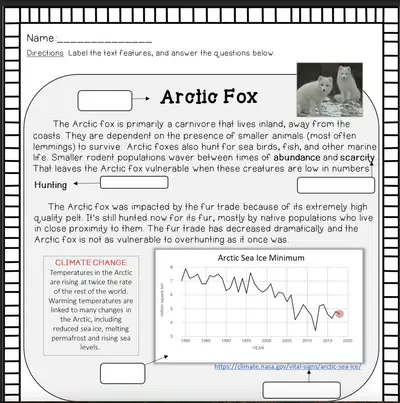
Title gives the reader the
topic which helps find
central idea
6
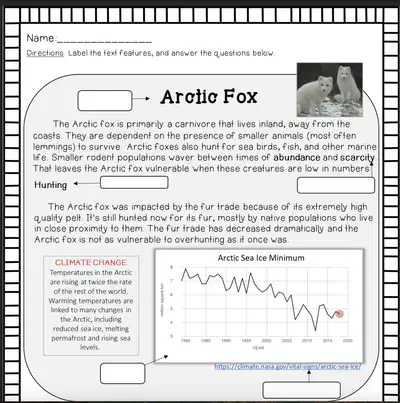
Headings-helps the reader determine
main ideas of sections
Heading
7

Graph
Graphs-organize information
to allow the reader to quickly draw
conclusions
8
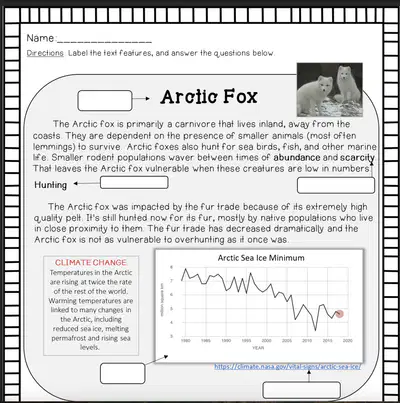
Photograph
Photographs allow the reader
to visualize or see important
information
9
Multiple Choice
How do photographs help a reader of informational text?
Photographs are used only for artistic purposes.
Photographs are there so that author's don't have to expain things.
10
Multiple Choice
How can titles help readers understand informational text?
Titles provide detailed information about the text.
11
Look for clue words and phrases that are
repeated throughout the selection.
Meerkats in Africa live in large groups of 20 to 50 members. The group works together to survive. All members of the group care for the baby meerkats. They take turns babysitting and will protect the young ones from danger. Members of the group also take turns watching out for threats from other animals while the group finds food. If any dangerous animal comes towards the group, the meerkat will bark a warning.
12
Open Ended
Type the clue words and phrases that are repeated.
Meerkats in Africa live in large groups of 20 to 50 members. The group
works together to survive. All members of the group care for the baby meerkats. They take turns babysitting and will protect the young ones from danger. Members of the group also take turns watching out for threats from other animals while the group finds food. If any dangerous animal comes towards the group, the meerkat will bark a warning.
13
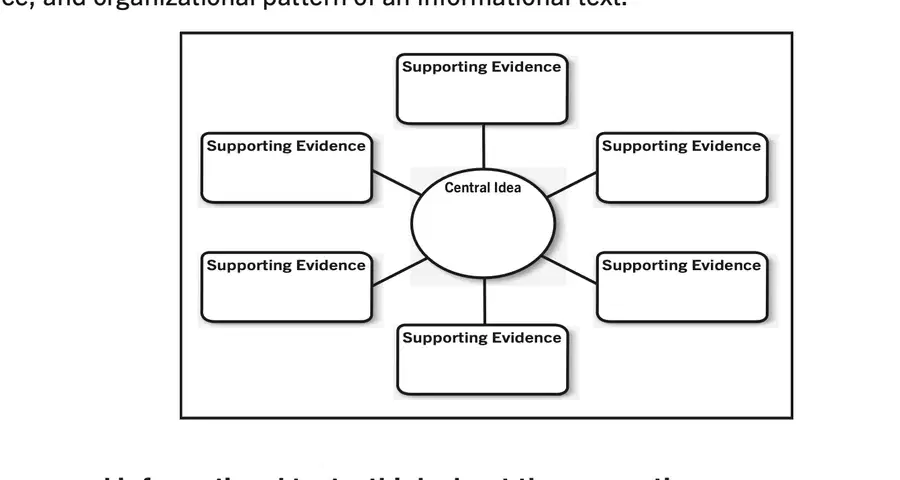
Read the first and last sentence of the passage. The central idea might be stated there.
Identify examples, explanations, and details the author provides about the topic.
Meerkats in Africa live in large groups of 20 to 50 members. The group works together to survive. All members of the group care for the baby meerkats. They take turns babysitting and will protect the young ones from danger. Members of the group also take turns watching out for threats from other animals while the group finds food. If any dangerous animal comes towards the group, the meerkat will bark a warning.
14
15
Multiple Choice
What is the central idea?
Meerkats in Africa live in large groups of 20 to 50 members. The group
works together to survive. All members of the group care for the baby meerkats. They take turns babysitting and will protect the young ones from danger. Members of the group also take turns watching out for threats from other animals while the group finds food. If any dangerous animal comes towards the group, the meerkat will bark a warning.
Meerkats live in groups of 20-50 members
Meerkats
Meerkats bark when danger is near
Meerkats live in groups to help each other
16
Multiple Choice
Meerkats in Africa live in large groups of 20 to 50 members. The group works together to survive. All members of the group care for the baby meerkats. They take turns babysitting and will protect the young ones from danger. Members of the group also take turns watching out for threats from other animals while the group finds food. If any dangerous animal comes towards the group, the meerkat will bark a warning.
What conclusion can the reader draw about meerkats after reading this passage?
First let's talk about what this question means.
Meerkats live on many continents.
It would be hard for a meerkat to survive without the group.
Young meerkats are lazy.
Meerkats find food in many different areas
Informational Text
By Pauline Harvey
Show answer
Auto Play
Slide 1 / 16
SLIDE
Similar Resources on Wayground

10 questions
Guess the Disney movie
Presentation
•
5th Grade
13 questions
Elements and Structures of Drama
Presentation
•
5th Grade
9 questions
Homophones and Homographs
Presentation
•
5th Grade
11 questions
They're, Their, There
Presentation
•
5th Grade
12 questions
WILL / MAY / MIGHT
Presentation
•
5th Grade
10 questions
Possessive Pronouns
Presentation
•
5th Grade
12 questions
Locating Text Evidence
Presentation
•
5th Grade
12 questions
Compound or Simple Sentence
Presentation
•
5th Grade
Popular Resources on Wayground
10 questions
GPA Lesson
Presentation
•
9th - 12th Grade
7 questions
Albert Einstein

Quiz
•
3rd Grade
31 questions
Bridge A Review
Quiz
•
3rd Grade
6 questions
Blue Sue and Red Ruth
Quiz
•
3rd Grade
8 questions
(Day12 HW) Inverse Trig Ratios
Quiz
•
9th Grade
20 questions
Summer Geometry QUIZ (Week3)
Quiz
•
9th Grade
16 questions
Theme Practice
Quiz
•
7th Grade
20 questions
Taxes
Quiz
•
9th - 12th Grade