

The Umbilical Cord

Presentation
•
Health Sciences
•
University
•
Practice Problem
•
Medium

Megan Mullins
Used 3+ times
FREE Resource
46 Slides • 22 Questions
1
2
3
4
Multiple Choice
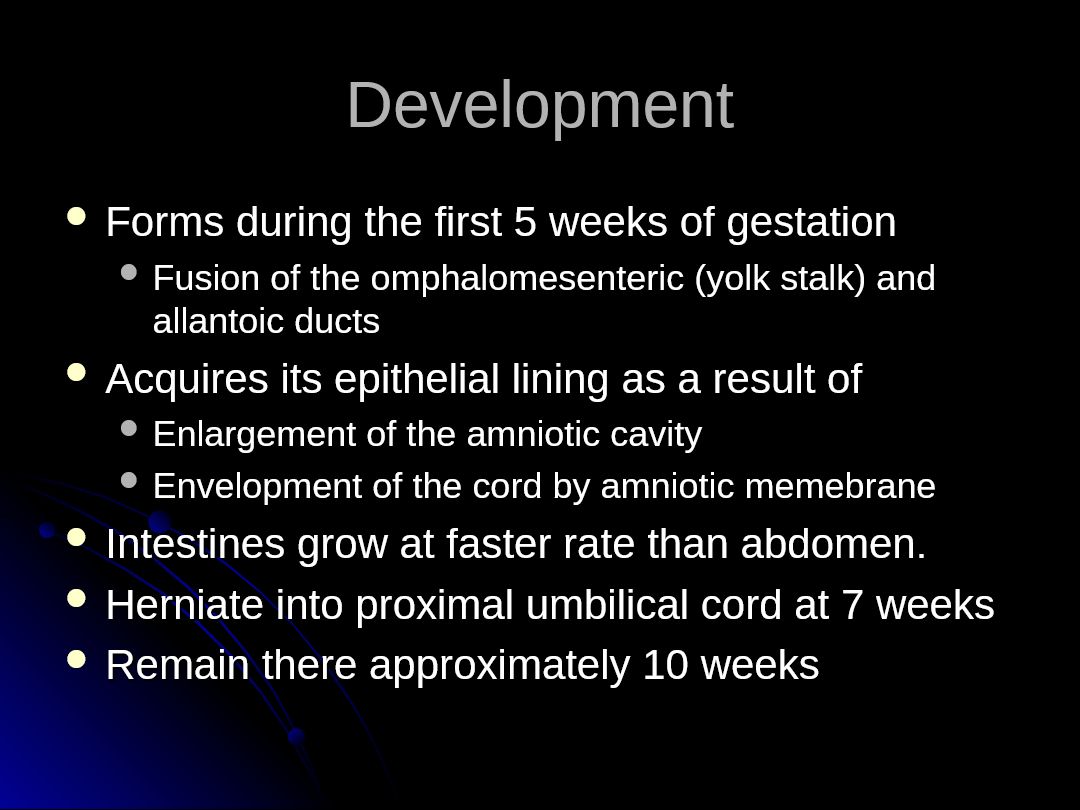
Which structures fuse during the first 5 weeks of gestation to form the umbilical cord?
Omphalomesenteric (yolk stalk) and allantoic ducts
Amniotic cavity and yolk sac
Placenta and chorion
Wharton's jelly and umbilical vein
5
6
7
Multiple Choice
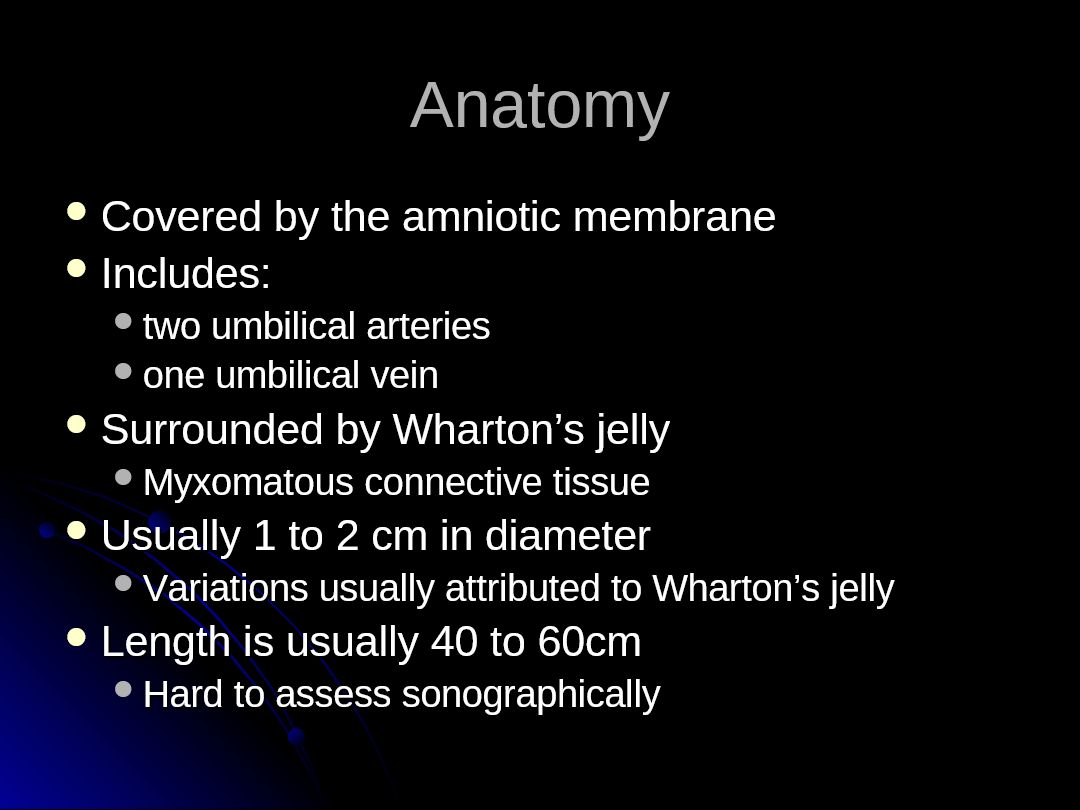
What are the main components included within the umbilical cord?
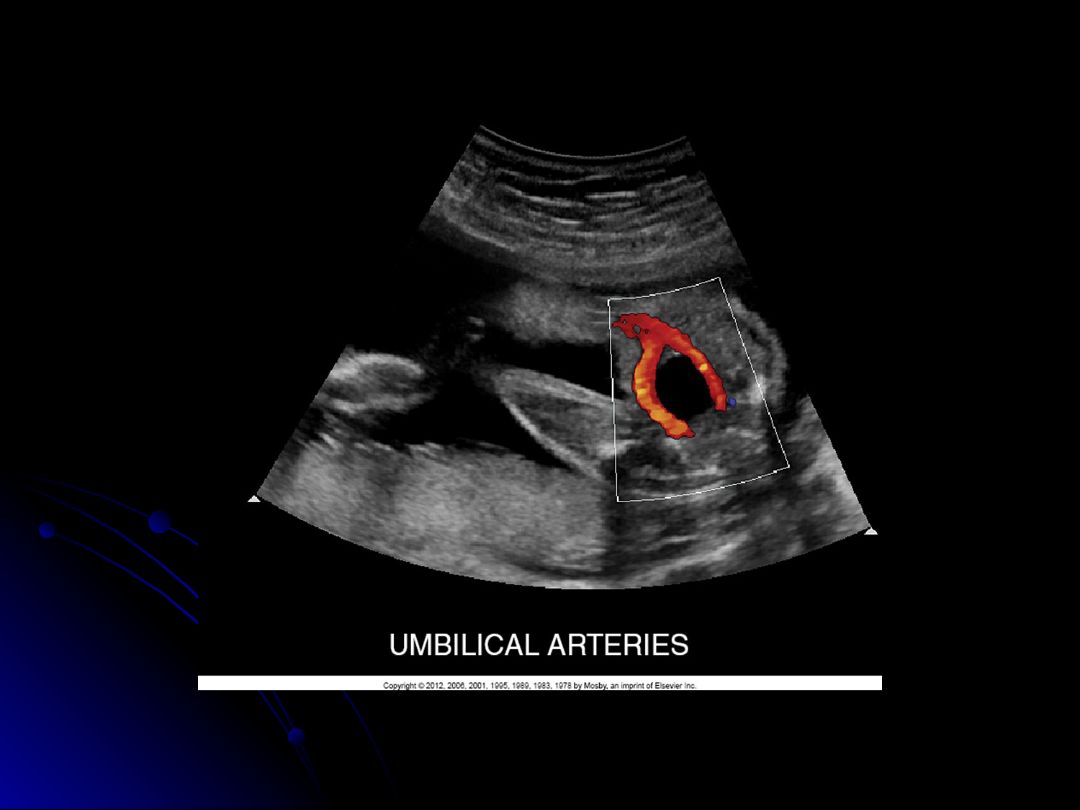
Two umbilical arteries and one umbilical vein
One umbilical artery and two umbilical veins
Three umbilical arteries
Two umbilical veins and one umbilical artery
8
Multiple Choice
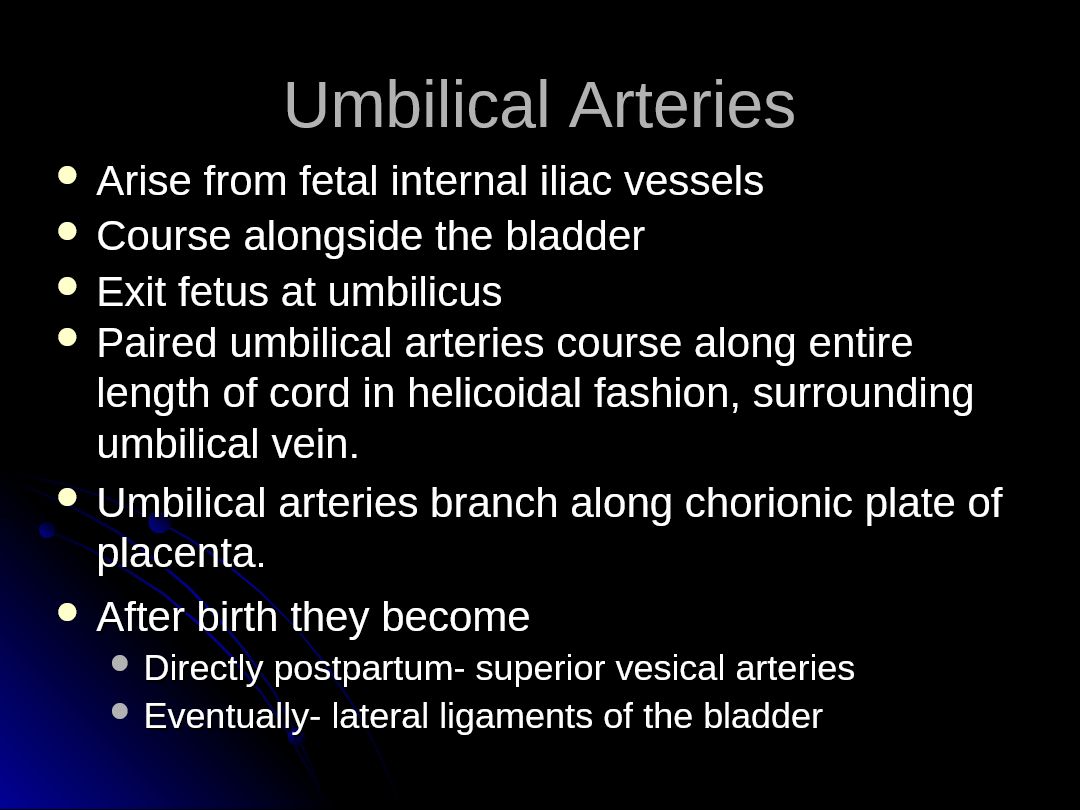
What happens to the umbilical arteries after birth?
remain functional after birth.
turn into the aorta.
are absorbed by the placenta.
become the medial umbilical ligaments.
9
10
11
12
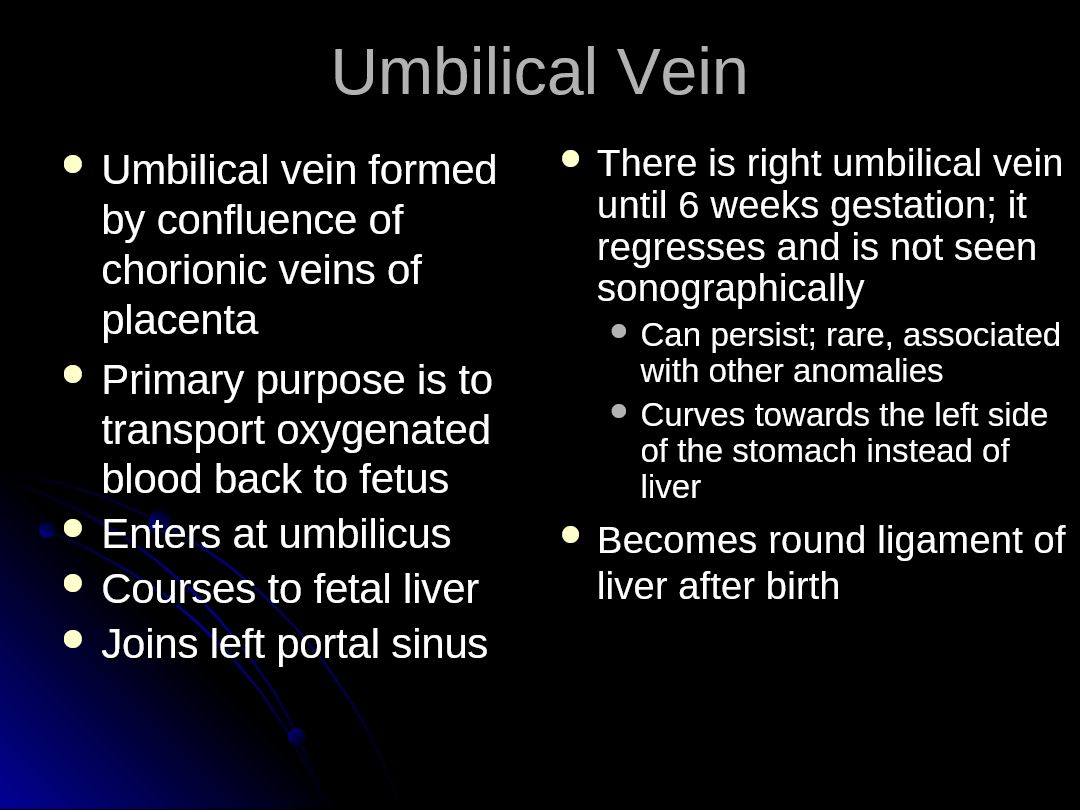
Fill in the Blanks
The umbilical vein's primary function is to transport
13
Multiple Choice
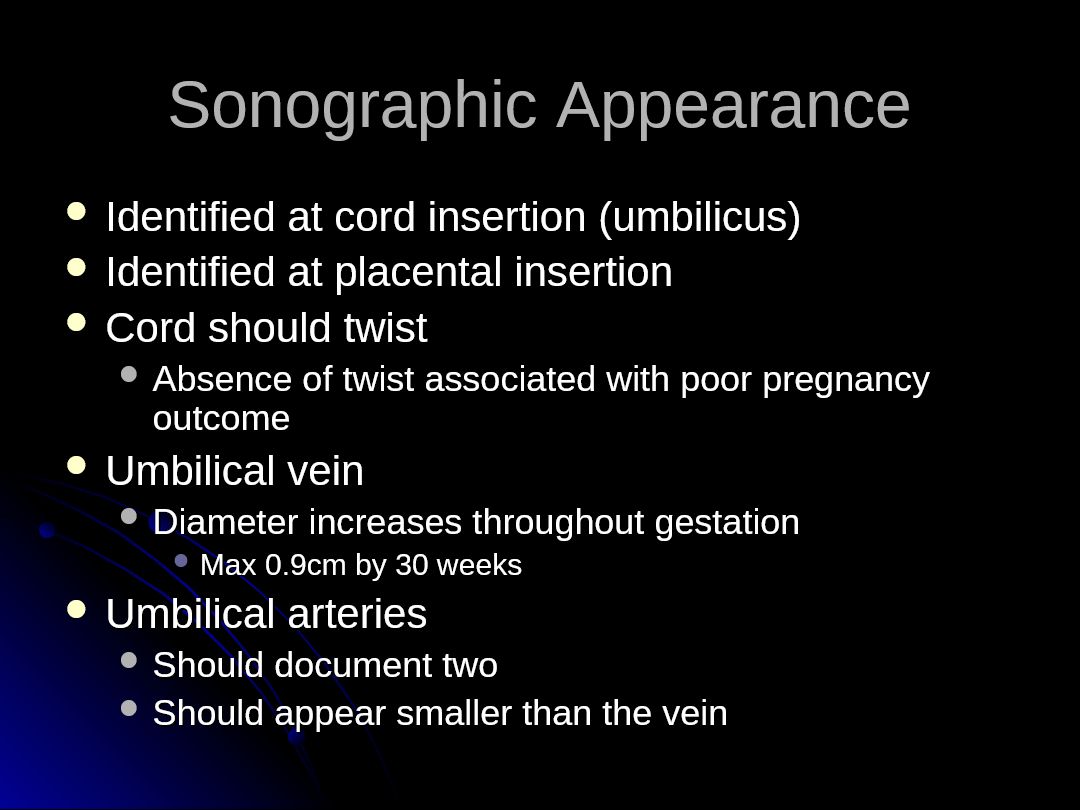
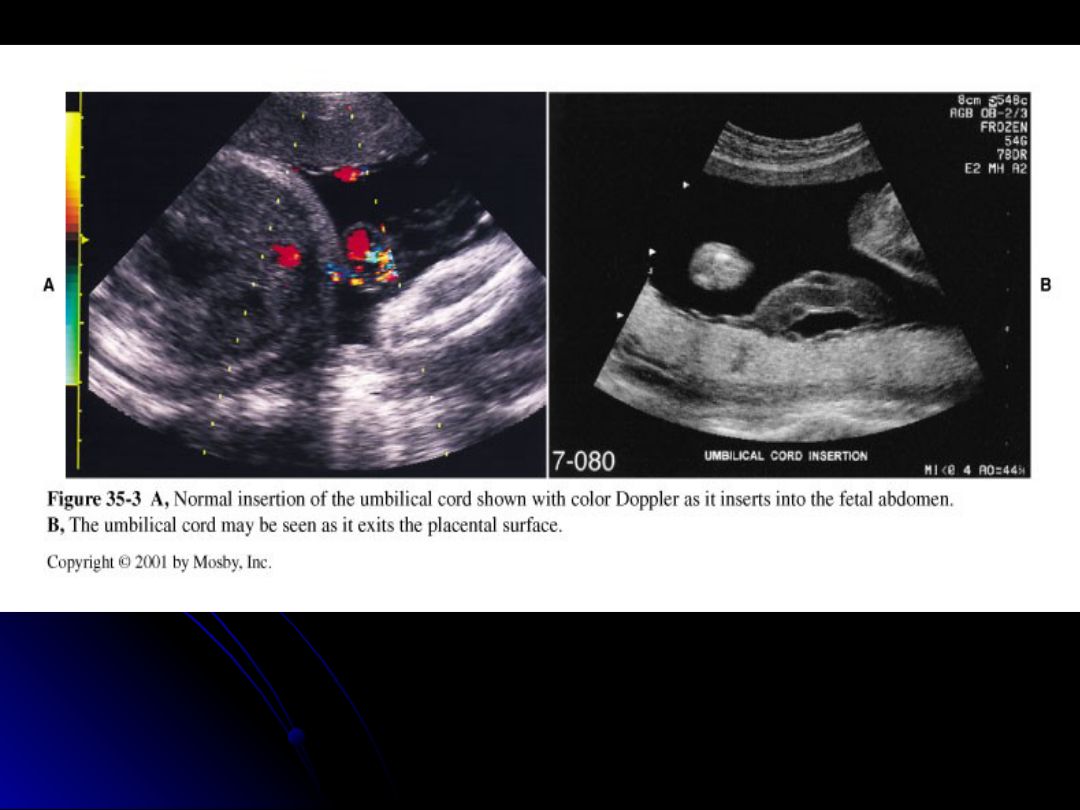
Based on the sonographic appearance, what are two key features to assess in the umbilical cord during gestation?
Cord twist and number of umbilical arteries
Cord length and fetal heart rate
Placental thickness and amniotic fluid volume
Maternal blood pressure and fetal movement
14
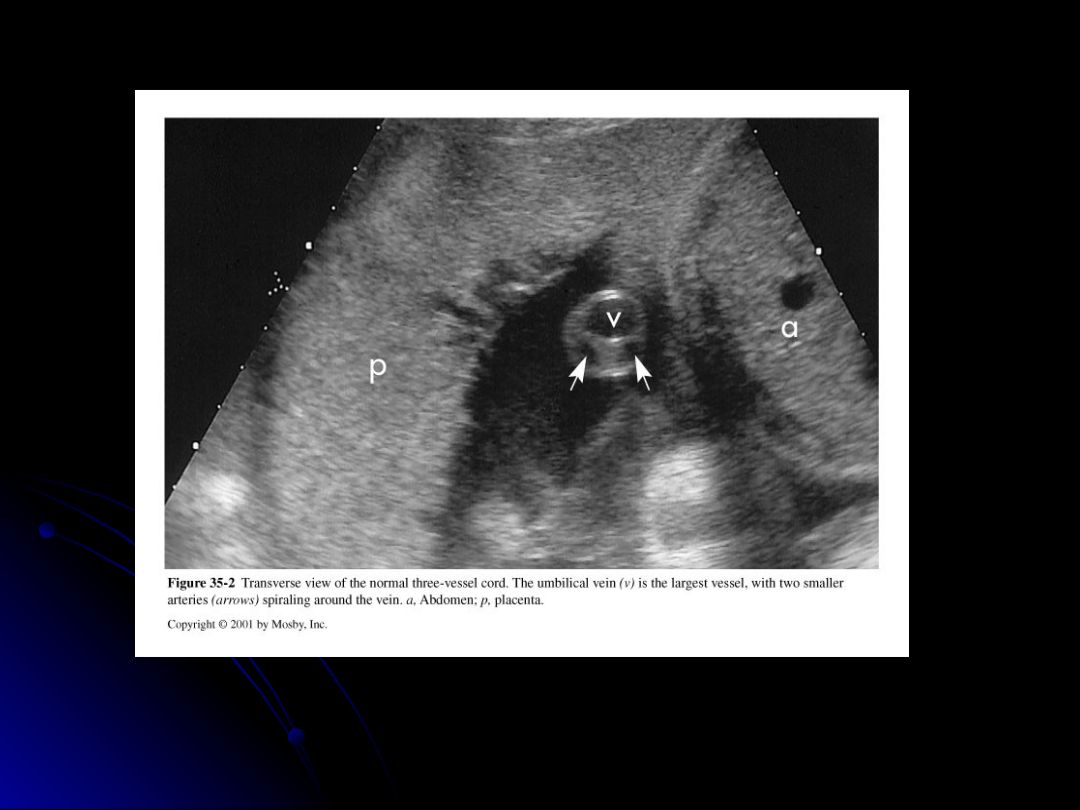
Multiple Choice
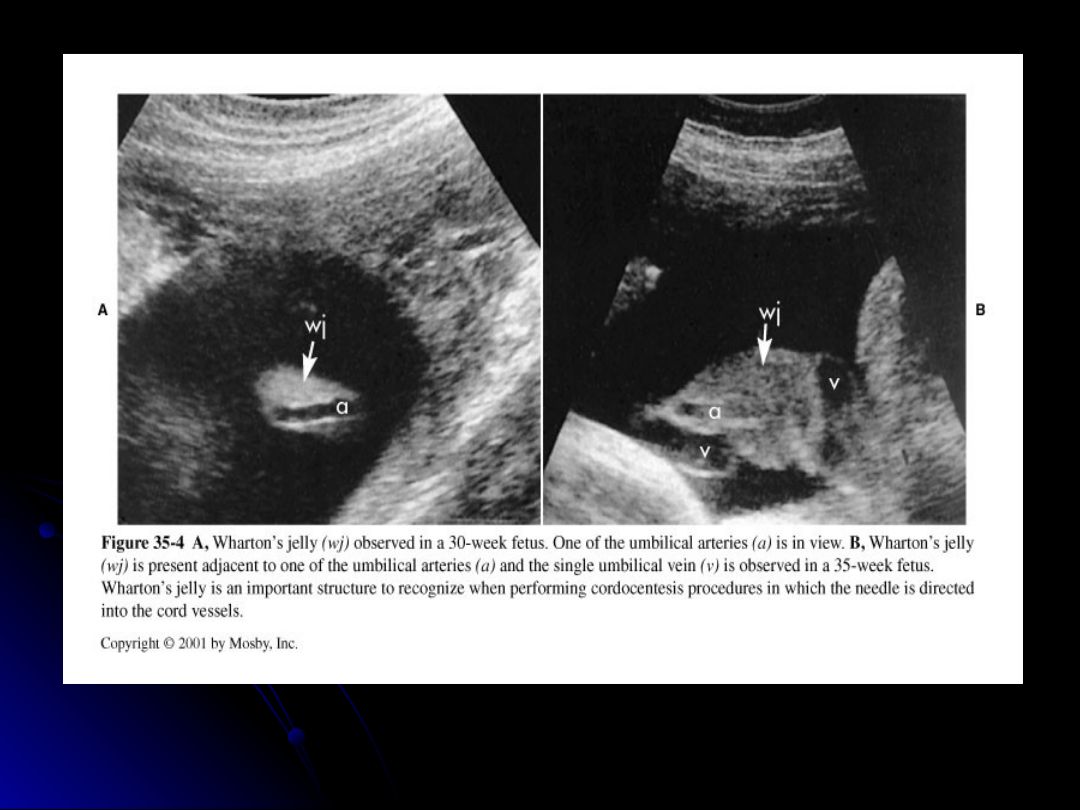
In the ultrasound image, which vessel is identified as the largest within the umbilical cord?
15
16
17
18
19
20
21
Multiple Select
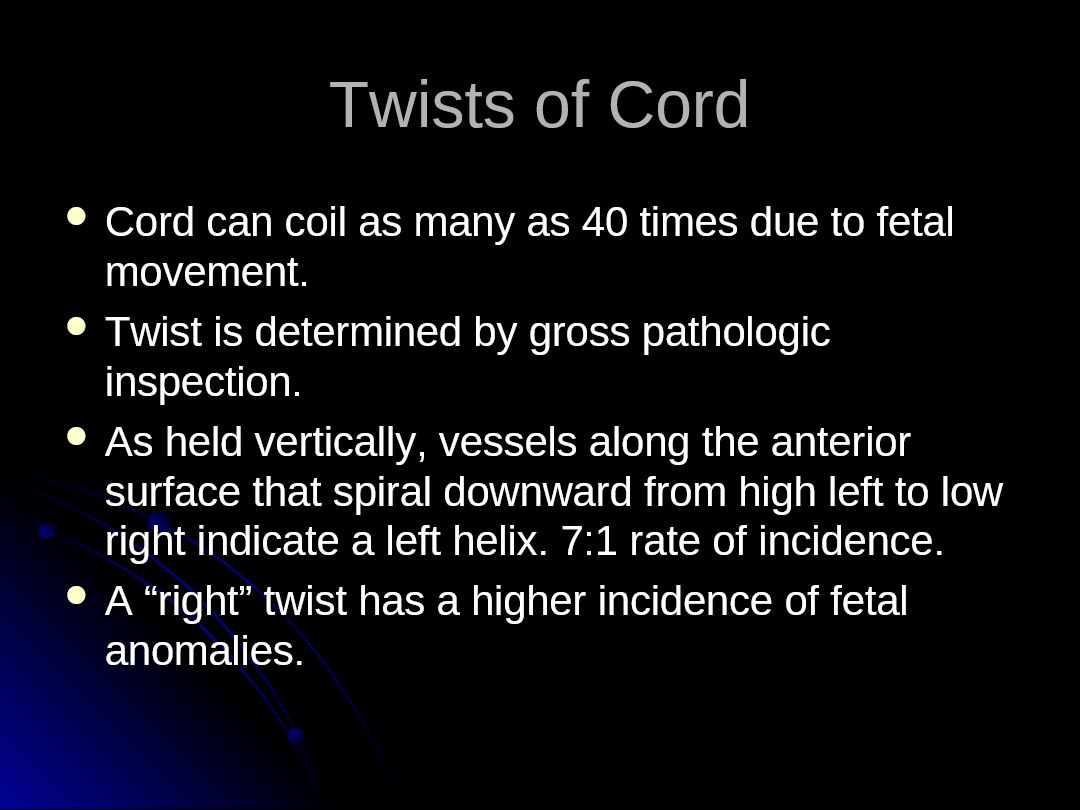
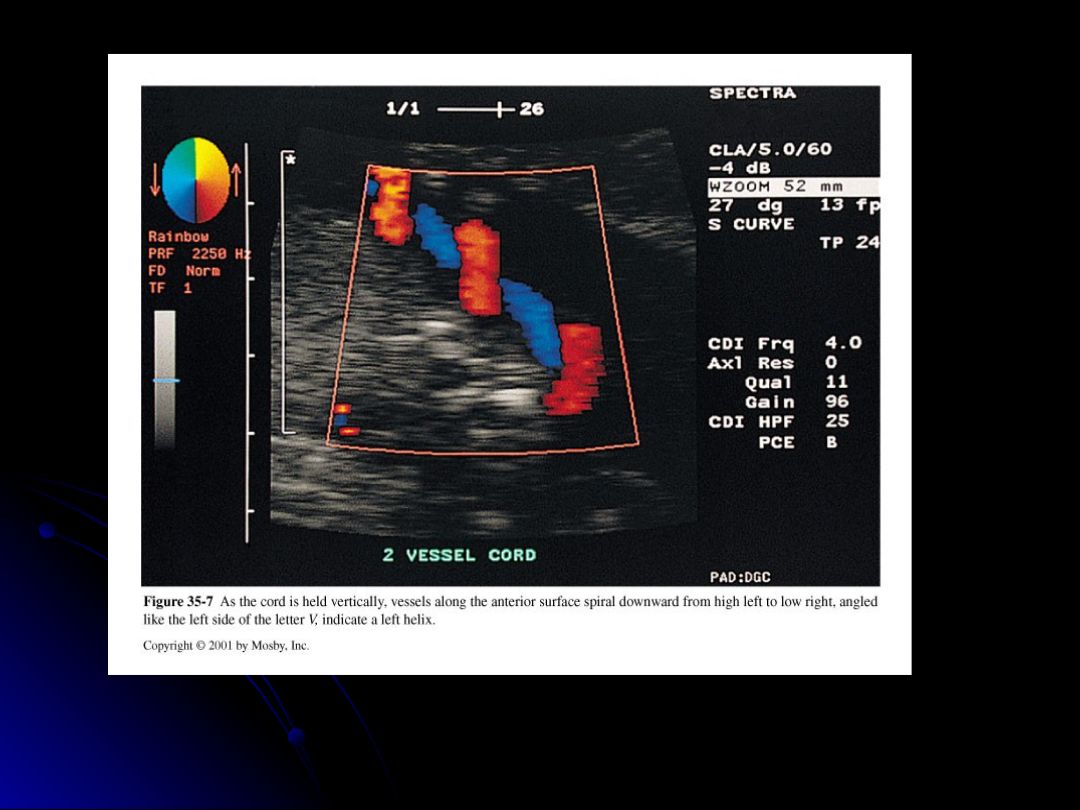
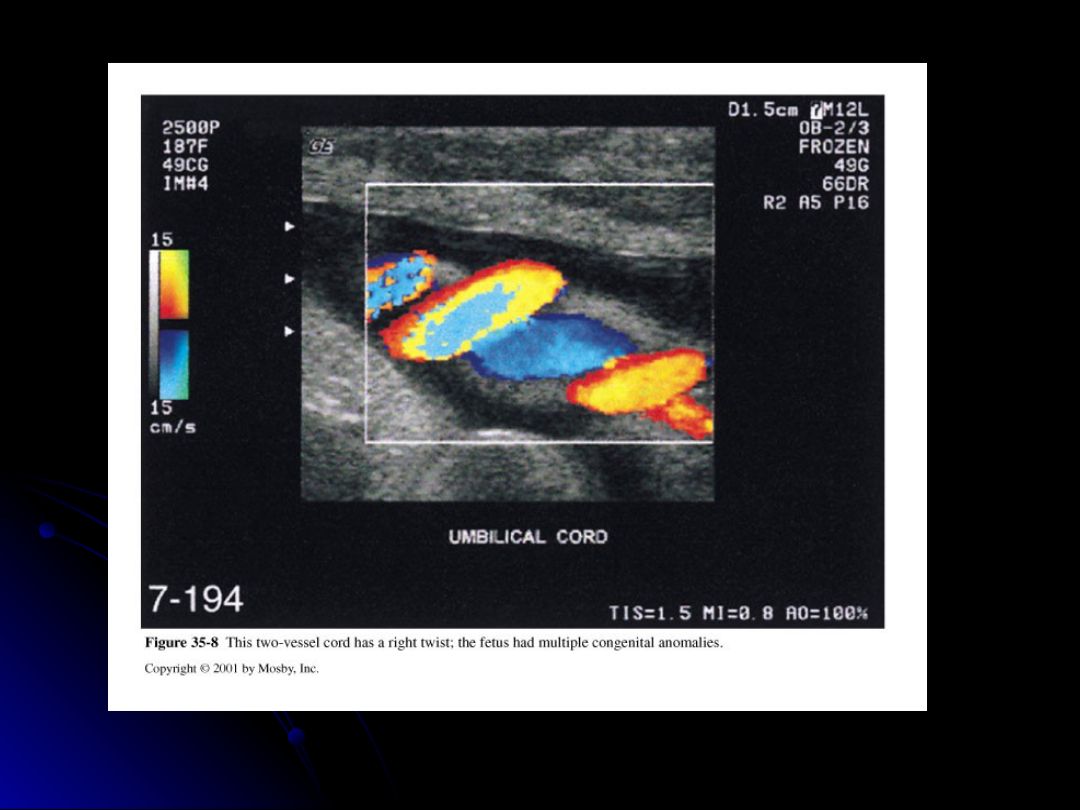
Which of the following statements about the twists of the umbilical cord are correct?
Cord can coil up to 40 times due to fetal movement.
A left helix is more common than a right helix.
Twist is determined by ultrasound only.
22
Multiple Choice
What is the clinical significance of a 'right' twist in the umbilical cord?
It is associated with a higher incidence of fetal anomalies.
It indicates normal fetal development.
It increases the risk of umbilical cord prolapse.
It has no clinical significance.
23
24
25
26
27
28
29
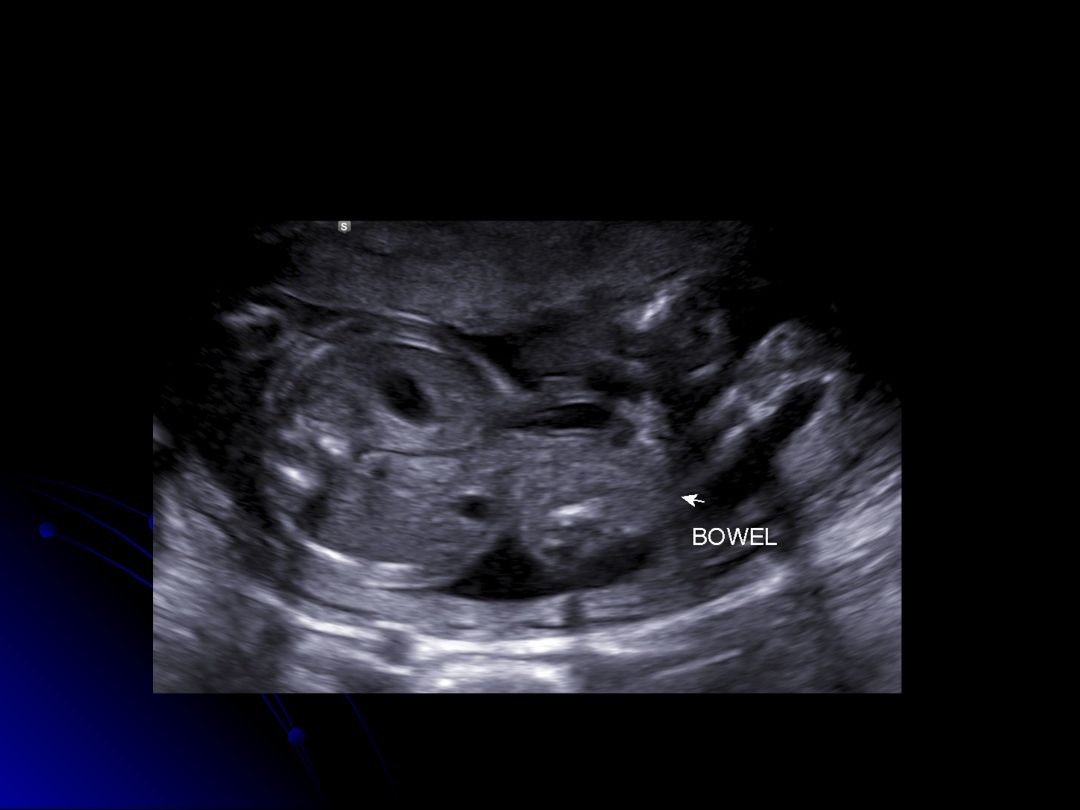
30
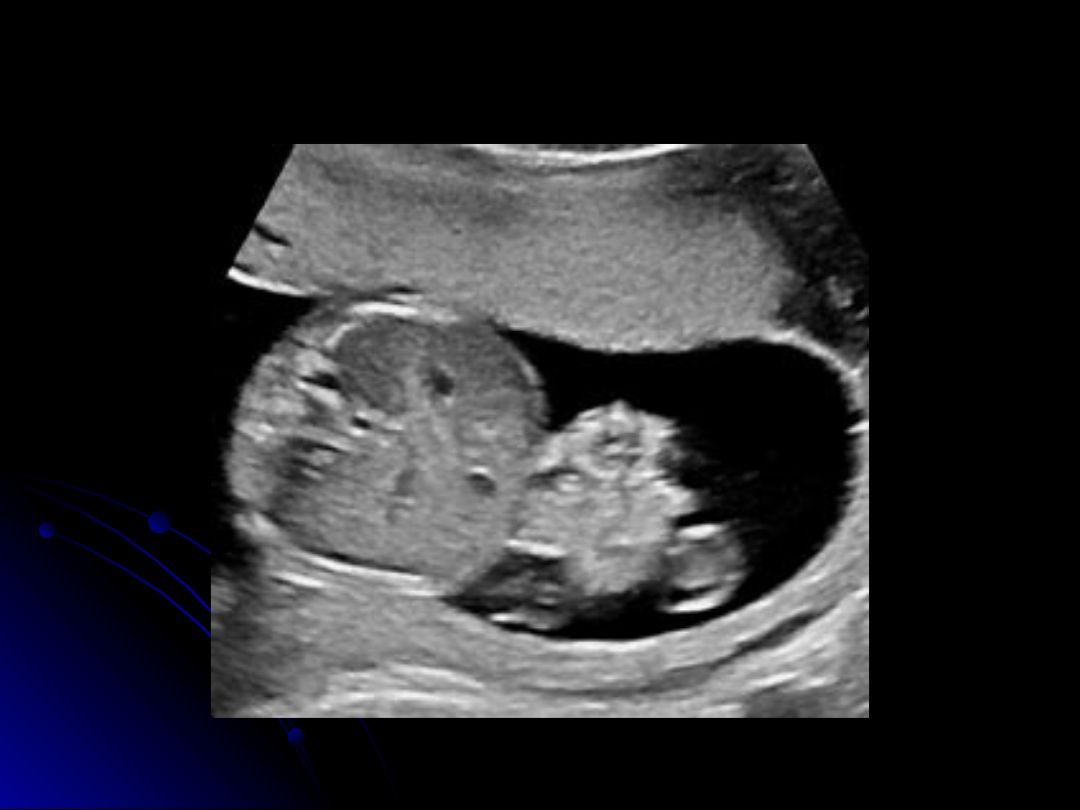
31
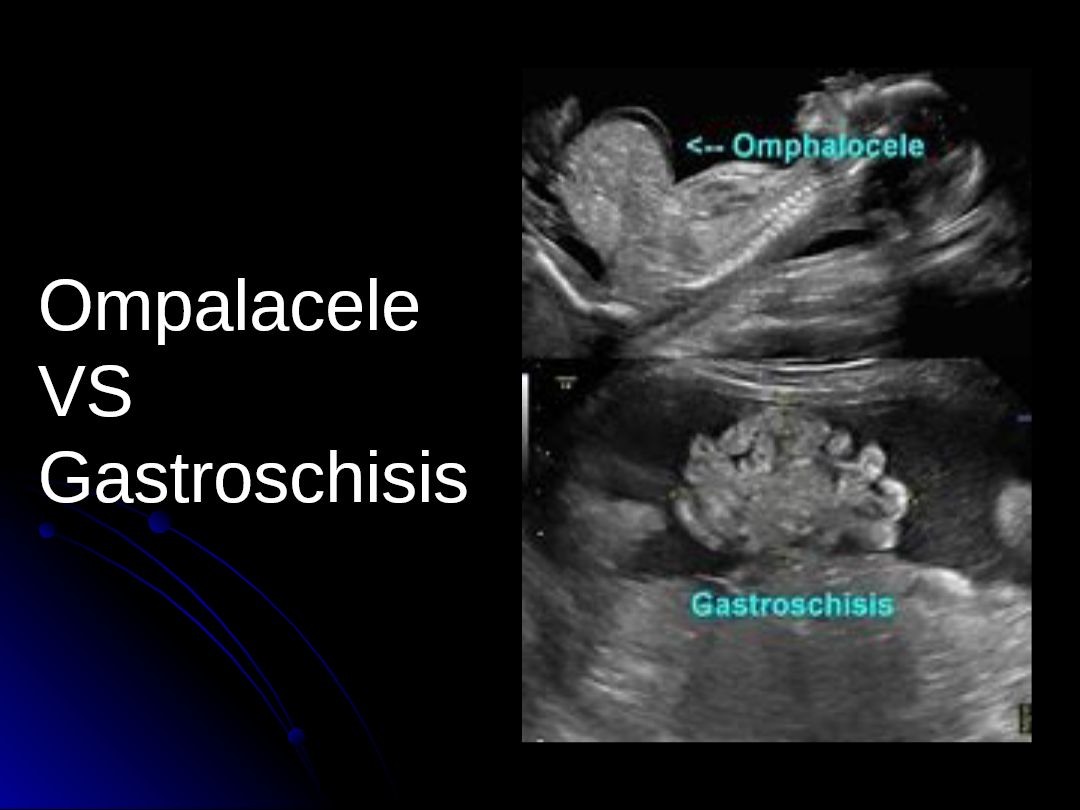
32
Multiple Choice
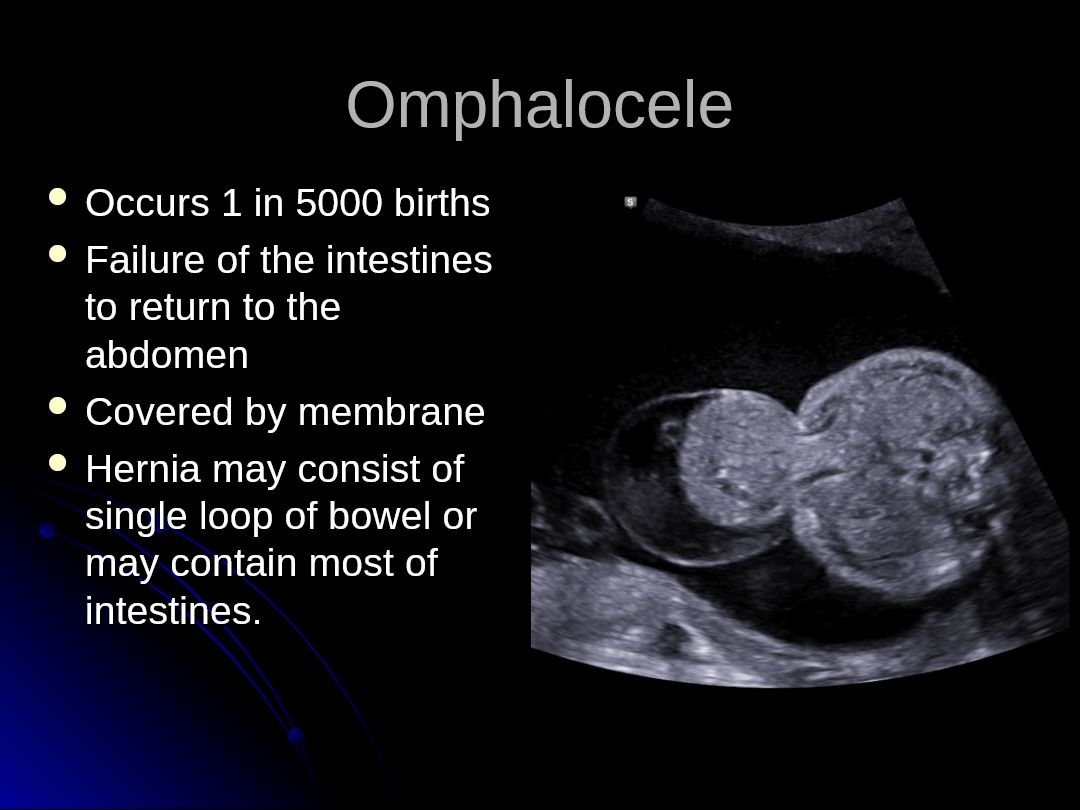
Which of the following conditions is characterized by the herniation of bowel loops outside the fetal abdomen without a covering membrane?
Gastroschisis
Omphalocele
Umbilical hernia
Omphalomesenteric cyst
33
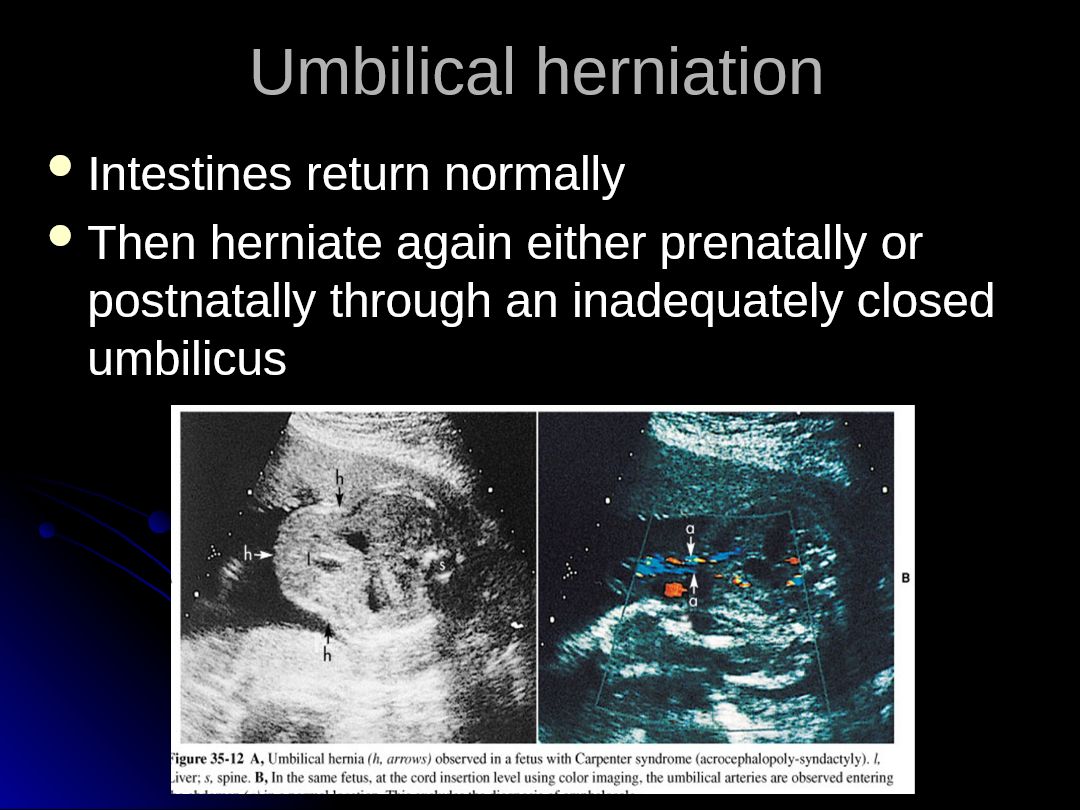
34
Fill in the Blanks
Umbilical herniation occurs when intestines return normally and then herniate again either prenatally or postnatally through an inadequately closed
35
36
Multiple Select
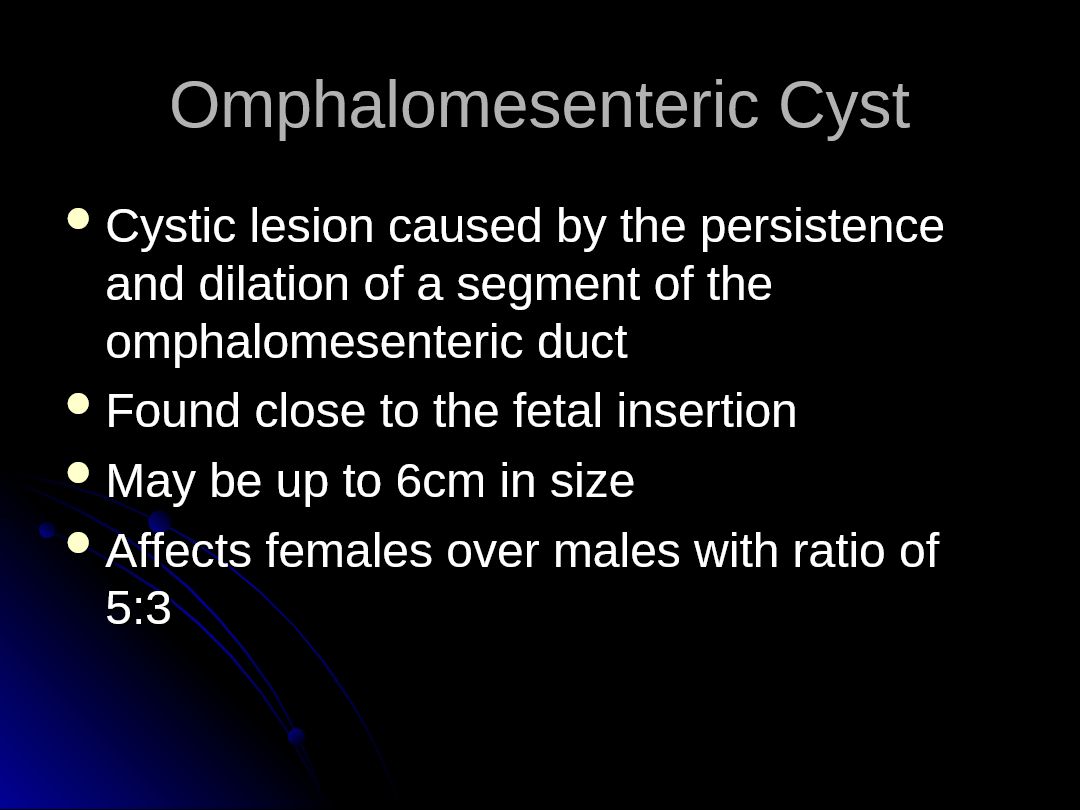
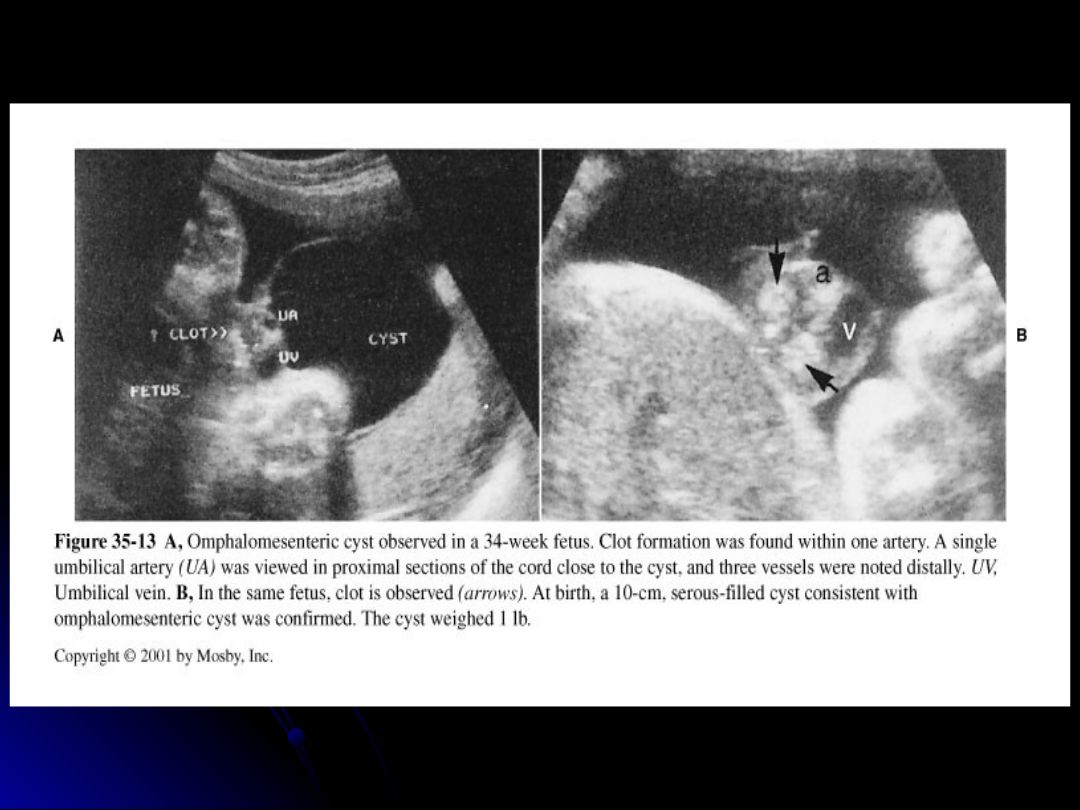
Which of the following statements about omphalomesenteric cysts is/are correct?
They are caused by persistence and dilation of a segment of the omphalomesenteric duct.
They are always found far from the fetal insertion.
They may be up to 6 cm in size.
They affect females more than males.
37
38
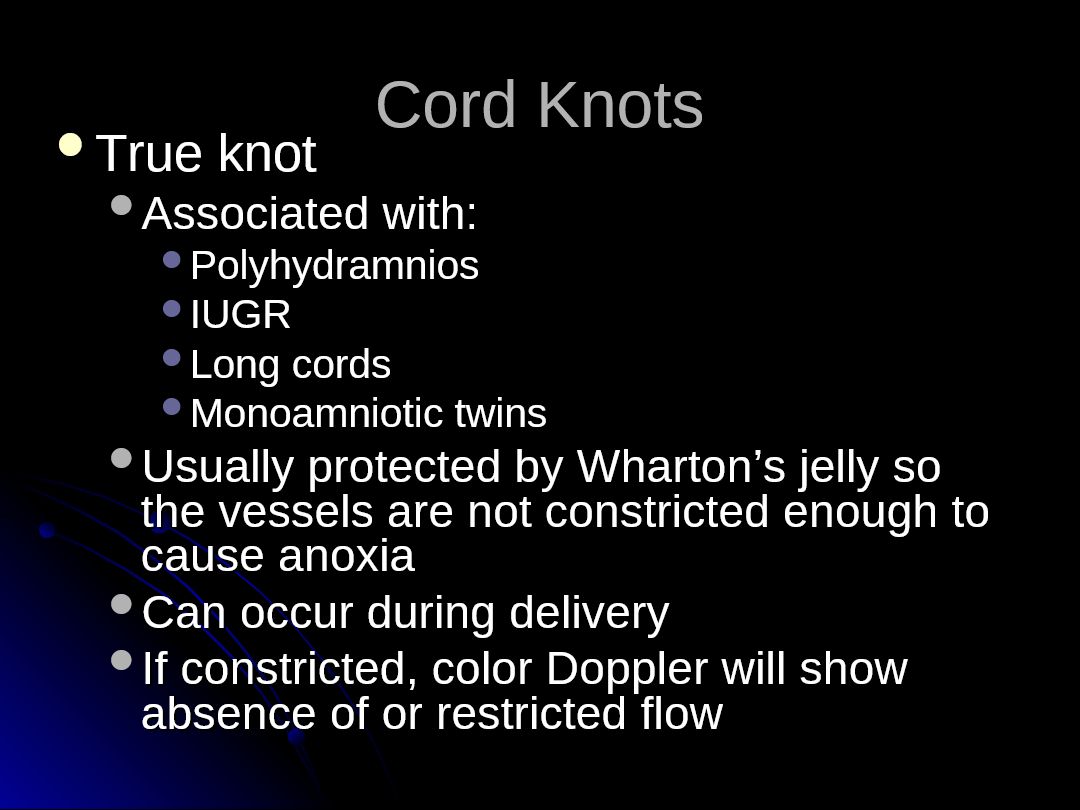
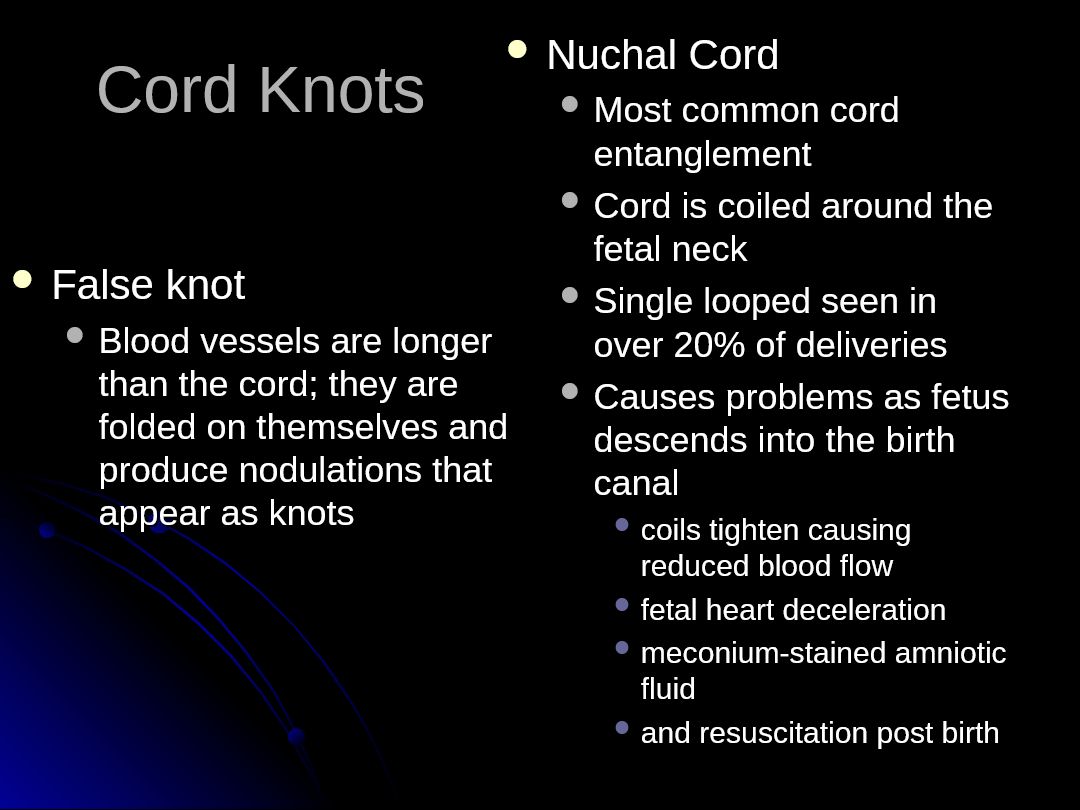
Hemangioma
lArises from the transepithelial cells of the vessels of the cord
lSurrounded by edema and Wharton’s jelly
lFound at the vessels and may involve more than one vessel
lRare
lSize varies; up to 15 cm
lWhen found near the placenta, associated with hydrops
39
40
41
42
43
44
45
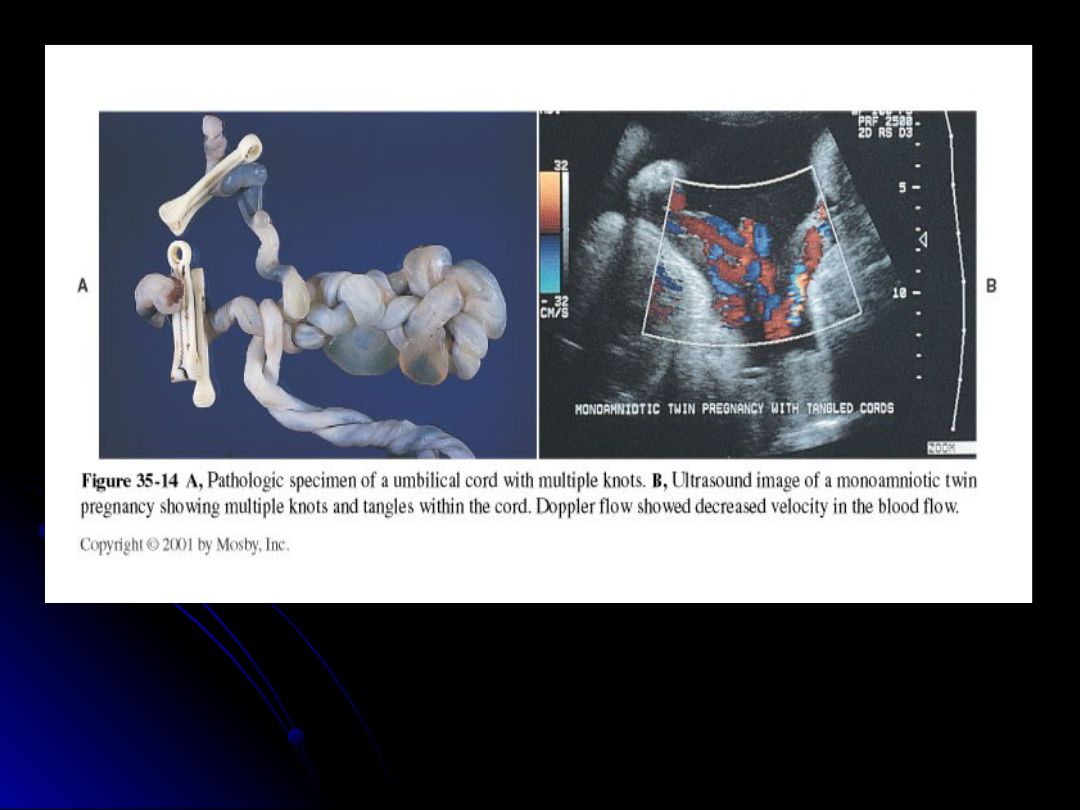
46
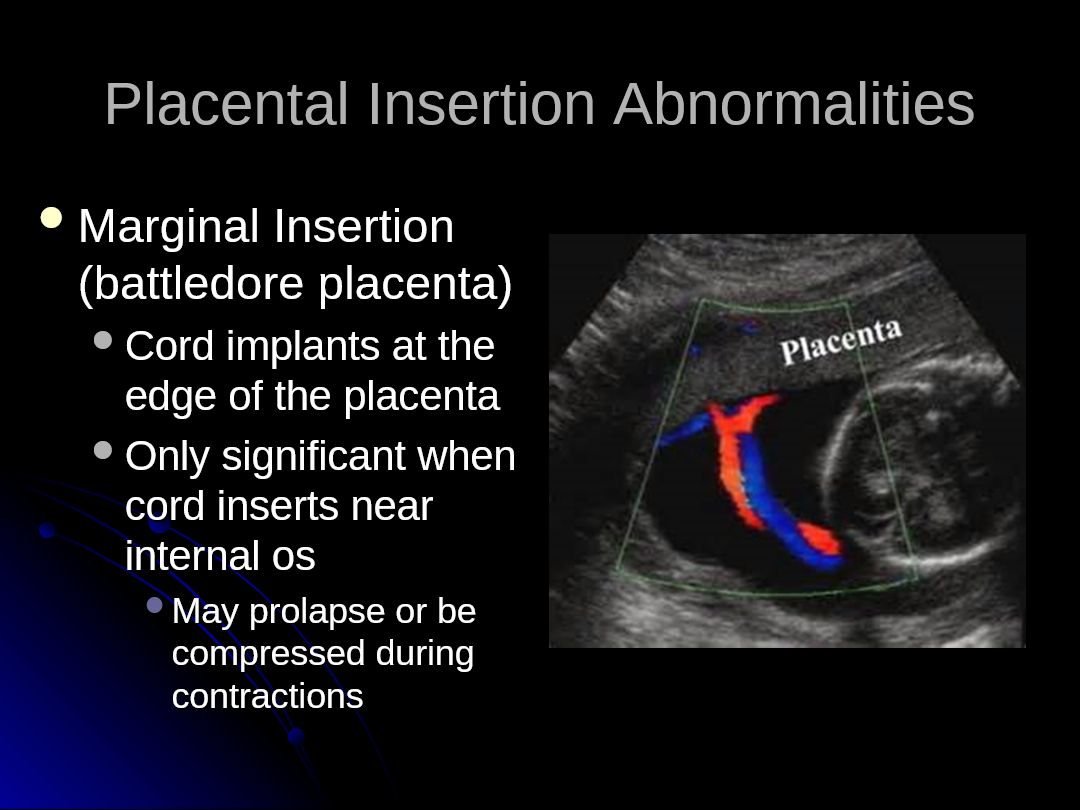
47
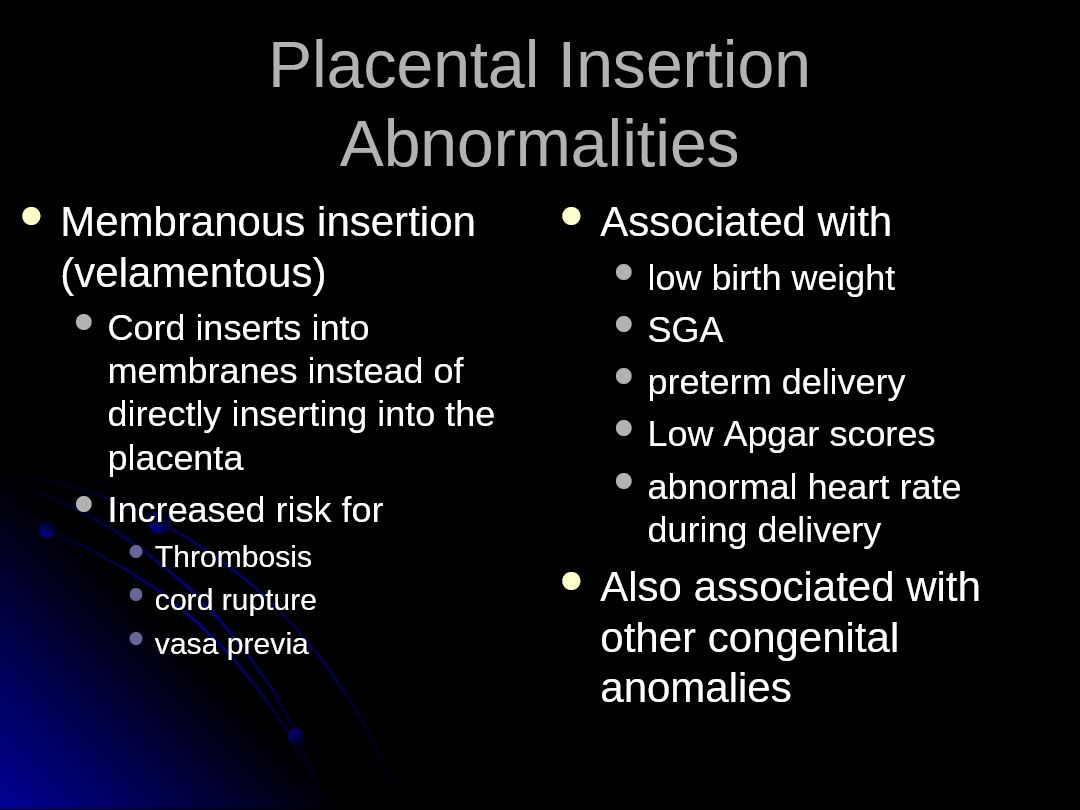
48
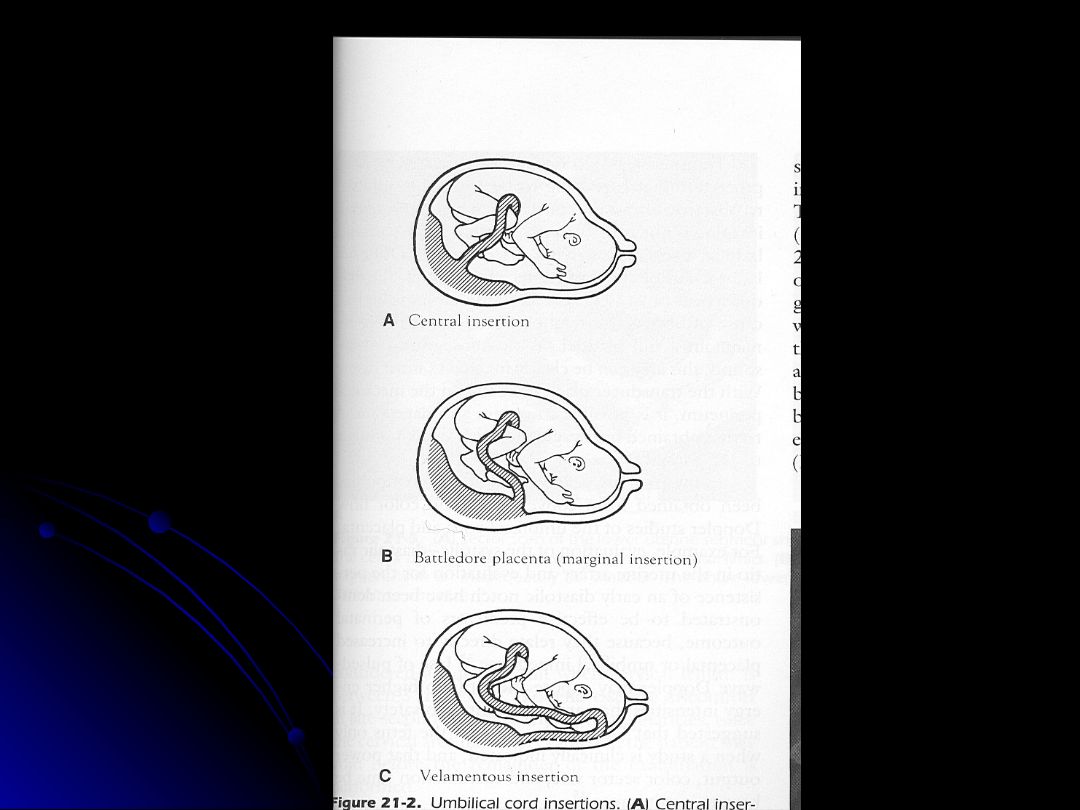
49
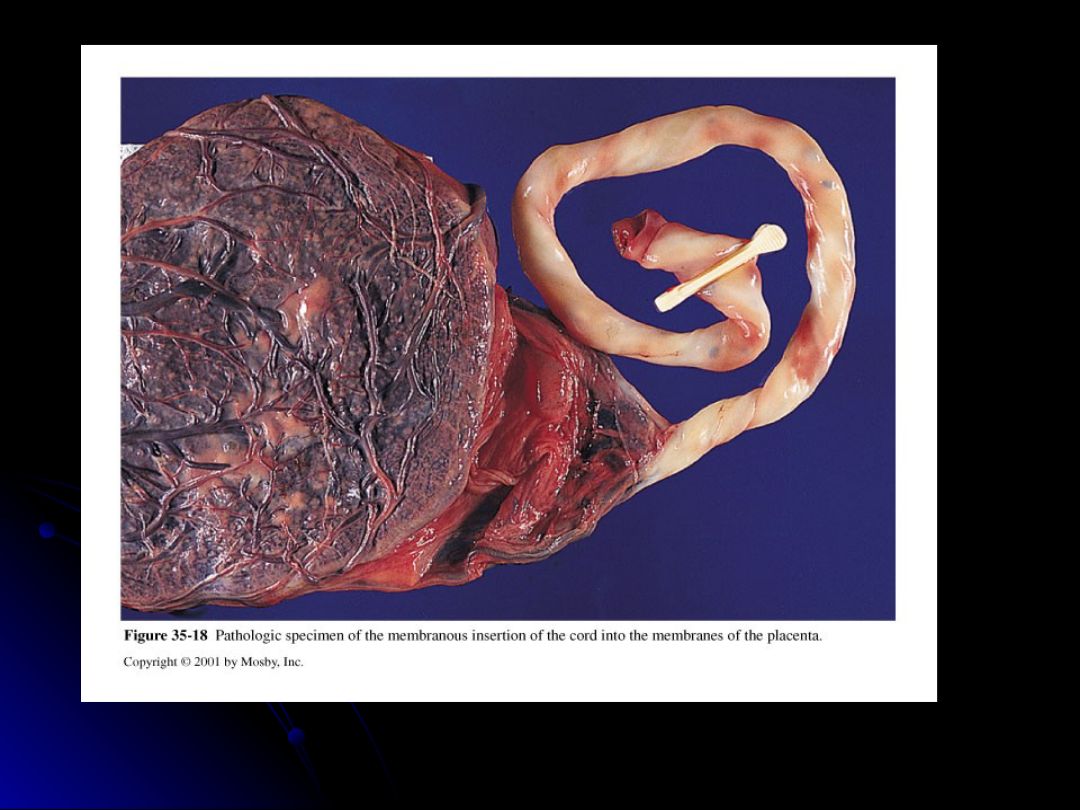
50
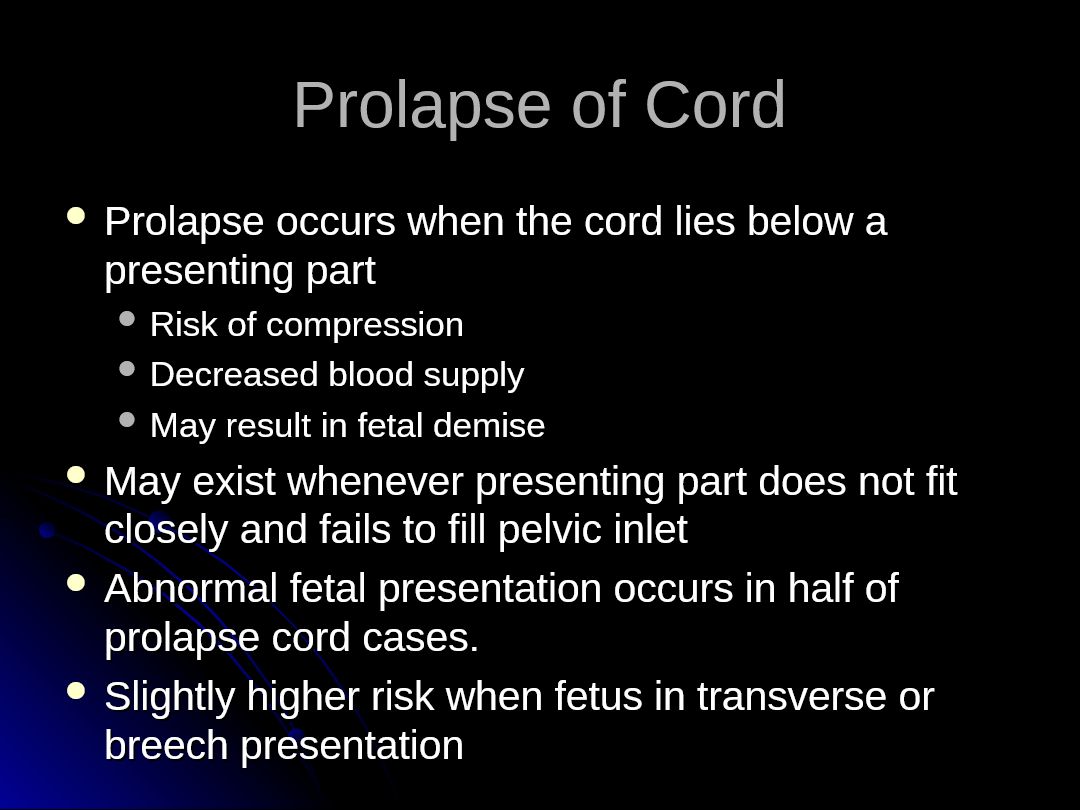
51
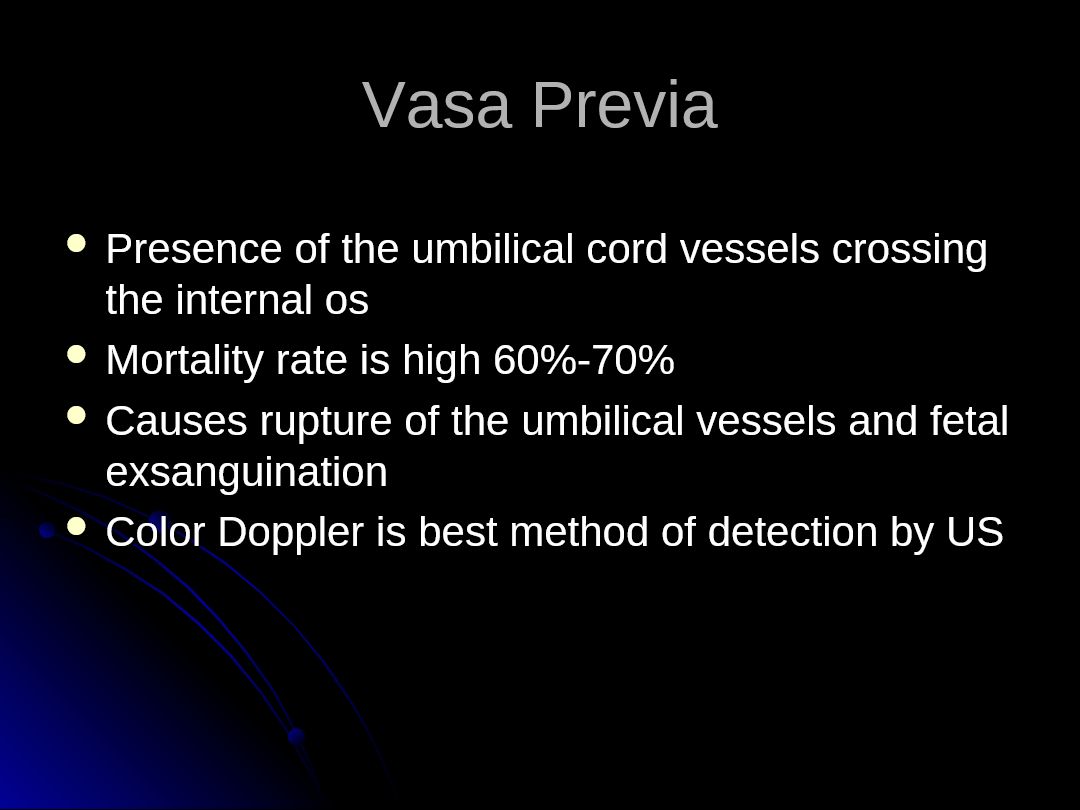
52
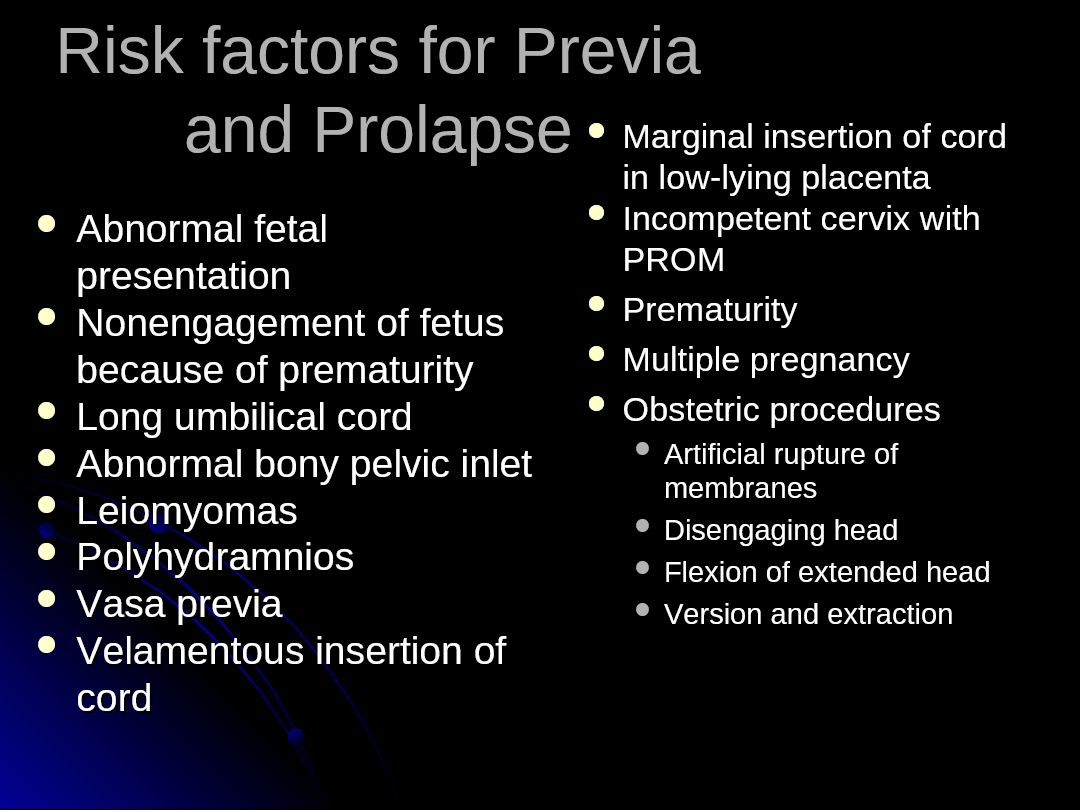
53
54
55
56
57
58
Multiple Choice
What is the primary function of the umbilical cord?
To provide oxygen and nutrients to the fetus
To remove waste from the mother's body
To regulate the mother's heartbeat
To protect the fetus from infections
59
Multiple Choice
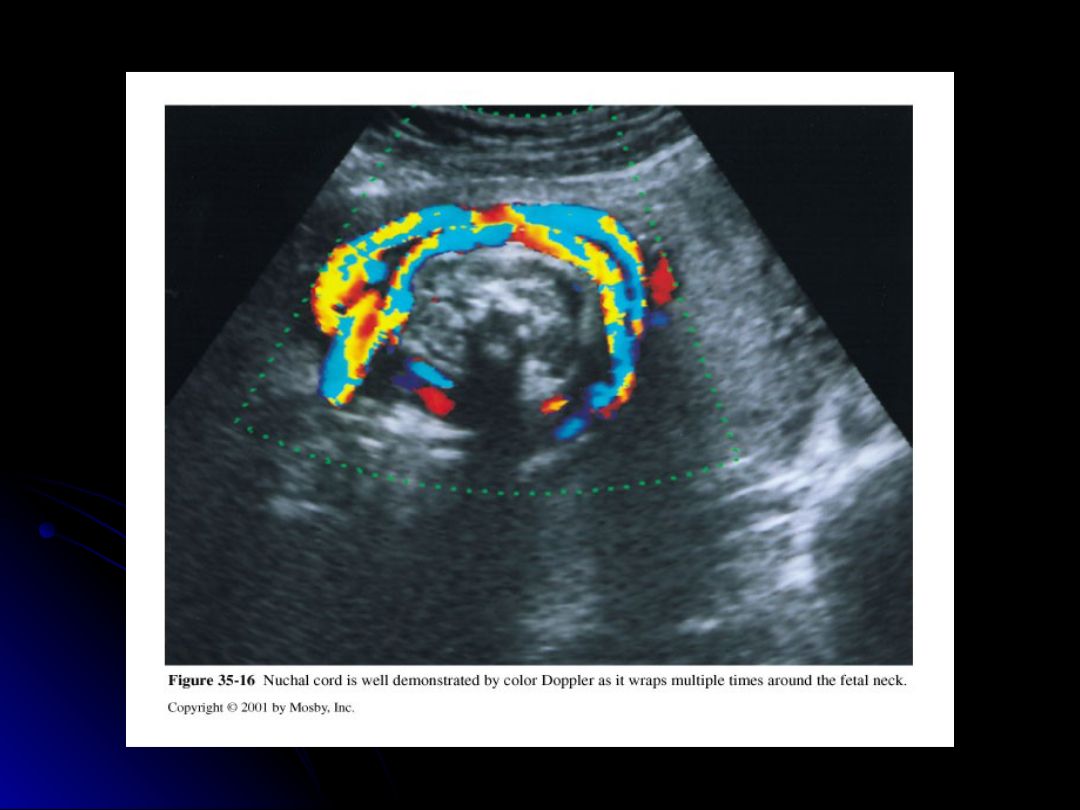
Which one of the following umbilical cord entanglements in the fetus is the most common?
nuchal cord
true knot
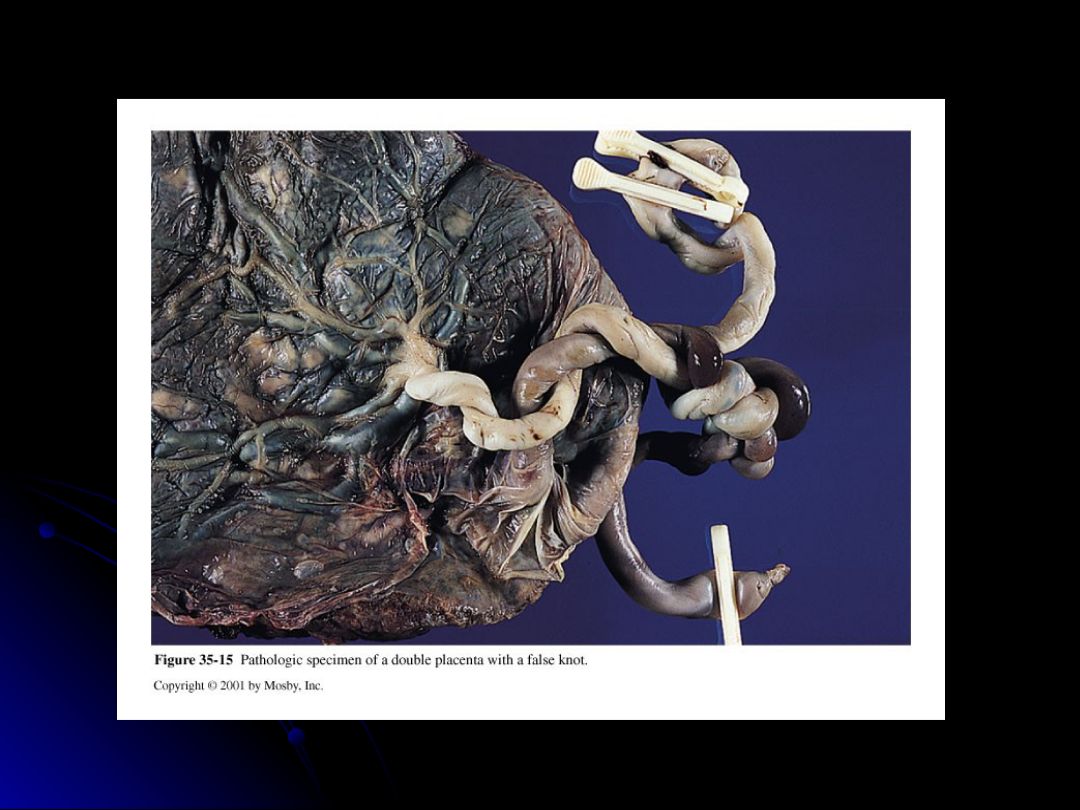
false knot
hematoma
60
Multiple Choice
The normal length of the umbilical cord measures _______cm.
20-35
40-60
30-50
60-90
61
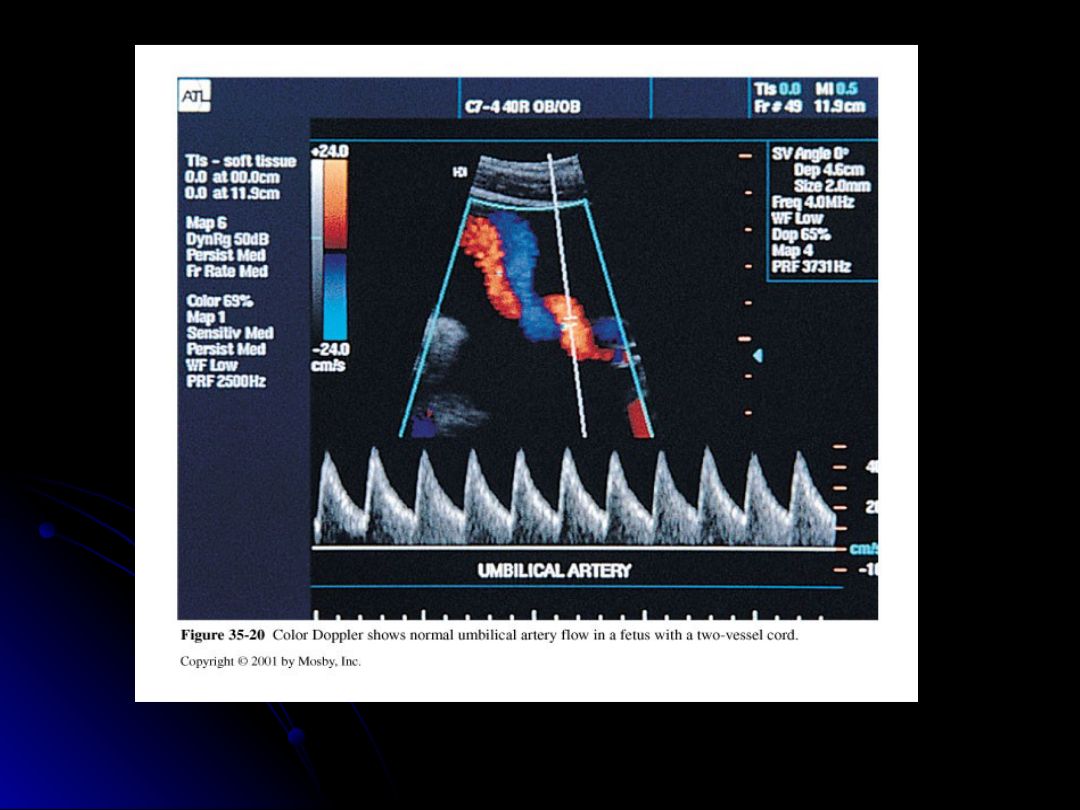
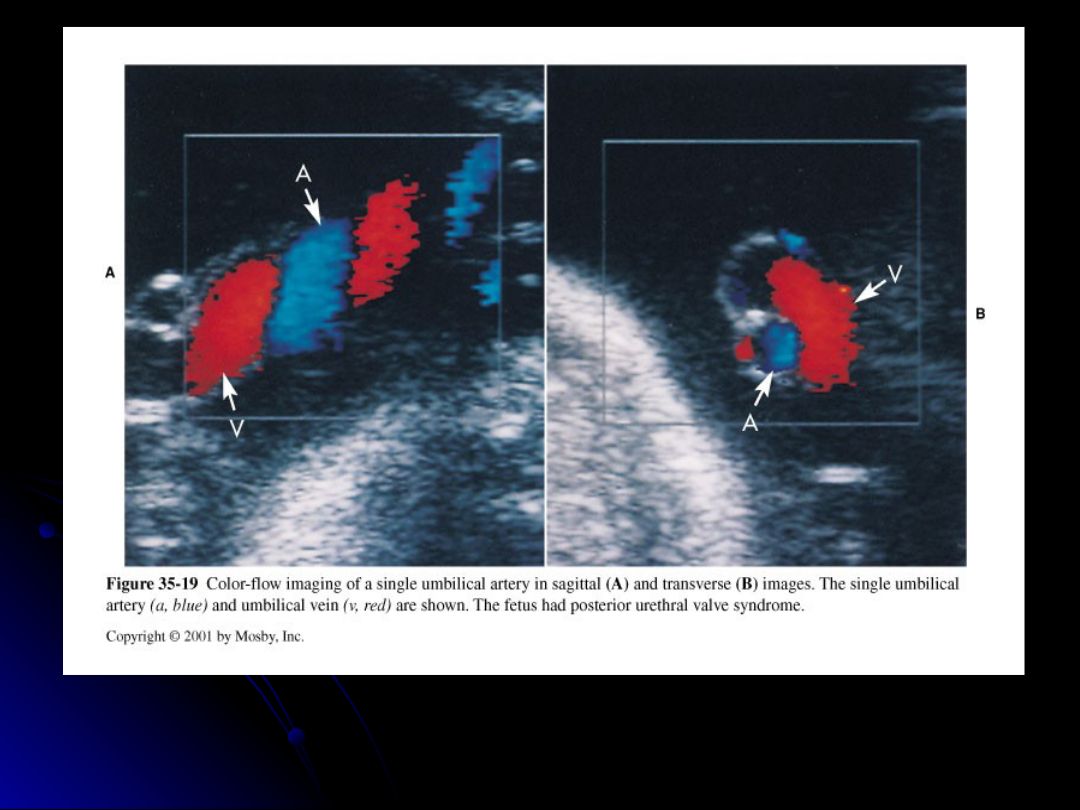
Multiple Choice
If a single umbilical artery is seen, the sonographer should search for which one of the following?
gastroschisis
esophageal atresia
genitourinary defect
umbilical hernia
62
Multiple Choice
Which one of the following occurs when the cord inserts into the membranes before it enters the placenta?
prolapse
velamentous insertion
battledore placenta
vasa previa
63
Multiple Choice
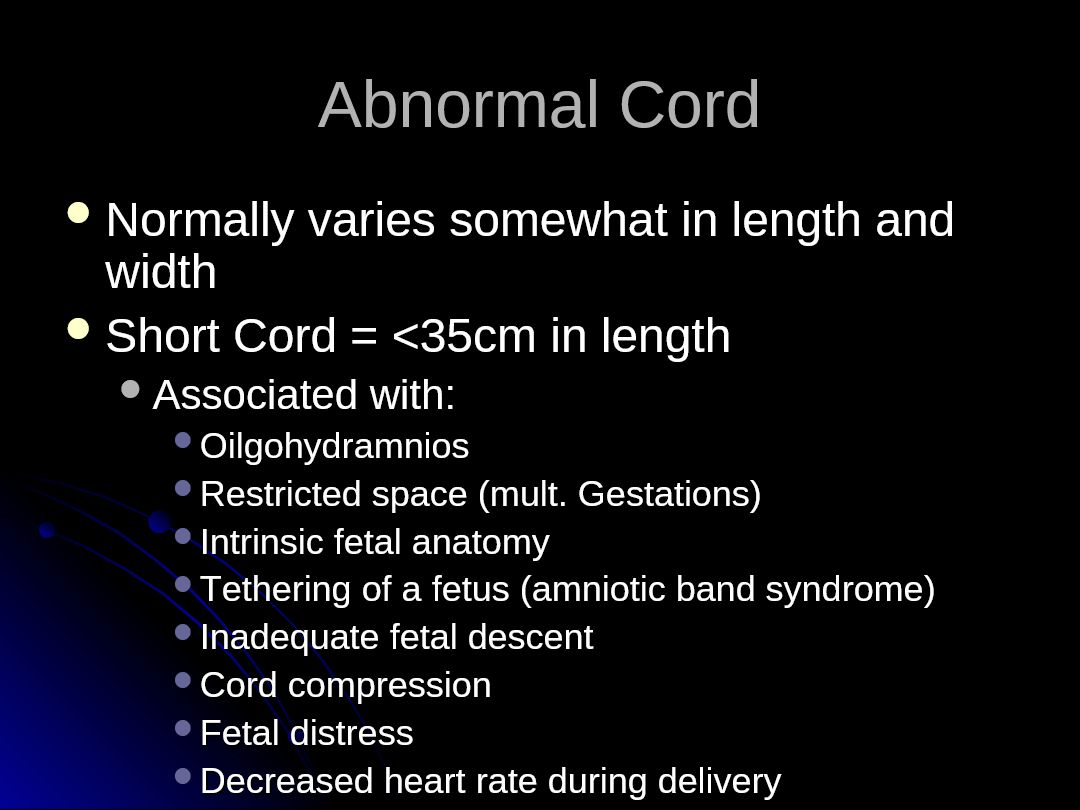
Which of the following problems may lead to inadequate fetal descent?
long cord
twisted cord
short cord
ruptured cord
64
Multiple Choice
Thrombosis of the umbilical vessels is most common in which one of the following?
right umbilical artery
left umbilical artery
umbilical vein
hypogastric arteries
65
Multiple Choice
The presence of umbilical vessels crossing the internal os of the cervix is called which one of the following?
placenta previa
cord prolapse
vasa previa
velamentous cord
66
Multiple Choice
A short cord measures less than ___cm.
25
30
35
40
67
Multiple Choice
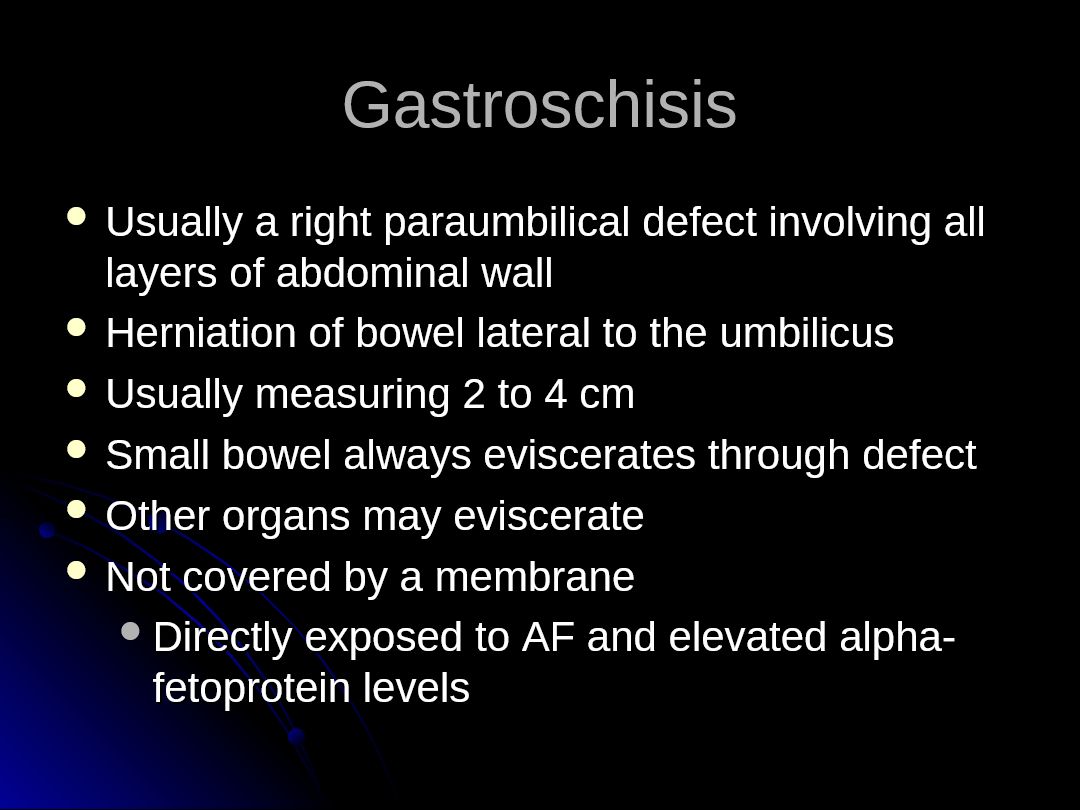
A para-umbilical defect involving all layers of the abdominal wall is called which one of the following?
omphalocele
umbilical herniation
gastroschisis
amniotic band syndrome
68
Multiple Choice
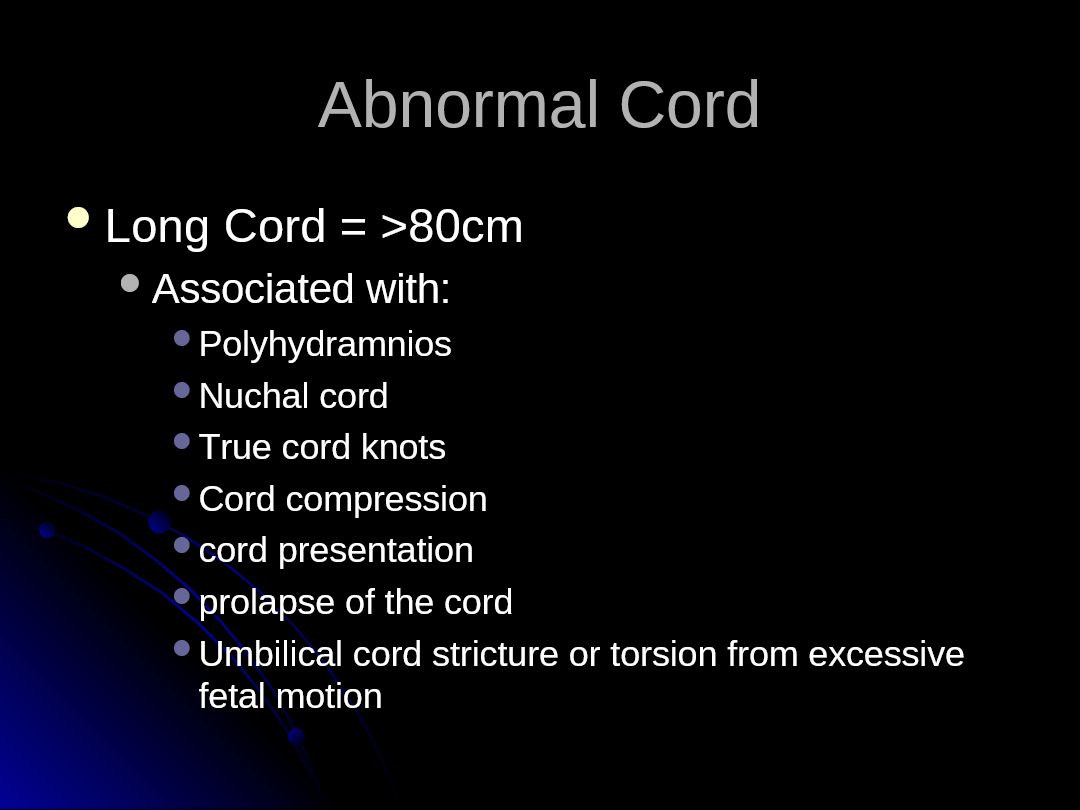
A long umbilical cord measures greater than ____cm.
60
80
100
120
Show answer
Auto Play
Slide 1 / 68
SLIDE
Similar Resources on Wayground

62 questions
AVĐB4 - Lesson 21 - What do you want to be when you grow up?
Presentation
•
University
61 questions
Ch 14 Lesson: Positioning, Lifting & Transferring Patients
Presentation
•
12th Grade
64 questions
mobile lesson
Presentation
•
University
60 questions
Untitled Presentation
Presentation
•
KG - University
65 questions
Membrane transport
Presentation
•
University
61 questions
Trivia Night
Presentation
•
KG - University
63 questions
Week 7 - DCS1101
Presentation
•
University
64 questions
Unit 4 (Reading and Writing )
Presentation
•
University
Popular Resources on Wayground
10 questions
How much do you know about our Portrait of an Eagle?

Quiz
•
10th Grade
10 questions
Fast Food Slogans
Quiz
•
6th - 8th Grade
21 questions
Continents and Oceans
Quiz
•
6th Grade
20 questions
Parts of Speech
Quiz
•
5th Grade
16 questions
Subject & Predicate
Quiz
•
5th Grade
25 questions
Multiplication Facts
Quiz
•
5th Grade
12 questions
Map Skills
Quiz
•
3rd Grade
22 questions
Continents and Oceans
Quiz
•
5th Grade
Discover more resources for Health Sciences
11 questions
NFL Football logos
Quiz
•
KG - Professional Dev...
20 questions
Disney Trivia
Quiz
•
University
10 questions
Identifying equations
Quiz
•
KG - University
16 questions
Water Modeling Activity
Presentation
•
11th Grade - University
20 questions
Logos
Quiz
•
KG - University
21 questions
Spanish-speaking Countries
Quiz
•
KG - University
36 questions
Unit 5 Key Terms
Quiz
•
11th Grade - University
21 questions
Mapa países hispanohablantes
Quiz
•
1st Grade - University