

Successes and Failures of Reconstruction

Presentation
•
Social Studies
•
9th - 12th Grade
•
Medium

Lisa Cooper
Used 1+ times
FREE Resource
19 Slides • 5 Questions
1
Open Ended
How did Radical Republicans in Congress try to ensure African American men had rights following the Civil War?
2
Successes & Failures of Reconstruction
3
Learners can...
identify the social, economic, and political affects of Reconstruction in the South
explain how Reconstruction both failed and was successful in the lives of African Americans
4
Vocabulary
15th Amendment, carpetbaggers, Compromise of 1877, disenfranchised, Ku Klux Klan (KKK), Panic of 1873, Redeemers, scallywags, sharecropping, suffrage
5
Important
Historians recognize that language, culture, and the way people view the world change over time. Some terms, images, video depictions, and points of view that were common in the past are considered offensive in the context of the modern era. The use of materials is intended to help the reader understand the historical record. When you interact with these resources, it is important to remember that you are viewing the world through the lens of the past to better understand change through history.
When you read primary sources, you will sometimes see the bracketed term [sic]. It indicates a word is misspelled, is a grammatical error, or is a sensitive language. Sic is a Latin term that means “as originally written;” therefore, you are reading the exact words spoken by the author of the text.
If you have any concerns or feel uncomfortable about your lessons, contact your teacher.
6
Essential Question
How successful were Reconstruction efforts in resolving social, economic, and political inequalities after the Civil War?
7
African Americans established religious institutions independent of White churches
African American churches in the North sent money and clergy to help communities set up their own churches & to help reconnect families
Churches from the North helped to send teachers to the South to help formerly enslaved people learn to read and write.
Social Changes
8
Social changes continued.
Hospitals, orphanages, and other organizations were founded to help the Black community.
Freedmen's Bureau
legal counsel, contracts, work training, literacy, access to medical care, finding family members, obtaining birth/marriage certificates, food/clothing, etc.
9
Multiple Choice
Which activity was not performed by the African American organizations and the Freedmen's Bureau as part of their efforts to help freed people during Reconstruction?
establish schools
provide health services
assist family members to reconnect
collect federal taxes
10
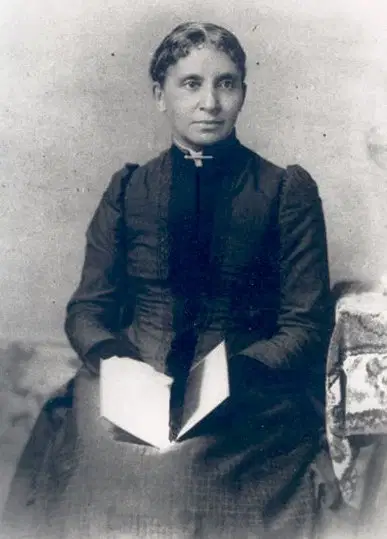
Abolitionist family from Philadelphia, PA.
She was the first Black teacher to go to South Carolina Sea Islands.
this area fell under Union control in the war and they allowed Northerners to set up schools to begin teaching freed people there.
Nursed soldiers from the 54th Massachusetts Regiment
Married, Francis J. Grimke, who was born enslaved.
Family connection to Sarah and Angelina Grimke
Charlotte Forten
11
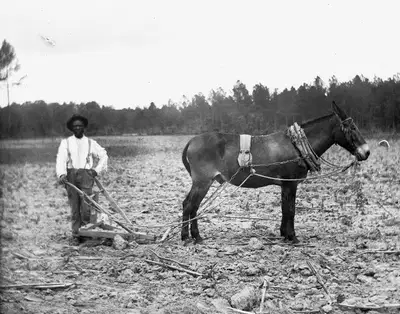
Field Orders No. 15- was issued by General William Tecumseh Sherman that said any plantation land seized in South Carolina & Georgia should be given to newly freed people into 40 -acre plots.
Union army gave some mules- so the policy became known as " forty acres and a mule."
Thousands of freed people would apply for land grants and established self-governed towns.
Economic Changes
Photo by: Alexander Krueger/Wisconsin Historical Society/Getty Images
12
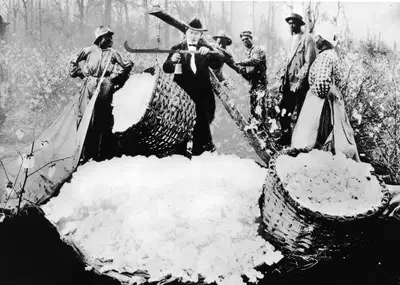
The promise of 40-acres was reversed by President Johnson because many White landowners refused to give up their land.
Newly freed African American men did not have money to purchase land.
sharecropping-a system in which the farmer promises to work on the landowner's field using their resources and equipment in exchange for a place to live and a small part of the harvest.
led to a cycle of debt because sharecroppers bought goods on credit
Economic changes continued.
A landowner weighs a sharecropper's cotton harvest.
Photo by: Lass/Getty Images
13
Multiple Select
Which factors contributed to the rise of the sharecropping system after the Civil War?
Select all that apply.
the reversal of the "forty acres and a mule" policy
lack of money to buy land
high payments to sharecroppers
rising sharecropper debts
14
Political Changes
Reconstruction Act of 1867- forced Democrats in the south to allow African Americans to vote.
this led to over 600 formerly enslaved men being elected to state and local offices.
Because there were many African Americans in office, the South that was once was Democratic was now Republican led with African Americans in positions of power for the first time.
15
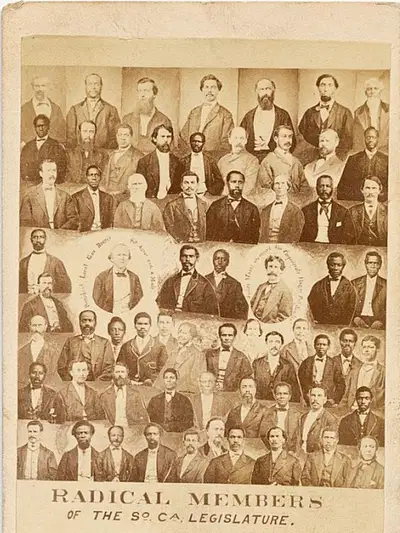
A large number of African American men were voting
African American men served as delegates in state constitutional conventions held in 1868.
Public School system was created
Almost 800 African American men served in state legislators in the South
Majority of South Carolina House of Representatives at one time.
Political Changes
16
Multiple Choice
Which state elected an African American majority to its state legislature during Reconstruction?
Louisana
North Carolina
South Carolina
Virginia
17
Election of 1868
Democrats selected Horatio Seymour who used to be the Governor of New York.
Republicans selected Ulysses S. Grant ( Civil War General)
Grant won the election without receiving many votes from Southern states.
What does this mean?
18
15th Amendment --1869
"Section 1. The right of citizens of the United States to vote shall not be denied or abridged by the United States or by any State on account of race, color, or previous condition of servitude.
Section 2. The Congress shall have the power to enforce this article by appropriate legislation."
15th Amendment of the U.S. Constitution
What did African American men gain the right to do?
19
the right to vote
Who was not protected by the 14th and 15th Amendments?
suffrage
20
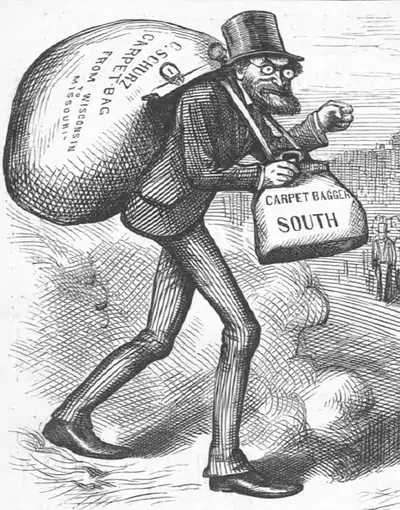
Carpetbaggers- refers to Northerners who traveled South during reconstruction. Named after the common type of luggage made from thick sturdy material.
Some Northern Republicans got elected into Southern Governments others worked for the Freedmen's Bureau
Resistance to Change
In the image, you see a caricature from the period of a carpetbagger depicting their corruption and selfishness from the perspective of many Southerners.
21
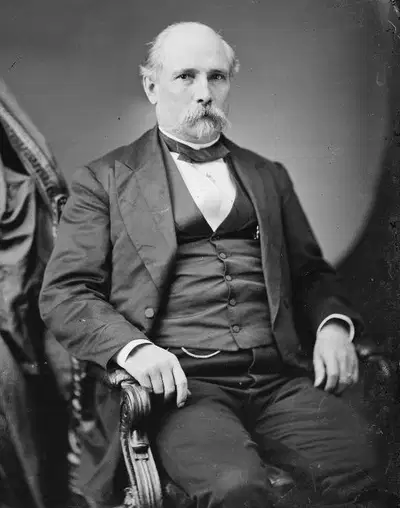
derogatory term for Southerners who supported the Republican Party and Reconstruction
This is a picture of James L. Alcorn ( Mississippi)
was a Confederate General, but aligned himself with Republicans after the war.
Scallywags
22
Resistance to change
A lot of violence occurred throughout Reconstruction, without any consequences for White people.
Terror groups formed
Nathan Bedford Forrest ( Former Confederate General) organized the Ku Klux Klan ( KKK)
23
Redeemers
refers to Southern Democrats who wanted to save the Southern social and political structure
During Reconstruction, Democrats started to take back control of state and local governments.
Passed laws that disenfranchised most African American voters and poor white voters.
24
Open Ended
What questions do you have from today's lesson?
How did Radical Republicans in Congress try to ensure African American men had rights following the Civil War?
Show answer
Auto Play
Slide 1 / 24
OPEN ENDED
Similar Resources on Wayground

21 questions
Introduction to Economic Systems
Presentation
•
8th - 12th Grade
17 questions
Choosing a career
Presentation
•
8th - 12th Grade
18 questions
The Korean War
Presentation
•
9th - 12th Grade
18 questions
Scientific Revolution
Presentation
•
9th - 12th Grade
19 questions
3.2 Civics North Carolina government
Presentation
•
9th - 12th Grade
17 questions
Mixed Economies
Presentation
•
9th - 12th Grade
19 questions
Conjugating AR Ending Verbs Lesson
Presentation
•
9th - 12th Grade
19 questions
Structure of Atom
Presentation
•
9th - 12th Grade
Popular Resources on Wayground
6 questions
Secondary Safety Quiz
Presentation
•
9th - 12th Grade
10 questions
Afterschool Activities & Sports

Quiz
•
6th - 8th Grade
19 questions
ROAR Week 2026
Quiz
•
9th - 12th Grade
20 questions
Lab Safety Quiz
Quiz
•
6th Grade
15 questions
Cool Tool:Chromebook
Quiz
•
6th - 8th Grade
22 questions
would you rather
Quiz
•
3rd - 11th Grade
21 questions
Continents and Oceans
Quiz
•
6th Grade
20 questions
Parts of Speech
Quiz
•
5th Grade
Discover more resources for Social Studies
36 questions
Unit 1 Topic 1 Vocab: Purpose and Types of Government
Quiz
•
10th Grade
55 questions
(I) USHC 1 Key Terms
Quiz
•
11th Grade
16 questions
Economics: Choices & Scarcity
Quiz
•
12th Grade
40 questions
Word Association Unit 1
Quiz
•
11th Grade
15 questions
Unit 1 Quiz: Foundations
Quiz
•
9th - 12th Grade
20 questions
Unit 1 Stimulus Question Practice World History
Quiz
•
10th Grade
21 questions
AgApps Obj. 1.02- FFA Ways
Presentation
•
12th Grade
20 questions
U1T1 Part 1 Quiz
Quiz
•
10th Grade