
TRANSLATION_PROTEIN SYNTHESIS

Presentation
•
Biology
•
2nd Grade
•
Practice Problem
•
Hard
Standards-aligned

Emely Tragua
FREE Resource
8 Slides • 7 Questions
1

2
3
4
Multiple Choice
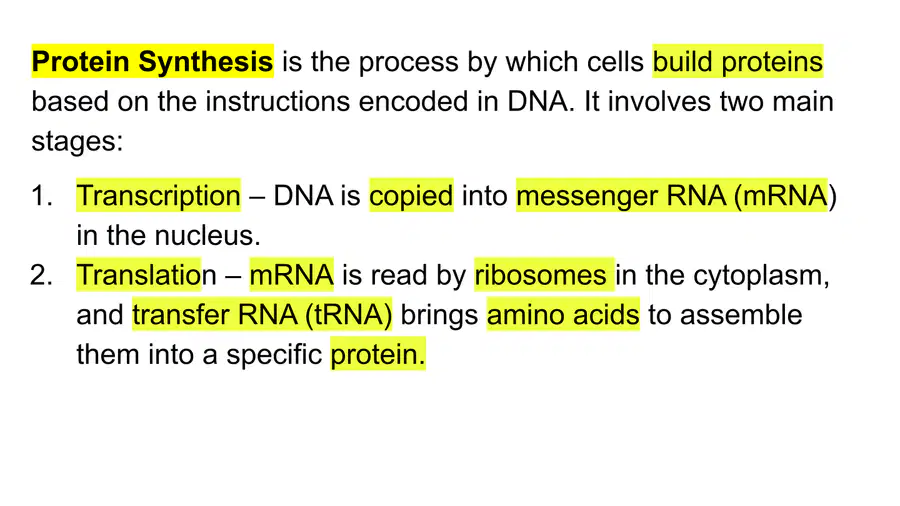
Why is protein synthesis important for living organisms?
It helps in energy storage
It allows cells to build proteins needed for structure and function
It is responsible for cell division
It helps in DNA replication
5
6
Multiple Choice
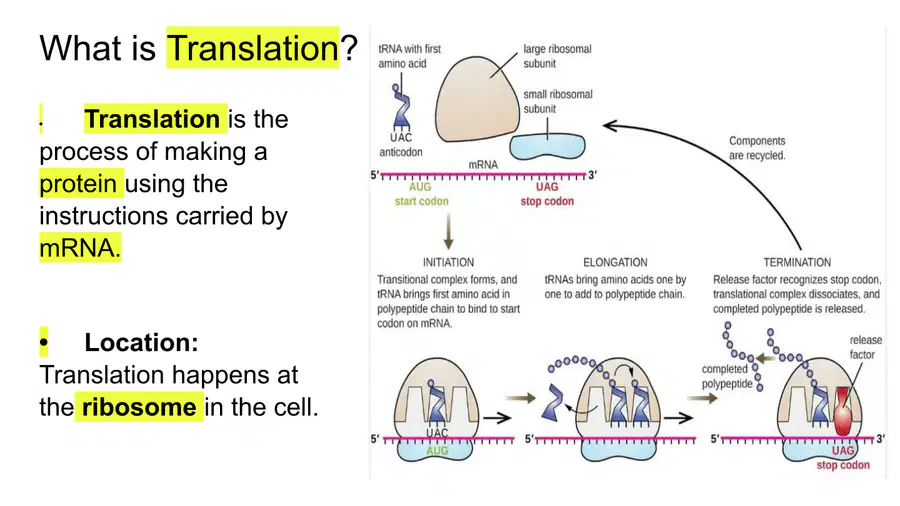
Which of the following best describes the process of translation in cells?
The process of copying DNA into RNA
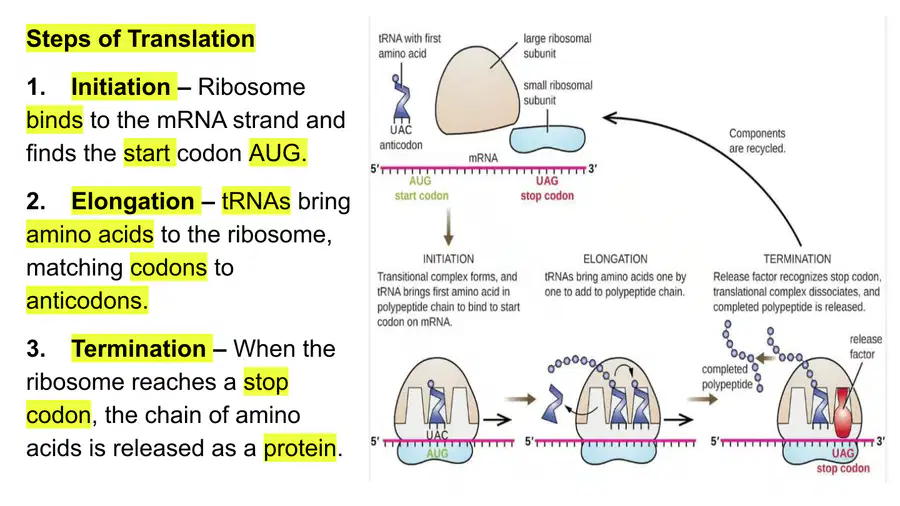
The process of making a protein using instructions carried by mRNA
The process of breaking down proteins into amino acids
The process of duplicating DNA
7
8
Multiple Choice
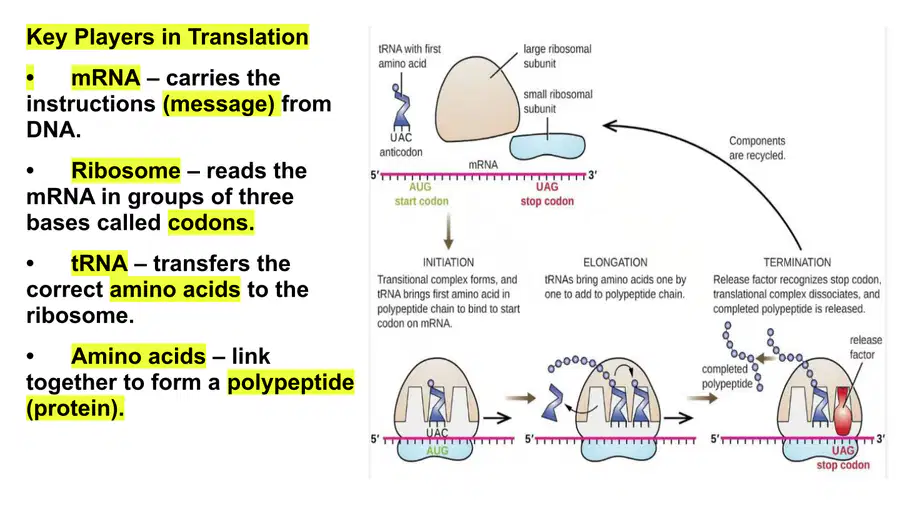
What are the key molecules involved in the process of translation, and what roles do they play?
9
10
Multiple Select
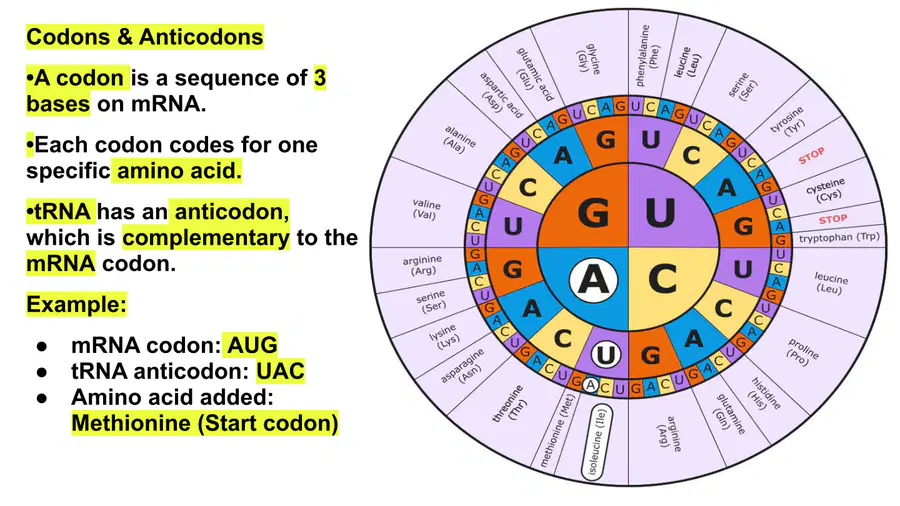
Which of the following statements about codons and anticodons are correct?
A codon is a sequence of three bases on mRNA.
Each codon codes for one specific amino acid.
tRNA has an anticodon that is complementary to the mRNA codon.
A codon is found on tRNA.
11
12
Fill in the Blanks
The first codon recognized by the ribosome during translation is usually
13

14
Multiple Choice
Explain why translation is important for cells and the body as a whole.
15
Multiple Choice
How does understanding protein synthesis help us appreciate the complexity of cellular functions?
Show answer
Auto Play
Slide 1 / 15
SLIDE
Similar Resources on Wayground

13 questions
Pronoun-Verb Agreement
Presentation
•
2nd Grade
11 questions
Numbers 1-20
Presentation
•
2nd Grade
12 questions
Supply and Demand
Presentation
•
2nd Grade
9 questions
Supply and Demand
Presentation
•
2nd Grade
9 questions
Finding theme
Presentation
•
2nd Grade
9 questions
preposition
Presentation
•
2nd Grade
11 questions
Introduction to Adult Nursing
Presentation
•
1st Grade
10 questions
Hormone quiz
Presentation
•
2nd Grade
Popular Resources on Wayground
21 questions
Continents and Oceans

Quiz
•
6th Grade
20 questions
Parts of Speech
Quiz
•
5th Grade
16 questions
Subject & Predicate
Quiz
•
5th Grade
25 questions
Multiplication Facts
Quiz
•
5th Grade
12 questions
Map Skills
Quiz
•
3rd Grade
22 questions
Continents and Oceans
Quiz
•
5th Grade
15 questions
Rounding Decimals
Quiz
•
5th Grade
20 questions
Brand Labels
Quiz
•
5th - 12th Grade