

Quarter 1 Review

Presentation
•
Physics
•
10th Grade - University
•
Medium
+8
Standards-aligned

Hugueline Beljean
Used 3+ times
FREE Resource
32 Slides • 33 Questions
1
Quarter 1 Exam Review
By Hugueline Beljean
2
What is Science?

3

4
Scientific Knowledge
What Makes a Scientific Claim Credible?
Science is more about gaining knowledge than it is about simply having knowledge. Science is a way of learning about the natural world that is based on evidence and logic. In other words, science is a process, not just a body of facts. Scientists make claims that they must provided evidence to show their claims are true. Through the process of science, our knowledge of the world advances.
5
Scientific Method
The scientific method is the process of proposing theories and rigorously testing them.
A tentative hypothesis becomes a theory only if the outcome of every single related experiment or observation, made by multiple researchers, agrees with the hypothesis.
6
Multiple Select
Identify all of the following that are strengths in science
subject to constant testing and revision
testable
studies must be of physical, testable, and observable world
explanations must have natural explanations of phenomena
changes lead to increased understanding of the physical world
7
Multiple Choice
A broad and comprehensive statement of what is thought to be true; it is supported by much evidence and repeated experimentation.
8
Multiple Choice
Repeatability means
being able to try the same experiment, with the same setup, and produce that exact same result.
being able to redo an experiment but finding different results
never being able to reproduce the results of an experiment
9
Chemistry of Biology
10
Properties of Water REVIEW
11

12

13

14

15
Multiple Choice
16
Multiple Choice

What property of water allows for water to act as a temperature regulator for the world?
Cohesive Behavior
Expansion Upon Freezing
High Specific Heat
Universal Solvent
17
Multiple Choice
What property of water helps in stabilizing aquatic environment temperatures?
Specific heat
Surface tension
Adhesion
Cohesion
18
Multiple Choice
Water is often called the "universal solvent" because many substances can be dissolved in water. What property of water allows it to be such a versatile solvent?
purity
polarity
high heat capacity
expansion upon freezing
19
Macromolecules
~Biochemistry~
20
The FOUR Macromolecules
Carbohydrates
Lipids
Protein
Nucleic Acids
21

22


23

24

25

26
Multiple Choice
27
Multiple Choice
Which macromolecule(s) have phosphorus?
Carbohydrates
Proteins
Nucleic Acids
Fats
28
Match
Match the following MONOMERS and MACROMOLECULES
Nucleic Acid
Protein
Lipid
Carbohydrate
Nucleic Acid
Protein
Lipid
Carbohydrate
29
Enzymes
Biological Catalysts

30
Enzymes are Biological Catalysts
They are proteins
Catalysts speed up chemical reactions
Structure = Function: Enzymes are specific to their Substrate (reactants). Active site of the enzymes fits together with the substrate(s)
Different reactions require different enzymes

31
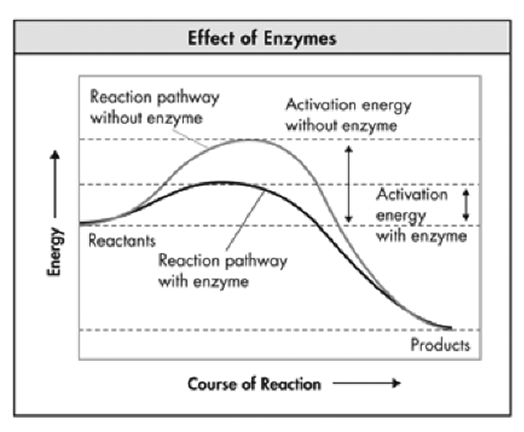
Enzymes speed up chemical reactions (Catalysts)
Activation energy is the energy needed to start a chemical reaction.
The less activation energy needed (smaller hill to climb) the faster the reaction will happen
Enzymes speed up reactions by lowering the activation energy

32

33

34
Denaturation = to lose shape
Structure (shape) = function
If enzymes lose their shape they no longer function correctly
Lower enzyme function = slower reaction rates
Factors that can affect shape & function of enzymes: Temperature, pH, salinity (ion concentration)

35
Multiple Choice
36
Multiple Choice
There are many different enzymes located in the cytoplasm of a single cell. How is a specific enzyme able to catalyze a specific reaction?
Enzymes are destroyed after catalyzing a reaction.
Most enzymes can catalyze many different reactions.
An enzyme binds only to a specific substrate.
Enzymes are transported to a specific substrate.
37
Multiple Select
The word denatured means an enzymes looses its shape or function
True
False
38
Multiple Choice
39
Multiple Choice
40
Multiple Choice
What happens when enzymes are heated to a high temperature?
The shape of the enzyme are changed and it denatures
The enzymes die
The enzymes' amino acid sequence changes
The enzymes remain the same
41
Multiple Choice

What is the optimum temperature for this enzyme?
20 degrees Celsius
45 degrees Celsius
52 degrees Celsius
64 degrees Celsius
42
Multiple Choice

What is the optimum pH for the enzyme salivary amylase?
2
5
6.2
9.1
43
Module 3 Review
- Microscope
- Cells
- Cell Theory
- Cell Transport
Please be sure to study!

44

45
Multiple Choice
To observe a small, living organism, a scientist might use a/an ____.
electronic balance
compound light microscope
TEM
SEM
46
Multiple Choice

This image shows the detailed structure of the tiny mitochondria organelle. Which microscope most likely took this image?
Compound Light
Scanning Electron
Dissecting
Transmission Electron
47
Multiple Choice
Which microscopes used light
light and dissecting
scanning electron and transmitting electron
scope and len
48
Cell Theory
All living things are made of cells.
Cells are the basic unit of life.
Cells must come from preexisting cells.

49
Multiple Choice
There are three tenets of the Cell Theory. Which of the following is NOT a tenet?
Cells are the basic structure and function of life.
All living things are made of one or more cells.
The cell is the basic unit of matter.
All cells come from preexisting cells.
50
Multiple Choice
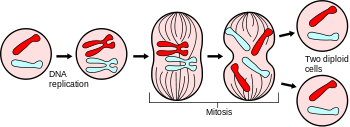
When cells are damaged, new cells are created by cell a process called cell division. How does the cell theory support this fact?
It states that all cells have a nucleus which divides.
It states that all living things are made up of one or more cells.
It states that cells come from previously existing cells.
It states that the basic units of structure and function are cells.
51
Difference between Eukaryotic and Prokaryotic Cells
Prokaryote = no nucleus, example: Bacteria
Eukaryote = true nucleus, examples: Plants, Animals, Fungi, Protists
52
Cell Organelles You MUST Know
Nucleus: Control center of cell, contains DNA
Ribosome: synthesizes (makes) proteins
Chloroplast: Site of photosynthesis
Mitochondria: Site of cellular respiration-Breaks down nutrients to release energy in the form of ATP
Cell membrane: Controls what enters and exits the cell, involved in cell signaling, structure of cell
Vacuoles: storage
53

54
Multiple Choice
55
Multiple Choice
Prokaryotic cells do not have…….
membrane bound organelles
cell membrane
DNA or RNA
life
56
Multiple Choice
Which of the following is a correct list of structures found in both plant AND animal cells?
mitochondria, vacuole, nucleus, cell membrane, cytoplasm
mitochondria, vacuole, nucleus, cell membrane, cytoplasm, cell wall, chloroplasts
57
Match
Match the organelle with its function
Vesicles
Endoplasmic Reticulum "ER"
Ribosomes
Vacuole
Lysosomes
Transport materials in the cell (& out)
Transports proteins
Make proteins
Stores food & water
Breakdown worn out cell parts & waste
Transport materials in the cell (& out)
Transports proteins
Make proteins
Stores food & water
Breakdown worn out cell parts & waste
58
Multiple Choice
True or False: Both prokaryote and eukaryotes has genetic material such as DNA
True
False
59
Passive Transport
Does not require energy!
Molecules travel from a high concentration to a low concentration (with the concentration gradient)
Diffusion
Osmosis (Diffusion of water across a semipermeable membrane.)
Facilitated diffusion (molecules that are too big to cross the membrane alone will diffuse across the membrane using channel proteins)

60
Multiple Choice
Passive Transport means
Energy is used
No energy is used
Energy is created
61
Multiple Choice
If there is 5 percent water inside a cell and 15 percent water outside a cell ...
62
Multiple Choice

63
Active Transport
Requires energy
Moves molecules from a low to high concentration (against the concentration gradient)
Protein pumps
Endocytosis and exocytosis
64
Multiple Choice
65
Multiple Choice

Hypotonic solutions
make cells shrink
make cells swell
Quarter 1 Exam Review
By Hugueline Beljean
Show answer
Auto Play
Slide 1 / 65
SLIDE
Similar Resources on Wayground

60 questions
S3 Student Learning Profile
Presentation
•
KG - 12th Grade
56 questions
สรุปบทเรียนการแทรกสอดและการเลี้ยวเบนของแสง
Presentation
•
KG
59 questions
electric field applications2
Presentation
•
9th - 12th Grade
60 questions
type of collision
Presentation
•
9th - 12th Grade
63 questions
0. Introduction to PMP Certification
Presentation
•
KG - University
60 questions
unit 104 PPT1
Presentation
•
KG - University
58 questions
Regencia 2nd term quiz short
Presentation
•
KG
62 questions
Unit 1: Protect Data and Systems (Section D: AAQ)
Presentation
•
KG - University
Popular Resources on Wayground
6 questions
Secondary Safety Quiz
Presentation
•
9th - 12th Grade
10 questions
MyPath Diagnostic Overview
Presentation
•
6th - 8th Grade
20 questions
Lab Safety Quiz

Quiz
•
6th Grade
21 questions
Continents and Oceans
Quiz
•
6th Grade
20 questions
Adding and Subtracting Decimals
Quiz
•
5th Grade
20 questions
Parts of Speech
Quiz
•
5th Grade
16 questions
Subject & Predicate
Quiz
•
5th Grade
21 questions
Lab Safety
Quiz
•
10th Grade