

World War I

Presentation
•
Social Studies
•
2nd Grade
•
Easy

Cindy Hernandez
Used 1+ times
FREE Resource
24 Slides • 22 Questions
1

2
3
4
Open Ended
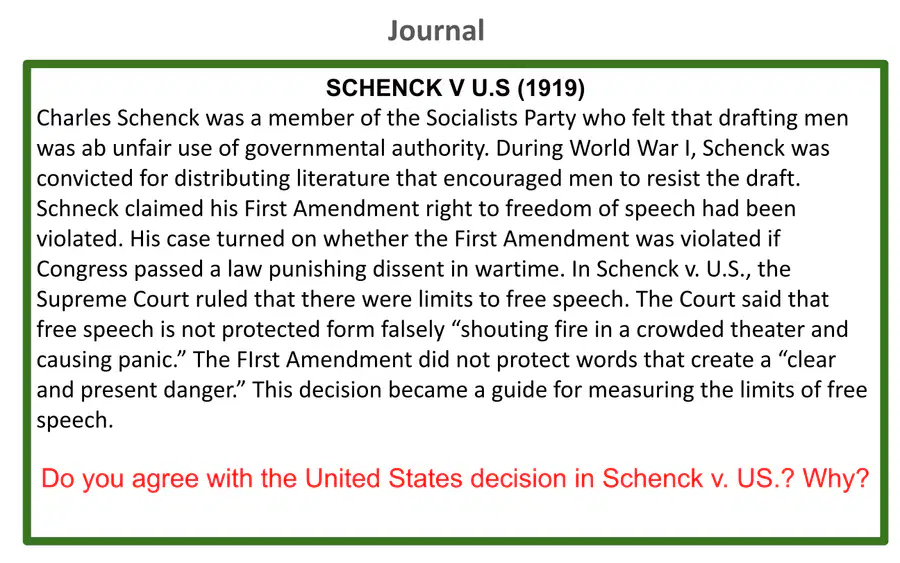
Do you agree with the United States decision in Schenck v. US? Why?
5
6
Multiple Choice
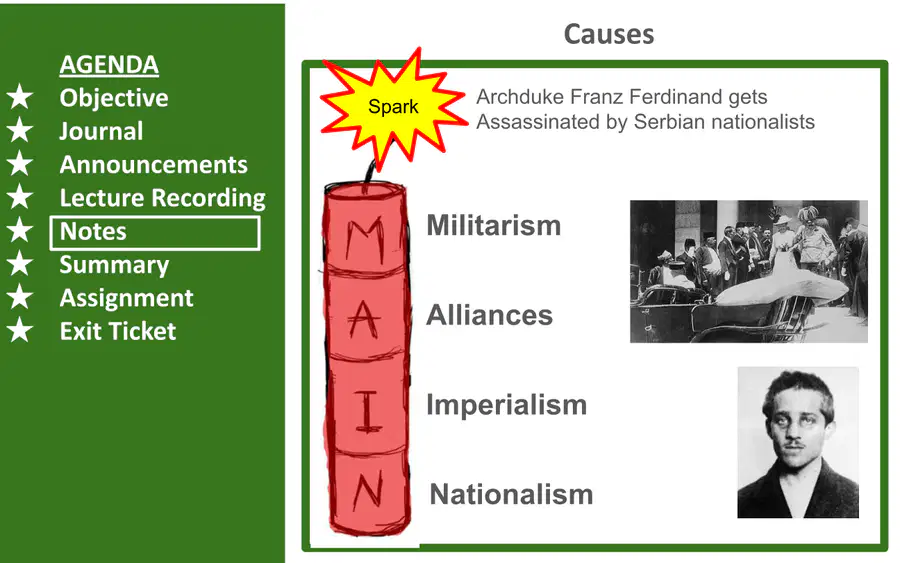
Which of the following was the immediate spark that started World War I?
The assassination of Archduke Franz Ferdinand
The signing of the Treaty of Versailles
The bombing of Pearl Harbor
The invasion of Poland
7
8
Multiple Select
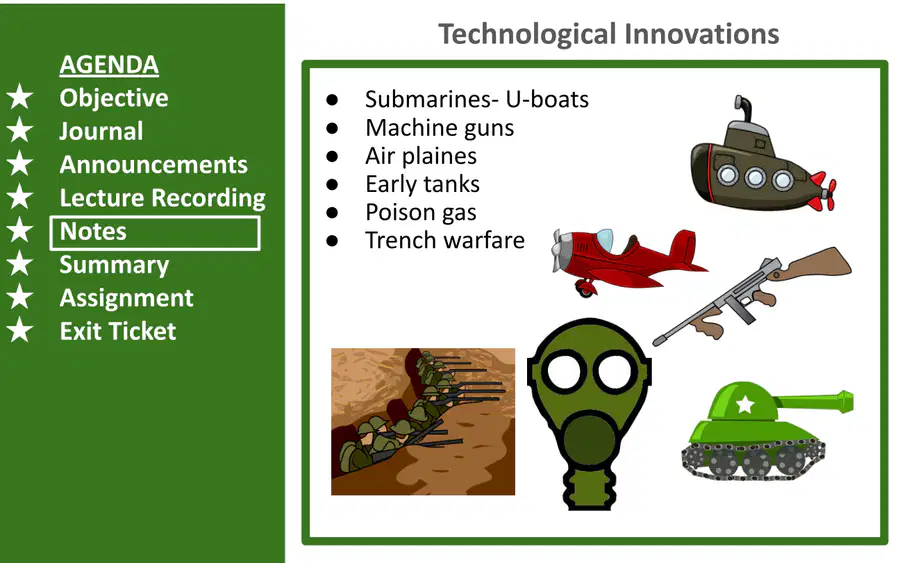
Which of the following were technological innovations introduced during World War I?
Submarines (U-boats)
Machine guns
Poison gas
Atomic bombs
9

10
Open Ended
What was the Schlieffen Plan and how did it impact the early stages of World War I, and why wasn't Germany able to complete this military mission?
11
12
13
14
Multiple Choice
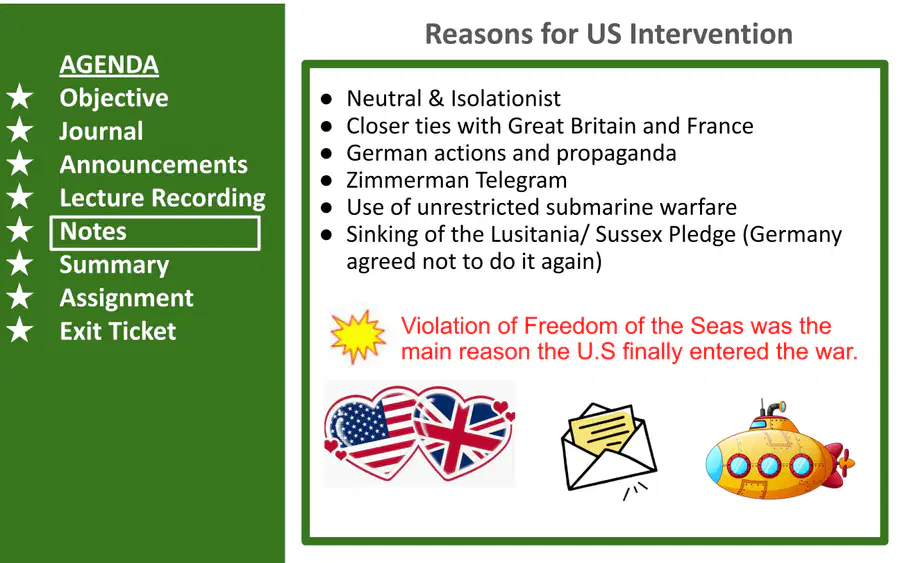
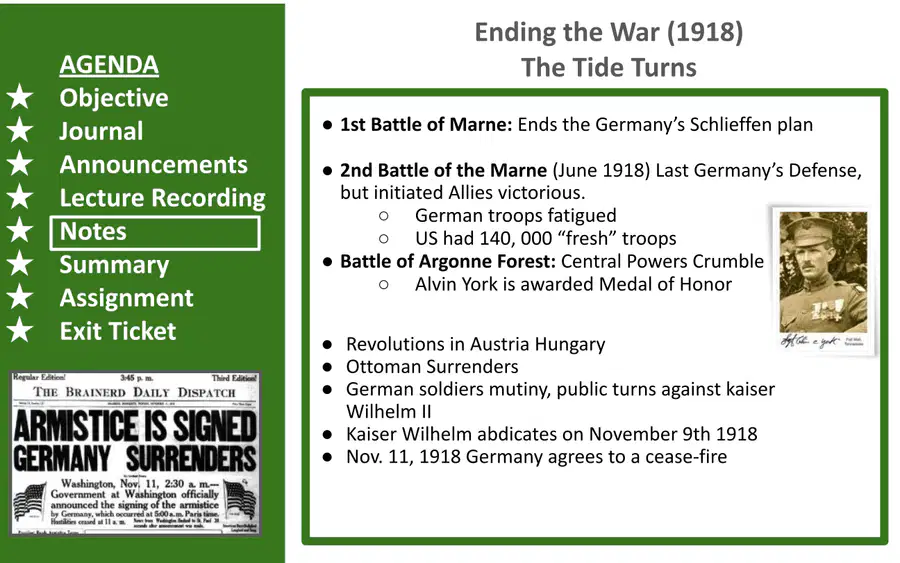
Which of the following was the main reason the United States finally entered World War I?
Zimmerman Telegram
Violation of Freedom of the Seas
Closer ties with Great Britain and France
German actions and propaganda
15


16
17
Open Ended
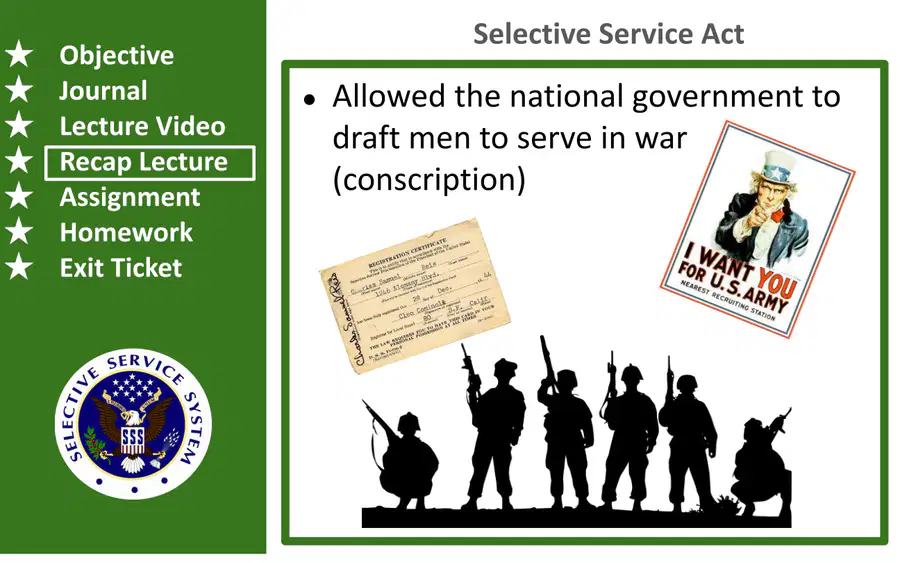
How did the Selective Service Act impact the U.S. military during World War I?
18

19
Multiple Select
Which of the following were effects of the Espionage Act of 1917?
It allowed criticism of the war effort
It led to the conviction of Schenck for encouraging resistance to the draft
It protected all forms of free speech
It established limits to the 1st Amendment
20
21
Open Ended
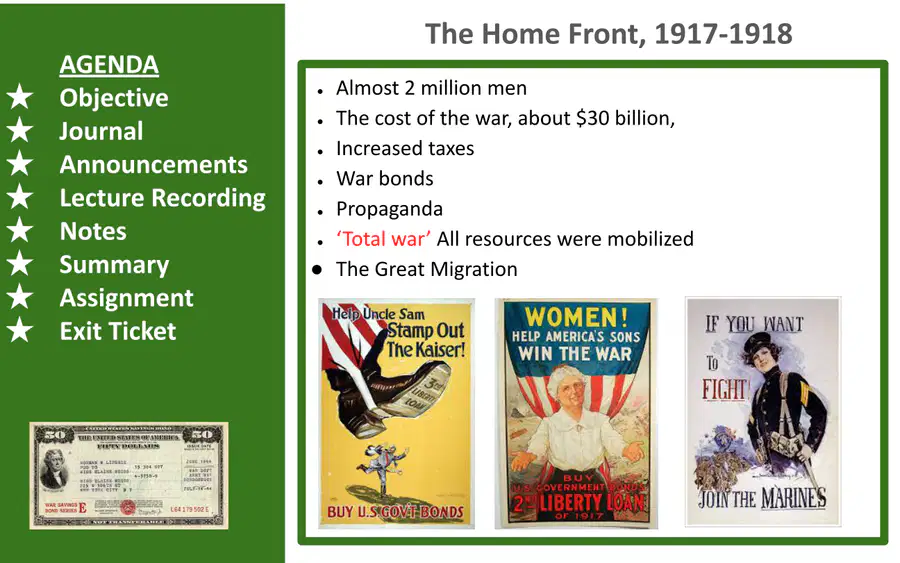
Describe two ways the U.S. government mobilized resources on the home front during World War I.
22
23

24
25
26
Multiple Select
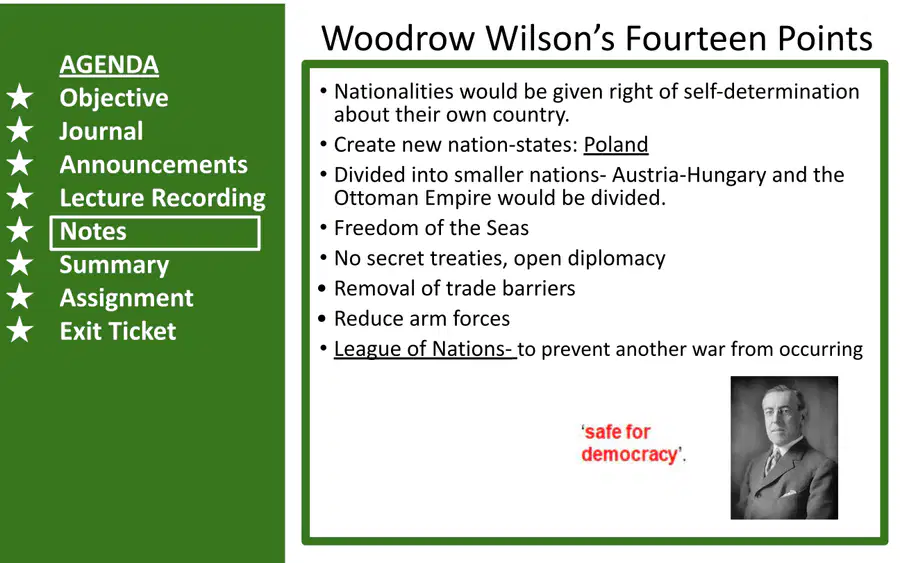
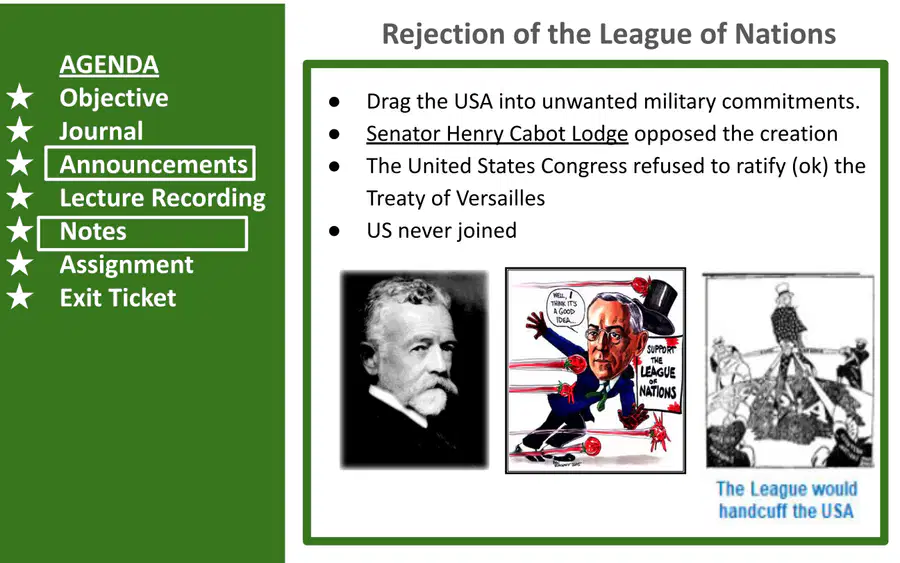
Which of the following were part of Woodrow Wilson’s Fourteen Points?
Freedom of the Seas
Punish Germany by making them pay repartions
League of Nations
Removal of trade barriers
27

28
29
Multiple Select
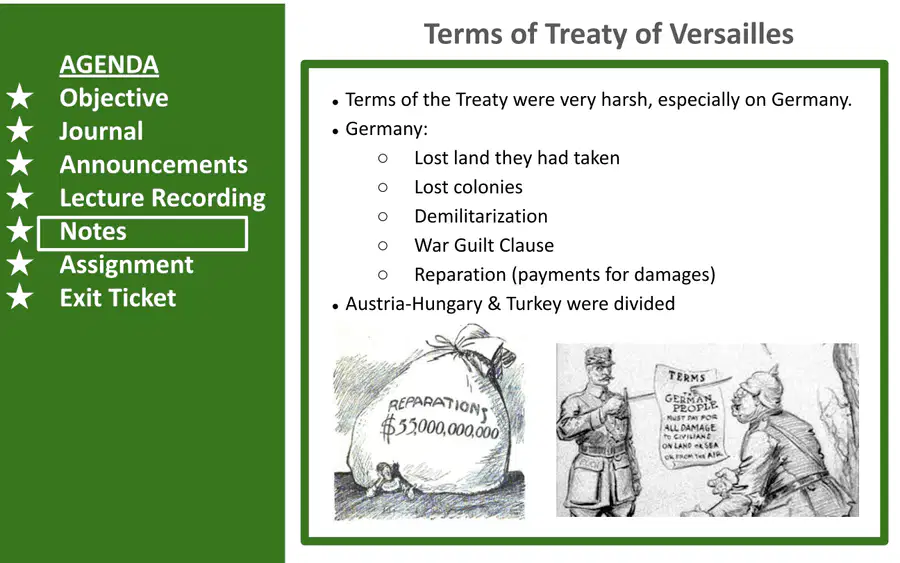
According to the Terms of the Treaty of Versailles, which of the following consequences did Germany face?
Lost colonies
Demilitarization
Expansion of territory
Reparation payments
30
31
32
Multiple Choice
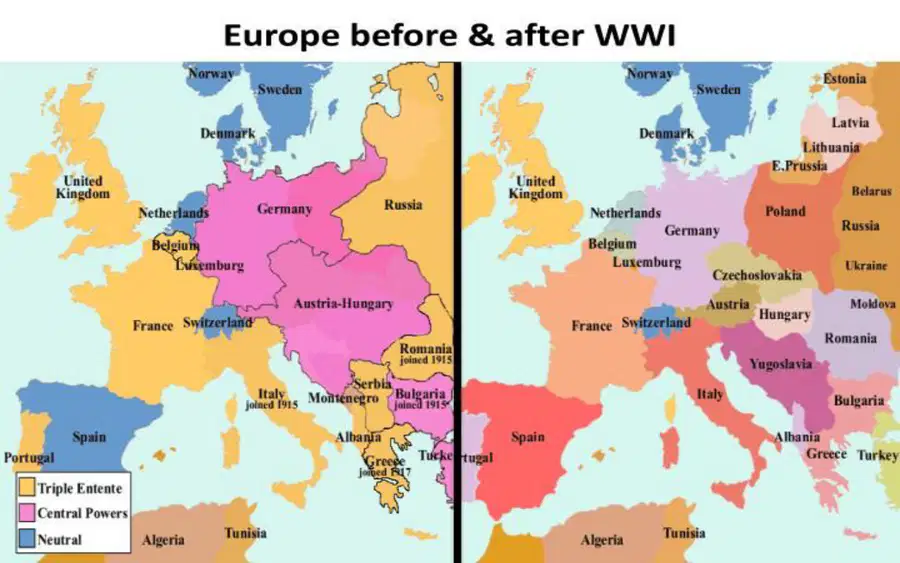
Which of the following countries was created as a result of the changes in Europe after World War I?
Czechoslovakia
Slovenia
Montenegro
Ottoman Empire
33

34
Multiple Select
Which of the following were requirements placed on Germany by the Treaty of Versailles?
Pay reparations
Accept war guilt
Expand military
Demilitarize
35

36
37
Multiple Choice
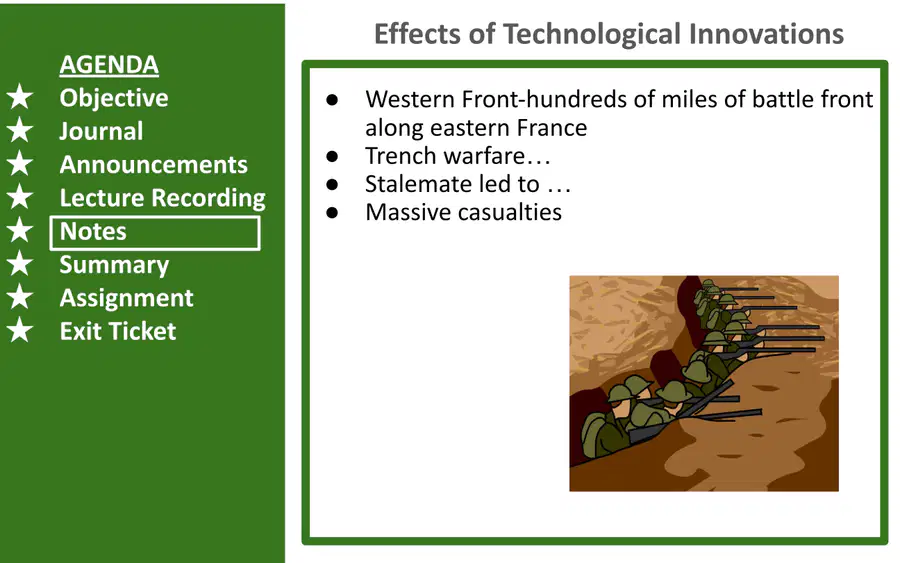
Which of the following vocabulary terms is most closely associated with the type of fighting that took place on the Western Front during World War I?
Trench warfare
Selective Service Act
Wilson’s 14 points
Treaty of Versailles
38
Open Ended
What were the major reasons why the United States entered World War I?
39
Multiple Choice
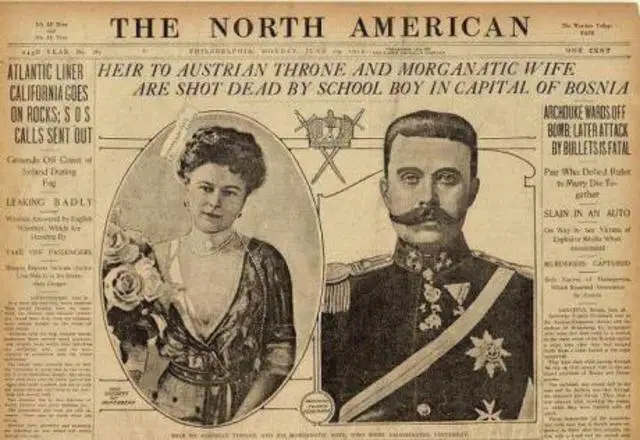
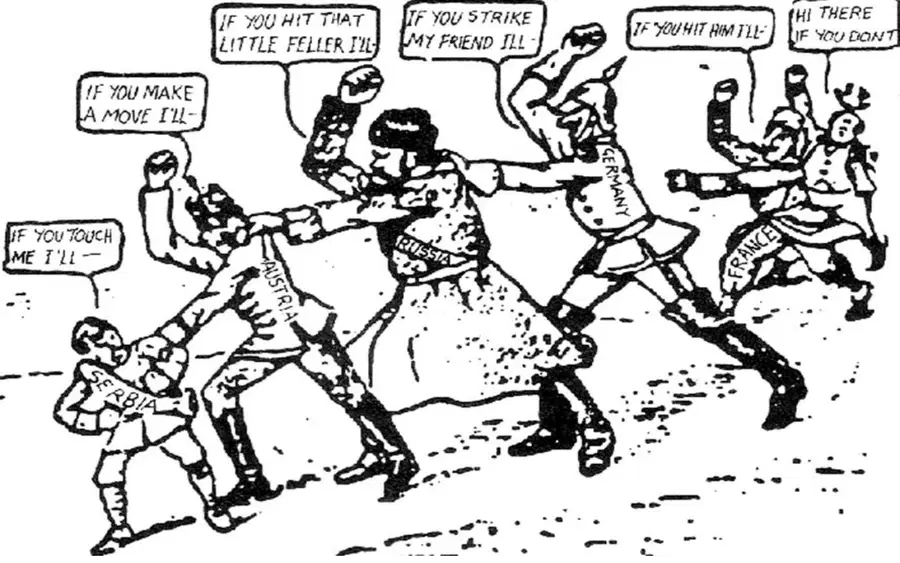
How does this newspaper best illustrate how the assassination of a political figure contributed to the outbreak of World War I?
A. It shows that industrialized nations used the event to justify expanding their colonial empires.
B. It reflects how tensions in Southeastern Europe triggered a series of war declarations due to tangled alliance obligations.
C. It reveals that Austria-Hungary immediately launched attacks on Britain and France in retaliation.
D. It proves that nationalist groups from Western Europe were primarily responsible for starting the war.
40
Multiple Choice
“Faced with barbed wire, entrenched positions, and machine-gun fire, our forces relied on tanks and chemical weapons to disrupt enemy defenses. Though experimental, these technologies filled urgent needs on the battlefield.”
What does this excerpt suggest about the relationship between military needs and technological innovation during World War I?
A. Most new weapons were developed for postwar civilian use
B. Innovations were driven by competition for industrial dominance
C. Urgent battlefield challenges prompted rapid scientific development and testing
D. The use of new technologies had little strategic impact on the outcome of the war
41
Multiple Choice

According to the chart, how did the introduction of these weapons affect the conduct of World War I?
A. They reduced the duration of major battles by overwhelming defenses
B. They forced commanders to abandon traditional strategies and adapt to new forms of warfare
C. They had minimal influence due to poor battlefield conditions
D. They were most useful in colonial battles rather than European theaters
42
Multiple Choice
Excerpt from President Woodrow Wilson’s Address to Congress (April 2, 1917)
“The present German submarine warfare against commerce is a warfare against mankind. It is a war against all nations… The challenge is to all mankind. Each nation must decide for itself how it will meet it. The choice we make today is for civilization.”
According to President Wilson’s speech, what factor most directly pushed the United States to enter the war?
A. Germany’s attacks on ships threatened American lives and violated the nation’s right to freedom of the seas
B. The rise of militarism in European nations and growing stockpiles of weapons
C. The assassination of a European political leader in the Balkans
D. British and French demands that the U.S. honor old alliance agreement
43
Multiple Choice
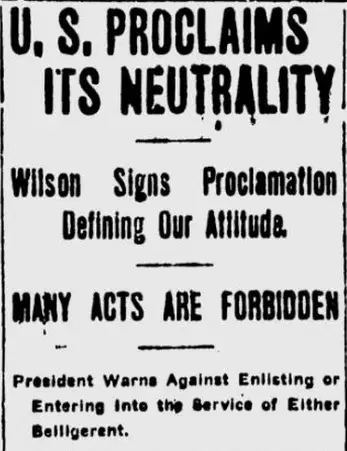
What does this headline most strongly suggest about the U.S. government's approach to the war in its early stages?
A. The United States aimed to protect economic interests by immediately supporting Allied powers without a formal declaration of war.
B. Although President Wilson expressed neutrality, the U.S. had already begun preparing for military involvement in Europe.
C. The government pursued a policy of isolationism, hoping to avoid entanglement in European alliances and conflicts.
D. Congress had already committed troops to support Great Britain, despite public opposition to the war.
44
Multiple Choice
Excerpt from President Woodrow Wilson’s Address to Congress (April 2, 1917)
“The present German submarine warfare against commerce is a warfare against mankind. It is a war against all nations… The challenge is to all mankind. Each nation must decide for itself how it will meet it. The choice we make today is for civilization.”
According to President Wilson’s speech, what factor most directly pushed the United States to enter the war?
A. Germany’s attacks on ships threatened American lives and violated the nation’s right to freedom of the seas
B. The rise of militarism in European nations and growing stockpiles of weapons
C. The assassination of a European political leader in the Balkans
D. British and French demands that the U.S. honor old alliance agreement
45
Multiple Choice
Excerpt from the Espionage Act of 1917
"Whoever, when the United States is at war, shall willfully make or convey false reports or statements with intent to interfere with the operation or success of the military... shall be punished by a fine or imprisonment."
Which constitutional issue was raised in response to this law?
A. Whether the law violated the Fifth Amendment right to due process
B. Whether the government had overstepped its authority to regulate commerce
C. Whether the law infringed on the First Amendment right to freedom of speech
D. Whether the military had the power to create laws without congressional approval
46
Multiple Choice
Excerpt from Woodrow Wilson’s Fourteen Points (1918):
"A general association of nations must be formed under specific covenants for the purpose of affording mutual guarantees of political independence and territorial integrity to great and small states alike."
What was the main purpose of Wilson’s proposal in this excerpt?
A. To encourage the Allied powers to annex territory from defeated nations
B. To establish a system for resolving future international conflicts without resorting to war
C. To justify U.S. withdrawal from the war before peace terms were finalized
D. To prevent the spread of communism in Eastern Europe
Show answer
Auto Play
Slide 1 / 46
SLIDE
Similar Resources on Wayground

40 questions
Trivia GD/Anthelia
Presentation
•
KG
40 questions
2.1 Dividing Fractions
Presentation
•
KG
40 questions
COT#2 AP 2 Q3 W7 - MARCH 28, 2022
Presentation
•
2nd Grade
42 questions
ENGLISH - KISI-KISI UAS GENAP KELAS 2
Presentation
•
2nd Grade
40 questions
Formative Assessment for exam 2°
Presentation
•
2nd Grade
46 questions
CKLA 2nd Domain 7 Lesson 1
Presentation
•
2nd Grade
41 questions
Uri Thursday April 15, 2021
Presentation
•
2nd Grade
39 questions
E2S1U1 - Key Words Lesson
Presentation
•
2nd Grade
Popular Resources on Wayground
24 questions
PBIS-HGMS Day 10

Quiz
•
6th - 8th Grade
10 questions
HCS SCI 03 Summer School Review 3
Quiz
•
3rd Grade
11 questions
Home Scope
Quiz
•
7th - 8th Grade
15 questions
HCS SCI 05 Summer School Assessment 3 Review
Quiz
•
5th Grade
35 questions
Lufkin Road Middle School Student Handbook & Policies Assessment
Quiz
•
7th Grade
18 questions
Geo 11.3 Area of Circles and Sectors
Quiz
•
9th - 11th Grade