

Unit 2 Lesson 2

Presentation
•
Science
•
6th Grade
•
Practice Problem
•
Medium
+4
Standards-aligned

Craig Kirkdoffer
Used 7+ times
FREE Resource
26 Slides • 20 Questions
1
Structure and Support
2
Multiple Choice

Four students were discussing muscle. They each had a different ideas about whether muscles are alive.
Millie: Muscles are living because they are inside of our bodies.
Akhim: Muscles are living because they are made up of cells.
Bao: Muscles are nonliving because their cells do not reproduce.
Tony: Muscles are nonliving because they do not exist as single celled organisms.
3

One part of the body that enables the girl to do a handstand is her muscles. Do you think she controls all of her muscles? Shake hands with another student. What muscles did you use? Did you have to think about this action? Explain your answer

Write your answer on page 77
4
Rest your index and middle fingers on the side of your wrist until you can feel your pulse. What muscles control your pulse? Can you change the speed of your pulse by thinking about it?

Write your answer on page 77
5
What part of your body have muscles that you can control by thinking about them? What are their functions?
Write your answer on page 77
6
Think of other muscles in your body, besides your heart, that work without you thinking about them. How do the functions of these muscles differ from the ones you consciously control?
Write your answer on page 77
7
8
Did you see how your muscles have different functions? Use your observations about the phenomenon to make a claim about what body systems work together to provide structure and support.
9
10
You probably have already learned that you need muscles in order to move. At the beginning of the lesson, you saw a girl support the weight of her body with just her arms by using muscles. How do muscles work? A muscle is made of strong tissue that contract in an orderly way. When a muscle contracts, the cells of the muscle become shorter. When the muscle relaves, the cells return to their original length.

11
You might recall that mitochondria are the main energy producers in a cell. Because so much energy is required for muscle function, muscle cells are packed with mitochondria. Muscles allow for movement of the body, but they do not work alone.

Muscles enable the body to move, but cannot function without the support of bones. Bones can move because they are attached to muscles. The skeletal system and the muscular system work together and move you body.
12
Your bones work together at places called joints. A joint is where two or more bones meet. Joints provide flexibility and movement. Like you saw with the girl doin a handstand at the start of the lesson. Bones are connected to other bones by tissues called ligaments. When the bones in the joints move, ligaments stretch and keep the bones from shifting away from each other. Your arms and legs may not seem like machines but in fact they are. When muscles pull on bones they act like a simple machine called a lever. Levers rotate about a fixed point, which in your body are the joints. Three different types of joints enables movement- ball and socket, hinge, and pivot joints.
13
Multiple Choice
________ is strong tissue that can contract in an orderly way.
Joint
Ligament
Muscle
Tendon
14
Multiple Choice
________ is where two bones meet.
Joint
Ligament
Muscle
Tendon
15
Multiple Choice
________ is the tissue that connects bones to other bones.
Joint
Ligament
Muscle
Tendon
16

How do muscles and bones provide structure and support for organisms such as the girl doing the handstand at the beginning of the lesson? Record your evidence (A) in the chart at the beginning of the lesson.
17
Multiple Choice
Which joint allows bones to move and rotate in nearly all directions?
Ball and Socket
Hinge
Pivot
18
Multiple Choice
How does you neck allow your bones to move?
move and rotate in nearly all directions
move back and forth in a single direction
bones to turn
19
Open Ended
Imagine that you are building a robot that is shaped like a human. You can insert any type of joint where two or more bones meet. Pick one joint in your robot and change they type of joint for that location. What change would you make and what advantages would it provide?
20
The skeletal system does more than help the body move. Bones provide support. They help you sit up, stand, and raise your arm over you head to ask a question. What else can the skeleton do for the body?
Feel you head, and then feel your stomach. Your stomach is softer than you head. The hard, rigid structure you feel in you head is your skull. It protects the soft, fragile tissue of your brain from damage. Other bones protect the spinal cord, heart, lungs, and other internal organs.
Another function of bones is to produce and store materials needed by your body. Red blood cells are produced inside your bones. Bones store fat and calcium. Calcium is needed for strong bones and for many Cellular processes.
21
Multiple Choice
Which body system provides support for the body?
skeletal
muscular
circulatory
nervous
22
Multiple Choice
Which one is not a function of your bones?
Creating Red Blood Cells
Storing Fat
Creating Minerals
Storing Calcium
23

24
In what ways are different animals supported and provided with structure
Fluid Support What about organisms that don't have bones, such as worms? What provides them with structure, and how do they move? You move by using your muscles and skeleton. However, an earthworm does not have a skeleton. How is an earthworm able to move? Some animals have an Hydrostatic skeleton, which is a fluid-filled internal cavity surrounded by muscle tissue. Muscles help the organism move by pushing the fluid in different directions.

25
Hard outer coverings provide support and protection for many animals. Sometimes called shells. These outer coverings support animals such as crabs, snails, and the scorpion shown to the left. A thick hard outer covering that protects and supports an animal's body is called an exoskeleton.

26
Multiple Choice
__________ is a thick, hard outer covering that protects and supports an animal's body.
Endoskeleton
Exoskeleton
Hydrostatic skeleton
Hyperstatic skeleton
27
Multiple Choice
_______ is a fluid-filled internal cavity surrounded by muscles tissue which help organism move.
Endoskeleton
Exoskeleton
Hydrostatic skeleton
Hyperstatic skeleton
28
Open Ended
Why might an animal with an exoskeleton have to shed it occasionally?
29

30
How are different types of animals provided with structure and support? Record your evidence (B) in the chart at the beginning of the lesson (pg 80).
31
You have learned how muscle enable organism to move. However muscles serve other functions in the body besides movement. Three types of muscle cells-skeletal, cardiac, and smooth- have different characteristics and functions in the body.
Skeletal Muscle- type of Muscle that attaches to bones is skeletal Muscle. Called "Voluntary Muscles" and can be quick and powerful (ex. running fast)
Cardiac Muscle- Muscles are only found in the heart. Involuntary muscle that pumps blood through your heart and through blood vessels through your body.
Smooth Muscle- line blood vessels and many organs like stomach. Involuntary muscles and named for their smooth appearance.


Skeletal
Cardiac
Smooth
32

What systems do plants have that give them structure and support?
33
Roots
Even though the roots of most plants are never seen, they are vital to a plant's survival. Roots anchor a plant, either in soil or onto another plant or an object such as a rock. All Roots help a plant stay upright. Some plants have roots that spread out in all directions several meters from a plan'ts stem. All root systems help a plant absorb water and other substances from the soil.
Many plants have a large main root, called a taproot, with smaller roots growing from it. Some plants have additional small roots above ground, called prop roots, that help support the plant. Other plants have fibrous root systems that consist of many small branching roots.


34
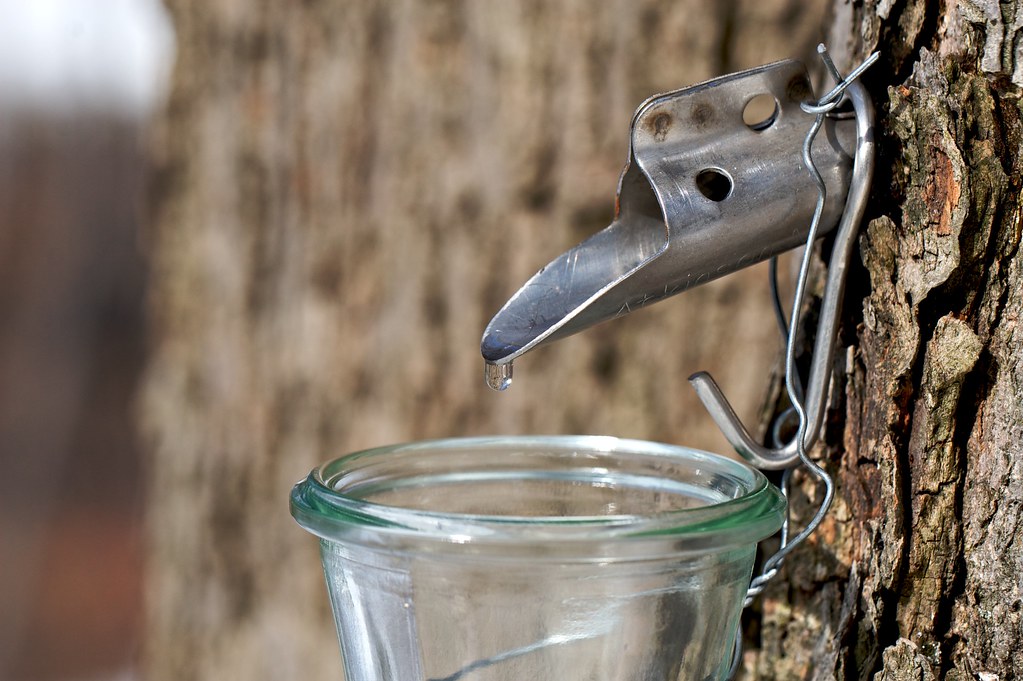
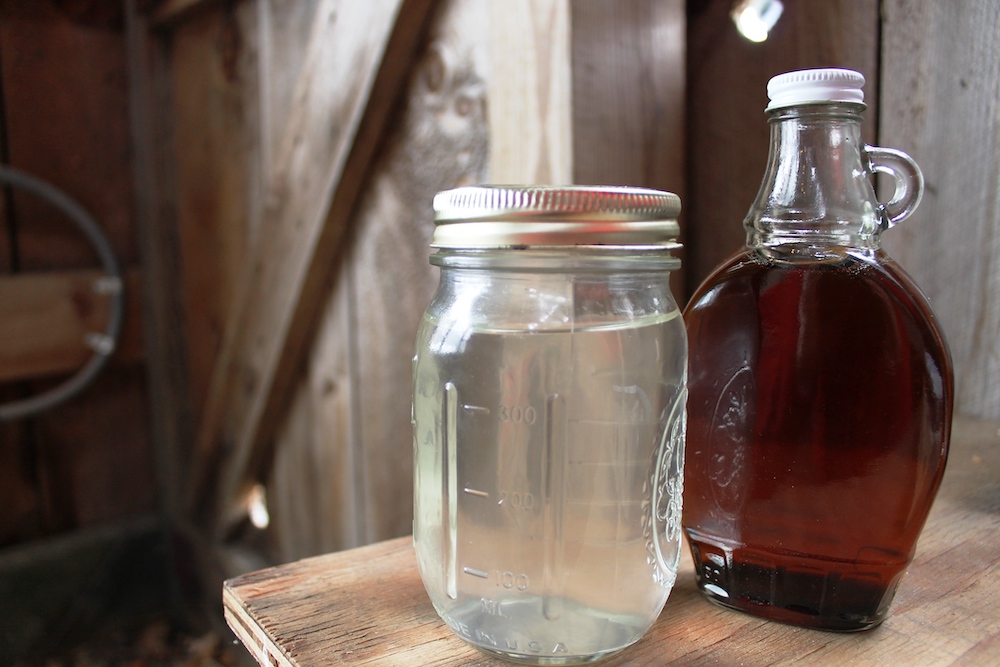
Plants such as radishes and carrots store food in their roots. This food can be used to grow new plant tissue after a dry period or a cold season. Sugar stored in the roots of sugar maple trees over the winter is converted to maple sap in the spring. Farmers drain some of the sap from these trees and boil it to make maple syrup.


35
Stems
Have you ever leaned against a tree? If so, you were leaning on a plant stem. In plants such as the tree, the stem is obvious. Other plants such as the potato and the iris, have underground stems that are often mistaken for roots.
Support branches and leaves
tissue transport water, minerals, and food.
Sugar from photosynthesis flows through the stem
certain areas produce new cells
Plant stems usually are classified as either Herbaceous or woody. Woody stems are stiff and typically not green (Trees or Shrubs). Herbaceous stems are usually soft and green.
36
Multiple Choice

Which plant has a woody stem structure?
Tree
Vine
Both
Neither
37
Multiple Choice
Which plant has a herbaceous stem structure?
Tree
Vine
Both
Neither
38
Open Ended
What would be a benefit for a plant with a herbaceous stem?
39
How do systems provide plants with structure and support? Record your evidence (C) in the chart at the beginning of the lesson (pg 80).
40

3-Dimensional Thinking: Compare and Contrast the systems that provide structure and Support in plants and animals
41

Organize Create a graphic organizer to summarize the fuction of the muscular system and how it interacts witht other organs
2. Create another graphic organizer to summarize the systems of structure and support found in plants and how they interact with one another
42
Multiple Choice
Why do muscle cells have so many mitochondria?
Muscle cells are bigger than every other cell and can fit more mitochondria
Muscle cells need to quickly respond to energy needs
Mitochondria in muscle cells are smaller so more are needed
There are more mitochondria only because there are more nuclei
43
Multiple Choice
What is the effect when a muscle contracts?
The muscle lengthens.
The muscle pushes on a bone.
The muscle pushes on another muscle.
The muscle shortens.
44
Multiple Choice
What are the characteristics of woody stems?
soft and green
rigid and not green
soft and not green
rigid and green
45
Multiple Choice

The image represents a joint that would be found in which structure?
finger
knee
neck
shoulder
46
Multiple Choice
What are the characteristics of herbaceous stems?
soft and green
rigid and not green
soft and not green
rigid and green
Structure and Support
Show answer
Auto Play
Slide 1 / 46
SLIDE
Similar Resources on Wayground

39 questions
S6E5g
Presentation
•
6th Grade
42 questions
Module F Unit 2 Lesson 1 - Earth's Oceans and the Ocean Floor
Presentation
•
6th Grade
41 questions
Air Quality & Air Pollution
Presentation
•
6th Grade
40 questions
Scientific Method
Presentation
•
7th Grade
39 questions
Scientific Method
Presentation
•
6th Grade
38 questions
Thermal Energy Lesson
Presentation
•
6th Grade
39 questions
Human Body Systems
Presentation
•
7th Grade
39 questions
Digestive System
Presentation
•
6th Grade
Popular Resources on Wayground
21 questions
Continents and Oceans

Quiz
•
6th Grade
20 questions
Parts of Speech
Quiz
•
5th Grade
16 questions
Subject & Predicate
Quiz
•
5th Grade
25 questions
Multiplication Facts
Quiz
•
5th Grade
12 questions
Map Skills
Quiz
•
3rd Grade
22 questions
Continents and Oceans
Quiz
•
5th Grade
15 questions
Rounding Decimals
Quiz
•
5th Grade
20 questions
Brand Labels
Quiz
•
5th - 12th Grade
Discover more resources for Science
20 questions
Elements, compounds, and mixtures
Quiz
•
6th Grade
10 questions
6.6D - Relative Density Review
Quiz
•
6th Grade
20 questions
Claim, Evidence and Reasoning (CER)
Quiz
•
6th - 8th Grade
10 questions
Exploring Chemical and Physical Changes

Interactive video
•
6th - 10th Grade
20 questions
Rocks and The Rock Cycle
Quiz
•
6th Grade
20 questions
6th Grade Force & Motion
Quiz
•
6th Grade
18 questions
Interpreting Distance/Time Graphs
Quiz
•
6th Grade
16 questions
Kinetic Energy and Potential Energy
Presentation
•
6th Grade