

ch22.ppt

Presentation
•
Physics
•
11th Grade
•
Practice Problem
•
Hard

Wayground Resources
FREE Resource
30 Slides • 27 Questions
1
2
Open Ended
Why is it important to understand the different ways heat can be transferred, such as conduction, convection, and radiation, in our daily lives?
3
4
Multiple Choice
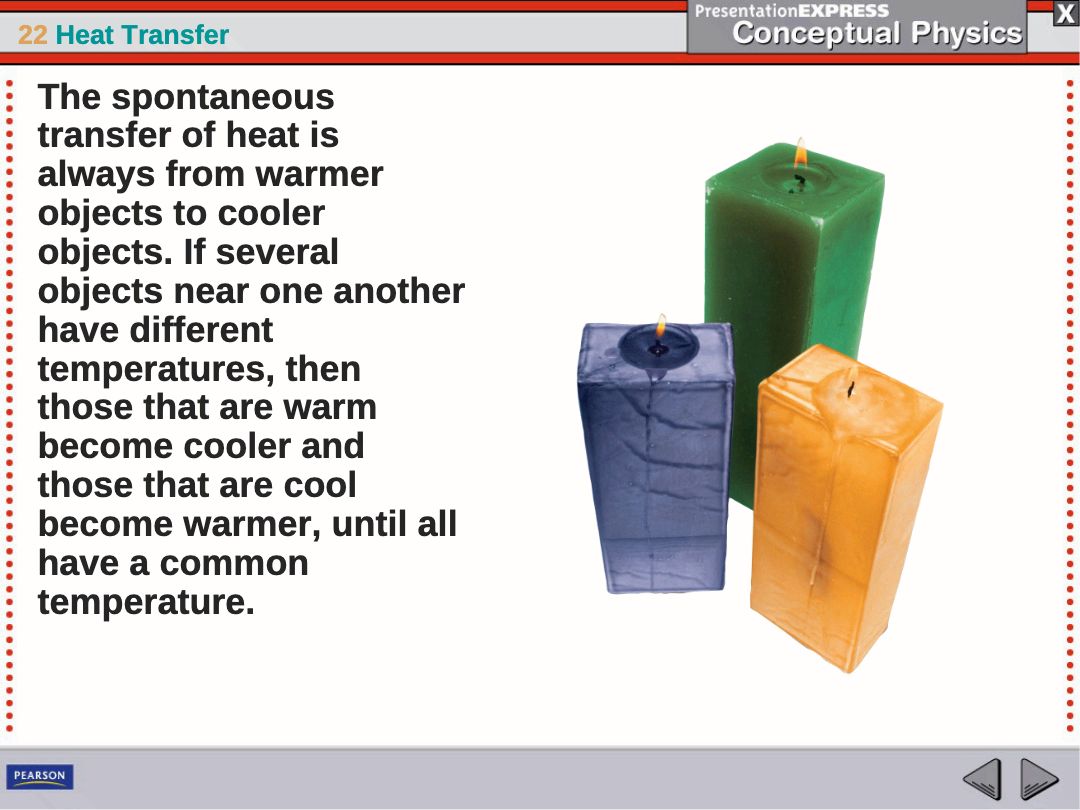
When several objects at different temperatures are placed near each other, what will eventually happen to their temperatures?
They will all reach the same temperature.
The warm objects will get warmer and the cool objects will get cooler.
Their temperatures will remain unchanged.
Only the largest object will change temperature.
5
6
7
Fill in the Blanks
Materials that conduct heat well are known as heat
Type answer...
8
Multiple Choice
Which of the following best describes the process of conduction as explained in the slides?
Transfer of thermal energy through collisions between particles without overall transfer of matter
Transfer of matter along with energy
Transfer of energy through radiation only
Transfer of energy by convection currents
9
10
11
Open Ended
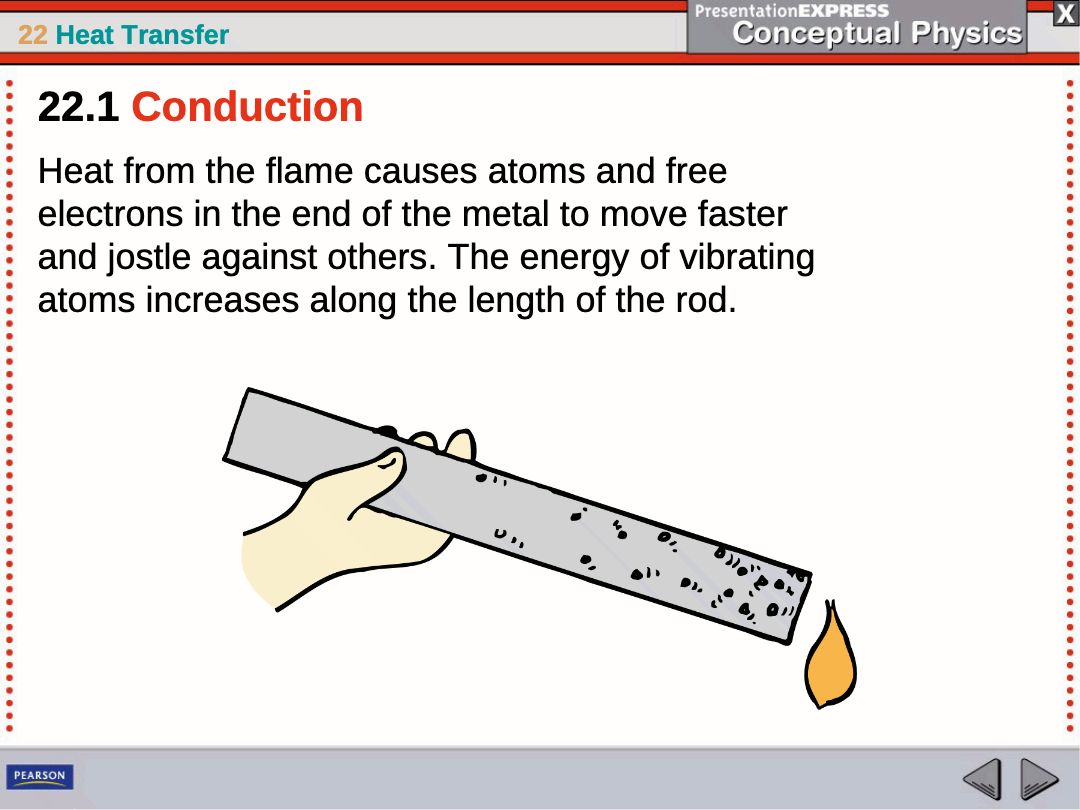
Explain how the energy of vibrating atoms changes along the length of a metal rod when one end is heated by a flame.
12
13
Multiple Choice
Which of the following is NOT a reason why metals are good conductors of heat?
They have loosely bound outer electrons.
Their atoms vibrate more rapidly when heated.
They have tightly bound electrons that do not move.
Free electrons can transfer energy by colliding with atoms and other electrons.
14
Multiple Select
Which of the following statements about conductors is/are correct?
Materials with loose outer electrons are good conductors of heat.
Metals are the best conductors of heat and electricity.
All materials conduct heat equally well.
Good conductors of heat are always good conductors of electricity.
15
16
Open Ended
Why does metal feel colder than wood even if both are at the same temperature?
17
18
Multiple Choice
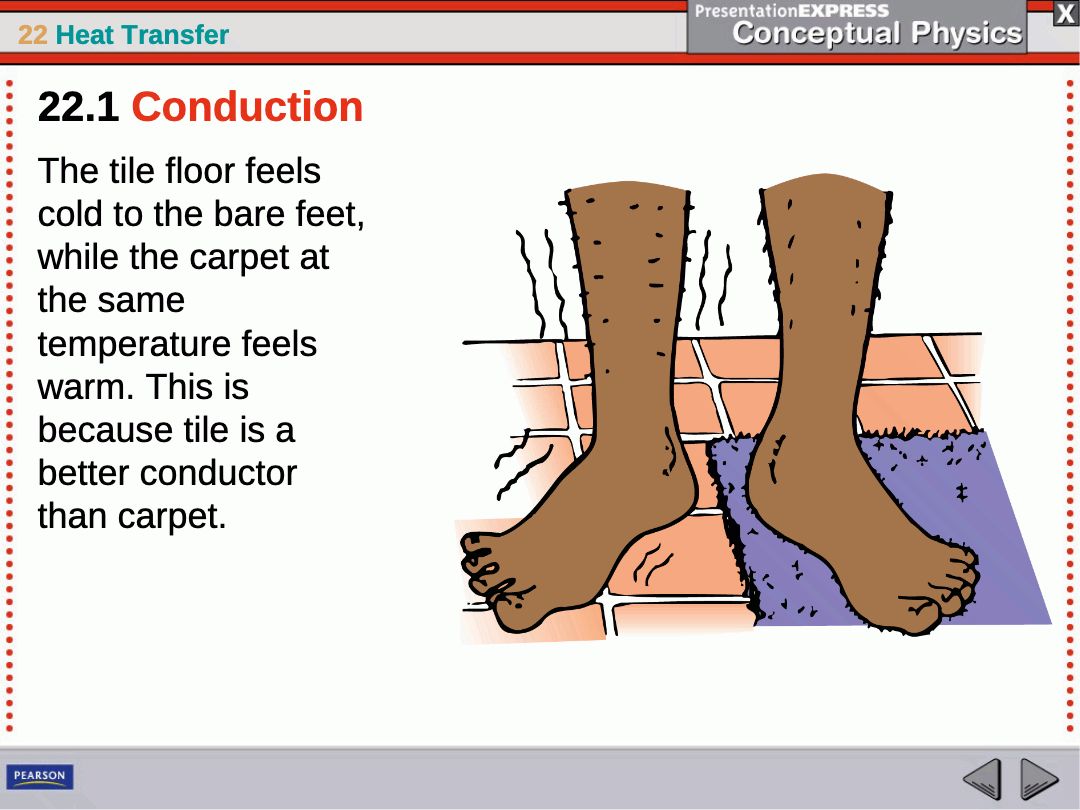
Why does a tile floor feel colder to bare feet than a carpet at the same temperature?
Because tile is a better conductor of heat than carpet
Because tile is colder than carpet
Because carpet is a better conductor of heat than tile
Because tile absorbs more heat from the feet
19
20
21
Multiple Select
Which of the following materials are considered good insulators due to the air spaces they contain?
Wool
Polystyrene
Feathers
Metal
22
23
Fill in the Blanks
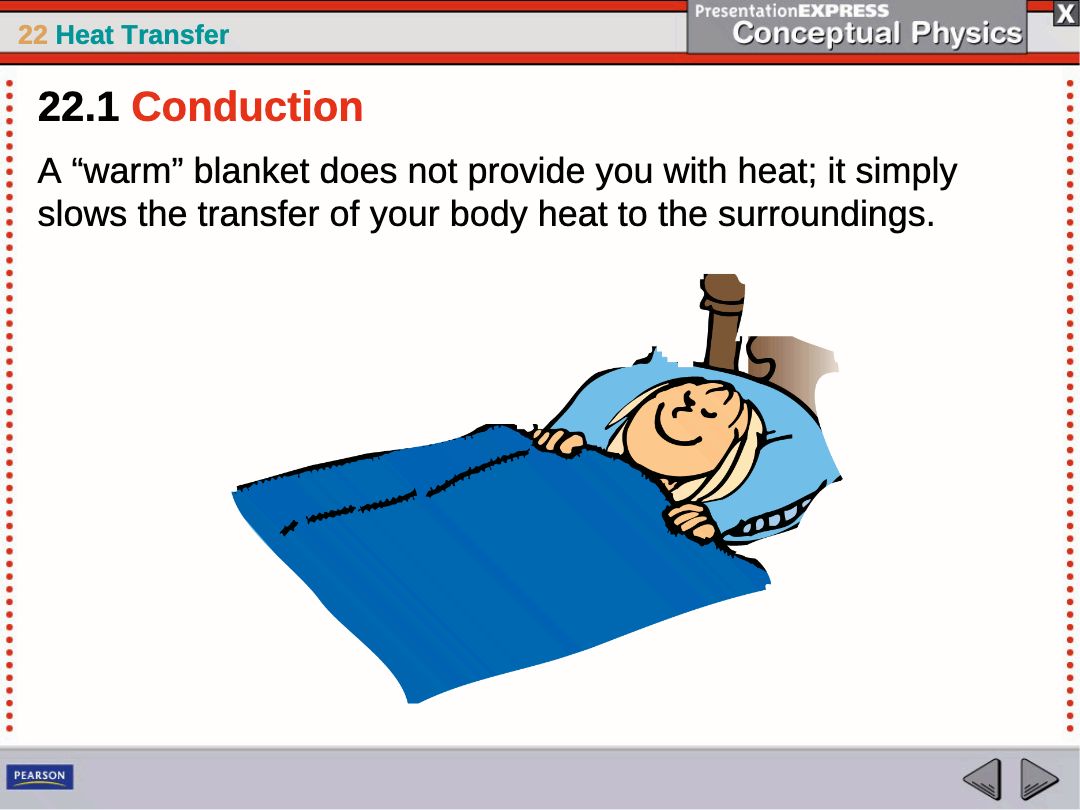
A 'warm' blanket does not provide you with heat; it simply slows the transfer of your body heat to the
Type answer...
24
25
Multiple Choice
What is the main purpose of insulation in a home according to the slides?
To keep the cold out
To keep the heat in
To prevent air flow
To make the house look better
26
27
Open Ended
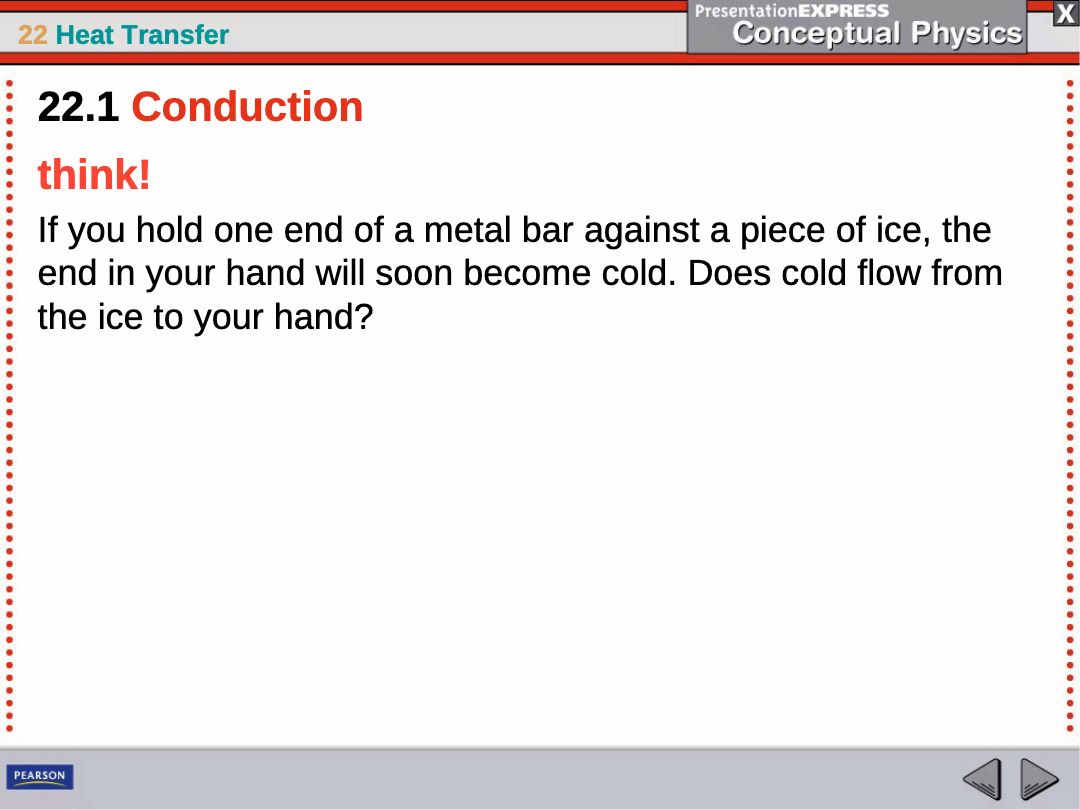
Why does snow last longer on the roof of a well-insulated house compared to a poorly insulated one?
28
29
Open Ended
If you hold one end of a metal bar against a piece of ice, the end in your hand will soon become cold. Does cold flow from the ice to your hand?
30
31
Multiple Choice
Which of the following statements best explains why metal feels colder than wood at the same temperature?
Metal is a better conductor of heat than wood.
Wood absorbs more heat than metal.
Metal is always colder than wood.
Wood is a better conductor of heat than metal.
32
33
Open Ended
You can place your hand into a hot pizza oven for several seconds without harm, whereas you’d never touch the metal inside surfaces for even a second. Why?
34
35
36
Open Ended
How does conduction transfer heat?
37
38
Multiple Select
Which of the following are methods of heat transfer?
Conduction
Convection
Radiation
All of the above
39
Fill in the Blanks
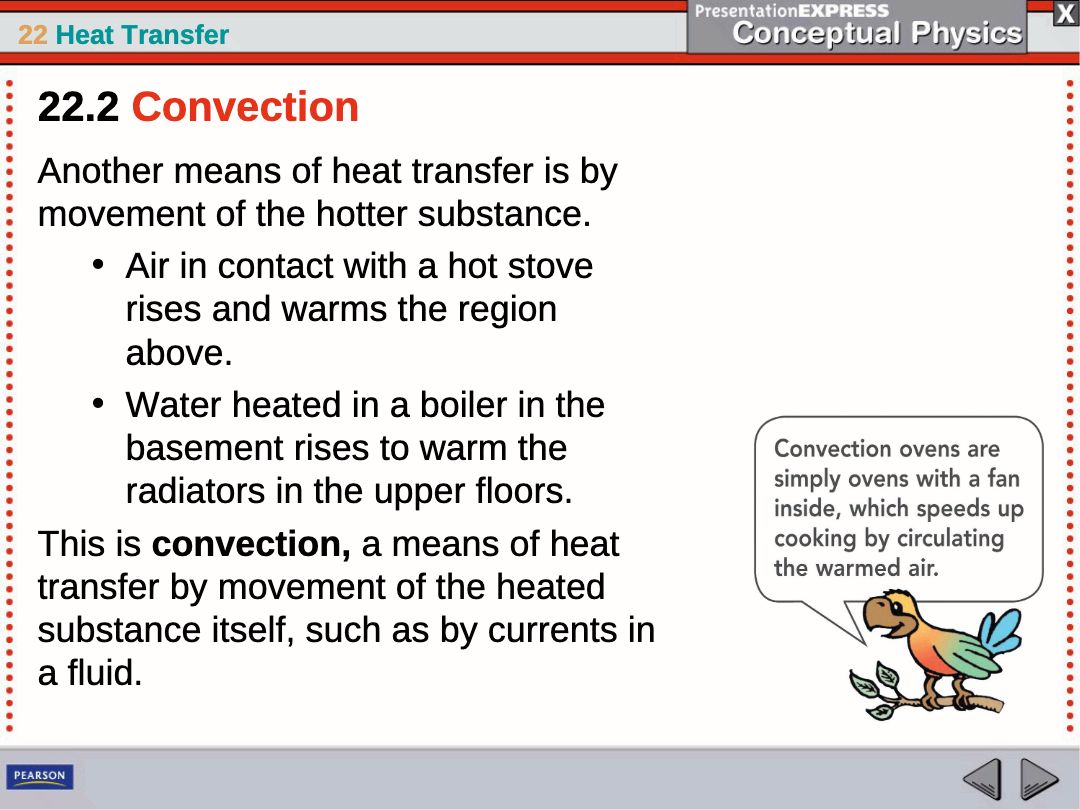
Fill in the blank: In convection, heat is transferred by movement of the
Type answer...
40
41
Multiple Choice
Which of the following best describes convection as a method of heat transfer?
Movement of heated substance itself, such as by currents in a fluid
Transfer of heat through direct contact between molecules
Transfer of heat by electromagnetic waves
Transfer of heat only in solids
42
43
Fill in the Blanks
When a fluid is heated, it expands, becomes less
Type answer...
44
Open Ended
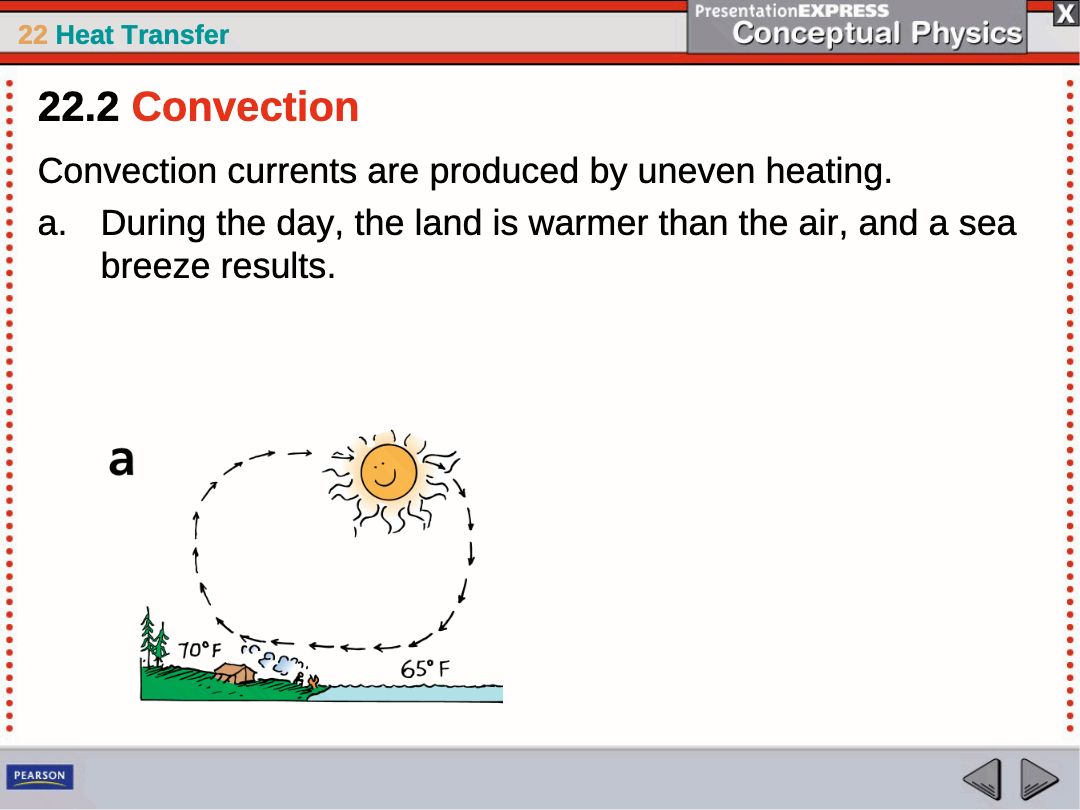
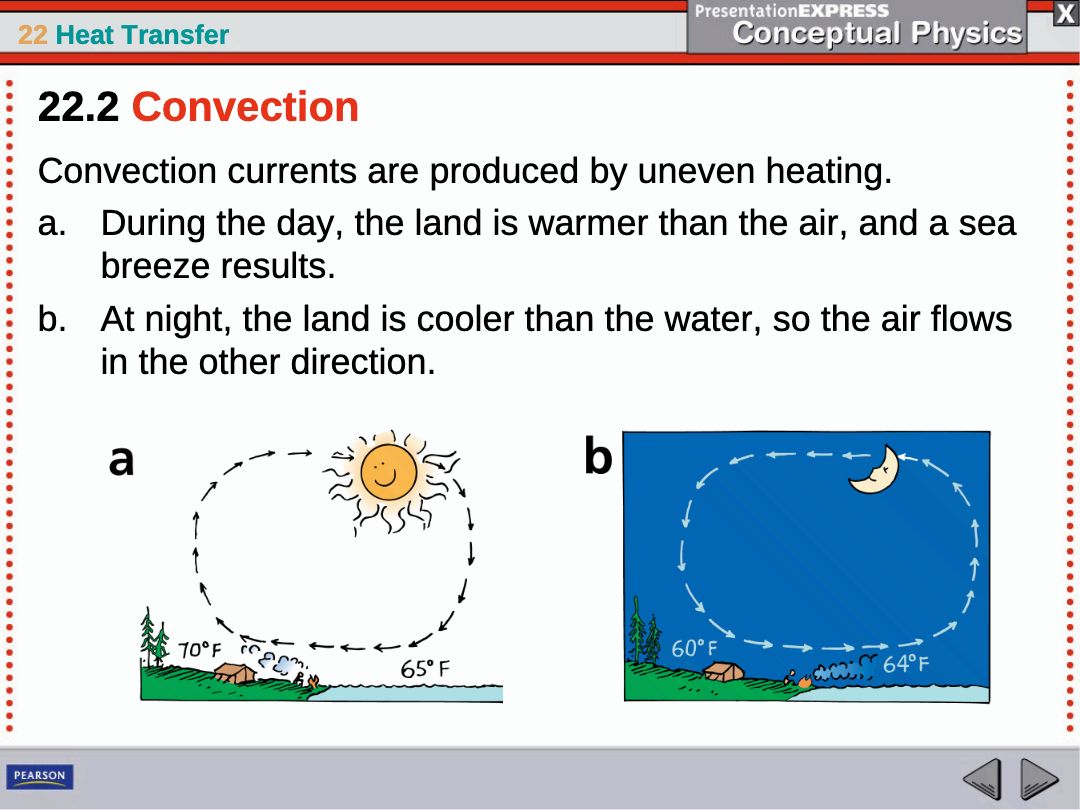
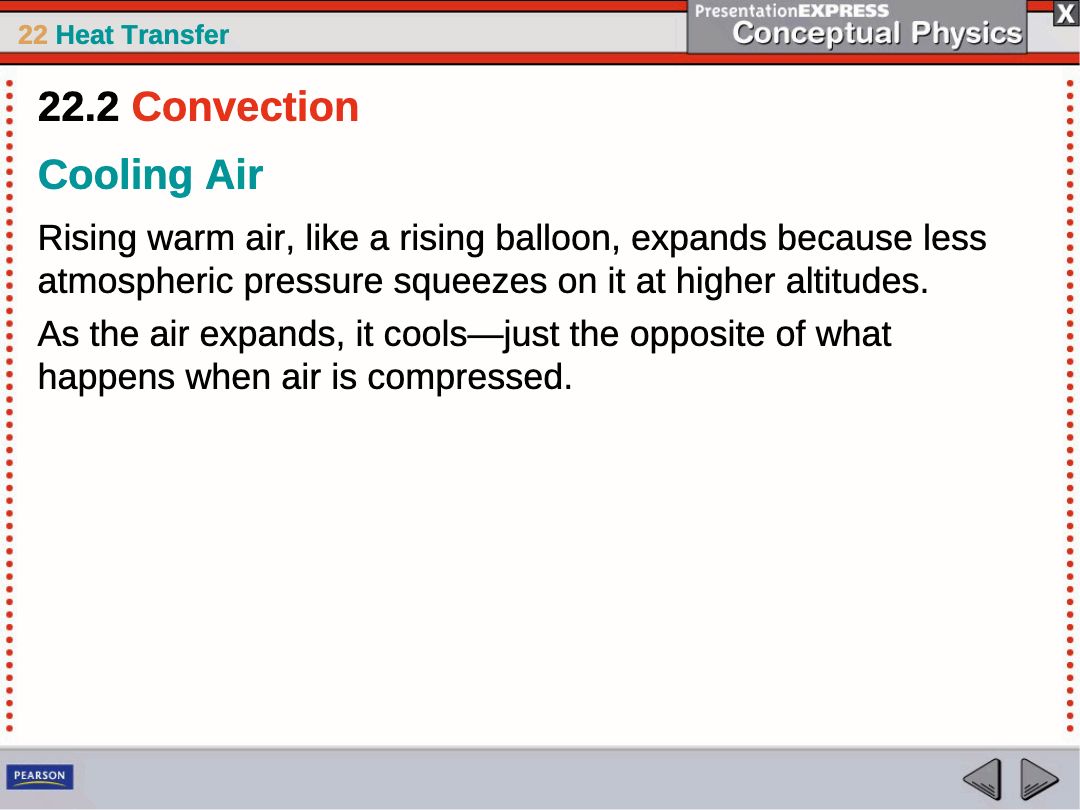
Explain how convection currents are formed in fluids when they are heated.
45
46
47
Multiple Select
Which of the following statements about convection currents is/are correct?
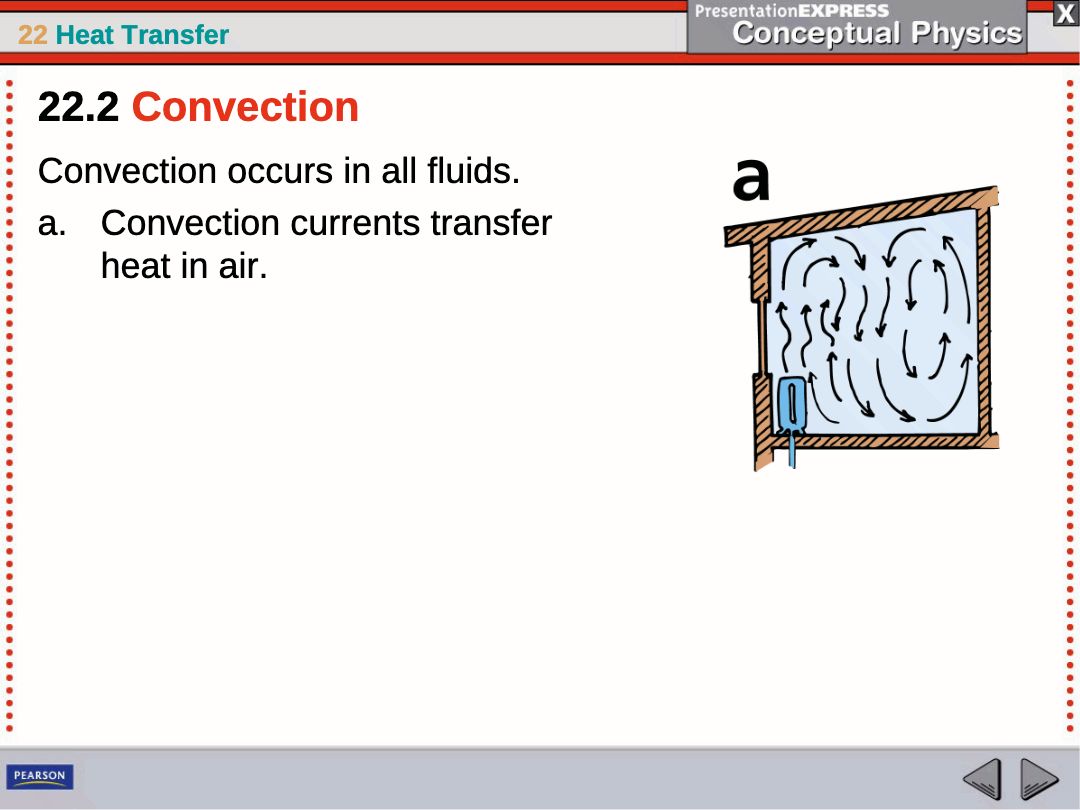
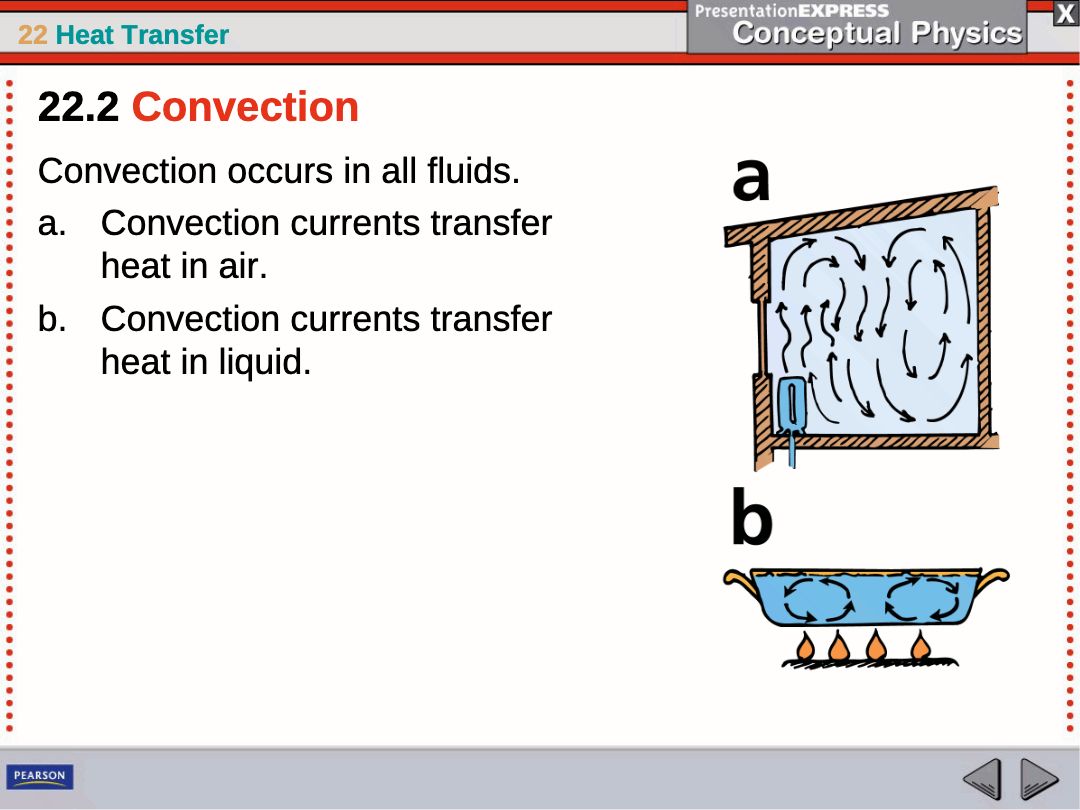
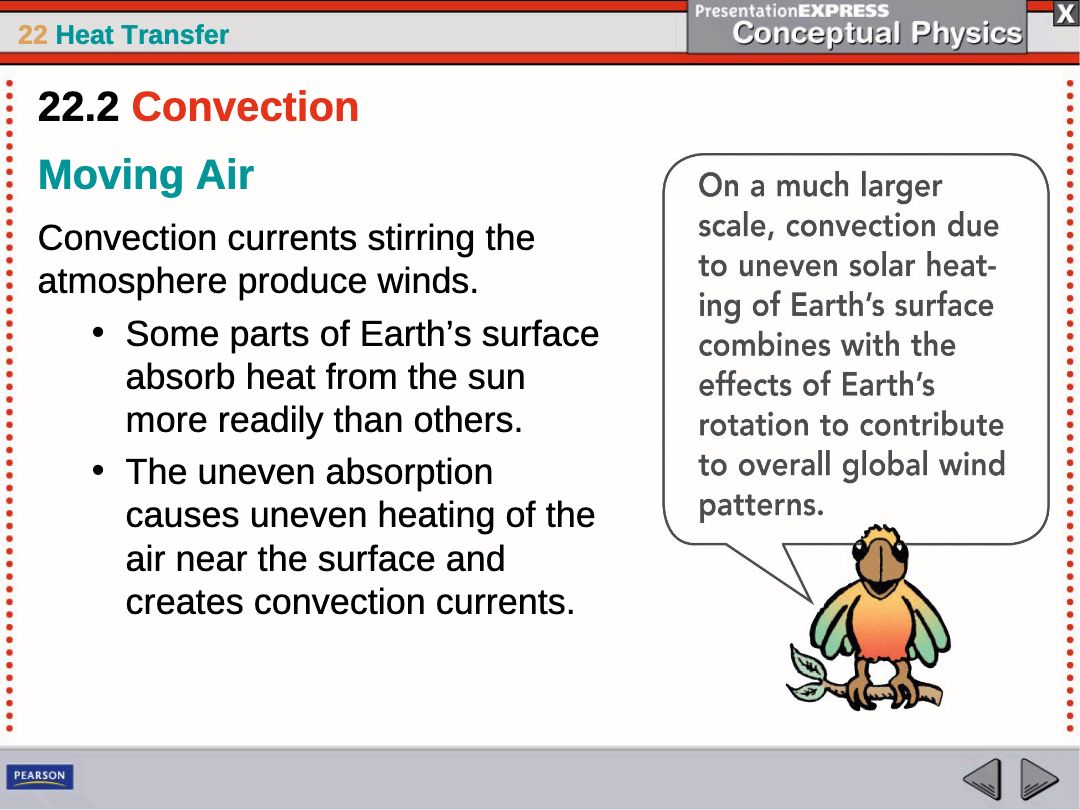
Convection currents transfer heat in air.
Convection currents transfer heat in liquids.
Convection currents occur only in solids.
Convection currents require the movement of the heated substance.
48
49
50
Multiple Choice
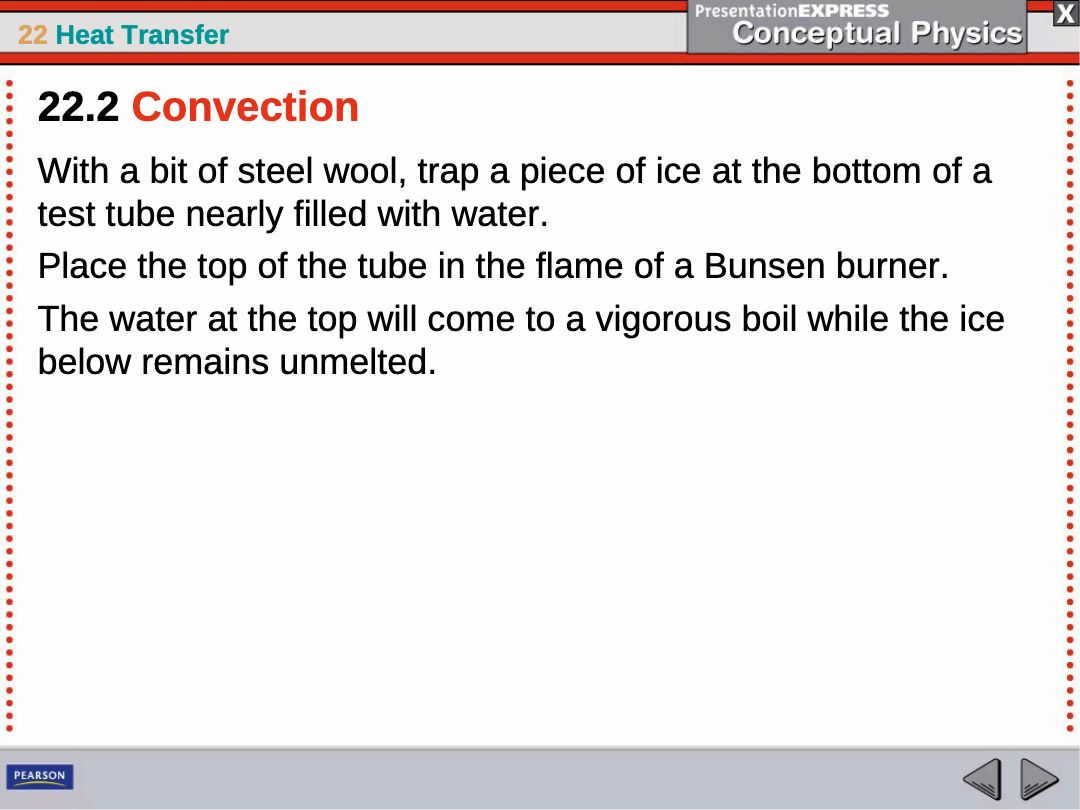
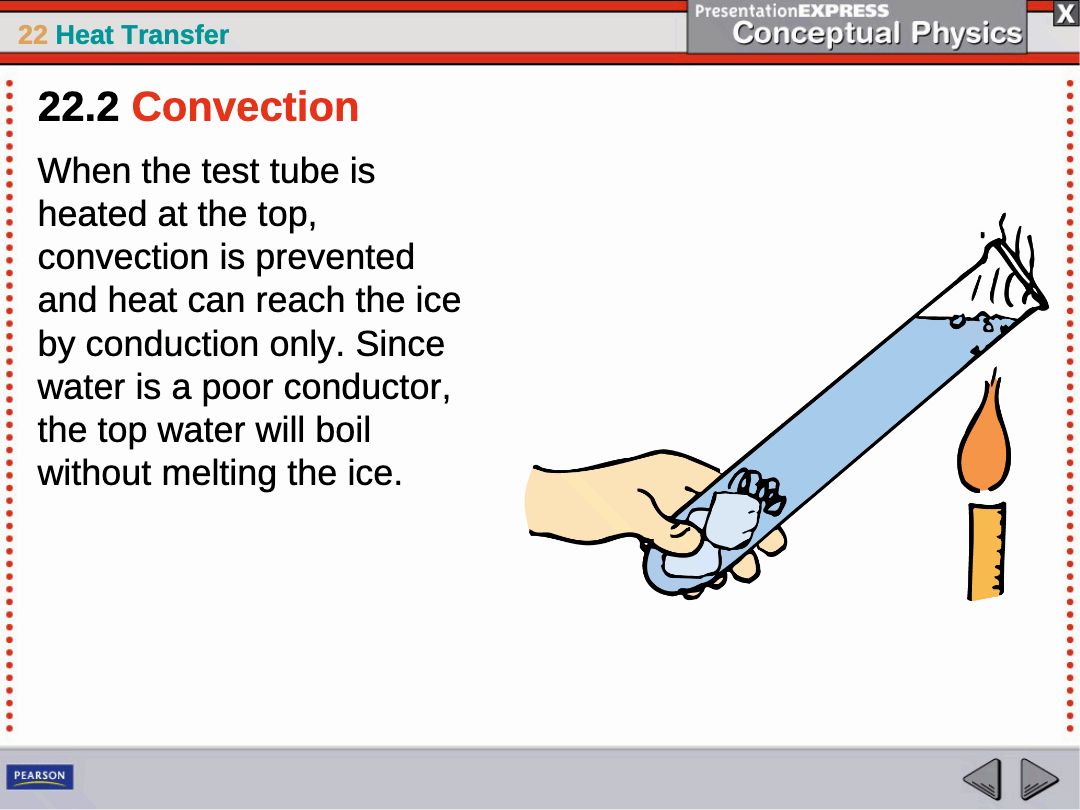
Why does the ice at the bottom of the test tube remain unmelted even when the water at the top is boiling?
Because water is a poor conductor and convection is prevented
Because ice is a good conductor of heat
Because heat is transferred quickly to the bottom
Because the flame is not hot enough
51
Open Ended
Describe what happens in the experiment where a piece of ice is trapped at the bottom of a test tube filled with water and the top is heated with a Bunsen burner.
52
53
54
55
56
Fill in the Blanks
Heat always transfers from ___ objects to ___ objects until all reach a common temperature.
Type answer...
57
Open Ended
Explain how the concept of heat transfer applies to everyday objects you encounter. Can you give an example from your own experience?
Show answer
Auto Play
Slide 1 / 57
SLIDE
Similar Resources on Wayground

51 questions
ELASTISITAS
Presentation
•
10th Grade
47 questions
Elkhorn History Images
Presentation
•
KG
53 questions
Speech in the Convention Vocabulary Lesson
Presentation
•
11th Grade
51 questions
Exponential and Logarithmic Functions - Study Guide
Presentation
•
11th Grade
53 questions
Gilded Age
Presentation
•
11th Grade
54 questions
Collisions and Impulses
Presentation
•
11th Grade
50 questions
Sentence Structure
Presentation
•
10th Grade
Popular Resources on Wayground
10 questions
Safety Day 2026 – Student Review

Quiz
•
9th Grade
21 questions
Continents and Oceans
Quiz
•
6th Grade
20 questions
Parts of Speech
Quiz
•
5th Grade
16 questions
Subject & Predicate
Quiz
•
5th Grade
25 questions
Multiplication Facts
Quiz
•
5th Grade
12 questions
Map Skills
Quiz
•
3rd Grade
22 questions
Continents and Oceans
Quiz
•
5th Grade
15 questions
Rounding Decimals
Quiz
•
5th Grade
