

ch05_projective_motion NOT NEEDED FOR MR ROSEN CLASS.ppt

Presentation
•
Physics
•
11th Grade
•
Practice Problem
•
Hard

Wayground Resources
FREE Resource
30 Slides • 28 Questions
1
2
Open Ended
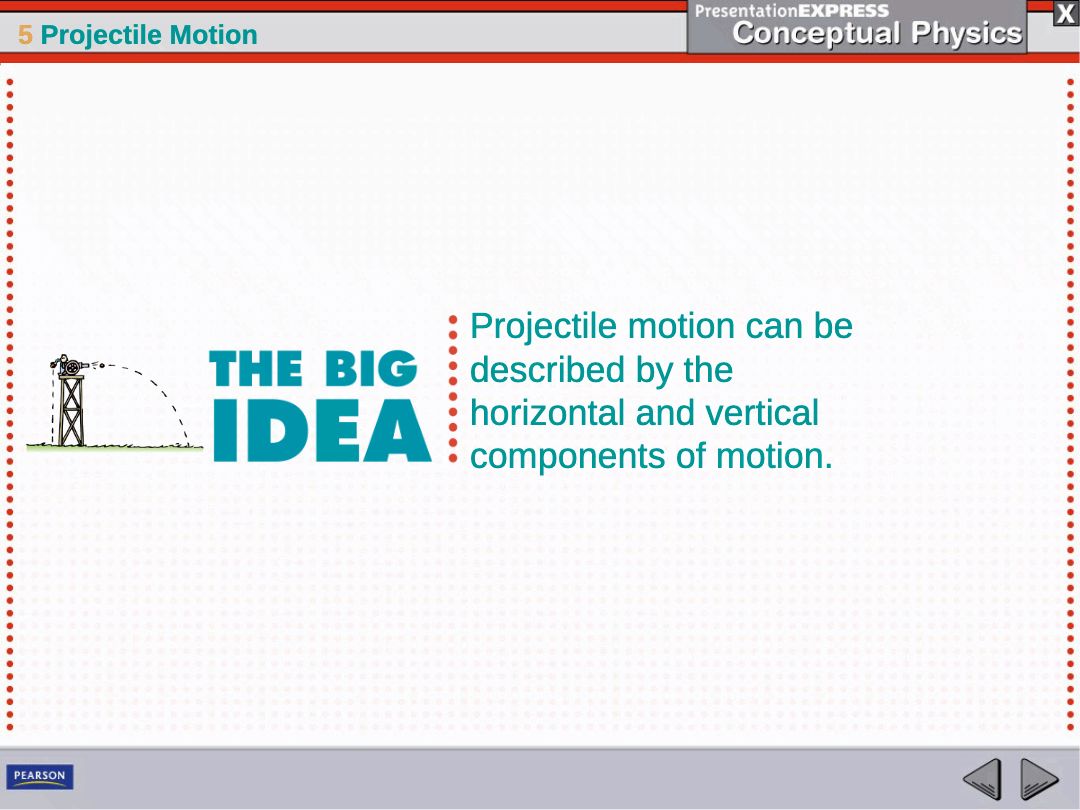
Why is it important to study the horizontal and vertical components of projectile motion separately?
3
4
Multiple Choice
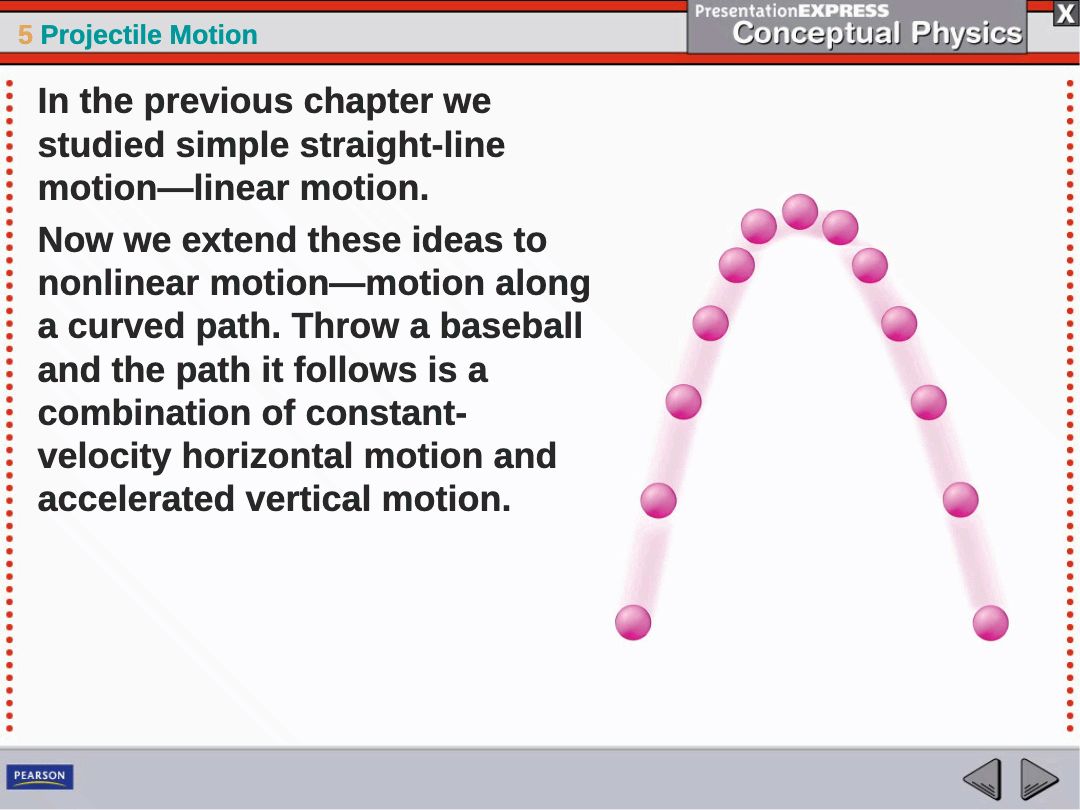
When you throw a baseball, what type of motion does it follow?
It moves in a straight line at constant speed.
It moves in a curved path due to both horizontal and vertical motion.
It moves only vertically with increasing speed.
It remains stationary after being thrown.
5
6
7
Multiple Select
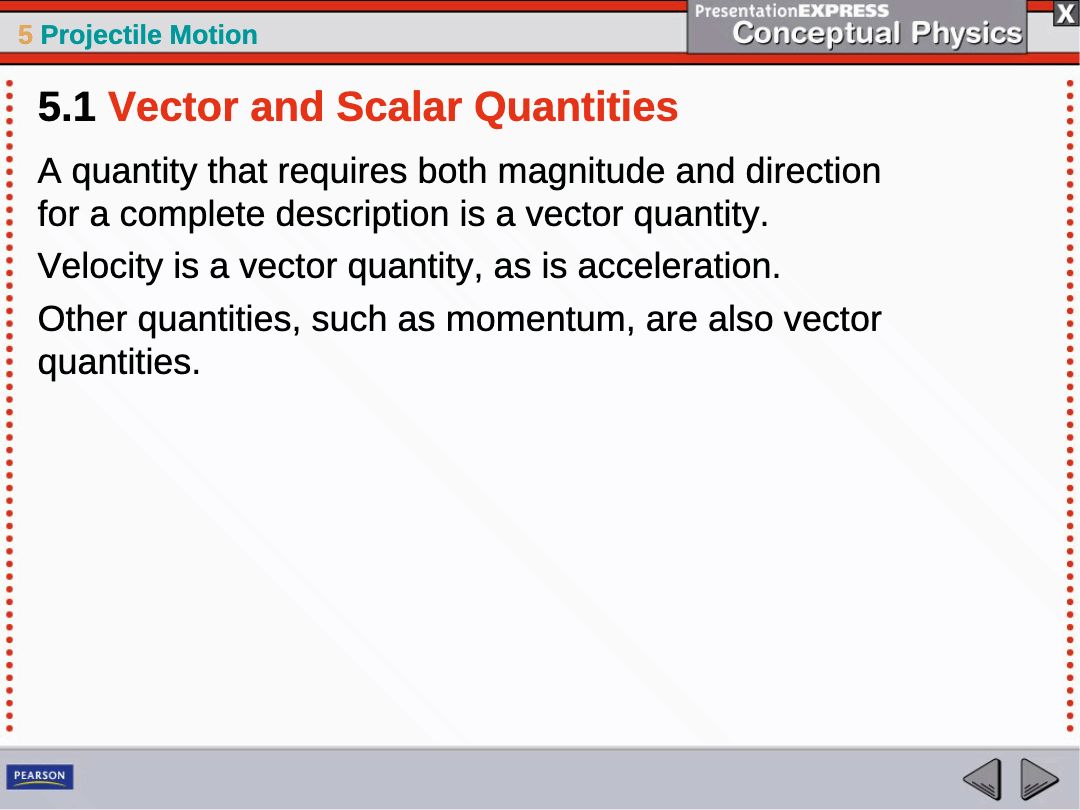
Which of the following are vector quantities?
Velocity
Acceleration
Momentum
Mass
8
Multiple Choice
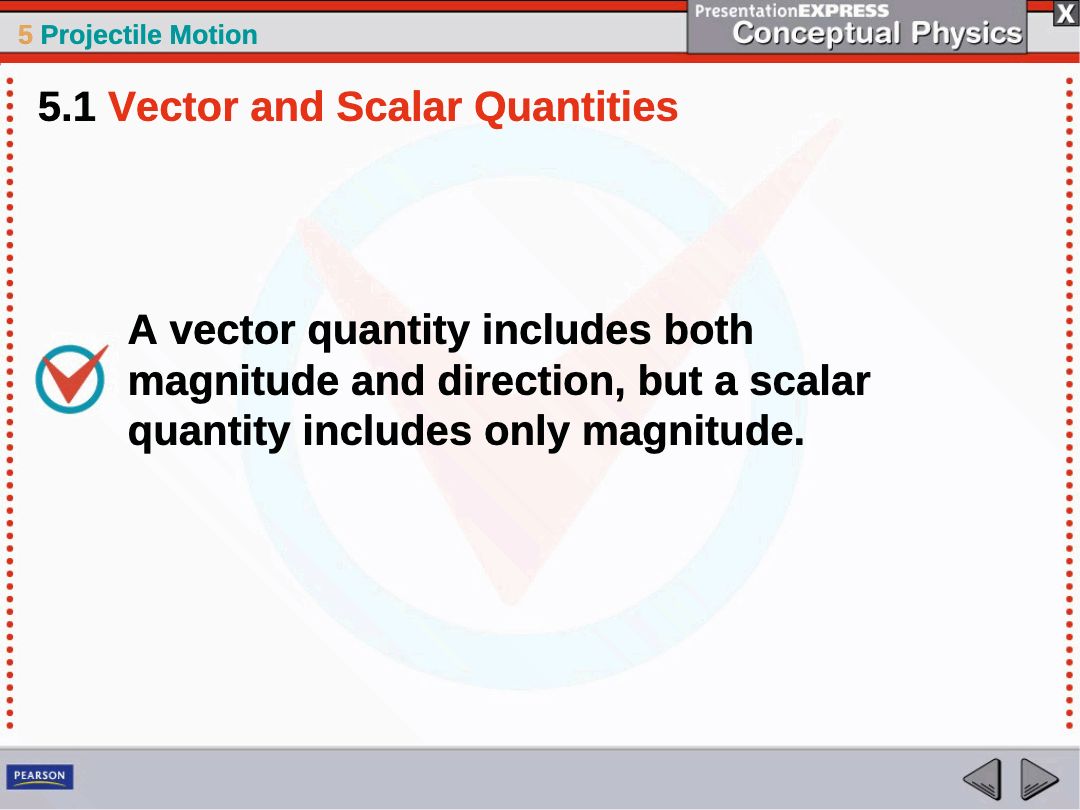
Which of the following best describes the difference between a vector quantity and a scalar quantity?
A vector quantity has both magnitude and direction, while a scalar quantity has only magnitude.
A vector quantity has only magnitude, while a scalar quantity has both magnitude and direction.
A vector quantity can only be positive, while a scalar quantity can be negative.
A vector quantity is always larger than a scalar quantity.
9
10
Fill in the Blanks
Type answer...
11
12
Open Ended
How does a scalar quantity differ from a vector quantity?
13
14
Fill in the Blanks
Type answer...
15
16
Multiple Choice
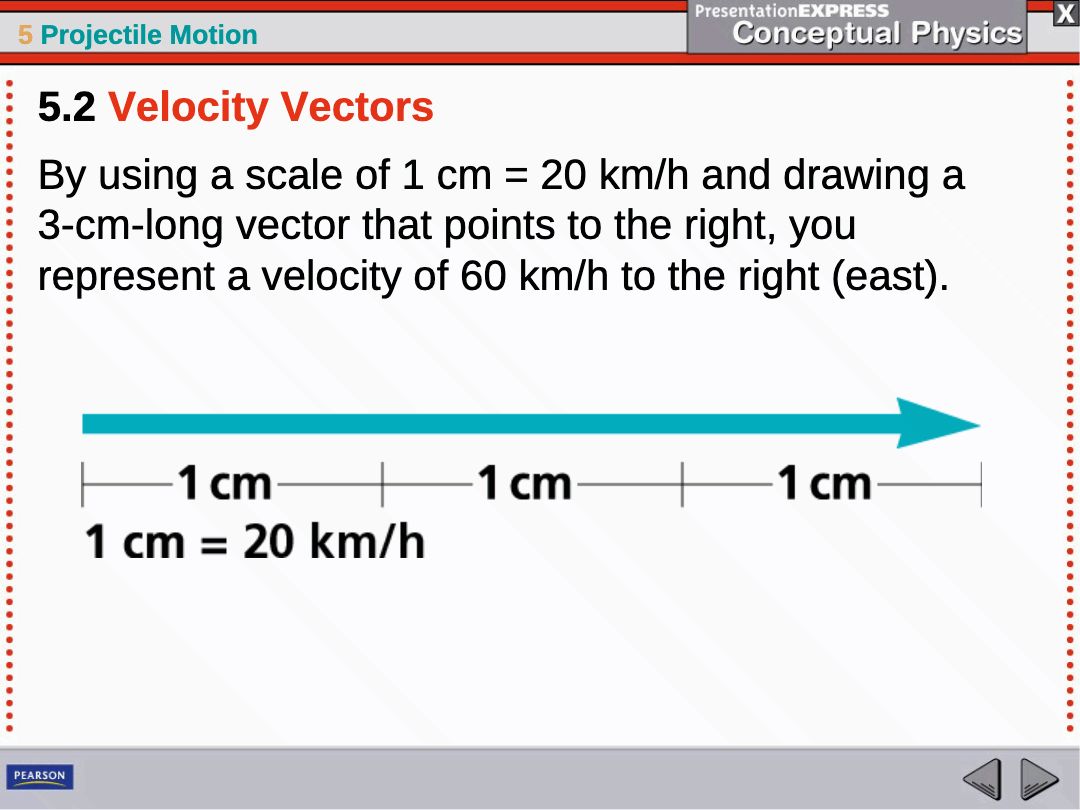
If you use a scale of 1 cm = 20 km/h, what velocity does a 3-cm-long vector pointing to the right represent?
60 km/h to the right (east)
20 km/h to the right (east)
40 km/h to the right (east)
80 km/h to the right (east)
17
18
19
Open Ended
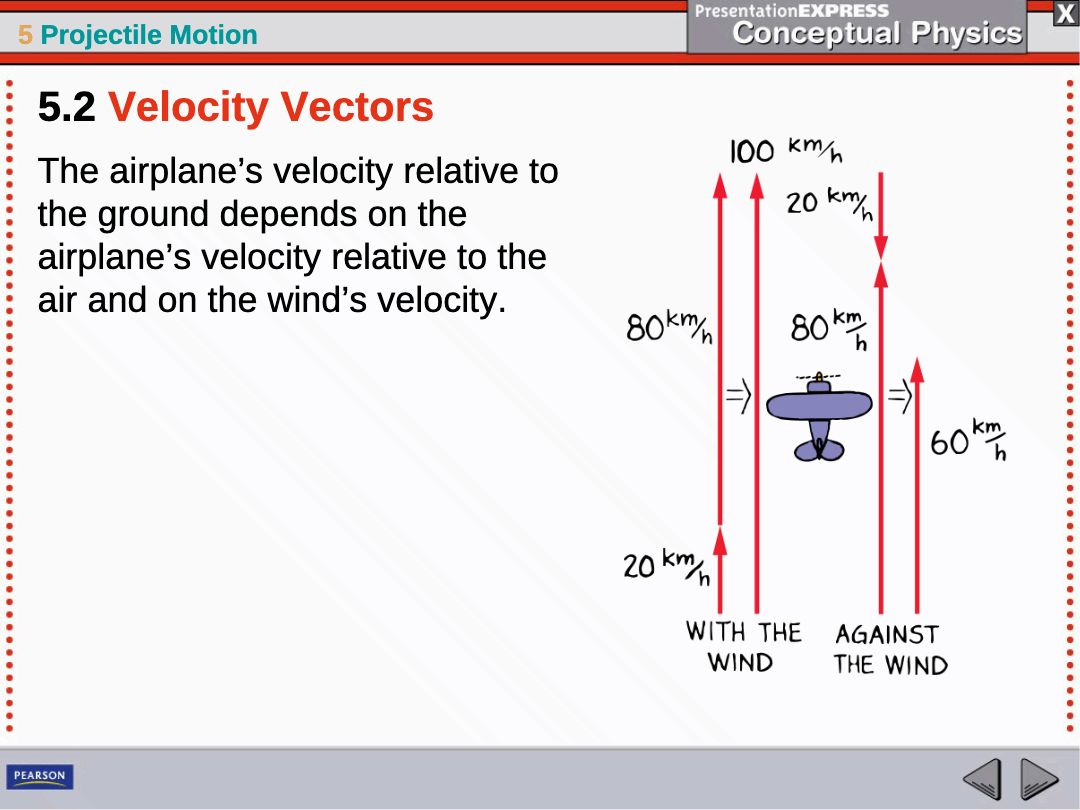
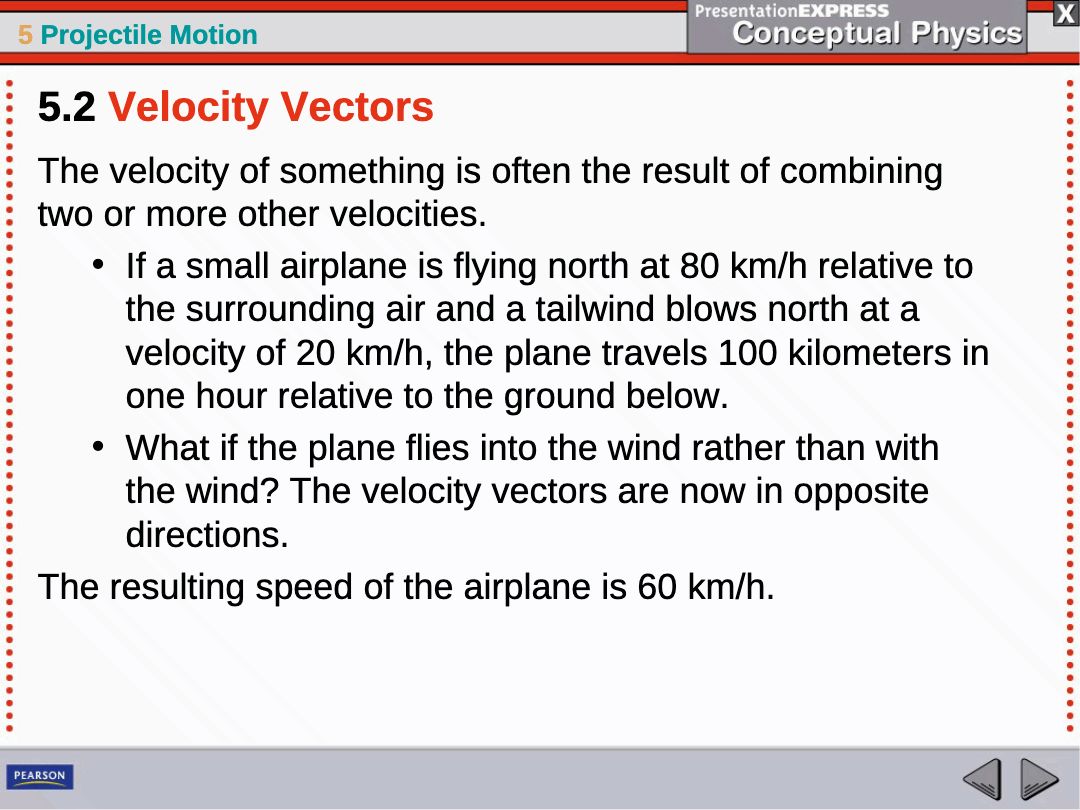
Explain how the velocity of an airplane relative to the ground is affected when it flies with the wind versus against the wind.
20
Multiple Choice
If an airplane is flying north at 80 km/h relative to the air and there is a tailwind blowing north at 20 km/h, what is the airplane's velocity relative to the ground?
100 km/h
80 km/h
60 km/h
20 km/h
21
22
23
Multiple Choice
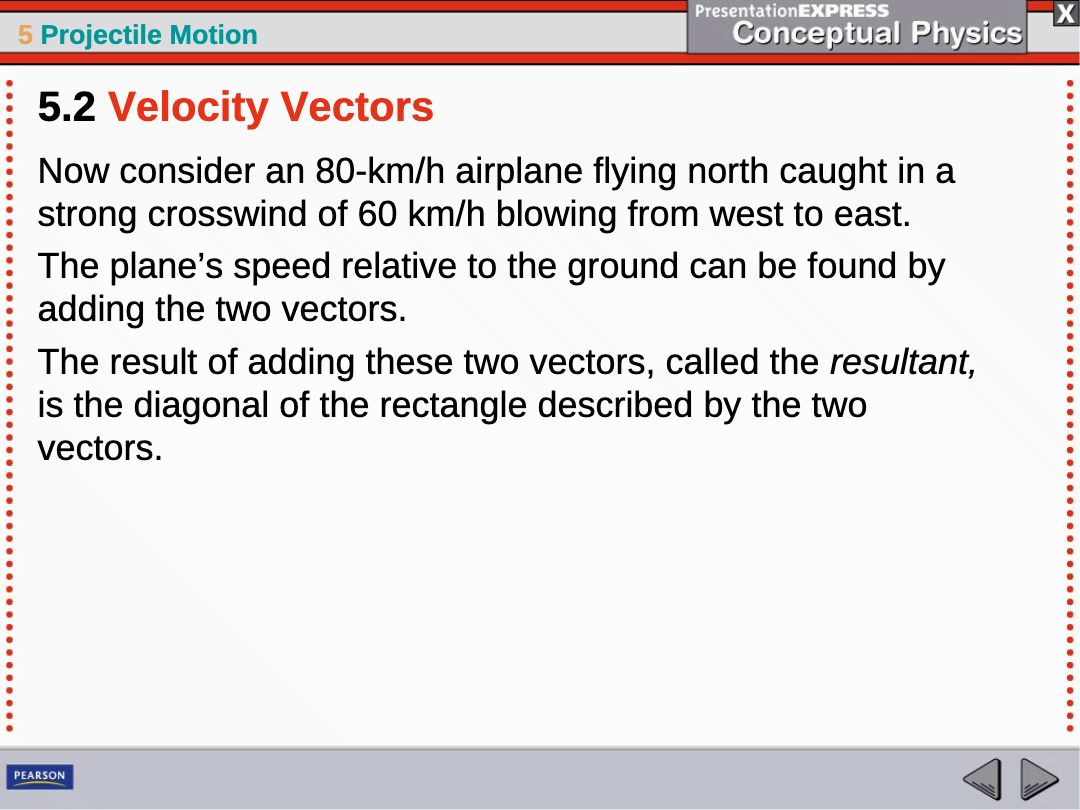
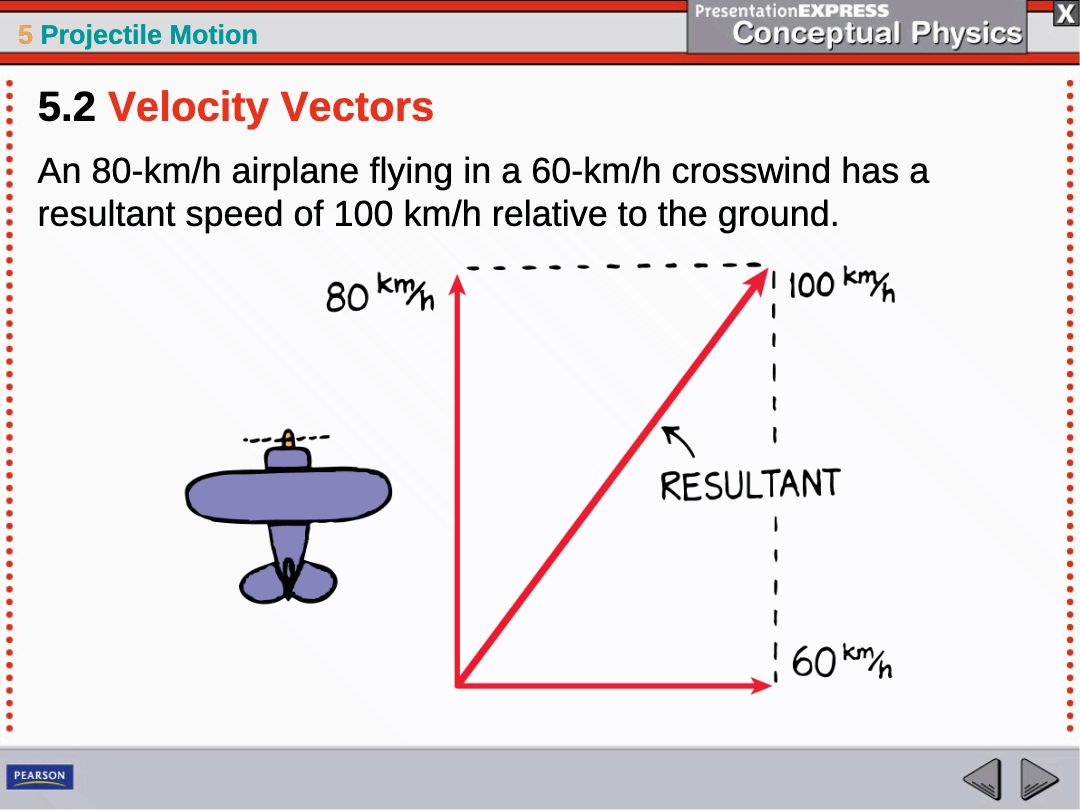
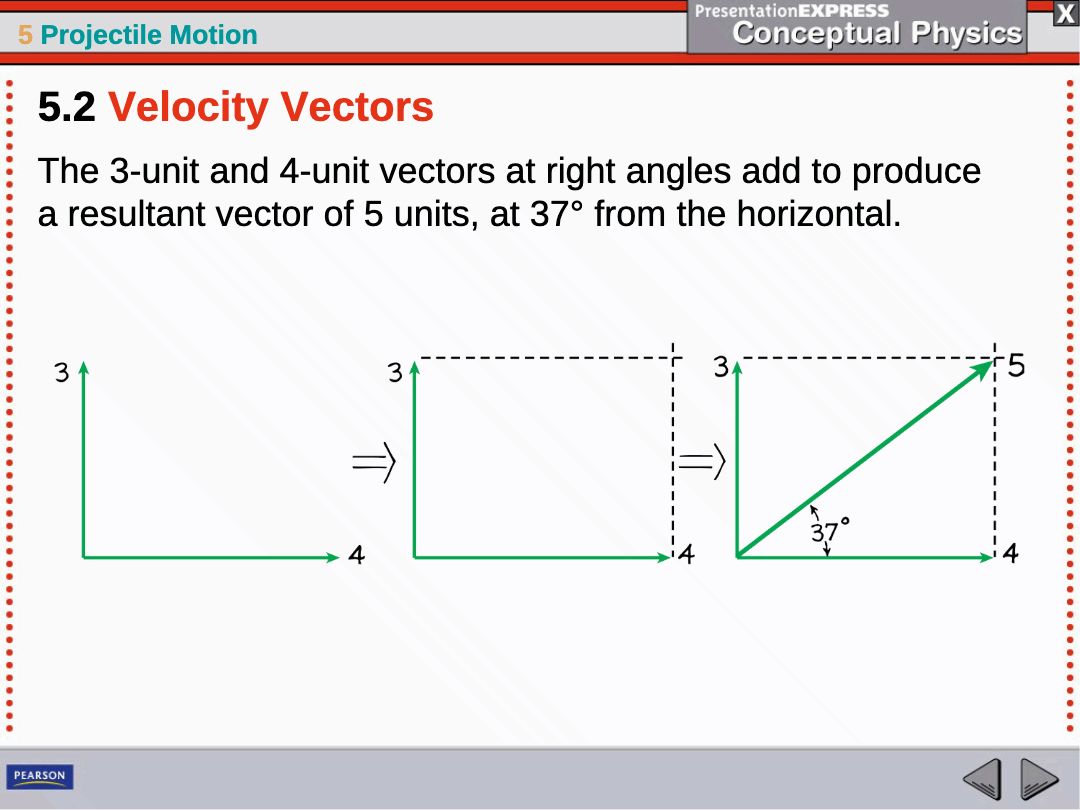
When an 80-km/h airplane is caught in a 60-km/h crosswind blowing from west to east, what is the resultant speed of the airplane relative to the ground?
100 km/h
140 km/h
80 km/h
60 km/h
24
25
Multiple Select
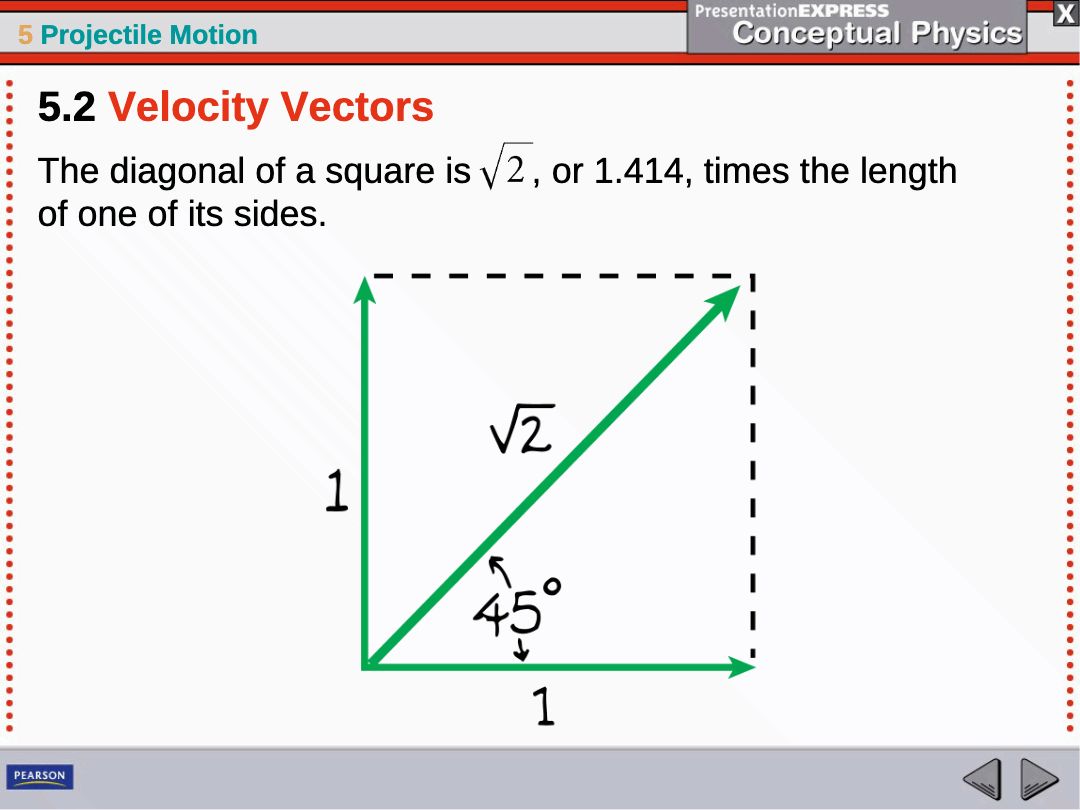
Which of the following statements are true about the resultant vector when two vectors are at right angles?
The resultant is the diagonal of the rectangle formed by the two vectors.
The resultant is equal to the sum of the magnitudes of the two vectors.
The resultant is always greater than either of the original vectors.
The resultant is always perpendicular to both vectors.
26
27
Open Ended
Describe how to determine the magnitude and direction of the resultant when two vectors are perpendicular to each other.
28
Fill in the Blanks
Type answer...
29
30
31
Open Ended
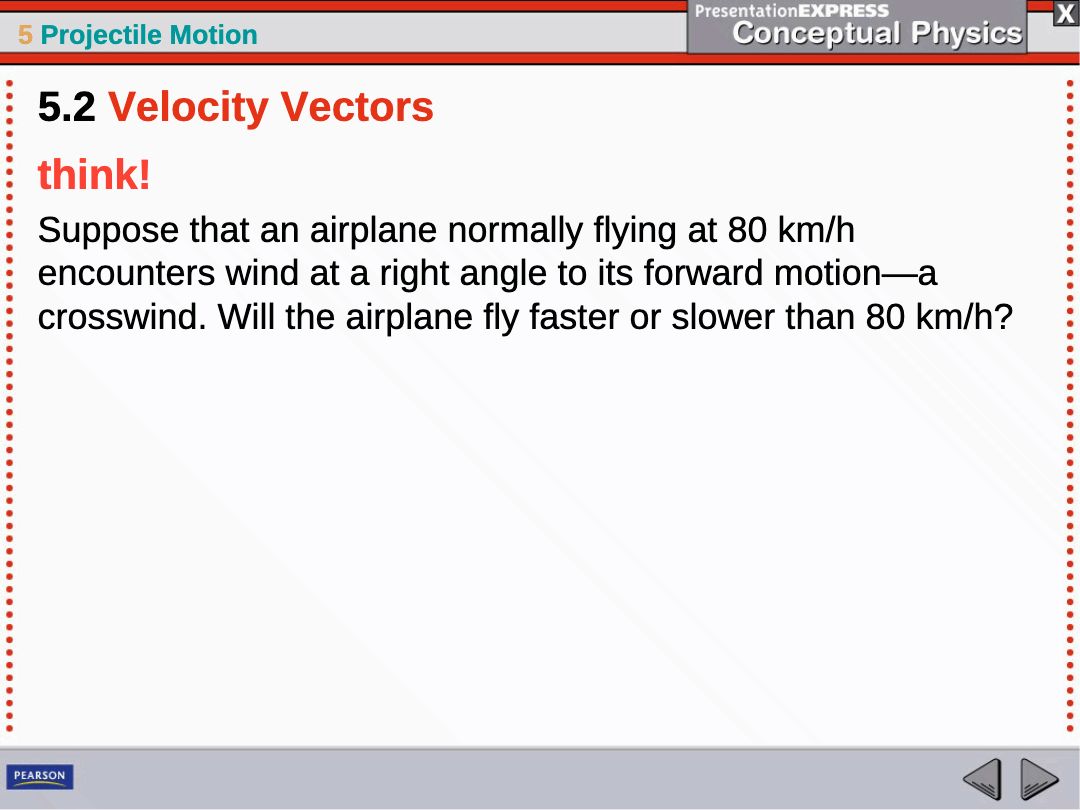
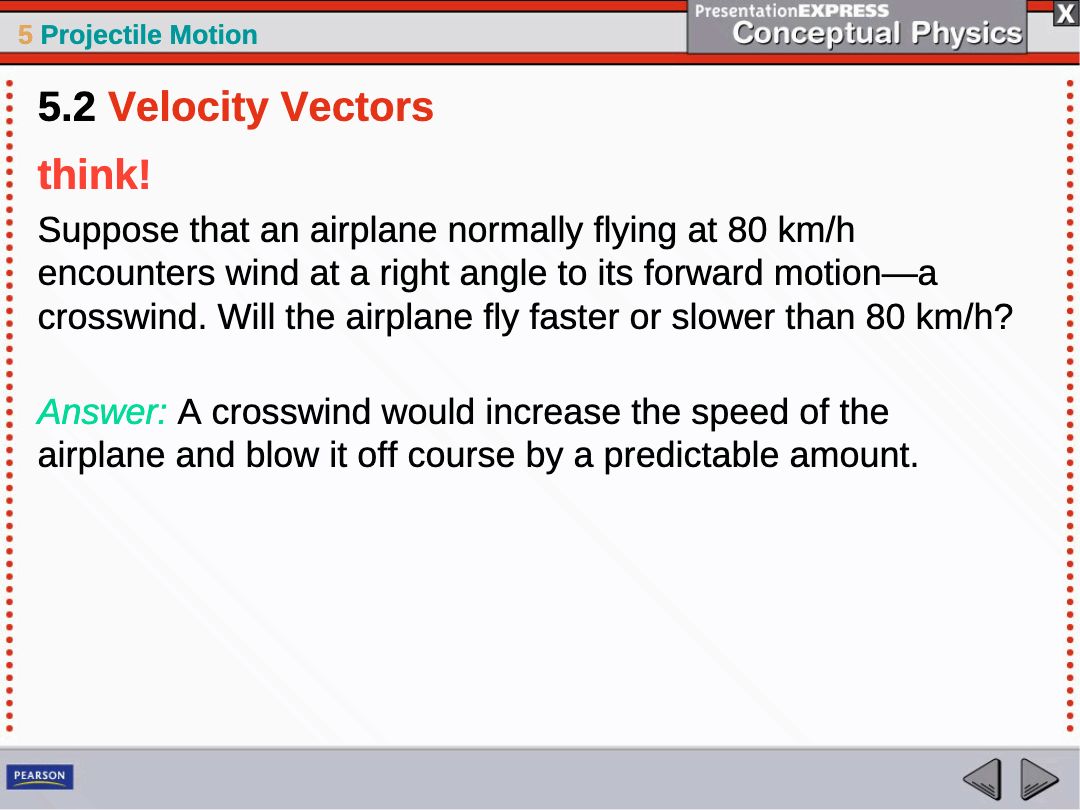
Suppose that an airplane normally flying at 80 km/h encounters wind at a right angle to its forward motion—a crosswind. Will the airplane fly faster or slower than 80 km/h?
32
33
Open Ended
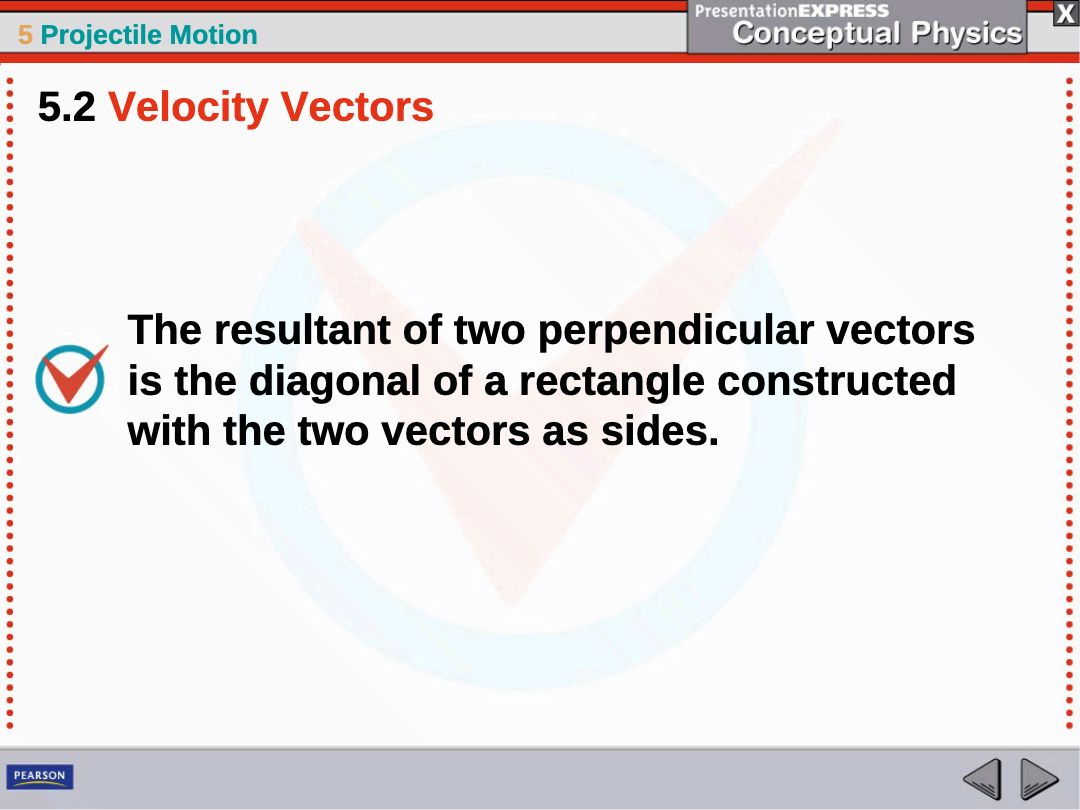
What is the resultant of two perpendicular vectors?
34
35
Multiple Choice
Which of the following statements is true about the perpendicular components of a vector?
They are dependent on each other.
They are independent of each other.
They always have equal magnitudes.
They cannot be resolved.
36
37
Fill in the Blanks
Type answer...
38
39
Open Ended
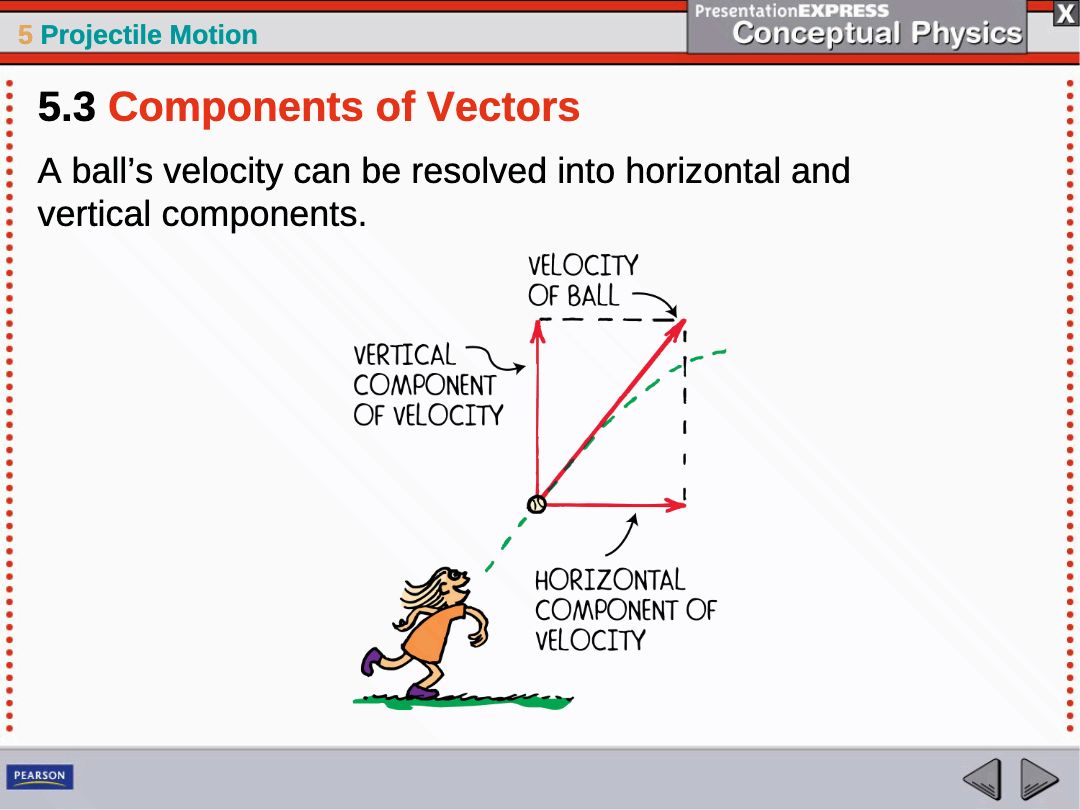
Explain how the concept of vector components helps in understanding the motion of a projectile, such as a ball thrown at an angle.
40
Multiple Choice
A ball’s velocity can be resolved into which two components?
Horizontal and vertical
Horizontal and diagonal
Vertical and diagonal
Forward and backward
41
42
Multiple Choice
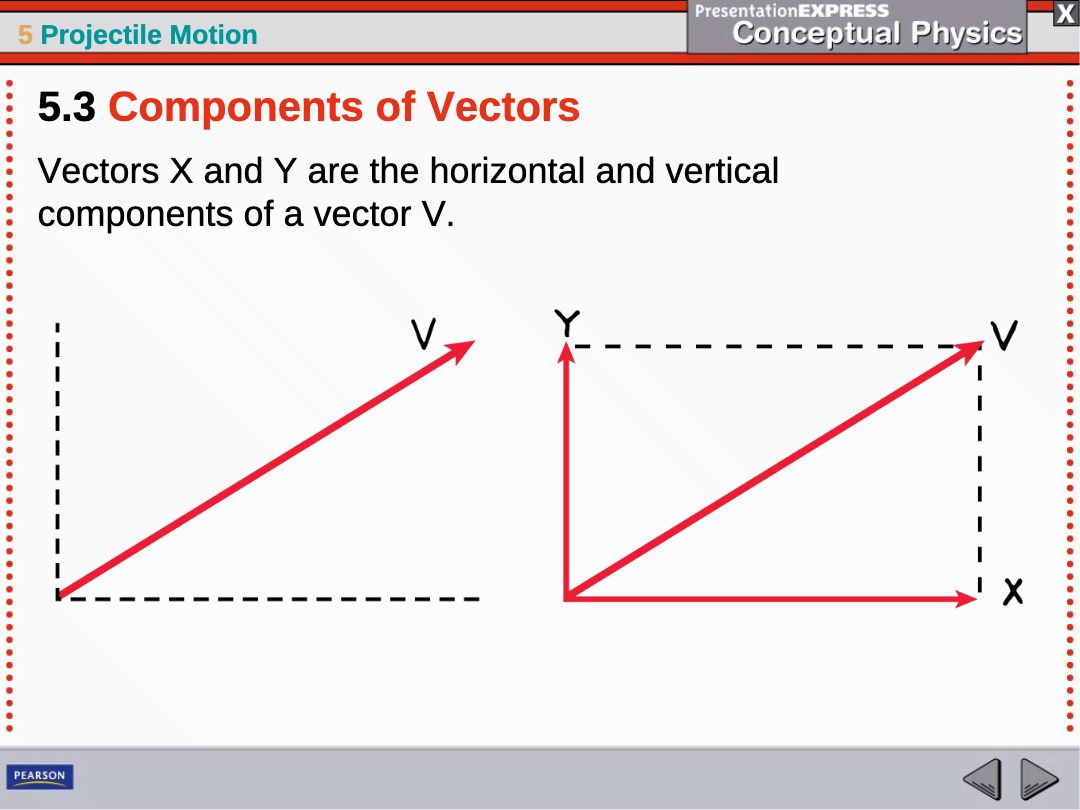
Which of the following best describes the relationship between vectors X, Y, and V as shown in the diagram?
V is the sum of X and Y, which are perpendicular components.
X and Y are equal in magnitude to V.
V is the difference between X and Y.
X and Y are parallel to each other.
43
44
Open Ended
How do components of a vector affect each other?
45
46
47
Fill in the Blanks
Type answer...
48
49
Fill in the Blanks
Type answer...
50
Multiple Choice
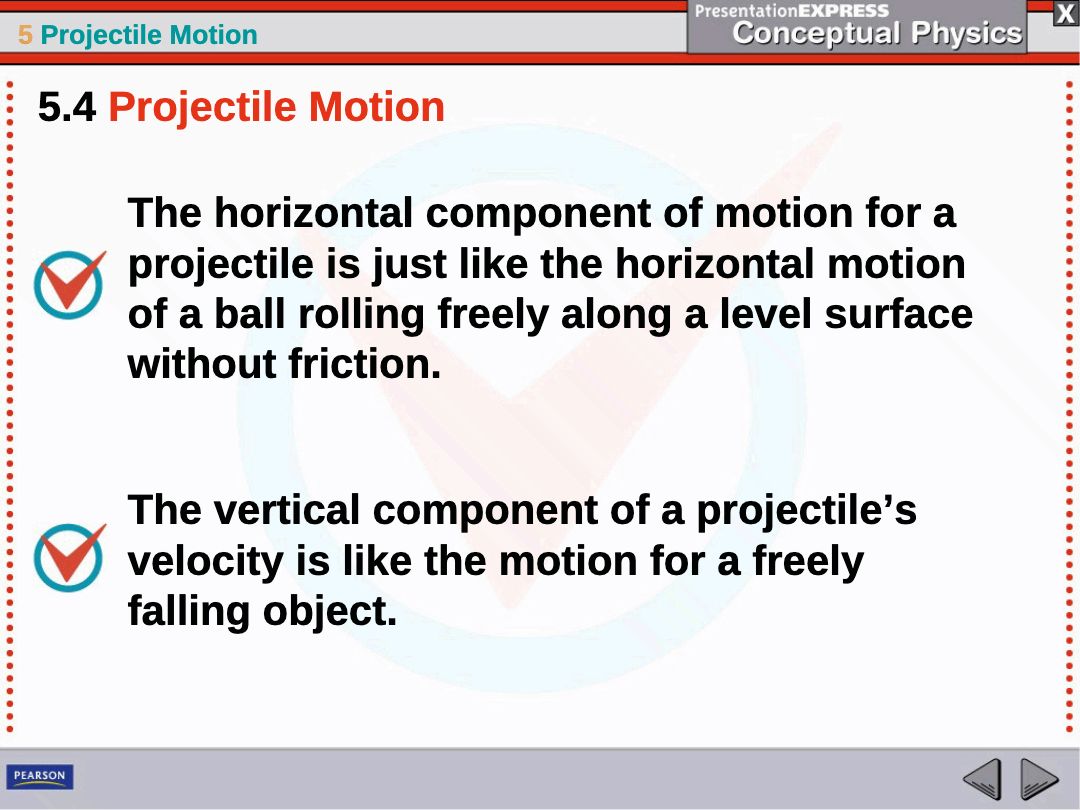
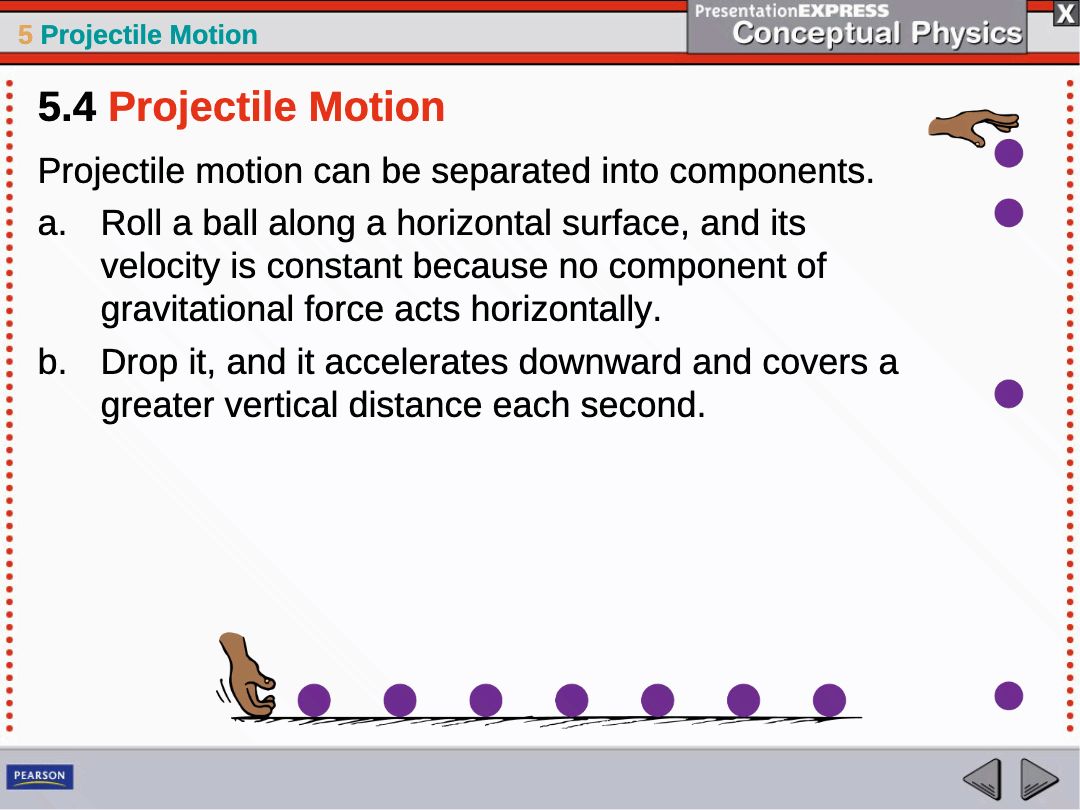
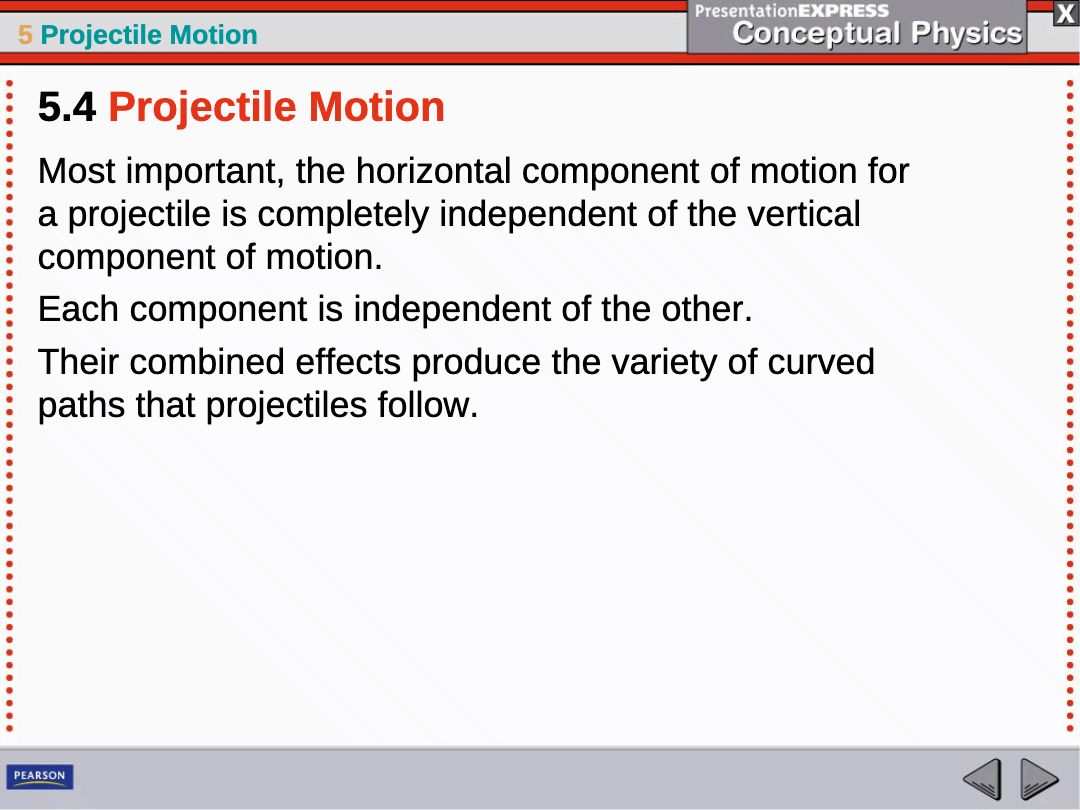
Which of the following statements about projectile motion is correct?
The horizontal component of a projectile's motion is unaffected by gravity.
The vertical component of a projectile's motion is constant.
Both horizontal and vertical components of a projectile's motion are affected equally by gravity.
The horizontal component of a projectile's motion is like a freely falling object.
51
52
Open Ended
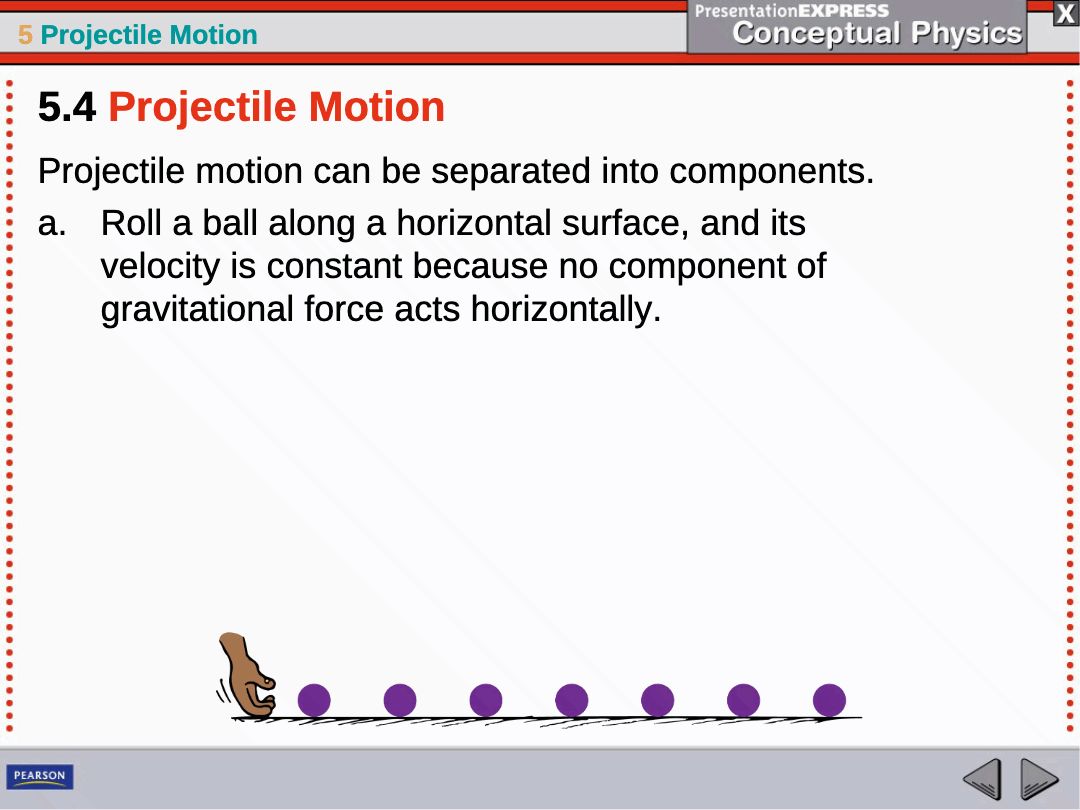
Explain why the velocity of a ball rolling along a horizontal surface remains constant, according to the concept of projectile motion.
53
54
55
56
57
Open Ended
What questions do you still have about the relationship between horizontal and vertical components in projectile motion?
58
Multiple Choice
How does projectile motion differ from simple straight-line (linear) motion?
Projectile motion involves both horizontal and vertical components, while linear motion involves only one direction.
Projectile motion is always faster than linear motion.
Linear motion involves acceleration in both directions, while projectile motion does not.
Projectile motion only occurs in space.
Show answer
Auto Play
Slide 1 / 58
SLIDE
Similar Resources on Wayground

52 questions
Colonization and The British Colonies
Presentation
•
11th Grade
53 questions
Pharmacy monday IV final
Presentation
•
KG
52 questions
CPUSH EOC Standard 4 Review
Presentation
•
11th Grade
56 questions
Mediciones y Unidades
Presentation
•
11th Grade
55 questions
Logical Fallacies
Presentation
•
10th - 11th Grade
51 questions
Computing Paper 1 - OCR GCSE
Presentation
•
11th Grade
52 questions
Lesson 1 Cosmic Origins
Presentation
•
11th Grade
54 questions
Unit 6: Progressives Part 3 & 4
Presentation
•
11th Grade
Popular Resources on Wayground
24 questions
PBIS-HGMS Day 10

Quiz
•
6th - 8th Grade
10 questions
HCS SCI 03 Summer School Review 3
Quiz
•
3rd Grade
11 questions
Home Scope
Quiz
•
7th - 8th Grade
15 questions
HCS SCI 05 Summer School Assessment 3 Review
Quiz
•
5th Grade
35 questions
Lufkin Road Middle School Student Handbook & Policies Assessment
Quiz
•
7th Grade
18 questions
Geo 11.3 Area of Circles and Sectors
Quiz
•
9th - 11th Grade