Search Header Logo
Cap 3: Los mandatos informales (+)

Cap 3: Los mandatos informales (+)

Assessment

Presentation

World Languages

9th - 12th Grade

Practice Problem

Easy

Created by

Justine Simon

Used 10+ times

FREE Resource

12 Slides • 12 Questions

1
media

2

media

3

Multiple Choice

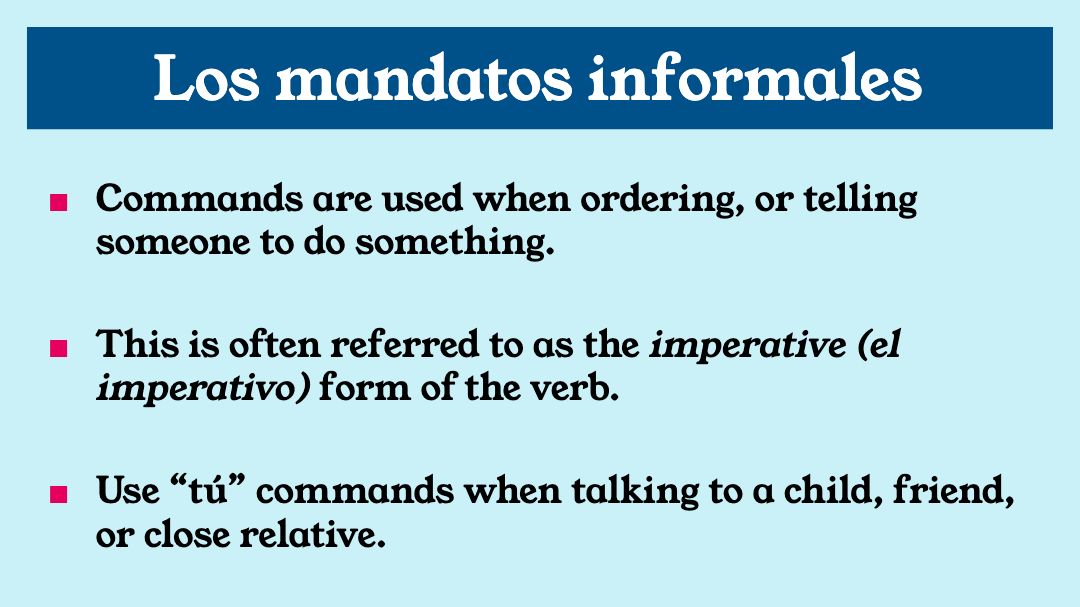
Which of the following situations would most likely require the use of a 'tú' command in Spanish?

1

Giving instructions to a coworker

2

Ordering food at a restaurant

3

Talking to your younger sibling

4

Speaking to your teacher

4

media

5

Multiple Choice

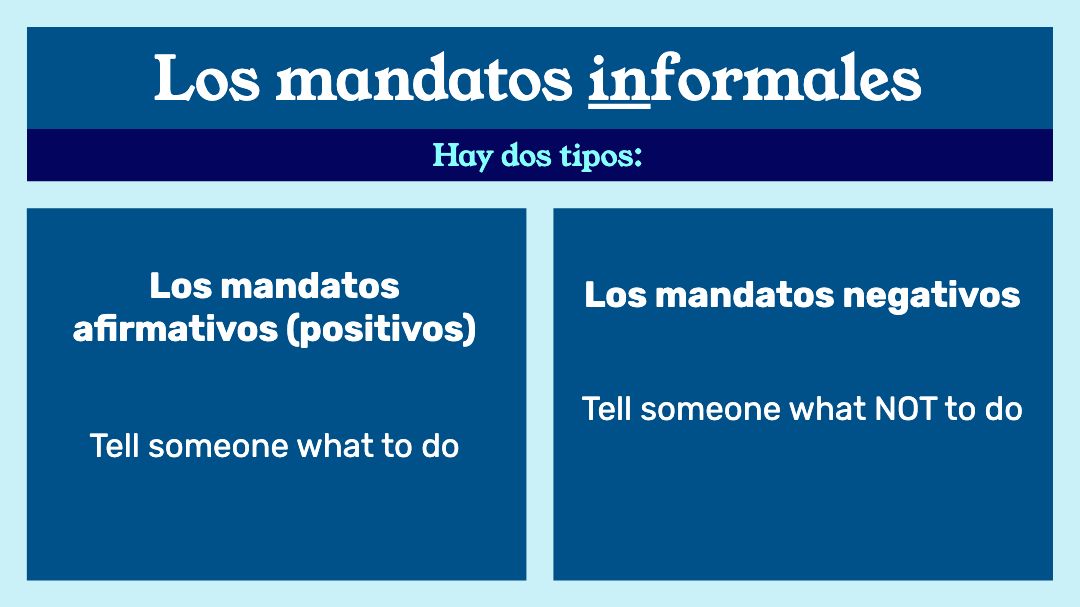
What is the difference between affirmative (positive) and negative informal commands in Spanish?

1

Affirmative commands tell someone what to do; negative commands tell someone what NOT to do.

2

Affirmative commands are always polite, and negative commands are rude.

3

Affirmative commands use regular verbs, and negative commands use irregular verbs.

4

Affirmative commands are used with adults, and negative commands are used with children.

6

media

7

Multiple Select

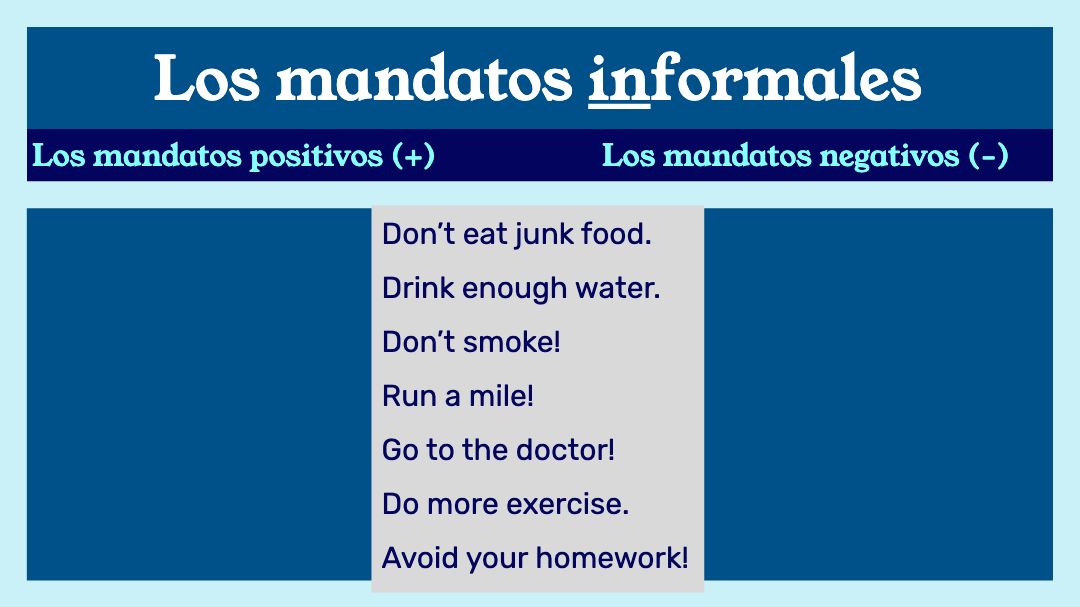
Based on the examples provided, which of the following are positive informal commands in Spanish? Select all that apply.

1

Run a mile!

2

Don’t eat junk food.

3

Go to the doctor!

4

Don’t smoke!

8

media

9

Open Ended

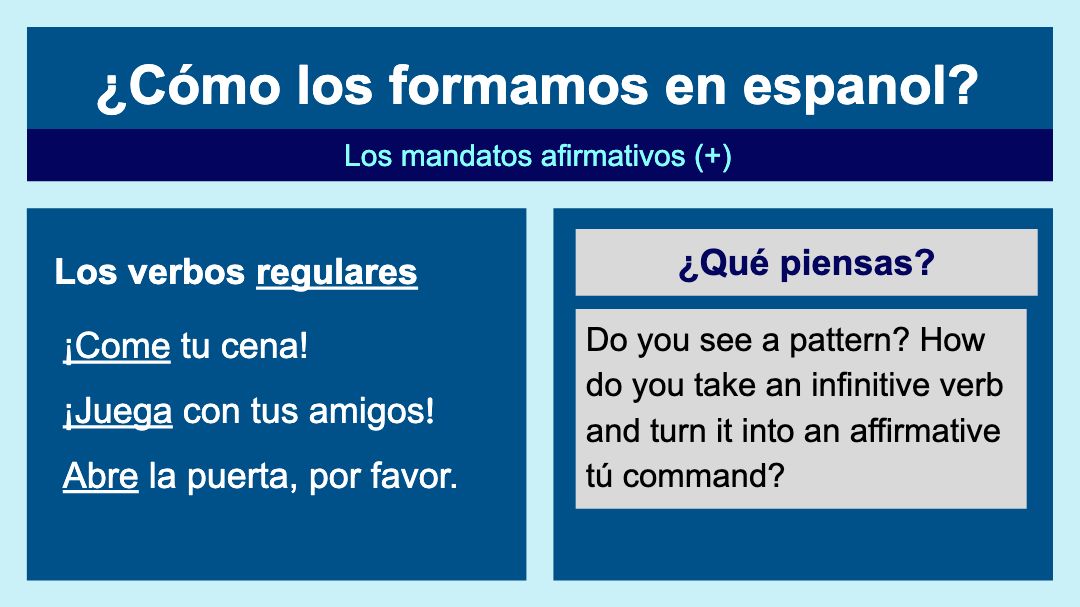
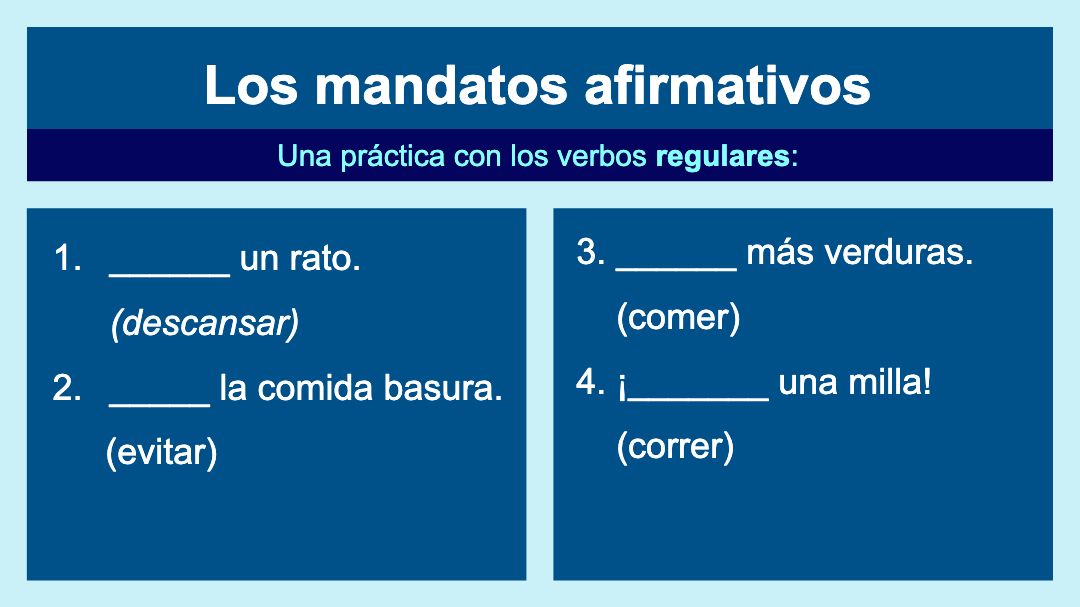
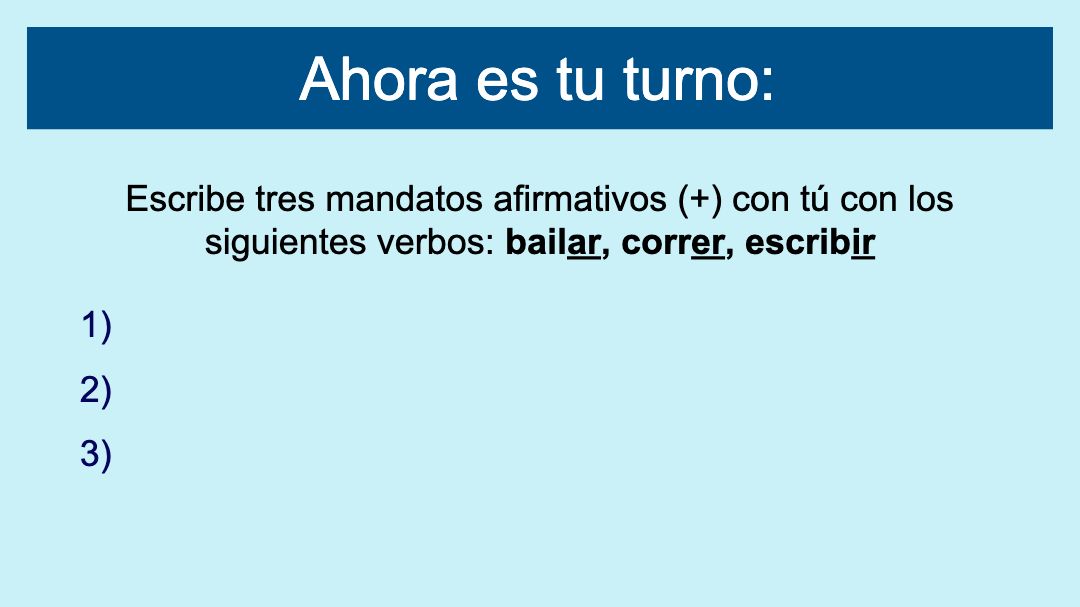
Do you see a pattern? How do you take an infinitive verb and turn it into an affirmative tú command?

10

media

11

Fill in the Blanks

12

media

13

media

14

Open Ended

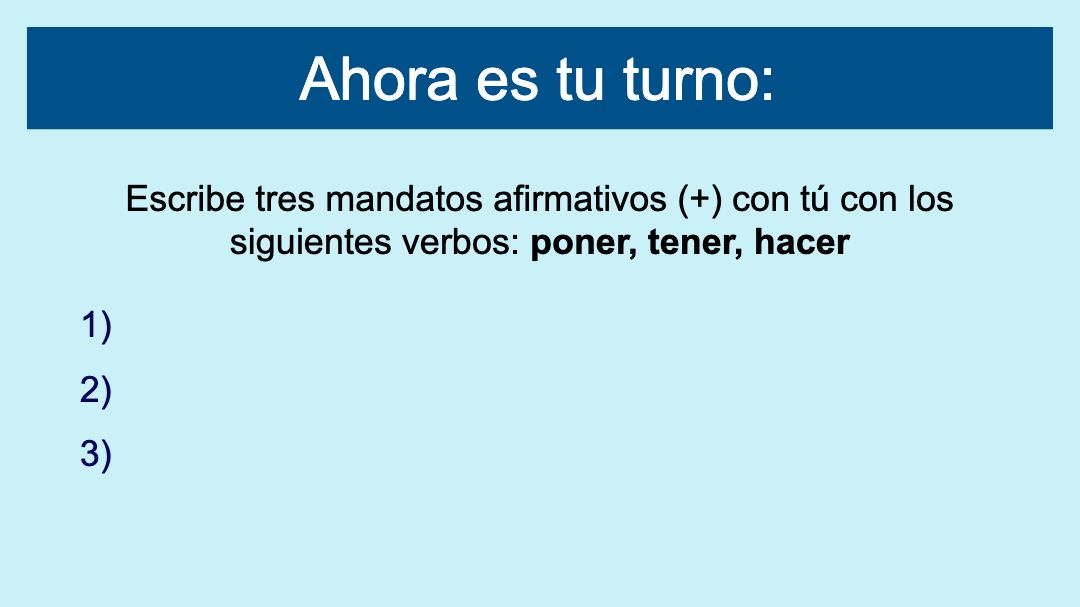
Explain the mnemonic 'Vin Diesel has ten weapons' and how it helps you remember irregular tú commands in Spanish.

15

Multiple Choice

Which of the following is the correct tú command form for the verb 'salir'?

1

sal

2

sale

3

salga

4

salir

16

media

17

Fill in the Blanks

18

media

19

media

20

Multiple Choice

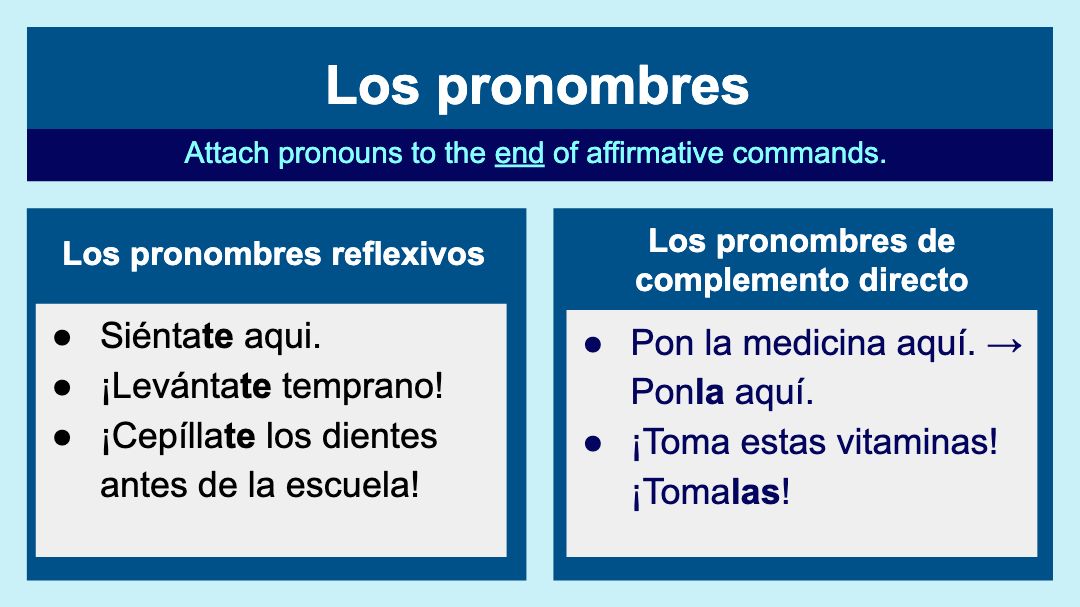
Based on the examples provided, which of the following sentences correctly uses a direct object pronoun with an affirmative command?

1

Ponla aquí.

2

La pon aquí.

3

Pon aquí la.

4

Aquí ponla.

21

Multiple Choice

Which of the following is the correct way to attach pronouns to affirmative commands in Spanish?

1

Attach pronouns to the end of the command.

2

Attach pronouns to the beginning of the command.

3

Do not use pronouns with commands.

4

Insert pronouns in the middle of the command.

22

media

23

Fill in the Blanks

24

Open Ended

Reflecting on today's lesson about informal commands in Spanish, what is one situation in which you might use a 'tú' command?

media

Show answer

Auto Play

Slide 1 / 24

SLIDE