

3.5-3.7 Unit 3

Presentation
•
Science
•
10th Grade
•
Practice Problem
•
Medium
+6
Standards-aligned

JASMINE RODRIGUEZ
Used 3+ times
FREE Resource
28 Slides • 31 Questions
1
Unit 3: Populations
Take out lab reports to turn in (LATE)
Take out environmental science journal for notes
Login to Wayground
No phones or personal devices. Must be in your backpack!!
2
Open Ended
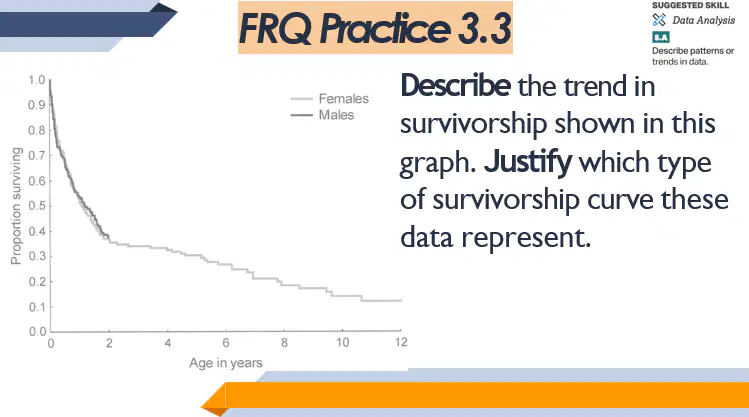
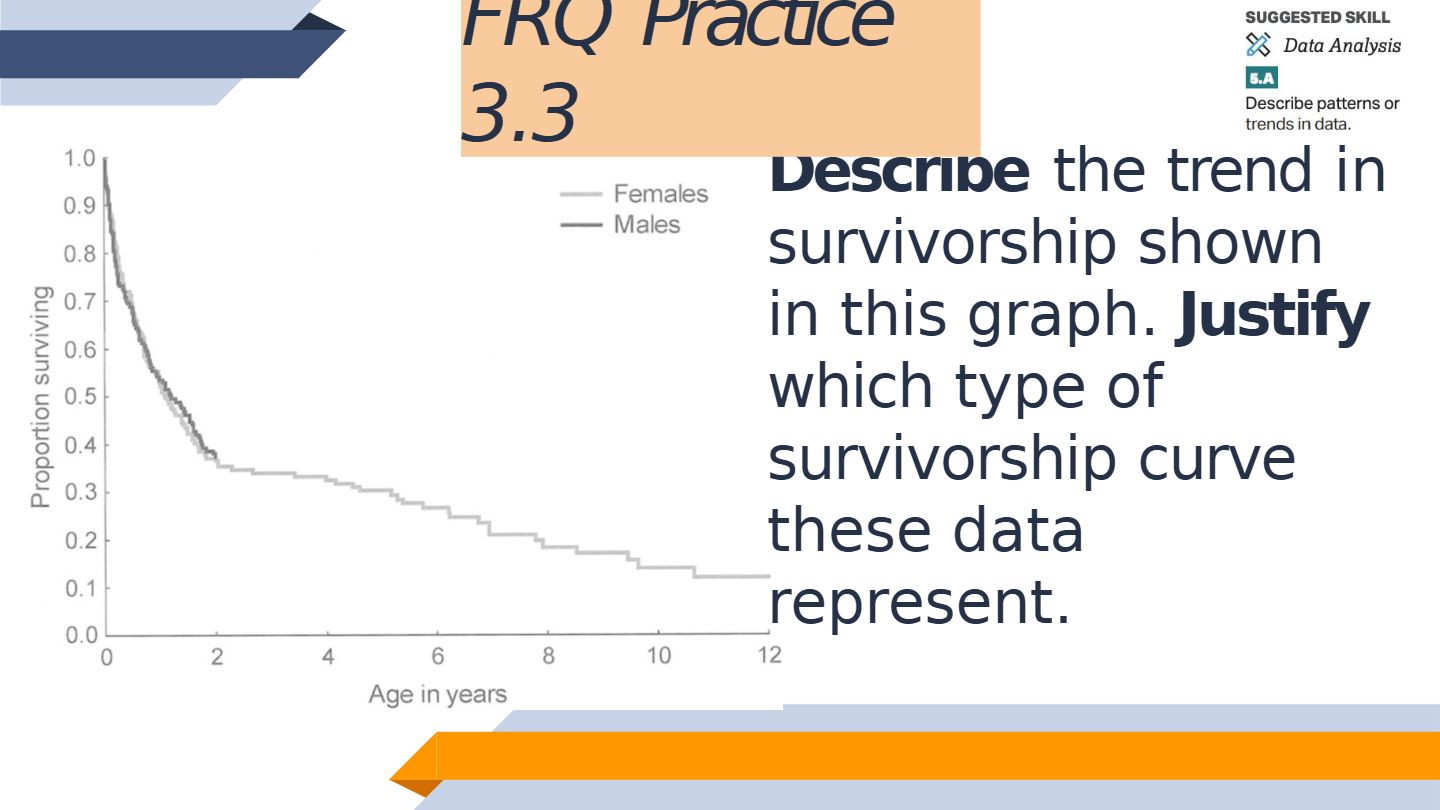
DO NOW: Describe the trend in survivorship shown in this graph. Justify which type of survivorship curve these data represent.
3
Multiple Choice
DO NOW: Which type of survivorship curve is typically followed by K-selected species?
Type I
Type II
Type III
Type IV
4
5
Multiple Choice
DO NOW: Which of the following best describes carrying capacity (K) in an ecosystem?
The maximum number of individuals an ecosystem can support based on limiting resources.
The average population size over time.
The minimum number of individuals required for survival.
The rate at which a population grows exponentially.
6
Multiple Select
DO NOW: Which factors are considered limiting resources that determine the carrying capacity of an ecosystem?
Food
Water
Habitat (nesting sites, space)
Sunlight
7
Multiple Choice
DO NOW: Which of the following traits are commonly associated with r-selected species?
Short lifespan
Large offspring size
High parental care
Slow population growth rate
8
Multiple Choice
DO NOW: Which of the following is a characteristic of K-selected species?
Many offspring, little to no parental care
Short lifespan, quick to sexual maturity
Few offspring, heavy parental care
High biotic potential, rapid population growth
9
10
11
12

13
Multiple Choice
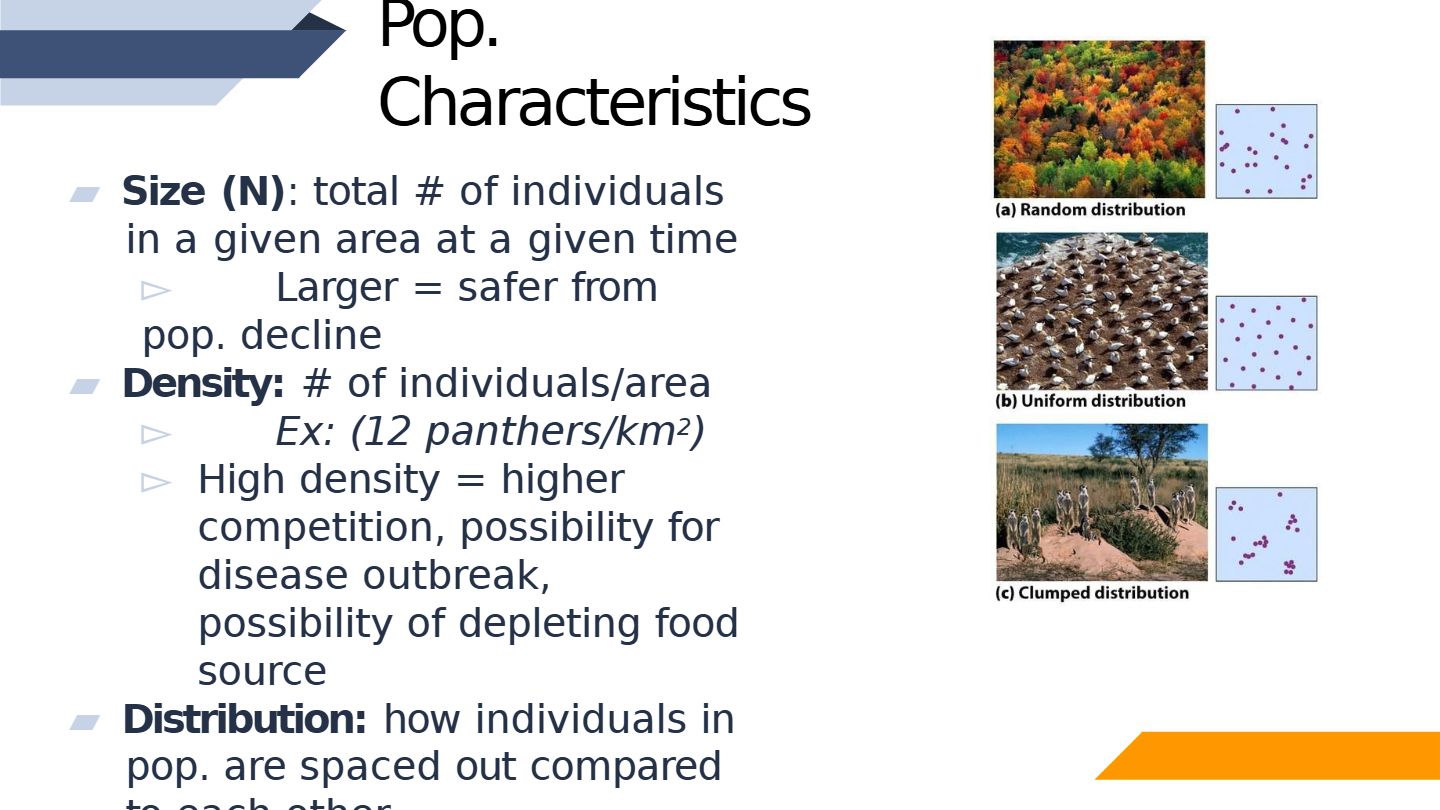
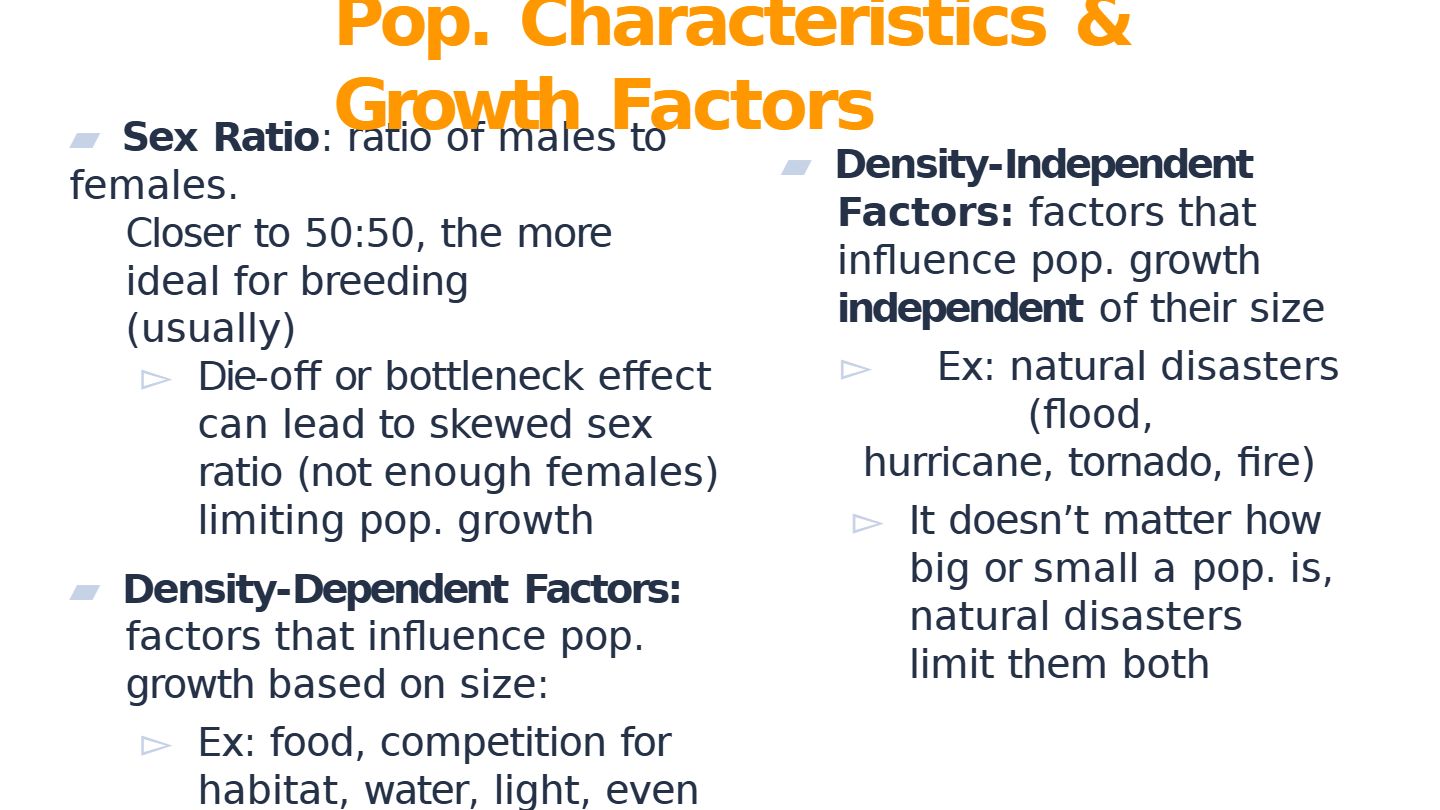
Which of the following factors is most likely to limit the population growth of deer in a forest ecosystem?
Predator presence
Resource availability
Weather patterns
Migration patterns
14
Multiple Choice
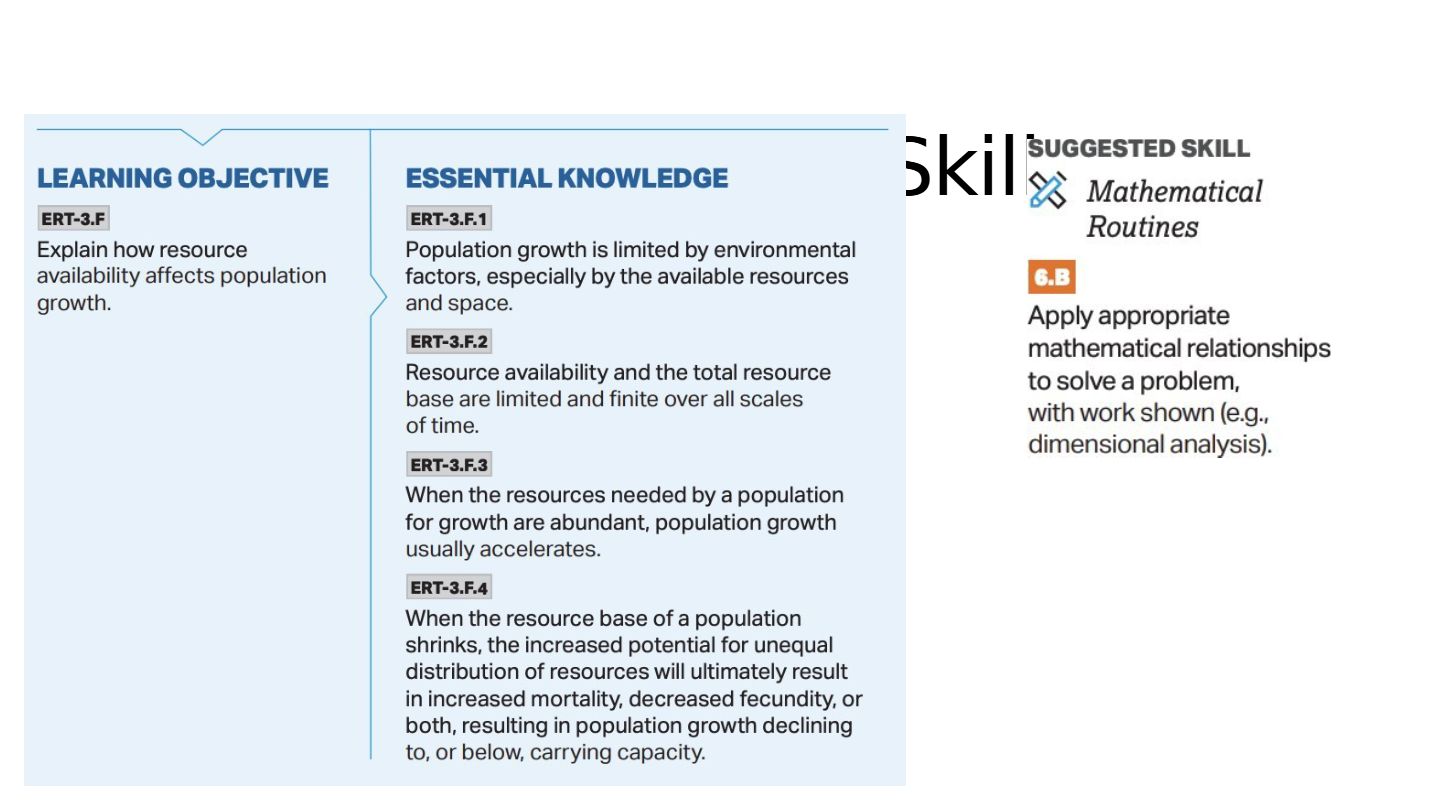
Which of the following best explains how resource availability affects population growth?
Resource availability determines the rate at which populations grow and decline.
Population growth is unaffected by resource availability.
Resource availability only affects population decline, not growth.
Population growth is limited only by space, not resources.
15
Open Ended
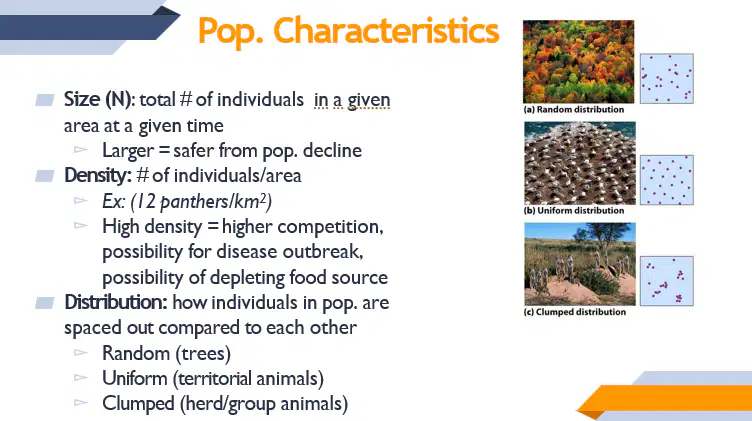
Describe how population density can influence the likelihood of disease outbreaks within a population.
16
Multiple Select
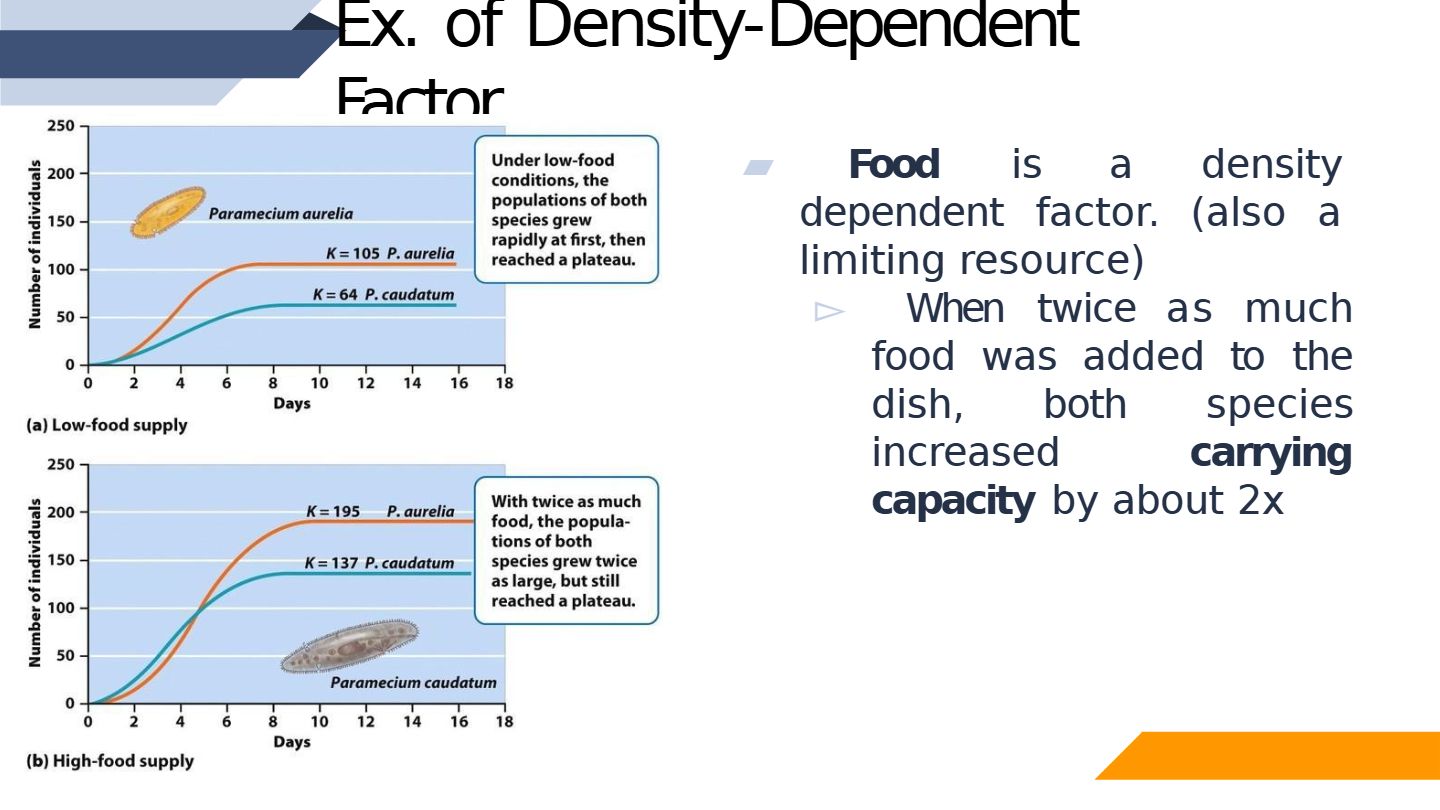
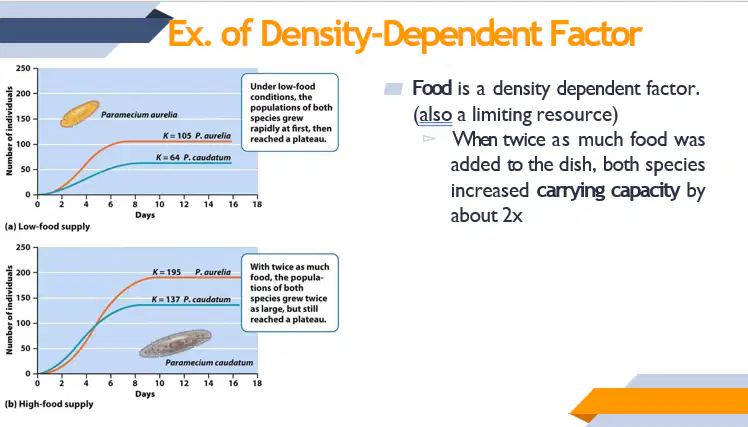
Which of the following are density-dependent factors that influence population growth?
Food
Competition for habitat
Natural disasters
Water
17
18
Fill in the Blanks
Type answer...
19
20
Open Ended
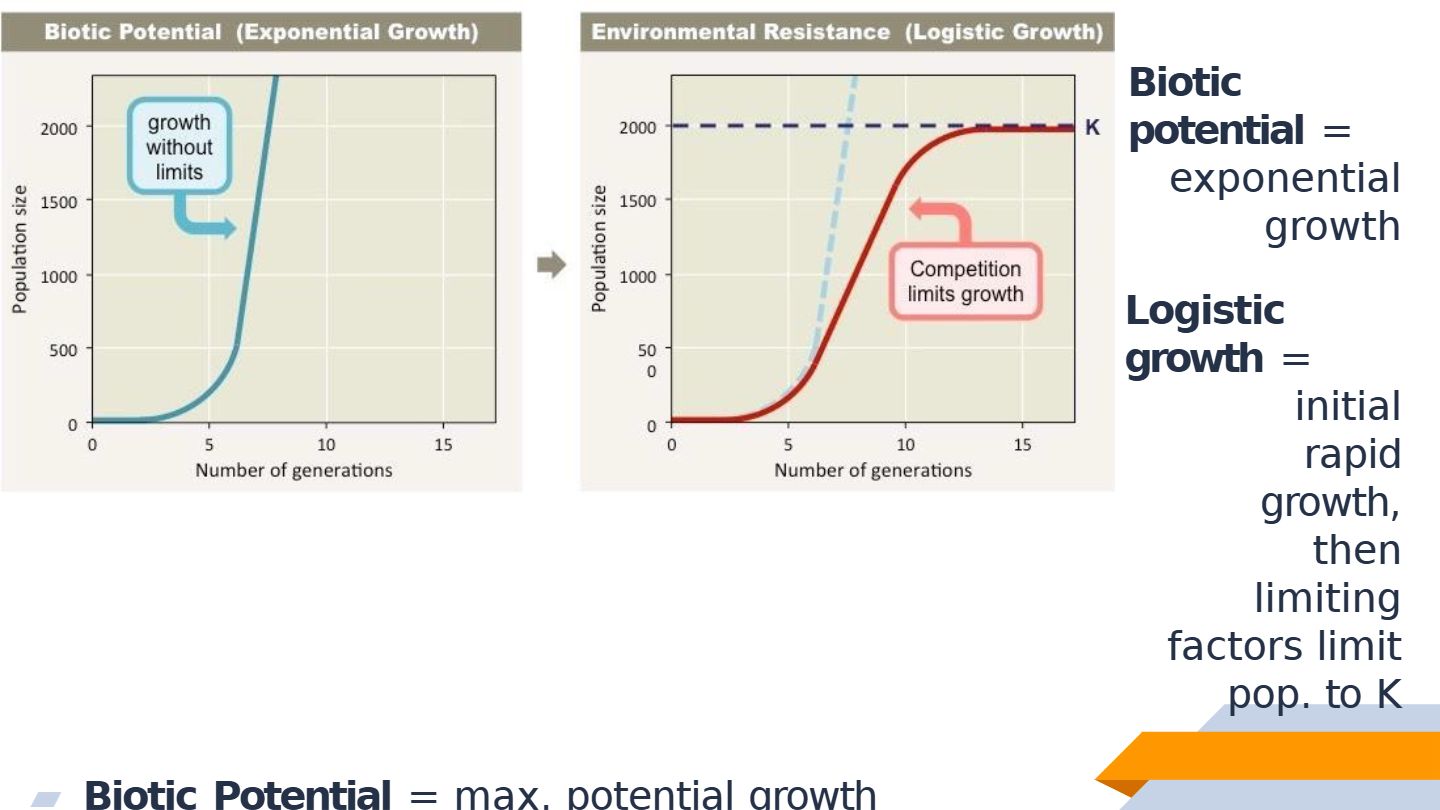
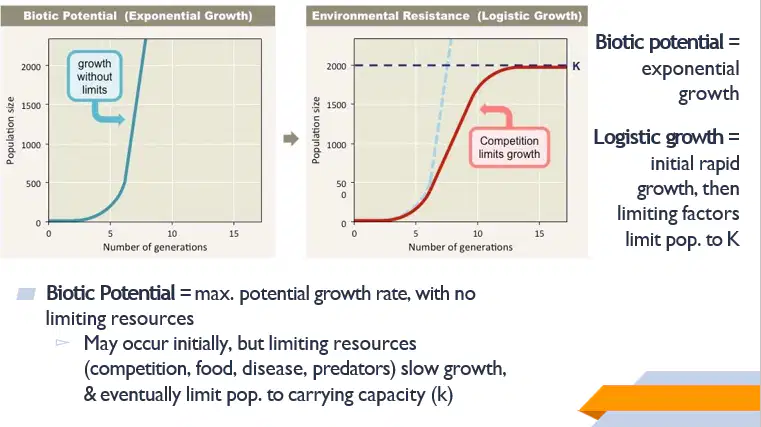
Compare and contrast biotic potential and environmental resistance in terms of population growth patterns.
21
22
Fill in the Blanks
Type answer...
23
24
Open Ended
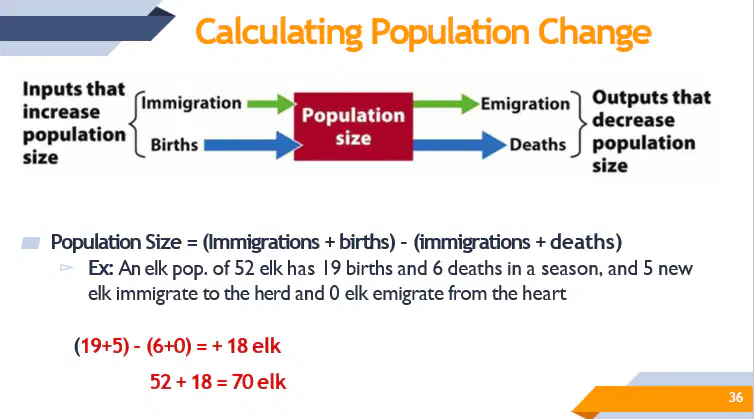
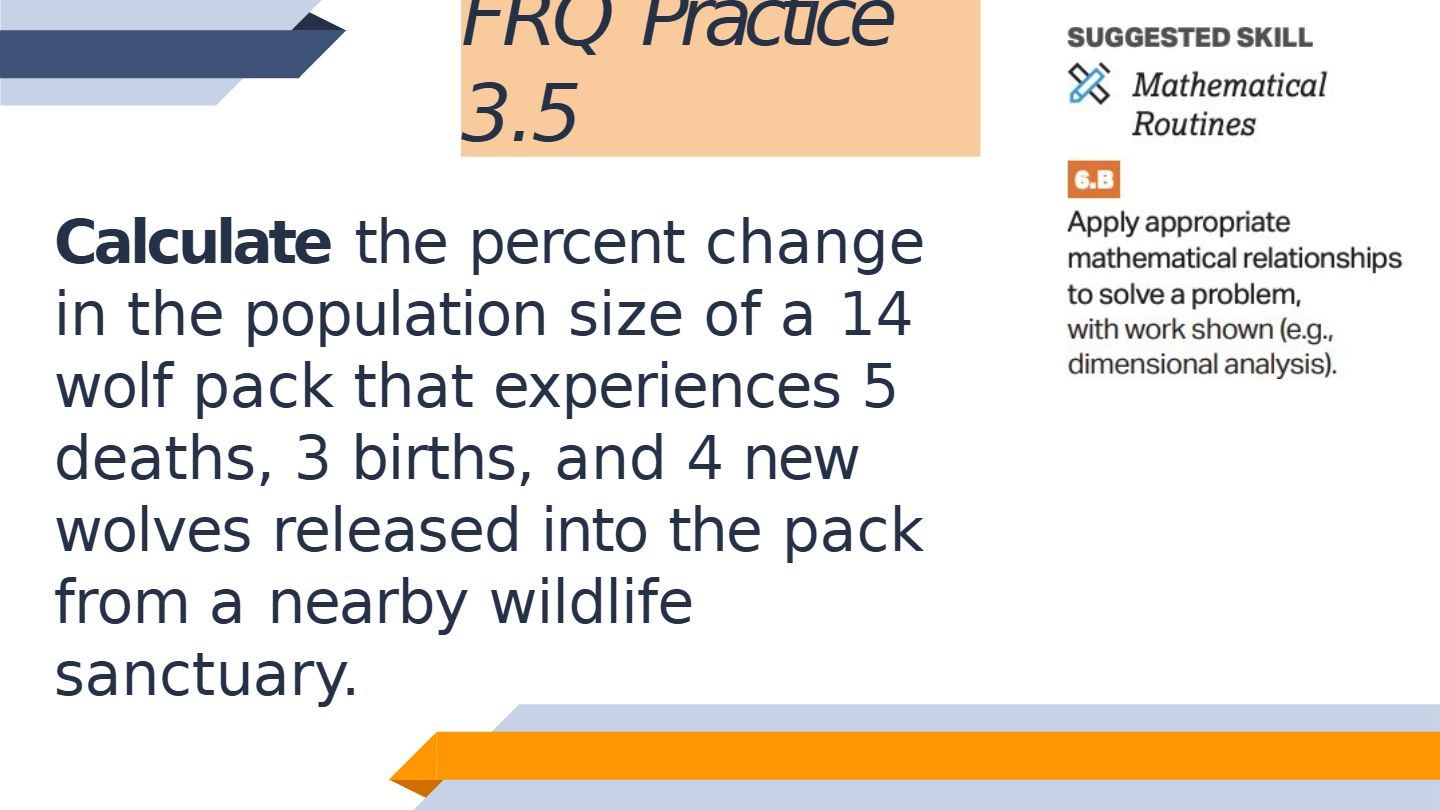
Calculate the percent change in the population size of a 14 wolf pack that experiences 5 deaths, 3 births, and 4 new wolves released into the pack from a nearby wildlife sanctuary.
25
26
27
28
Multiple Choice
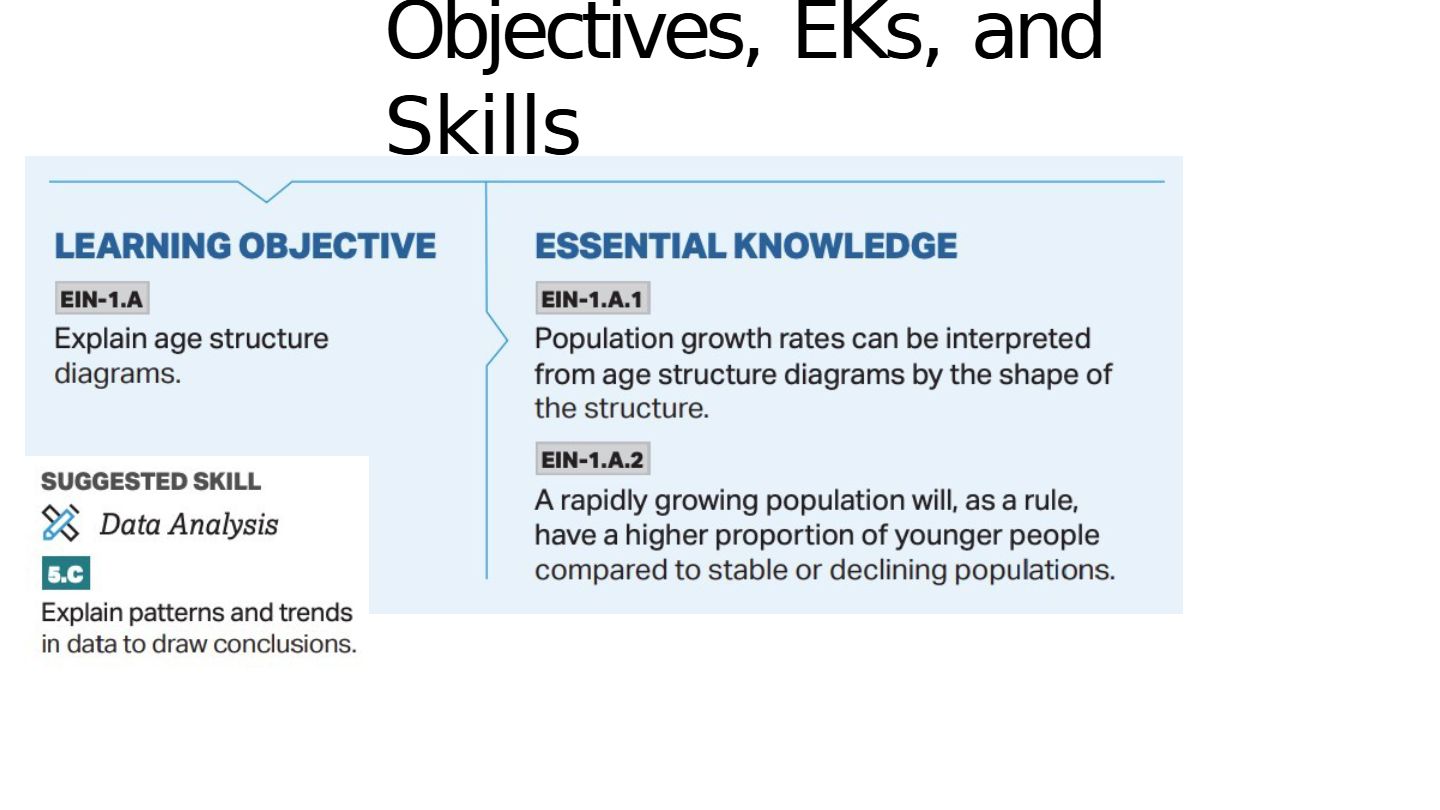
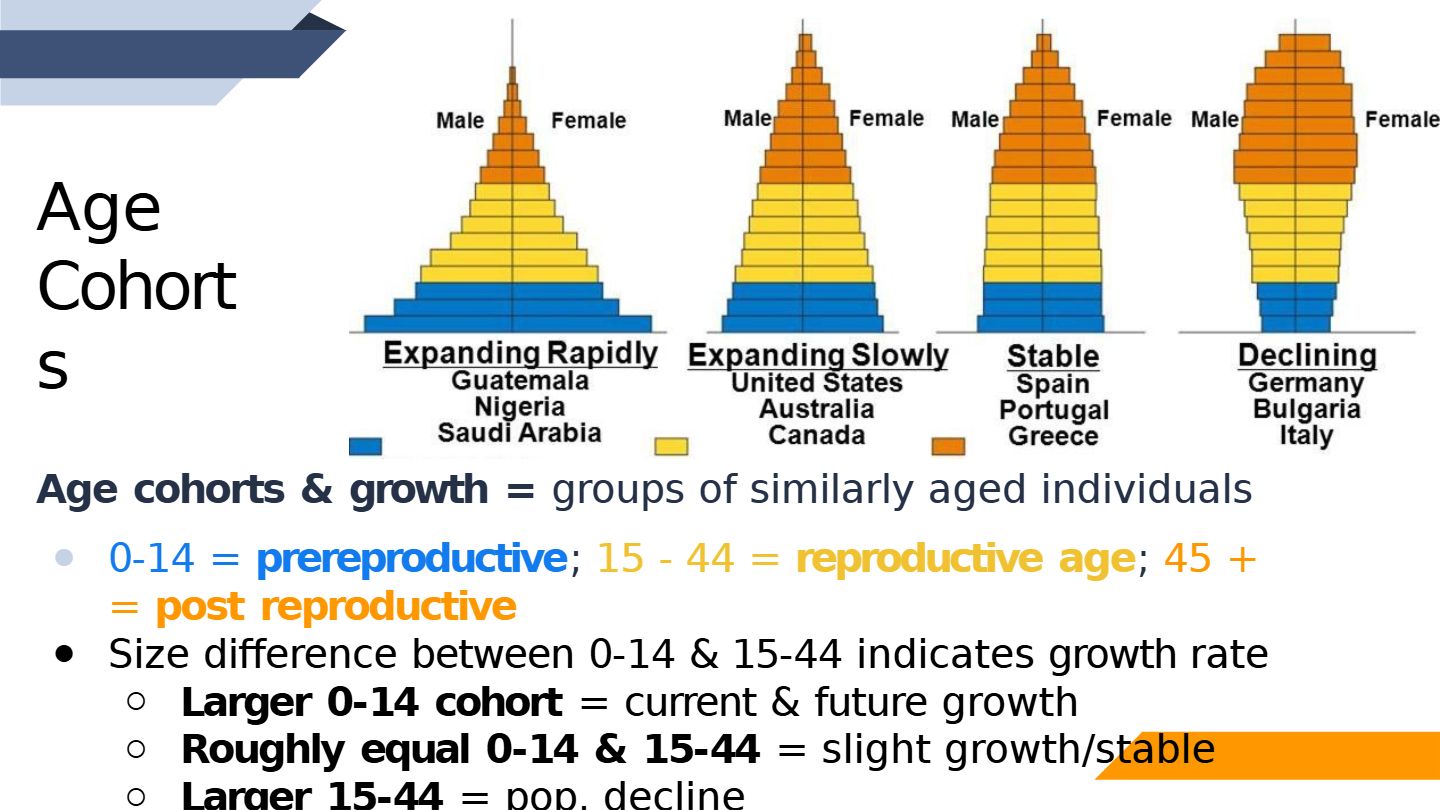
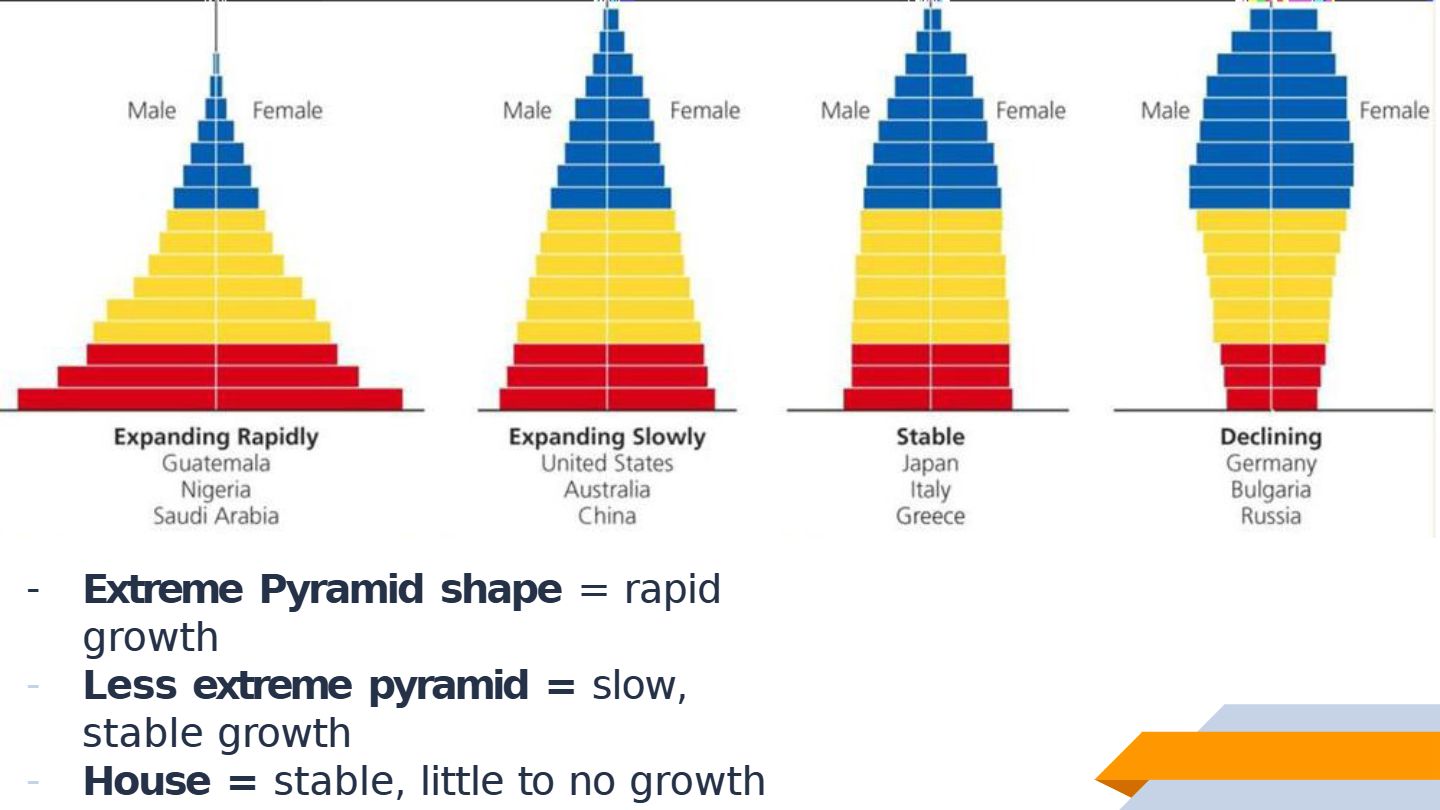
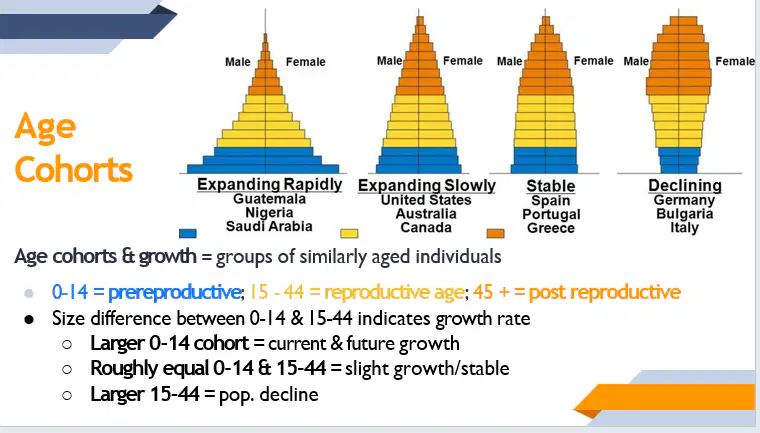
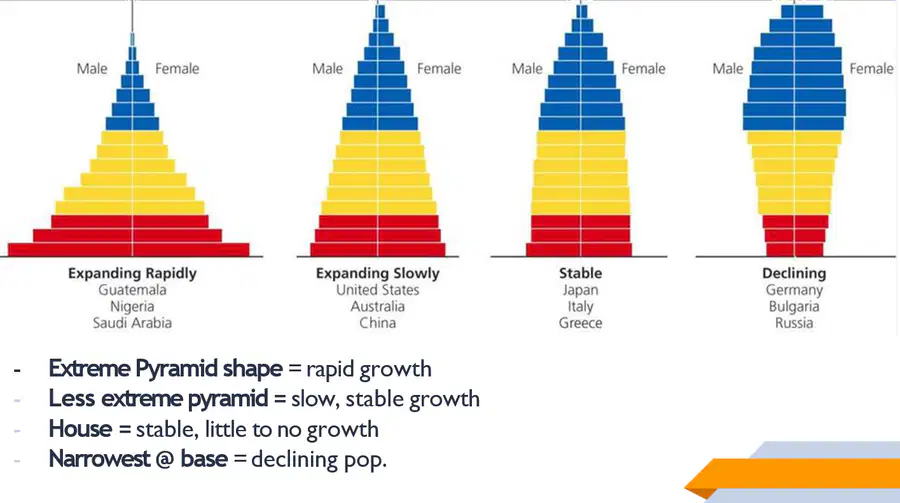
Which of the following best describes the difference between a rapidly growing and a stable population based on age structure diagrams?
A rapidly growing population has a higher proportion of younger people compared to a stable population.
A stable population has more elderly individuals than a rapidly growing population.
A rapidly growing population has equal numbers of all age groups.
A stable population has a higher birth rate than a rapidly growing population.
29
30
Multiple Select
Select all characteristics that describe a country with a stable population based on its age structure diagram.
Roughly equal 0-14 and 15-44 cohorts
Extreme pyramid shape
House shape
Little to no growth
31
Fill in the Blanks
Type answer...
32
Open Ended
Explain how the shape of an age structure diagram can be used to predict future population growth trends.
33
Multiple Choice
Which countries are most likely to experience population decline based on their age structure diagrams?
Guatemala, Nigeria, Saudi Arabia
United States, Australia, Canada
Spain, Portugal, Greece
Germany, Bulgaria, Italy
34
35
36
Open Ended
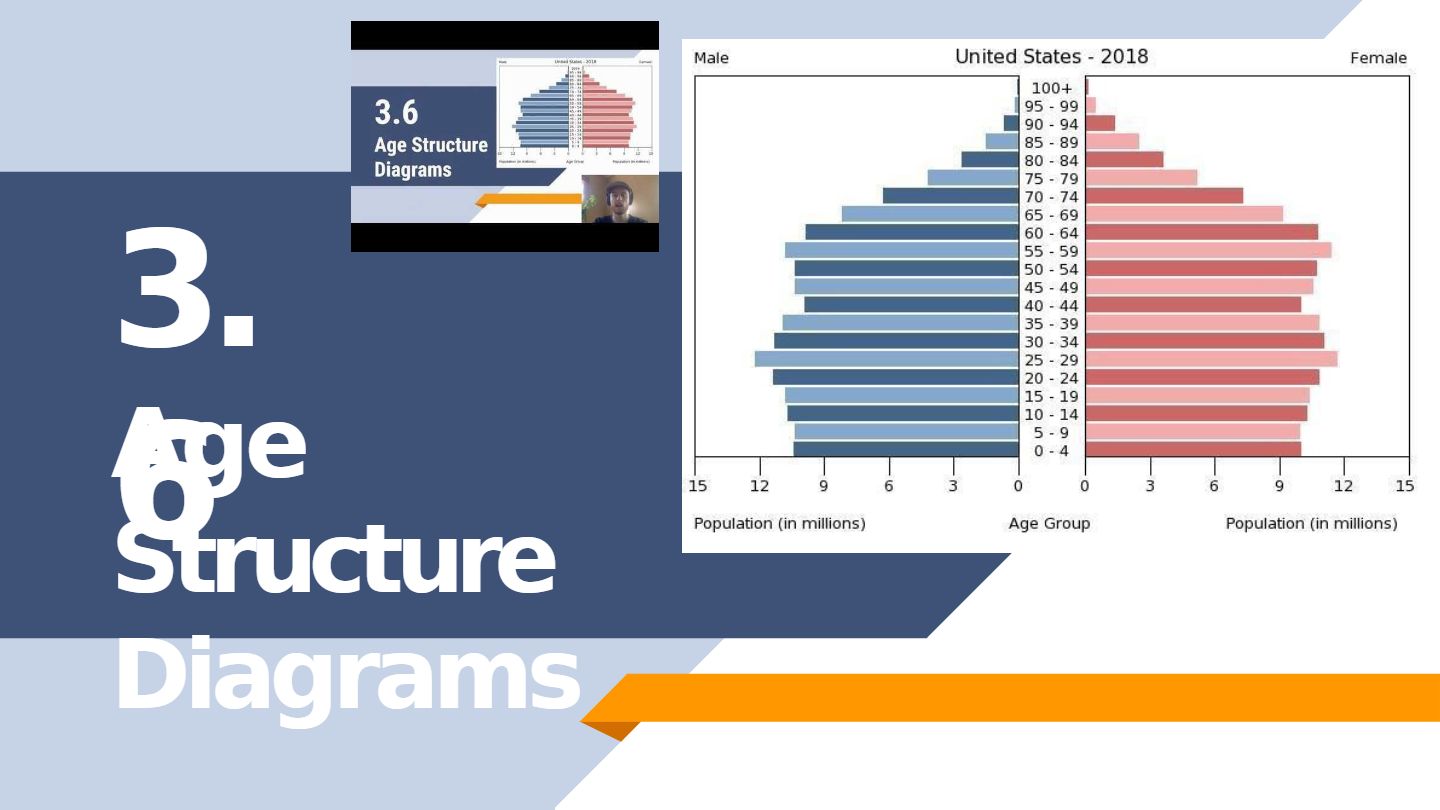
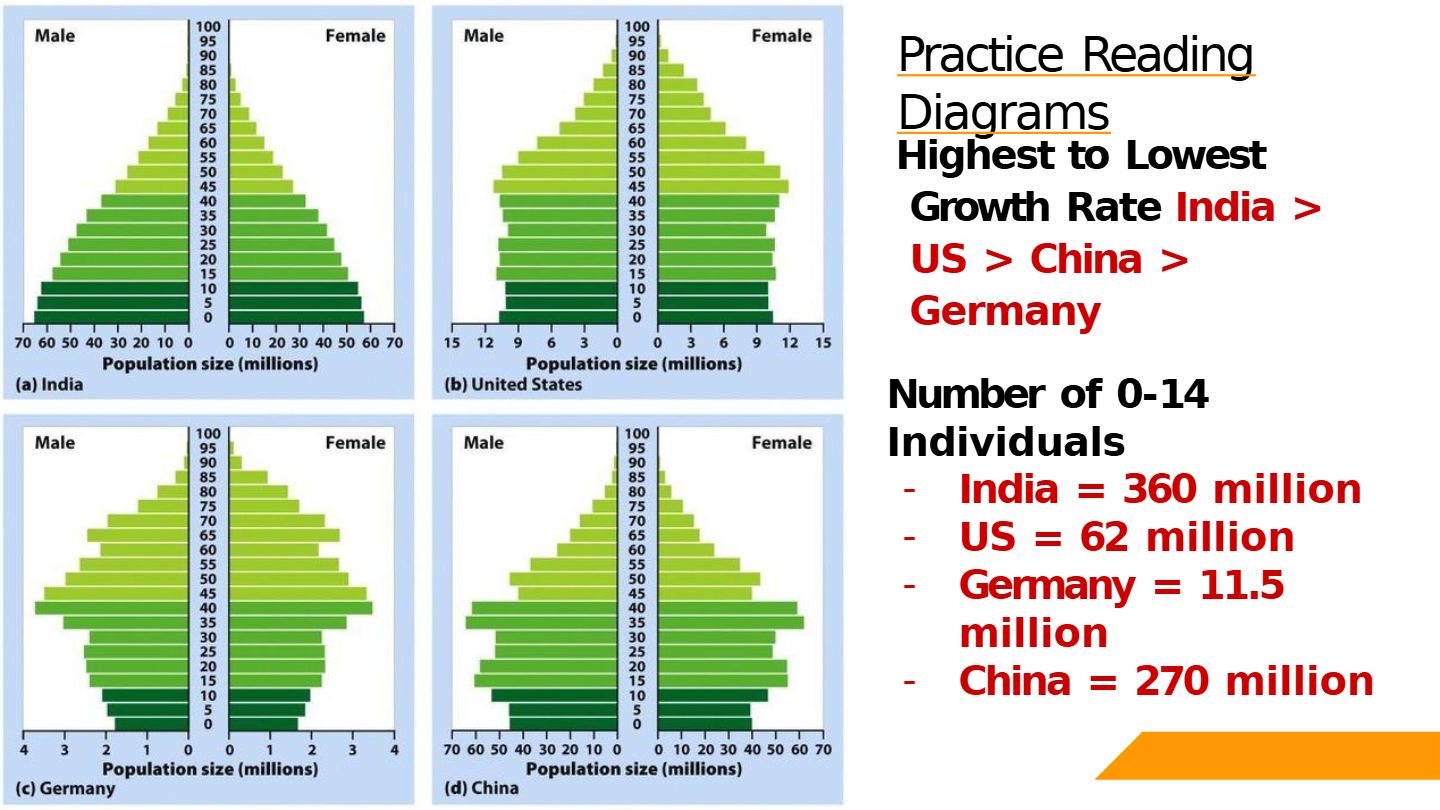
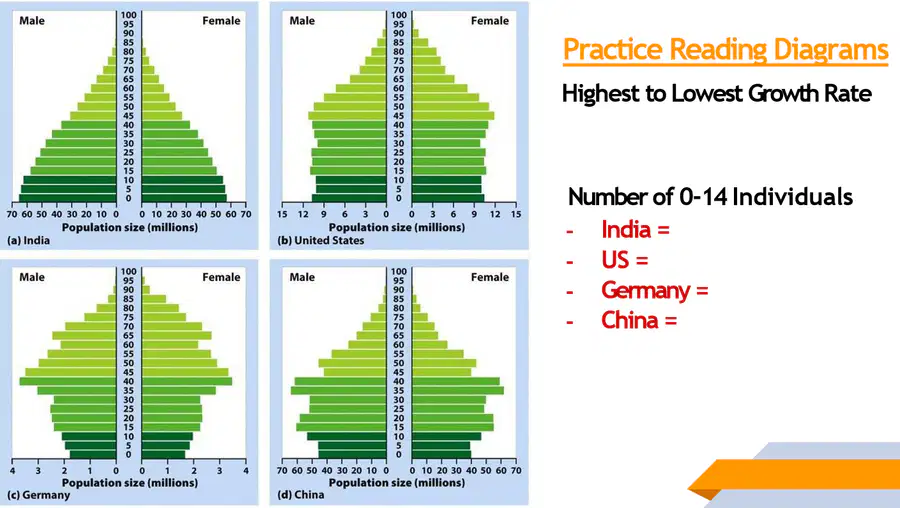
Explain how the shape of a population pyramid can indicate a country's population growth rate. Use examples from the diagrams provided.
37
Multiple Choice
Based on the population pyramids for India, United States, Germany, and China, which country has the largest proportion of young individuals (ages 0-14)?
India
United States
Germany
China
38
39
Open Ended
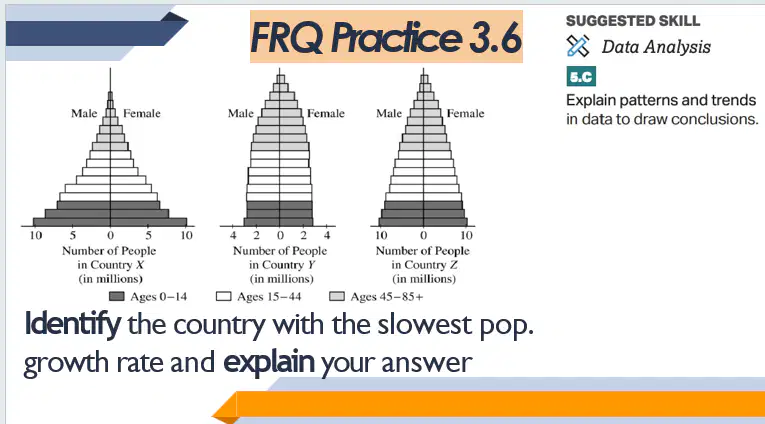
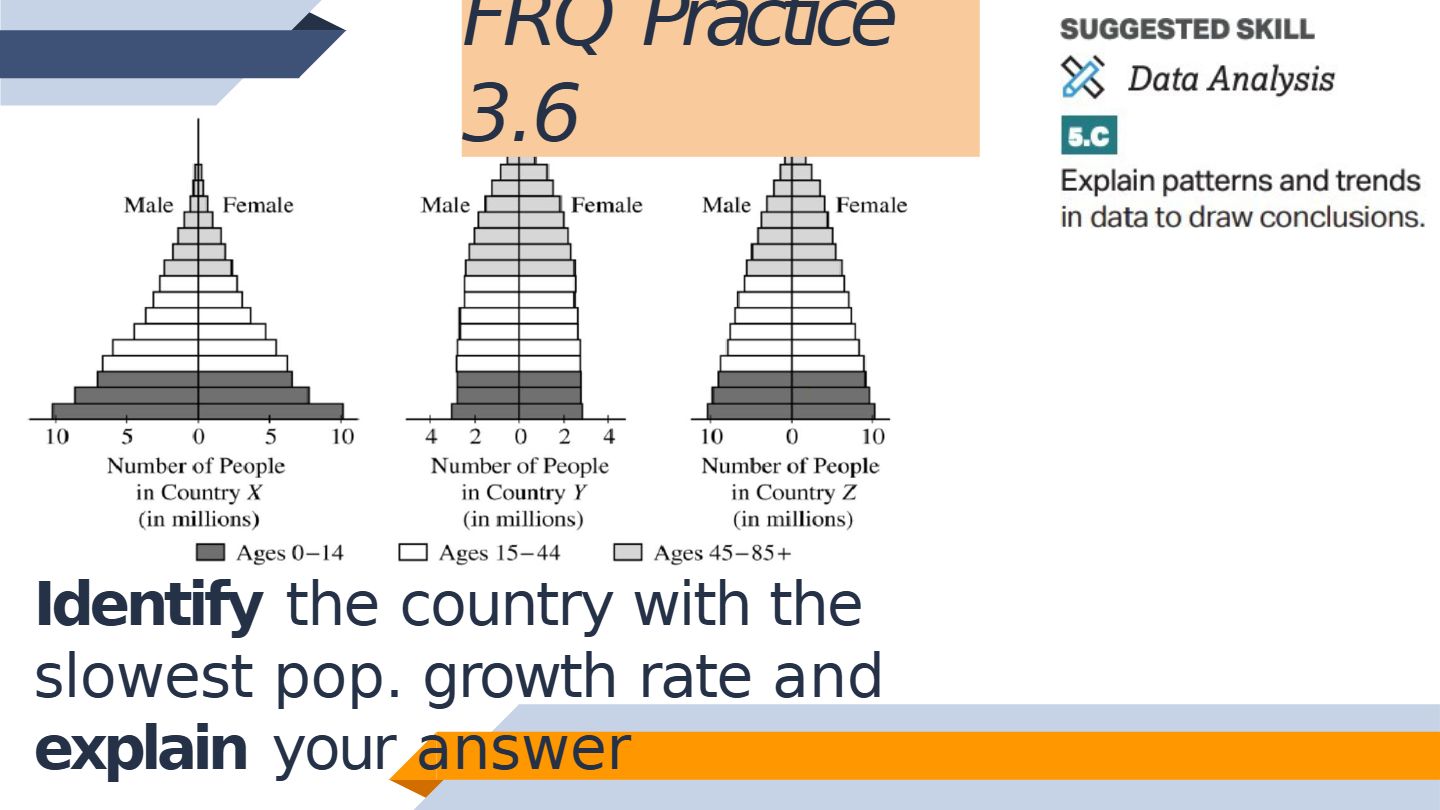
Identify the country with the slowest population growth rate and explain your answer.
40
Independent Practice- AP Classroom
Complete all assigned Unit 3 Quizzes on AP Classroom
Watch videos on topics and take notes in your journal
41
Exit Ticket-
ON Google Classroom
42
43
44
45
Multiple Select
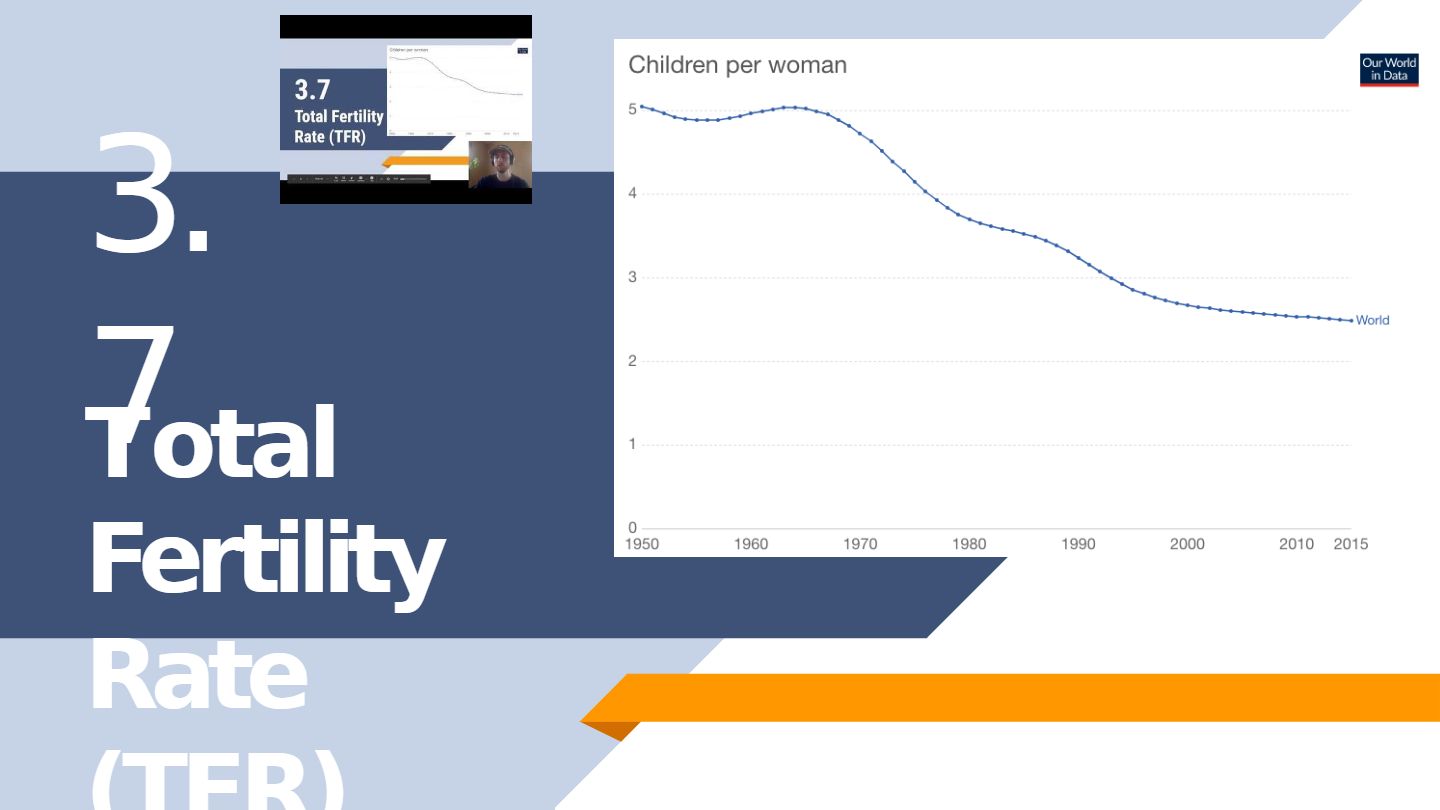
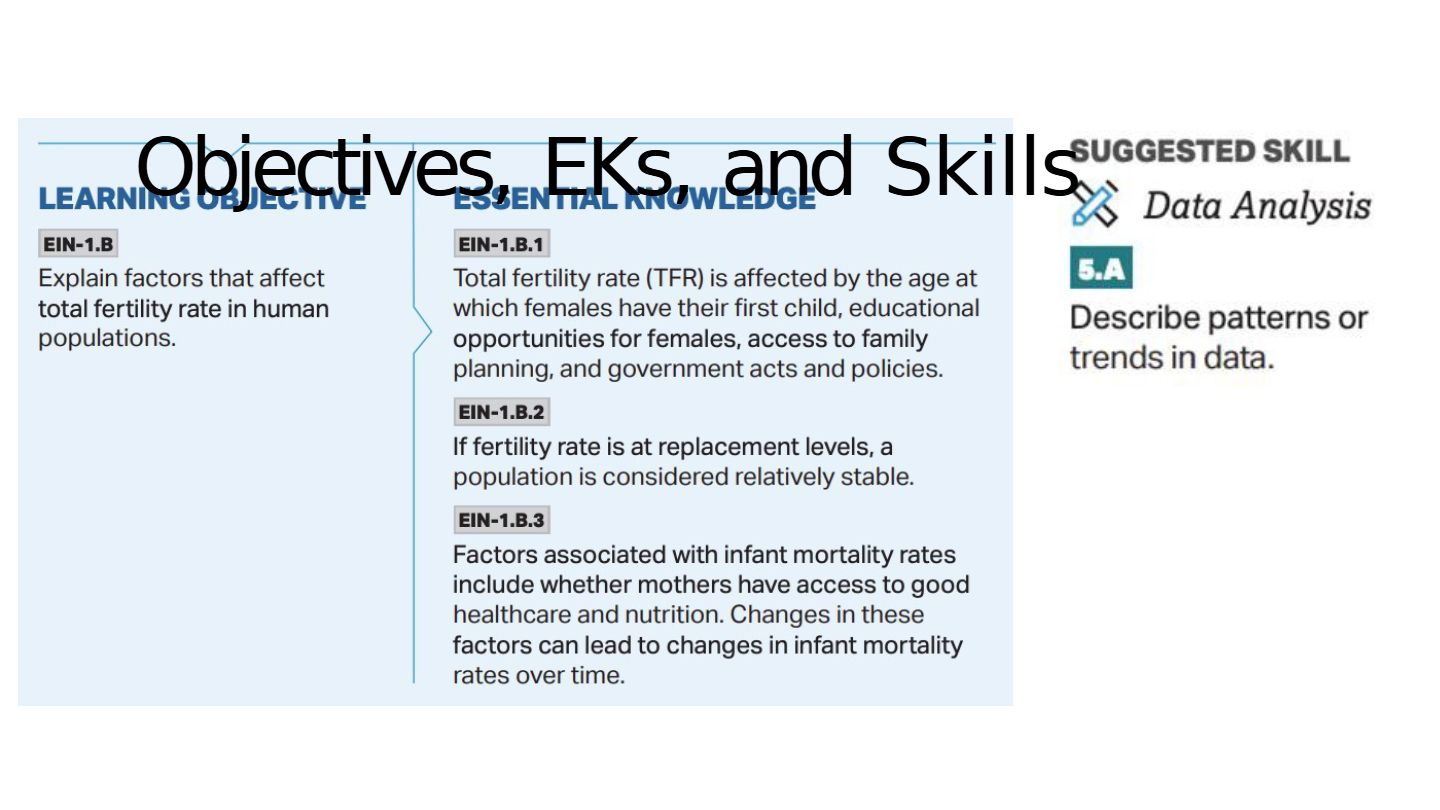
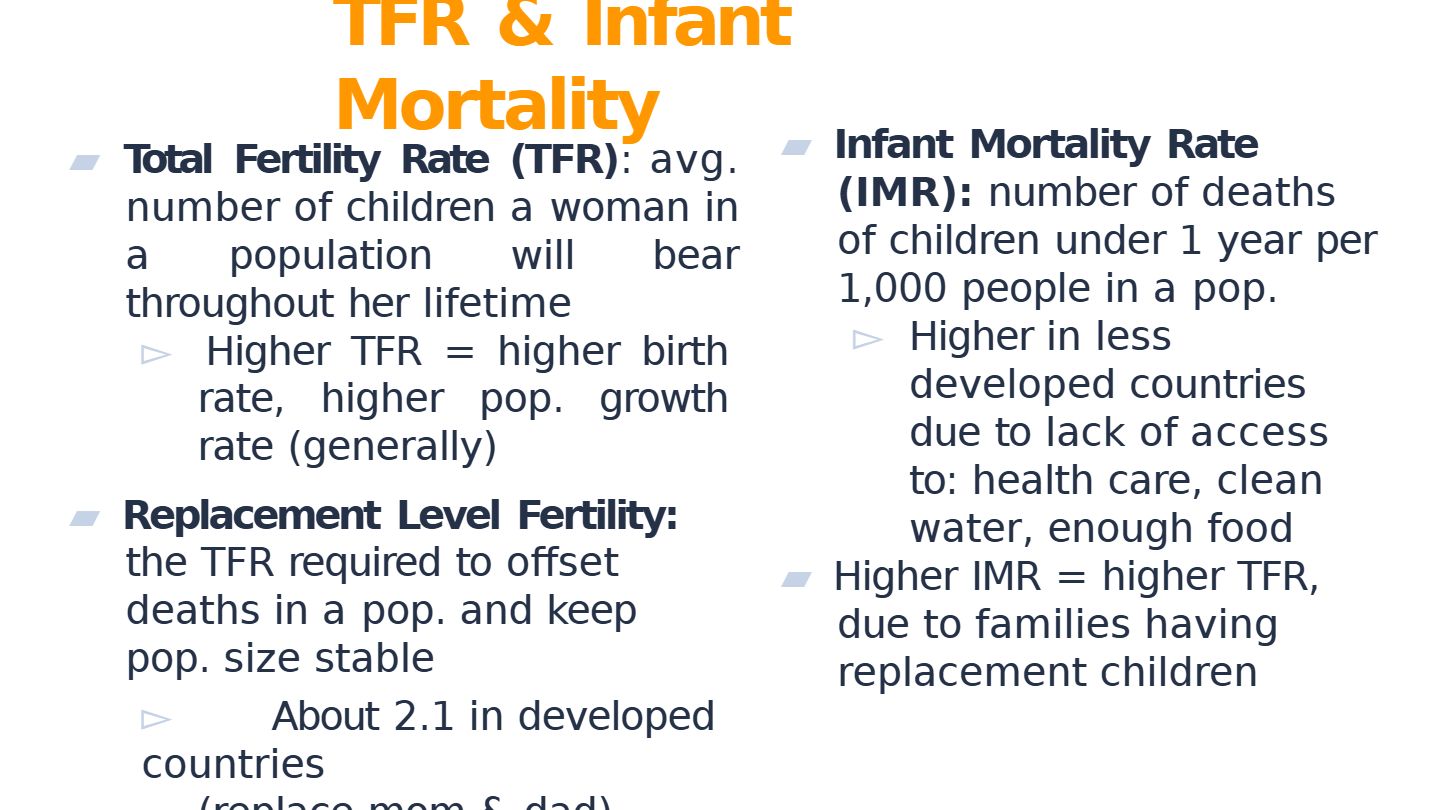
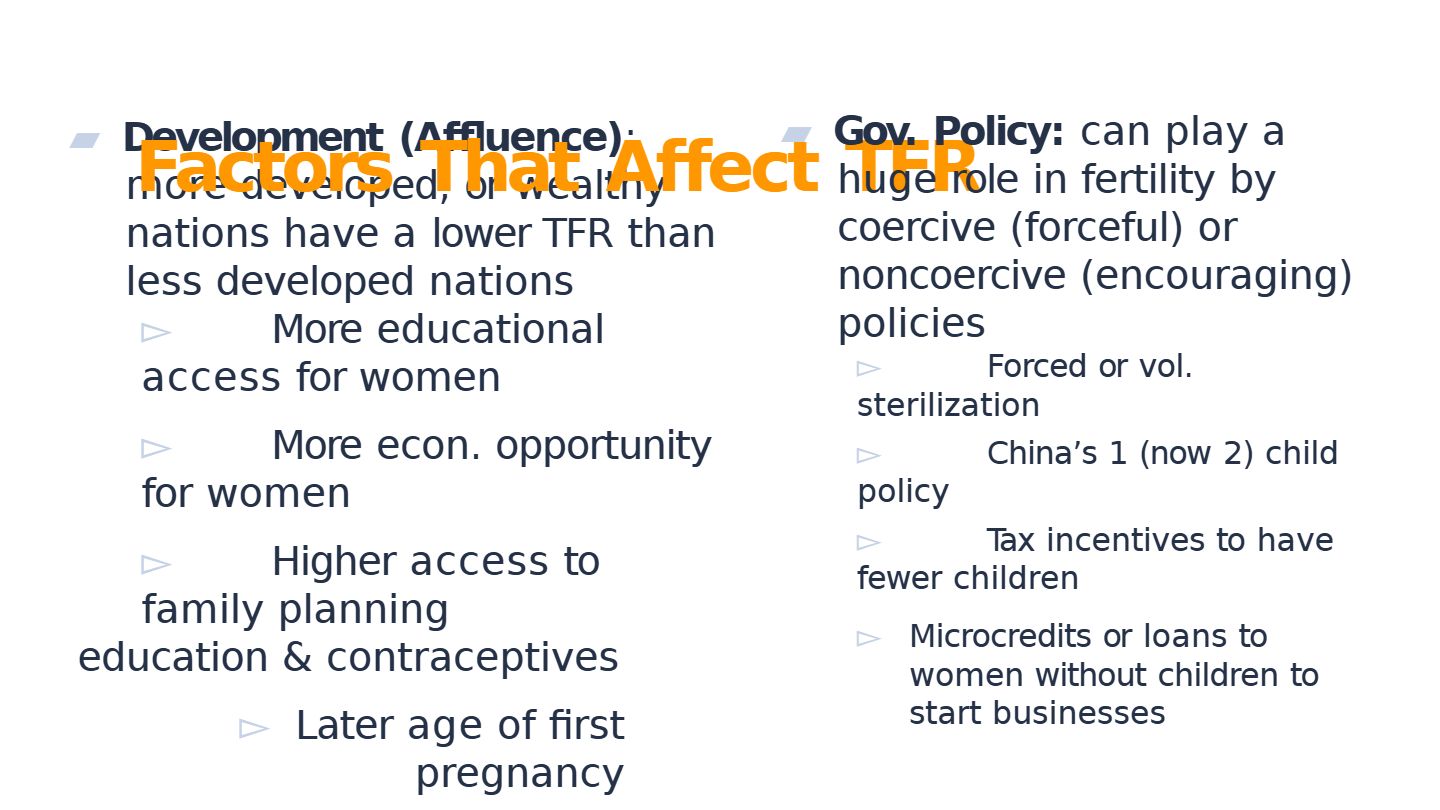
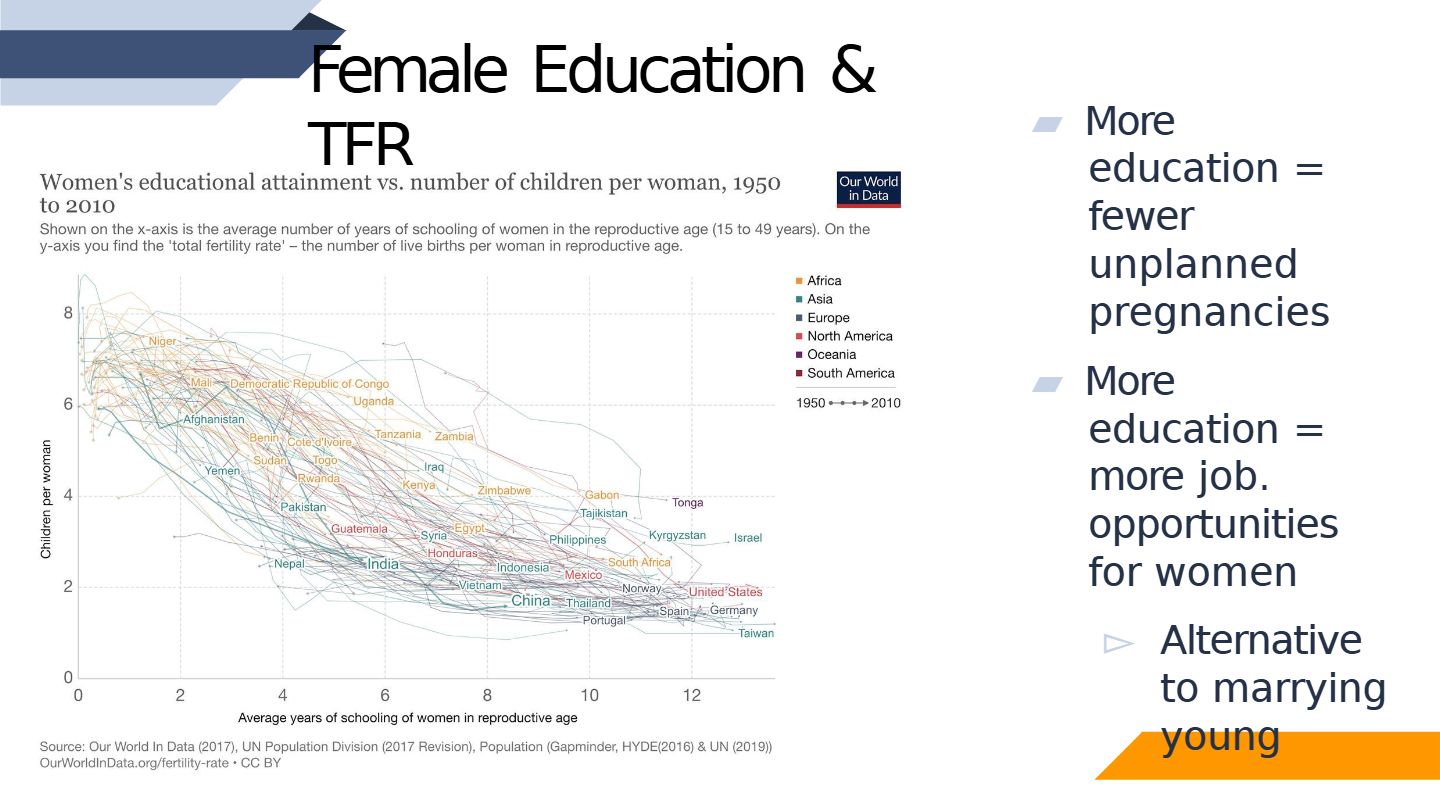
Which of the following factors can affect the total fertility rate (TFR) in human populations?
Access to family planning
Educational opportunities for females
Government acts and policies
All of the above
46
47
Fill in the Blanks
Type answer...
48
49
Multiple Choice
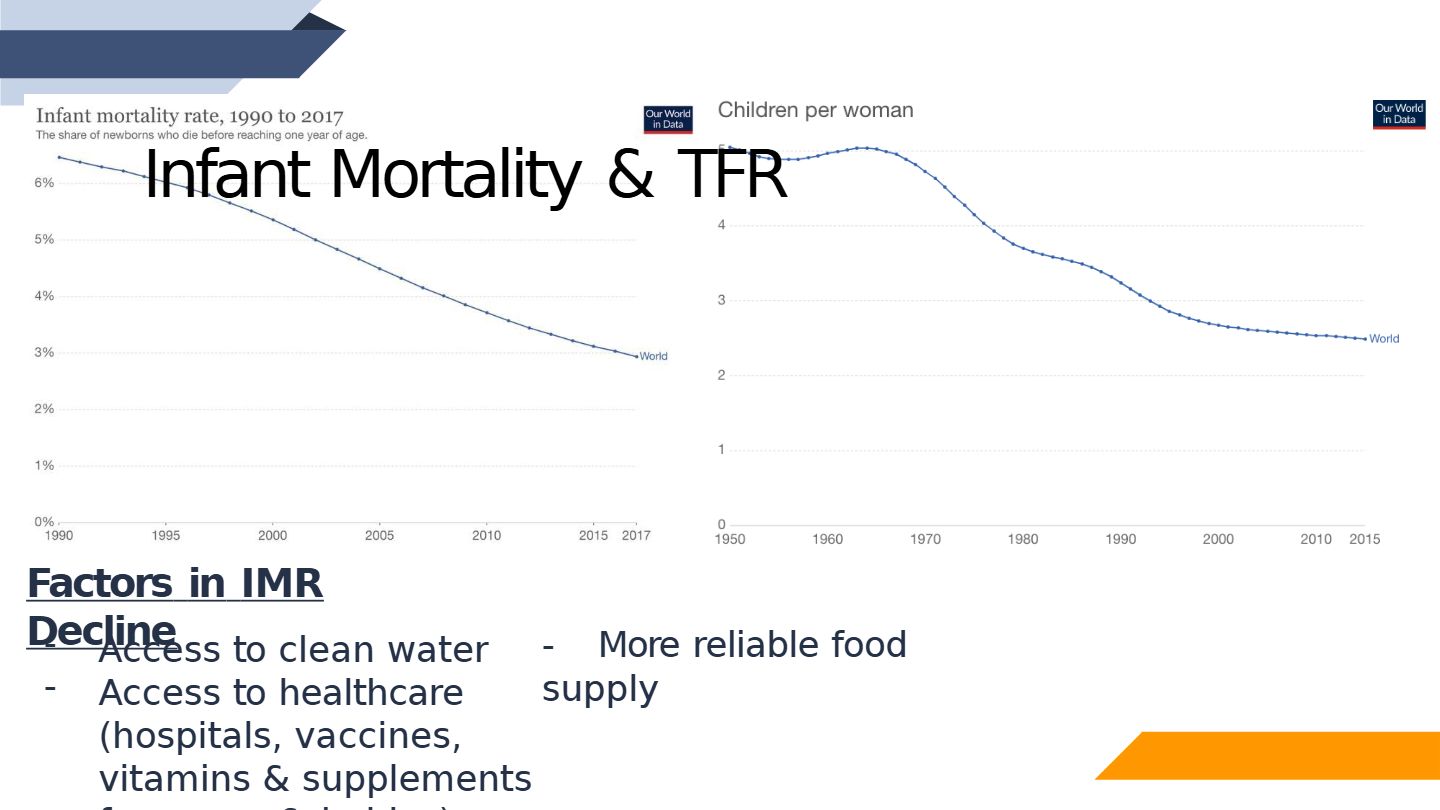
Which of the following is NOT a factor that contributed to the decline in infant mortality rate (IMR) from 1990 to 2017?
Access to clean water
Access to healthcare
More reliable food supply
Increased air pollution
50
51
Open Ended
Explain how government policies can influence the total fertility rate (TFR) in a country.
52
53
Multiple Select
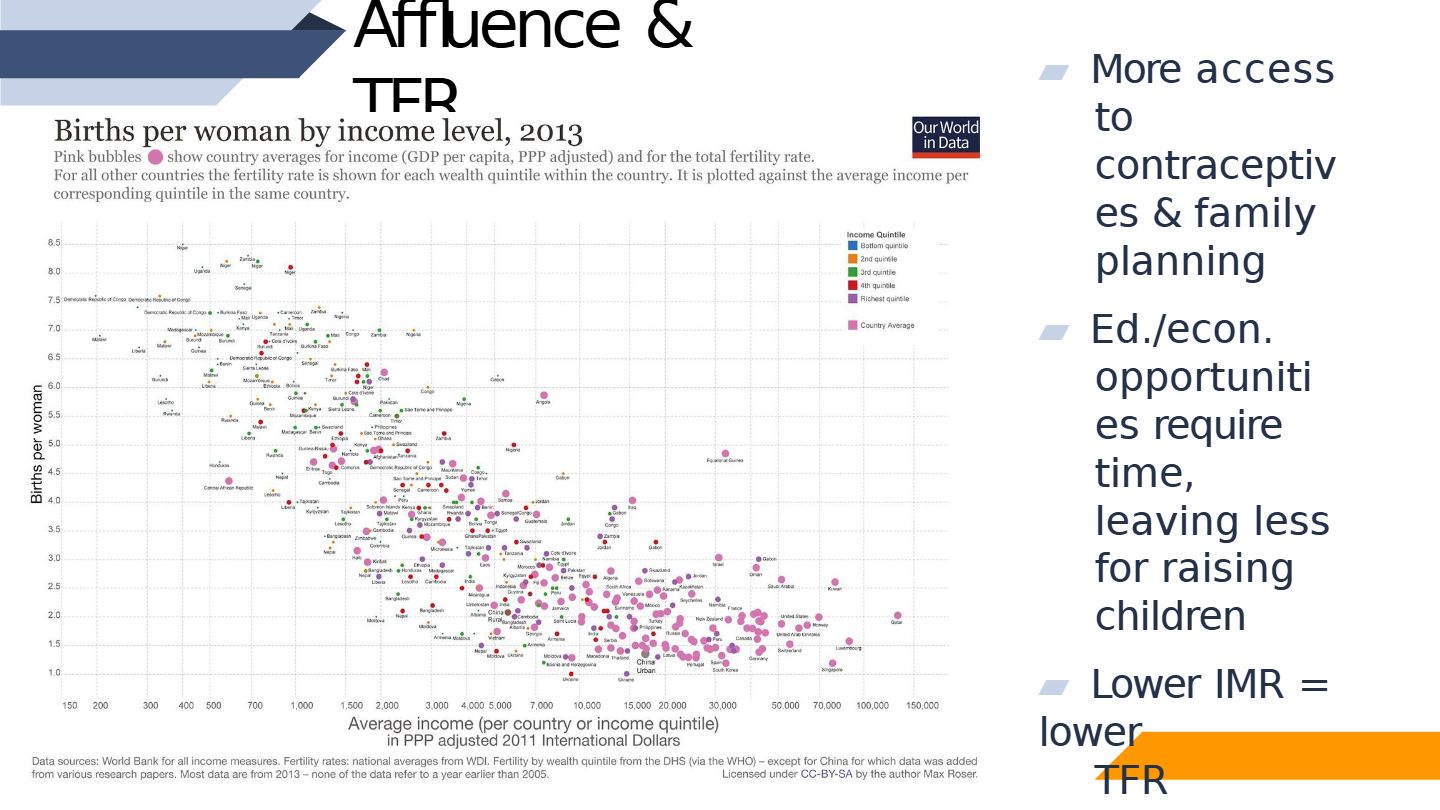
Which of the following factors are associated with lower total fertility rates (TFR) according to the data on births per woman by income level?
Higher average income
Limited access to family planning
Lower educational attainment for women
Higher infant mortality rate
54
55
Fill in the Blanks
Type answer...
56
57
Open Ended
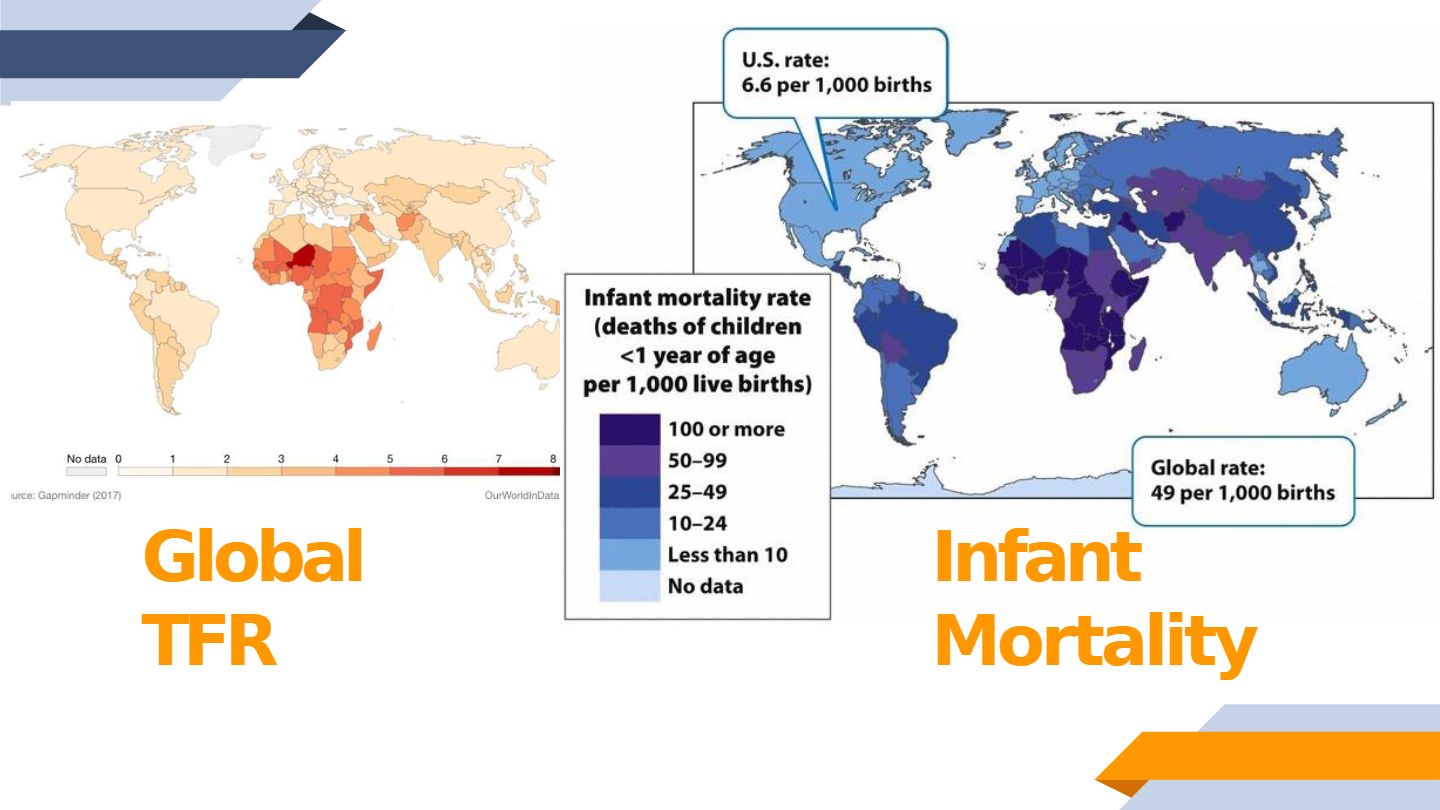
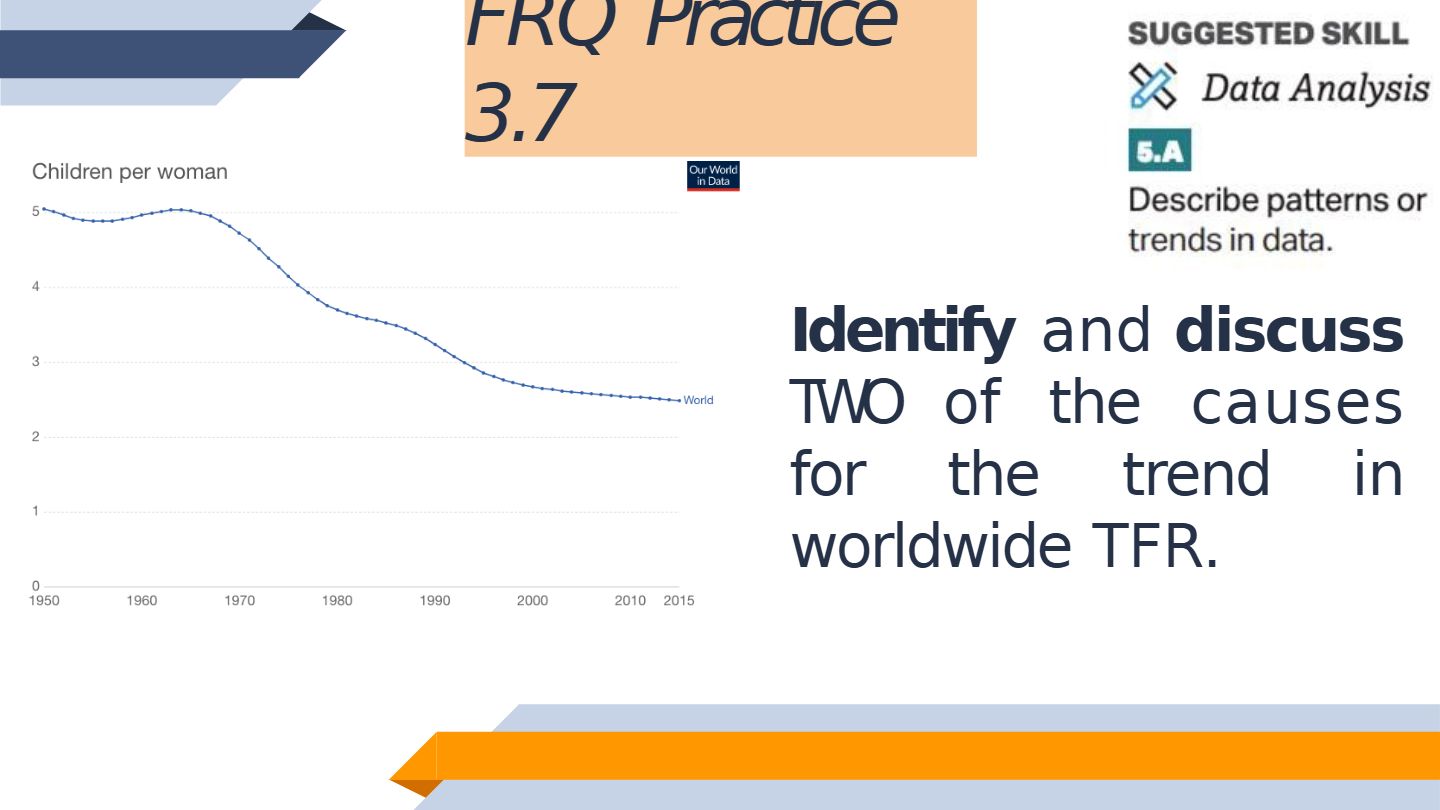
Identify and discuss TWO of the causes for the trend in worldwide TFR.
58
Fill in the Blanks
Type answer...
59
Open Ended
How does resource availability affect population growth in an ecosystem?
Unit 3: Populations
Take out lab reports to turn in (LATE)
Take out environmental science journal for notes
Login to Wayground
No phones or personal devices. Must be in your backpack!!
Show answer
Auto Play
Slide 1 / 59
SLIDE
Similar Resources on Wayground

56 questions
Cell Structures & Functions
Presentation
•
10th - 11th Grade
54 questions
Metamorphic Rock
Presentation
•
9th - 10th Grade
54 questions
Metamorphism
Presentation
•
9th - 10th Grade
53 questions
HEALTHY LIFESTYLE
Presentation
•
9th Grade
53 questions
Computer Hardware and Software
Presentation
•
10th Grade
52 questions
SSS, SAS, ASA, AAS, HL
Presentation
•
10th Grade
53 questions
Food Tests
Presentation
•
9th - 10th Grade
56 questions
Can I Believe My Eyes: Introduction to Waves
Presentation
•
10th Grade
Popular Resources on Wayground
6 questions
Secondary Safety Quiz
Presentation
•
9th - 12th Grade
10 questions
Afterschool Activities & Sports

Quiz
•
6th - 8th Grade
19 questions
ROAR Week 2026
Quiz
•
9th - 12th Grade
20 questions
Lab Safety Quiz
Quiz
•
6th Grade
15 questions
Cool Tool:Chromebook
Quiz
•
6th - 8th Grade
22 questions
would you rather
Quiz
•
3rd - 11th Grade
21 questions
Continents and Oceans
Quiz
•
6th Grade
20 questions
Parts of Speech
Quiz
•
5th Grade
Discover more resources for Science
9 questions
Scientific method

Interactive video
•
9th - 12th Grade
10 questions
Lab Safety Essentials
Interactive video
•
6th - 10th Grade
10 questions
Essential Guidelines for Science Lab Safety
Interactive video
•
6th - 10th Grade
14 questions
Flinn Lab Safety
Quiz
•
9th - 12th Grade
10 questions
Exploring the Steps of the Scientific Method for Kids
Interactive video
•
6th - 10th Grade
38 questions
Lab Safety
Quiz
•
9th - 12th Grade
20 questions
Quiz #1: Lab Safety and Scientific Method
Quiz
•
9th - 12th Grade
11 questions
Unit 0: Introduction to Biology Vocab
Quiz
•
9th - 12th Grade