

12ial-Hazards-Predicitng

Presentation
•
Geography
•
KG - Professional Development
•
Practice Problem
•
Easy

Aimee Cooper
Used 1+ times
FREE Resource
31 Slides • 9 Questions
1
Topic: 1.3.3 Global Hazard Trends
Enquiry question: Why are some hazards more predictable and manageable than others?
By Aimee Cooper
2
Learning objectives
Explain how scientists predict and monitor key hazards.
Compare levels of predictability for volcanoes, earthquakes, tsunamis, and cyclones.
Assess how technology and development interact to shape responses.

3
Open Ended
Rank these hazards by how far ahead you can give warning:
Volcano Tsunami Cyclone Earthquake
After ranking, justify the top and bottom positions.
4
Defining Key Terms
Prediction: estimating when and where an event will occur.
Monitoring: continuous observation of indicators to identify abnormal change.
Forecasting: communicating risk levels based on probability.

5
Why Predictability Matters
Prediction gives time to evacuate, protect infrastructure, and mobilise aid.
However, accuracy depends on hazard type, data quality, and political willingness to act.
Even perfect science fails if communities cannot respond.

6
Open Ended

How are volcanoes monitored and how easy are they to predict?
7
Volcanoes: Among the Most Predictable
Volcanoes usually exhibit precursor signals weeks or months in advance:
Small earthquakes from magma movement
Ground deformation
Gas emission changes (SO₂, CO₂)
Increased heat flow
Example: Mount Pinatubo (1991) – eruption predicted after SO₂ levels rose 10-fold; 60 000 people evacuated, > 5000 lives saved.

8
Monitoring Volcanic Activity
Seismometers detect harmonic tremor. Tiltmeters & GPS track swelling. Spectrometers analyse gas ratios. Thermal & satellite imagery reveal heat anomalies. Evaluation: Prediction reliability ≈ 80 % once unrest begins, but dormant volcanoes remain difficult.

9
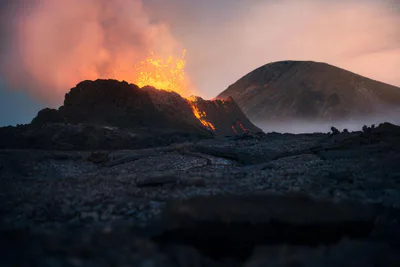
Case Study: Fagradalsfjall (Iceland 2023–24)
Over 20 000 micro-quakes signalled magma intrusion. Evacuation of Grindavík prevented fatalities.
Shows effective science–policy link and public trust.
AO3 comment: High predictability in HIC + strong governance = minimal human loss.
10
Open Ended

How are earthquakes monitored and how predictable are they?
11
Earthquakes: Still Unpredictable
Despite decades of research, no method accurately predicts time, place, and magnitude. Warning comes only seconds before shaking. Example: Japan 2011 Tōhoku M9.0 – sensors issued alerts 8 s before major motion. Outcome: trains halted, factories shut, but tsunami impact followed.

12
Why Earthquakes Are Hard to Predict
Despite decades of research, scientists cannot yet predict the exact time, location or magnitude of an earthquake. This is because the physical processes inside the Earth’s crust are complex, variable and only partly observable.

13
1️⃣ Irregular strain build-up Stress accumulates along fault lines at different rates depending on rock type, temperature and friction. Some segments release energy gradually through small tremors, while others remain locked for centuries. Because we cannot measure the exact frictional strength of rocks deep underground, the moment of rupture remains unknown.
2️⃣ Foreshocks are unreliable indicators Small earthquakes sometimes occur before a major event (e.g. 1989 Loma Prieta, 2011 Tohoku) but not always. In many cases, a supposed “foreshock” is only recognised after the main shock happens. This inconsistency makes short-term forecasting impossible.

14
3️⃣ Stress transfer between faults is unpredictable When one fault ruptures it can either relieve or increase pressure on nearby faults. This domino effect may trigger another quake hundreds of kilometres away — for example, the 1992 Landers quake in California influenced stress on the San Andreas Fault. These interactions are too complex to model precisely.
4️⃣ Monitoring limitations Networks of seismometers and GPS instruments record crustal movement, but even the densest networks (like Japan’s Hi-net) can only infer deep-earth processes indirectly. Laboratory experiments show warning micro-fractures seconds before failure, but these signals are undetectable at natural fault depths.

15
However – long-term probability mapping offers partial prediction Scientists can estimate where large quakes are most likely over decades. For instance, the US Geological Survey’s Uniform California Earthquake Rupture Forecast (UCERF 3) states there is a 99 % probability of an M6+ event within 30 years. These forecasts guide building codes and emergency planning, even though they cannot specify a date.

16
Earthquake science has high conceptual understanding but low predictive precision. We can locate plate boundaries and identify high-risk zones, yet the exact timing of rupture remains beyond reach.
Effective management therefore depends more on preparedness and resilient design than on precise prediction.

17
Open Ended
“Given that earthquakes cannot be predicted precisely, spending millions on prediction research is a waste of money.”
18
Open Ended

How are tsunamis monitored and how predictable are they?
19
Tsunamis: Minutes of Warning
Tsunamis originate from submarine quakes or landslides. Prediction depends on rapid detection.
Monitoring network: Deep-ocean DART buoys detect pressure waves.
Tide gauges confirm anomalies.
Warning centres (Hawaii, Japan, IOTWS) distribute alerts.
Lead time = 10 – 180 minutes depending on distance.

20
Case Study: Indian Ocean Tsunami (2004)
M9.1 quake near Sumatra → no regional system → 230 000 deaths.
Post-2004, IOTWS built (26 nations + UNESCO).
Impact: Since 2004 no tsunami has caused > 1000 deaths in Indian Ocean.
Lesson: Prediction infrastructure saves lives, even without forecasting the quake.

21
Cyclones: Highly Predictable
Form over warm (>26 °C) oceans with Coriolis force.
Meteorologists track them 5–7 days in advance using: Satellite imagery for cloud spiral patterns. Doppler radar for wind speed. Computer models for track prediction.
Example: Cyclone Fani (2019) – predicted 5 days ahead; 1.2 m evacuated; 64 deaths.

22
Categorize
Lead time-Weeks/Months
Lead time: Seconds
Lead Time: 3-7 days
Lead Time: 10-180 mins
Seismic, gas, satellite
Seismometers
Satellite, Radar
Buoys, tide gauge
Predictability: Very high
Predictability: Very low
Predictability: High
Predictability: Medium
Measured by VEI
Measured by Richter Scale and Mercalli Scale
Measured by Saffir-Simpson Scale
Papadopoulos-Imamura tsunami intensity scale
Match the hazard to its predictability
23

24
Link to Response Effectiveness
Prediction reduces impacts only if warnings lead to timely action.
Barriers: trust, poverty, communication, governance.
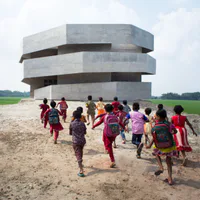
Model example: Bangladesh’s Cyclone Preparedness Programme (1970 → 2020) cut average deaths per storm from 300 000 to < 100.
25
Hazard-Resistant Design
When prediction is uncertain, structural adaptation becomes the most effective way to reduce loss of life and property.
Well-designed buildings absorb or deflect hazard energy rather than collapsing. These measures form part of mitigation – actions taken before an event to reduce its impact.

26
Earthquake-Resistant Design
In countries where earthquakes strike without warning, engineering innovation is crucial.
Base isolation (Japan, New Zealand): buildings rest on rubber-steel bearings that absorb ground motion, allowing the structure to sway gently instead of fracturing.
Cross-bracing (Chile): diagonal steel braces transfer lateral forces evenly through the frame, preventing pancake collapse.
Shock absorbers and tuned mass dampers (Taipei 101): huge suspended weights counteract shaking forces at the top of tall towers.
Model evaluation: These designs drastically reduce fatalities but are costly – many low-income countries cannot retrofit older buildings.

27
Flood- and Storm-Resistant Design
In coastal and delta regions, construction focuses on resisting water and wind forces.
Raised foundations or stilts (Bangladesh, Philippines): lift homes above flood levels; often combined with concrete plinths for stability.
Cyclone-resistant roofing (Caribbean): roof anchors and hurricane straps tie the roof to walls, preventing uplift in high winds.
Elevated shelters (Bangladesh): concrete refuges double as schools during the dry season and save thousands during cyclones.
Evaluation: These simple, low-cost measures are highly effective where prediction time is short, but rely on community maintenance and enforcement of building codes.

28
Volcanic and Landslide Engineering
In volcanic regions such as Japan and Iceland: Lava diversion walls and channels guide slow-moving flows away from settlements.
Roof pitch adjustments in ash-fall zones prevent roof collapse under weight.
Reinforced retaining walls stabilise slopes prone to lahars or landslides.
Evaluation: Works best for small-scale eruptions or moderate hazards; catastrophic events can overwhelm defences.

29
Design in Context: Linking Development and Culture
High-tech solutions dominate HICs, while LICs adapt traditional materials for resilience – e.g. bamboo cross-bracing in Nepalese housing, or mangrove buffers in coastal Asia.
Engineering success depends on cost, governance, and community acceptance as much as scientific design.

30
Open Ended
Structural design mitigates hazard impacts more reliably than prediction alone.
To what extend to you agree?
31
Land-Use Zoning
Example: Philippines’ “no-build zone” 50 m from shore after Typhoon Haiyan (2013). Benefit: reduces exposure. Limitations: ignored by low-income families needing coastal livelihoods.

32
Aid and Preparedness
International co-operation is vital where prediction is weak.
The UN Sendai Framework (2015-2030) shifts focus from response to risk reduction. Goal: “Prevent new and reduce existing disaster risk.” Encourages data sharing and community training.

33
Critical Point
Predictability depends on three interlocking factors:
1️⃣ Physical process (speed of onset).
2️⃣ Scientific knowledge and equipment.
3️⃣ Human capacity to respond.
If any one fails, prediction does not translate into safety.

34
Governance and Trust
Public belief in scientific warnings is crucial. Example: Montserrat 1997 – residents ignored early warnings until eruption began.
Lesson: Prediction fails without effective communication and trust.

35
Limitations of Technology
Equipment costs high. Data requires expert analysis. Developing countries rely on external aid. False alarms can cause “warning fatigue.”

36
Global Collaboration
International networks share real-time data: WMO for cyclones and floods.
UNESCO for tsunamis.
Global Volcanism Program for eruption alerts.
Outcome: Knowledge transfer bridges the technology gap between HICs and LICs.

37
Open Ended
1️⃣ Which hazard is most predictable?
2️⃣ Least?
3️⃣ Lead time for cyclones?
4️⃣ Name one factor limiting prediction usefulness.
38
1️⃣ Which hazard is most predictable? (Volcano) 2️⃣ Least? (Earthquake) 3️⃣ Lead time for cyclones? (3–7 days) 4️⃣ Name one factor limiting prediction usefulness. (Governance / trust / cost)
39
Learning objectives
Explain how scientists predict and monitor key hazards.
Compare levels of predictability for volcanoes, earthquakes, tsunamis, and cyclones.
Assess how technology and development interact to shape responses.
40
Open Ended
Assess the extent to which the predictability of natural hazards depends on a country’s level of development.
Structure guide (TEEC):
1️⃣ Define predictability and development.
2️⃣ Agree – HICs have tech + infrastructure → Japan, Iceland.
3️⃣ Disagree – Physical process limits all prediction (e.g. earthquakes).
4️⃣ Add LIC example – IOTWS aid helps Bangladesh forecast cyclones.
5️⃣ Evaluate – Tech reduces risk only if governance and trust exist.
6️⃣ Judgement – Development increases capacity but does not guarantee success.
Topic: 1.3.3 Global Hazard Trends
Enquiry question: Why are some hazards more predictable and manageable than others?
By Aimee Cooper
Show answer
Auto Play
Slide 1 / 40
SLIDE
Similar Resources on Wayground

36 questions
Homeostasis Review
Presentation
•
6th Grade
35 questions
Physical Geography of Southeast Asia
Presentation
•
7th Grade
31 questions
East Asia
Presentation
•
7th Grade
37 questions
Representing Decimals review
Presentation
•
4th Grade
35 questions
Solubility
Presentation
•
9th - 12th Grade
35 questions
HR Diagram and The Sun
Presentation
•
8th Grade
35 questions
Ratios Interactive Lesson
Presentation
•
6th Grade
Popular Resources on Wayground
28 questions
US History Regents Review

Quiz
•
11th Grade
36 questions
Biology Regents Review
Quiz
•
9th - 10th Grade
20 questions
Math Review
Quiz
•
3rd Grade
38 questions
Regents Life Science General Review
Quiz
•
9th Grade
20 questions
Math Review
Quiz
•
6th Grade
21 questions
EOY Grade 6 Benchmark Assessment - Content Skills
Quiz
•
6th Grade
20 questions
Inferences
Quiz
•
4th Grade
20 questions
Figurative Language Review
Quiz
•
6th Grade
Discover more resources for Geography
28 questions
US History Regents Review
Quiz
•
11th Grade
36 questions
Biology Regents Review
Quiz
•
9th - 10th Grade
20 questions
Math Review
Quiz
•
3rd Grade
38 questions
Regents Life Science General Review
Quiz
•
9th Grade
20 questions
Math Review
Quiz
•
6th Grade
21 questions
EOY Grade 6 Benchmark Assessment - Content Skills
Quiz
•
6th Grade
20 questions
Inferences
Quiz
•
4th Grade
20 questions
Figurative Language Review
Quiz
•
6th Grade