Search Header Logo
Natural Selection Lesson-Diseases

Natural Selection Lesson-Diseases

Assessment

Presentation

Biology

9th - 12th Grade

Easy

NGSS
MS-LS4-4, MS-LS1-4, MS-LS2-4

+1

Standards-aligned

Created by

LATRICE WOODS

Used 10+ times

FREE Resource

15 Slides • 5 Questions

1

media

2

media

3

4

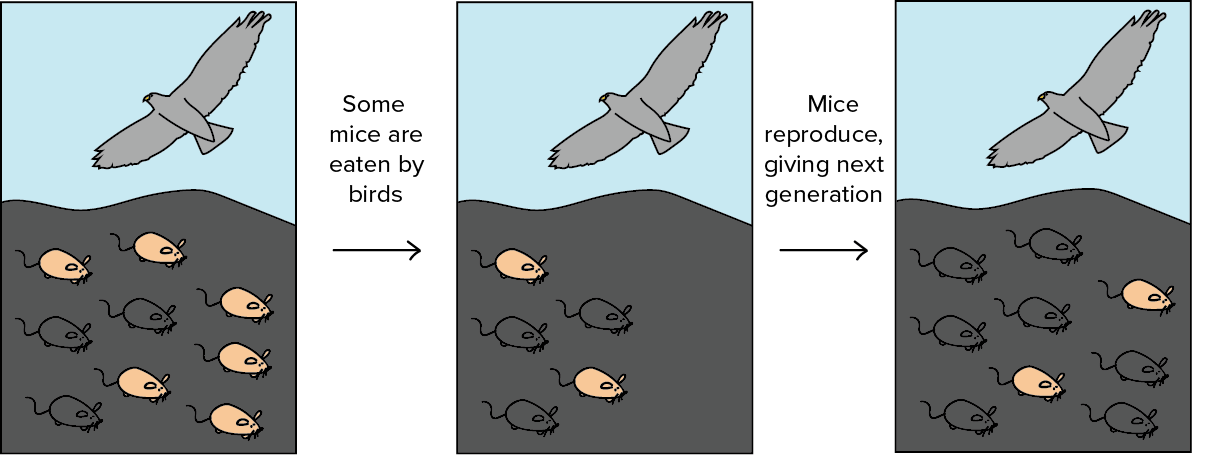
Multiple Choice

Question image
Why is the mouse population changing over time?
1
The light mice can reproduce more successfully than the dark mice
2
The hawks eat more dark mice than light mice because the dark mice taste better
3
The hawks eat more light mice than dark mice because they can see the light mice more easily
4
The hawks eat more dark mice than light mice because they can see the dark mice more easily

5

media

6

media

7

media

8

media

9

Multiple Choice

There is a species of beetle that has two variations in the population: brown beetles and green beetles. About 82% of all brown beetles survive to adulthood while only 31% of green beetles survive to adulthood. Which of the following statements is true about the fitness of these beetles?

1

The green beetles have higher fitness

2

The brown beetles have higher fitness

3

The green beetles have more adaptations

4

The brown and green beetles have the same level of fitness

10

media

11

media

12

media

13

media

14

Match

Match the following principles of natural selection

Variation

Inherit

Over-production

Selection

Evolution

There is genetic variation within populations which can be inherited

Offspring has traits similar to those of the parents

More offspring are produced than survive

Some variations/traits are favorable for survival

Population will change over time through inherited variability and selection

15

media

16

media

17

Multiple Choice

Question image

The three species pictured do not share a common ancestor, yet have evolved to have a similar anatomy and life style. This is an example of ?

1

Homologous Structures

2

Divergent Evolution

3

Vestigial Organs

4

Convergent Evolution

18

Multiple Choice

As smaller lizard like reptiles hid in rock crevices to avoid larger predators and feed on smaller insects they found that shorter legs could get further in and find more insects. Over time through many generations snakes evolved as the legs were slowly lost.

1

Convergent

2

Divergent

3

Coevolution

19

media

20

media
media

Show answer

Auto Play

Slide 1 / 20

SLIDE