

Global Citizenship-International Law

Presentation
•
Geography
•
9th Grade
•
Practice Problem
•
Easy

Aimee Cooper
Used 1+ times
FREE Resource
21 Slides • 8 Questions
1
By Aimee Cooper
The Development of International Law
2
Learning Objectives
By the end of this lesson you will be able to: • Describe what international law is and why it exists. • Explain how and why international law developed after the Second World War. • Describe the role of organisations such as the United Nations and the Geneva Convention. • Evaluate how international law protects people’s rights across borders.
3
Open Ended

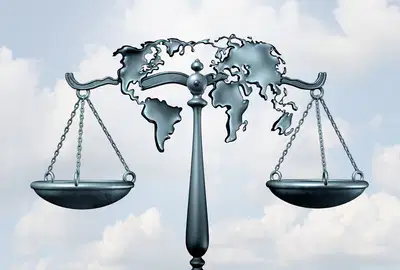
Imagine a soldier harms civilians in another country.
Who should decide their punishment — that country, the soldier’s country, or an international court?
Write your answer and give one reason.
4
Introducing International Law
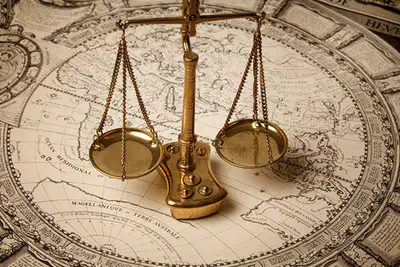
International law is a set of rules and agreements recognised by countries that agree to follow them. It helps nations live peacefully, trade fairly, and protect human rights across borders.
5
Why It Matters
Without international law, countries could act only in their own interests.
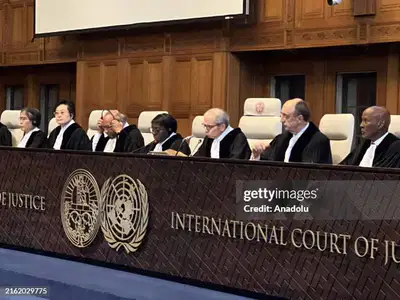
Agreements and courts ensure that even powerful states are held accountable for their actions.
6
Case Study: Zura Bitiyeva
Zura Bitiyeva was a human-rights activist in Chechnya during the war with Russia. She complained to the European Court of Human Rights (ECHR) about being illegally detained and mistreated. Before the court ruled, she and her family were executed in 2003.

7
What Happened Next
The ECHR found Russia responsible for her illegal detention and degrading treatment. Russia was ordered to pay €85 000 in damages to her daughter. This case shows why global courts exist — to seek justice when national systems fail.

8
Open Ended
Why is it important that courts can act across national borders?
Was the fine a fair punishment?
Why might a government resist being judged by another country’s court?
9
Origins of International Law
Rules between nations existed as early as the Roman Empire. Modern international law developed after the First World War, when the League of Nations was created to maintain peace.
10
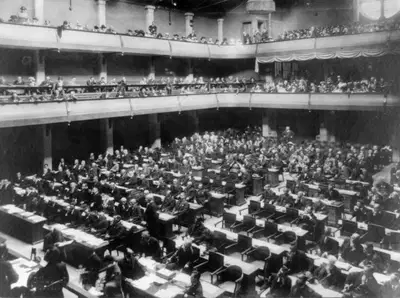
League of Nations
Founded in 1919, the League aimed to prevent another world war and to encourage countries to solve disputes peacefully. It failed when major powers ignored it, and it collapsed when the Second World War began in 1939.
11
Birth of the United Nations
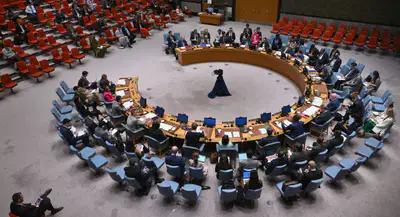
After 1945, world leaders formed the United Nations (UN) to replace the League. Its mission: to keep peace, protect human rights, and promote cooperation between nations. The creation of the UN marked the beginning of international law as we know it today.

12
The UN Charter
When a country joins the UN, it agrees to the UN Charter, a treaty that sets four key aims: 1️⃣ Maintain international peace and security. 2️⃣ Develop friendly relations among nations. 3️⃣ Co-operate in solving global problems and promoting human rights. 4️⃣ Harmonise the actions of nations toward shared goals.
13
Open Ended

Imagine your country is deciding whether to join the UN.
List two benefits and one possible drawback.
14
Other International Agreements
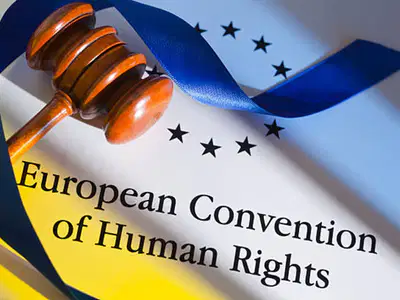
Many treaties support human rights worldwide, such as: • The European Convention on Human Rights (ECHR) – protects basic freedoms in Europe. • The Universal Declaration of Human Rights (UDHR) – sets global standards for dignity and equality.
15
The Geneva Convention
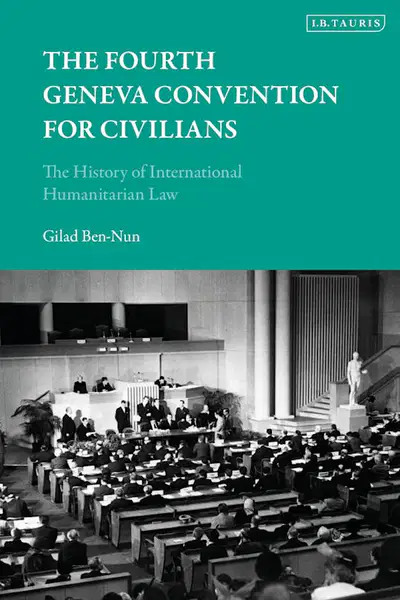
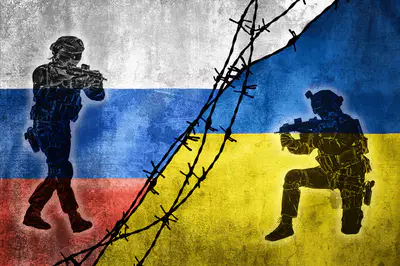
Formed in 1949 after the Second World War, the Geneva Convention established international humanitarian law. It explains how people must be treated during war.
16
Who Is Protected?
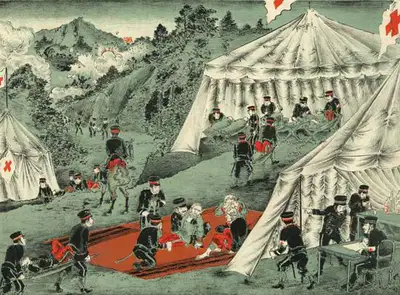
The Geneva Convention protects: • Civilians – those not in the military or police. • Wounded soldiers and prisoners of war. • Doctors and medics treating the injured. They must never be mistreated and must be allowed food, medical care, and communication with family.

17
How It Works
The Convention has been updated several times and is now signed by 196 countries. It ensures that even in war, humanity and dignity are respected.
18
Open Ended
Match the situation to the Geneva rule:
A – A captured soldier is denied medical treatment.
B – A hospital is bombed.
C – A prisoner of war is allowed to write home.
→ Which actions follow or break the Geneva Convention?
19
20
Why 1945 Matters
1945 was the birth of the modern international order — the end of a global war and the start of cooperation through the UN. Since then, most laws protecting peace, refugees, and human rights trace back to this moment.

21
Open Ended
Why is it important to have laws that cross borders?
Consider issues like:
• War crimes
• Refugees
• Climate change
• Trade and safety standards
22
Criticisms and Challenges
Some countries argue that international law limits national sovereignty. They may refuse to follow rulings they believe interfere with internal affairs. Example: nations ignoring UN resolutions or international court decisions.

23
Open Ended
People should be tried in the country where they committed their crimes.”
Do you agree?
Give one argument for and one against.
24
Real-World Impact
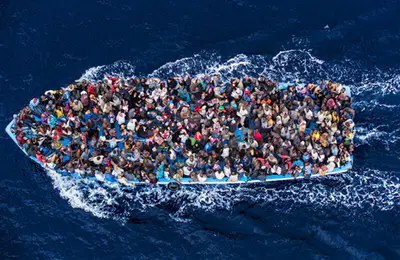
International law influences: • War crimes tribunals (Yugoslavia, Rwanda) • Refugee protection agreements • Global environmental treaties • Trade and sanctions systems
25
Action Link – Looking Back
Create a short timeline of key international law milestones:
– 1919 League of Nations
– 1945 United Nations
– 1948 UDHR
– 1949 Geneva Convention
– 1953 ECHR
Add one event from the last 20 years (e.g., International Criminal Court 2002).

26
Open Ended
Do international laws truly work if some countries ignore them?
Extension: Suggest how international law could be strengthened.
27
Summary
Today we learned that: • International law is a shared set of rules for peace and justice. • The UN and Geneva Convention protect people during war and peace. • Global laws exist because no nation is above responsibility.
28
Open Ended
1️⃣ What is international law?
2️⃣ Why was the UN created?
3️⃣ Who is protected under the Geneva Convention?
4️⃣ Why might a country refuse international laws?
29
Learning Objectives
By the end of this lesson you will be able to: • Describe what international law is and why it exists. • Explain how and why international law developed after the Second World War. • Describe the role of organisations such as the United Nations and the Geneva Convention. • Evaluate how international law protects people’s rights across borders.
By Aimee Cooper
The Development of International Law
Show answer
Auto Play
Slide 1 / 29
SLIDE
Similar Resources on Wayground

21 questions
Industrial Revolution Vocabulary
Presentation
•
9th Grade
22 questions
Algebra 1 Fall Final Review
Presentation
•
9th Grade
22 questions
Ecological Succession
Presentation
•
9th Grade
23 questions
Linear Equations
Presentation
•
9th Grade
23 questions
Occupations related to digital media careers
Presentation
•
9th Grade
23 questions
osmosis and diffusion
Presentation
•
9th Grade
21 questions
Addition and Subtraction
Presentation
•
KG
21 questions
Symbiosis
Presentation
•
9th Grade
Popular Resources on Wayground
6 questions
PRIDE Always and Everywhere
Presentation
•
12th Grade
20 questions
Lab Safety Quiz

Quiz
•
6th Grade
26 questions
KOR Review Kahoot Questions
Quiz
•
8th Grade
21 questions
Continents and Oceans
Quiz
•
6th Grade
12 questions
Unit Zero lesson 2 cafeteria
Presentation
•
9th - 12th Grade
20 questions
Parts of Speech
Quiz
•
5th Grade
10 questions
Riddles Riddles fun Riddles
Quiz
•
6th - 12th Grade
16 questions
Subject & Predicate
Quiz
•
5th Grade
Discover more resources for Geography
15 questions
Population Pyramid
Quiz
•
9th Grade
29 questions
WG Unit 1 TEST Review
Quiz
•
9th Grade
26 questions
AP Human Geography Unit 1
Quiz
•
9th Grade
26 questions
World Geography Unit 1 Review
Quiz
•
9th Grade
52 questions
Unit 1.5 Review
Quiz
•
9th Grade
10 questions
Perceptual vs. Functional vs. Formal Regions
Quiz
•
9th - 12th Grade
18 questions
5 Themes of Geography
Quiz
•
9th Grade
26 questions
GHOTW Unit 1
Quiz
•
9th Grade