

Age of the Common Man & Westward Presentation

Presentation
•
Social Studies
•
2nd Grade
•
Practice Problem
•
Medium

Sean Beechaum
Used 3+ times
FREE Resource
14 Slides • 19 Questions
1
2
3
Multiple Choice
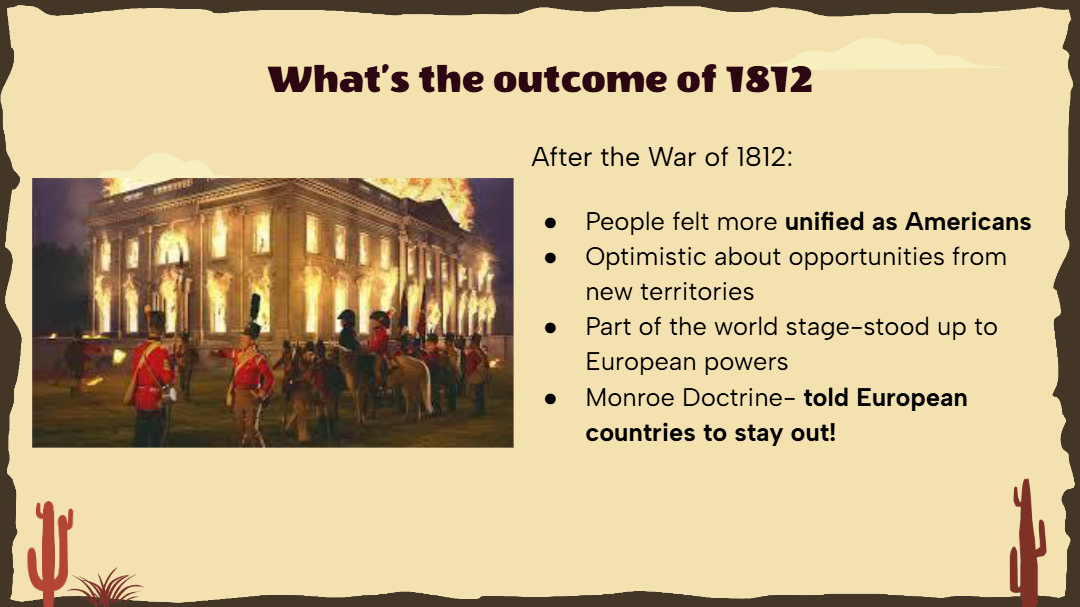
Which of the following was a result of the War of 1812?
Americans felt more unified as a nation
The United States lost significant territory
European countries increased their influence in America
Americans became less optimistic about new territories
4
Open Ended
How did the outcome of the War of 1812 influence the identity and optimism of Americans during the Age of the Common Man?
5
6
Multiple Choice
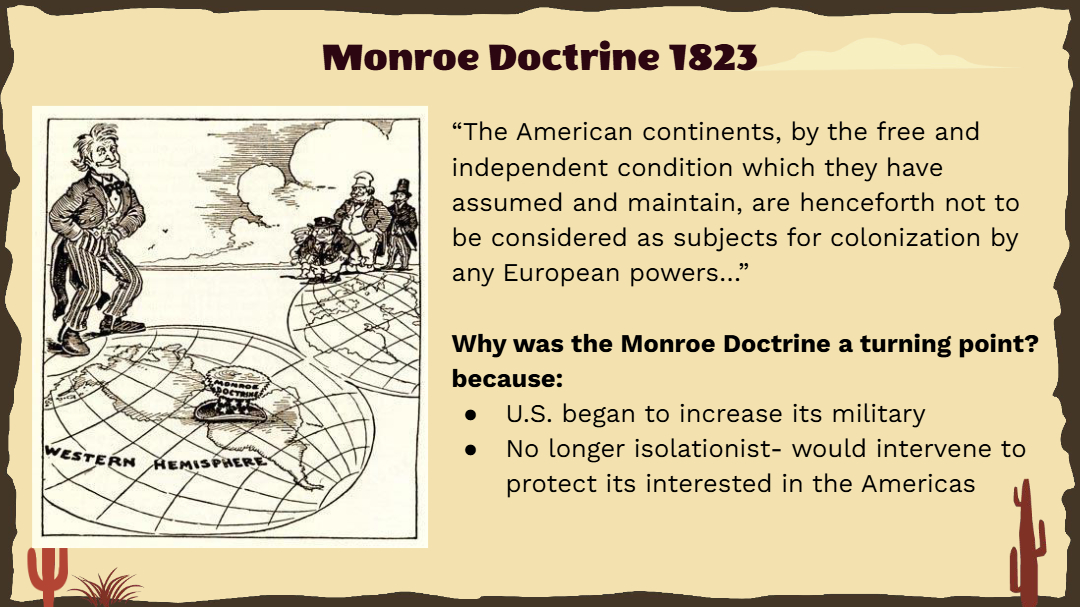
Why was the Monroe Doctrine considered a turning point in U.S. foreign policy?
It marked the beginning of U.S. military expansion and intervention in the Americas.
It led to the immediate colonization of South America by European powers.
It resulted in the U.S. remaining strictly isolationist.
It caused the U.S. to lose influence in the Western Hemisphere.
7
8
Multiple Select
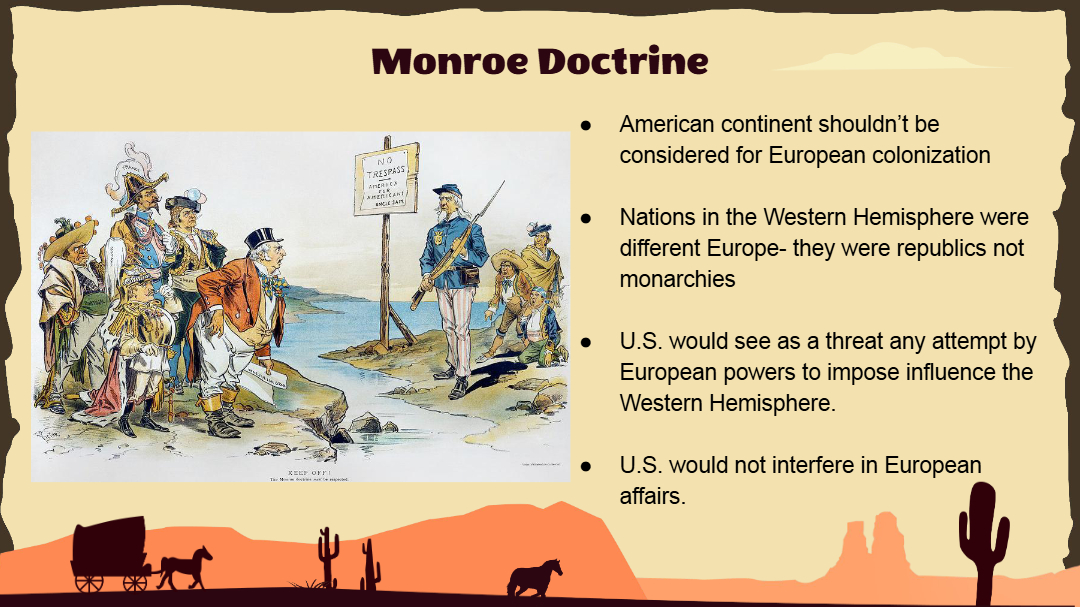
Which of the following were key principles of the Monroe Doctrine?
The American continent should not be considered for European colonization.
The U.S. would interfere in European affairs.
Nations in the Western Hemisphere were republics, not monarchies.
The U.S. would see any European attempt to influence the Western Hemisphere as a threat.
9
Open Ended
Explain how the Monroe Doctrine affected the relationship between the United States and European powers.
10
11
Fill in the Blanks
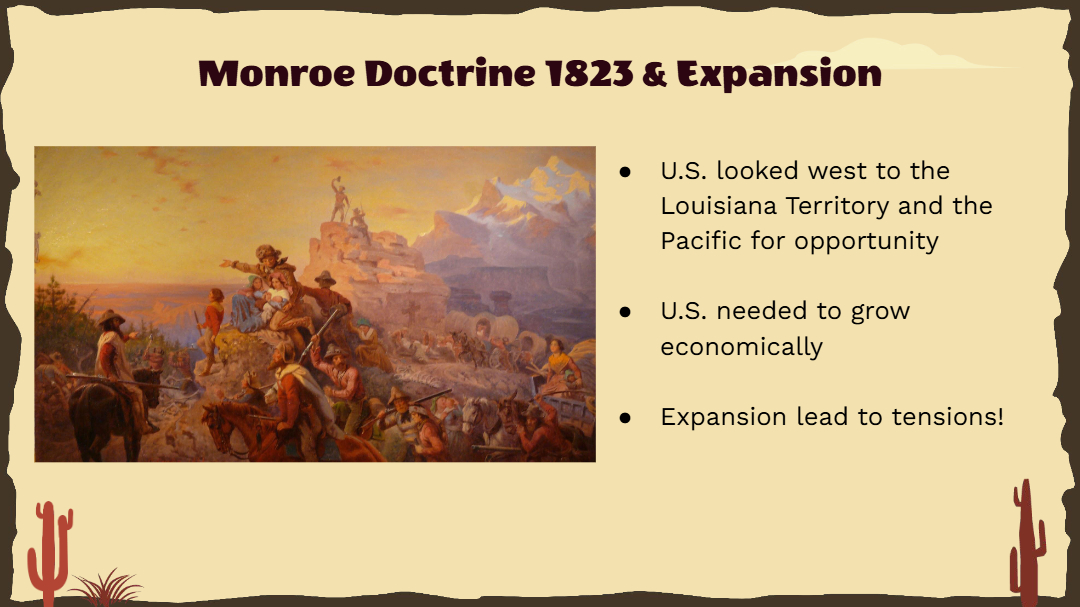
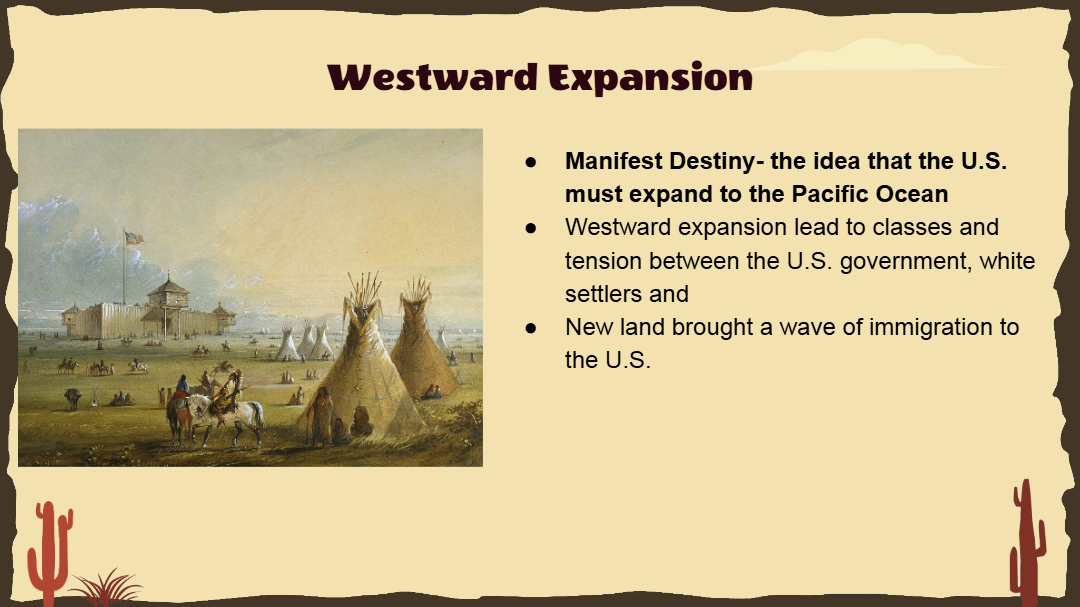
The U.S. looked west to the
Type answer...
12
13
Open Ended
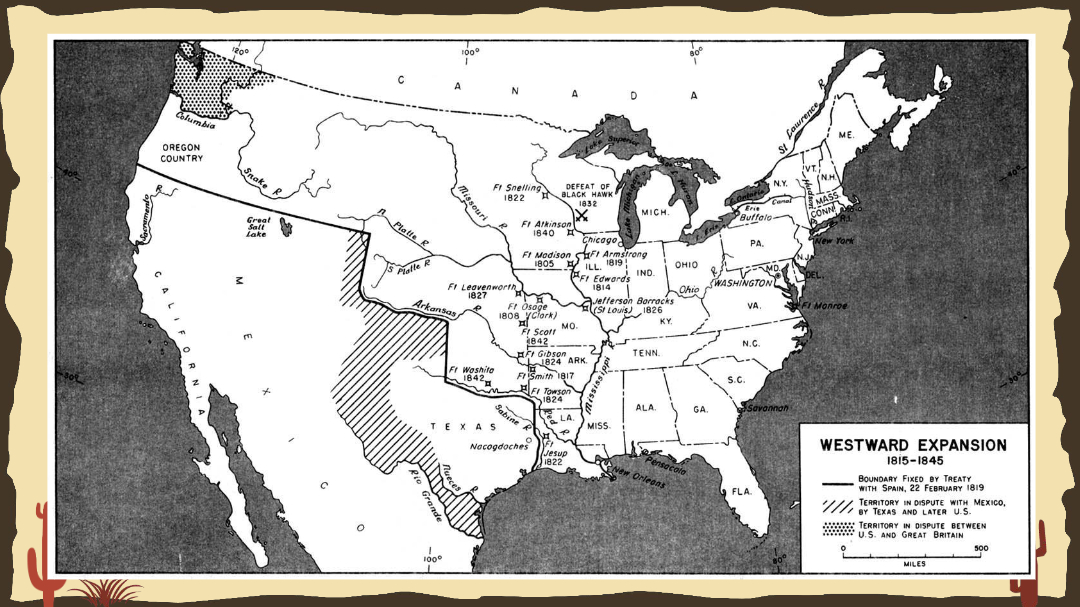
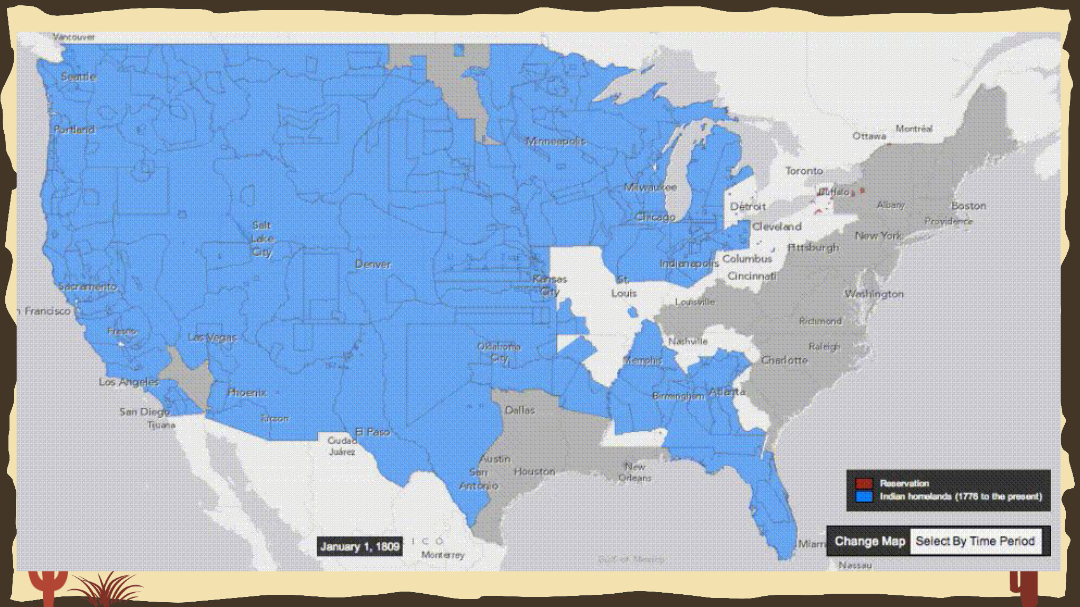
Based on the map, describe two major territorial changes in the United States between 1815 and 1845.
14
15
Multiple Select
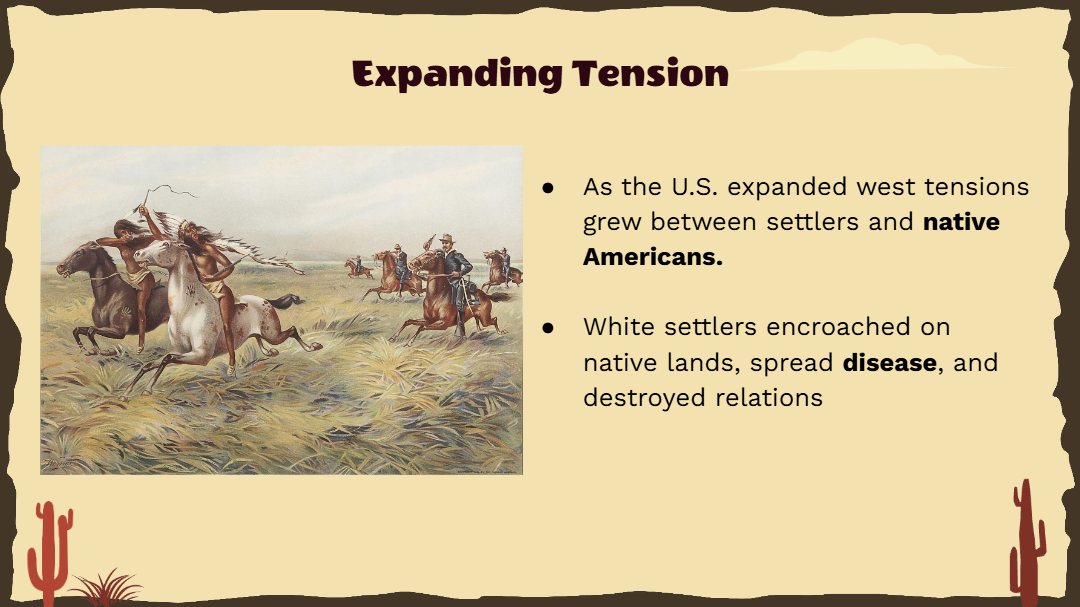
What were two major sources of tension between white settlers and Native Americans during westward expansion?
Encroachment on native lands
Spread of disease
Peaceful trade relations
Shared agricultural practices
16
17
Open Ended
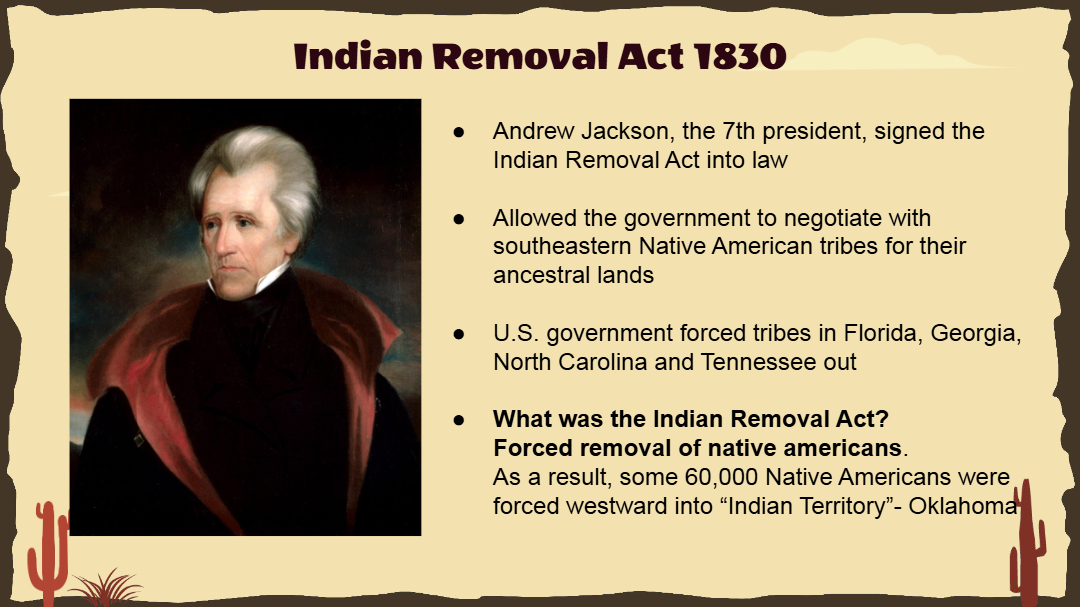
What was the Indian Removal Act?
18
Multiple Choice
Which U.S. president signed the Indian Removal Act into law?
Andrew Jackson
Thomas Jefferson
Abraham Lincoln
James Madison
19
20
Multiple Choice
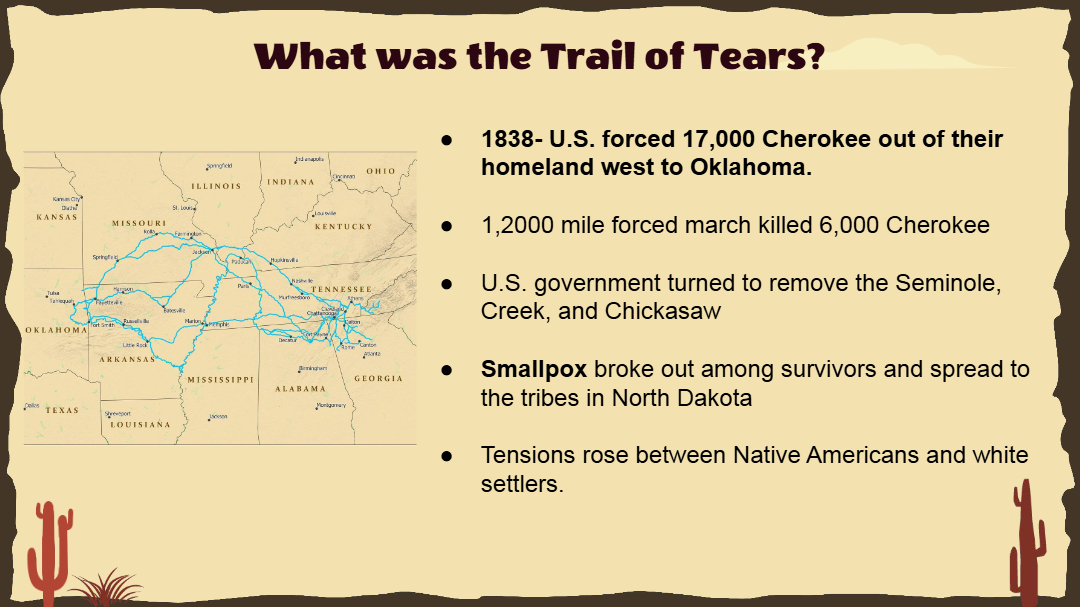
Which of the following statements about the Trail of Tears is correct?
The Trail of Tears involved the forced relocation of the Cherokee to Oklahoma.
The Trail of Tears was a peaceful migration of Native Americans to California.
The Trail of Tears resulted in the immediate granting of citizenship to Native Americans.
The Trail of Tears was led by President Abraham Lincoln.
21
Open Ended
Explain the main consequences of the Indian Removal Act of 1830 for Native American tribes.
22
23
Multiple Choice
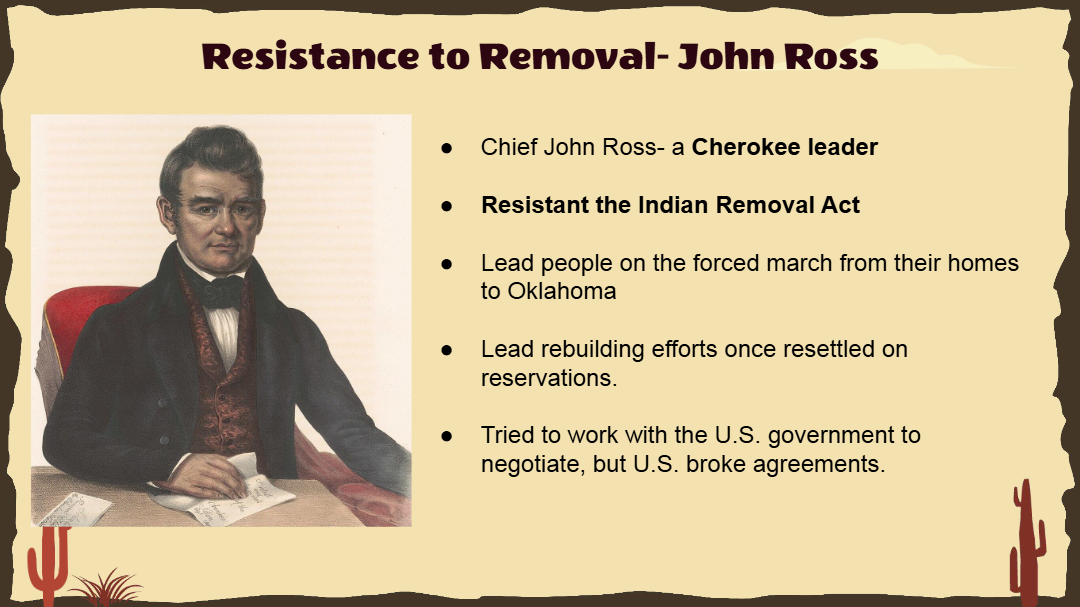
Chief John Ross is best known for which of the following actions?
Cherokee leader that Lead resistance against the Indian Removal Act
Negotiating the Louisiana Purchase
Signing the Indian Removal Act into law
Leading the U.S. Army in the Civil War
24
25
Fill in the Blanks
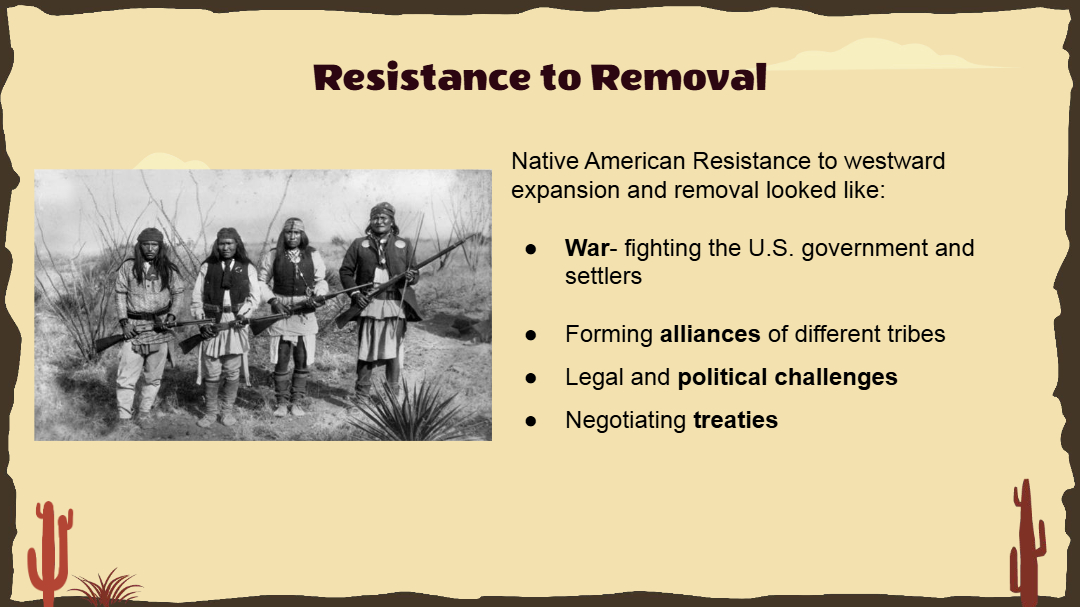
Native American resistance to removal included war, alliances, legal challenges, and negotiating
Type answer...
26
27
28
Open Ended
Who was Chief John Ross?
29
30
Open Ended
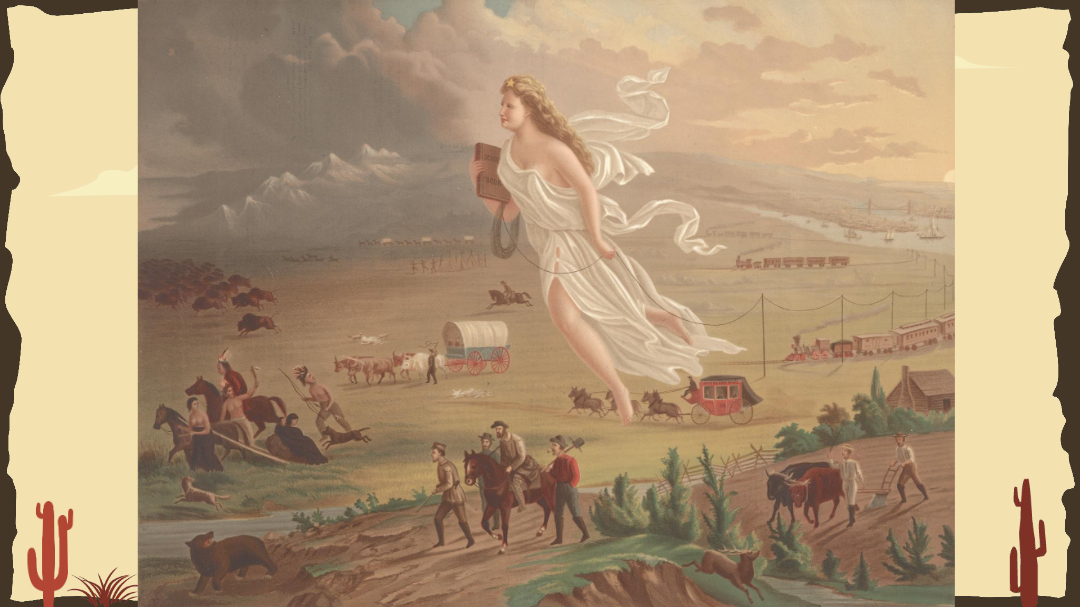
Define “Manifest Destiny”
31
Open Ended
How did the idea of Manifest Destiny contribute to westward expansion and the displacement of Native Americans?
32
Multiple Choice
Which of the following was a result of the Monroe Doctrine after the War of 1812?
It encouraged European countries to colonize new American territories.
It told European countries to stay out of American affairs.
It promoted alliances with European powers.
It led to the division of the United States.
33
Open Ended
How did the outcome of the War of 1812 influence the identity and future of Americans?
Show answer
Auto Play
Slide 1 / 33
SLIDE
Similar Resources on Wayground

23 questions
Java Programming
Presentation
•
2nd Grade
26 questions
Three Branches of Government
Presentation
•
2nd - 3rd Grade
23 questions
Pre-Kids 1 - Lesson 1
Presentation
•
1st - 2nd Grade
30 questions
November 7-11, 2022 Lesson
Presentation
•
2nd Grade
28 questions
Liquid Volume
Presentation
•
3rd Grade
26 questions
Balboa Booklet Voyage and Accomplishments
Presentation
•
3rd Grade
24 questions
Pop's Bridge Review
Presentation
•
3rd Grade
26 questions
One Good Turn Deserves Another
Presentation
•
2nd Grade
Popular Resources on Wayground
10 questions
Safety Day 2026 – Student Review

Quiz
•
9th Grade
21 questions
Continents and Oceans
Quiz
•
6th Grade
20 questions
Parts of Speech
Quiz
•
5th Grade
16 questions
Subject & Predicate
Quiz
•
5th Grade
25 questions
Multiplication Facts
Quiz
•
5th Grade
12 questions
Map Skills
Quiz
•
3rd Grade
22 questions
Continents and Oceans
Quiz
•
5th Grade
15 questions
Rounding Decimals
Quiz
•
5th Grade
Discover more resources for Social Studies
15 questions
Local History
Quiz
•
2nd Grade
5 questions
Math GI 2.1.4 Quiz Review
Presentation
•
1st - 5th Grade
12 questions
Georgia Regions and Rivers
Quiz
•
2nd Grade
13 questions
Exploring the Regions of Texas

Passage
•
1st - 5th Grade
20 questions
CKLA Domain 2 Early Asian Civilizations
Quiz
•
2nd Grade
10 questions
Needs and Wants
Presentation
•
2nd Grade
4 questions
Solving Problems In Your Community
Quiz
•
2nd Grade
9 questions
Good Citizens
Quiz
•
2nd Grade