

SS7h2 Powerpoint

Presentation
•
Social Studies
•
7th Grade
•
Practice Problem
•
Medium

Nathaniel Goings
Used 8+ times
FREE Resource
26 Slides • 22 Questions
1
2
3
Open Ended
In what ways do land and religion continue to influence conflicts in the Middle East today?
4
Multiple Choice
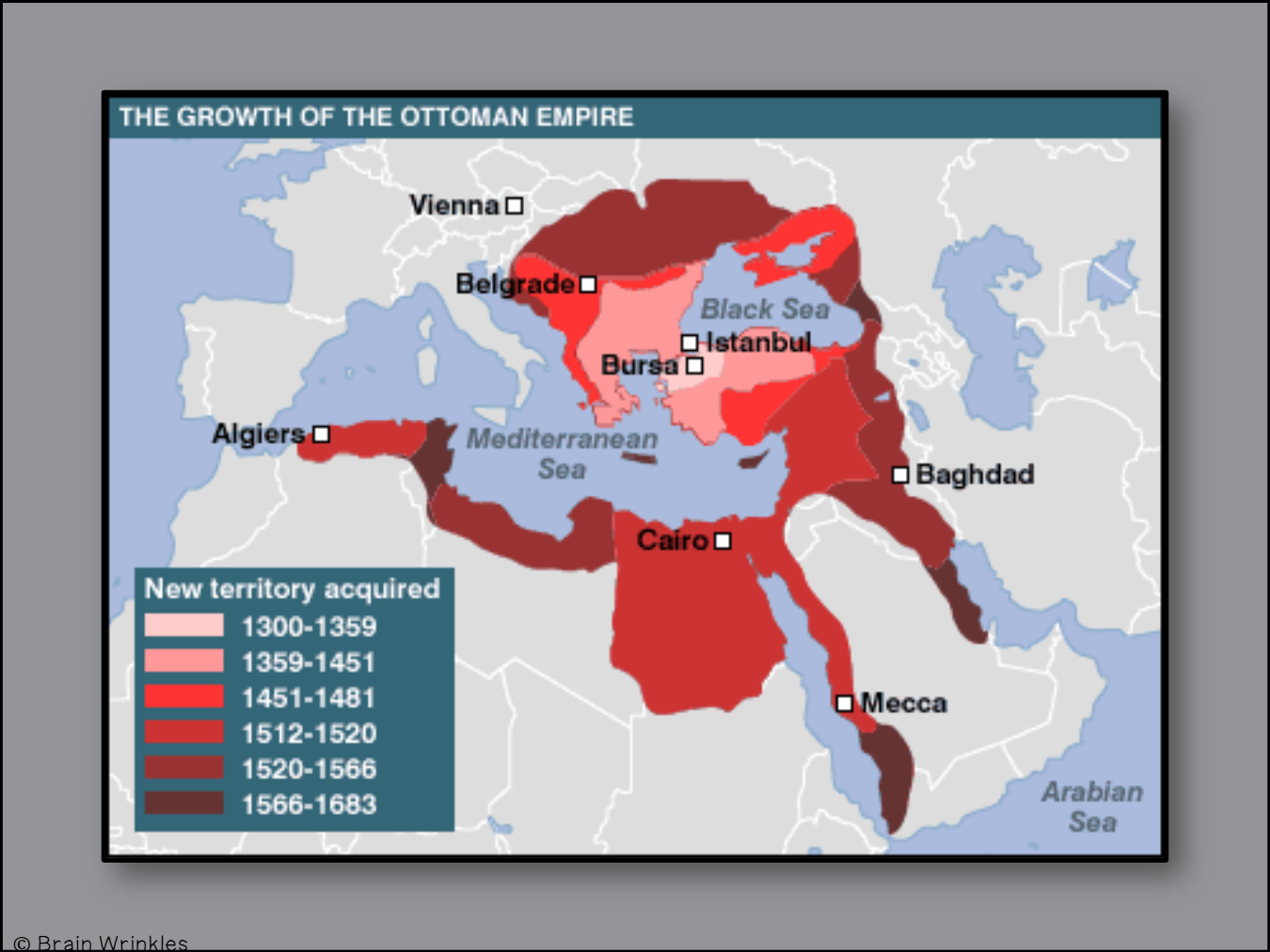
How did European partitioning of the Middle East after World War I contribute to ongoing regional conflicts?
It created new borders without considering ethnic and religious groups.
It led to immediate peace and stability in the region.
It promoted unity among all Middle Eastern countries.
It resulted in economic prosperity for everyone.
5
6
7
Fill in the Blanks
Type answer...
8
9
10
11
Multiple Choice
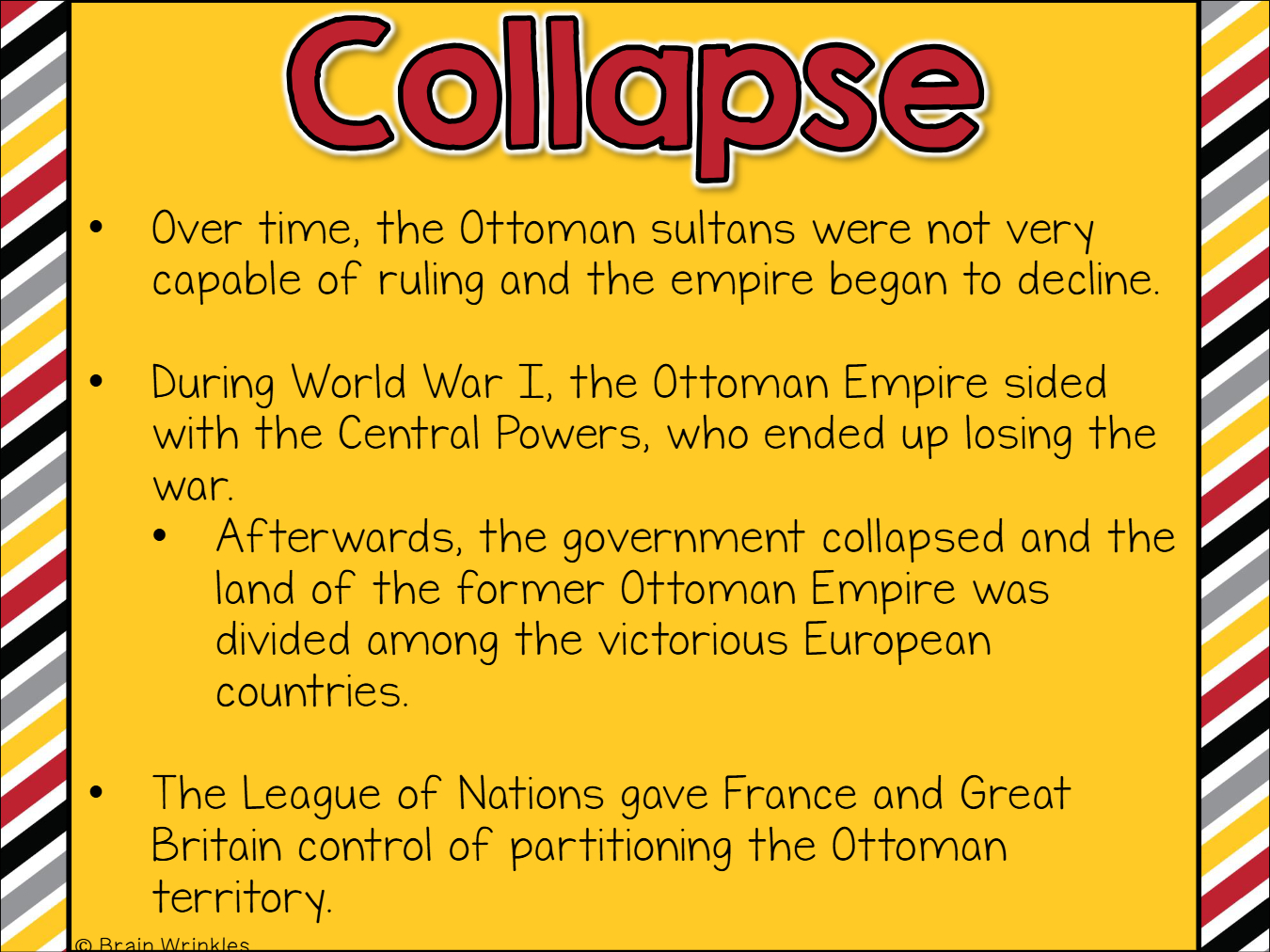
What role did the League of Nations play in the partitioning of the Ottoman Empire?
It gave France and Great Britain control of partitioning the Ottoman territory.
It supported the Ottoman sultans in regaining power.
It divided the Ottoman Empire among Middle Eastern countries.
It prevented any European country from gaining control.
12
13
Multiple Select
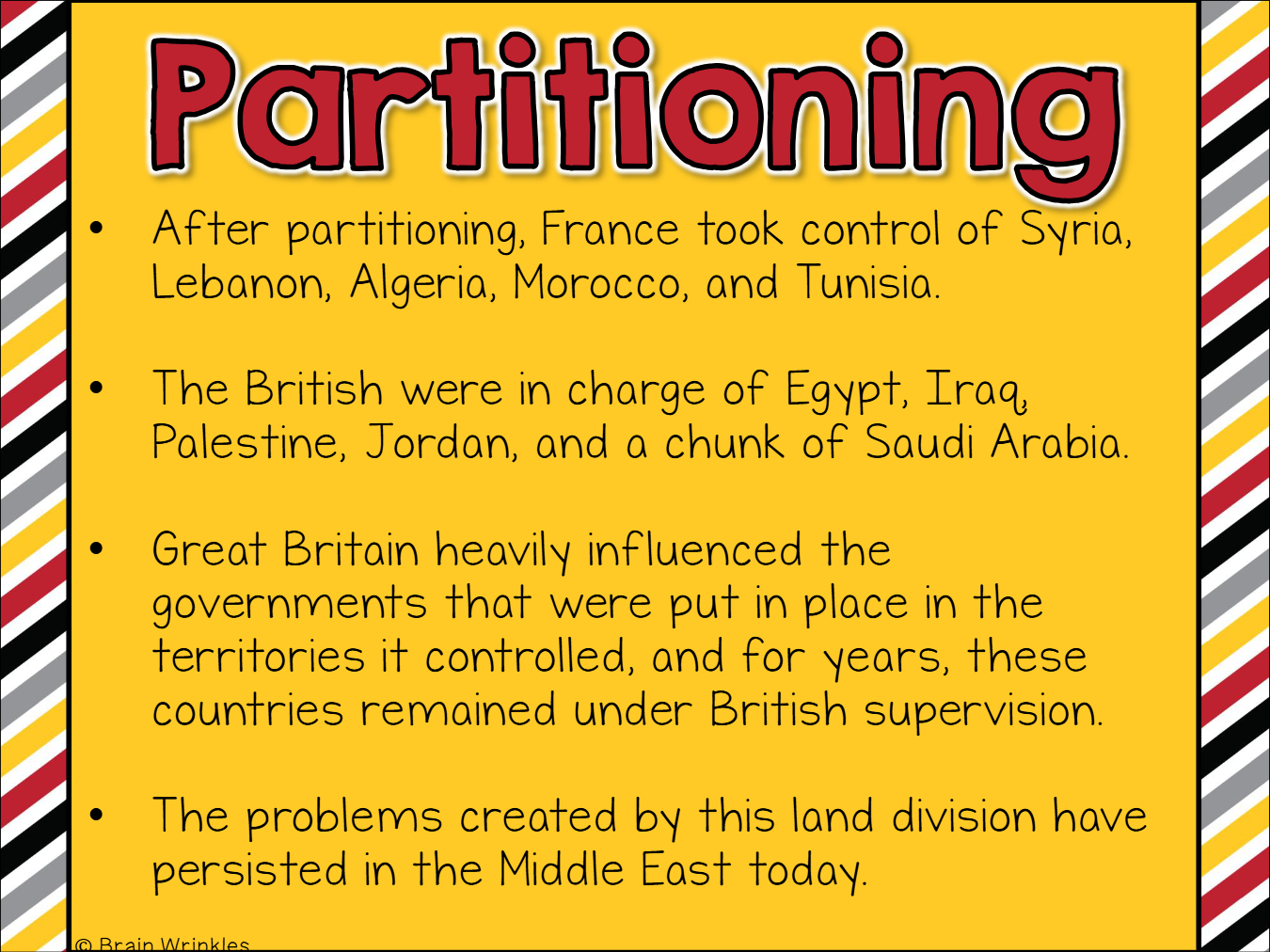
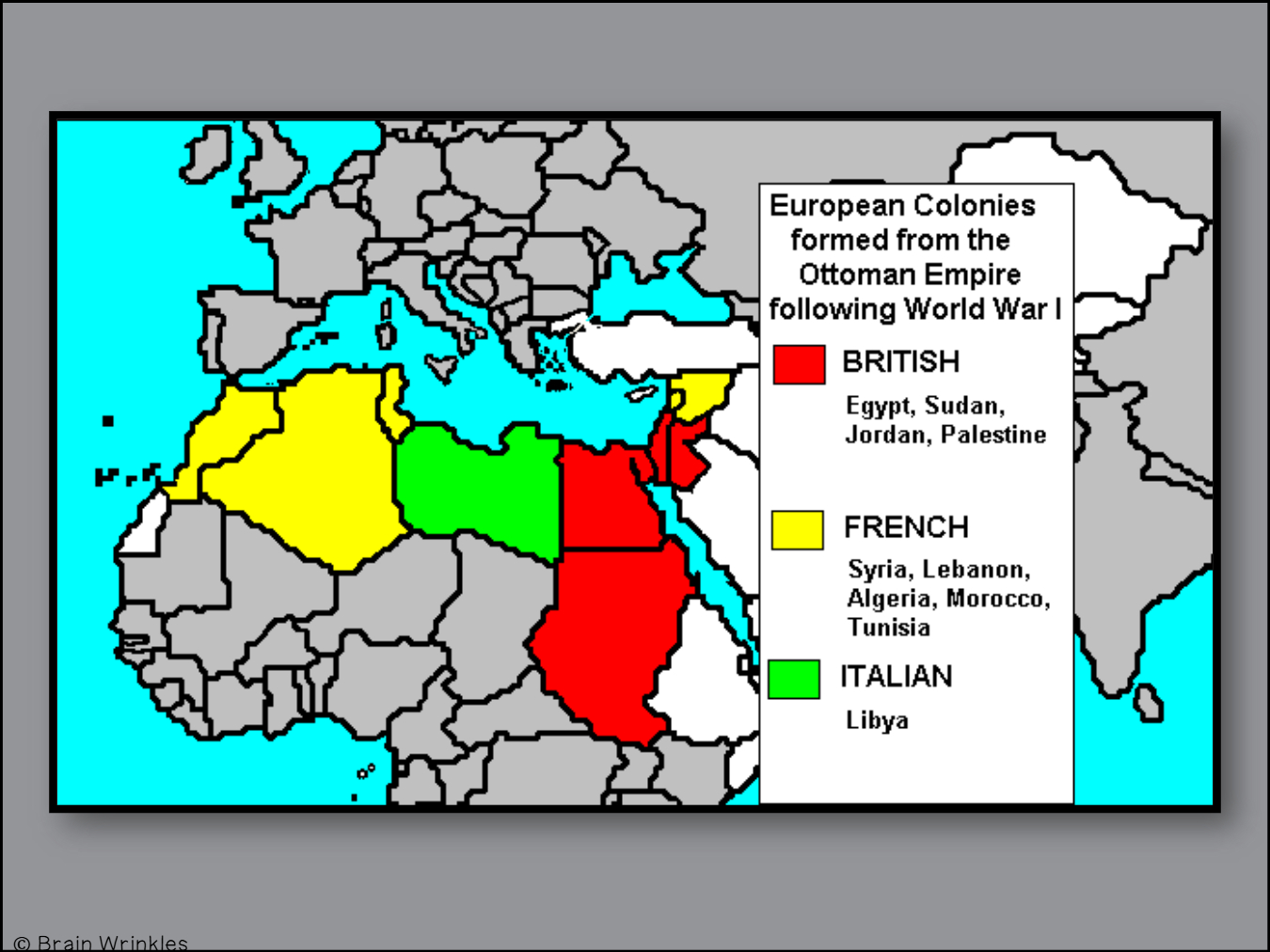
Which of the following territories were under British control after the partitioning of the Ottoman Empire?
Egypt, Iraq, Palestine, Jordan, Saudi Arabia
Syria, Lebanon, Algeria, Morocco, Tunisia
Libya, Sudan, Palestine, Jordan
Turkey, Greece, Bulgaria, Romania
14
Multiple Choice
Which regions were controlled by France after the partitioning of the Ottoman Empire?
Syria, Lebanon, Algeria, Morocco, Tunisia
Egypt, Iraq, Palestine, Jordan, Saudi Arabia
Libya, Sudan, Palestine, Jordan
Turkey, Greece, Bulgaria, Romania
15
16
Multiple Choice
How did the way Great Britain and France drew new borders after World War I impact the ethnic and religious groups in the Middle East?
It united all groups under one government peacefully.
It respected the boundaries of tribes and religious groups.
It ignored the divisions between tribes, religious groups, and ethnic groups.
It gave Arab countries control over the division of territory.
17
18
Multiple Select
Which of the following were consequences of the land disputes in the Middle East after new borders were drawn?
Ethnic and religious groups were separated or grouped together.
Claims over land led to conflict and bloodshed.
Wars were fought over disputed territories.
All of the above.
19
20
21
22
Open Ended
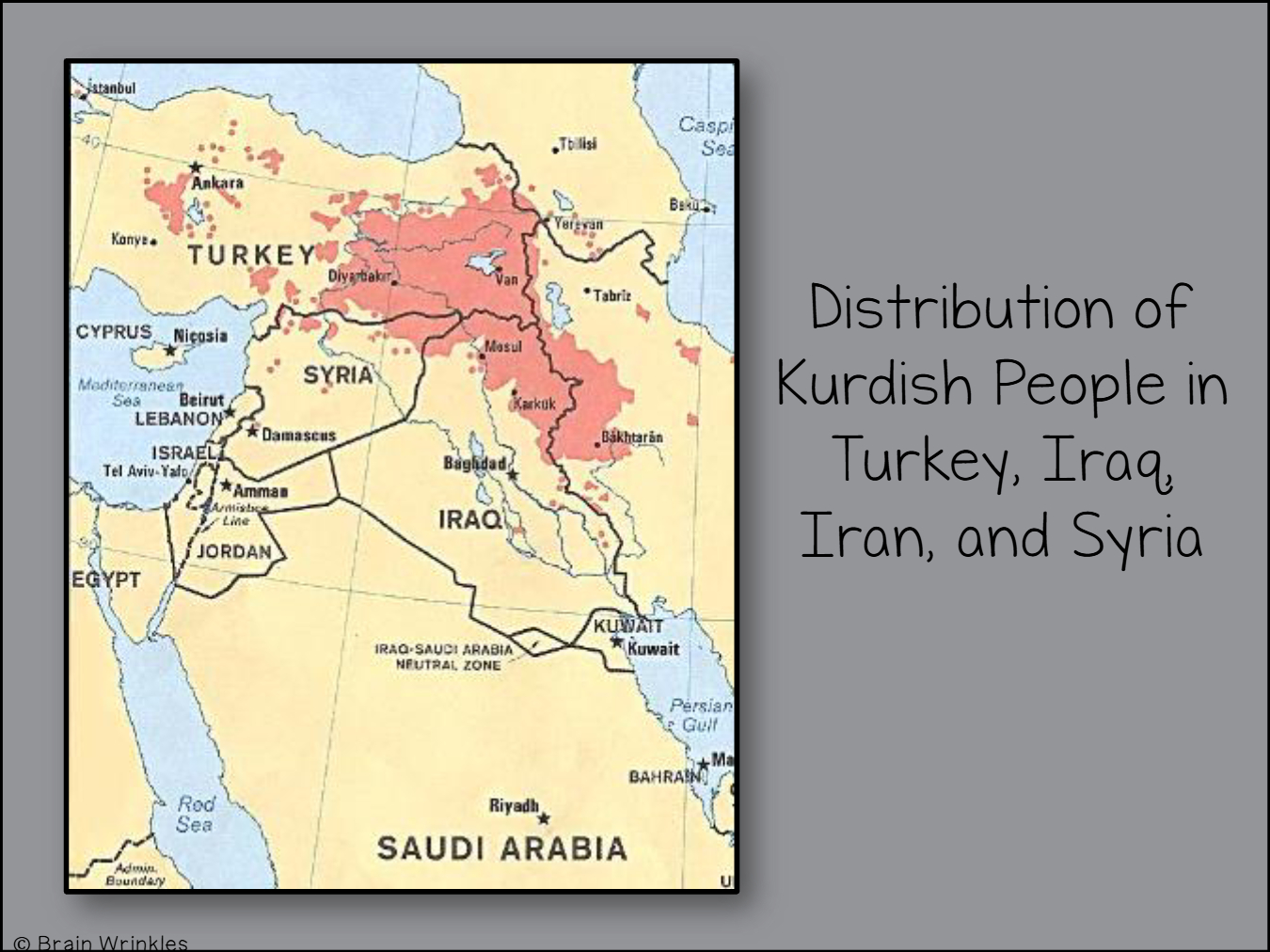
Based on the map, describe the geographic distribution of Kurdish people in the Middle East.
23
Fill in the Blanks
Type answer...
24
25
Multiple Choice
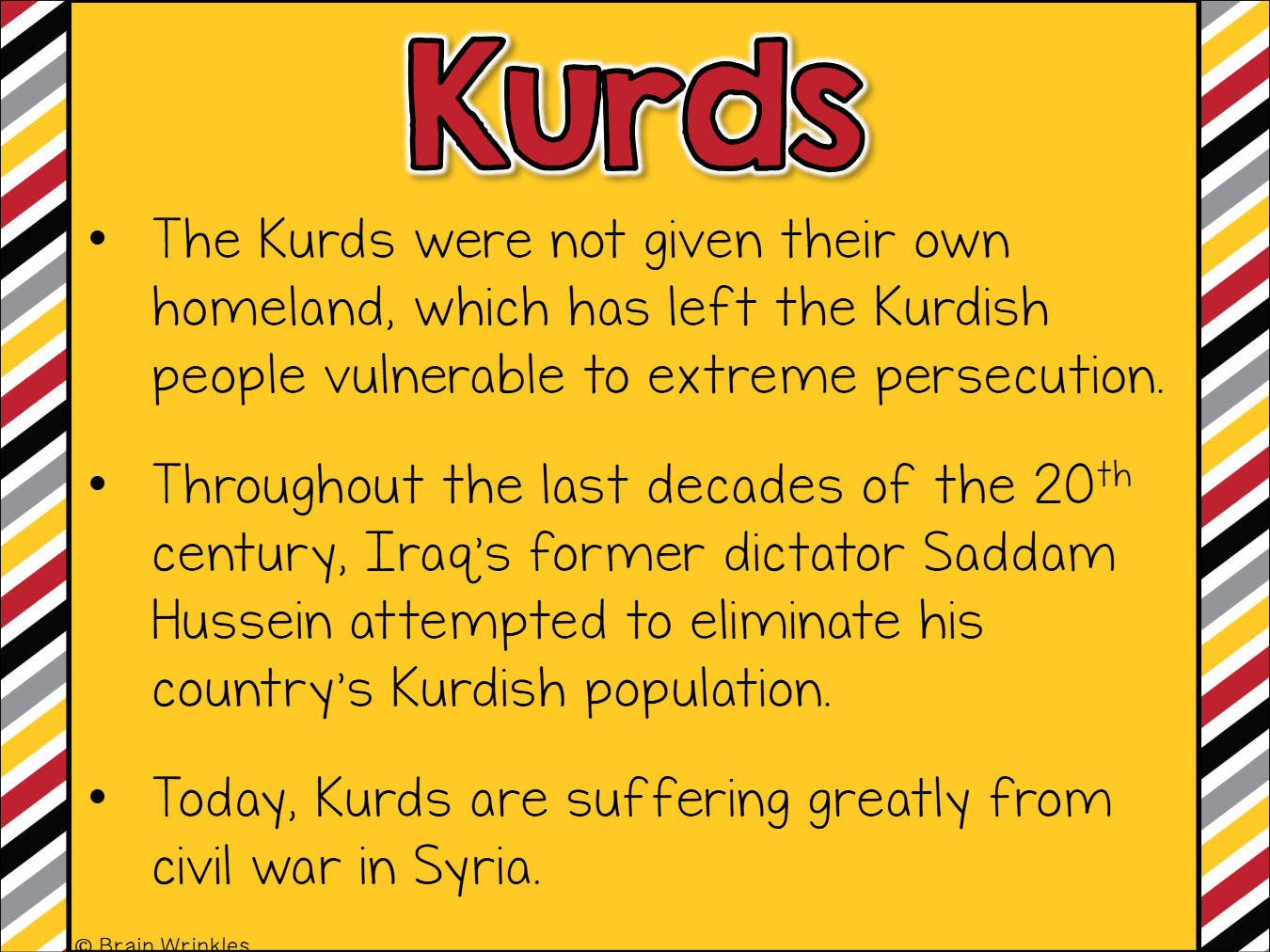
What are some challenges faced by the Kurdish people as a result of not having their own homeland?
They have been vulnerable to persecution.
They have experienced attempts at elimination by dictators.
They have suffered from civil war.
All of the above.
26
27
Multiple Choice
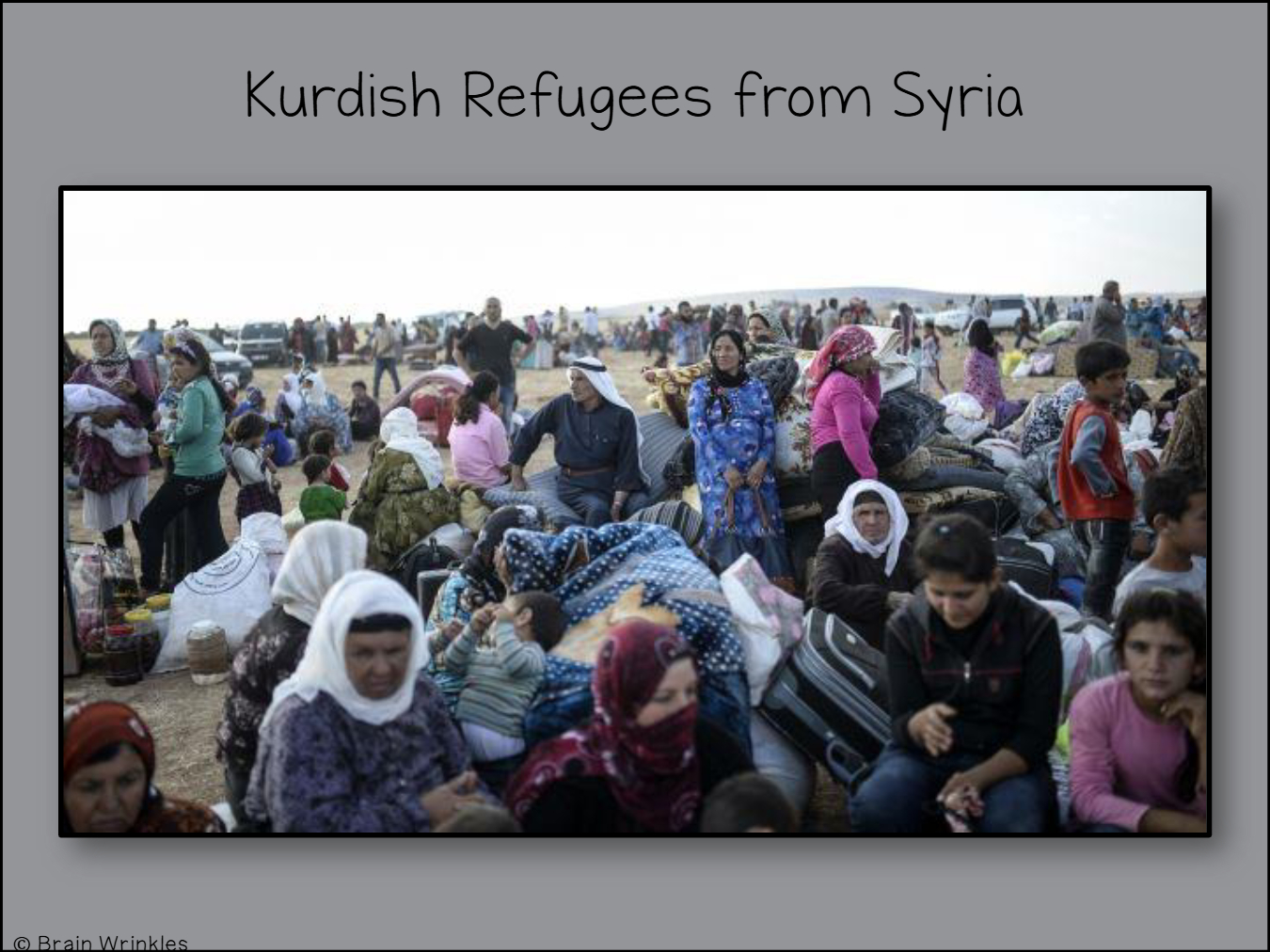
What are some possible reasons Kurdish refugees from Syria might have been forced to leave their homes?
Natural disasters
Religious conflict
Economic opportunities
Political instability
28
29
Open Ended
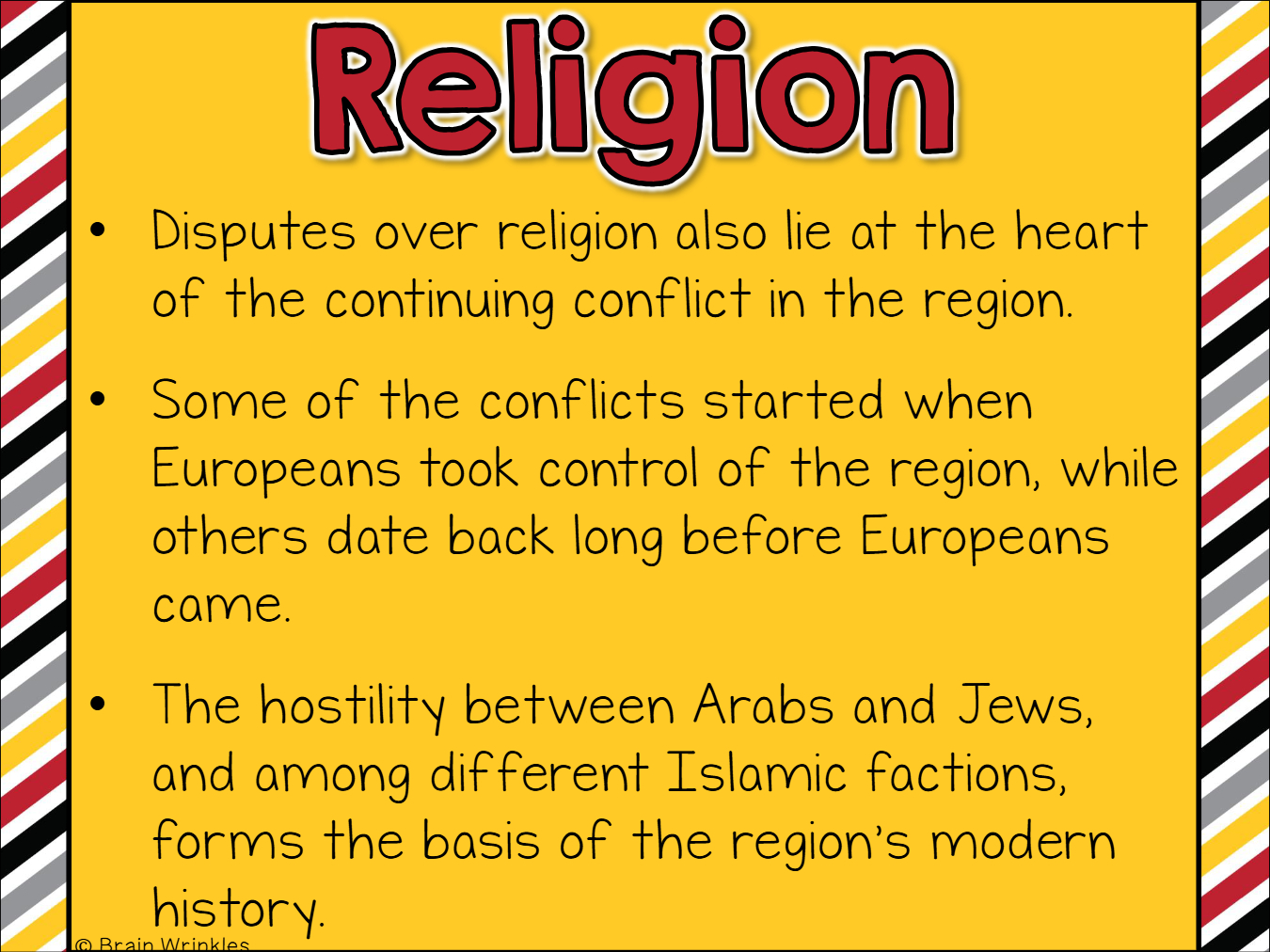
Explain how disputes over religion have contributed to the ongoing conflict in the Middle East.
30
31
Fill in the Blanks
Type answer...
32
Multiple Select
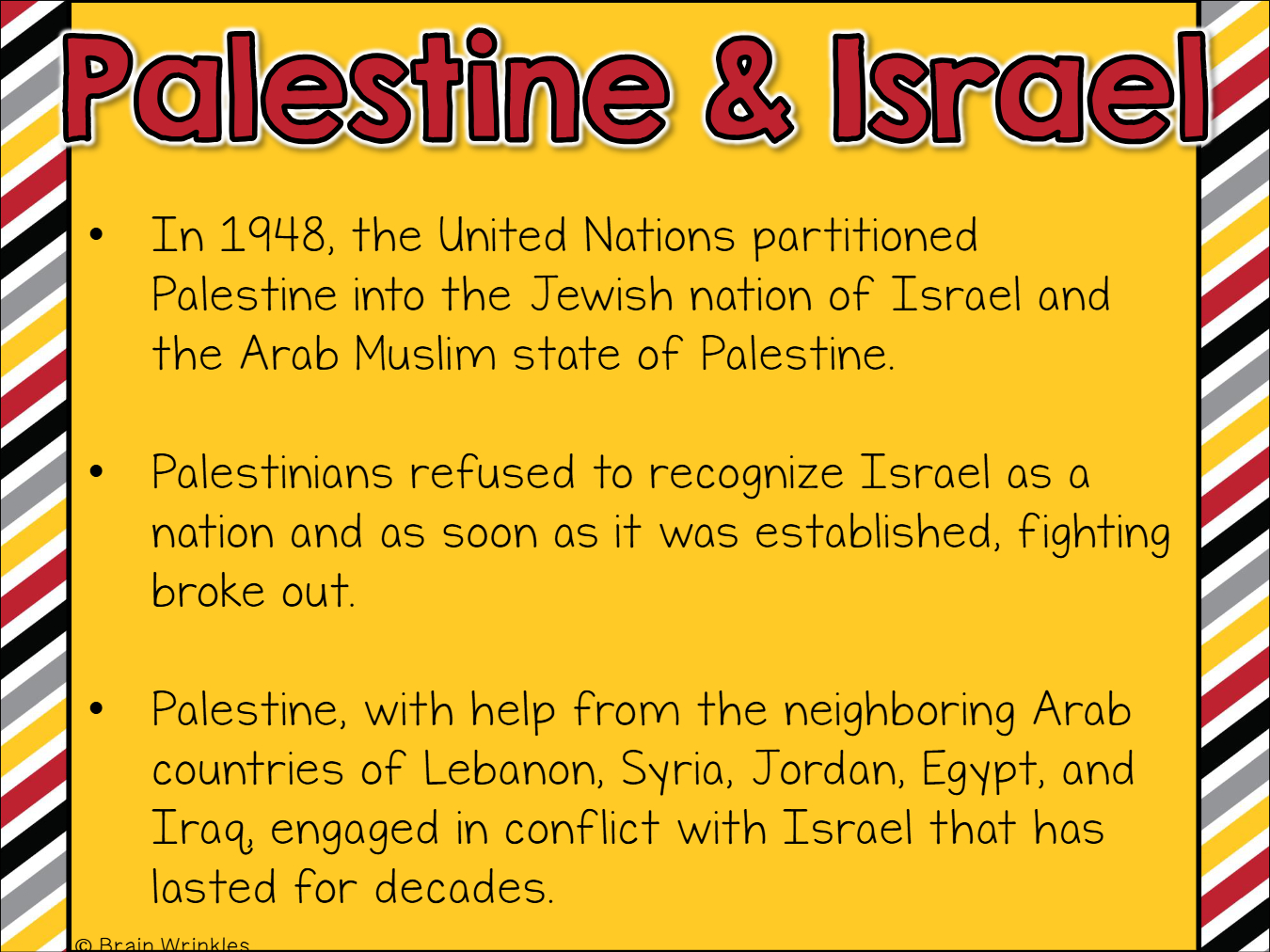
Which of the following countries helped Palestine in its conflict with Israel after 1948?
Lebanon
Jordan
Egypt
Turkey
33
34
35
36
Fill in the Blanks
Type answer...
37
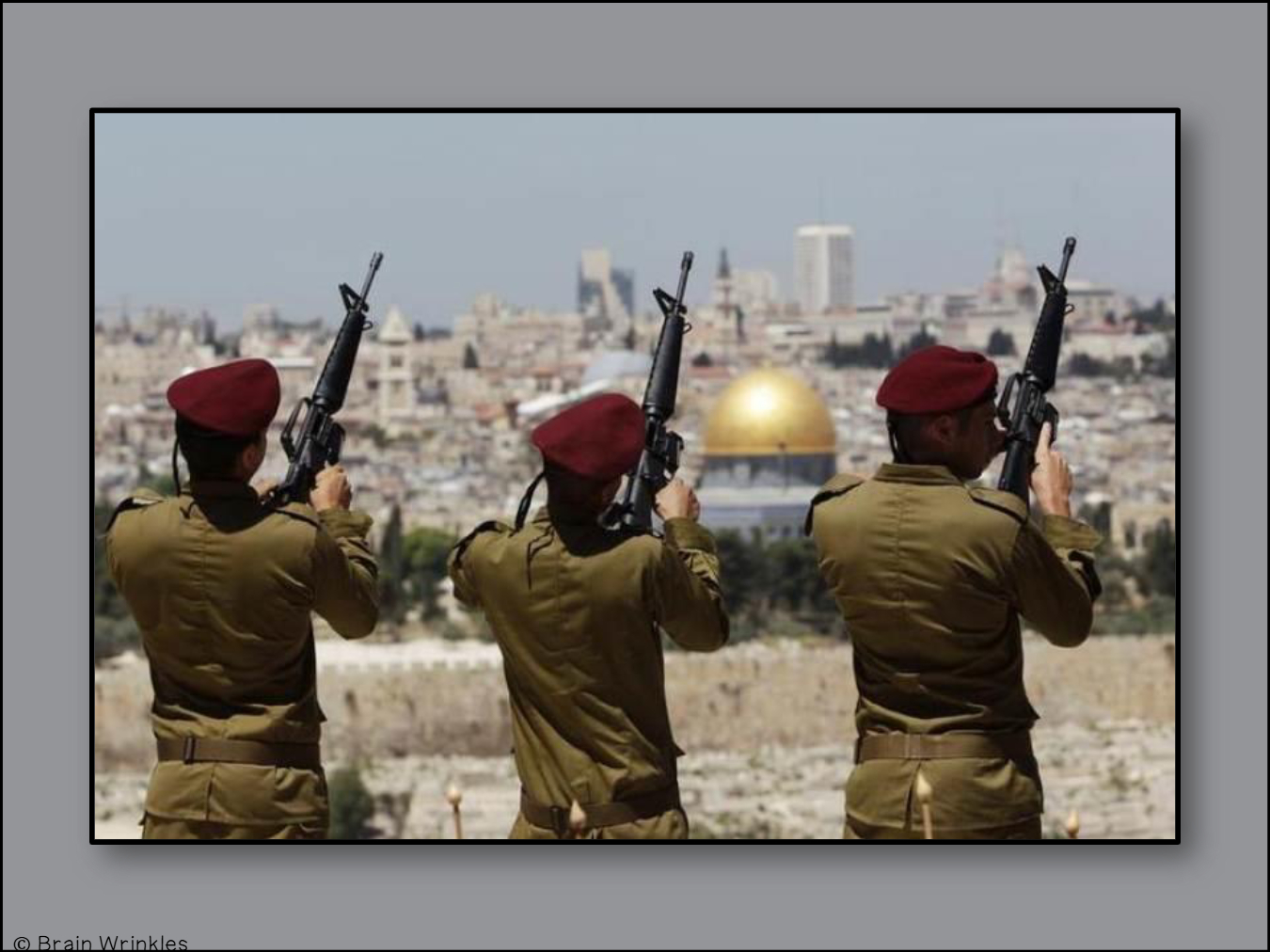
38
Multiple Choice
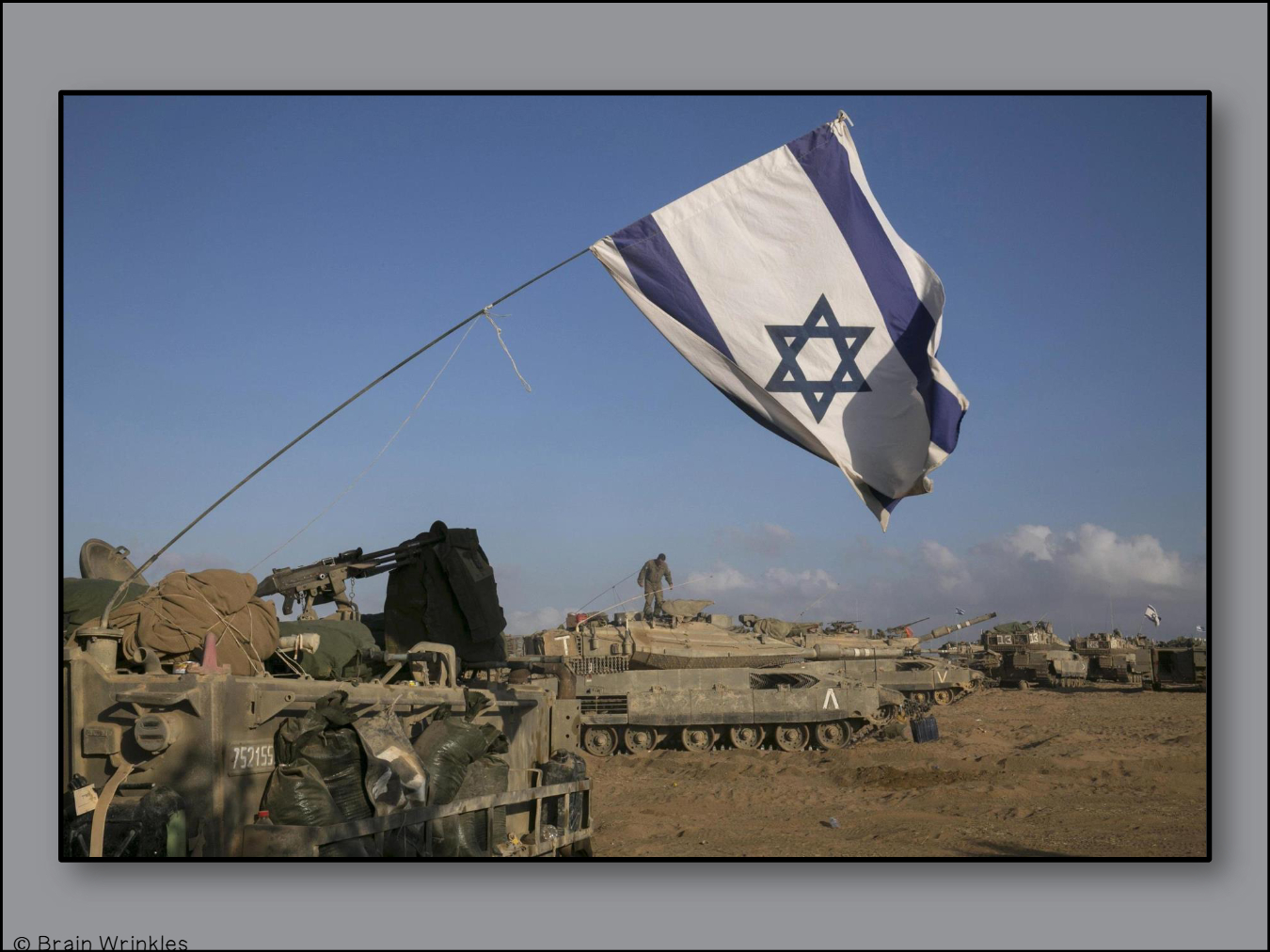
Which religious site is visible in the background of the image showing soldiers with rifles?
The Dome of the Rock
The Vatican
The Great Mosque of Mecca
St. Basil's Cathedral
39
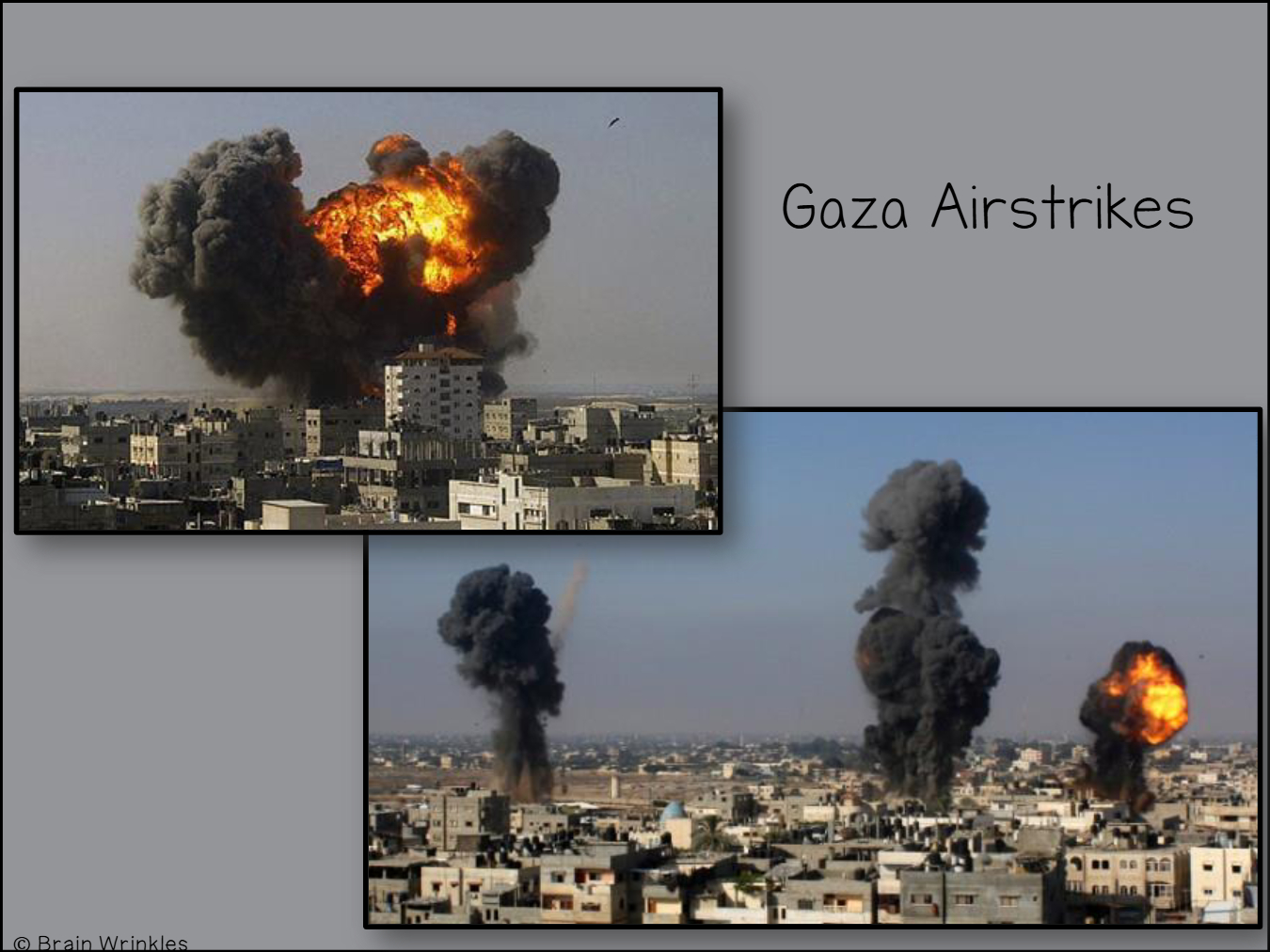
40
Open Ended
What are some possible consequences of airstrikes in urban areas like Gaza, as shown in the images?
41
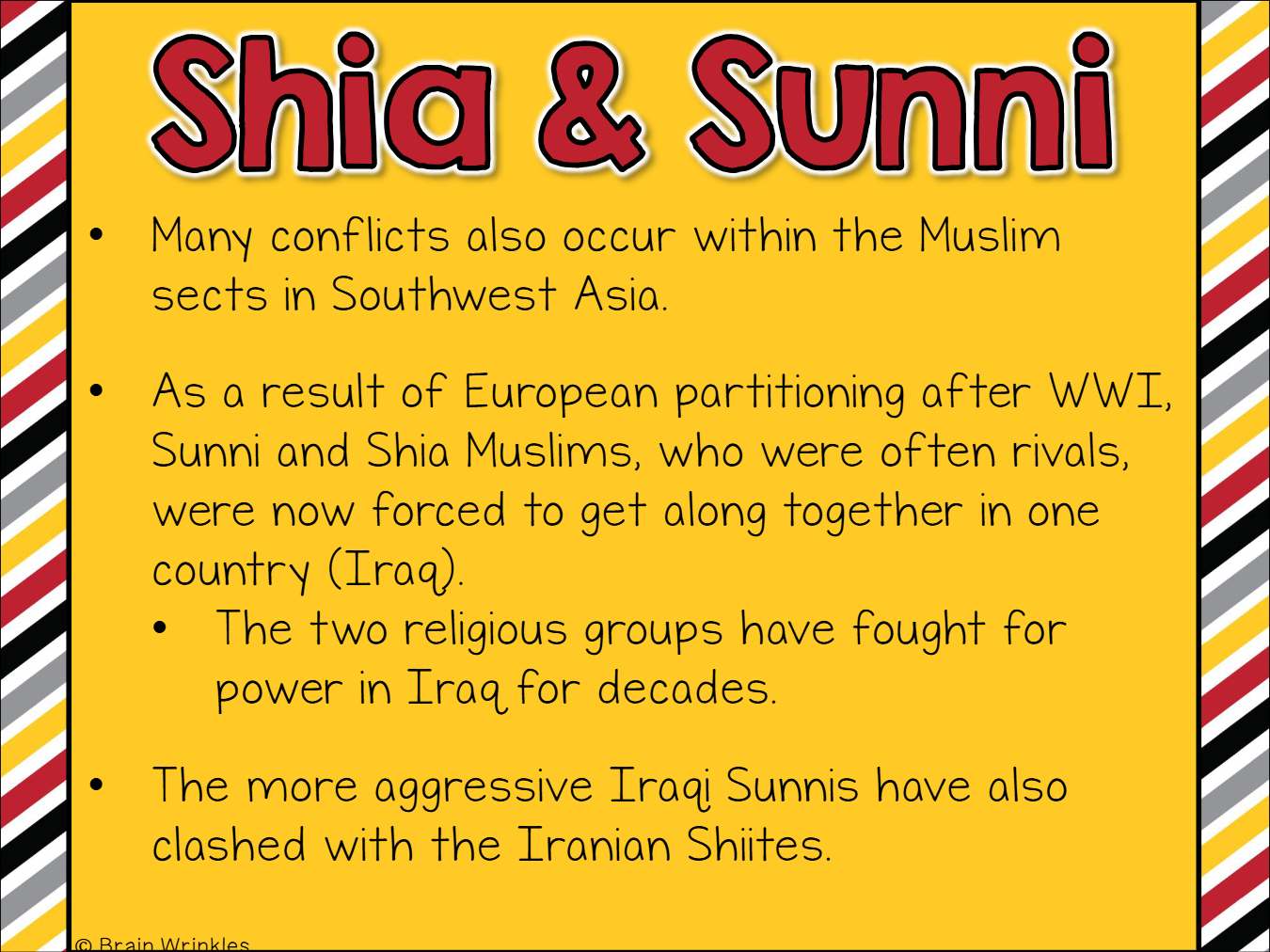
42
Fill in the Blanks
Type answer...
43
Multiple Choice
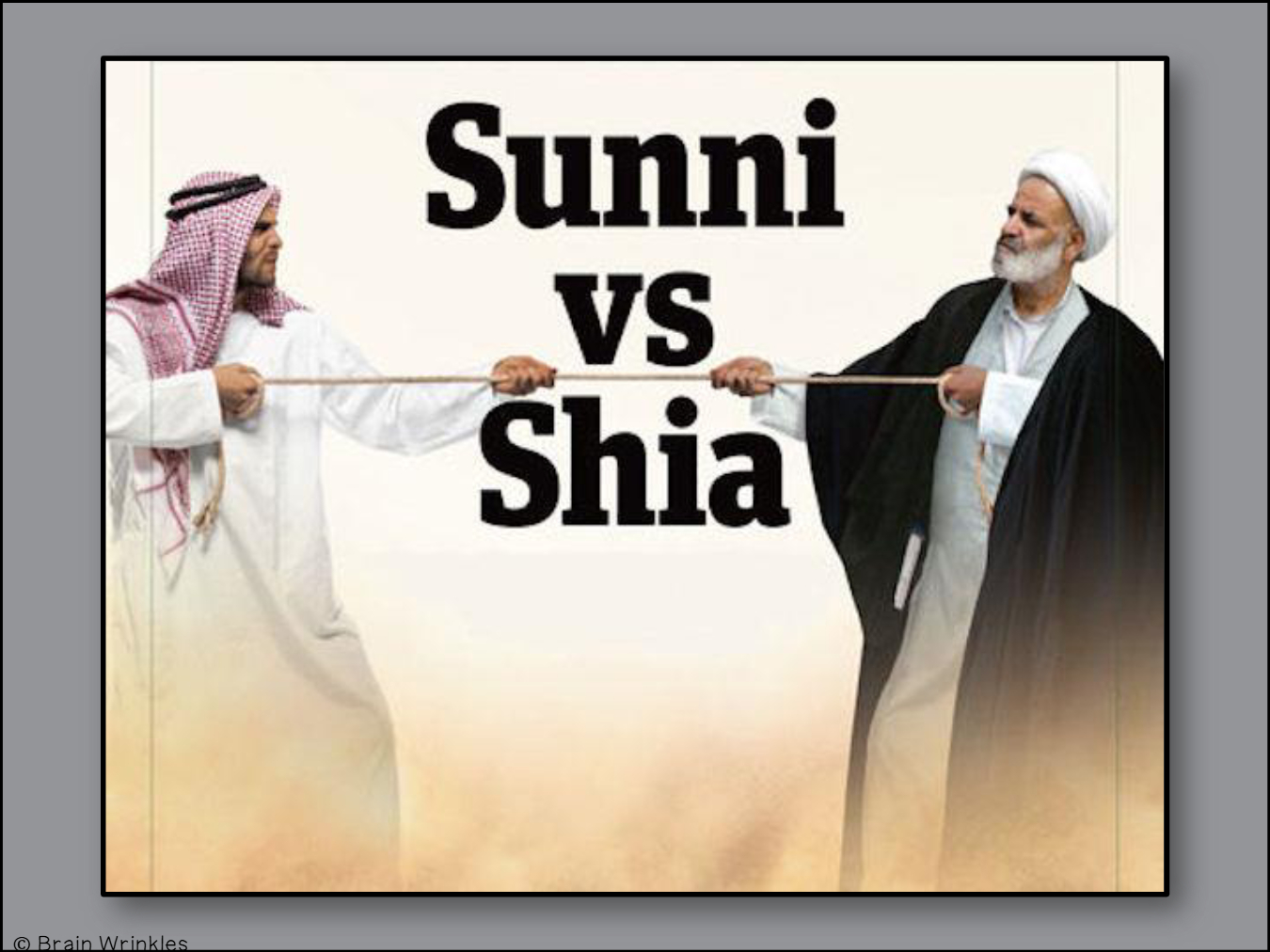
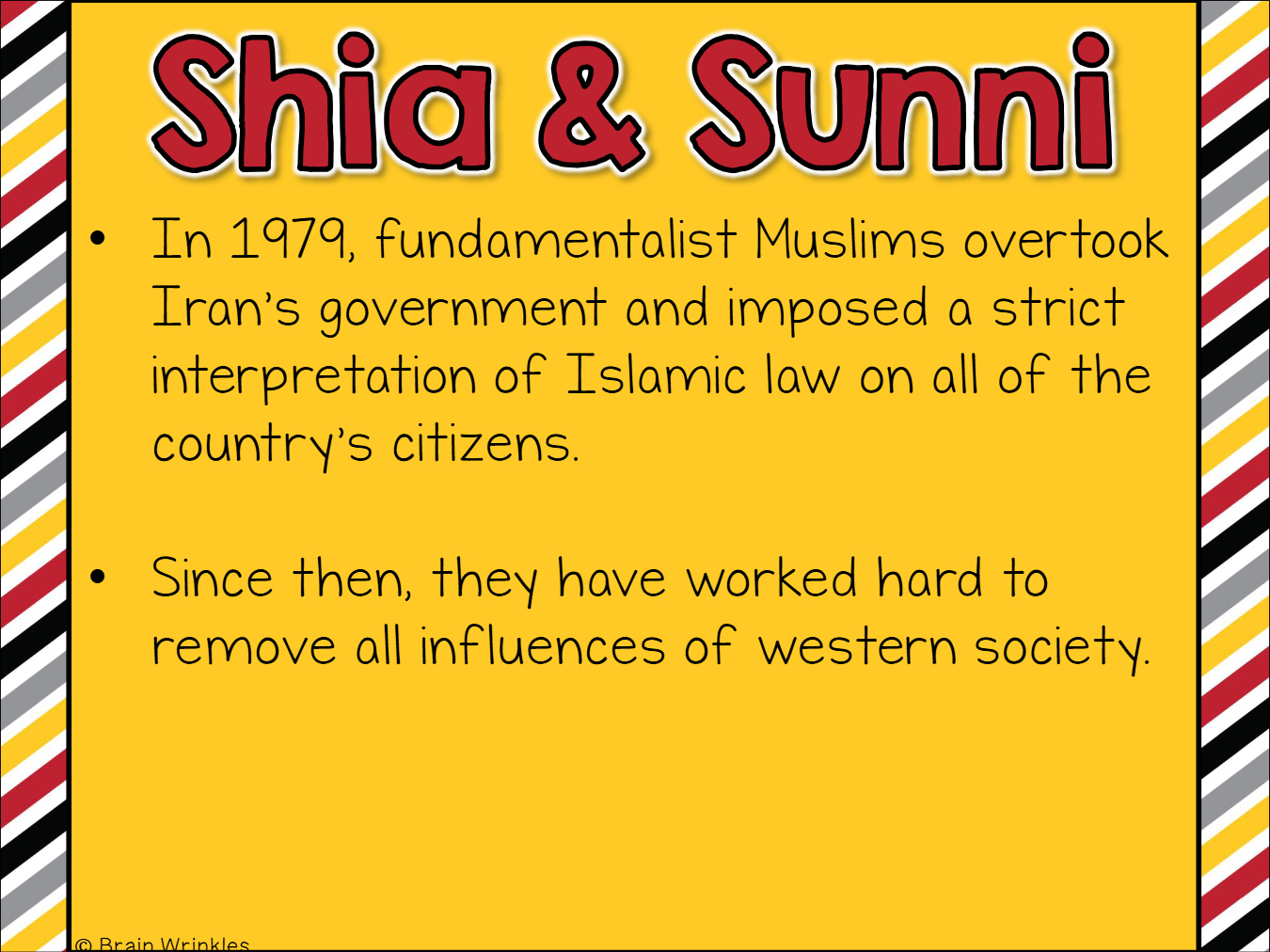
As a result of European partitioning after WWI, which two Muslim sects were forced to coexist in Iraq, leading to decades of conflict for power?
Sunni and Shia
Sunni and Druze
Shia and Alawite
Sunni and Christian
44
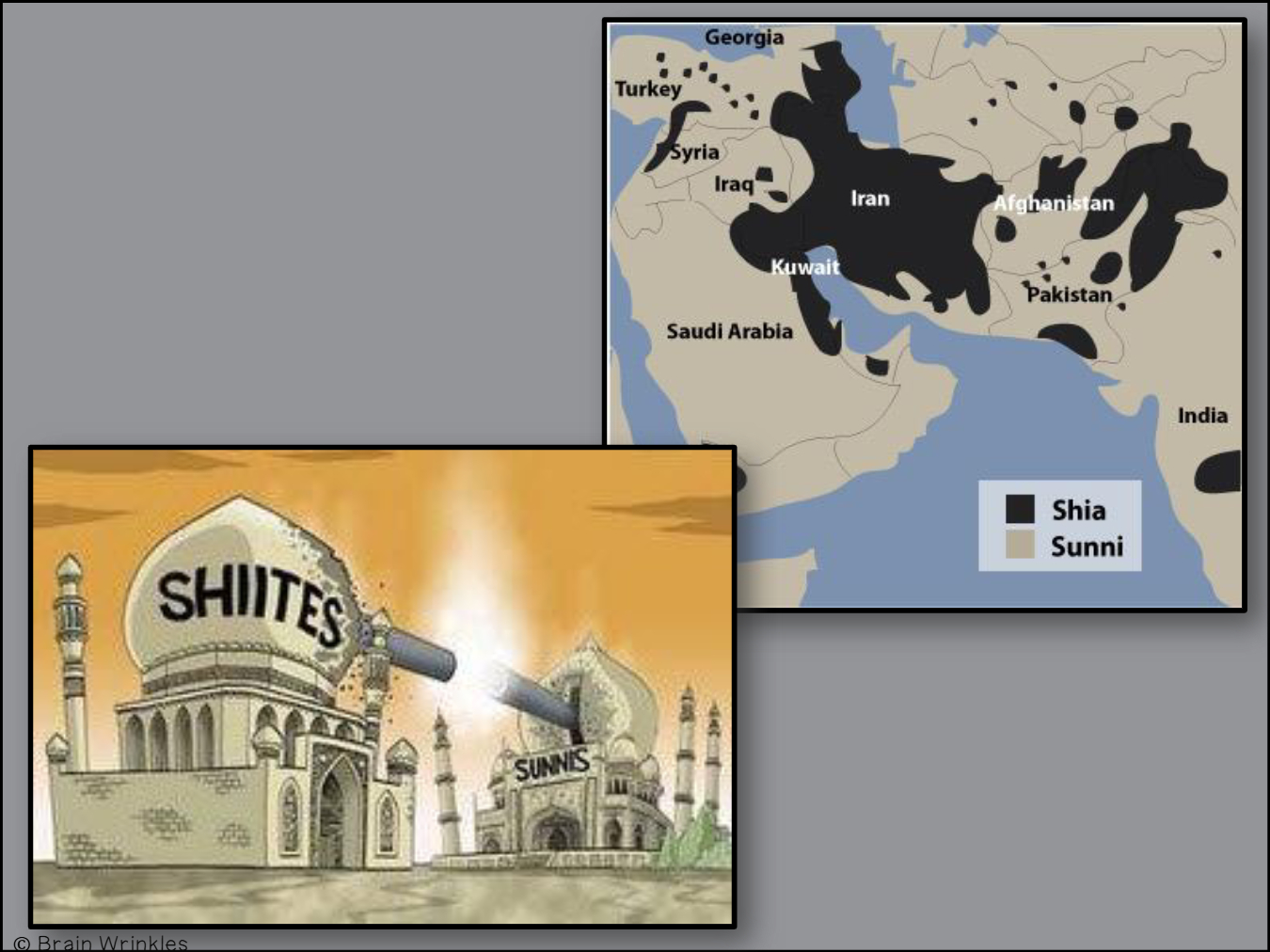
45
Multiple Select
Based on the map and illustration, which countries have significant populations of both Shia and Sunni Muslims?
Iran and Iraq
India and Saudi Arabia
Turkey and Afghanistan
Pakistan and Georgia
46
47
48
Multiple Choice
How did European partitioning in the Middle East after World War I contribute to ongoing regional conflicts?
It created borders that ignored ethnic and religious groups, leading to disputes.
It united all tribes and religious groups peacefully.
It eliminated all sources of conflict in the region.
It had no impact on the Middle East.
Show answer
Auto Play
Slide 1 / 48
SLIDE
Similar Resources on Wayground

44 questions
CH. 8-Medieval China
Presentation
•
7th Grade
41 questions
Buddhism, Taoism, and Confucianism
Presentation
•
6th Grade
44 questions
Introduction to Cells
Presentation
•
7th Grade
48 questions
Forms and Systems of Government
Presentation
•
7th Grade
40 questions
Checks and Balances
Presentation
•
7th - 8th Grade
44 questions
Greek Mythology Live Class
Presentation
•
7th Grade
43 questions
History of Southwest Asia: Creation of Israel (SS7H2b)
Presentation
•
7th Grade
44 questions
Battles of the Civil War
Presentation
•
7th Grade
Popular Resources on Wayground
11 questions
Hallway & Bathroom Expectations

Quiz
•
6th - 8th Grade
10 questions
HCS SCI 03 Summer School Assessment 2
Quiz
•
3rd Grade
11 questions
Home Scope
Quiz
•
7th - 8th Grade
12 questions
2026 TAP Technology in the Classroom
Presentation
•
Professional Development
15 questions
HCS SCI 05 Summer School Assessment 2 Review
Quiz
•
5th Grade
15 questions
HCS SCI 04 Summer School Review 2
Quiz
•
4th Grade
59 questions
Geometry Unit 3 Review
Quiz
•
9th - 12th Grade
14 questions
FAST ELA READING SMAPLE TEST MATERIALS

Passage
•
3rd Grade