
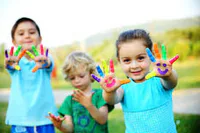
DESARROLLO SOCIAL Y EMAOCINAL EN LA PRIMERA INFANCIA

Presentation
•
Science
•
1st - 5th Grade
•
Practice Problem
•
Hard

DANIELA DEYANIRA GREFA CHONGO
FREE Resource
25 Slides • 27 Questions
1
2
Multiple Choice
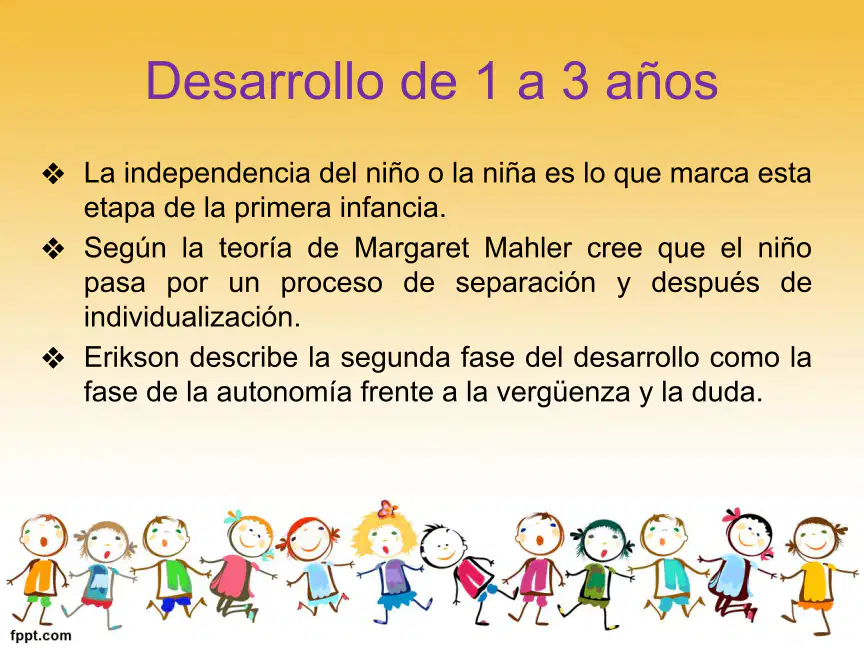
What does Erikson describe as the second phase of development?
Autonomy vs. Shame
Independence vs. Dependence
Trust vs. Mistrust
Identity vs. Role Confusion
3
4
Multiple Choice
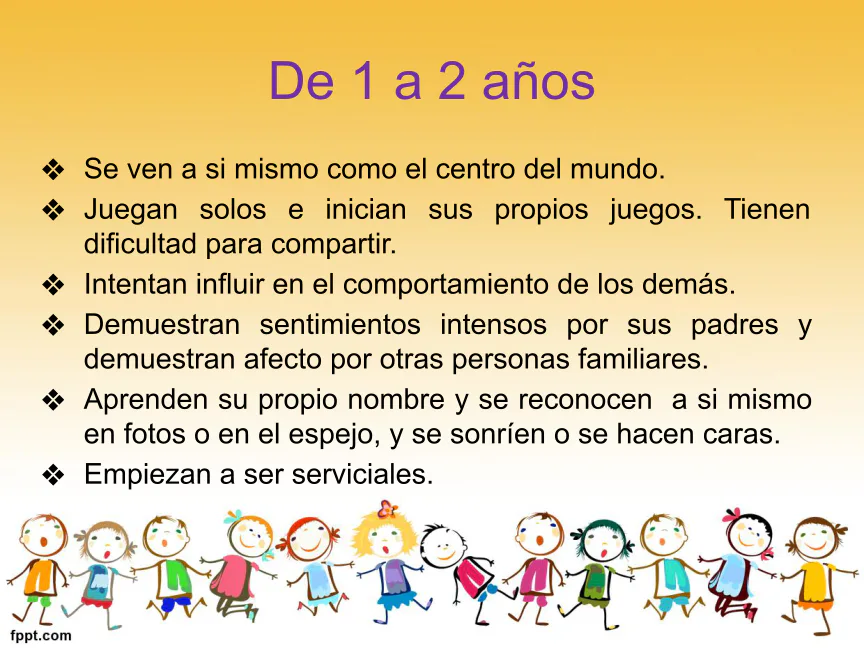
Which of the following is a cognitive development milestone for a 2-year-old?
Writing their own stories
Solving basic addition and subtraction
Recognizing themselves in a mirror
Understanding the concept of time
5
6
Multiple Choice
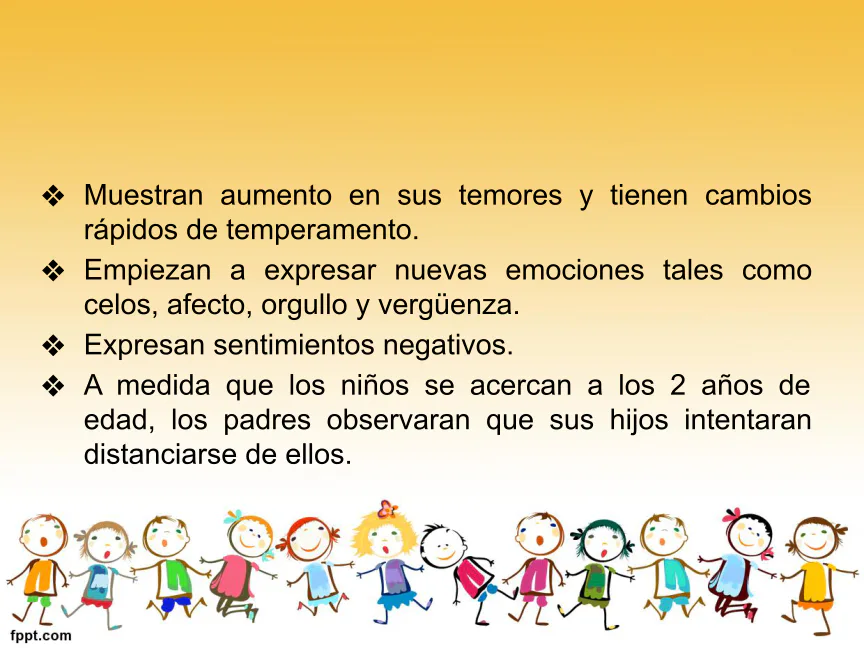
What new emotions do children begin to express as they approach 2 years of age?
Jealousy
Happiness
Fear
Surprise
7
8
Multiple Choice
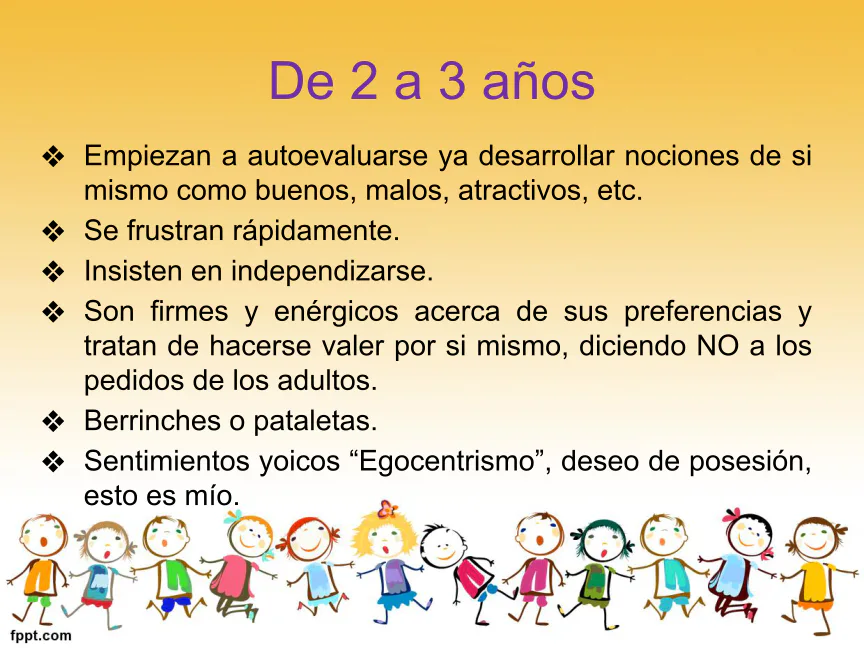
What are some characteristics of children aged 2 to 3 years old?
They start to self-evaluate
They are very independent
They rarely get frustrated
They always listen to adults
9
10
Multiple Choice
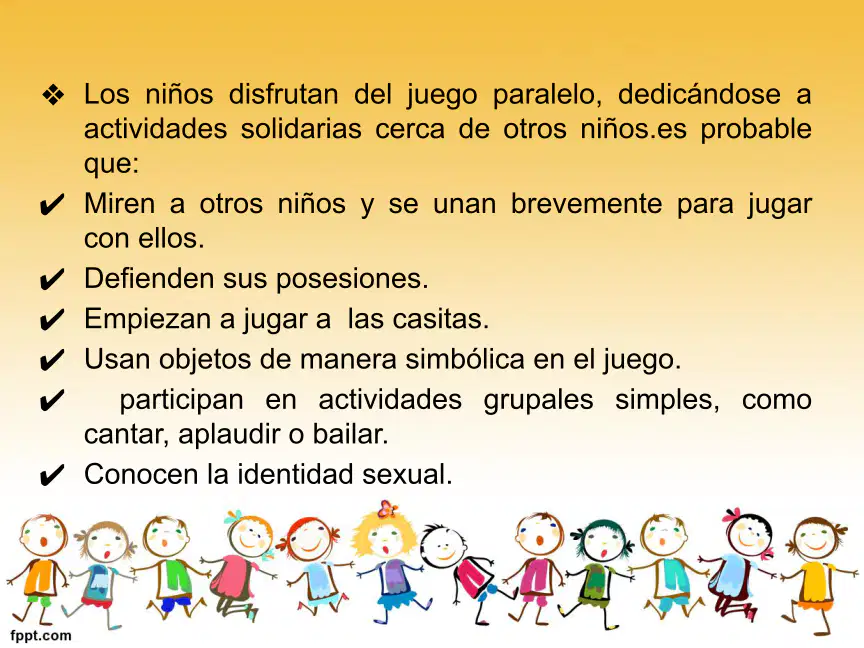
How does parallel play contribute to social development in children?
Parallel play hinders social development in children by promoting isolation
Parallel play contributes to social development in children by providing opportunities for observation, imitation, and eventual interaction with peers.
Parallel play has no impact on social development in children
Parallel play leads to increased aggression in children
11
12
Multiple Choice
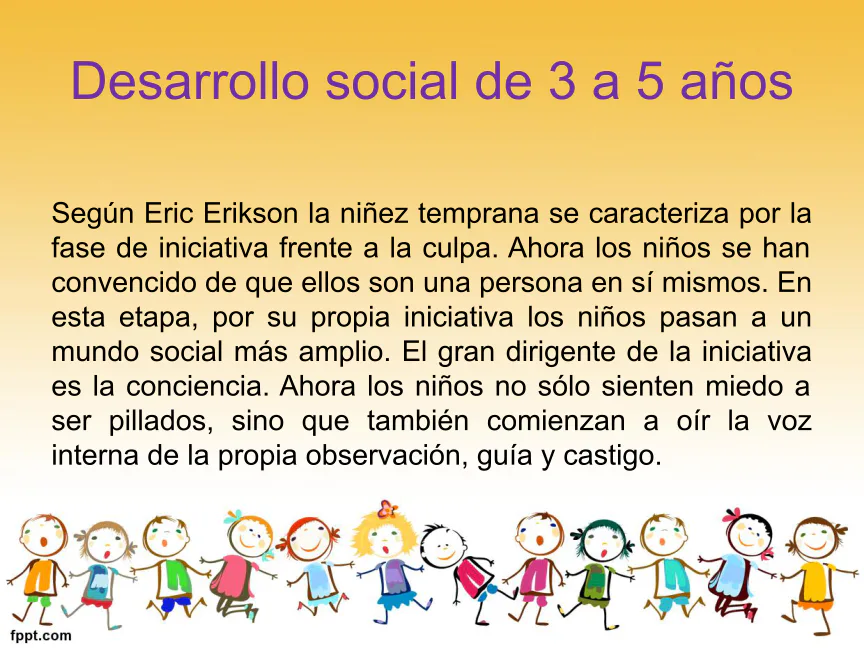
According to Erik Erikson, what characterizes early childhood between the ages of 3 to 5 years?
Initiative vs. Guilt
Trust vs. Mistrust
Autonomy vs. Shame
Industry vs. Inferiority
13
14
Multiple Choice
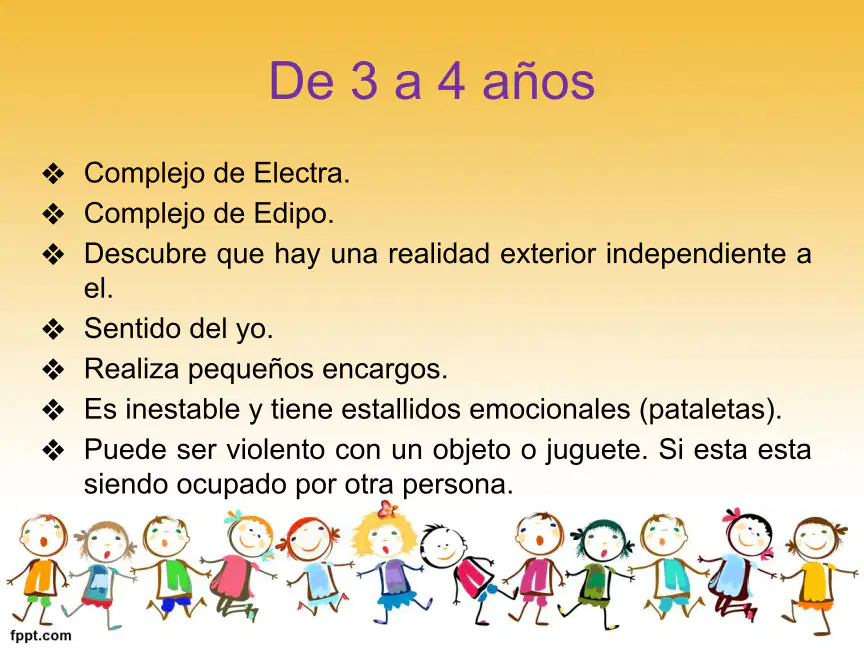
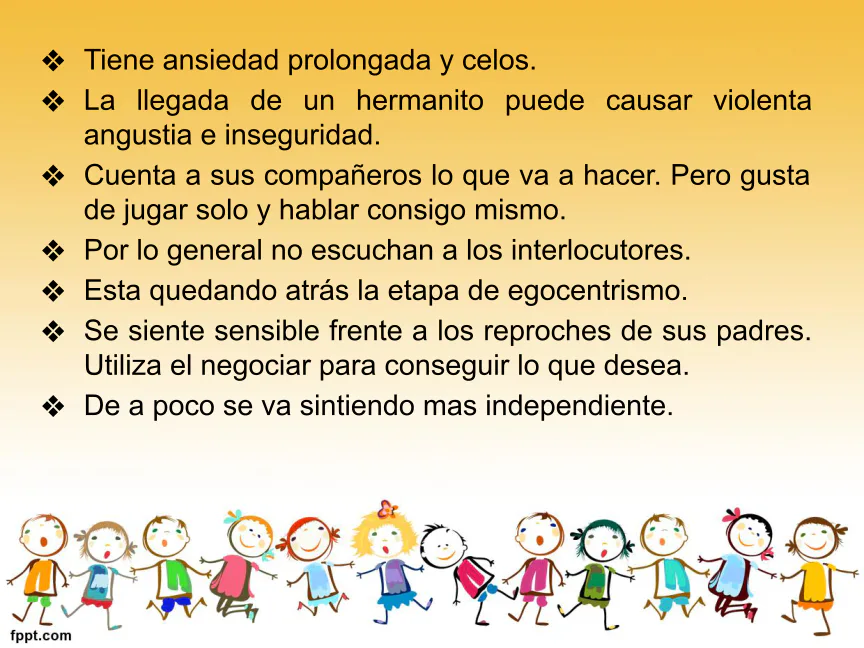
What are the characteristics of children aged 3 to 4 years according to the text?
Complex of Electra
Complex of Oedipus
Realization of an independent external reality
Sense of self
15
16
17
Multiple Choice
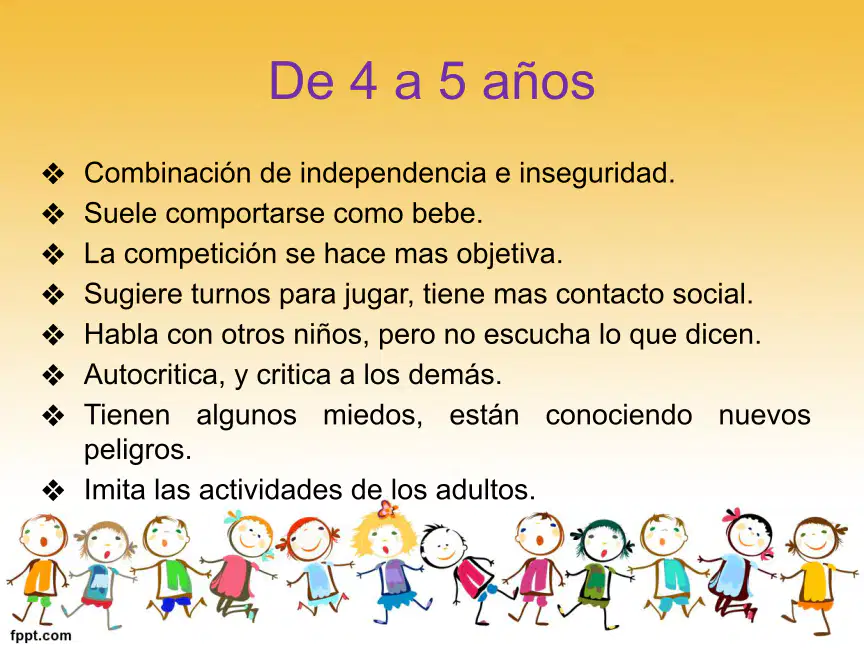
What are the characteristics of children aged 4 to 5 years?
Independence and insecurity
Imitating adult activities
Increased competition
Talking to other children
18
19
Multiple Choice
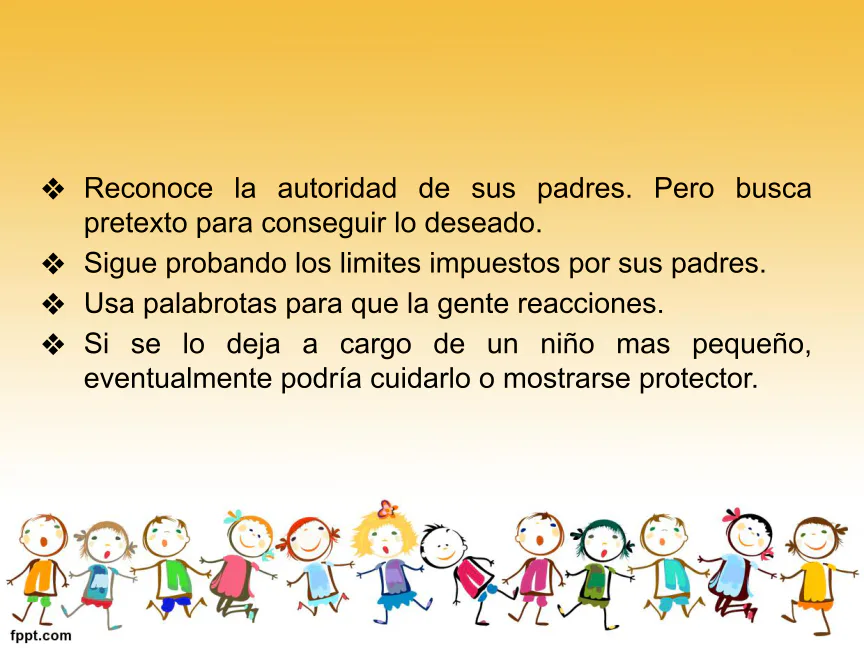
What are some ways children test boundaries set by their parents?
By recognizing authority
By using bad language
By seeking pretexts
By taking care of younger children
20
21
22
Multiple Choice
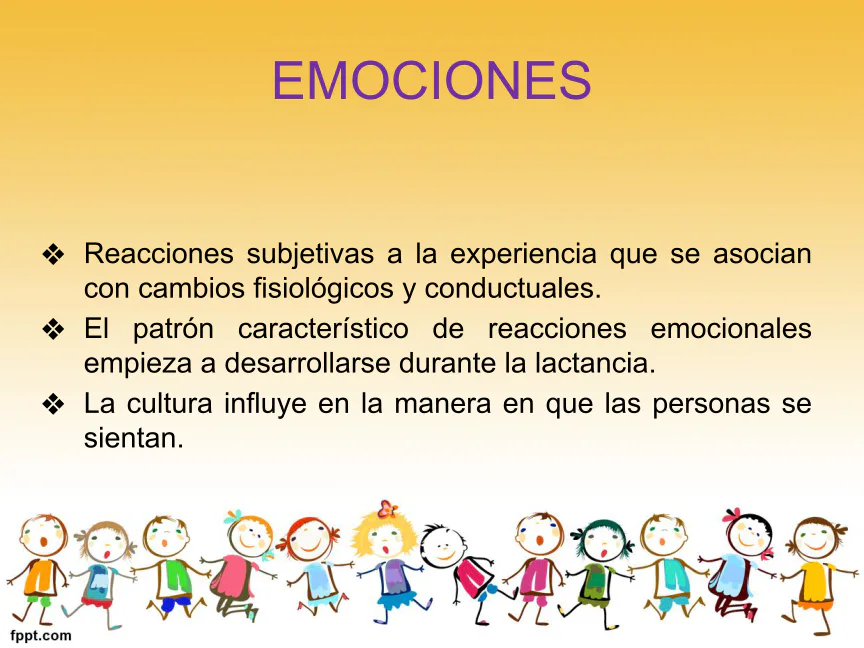
What are the subjective reactions associated with physiological and behavioral changes?
Emotions
Feelings
Thoughts
Behaviors
23
24
Multiple Choice
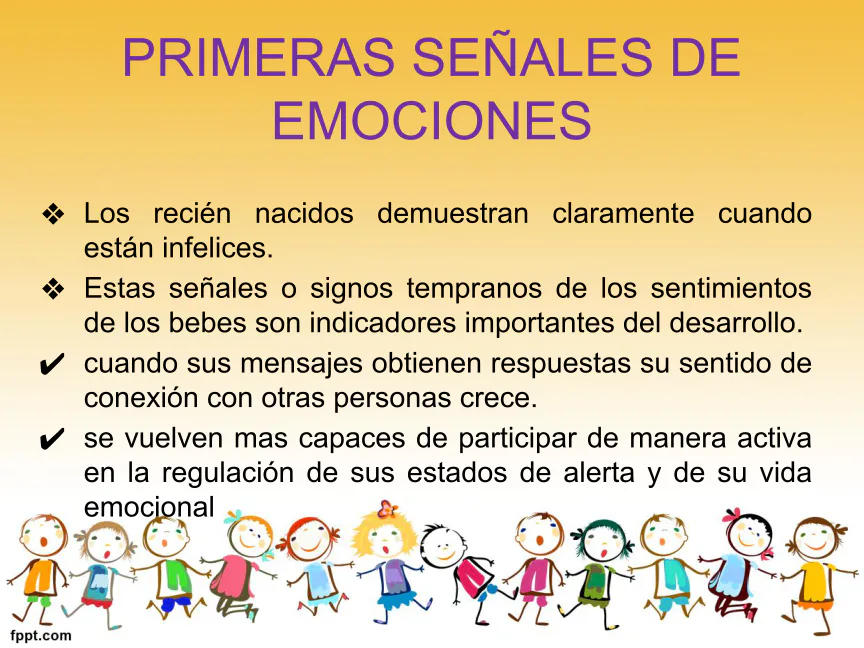
What are the early signs of emotions in newborns?
They cry when hungry
They smile at familiar faces
They show clear signs when unhappy
They sleep a lot
25
26
Multiple Choice
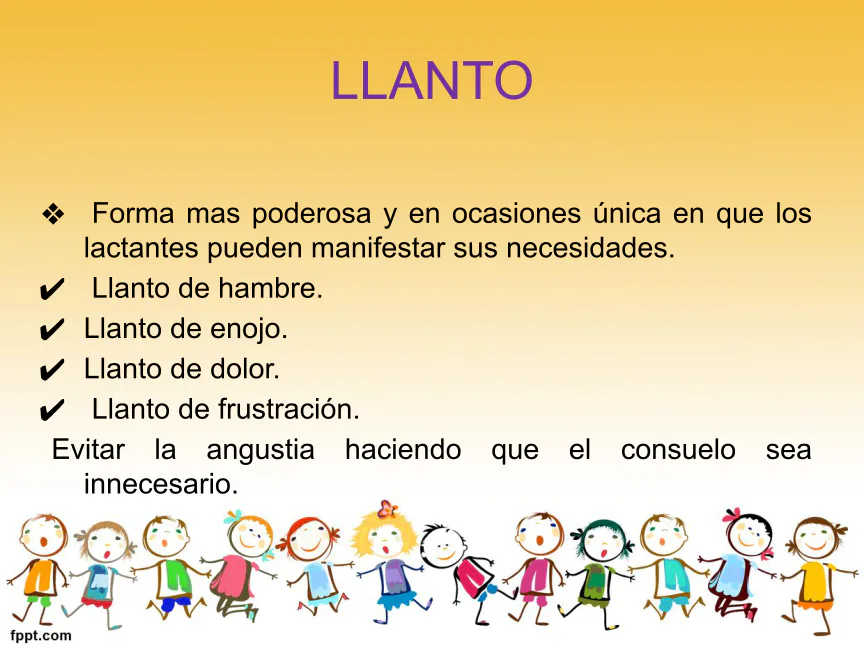
What are the different types of cries that infants can express their needs?
Hunger cry
Anger cry
Pain cry
Frustration cry
27
28
Multiple Choice
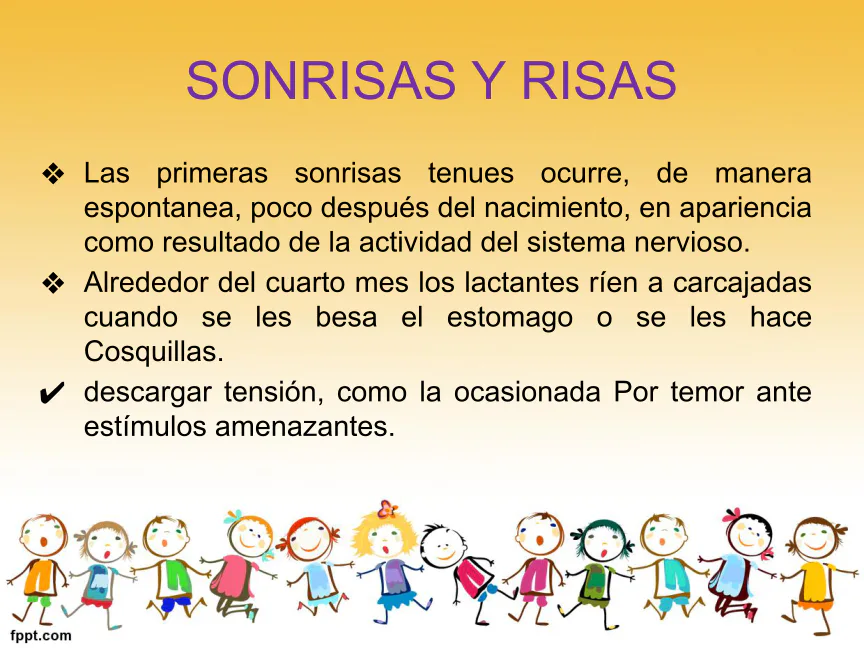
What are the first signs of smiles in infants according to the text?
They occur spontaneously shortly after birth
They are a result of external stimuli
They happen only when the baby is happy
They are a learned behavior
29
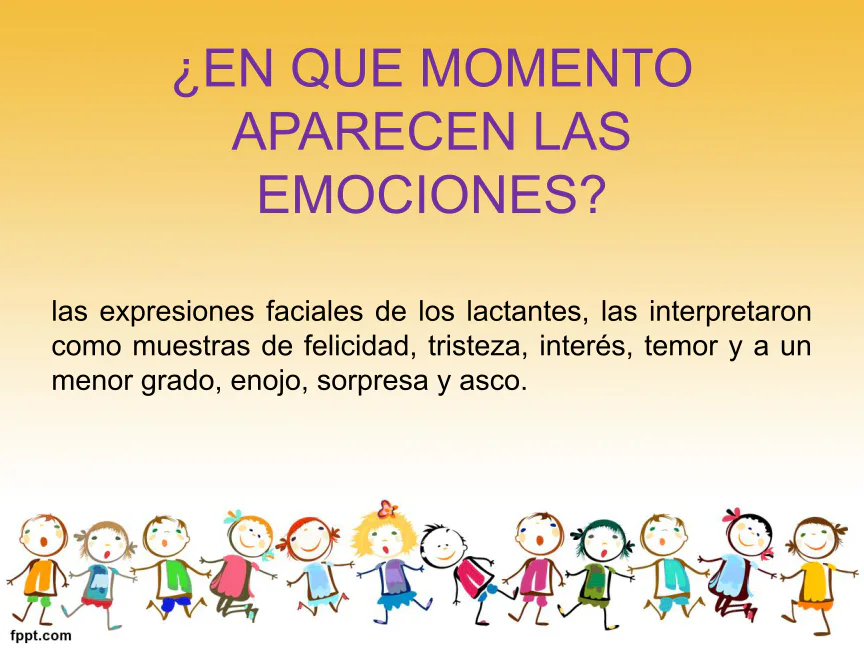
30
Multiple Choice
Which of the following best describes the concept of "secure attachment" in emotional development?
A child's indifference toward their caregiver
A child's preference for a specific toy
A child's distress when separated from their caregiver and joy upon their return
A child's ability to form friendships with peers
31
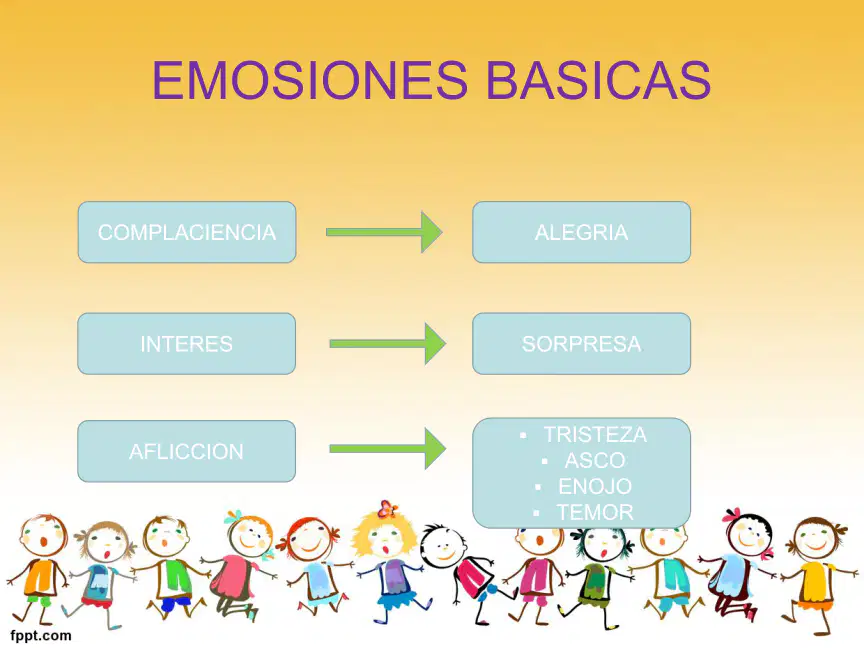
32
Multiple Select
What are the basic emotions represented in the image?
Sorpresa
Complacencia
Aflicción
Interes
Alegría
33
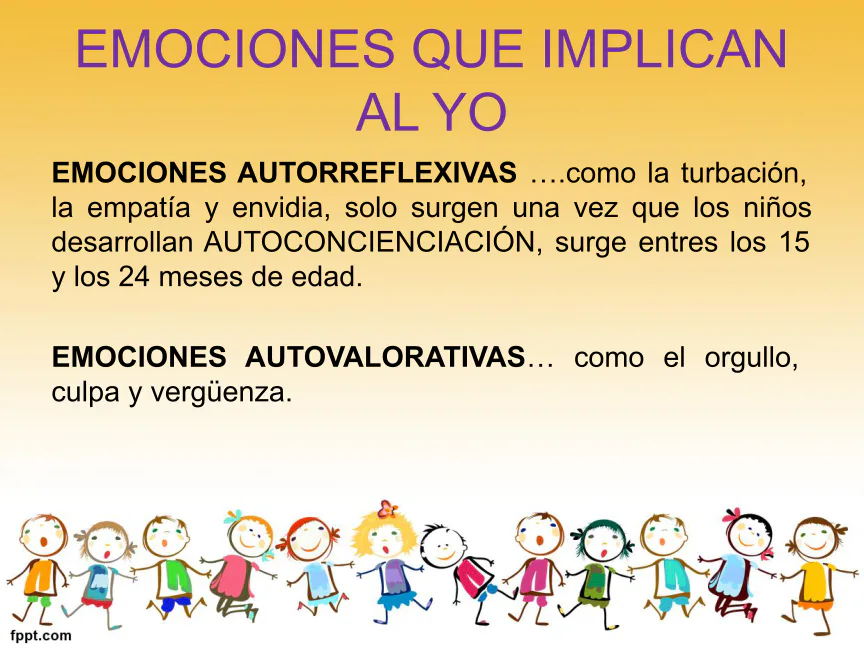
34
Multiple Choice
What are the two types of emotions mentioned that involve self-reflection and self-evaluation?
Emociones autorreflexivas
Emociones autovalorativas
Emociones de alegría
Emociones de tristeza
35
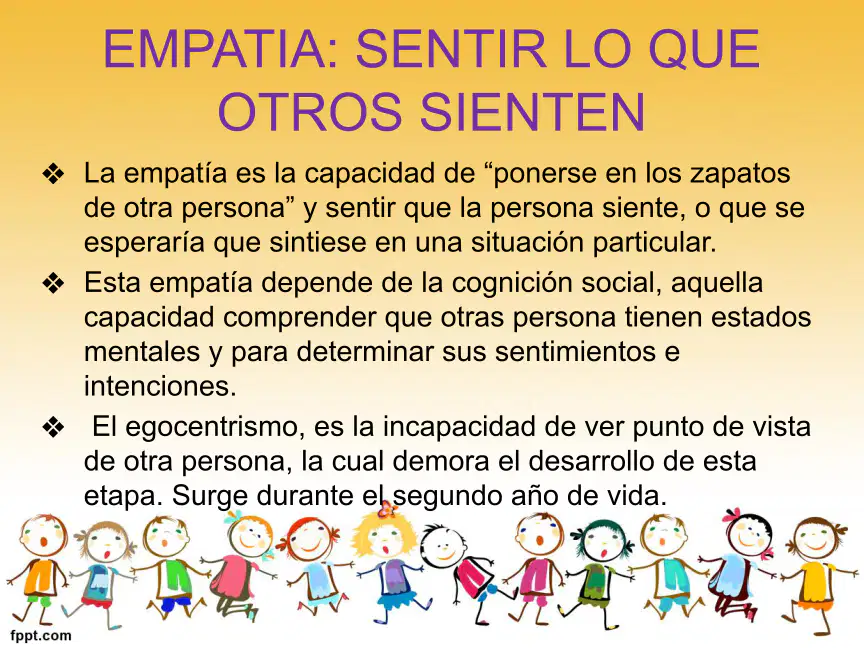
36
Multiple Choice
What is empathy according to the text?
The ability to ignore others' feelings
The ability to understand and share the feelings of another
The ability to manipulate others' emotions
The ability to express one's own feelings
37
38
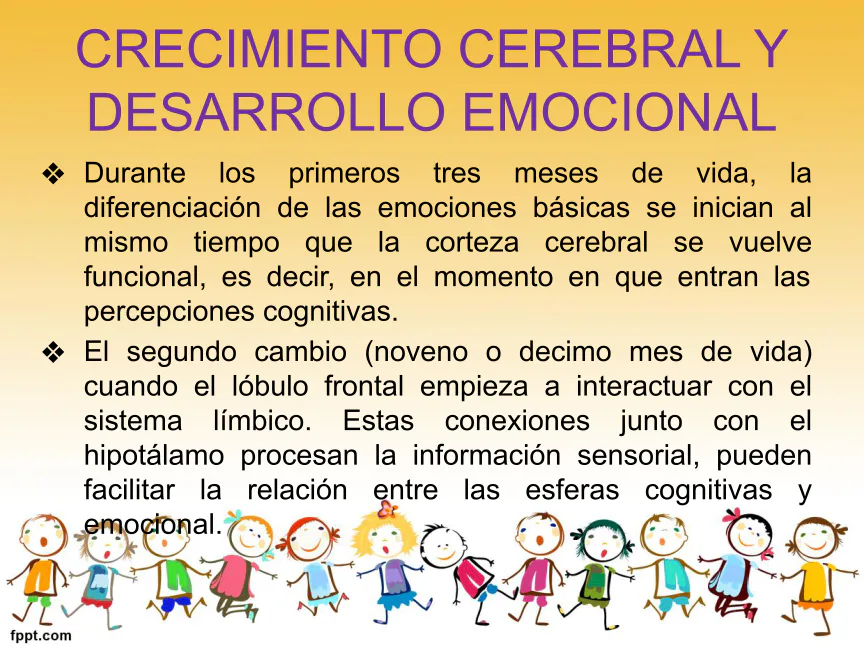
Multiple Choice
What is the significance of the differentiation of basic emotions during the first three months of life?
It marks the beginning of cognitive perceptions
It indicates the development of motor skills
It shows the interaction of the frontal lobe with the limbic system
It is related to sensory information processing
39
40
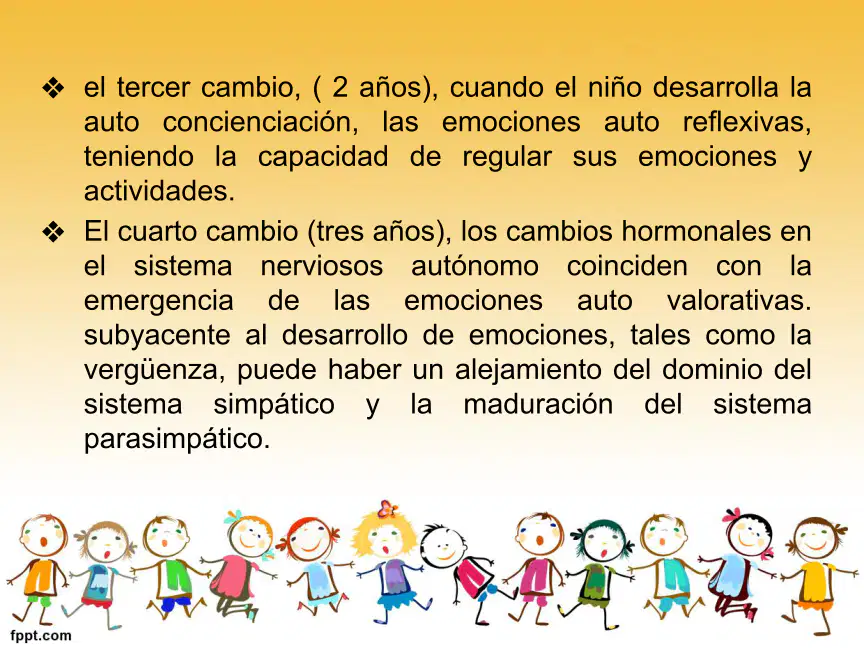
Multiple Choice
What are the emotional developments that occur in children at the ages of two and three according to the text?
Development of self-awareness
Emergence of self-evaluative emotions
Regulation of emotions and activities
All of the above
41
Multiple Choice
_____ is how we feel about ourselves.
stress
self esteem
outcome
42
43
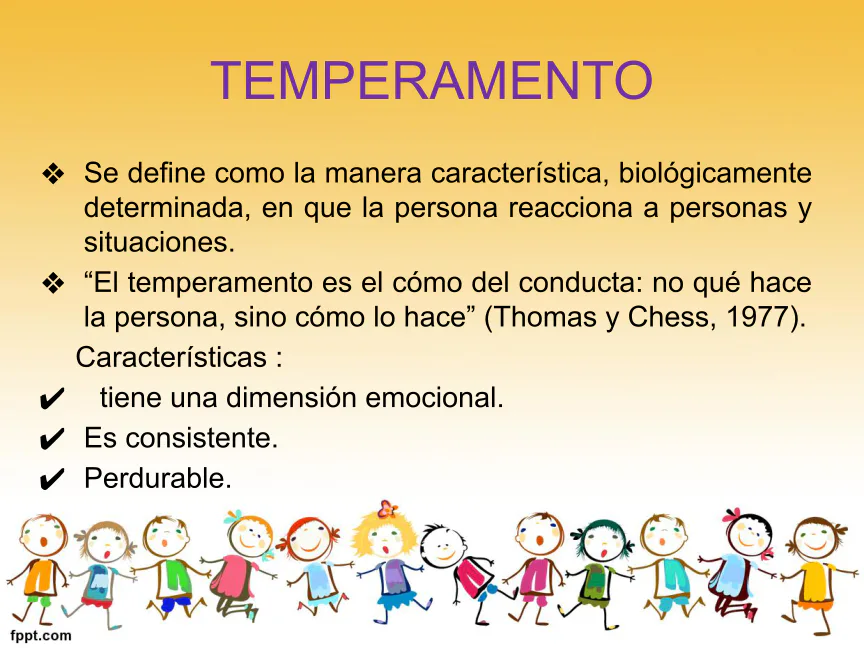
Multiple Choice
What are the characteristics of temperament as defined in the image?
Emotional dimension
Inconsistency
Temporary
Unpredictable
44
45
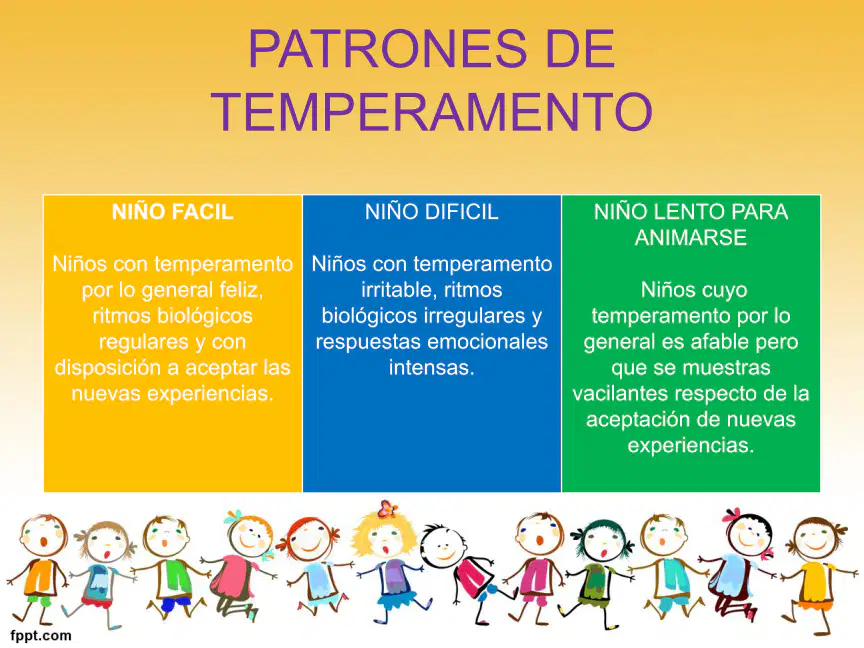
Multiple Choice
What traits are associated with a "Niño Lento para Animarse"?
Aflable temperament
Irritable temperament
Slow to warm up
Regular biological rhythms
46
Multiple Choice
What defines a "Niño Difícil"?
Happy temperament
Irritable temperament
Slow to warm up
Regular biological rhythms
47
Multiple Choice
What are the characteristics of a "Niño Fácil"?
Happy temperament
Irritable temperament
Slow to warm up
Regular biological rhythms
48
49
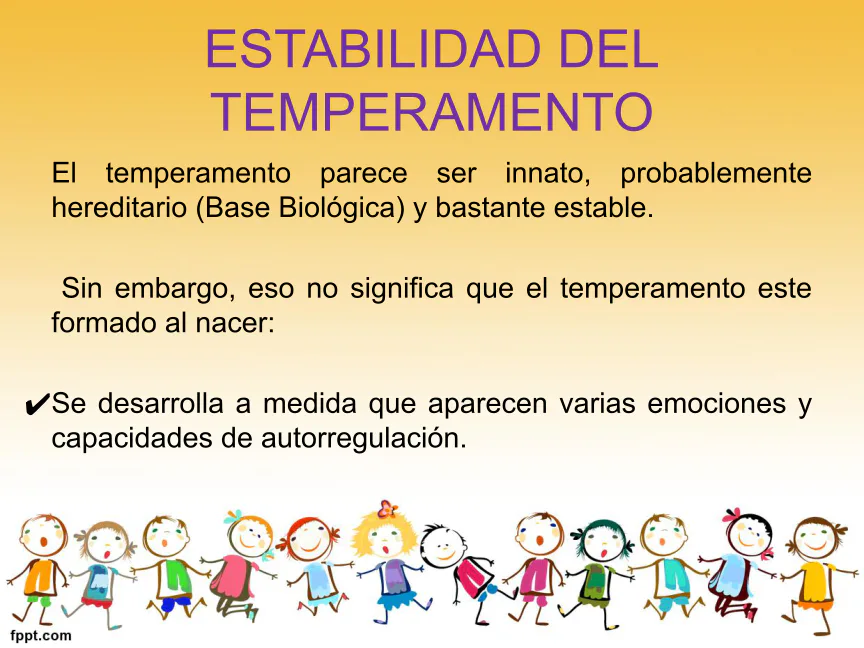
Multiple Choice
What does the text suggest about the development of temperament?
It is completely innate
It develops with emotions and self-regulation
It is not influenced by genetics
It is fixed at birth
50
51
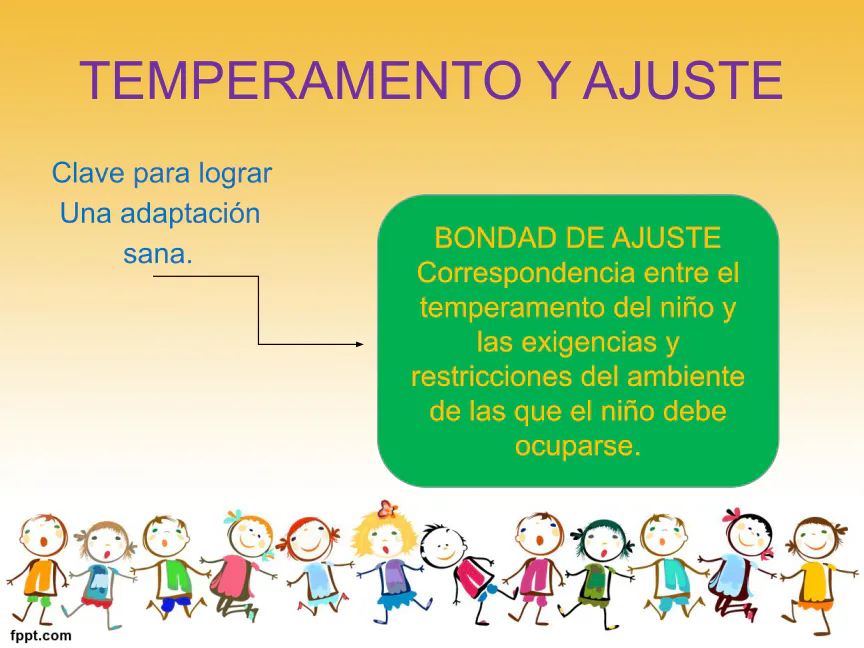
Multiple Choice
What is the concept of "bondad de ajuste" in relation to a child's temperament?
The child's ability to adapt to any environment
The correspondence between the child's temperament and environmental demands
The child's emotional intelligence
The child's social skills
52
Poll
How confident do you feel about this topic now?
Show answer
Auto Play
Slide 1 / 52
SLIDE
Similar Resources on Wayground

48 questions
5.9 Gravity Lesson
Presentation
•
1st - 5th Grade
48 questions
Space Reading Gravity
Presentation
•
1st - 5th Grade
48 questions
Hebrew Pronouns 1 - LESSON
Presentation
•
1st - 5th Grade
47 questions
Pyramid #20
Presentation
•
1st - 5th Grade
45 questions
Comparatives and Superlatives
Presentation
•
1st - 5th Grade
48 questions
body parts
Presentation
•
KG
48 questions
Fractions Greater Than or Less Than One
Presentation
•
1st - 5th Grade
46 questions
5.2 Food Webs Lesson
Presentation
•
1st - 5th Grade
Popular Resources on Wayground
10 questions
Safety Day 2026 – Student Review

Quiz
•
9th Grade
21 questions
Continents and Oceans
Quiz
•
6th Grade
20 questions
Parts of Speech
Quiz
•
5th Grade
16 questions
Subject & Predicate
Quiz
•
5th Grade
25 questions
Multiplication Facts
Quiz
•
5th Grade
12 questions
Map Skills
Quiz
•
3rd Grade
22 questions
Continents and Oceans
Quiz
•
5th Grade
15 questions
Rounding Decimals
Quiz
•
5th Grade
Discover more resources for Science
20 questions
Mixtures and Solutions Practice
Quiz
•
5th Grade
10 questions
Mixtures and Solutions
Quiz
•
4th Grade
20 questions
Food Chains and Food Webs Review
Quiz
•
5th Grade
20 questions
GC Interim #1 Review 2026
Quiz
•
5th Grade
10 questions
Severe Weather Around Us
Quiz
•
2nd Grade
20 questions
5.3 Force and Motion Study Guide Review
Quiz
•
5th Grade
15 questions
Force and Motion
Presentation
•
5th Grade
19 questions
3rd Grade CUA #1 Review GC
Quiz
•
3rd Grade