Unit 3 part 1
Presentation
•
Science
•
9th Grade
•
Hard
+3
Standards-aligned
Karen Cymru
Used 1+ times
FREE Resource
6 Slides • 48 Questions
1
Photosynthesis
2
3
4
5
6
7
Multiple Choice
Which lettered graph represents the effect of temperature on photosynthetic rate?
A
B
C
D
8
Multiple Choice
Look at the diagram. Which gas would most likely be found in the greatest amount in the bubbles?
9
Multiple Choice
Which lettered graph represents the affect of light intensity on photosynthetic rate?
A
B
C
D
10
Multiple Choice
11
Multiple Choice
12
Multiple Choice
If starch is present in the leaf, the leaf should turn what colour?
Blue/Black
Orange
Red
13
Fill in the Blanks
Type answer...
14
Multiple Choice
What do we use to test for starch?
Fluorine solution
Chlorine solution
Iodine solution
15
Multiple Choice
To show that photosynthesis has occurred we test for starch. Why?
Starch is a product of photosynthesis
Not sure
Glucose is a product of photosynthesis and is stored in the plant cells as starch
16
Multiple Choice
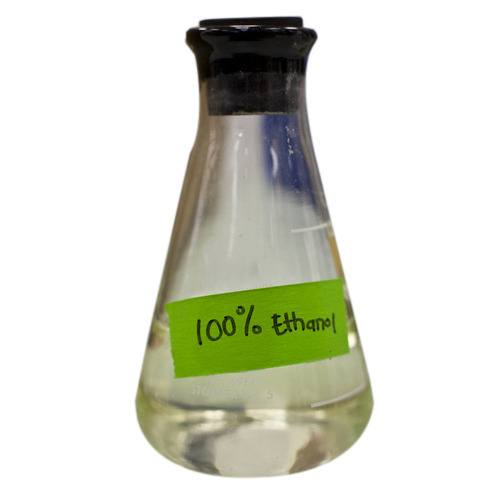
What colour does the leaf turn after being in ethanol?
It stays green
It turns blue
It turns white
17
Multiple Choice
What is chlorophyll soluble in?
Ethanol
Water
Don't Know
18
Multiple Choice
Why do we turn off the bunsen flame before adding ethanol?
Not sure
To save on gas
Because ethanol is extremely flammable
19
Multiple Choice
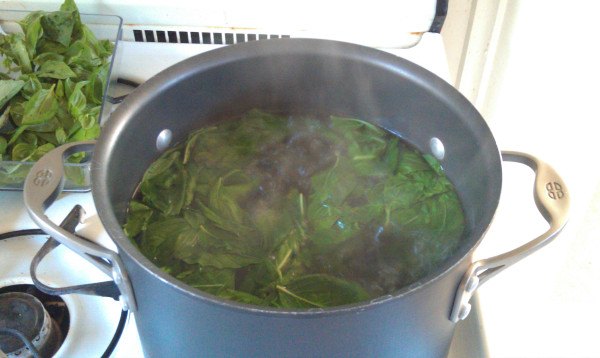
Why do we boil the leaf?
To keep it warm
To denature the enzymes and so stop photosynthesis
To make photosynthesis go faster
20
Multiple Choice
21
Multiple Choice
What are the products of photosynthesis?
water and carbon dioxide
oxygen and glucose
oxygen and carbon dioxide
oxygen and water
22
Multiple Choice
What does the 'photo' suggest when it is at the start of a word?
linked to the eyes
linked to cameras
linked to light
23
Multiple Choice
During photosynthesis, the energy from the sun is used to split water molecules into hydrogen and oxygen.
True
False
24
Multiple Choice
25
Multiple Choice
26
Multiple Choice
27
Multiple Choice
28
Multiple Choice
29
Multiple Choice
30
Multiple Choice
Which one of the following statements is an accurate description of genes?
DNA is made of carbohydrates that code for genes
Genes are made of DNA and code for proteins.
Genes are made of proteins that code for nitrogen bases.
Proteins are made of genes and code for DNA
31
Multiple Choice
In the diagram, what was used to "cut" the DNA?
enzymes
genes
receptors
clones
32
Multiple Choice
A farmer grows beans that he sells to local markets. Over a period of 40 years, the farmer has identified the plants that produced the most beans and only used those beans to produce new plants. This procedure is part of the process of
selective breeding
replication
cloning
gene splicing
33
Multiple Choice
In 1996, scientists cloned the first mammal, a sheep. This technique involved the removal of the nucleus from an egg cell. The nucleus from a cell of another adult sheep was then inserted into this egg cell. Once this cell began to develop into an embryo, it was implanted into a third female sheep that later gave birth to a healthy lamb, Dolly. Which one of the following statements concerning Dolly is correct?
Her offspring would be genetically identical.
Dolly was produced by the recombination of genetic material.
Dolly and her DNA donor are genetically identical.
Two different gametes were manipulated to produce Dolly
34
Multiple Choice
A positive reason(s) to genetically modify (GMOs) foods include...
Produce larger fruits
Make pest resistant vegetables
Produce foods that grow faster
All of these are positives of GMOs
35
Multiple Choice
36
Multiple Choice
Which of the following statements best describes the term photosynthesis?
When plants absorb the energy from the sun.
How plants reproduce.
The process by which plants make their own food.
The process by which animals make their own food.
37
Multiple Select
Which of the following is needed for the process of photosynthesis?
Water
Oxygen
Starch
Carbon dioxide
38
Multiple Choice
Chlorophyll is:
The substance that makes plants green.
Found inside the chloroplast cells.
Used to absorb energy from the sun.
All of the above.
39
Multiple Choice
The openings that are found in the leaves of plants are called:
Stomata
Chlorophyll
Xylem
Chloroplast
40
Multiple Choice
The process of photosynthesis takes place in the:
Leaves of the Plant.
Stem of the plant.
Roots of the plant.
All of the above.
41
Multiple Choice
Why are plants considered autotrophs
They make their own food
They provide food for others
42
Multiple Choice
43
Multiple Choice
What part of the plant soaks up water for photosynthesis?
roots
leaf
petals
stem
44
Multiple Choice
Which of the following is NOT needed for plants to survive?
Sunlight
Pesticides
Water
Carbon Dioxide
45
Multiple Choice
What is produced as a result of photosynthesis?
glucose and chlorophyll
water and light energy
glucose and oxygen
carbon dioxide and water
46
Multiple Choice
47
Multiple Choice
48
Multiple Choice
Which of the following equations represents the overall chemical reaction for photosynthesis?
6O2+ 6H2O → C6H12O6+ 6O2
C6H12O6 + 6H2O→ 6O2+ 6O2
6CO2+ 6H2O→ C6H12O6+ 6O2
6O2 + 6H2O→ C6H12O6 + 6CO2
49
Multiple Choice
50
Multiple Select
The rate of photosynthesis can be influenced by...
Temperature
Carbon dioxide levels
Light intensity
Oxygen concentration
51
Multiple Choice
Temperatures that are too high can slow photosynthesis because
stomata stay open
enzymes are ruined
there is not enough CO2
there is too much water
52
Multiple Choice
What does a plant need for photosynthesis - choose the correct combination
carbon dioxide, water, oxygen and minerals
carbon dioxide, water, light and minerals
oxygen, glucose, water and light
carbon dioxide, oxygen, water and glucose
53
Multiple Choice
Which of the following are examples of plant organs?
heart, lungs and blood vessels
stomach, gullet, small intestine
roots, leaves and stems
bone, muscle, tendon
54
Multiple Choice
Which of these is the definition of an organ
a group of similar cells working together
a group of similar tissues working together
a cell that does a specific job
Photosynthesis
Show answer
Auto Play
Slide 1 / 54
SLIDE

Similar Resources on Wayground
53 questions
Cellular Respiration
Presentation
•
9th Grade
49 questions
8th Grade 1-6 Scientific Measurement & Math
Presentation
•
8th Grade
50 questions
Equine 1 Obj. 8.03 - Saddles Lesson
Presentation
•
9th Grade
48 questions
ELECTRICITY CONSUMPTION
Presentation
•
9th Grade
49 questions
8.5C Periodic Table (Identifying Elements)
Presentation
•
8th Grade
49 questions
Miller Levine Lesson 8.3
Presentation
•
9th Grade
48 questions
Review for Chapter 1 Test
Presentation
•
9th Grade
49 questions
Meiosis
Presentation
•
9th Grade
Popular Resources on Wayground
16 questions
Grade 3 Simulation Assessment 2
Quiz
•
3rd Grade
19 questions
HCS Grade 5 Simulation Assessment_1 2526sy
Quiz
•
5th Grade
10 questions
Cinco de Mayo Trivia Questions
Interactive video
•
3rd - 5th Grade
17 questions
HCS Grade 4 Simulation Assessment_2 2526sy
Quiz
•
4th Grade
24 questions
HCS Grade 5 Simulation Assessment_2 2526sy
Quiz
•
5th Grade
13 questions
Cinco de mayo
Interactive video
•
6th - 8th Grade
20 questions
Math Review
Quiz
•
3rd Grade
30 questions
GVMS House Trivia 2026
Quiz
•
6th - 8th Grade
Discover more resources for Science
100 questions
Biology EOC Review
Quiz
•
9th - 12th Grade
25 questions
Biology EOC review Quiz
Quiz
•
9th - 12th Grade
20 questions
Human Impact on the Environment Review #2
Quiz
•
9th Grade
20 questions
Balancing Chemical Equations
Quiz
•
9th Grade
11 questions
EOC Domain 1: Cells
Presentation
•
9th - 10th Grade
14 questions
EOC Domain 2: Genetics
Presentation
•
9th - 10th Grade
10 questions
Exploring the Human Respiratory System
Interactive video
•
6th - 10th Grade
10 questions
Exploring Newton's Laws of Motion
Interactive video
•
6th - 10th Grade