

4.6 Music & Instruments of Europe

Presentation
•
Performing Arts
•
9th - 12th Grade
•
Practice Problem
•
Easy

Ellen Perkins
Used 1+ times
FREE Resource
19 Slides • 6 Questions
1
Welcome to Discovering Music!
By Ellen Perkins
Join Wayground
Answer the image in the chat
What are your plans for break?
2
3
Multiple Choice
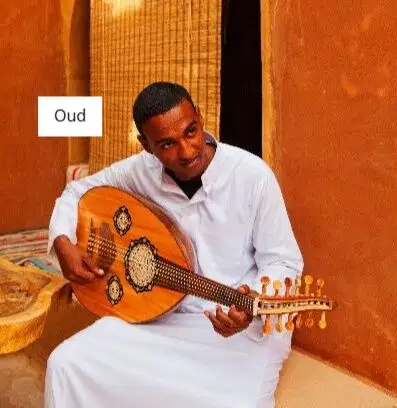
Which instrument family is this African instrument in?
Percussion
String
Wind
4
Multiple Choice
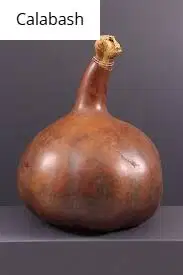
Which instrument family is this African instrument in?
Percussion
String
Wind
5
J.S. Bach
Baroque Period
Beethoven
Classical Period
Fugue
Gregorian Chant
Lute
Middle Ages
Vocabulary
Analyze listening examples from Europe
Compare the music of Europe from different time periods
Identify important composers from the Baroque, Classical, and Romantic periods
Learners can...
4.6 Music & Instruments of Europe
Monophonic
Mozart
Opera
Polyphonic
Recorder
Renaissance
Romantic Period
6
At a glance...
500-1400: Middle Ages (Medieval Times)
1400-1600: Renaissance
1600-1750: Baroque Period
1750-1825: Classical Period
1780-1920: Romantic Period
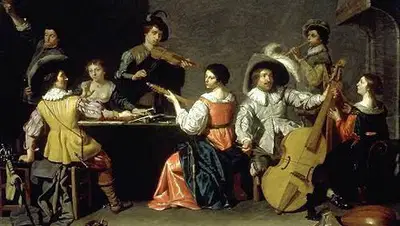
Music of the US, Canada, Europe are considered "Western" music. They developed from these European musical periods then expanded as European settlers traveled throughout the world.
7
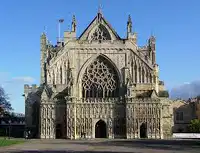
Music of the Middle Ages
Spanned years 500-1400
The church was the main governing power in Europe! Almost all aspects of life, including music, centered around the church
Singing was mainly for religious purpose
Instrumental music was mainly for entertainment
Typically only men could sing in church and write music
8
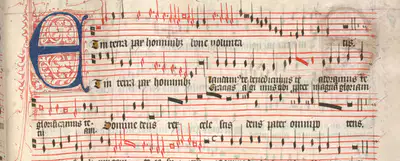
Gregorian Chant
Style of monophonic religious singing, typically in Latin, for Catholic Mass
Monophonic: one melody with nothing else!
No instruments, no harmony. Everyone sings one thing.
9
Life in the Renaissance
Spanned years 1400-1600
Renaissance means "rebirth"
Science and the arts became very important in society
Many new inventions like the printing press, eyeglasses, telescopes, flushable toilet, and the pencil!
Sacred (religious) music still very common, but more secular music (non-religious)
Secular was often about love, nature, work, daily life
10
Music of the Renaissance
Spanned years 1400-1600
Music became more complex by adding harmonies and instruments
Polyphonic: music with both a melody and harmonies
Musicians would travel from town to town to perform music on the streets for money
11
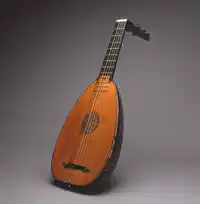
Pear-shaped string instrument (15 strings)
Often played to accompany singing or other instruments
Ancestor of the guitar!
Lute
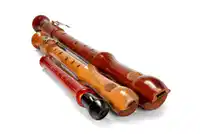
Small wooden wind instrument
Often played with other recorders or instruments
Recorder
Instruments of the Renaissance
12
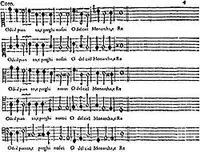
Opera
created in the late 16th century
dramatic work that includes singers and instruments
revive ancient Greek drama
reflect dramatic stories
First opera: Dafne (1597-1598)
About Greek god Apollo and nymph Dafne
13
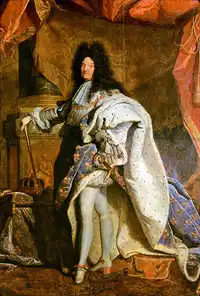
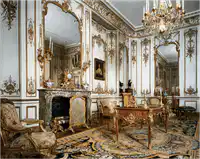
Music of the Baroque Period
Baroque refers to the style of art, music, architecture
Big! Bold! Extravagant! Wealthy! Ornate! Detailed!
Music became very complex to match the splendor of the times
Harpsichord, violin, and piano were popular during this time
Spanned from 1600-1750

14
Type of music which Bach was well-known for
A melody is played, then that melody is layered on itself many times
Very complex!
Fugue
Johann Sebastian Bach (1685-1750)
German, played harpsichord, organ, piano
Employed by churches and royal families
J.S. Bach
J.S. Bach & Fugues
15
16
Multiple Choice
Which time period is this music from?
Middle Ages (Medieval Period)
Renaissance
Baroque Period
17
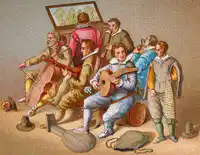
Music of the Classical Period
Concert halls were more common now so everyday people could have access to musical performances
Many learned to play music in their homes
Three basic musical principles
simplicity of melody
balance of the instruments
proportion of the form of the piece
Spanned from 1750-1825
18
Wolfgang Amadeus Mozart
Austrian classical composer (1756-1791)
Child prodigy, began writing music at 5 years old
Composed hundreds of musical pieces that are now defining pieces in the Classical Era
His music is even said to help with development of babies, improve scores on testing, and improve language
Wrote for symphonies, operas, solo instruments
19
Eine Kleine Nachtmusik
Mozart's Requiem: Lacrimosa
"Queen of the Night" aria from The Magic Flute
20
Music of the Romantic Period
Music moves from simple to being emotional and rich
NOT LOVE SONGS!!
Overlapped with the Classical Period which ended in 1825
Music often now told stories and was about specific events, places, people, or things
Spanned from 1780-1920
21
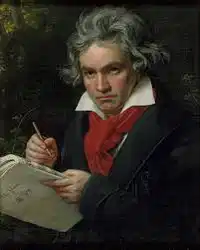
Ludwig van Beethoven
German composer (1770-1827)
"Bridged the gap" between the Classical and Romantic Era
Pianist who began playing and composing very young
Made a living on his own without regular employment from the church or royalty
At 30 he began losing his hearing and was completely deaf near the end of his life
22
Fur Elise
Symphony No. 9: Ode to Joy
Moonlight Sonata
Symphony No. 5, First Movement
23
Multiple Choice
Which era was centered around simplicity and balance?
Classical
Baroque
Romantic
24
Multiple Choice
Which era was centered around emotional richness?
Classical
Baroque
Romantic
25
Multiple Choice
Which era was centered around complexity, lavishness/wealth, detail?
Classical
Baroque
Romantic
Welcome to Discovering Music!
By Ellen Perkins
Join Wayground
Answer the image in the chat
What are your plans for break?
Show answer
Auto Play
Slide 1 / 25
SLIDE
Similar Resources on Wayground

19 questions
SAT math practice
Presentation
•
9th - 12th Grade
20 questions
Properties of Matter Notes
Presentation
•
9th - 12th Grade
20 questions
Volume of Prisms and Cylinders Review Lesson
Presentation
•
9th - 12th Grade
20 questions
Midpoint and distance
Presentation
•
9th - 12th Grade
20 questions
Adjetivos demostrativos
Presentation
•
9th - 12th Grade
20 questions
2.1 Computer Systems
Presentation
•
9th - 12th Grade
20 questions
Unidad 4B: Superlativo Absoluto & Vocab Los Espectáculos
Presentation
•
9th - 12th Grade
Popular Resources on Wayground
6 questions
Secondary Safety Quiz
Presentation
•
9th - 12th Grade
10 questions
Afterschool Activities & Sports

Quiz
•
6th - 8th Grade
19 questions
ROAR Week 2026
Quiz
•
9th - 12th Grade
20 questions
Lab Safety Quiz
Quiz
•
6th Grade
15 questions
Cool Tool:Chromebook
Quiz
•
6th - 8th Grade
22 questions
would you rather
Quiz
•
3rd - 11th Grade
21 questions
Continents and Oceans
Quiz
•
6th Grade
20 questions
Parts of Speech
Quiz
•
5th Grade
Discover more resources for Performing Arts
6 questions
Secondary Safety Quiz
Presentation
•
9th - 12th Grade
19 questions
ROAR Week 2026
Quiz
•
9th - 12th Grade
22 questions
would you rather
Quiz
•
3rd - 11th Grade
55 questions
CHS Student Handbook 26-27
Quiz
•
9th Grade
21 questions
Lab Safety
Quiz
•
10th Grade
10 questions
Fact Check Ice Breaker: Two truths and a lie
Quiz
•
5th - 12th Grade
12 questions
Lab Safety Quizizz
Quiz
•
9th Grade
20 questions
1.1 (a) Classifying Polynomials
Quiz
•
9th Grade