Experimental and Theoretical Probability Notes
Presentation
•
Mathematics
•
7th Grade
•
Practice Problem
•
Medium
Standards-aligned
Abigail Wangler
Used 29+ times
FREE Resource
11 Slides • 11 Questions
1
Experimental and Theoretical Probability
2
3
4
Multiple Choice
Which of the following best describes experimental probability?
It is based on what is expected to happen mathematically.
It is based on the results of actual experiments.
It is always equal to theoretical probability.
It does not require any experiments.
5
6
Multiple Select
Which of the following outcomes are considered 'odd numbers' when rolling a number cube?
1
2
3
5
7
Open Ended
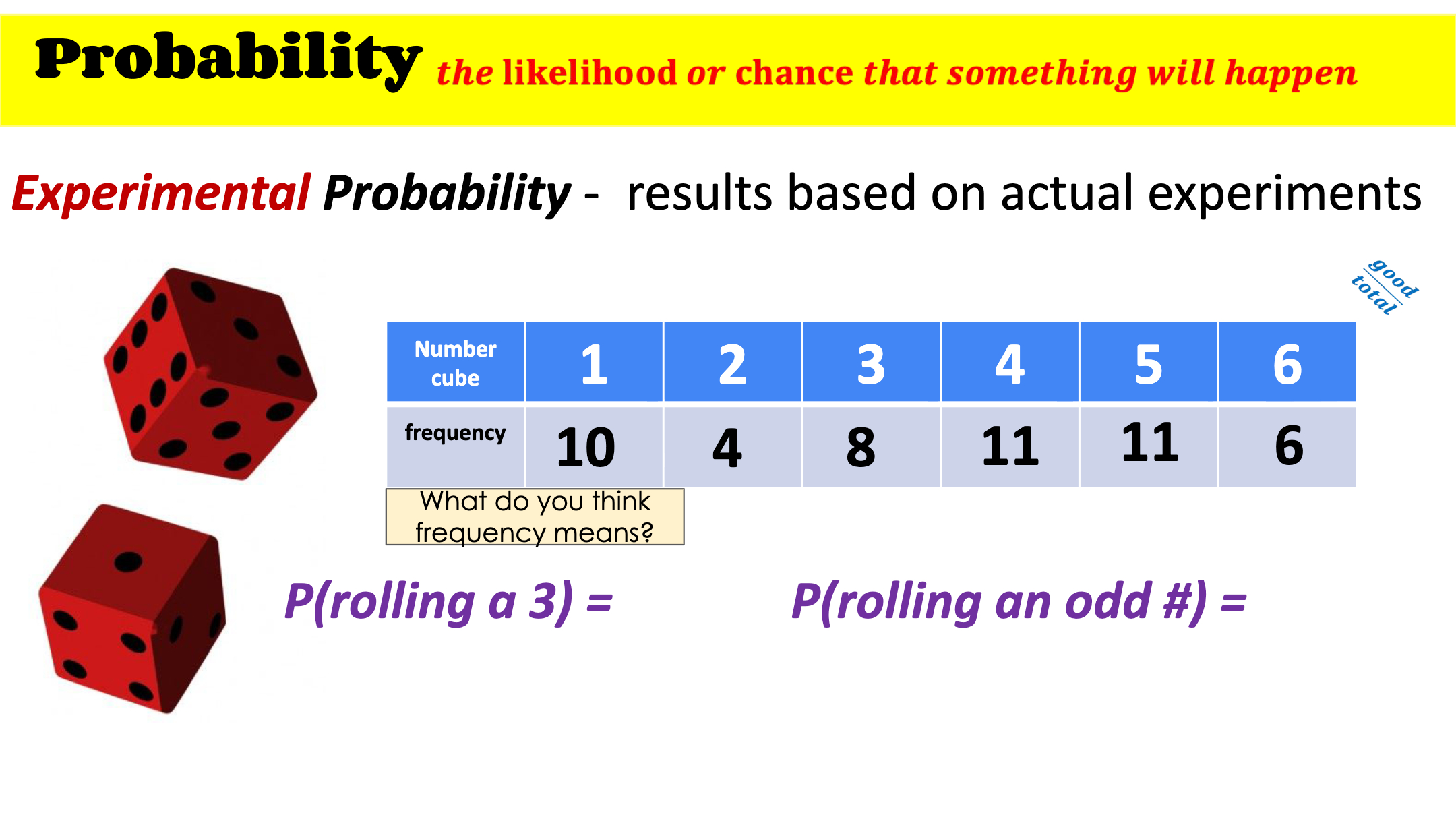
What do you think frequency means in the context of probability experiments?
8
Multiple Choice
What is the experimental probability of rolling a 3 based on the frequency table shown?
8/50
4/50
10/50
11/50
9
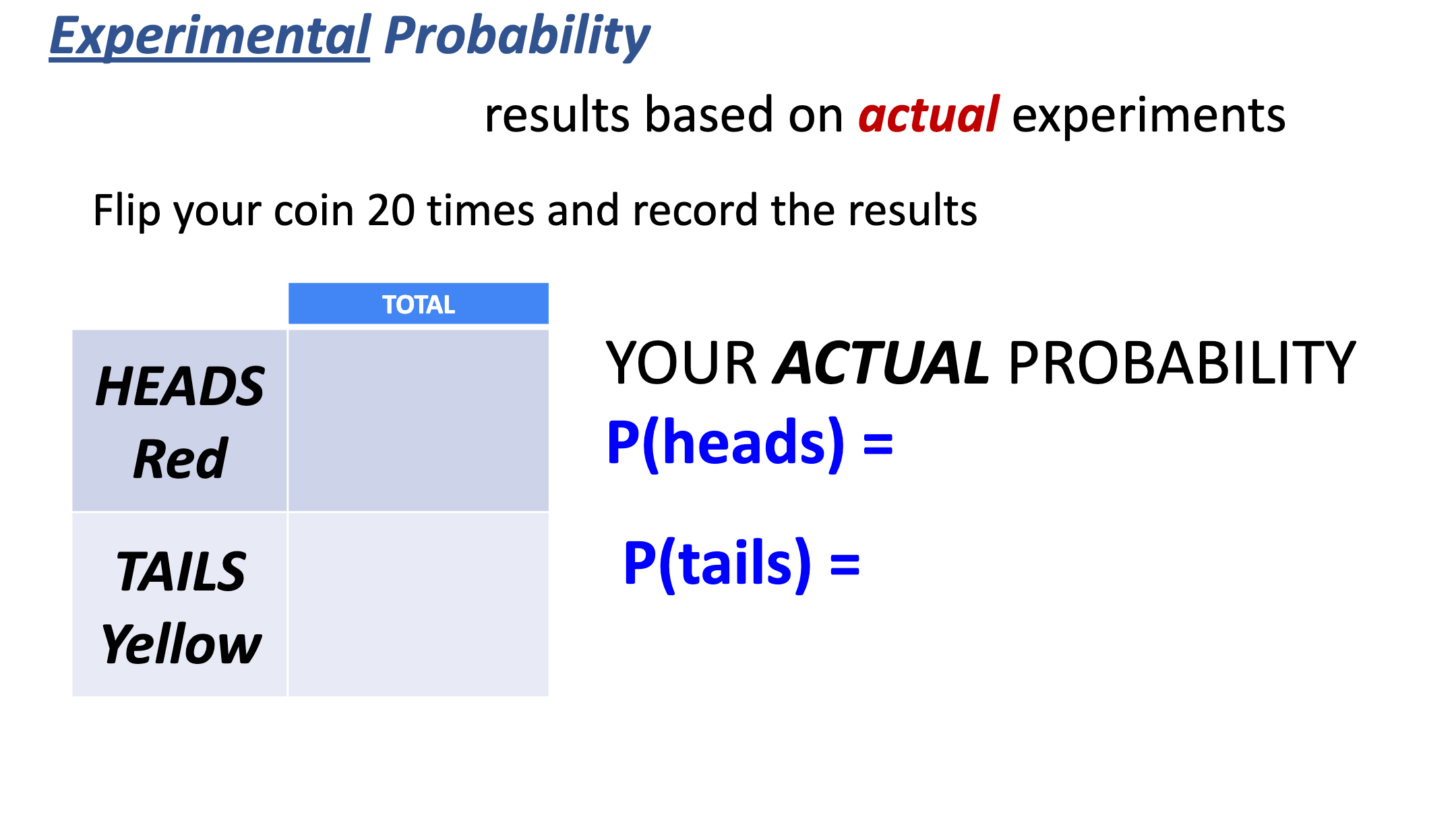
Go to PolyPad to use a digital coin
(Make sure to hit the tabulate button for it track your data)
10
11
12
Fill in the Blanks
13
14
Fill in the Blanks
15
Multiple Select
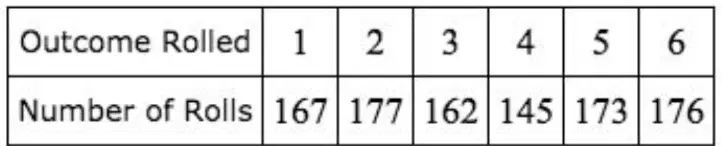
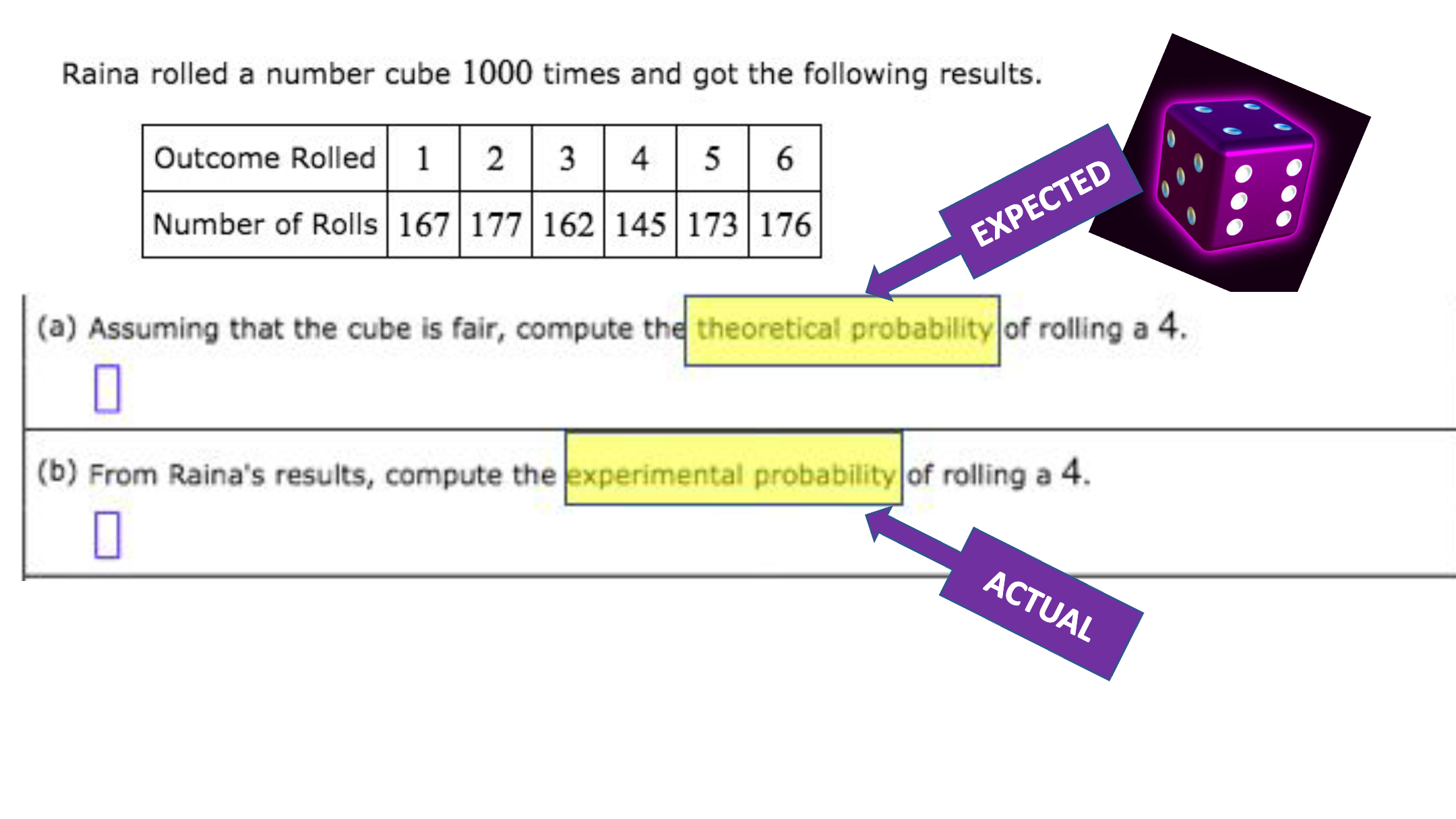
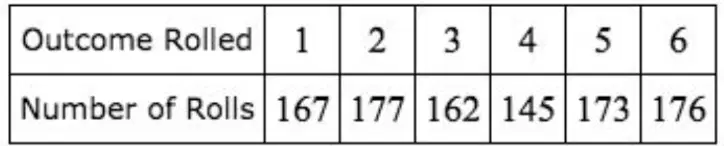
From Raina's results, compute the experimental probability of rolling a 4.
1/6
145/1000
29/200
4/6
16
17
Fill in the Blanks
18
19
Multiple Choice
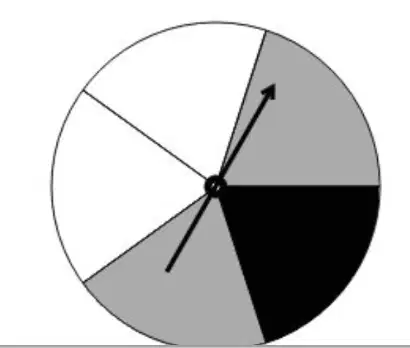
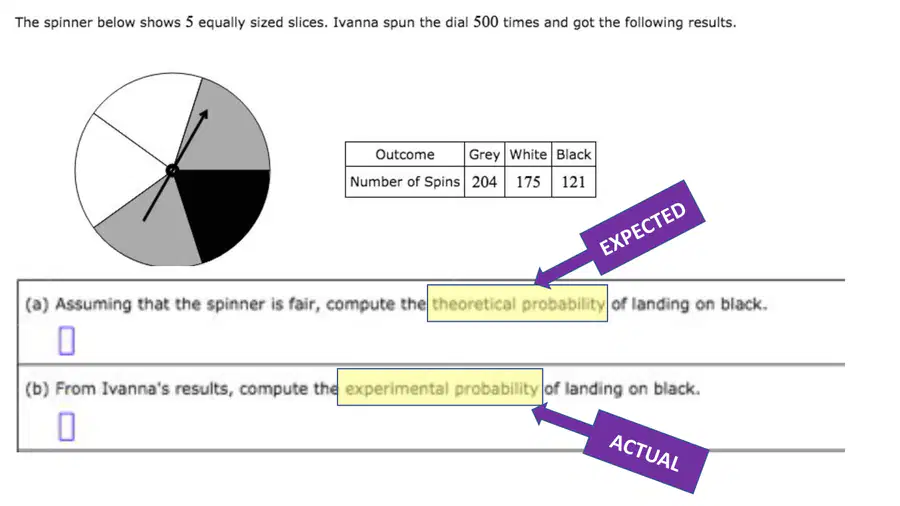
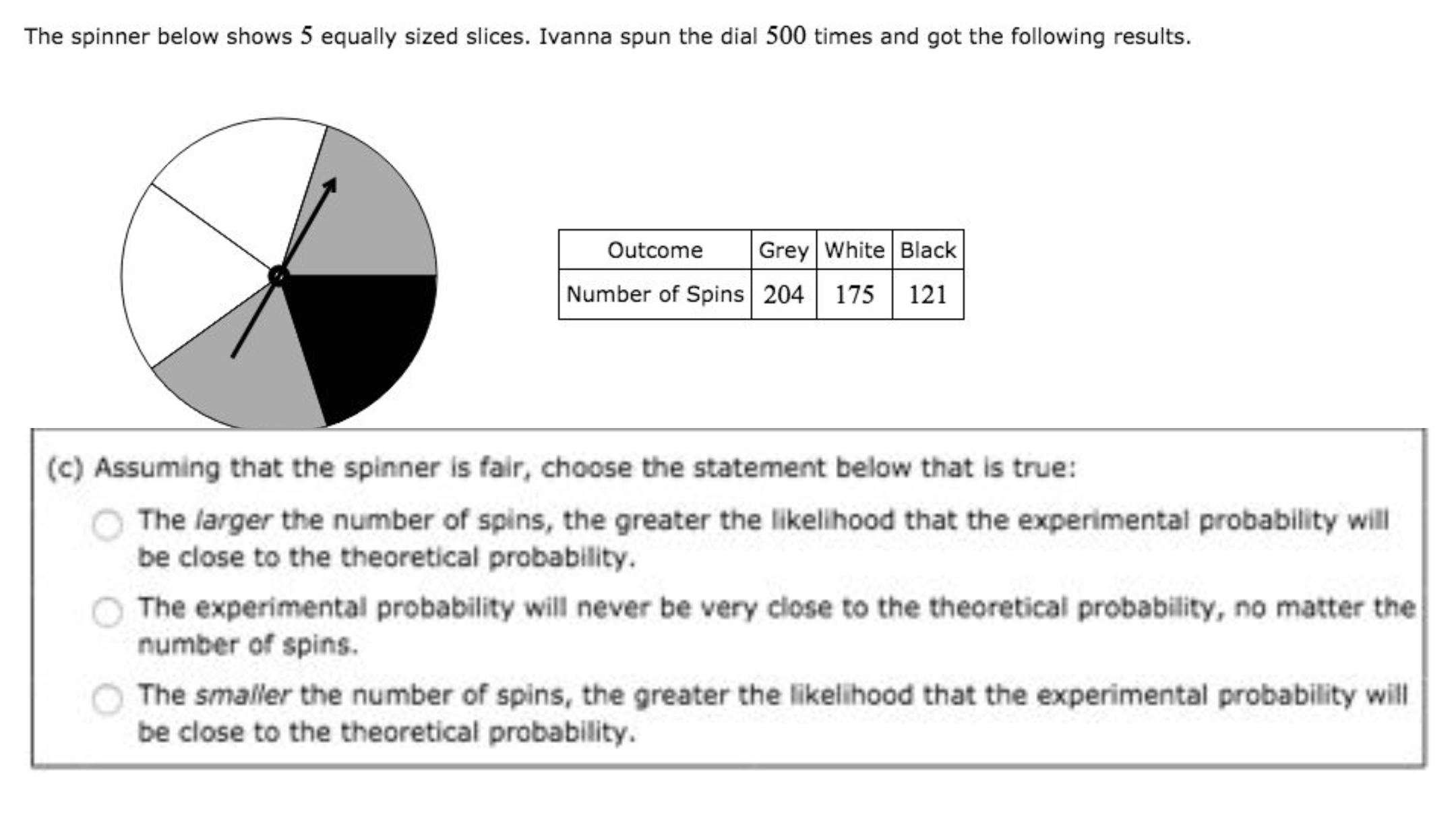
Assuming that the spinner is fair, choose the statement below that is true:
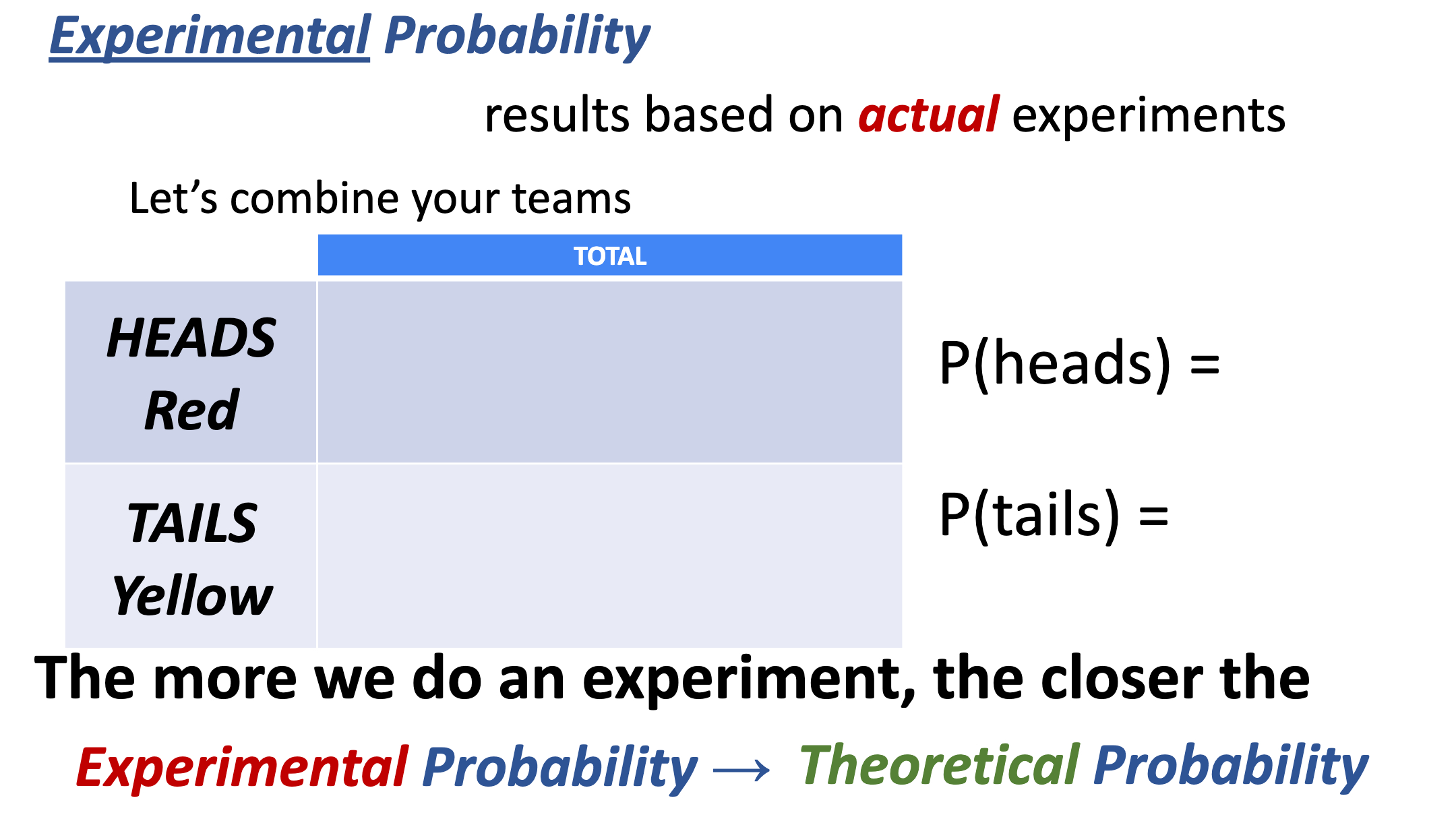
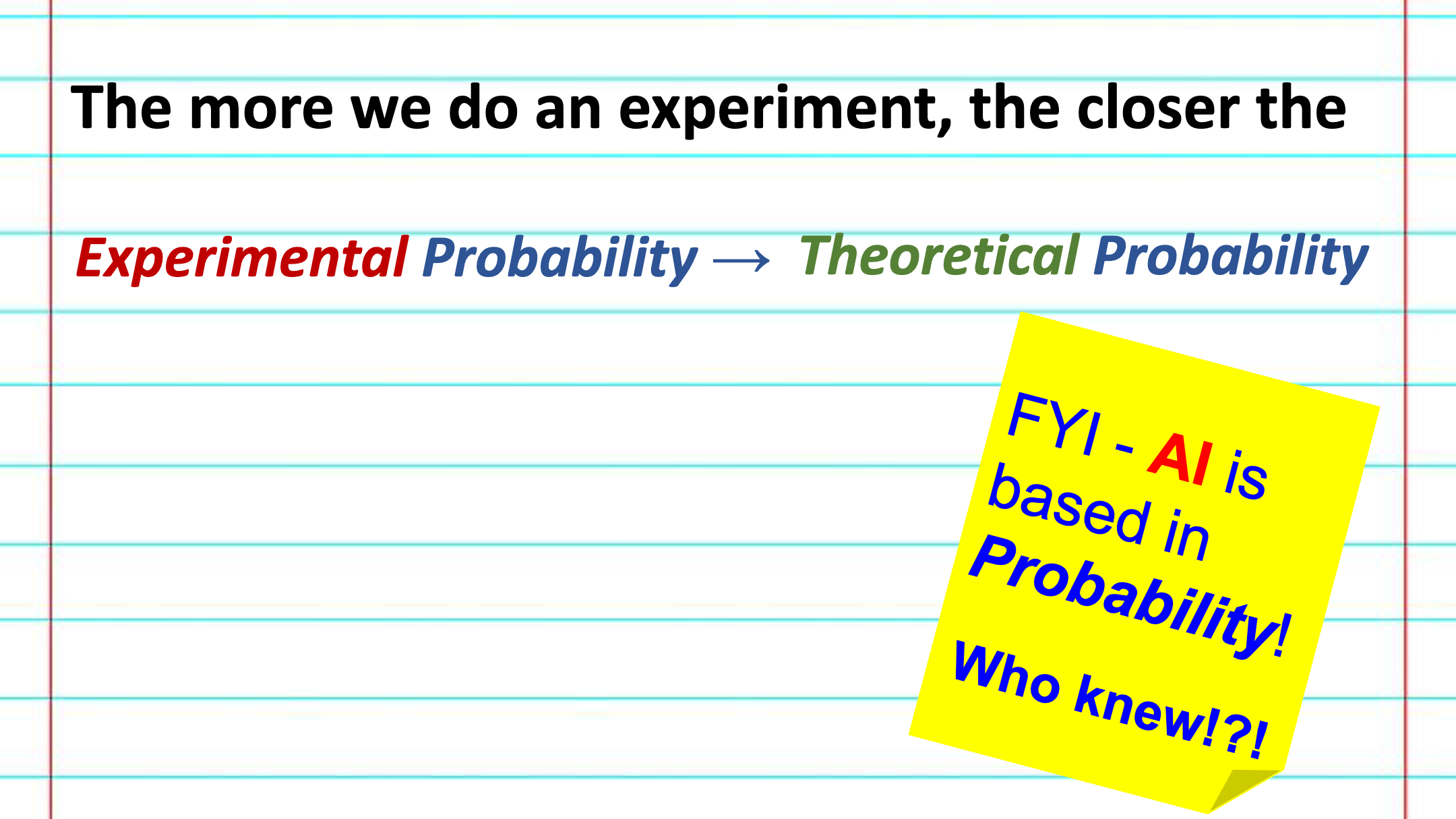
The larger the number of spins, the greater the likelihood that the experimental probability will be close to the theoretical probability.
The experimental probability will never be very close to the theoretical probability, no matter the number of spins.
The smaller the number of spins, the greater the likelihood that the experimental probability will be close to the theoretical probability.
20
21
Multiple Choice
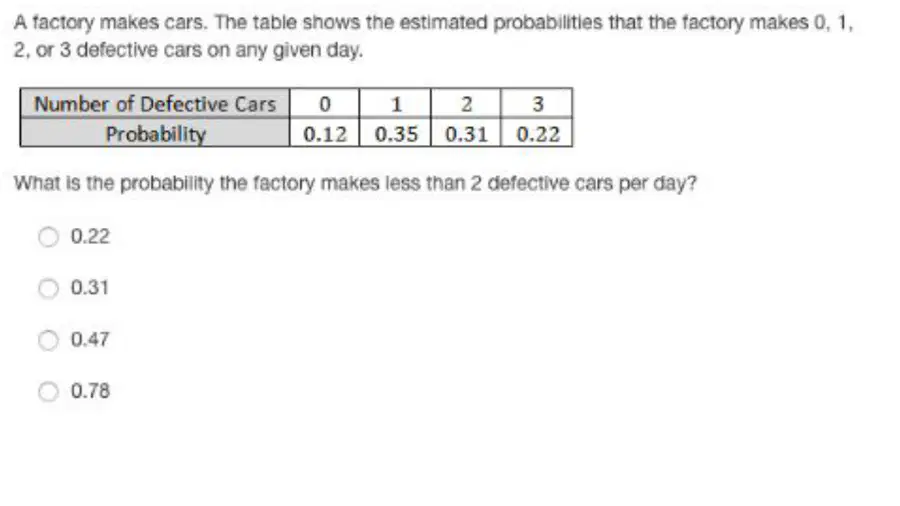
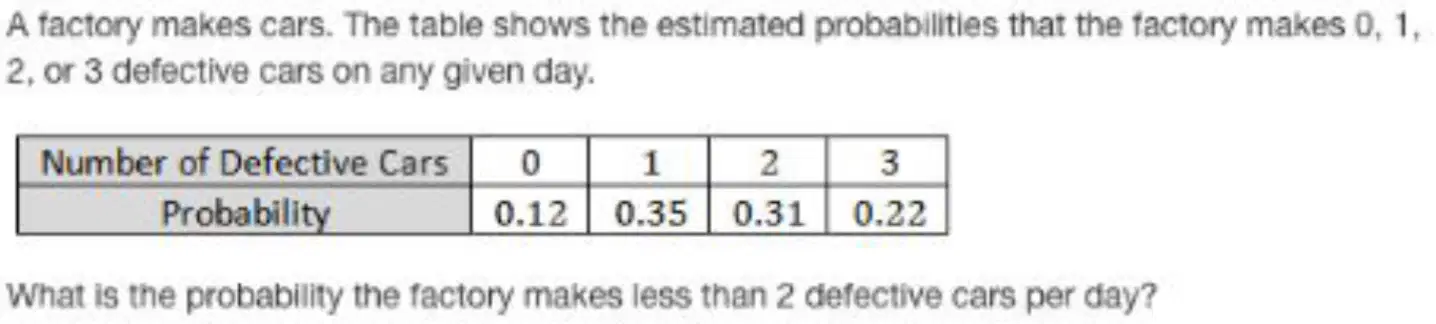
0.22
0.31
0.47
0.78
22
Multiple Choice
What is the main difference between theoretical probability and experimental probability?
Theoretical probability is based on expected outcomes using math, while experimental probability is based on actual results from experiments.
Theoretical probability is always more accurate than experimental probability.
Experimental probability is used only for coin flips.
Theoretical probability does not require any calculations.
Experimental and Theoretical Probability
Show answer
Auto Play
Slide 1 / 22
SLIDE

Similar Resources on Wayground
17 questions
Volume
Presentation
•
7th Grade
17 questions
7th Finance
Presentation
•
7th Grade
16 questions
Inequalities
Presentation
•
7th Grade
18 questions
Solving One Step Equations with Integers
Presentation
•
7th Grade
19 questions
Classifying Quadrilaterals
Presentation
•
7th Grade
15 questions
Dividing Fractions
Presentation
•
7th Grade
15 questions
Mean, Median, Mode, and Range
Presentation
•
7th Grade
19 questions
Place value of decimals
Presentation
•
7th Grade
Popular Resources on Wayground
16 questions
Grade 3 Simulation Assessment 2
Quiz
•
3rd Grade
19 questions
HCS Grade 5 Simulation Assessment_1 2526sy
Quiz
•
5th Grade
10 questions
Cinco de Mayo Trivia Questions
Interactive video
•
3rd - 5th Grade
17 questions
HCS Grade 4 Simulation Assessment_2 2526sy
Quiz
•
4th Grade
24 questions
HCS Grade 5 Simulation Assessment_2 2526sy
Quiz
•
5th Grade
13 questions
Cinco de mayo
Interactive video
•
6th - 8th Grade
20 questions
Math Review
Quiz
•
3rd Grade
30 questions
GVMS House Trivia 2026
Quiz
•
6th - 8th Grade
Discover more resources for Mathematics
14 questions
Volume of rectangular prisms
Quiz
•
7th Grade
17 questions
Georgia Milestones 7th Grade Math Review- Units 1 and 2: Integers, Rational Numbers, Expressions, Equations, Inequalities
Quiz
•
7th Grade
22 questions
Simple Probability
Quiz
•
7th Grade
20 questions
Graphing Inequalities on a Number Line
Quiz
•
6th - 9th Grade
21 questions
Math Review
Quiz
•
7th Grade
5 questions
8.PS/PFA Quizizz Day 4
Quiz
•
6th - 8th Grade
5 questions
8.MG.1-5 Quizizz Day 2
Quiz
•
6th - 8th Grade
5 questions
8.MG.1-5 Quizizz Day 1
Quiz
•
6th - 8th Grade