

Intro to DNA

Presentation
•
Biology
•
9th Grade
•
Practice Problem
•
Medium
Standards-aligned

Gemma Colunga
Used 1+ times
FREE Resource
17 Slides • 16 Questions
1
2
3
Open Ended
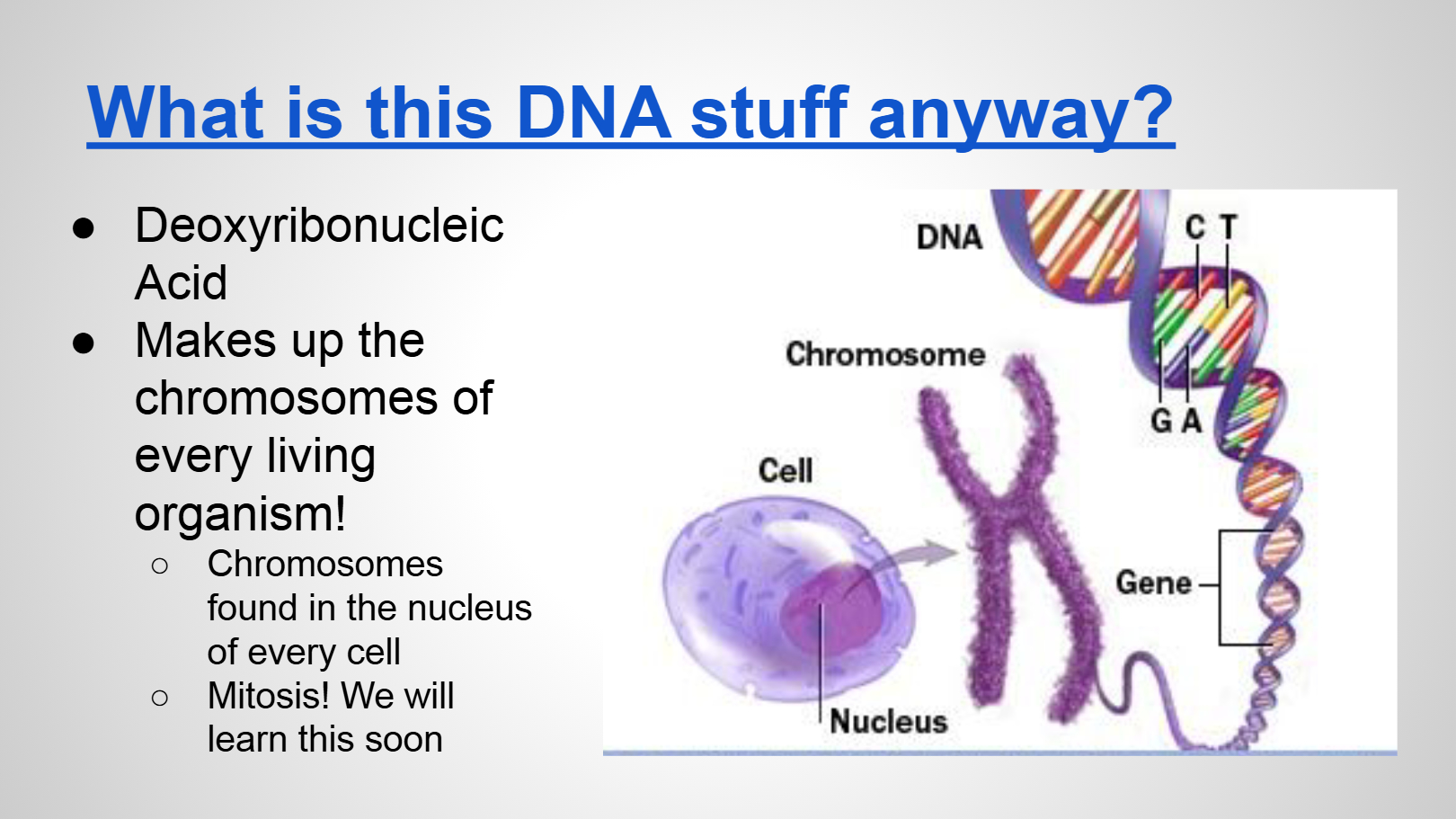
In your own words, explain the significance of chromosomes being found in the nucleus of every cell.
4
Multiple Choice
Why is DNA considered essential for all living organisms?
Because it provides energy for cells
Because it makes up the chromosomes that carry genetic information
Because it helps organisms breathe
Because it is found only in plants
5
6
Multiple Choice
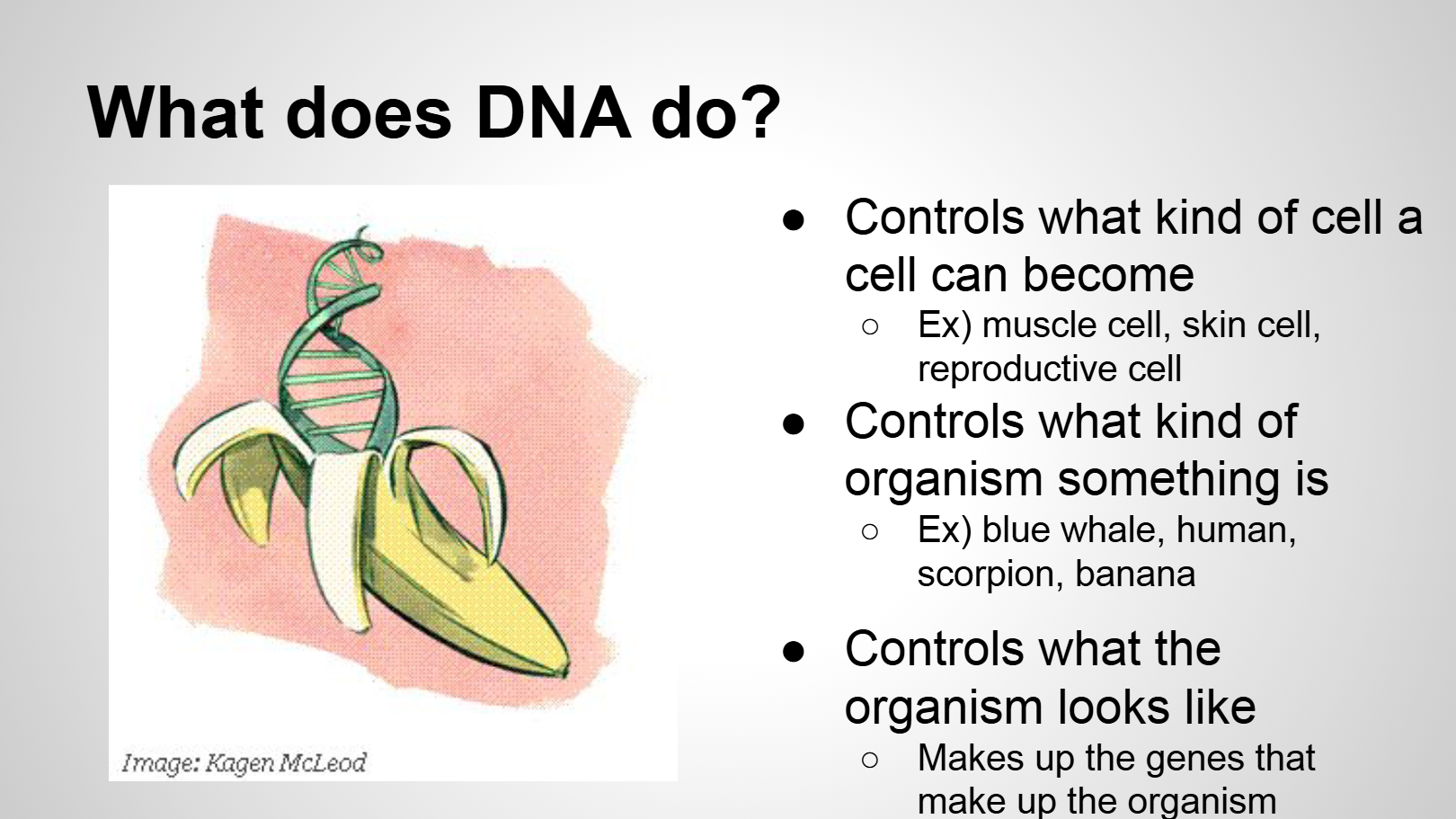
What are the three main functions of DNA as described in the first image?
Controls what kind of cell a cell can become, controls what kind of organism something is, controls what the organism looks like
Controls cell division, controls metabolism, controls immune response
Controls protein synthesis, controls cell movement, controls cell death
Controls energy production, controls cell repair, controls cell communication
7
8
9
10
Fill in the Blanks
Type answer...
11
Multiple Select
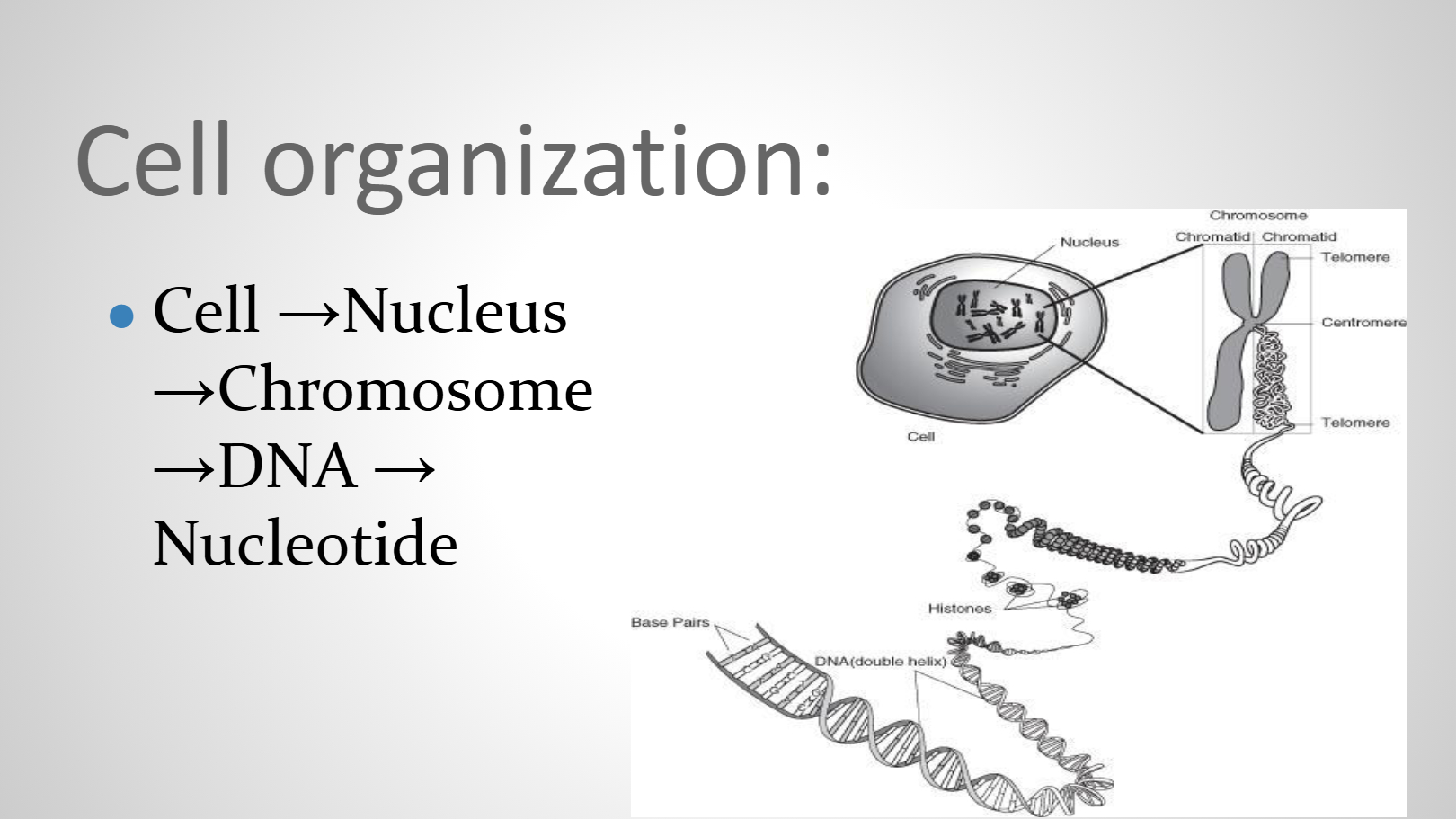
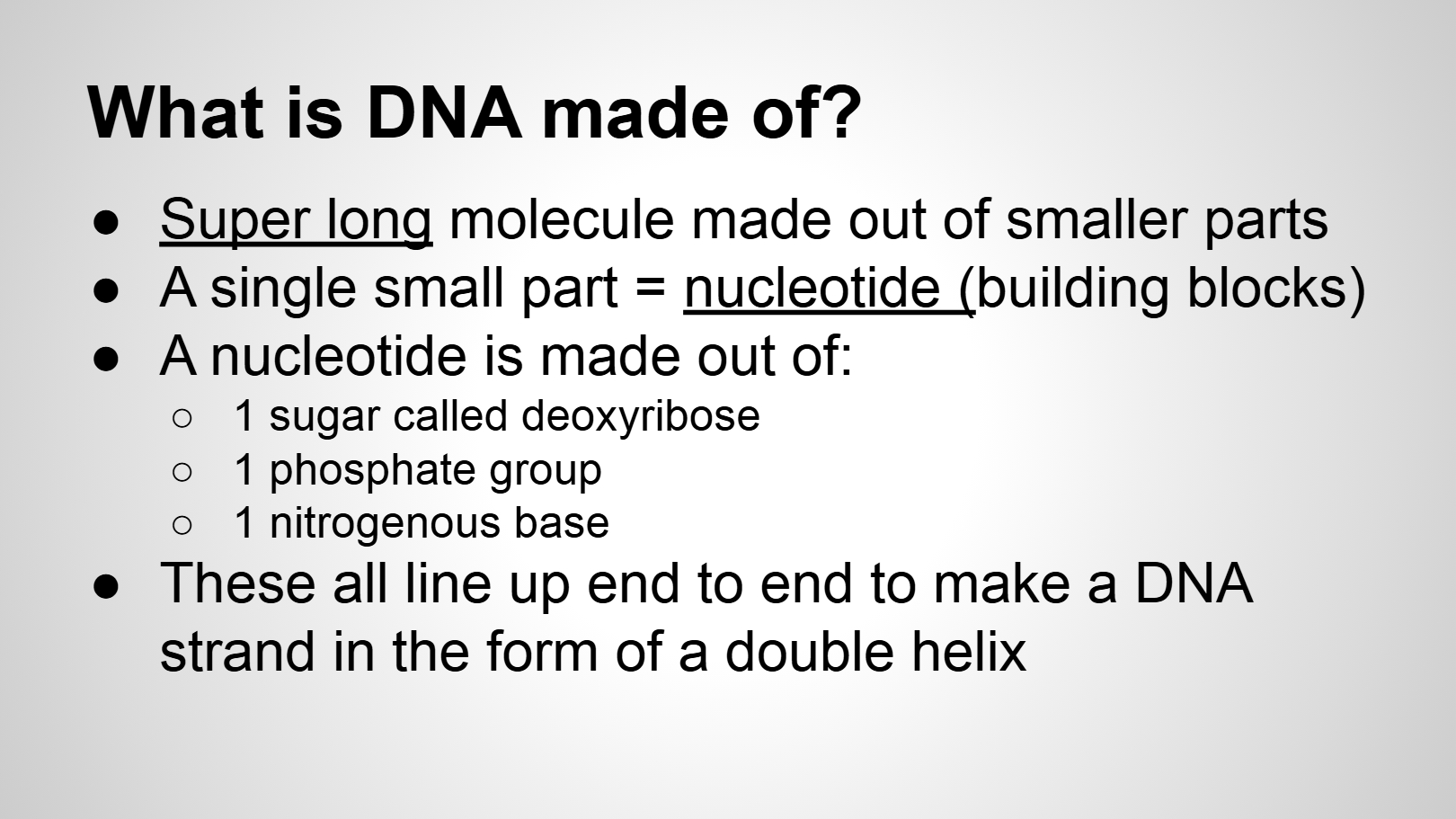
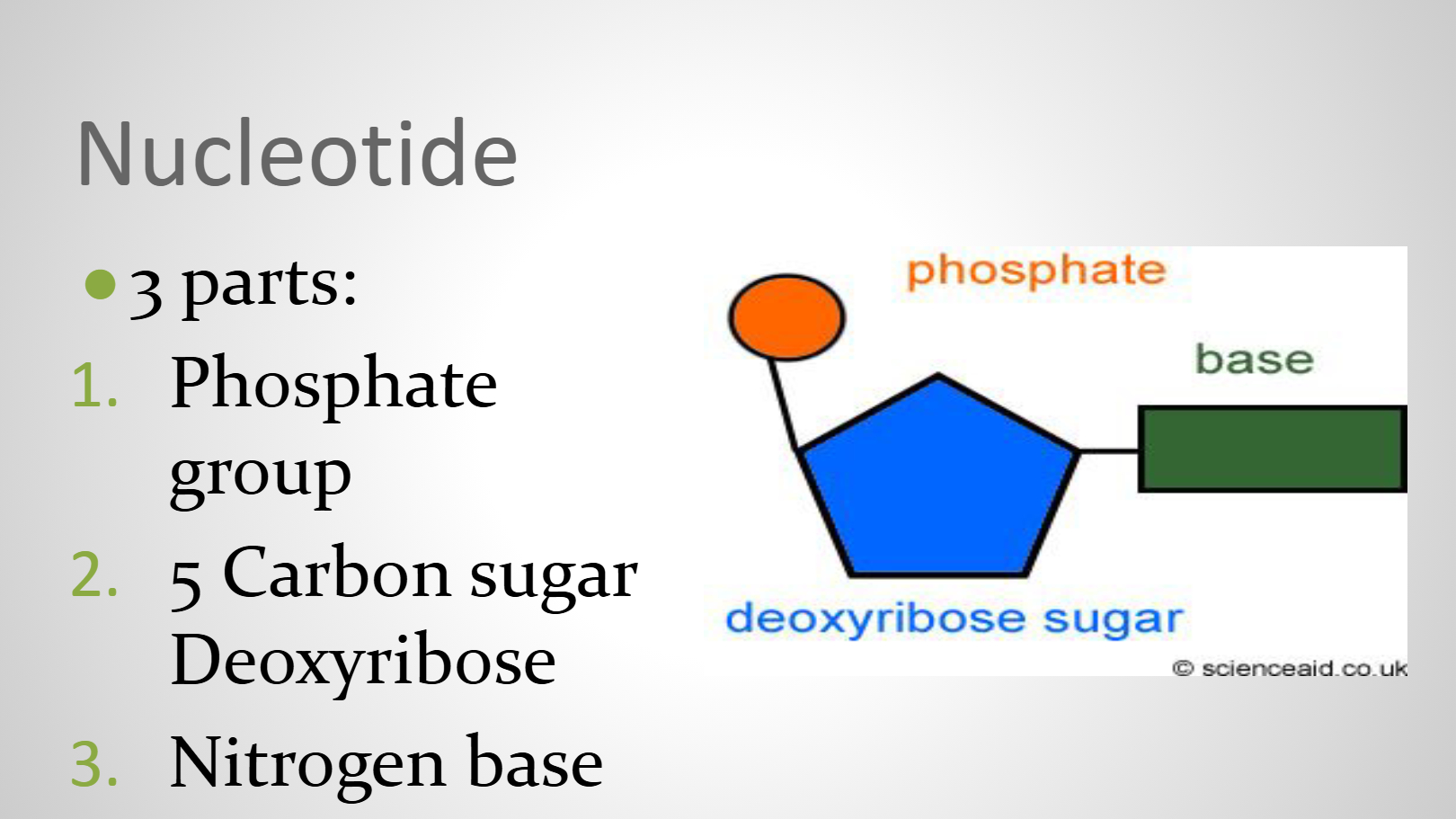
Which of the following are components of a nucleotide?
Phosphate group
Deoxyribose sugar
Nitrogen base
Amino acid
12
13
Multiple Choice
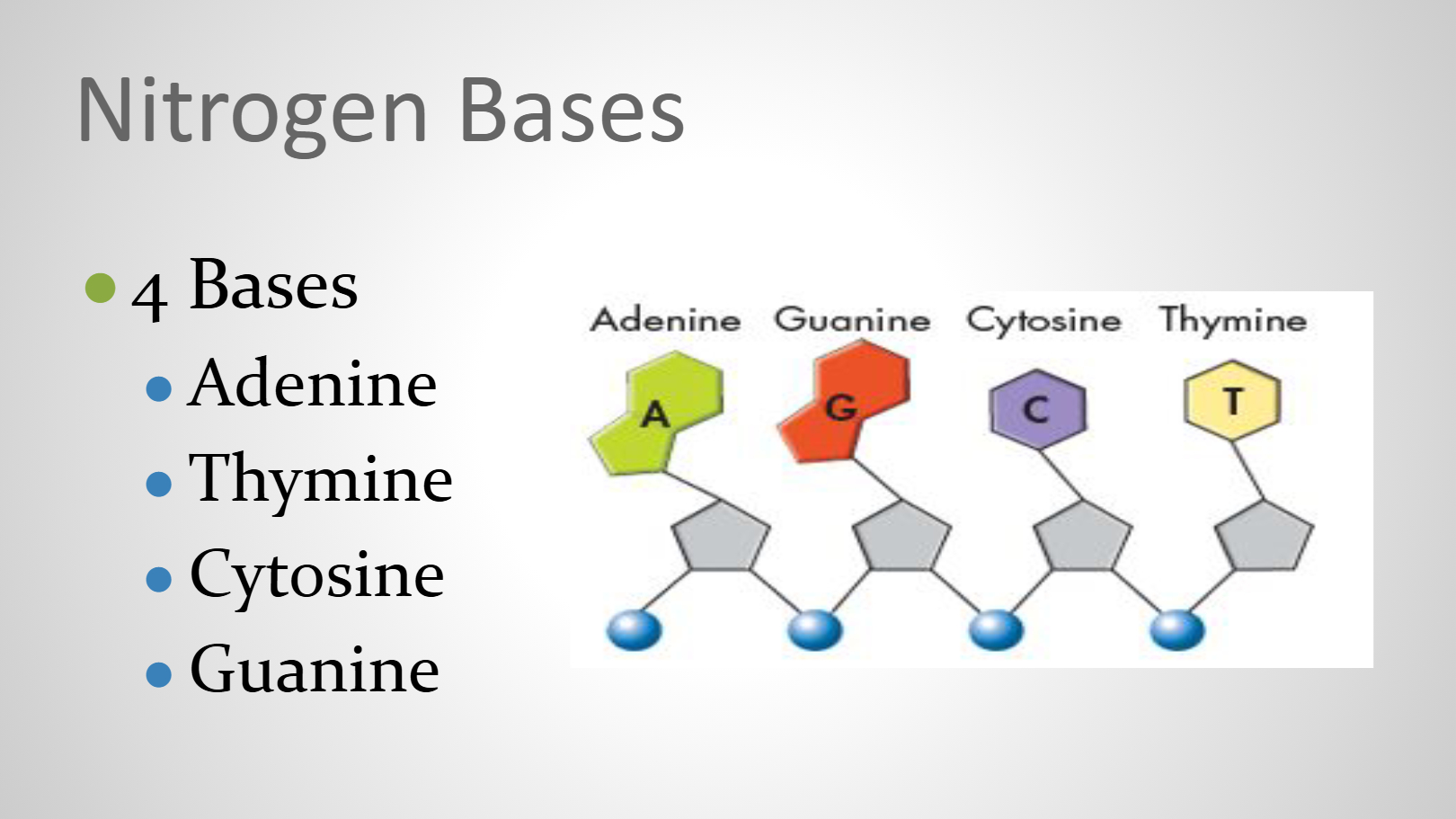
Which nitrogen bases are present in DNA?
Adenine, Thymine, Cytosine, Guanine
Adenine, Uracil, Cytosine, Guanine
Adenine, Thymine, Cytosine, Uracil
Adenine, Guanine, Cytosine, Thymine, Uracil
14
15
Open Ended
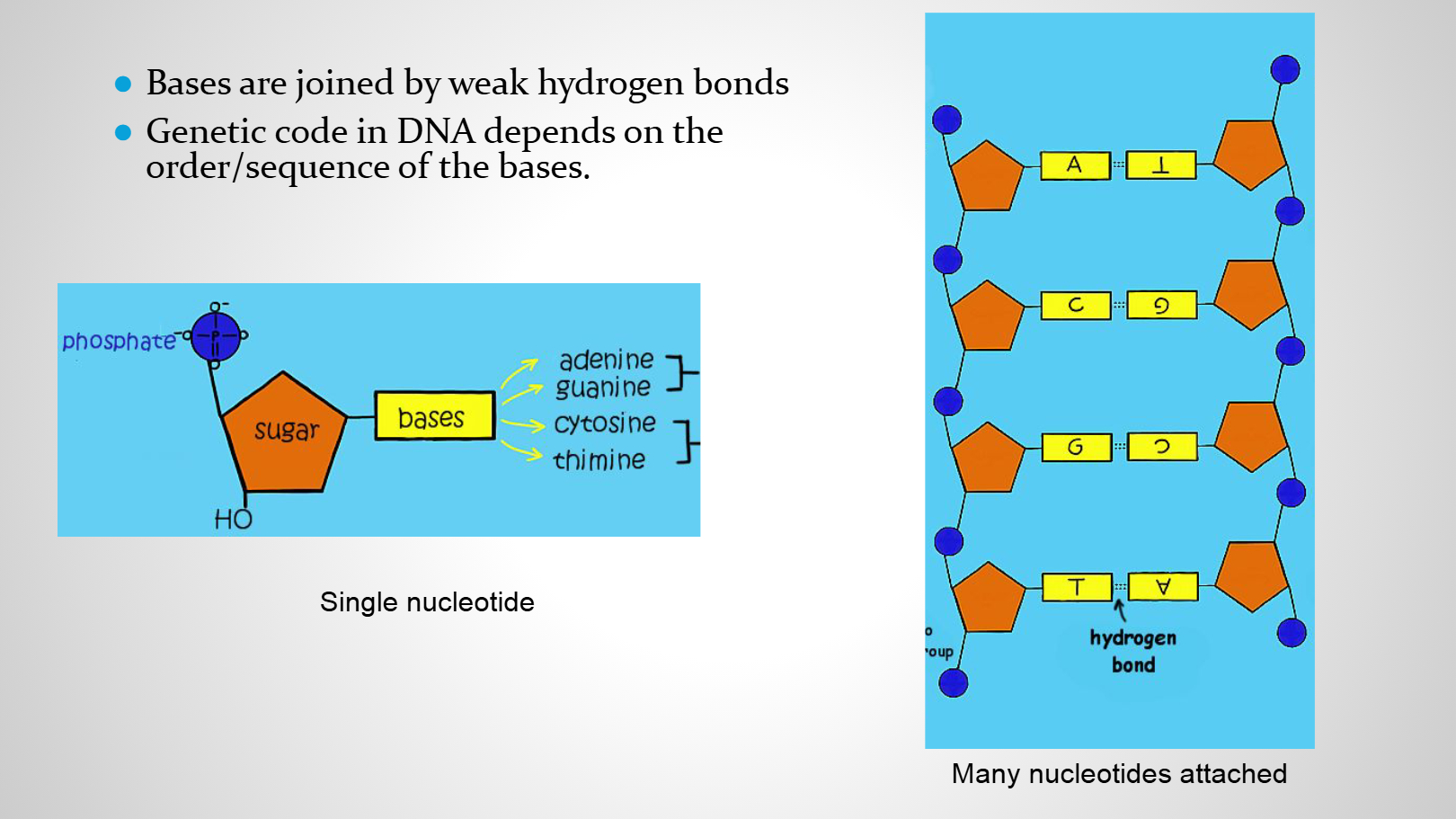
How does the sequence of nitrogen bases in DNA affect genetic information?
16
17
Multiple Choice
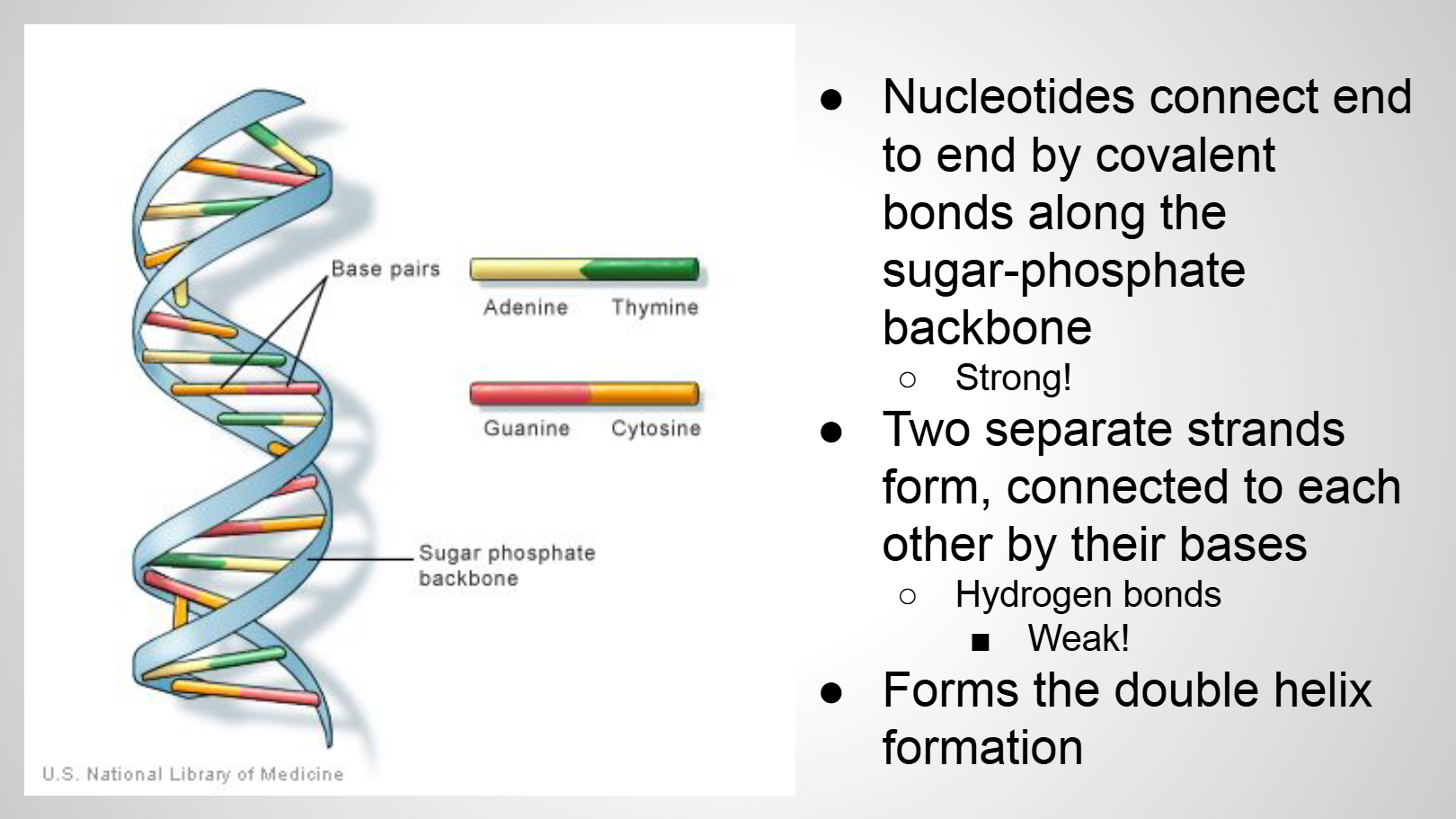
Which type of bond connects the nucleotides along the sugar-phosphate backbone in DNA?
Hydrogen bond
Ionic bond
Covalent bond
Peptide bond
18
19
20
Open Ended
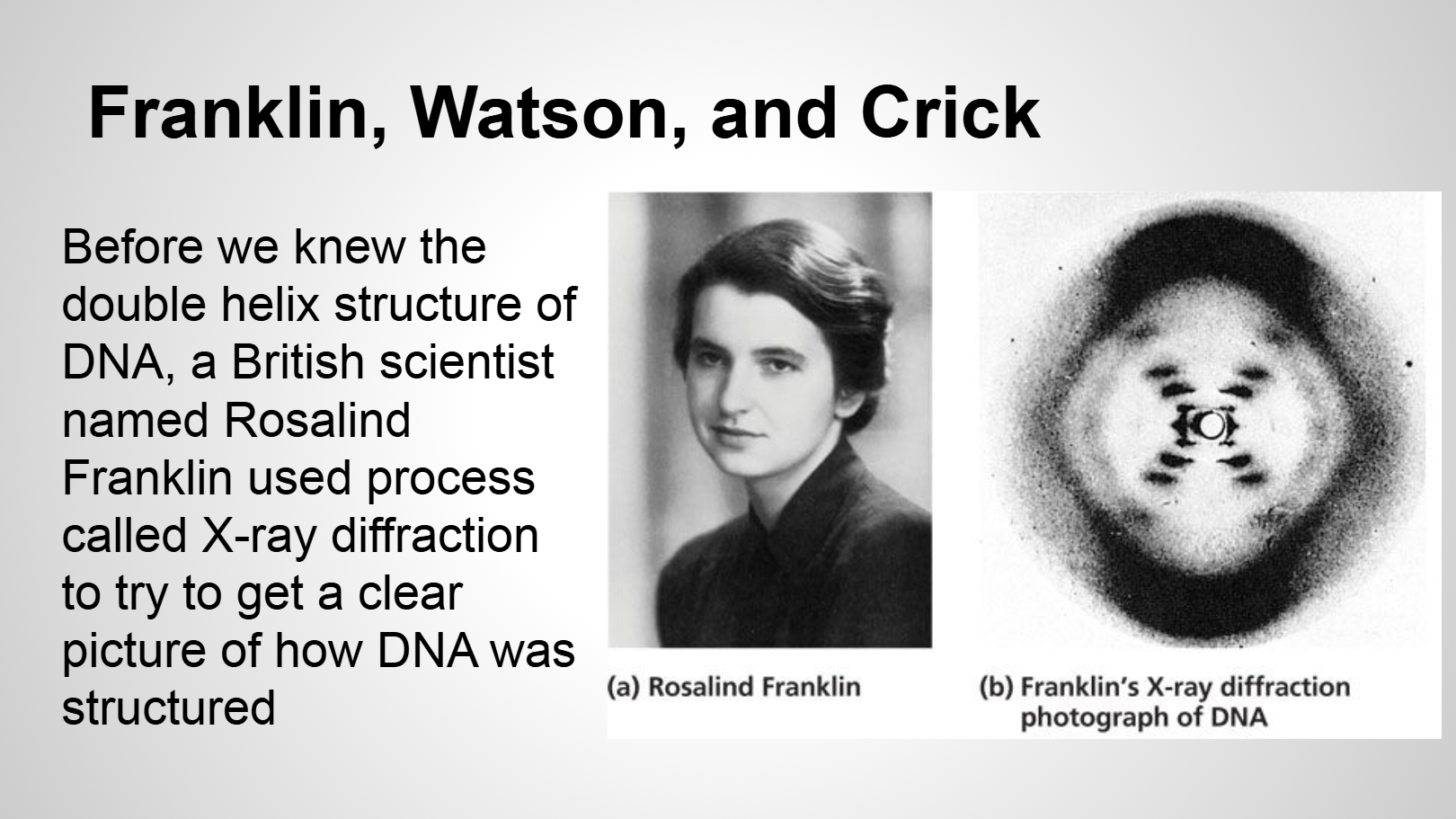
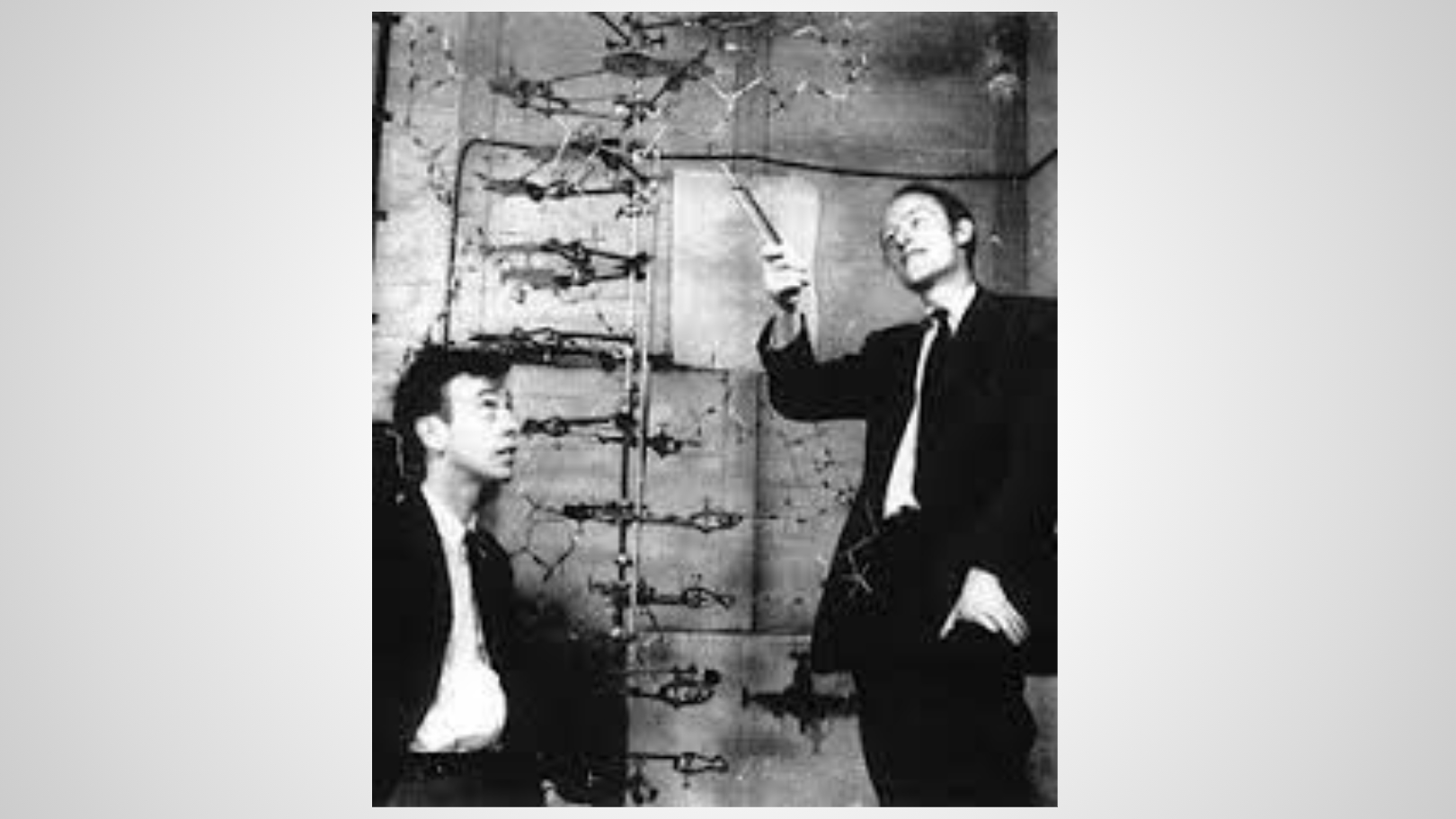
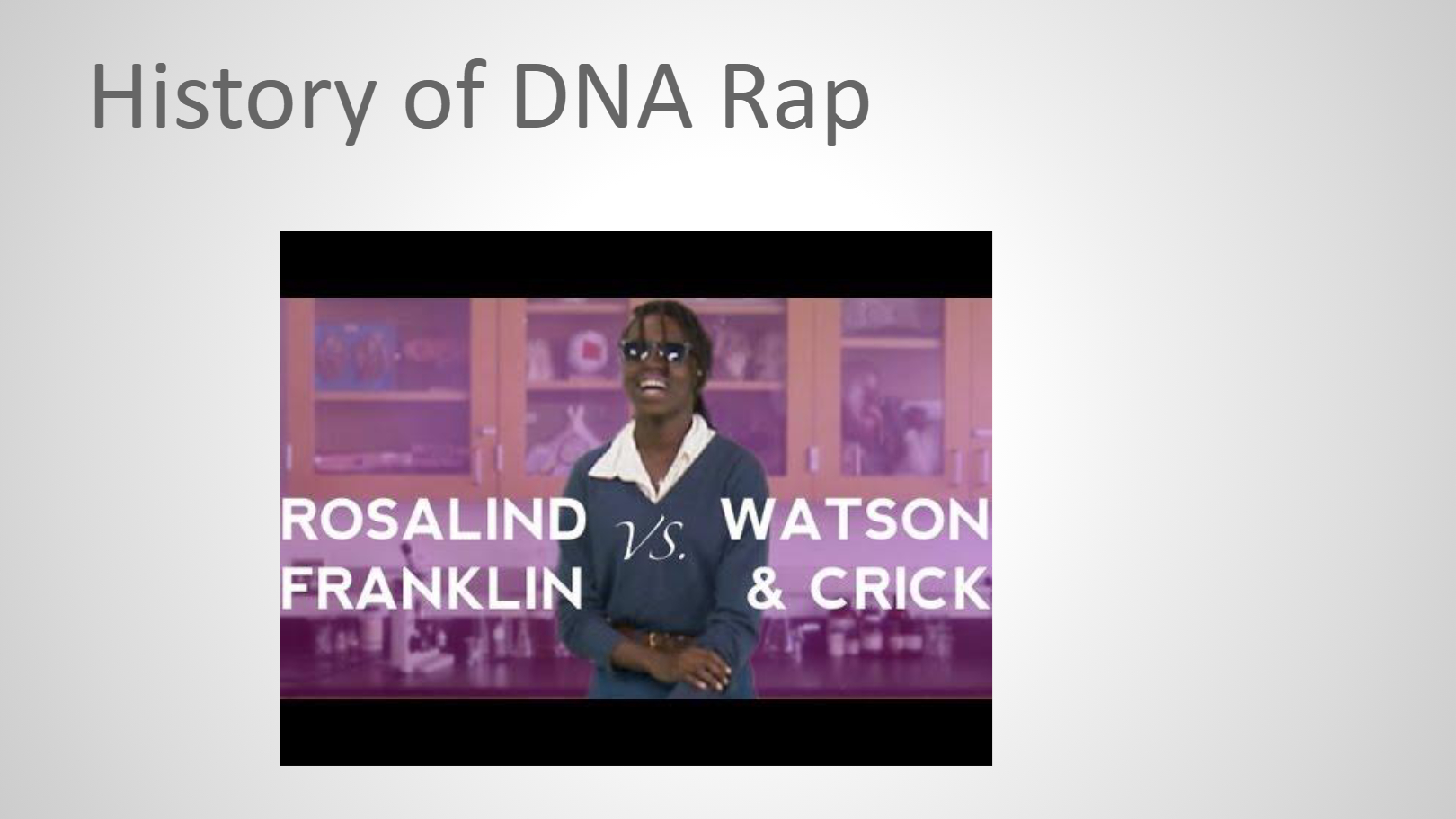
Explain the contribution of Rosalind Franklin to the discovery of DNA structure.
21
22
Multiple Choice
Which scientists realized that the twisting double helix structure was the missing piece in understanding DNA?
Rosalind Franklin and Maurice Wilkins
James Watson and Francis Crick
Linus Pauling and Erwin Chargaff
Gregor Mendel and Thomas Morgan
23
24
25
Multiple Select
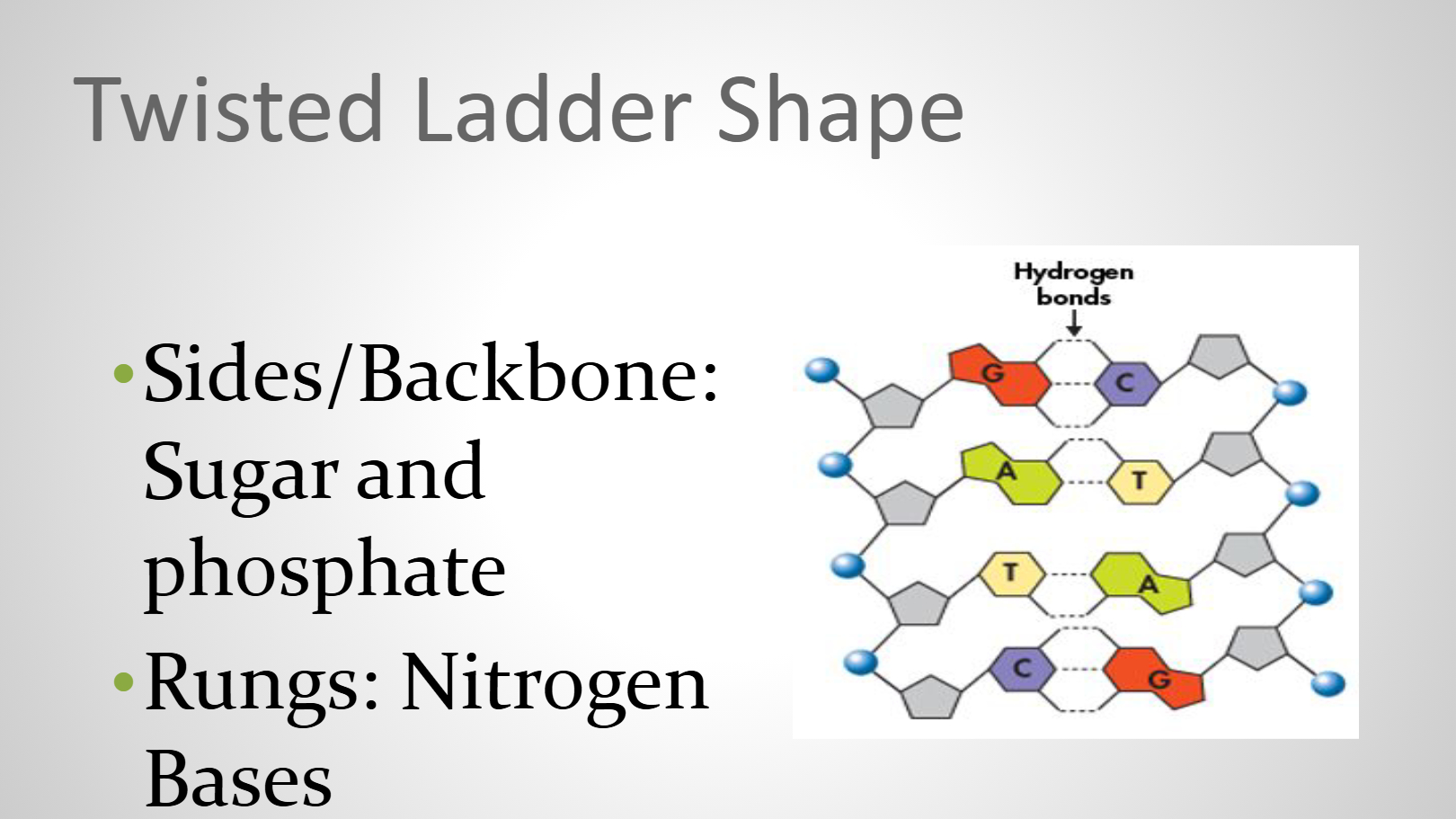
Select all the correct statements about the structure of DNA:
The backbone of DNA is made of sugar and phosphate.
The rungs of the DNA ladder are made of nitrogen bases.
Hydrogen bonds connect the sugar-phosphate backbone.
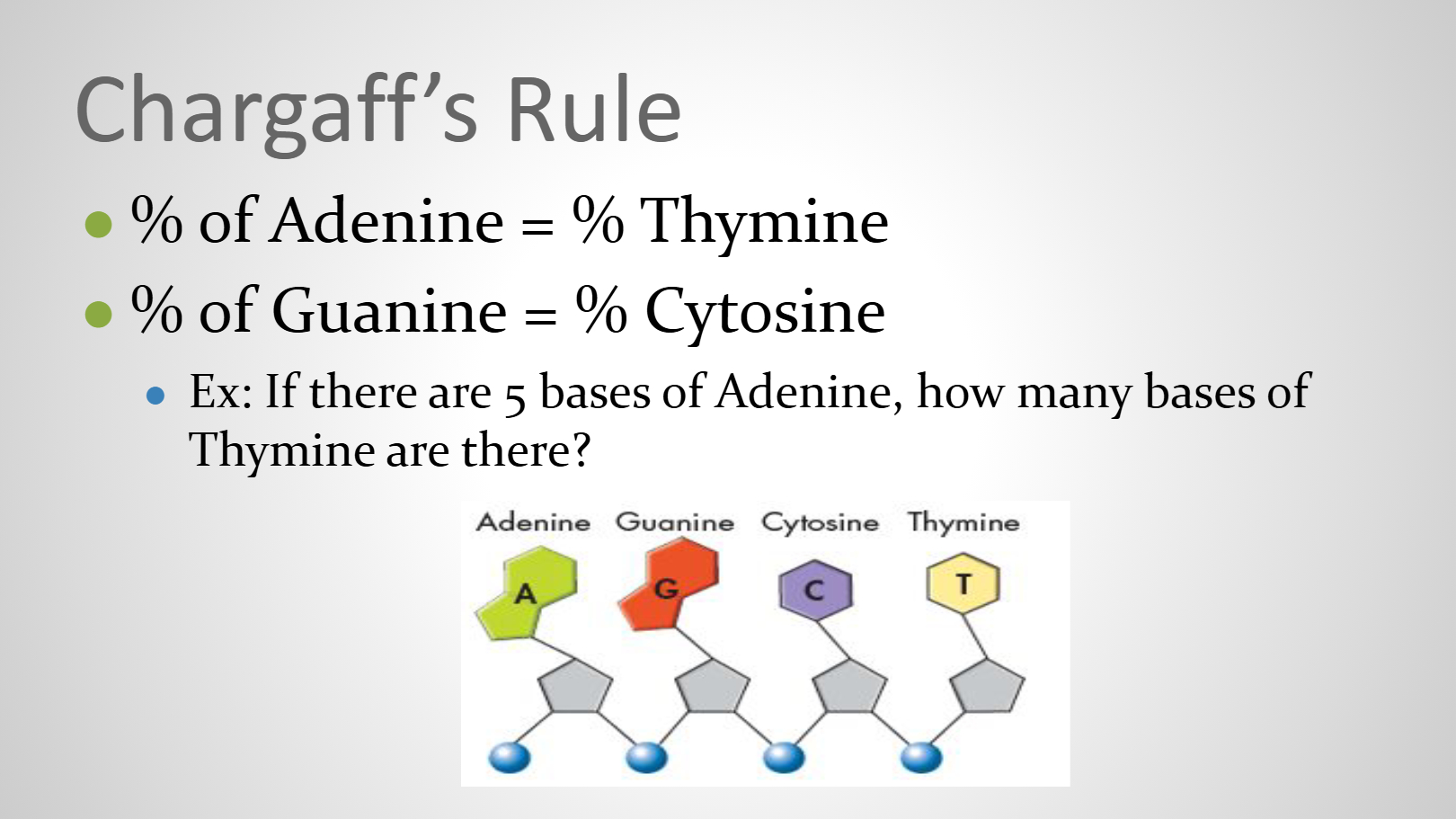
Adenine pairs with Thymine.
26
27

28
Multiple Choice
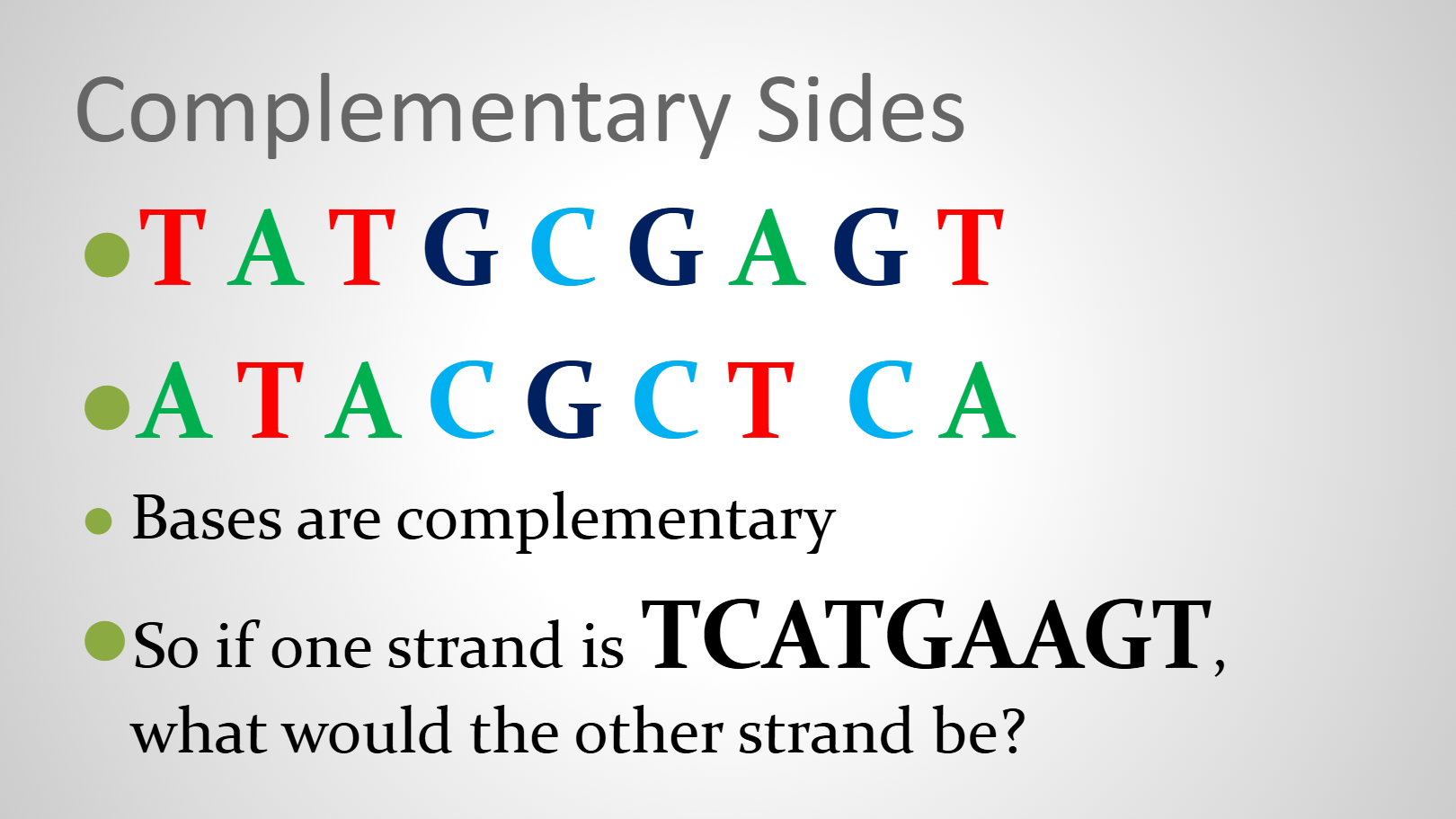
Which of the following is the correct complementary strand for the DNA sequence TCATGAAGT?
AGTACTTCA
TCATGAAGT
TTACTGCAA
AGTACCTGA
29
Open Ended
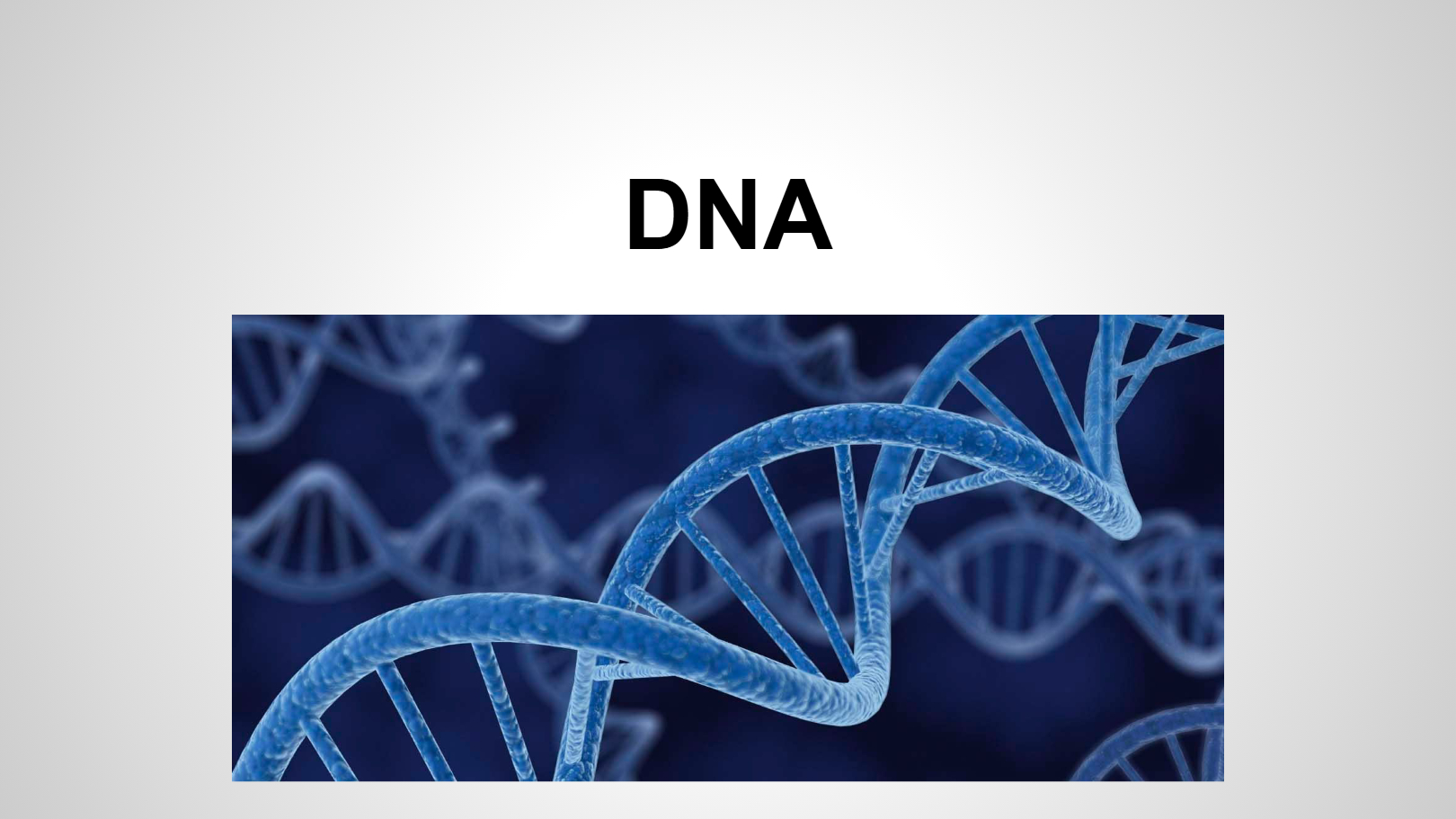
Explain how the concept of complementary base pairing is demonstrated in the DNA strands shown in the first two images.
30
31
Fill in the Blanks
Type answer...
32
Open Ended
How do you think the structure of DNA helps it carry genetic information?
33
Multiple Choice
What does DNA stand for and what is its role in living organisms?
Deoxyribonucleic Acid; makes up the chromosomes of every living organism
Deoxyribonucleic Acid; controls cell division only
Deoxyribose Acid; stores energy in cells
Dinucleic Acid; forms the cell membrane
Show answer
Auto Play
Slide 1 / 33
SLIDE
Similar Resources on Wayground

25 questions
Human Impact
Presentation
•
10th Grade
27 questions
14.1 Part 1
Presentation
•
9th Grade
29 questions
The Cell Cycle
Presentation
•
9th Grade
24 questions
Skeletal system
Presentation
•
8th Grade
25 questions
Transformations of Absolute Value Functions
Presentation
•
9th Grade
23 questions
6C: Protein Synthesis
Presentation
•
9th Grade
22 questions
G9 Chap 1.3 - Methods of Science
Presentation
•
9th Grade
22 questions
Natural Selection & Speciation
Presentation
•
9th Grade
Popular Resources on Wayground
6 questions
Secondary Safety Quiz
Presentation
•
9th - 12th Grade
10 questions
MyPath Diagnostic Overview
Presentation
•
6th - 8th Grade
20 questions
Lab Safety Quiz

Quiz
•
6th Grade
21 questions
Continents and Oceans
Quiz
•
6th Grade
20 questions
Adding and Subtracting Decimals
Quiz
•
5th Grade
20 questions
Parts of Speech
Quiz
•
5th Grade
16 questions
Subject & Predicate
Quiz
•
5th Grade
21 questions
Lab Safety
Quiz
•
10th Grade
Discover more resources for Biology
12 questions
Lab Safety Quizizz
Quiz
•
9th Grade
20 questions
Characteristics of Life
Quiz
•
9th - 10th Grade
20 questions
Scientific Method & Variables
Quiz
•
9th - 12th Grade
10 questions
Exploring the 4 Major Macromolecules and Their Functions

Interactive video
•
9th - 12th Grade
14 questions
Biomolecules
Quiz
•
9th Grade
20 questions
Biomolecules
Quiz
•
9th Grade
20 questions
Characteristics of Life
Quiz
•
7th - 10th Grade
11 questions
Water Properties
Quiz
•
9th - 10th Grade