

4.7 Solar Radiation and Seasons-4.9 El Nino and La Nina

Presentation
•
Science
•
11th Grade
•
Practice Problem
•
Easy
+9
Standards-aligned

JASMINE RODRIGUEZ
Used 3+ times
FREE Resource
26 Slides • 28 Questions
1
2
3
4
5

6
Multiple Choice
Why is solar radiation important for understanding Earth's seasons?
It determines the amount of daylight and temperature variations throughout the year.
It only affects the equator and not other regions.
It is unrelated to Earth's climate and weather patterns.
It is only important for solar panel energy production.
7
Open Ended
How does the tilt of Earth's axis influence the amount of solar radiation received at different locations throughout the year?
8
Multiple Choice
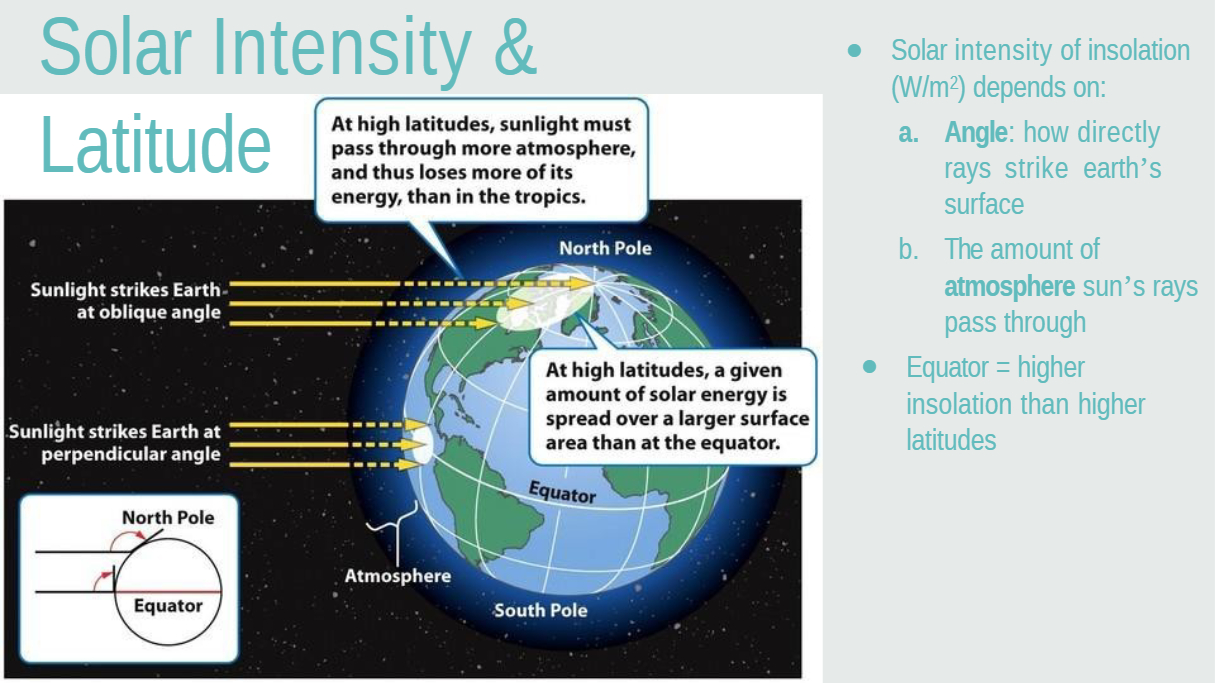
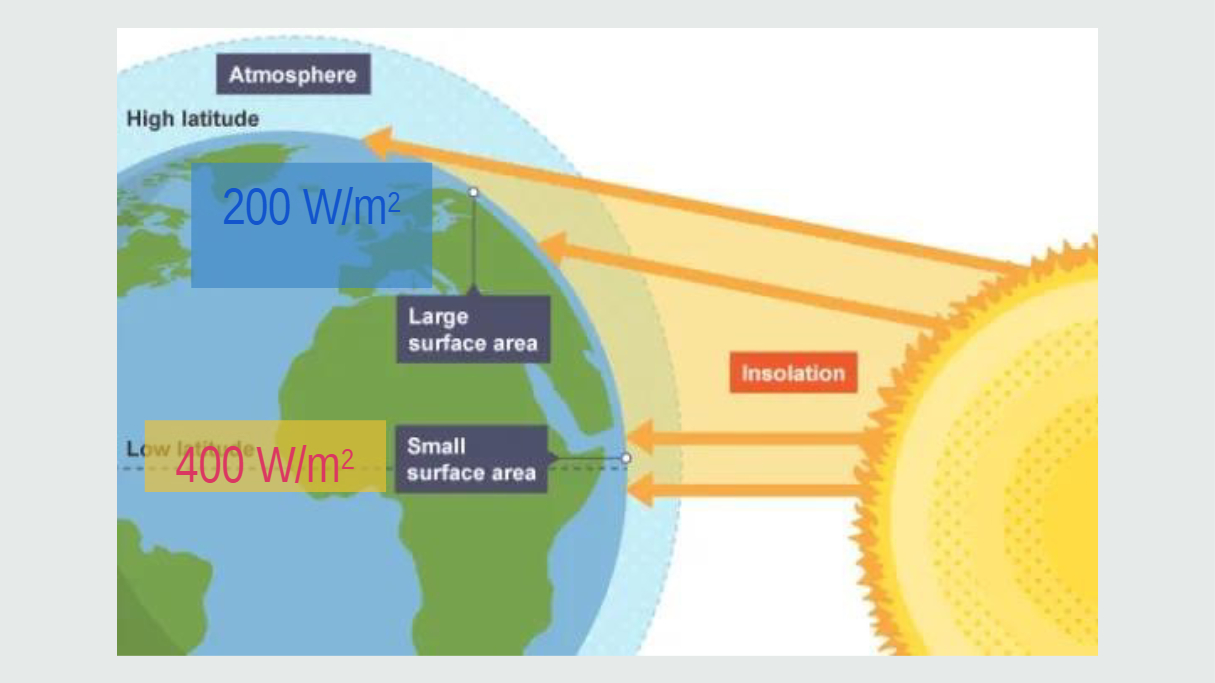
Which factor contributes to higher solar intensity at the equator compared to higher latitudes?
The equator receives sunlight at a more perpendicular angle, resulting in less atmospheric loss and higher intensity.
The equator is closer to the sun than higher latitudes.
Higher latitudes receive more direct sunlight than the equator.
The equator has a thicker atmosphere than higher latitudes.
9

10
Open Ended
Explain how the angle at which sunlight strikes the Earth affects the amount of solar energy received at different latitudes.
11
Fill in the Blanks
Type answer...
12
Multiple Select
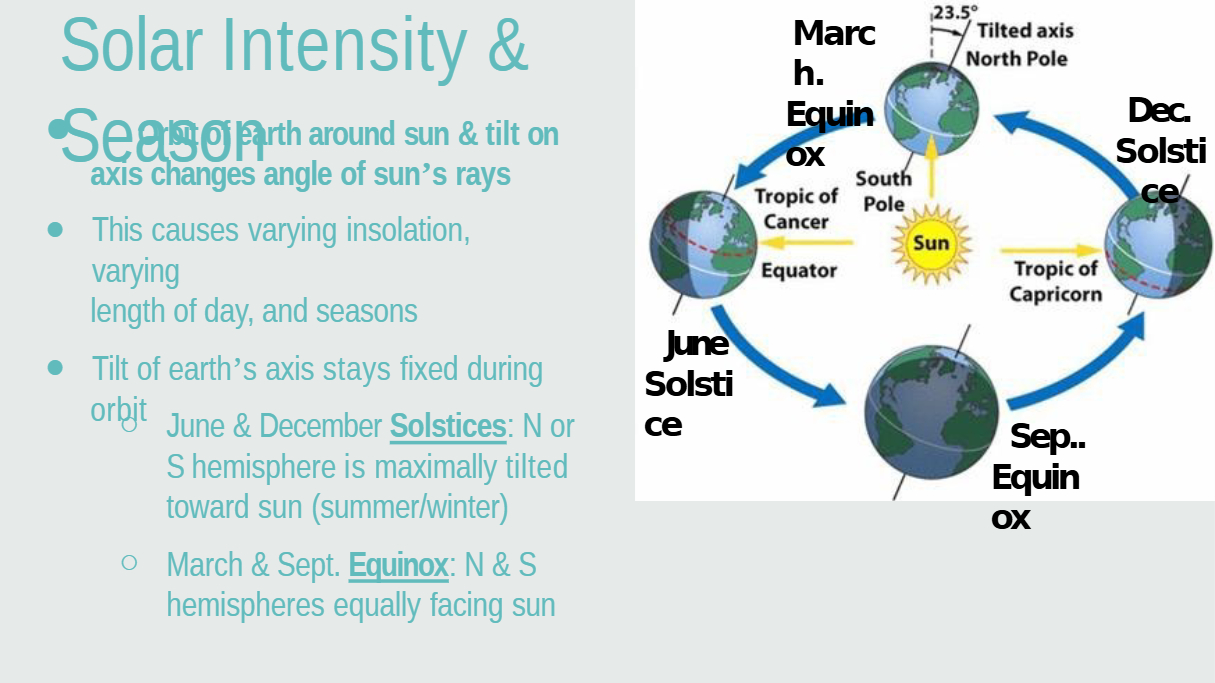
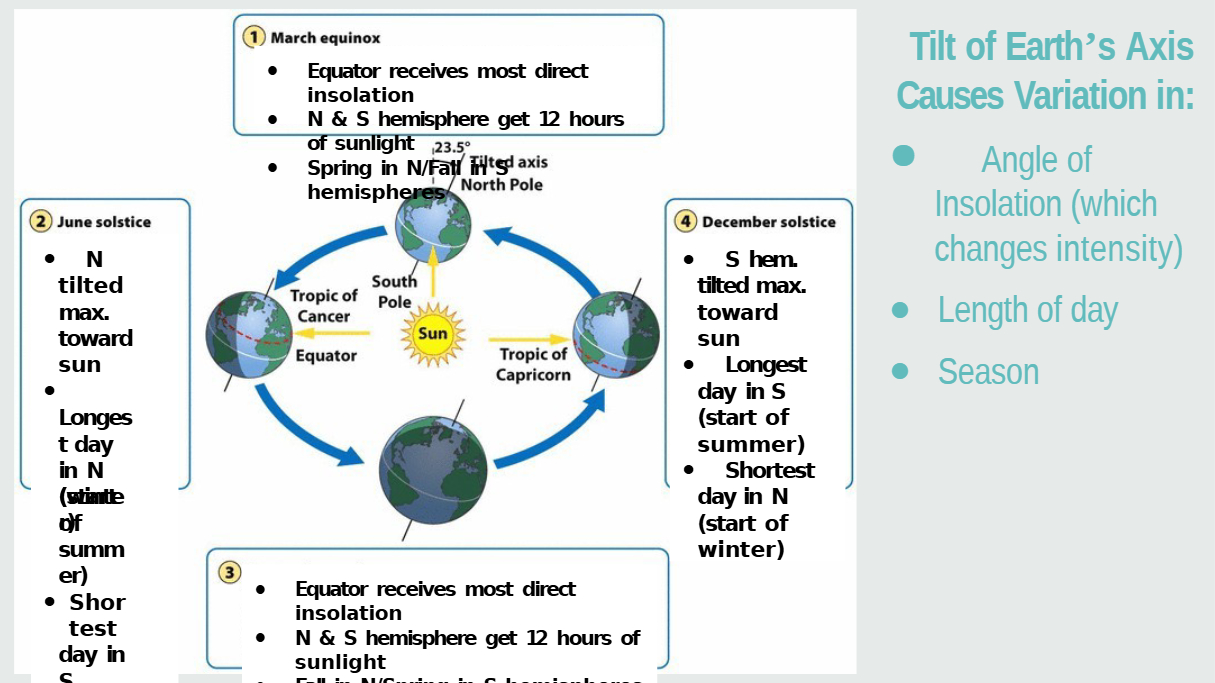
Which of the following are true about the effect of Earth's tilt and orbit on seasons?
The tilt causes varying insolation and length of day.
The tilt remains fixed during orbit.
Solstices occur when one hemisphere is maximally tilted toward the sun.
Equinoxes occur when both hemispheres equally face the sun.
13
14

15
Multiple Choice
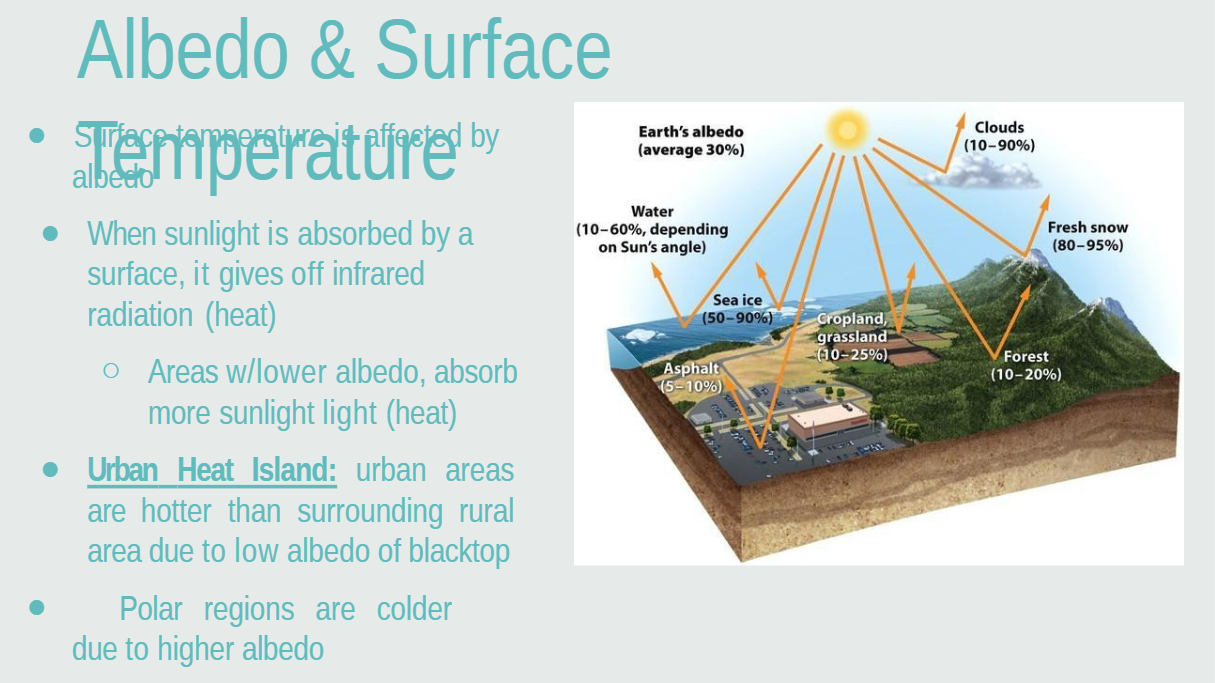
Which surface has the lowest albedo and therefore absorbs the most sunlight?
Fresh snow
Sea ice
Asphalt
Clouds
16
Open Ended
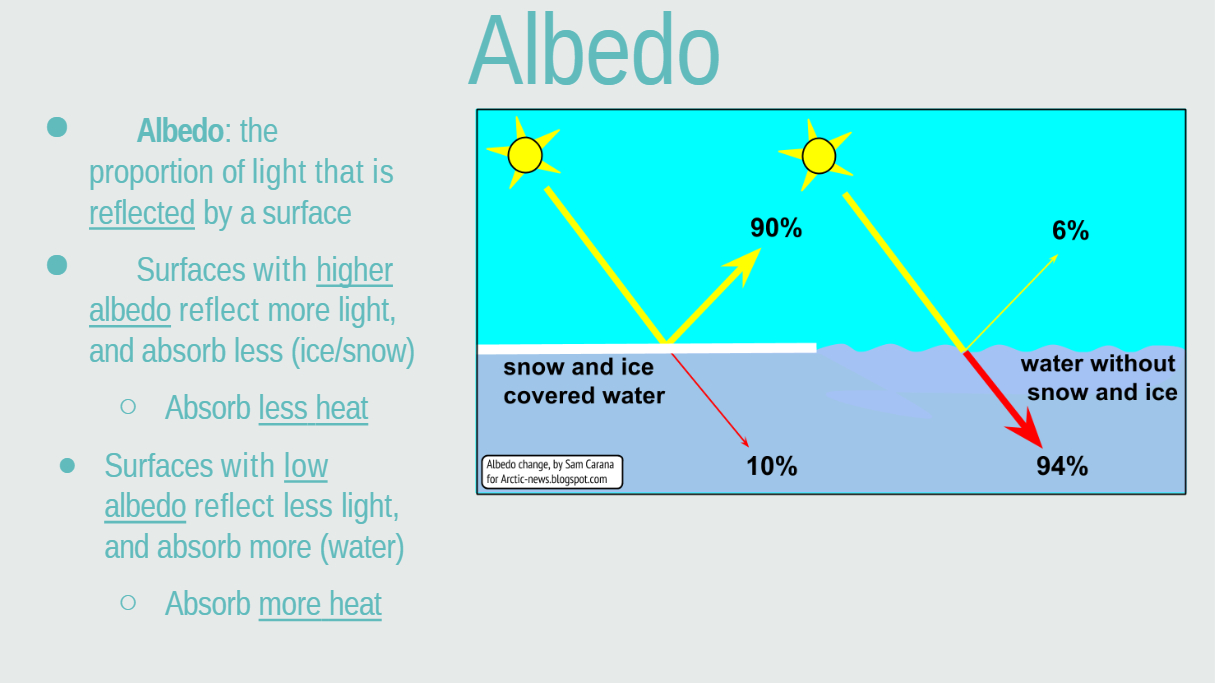
How does albedo affect the amount of heat absorbed by different surfaces on Earth?
17
18
Open Ended
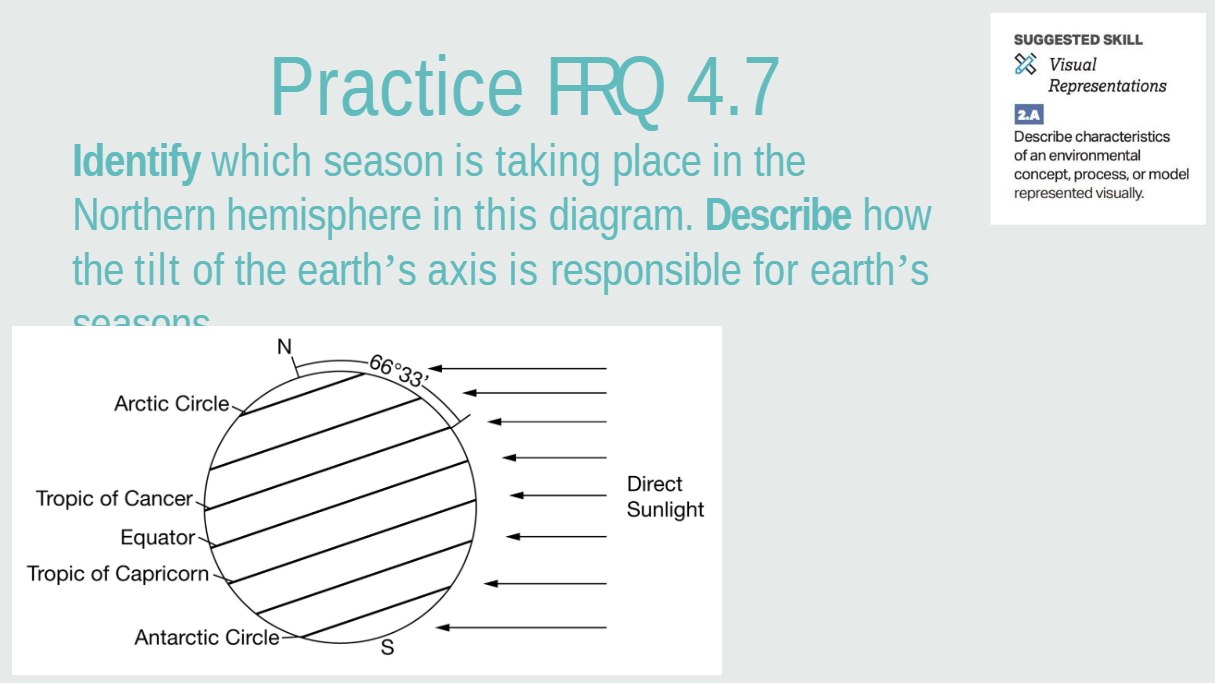
Identify which season is taking place in the Northern hemisphere in this diagram. Describe how the tilt of the earth’s axis is responsible for earth’s seasons.
19
20
21
Multiple Choice
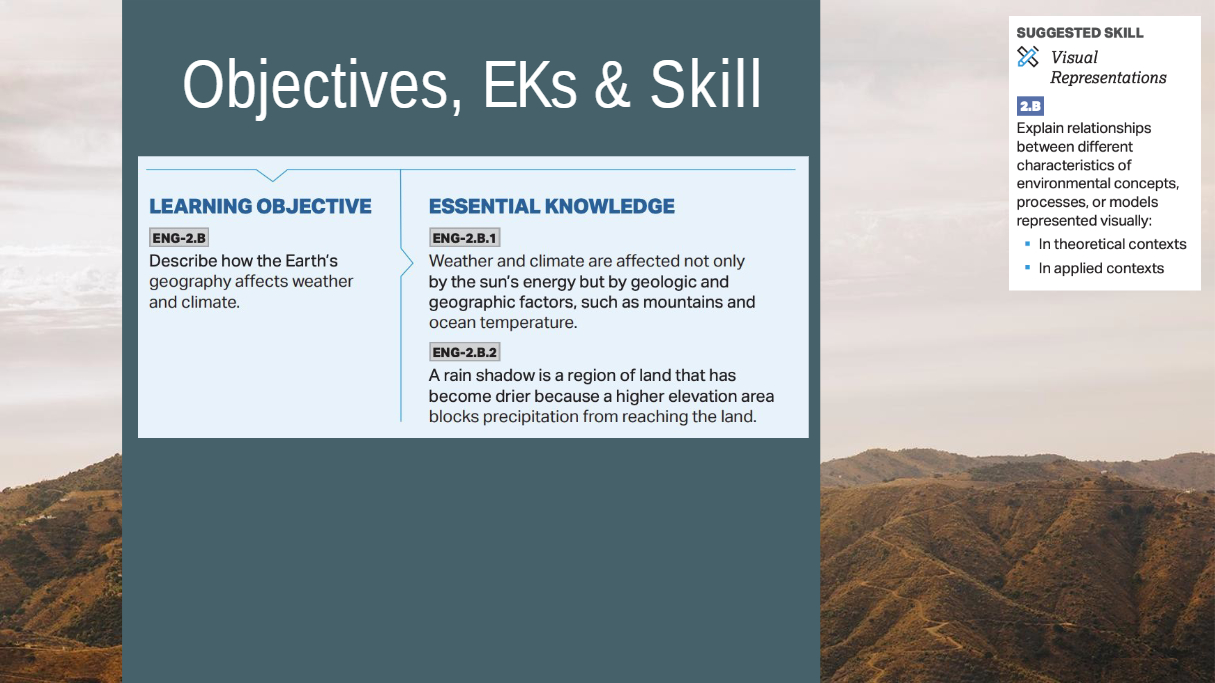
Which of the following best describes the learning objective for this lesson?
Explain the process of photosynthesis
Describe how the Earth’s geography affects weather and climate
Identify the layers of the Earth
Discuss the causes of earthquakes
22
23
24
25
Multiple Choice
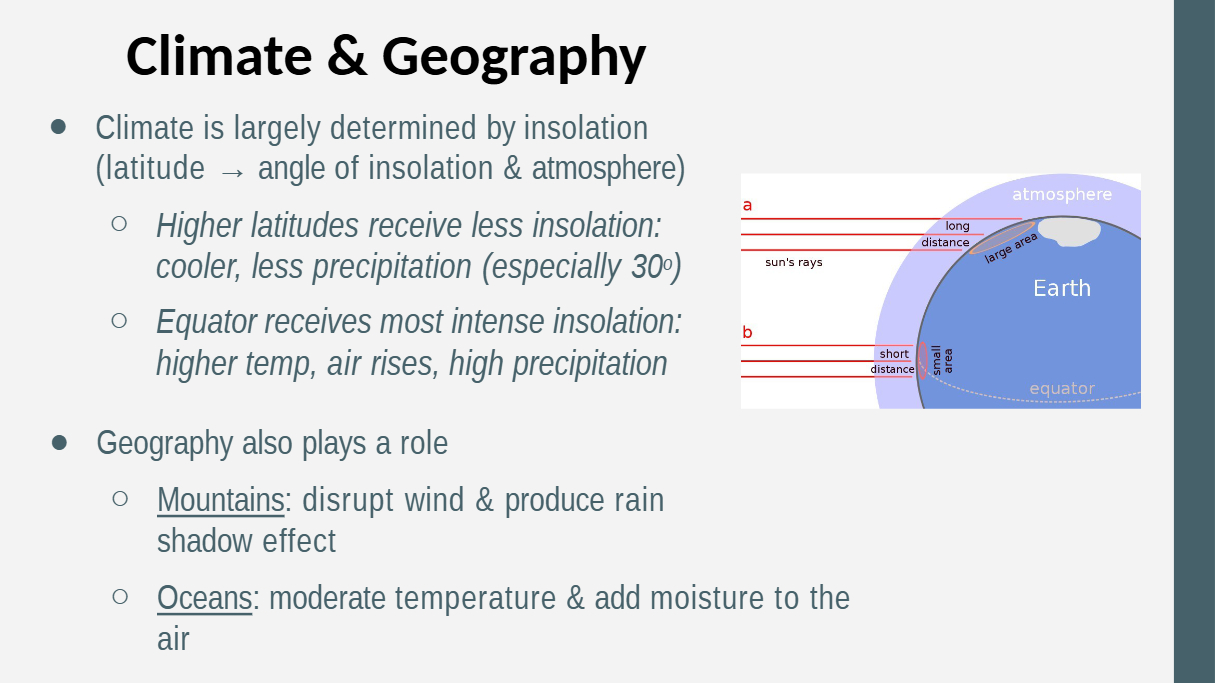
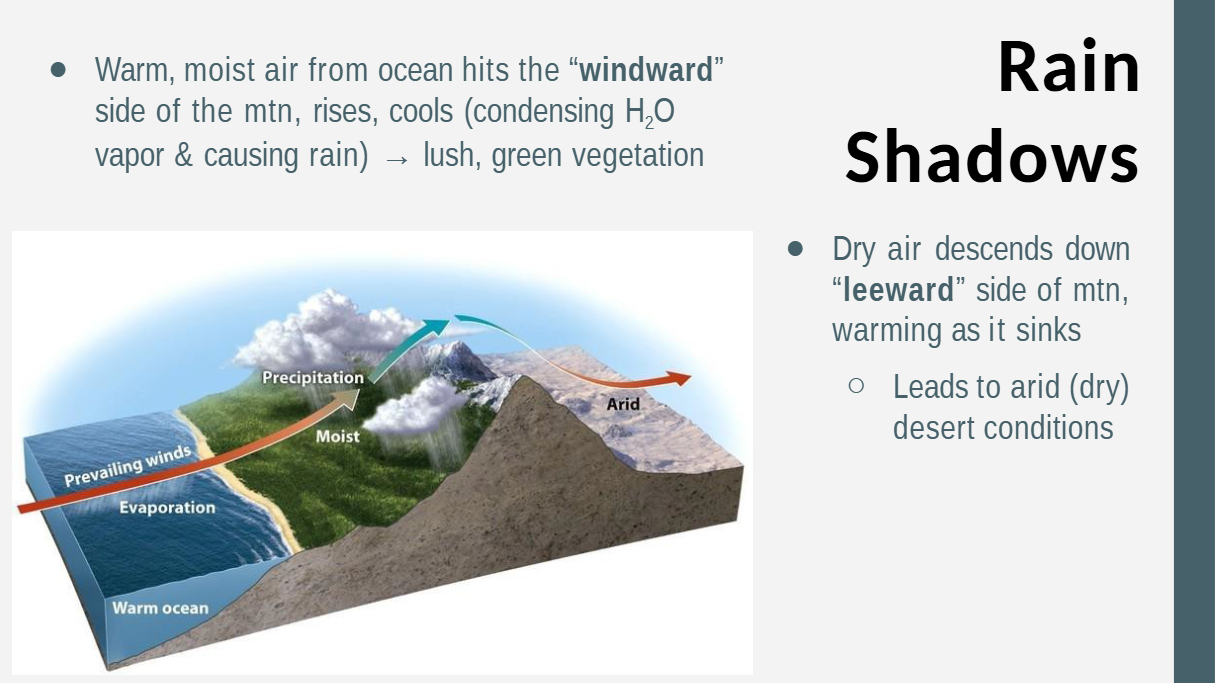
Which geographic factors are mentioned as affecting weather and climate?
Mountains and ocean temperature
Latitude and longitude
Soil composition and vegetation
Wind speed and humidity
26
Open Ended
Explain how mountains influence precipitation and create different climate conditions on their windward and leeward sides.
27
Fill in the Blanks
Type answer...
28
Multiple Choice
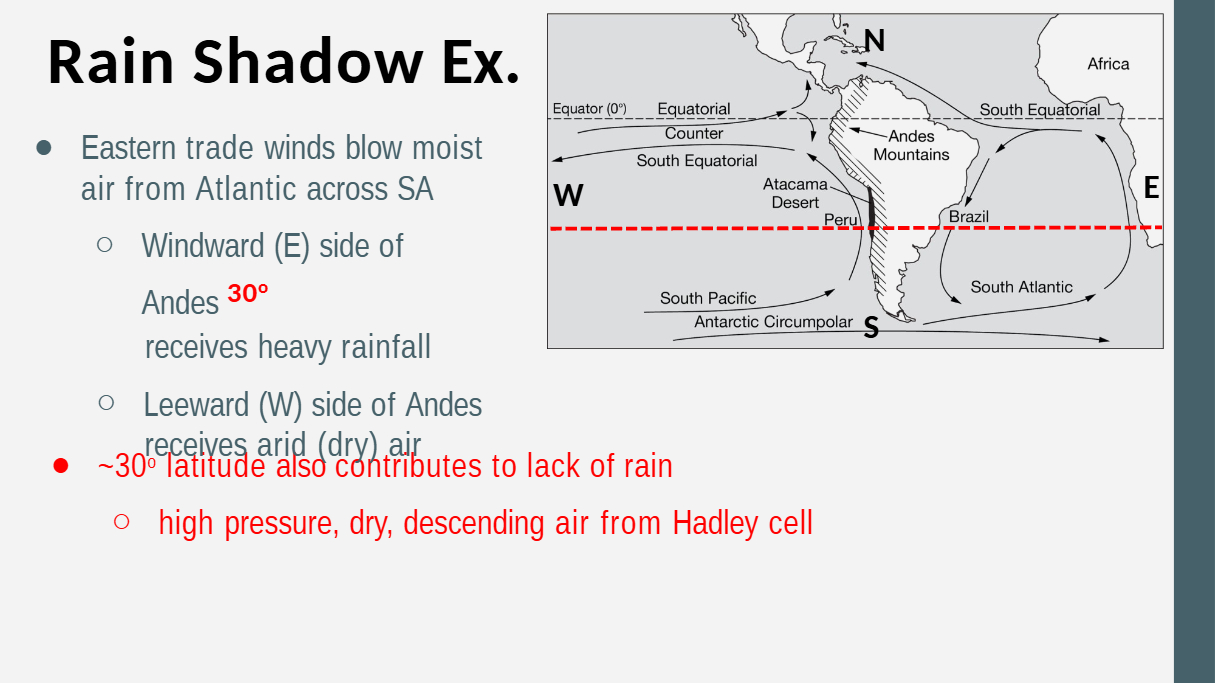
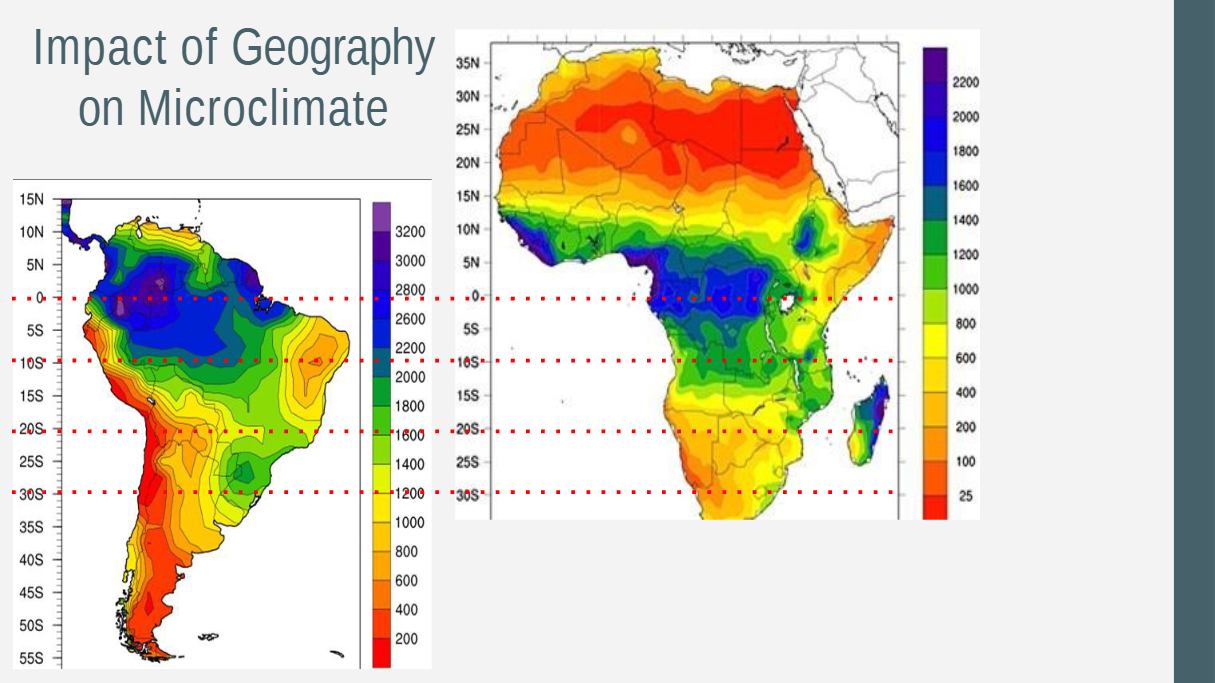
At approximately which latitude does the Andes Mountains' rain shadow effect contribute to arid conditions in South America?
0°
15°
30°
45°
29
30
Multiple Choice
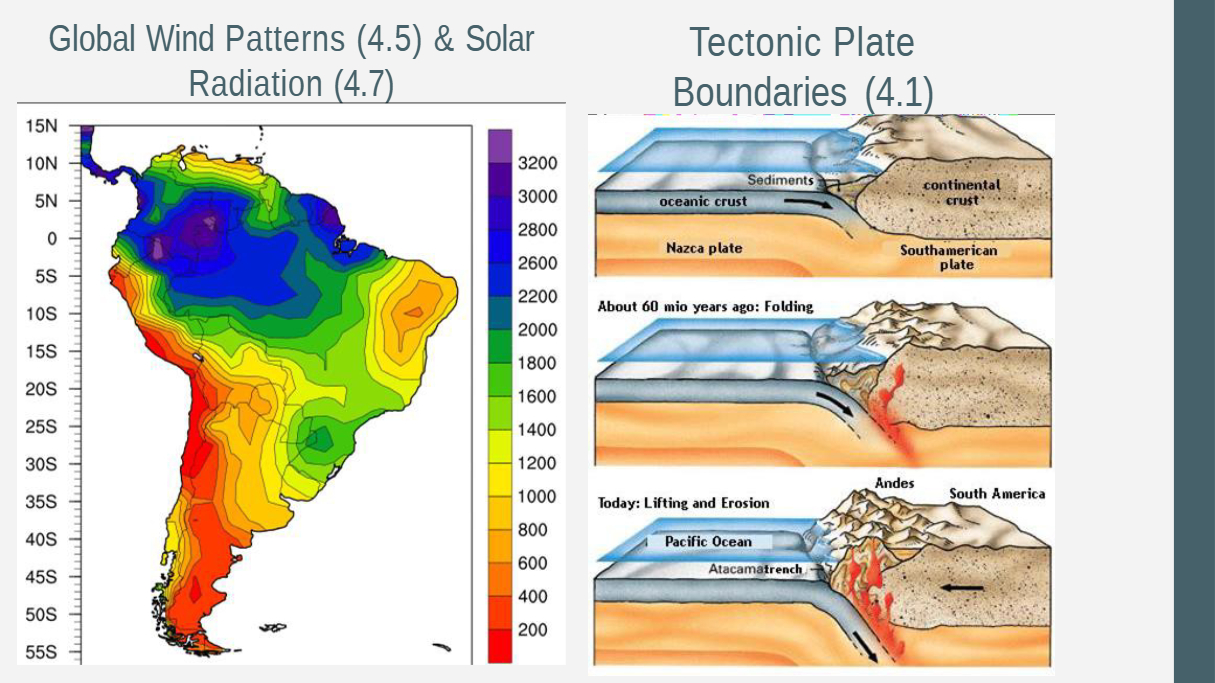
Which of the following best explains how tectonic plate boundaries influence the formation of the Andes mountains in South America?
The collision of the Nazca and South American plates causes folding and uplift, forming the Andes.
The separation of the Nazca and South American plates leads to volcanic activity, forming the Andes.
The movement of the South American plate over the Nazca plate causes erosion, forming the Andes.
The subduction of the South American plate beneath the Nazca plate causes sediment deposition, forming the Andes.
31
32
Open Ended
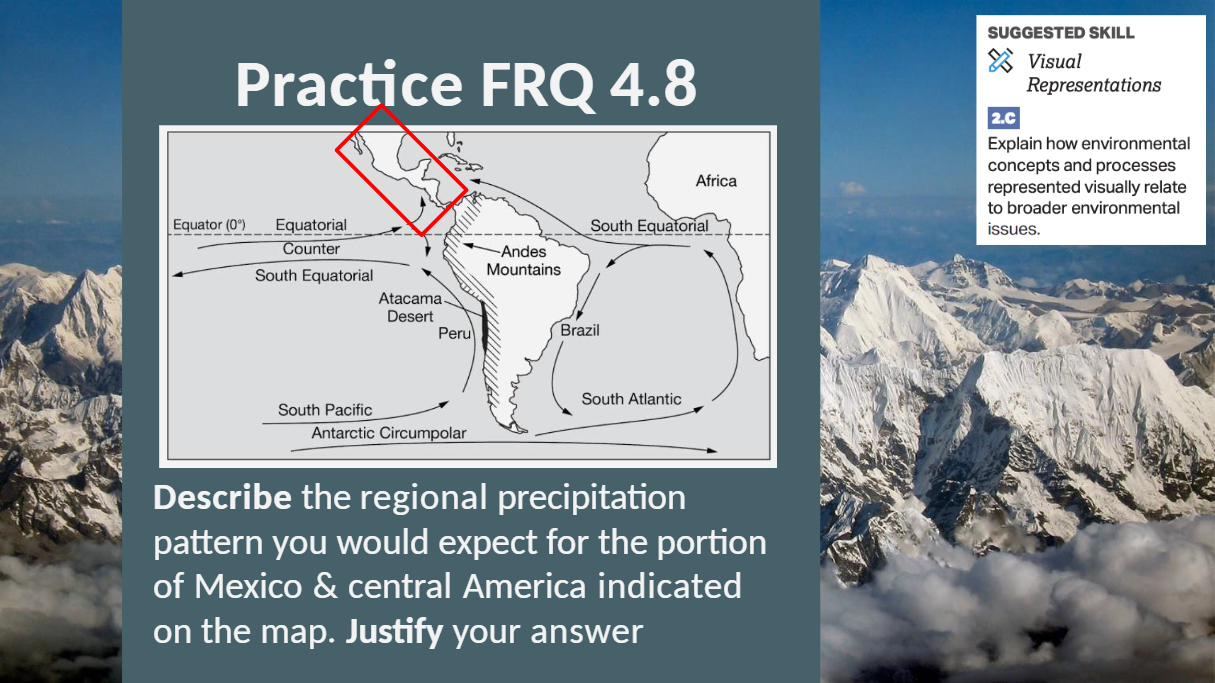
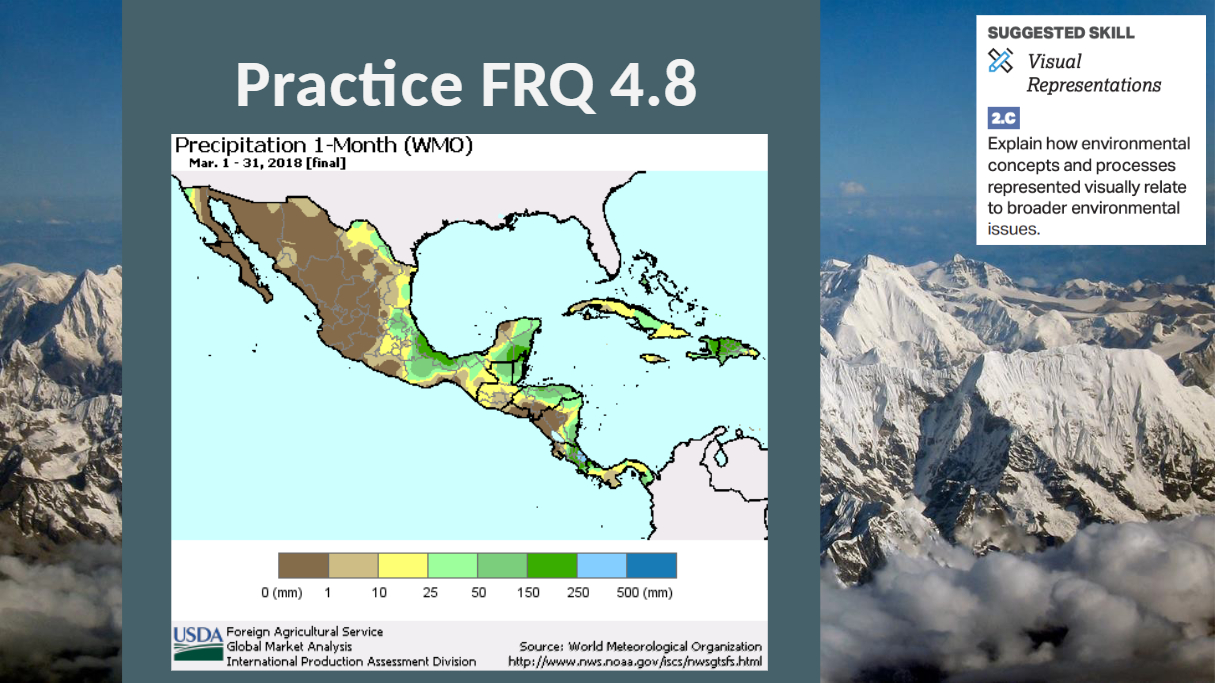
Describe the regional precipitation pattern you would expect for the portion of Mexico & central America indicated on the map. Justify your answer.
33

34
Open Ended

FRQ: See question on slide
35
36
Multiple Choice
The impact of geography on microclimate can be observed in both South America and Africa. Which factor is most responsible for the differences in precipitation patterns across these continents?
Latitude and proximity to the equator
Human activity and urbanization
Ocean currents and wind patterns
Mountain ranges and elevation
37

38
39
Open Ended
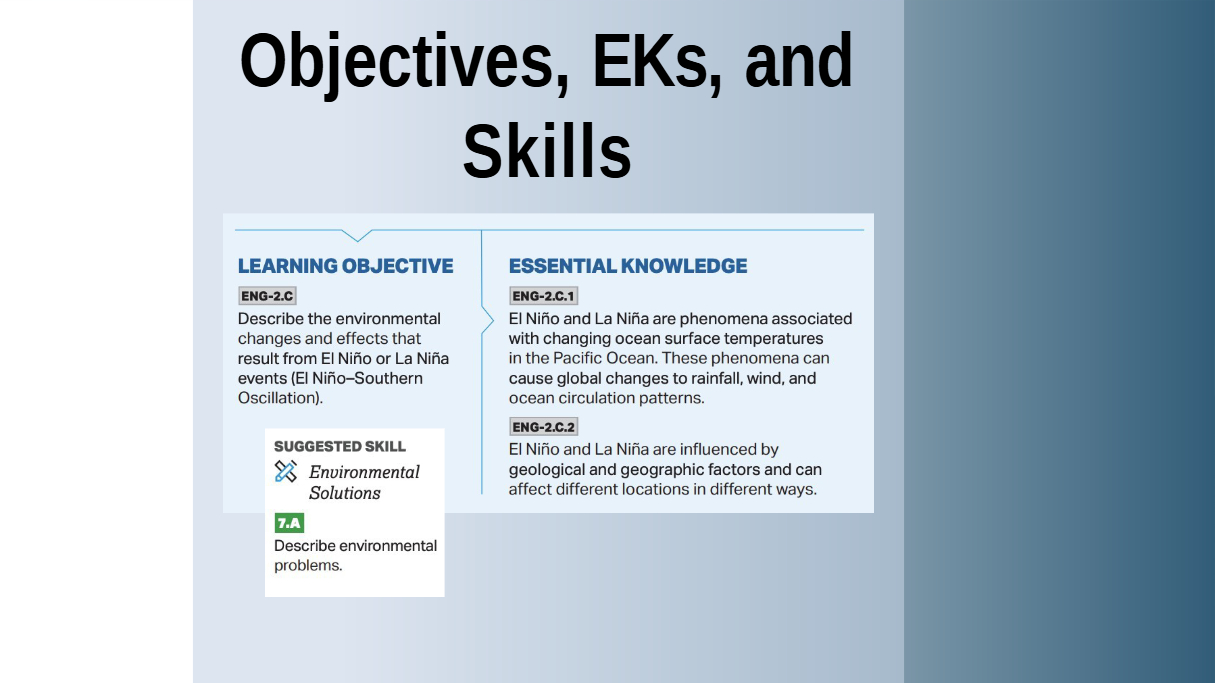
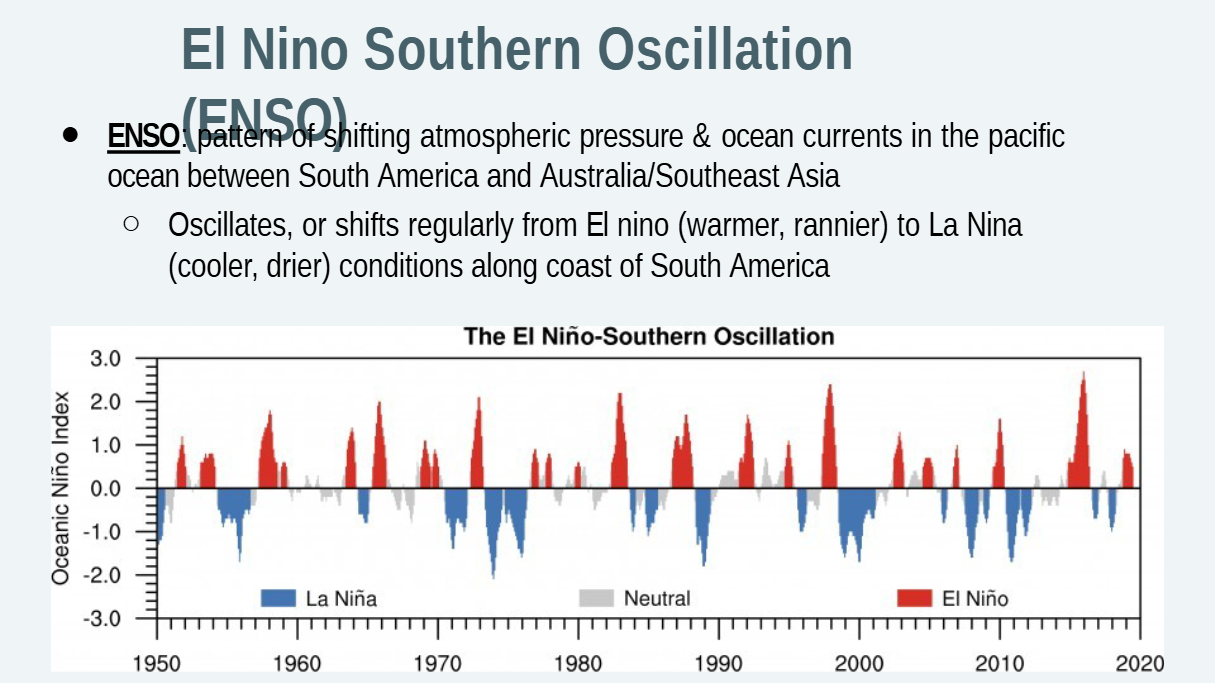
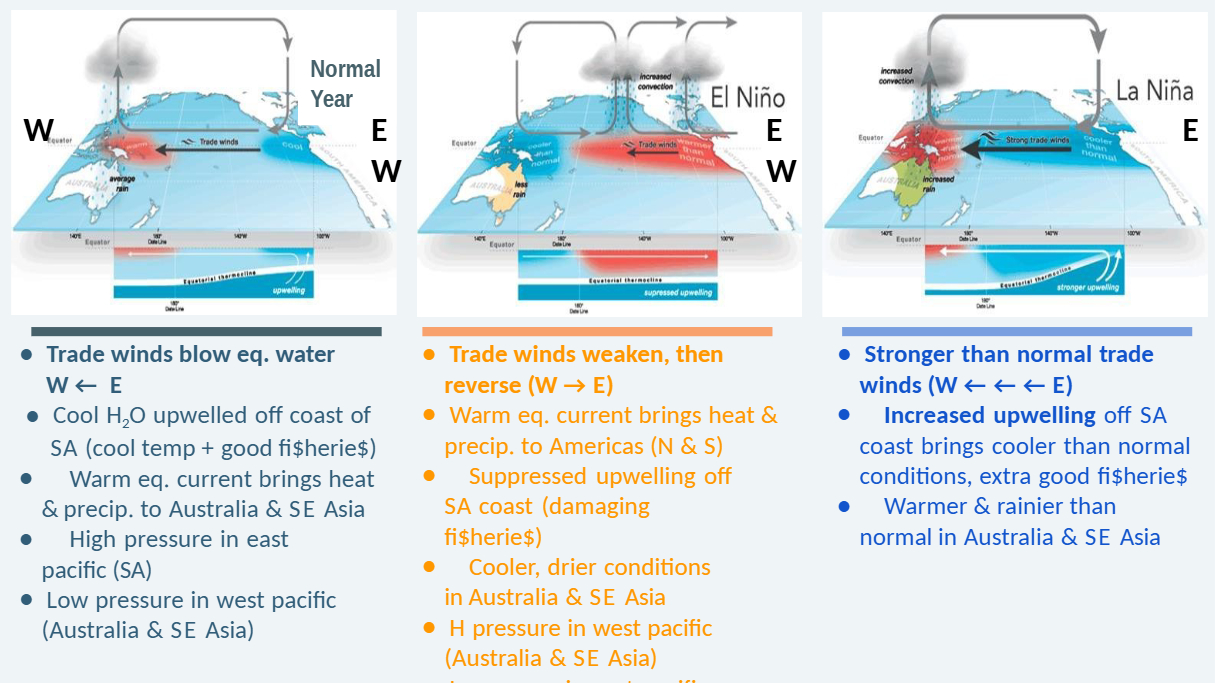
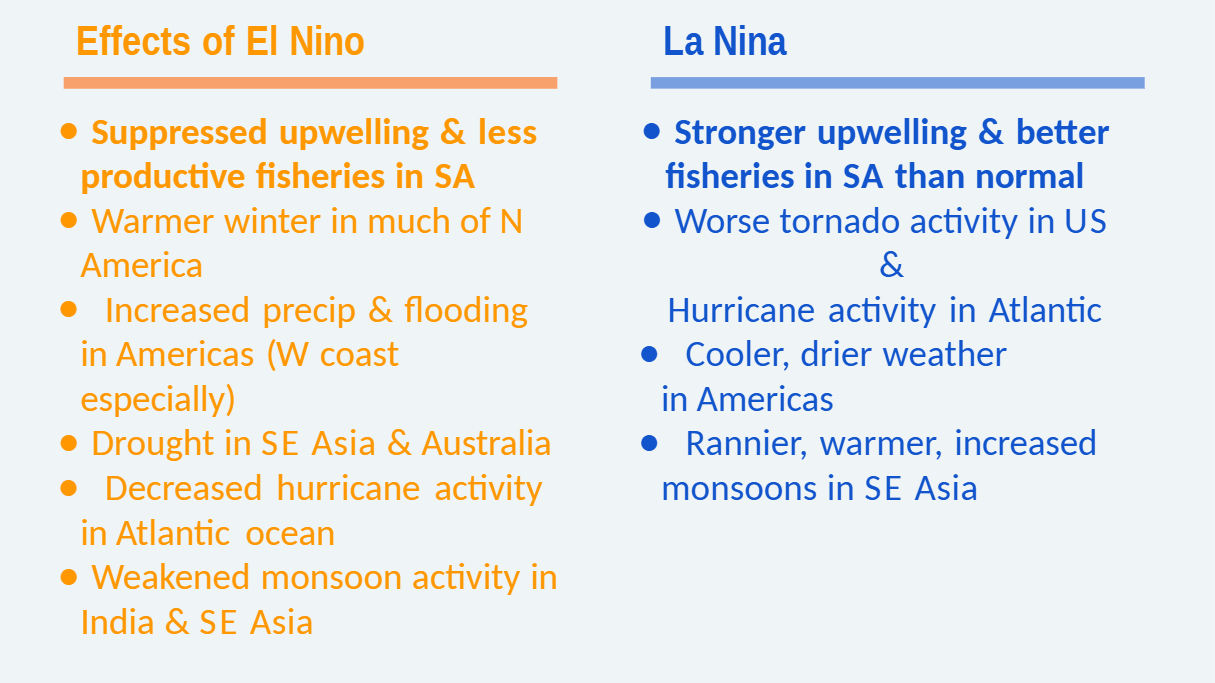
Explain how El Niño and La Niña events can cause global changes to rainfall, wind, and ocean circulation patterns. Provide examples of how these changes might affect different locations around the world.
40
Fill in the Blanks
Type answer...
41

42
Open Ended
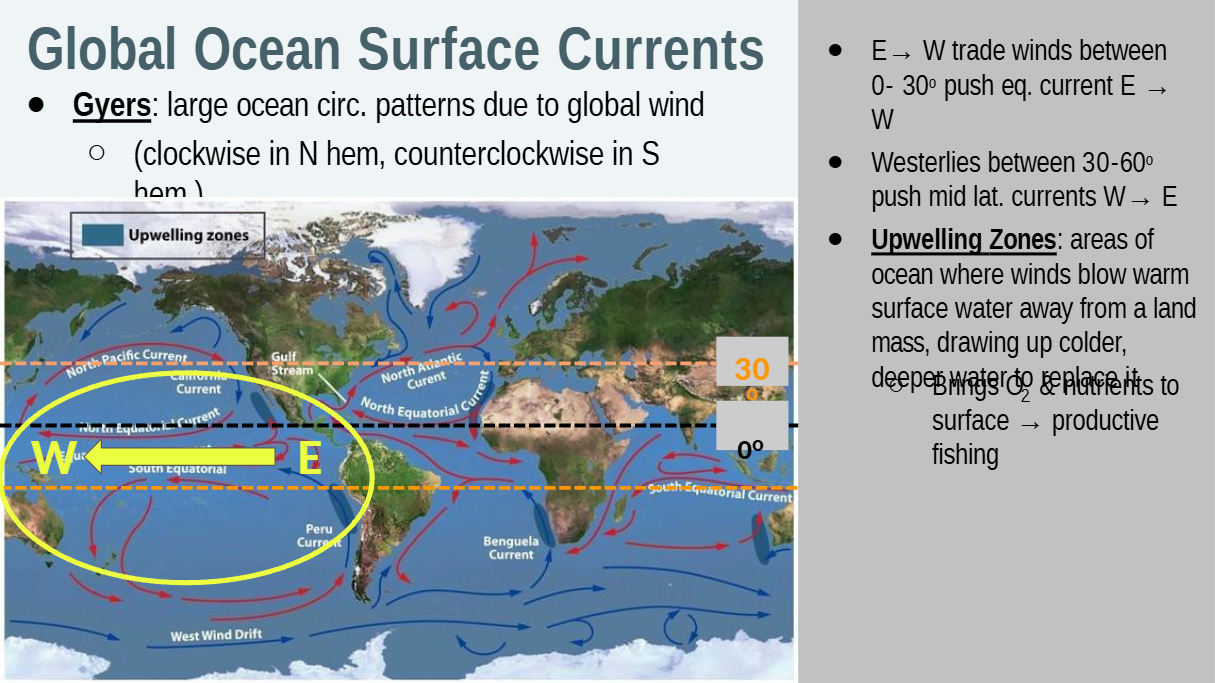
Explain how upwelling zones contribute to productive fishing and nutrient cycling in the ocean.
43
Multiple Choice
Which of the following best describes the direction of trade winds and their effect on ocean currents between 0° and 30° latitude?
Trade winds blow from east to west, pushing equatorial currents westward
Trade winds blow from west to east, pushing equatorial currents eastward
Trade winds blow from north to south, pushing equatorial currents southward
Trade winds blow from south to north, pushing equatorial currents northward
44
45
Multiple Choice
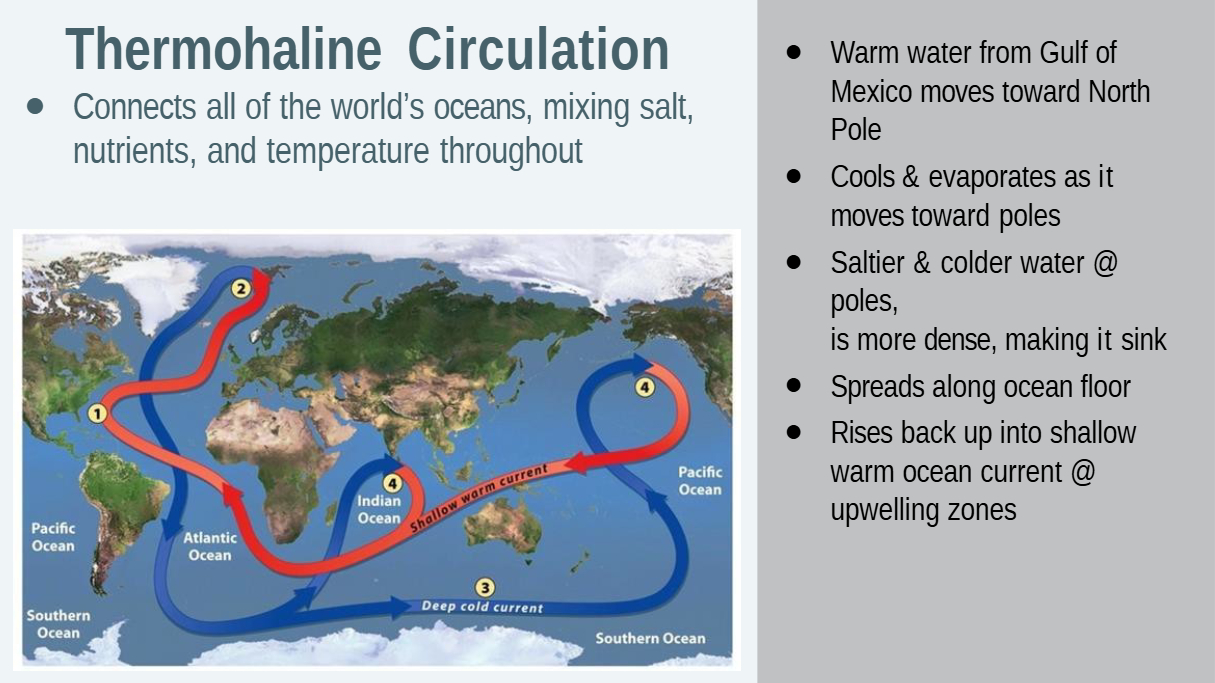
Which of the following processes are involved in thermohaline circulation?
Mixing of salt, nutrients, and temperature throughout the world's oceans
Formation of hurricanes in the Atlantic Ocean
Creation of gyres due to global wind patterns
Suppression of upwelling zones
46
47
Fill in the Blanks
Type answer...
48
49
50
Open Ended
Compare the effects of El Niño and La Niña on fisheries and weather patterns in South America and Southeast Asia.
51
52
Open Ended
Describe TWO environmental problems related to the conditions of an El Niño event.
53
Multiple Choice
Which of the following factors most directly affects the intensity of solar radiation received at a specific location on Earth?
The angle of the sun’s rays
The amount of cloud cover
The presence of vegetation
The altitude of the location
54
Open Ended
How does the tilt of Earth's axis of rotation influence the seasons and the number of daylight hours at different locations on Earth?
Show answer
Auto Play
Slide 1 / 54
SLIDE
Similar Resources on Wayground

48 questions
Rocks and Weathering
Presentation
•
11th Grade
51 questions
Names Formulas
Presentation
•
11th Grade
48 questions
Functional Physical Science FINAL REVIEW
Presentation
•
KG - 12th Grade
50 questions
Agroecology
Presentation
•
11th - 12th Grade
49 questions
Big Bang Theory
Presentation
•
11th - 12th Grade
47 questions
Earth Subsystem
Presentation
•
11th Grade
52 questions
FIRE HAZARDS
Presentation
•
11th Grade
48 questions
Rate of Weathering
Presentation
•
11th Grade
Popular Resources on Wayground
10 questions
GPA Lesson
Presentation
•
9th - 12th Grade
7 questions
Albert Einstein

Quiz
•
3rd Grade
31 questions
Bridge A Review
Quiz
•
3rd Grade
6 questions
Blue Sue and Red Ruth
Quiz
•
3rd Grade
8 questions
(Day12 HW) Inverse Trig Ratios
Quiz
•
9th Grade
20 questions
Summer Geometry QUIZ (Week3)
Quiz
•
9th Grade
16 questions
Theme Practice
Quiz
•
7th Grade
20 questions
Taxes
Quiz
•
9th - 12th Grade