

Periodic table - Structure and element

Presentation
•
Chemistry
•
10th Grade
•
Practice Problem
•
Medium
Standards-aligned

Eric Peterson
Used 3+ times
FREE Resource
22 Slides • 26 Questions
1
2
The purpose of the slides is for learning.
You can go back and look at the previous slides if you do not know the answer to a question asked
3
Multiple Choice
Which of the following best describes the significance of grouping elements in the periodic table?
It helps predict chemical properties and behaviors.
It makes the table look more organized.
It shows the atomic number of each element.
It allows for easier memorization of element names.
4
5
Fill in the Blanks
Type answer...
6
Multiple Choice
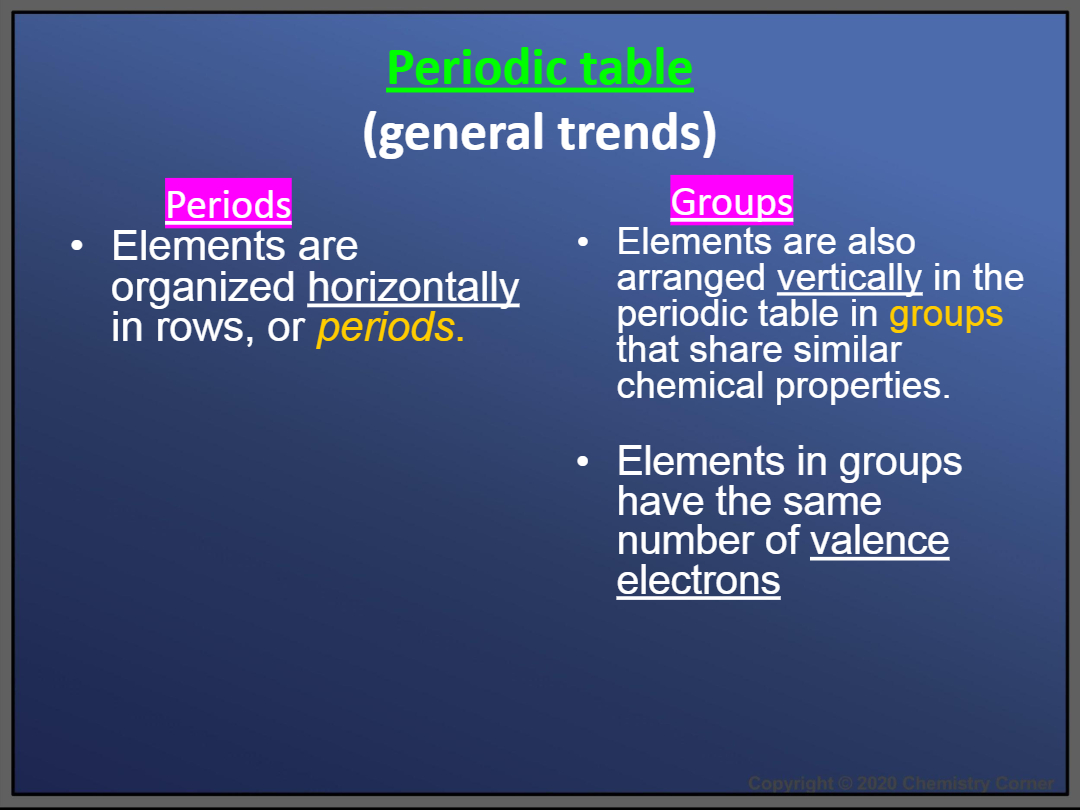
What is the difference between periods and groups in the periodic table?
Periods are vertical columns and groups are horizontal rows.
Periods are horizontal rows and groups are vertical columns.
Both periods and groups are horizontal rows.
Both periods and groups are vertical columns.
7
8
Hotspot
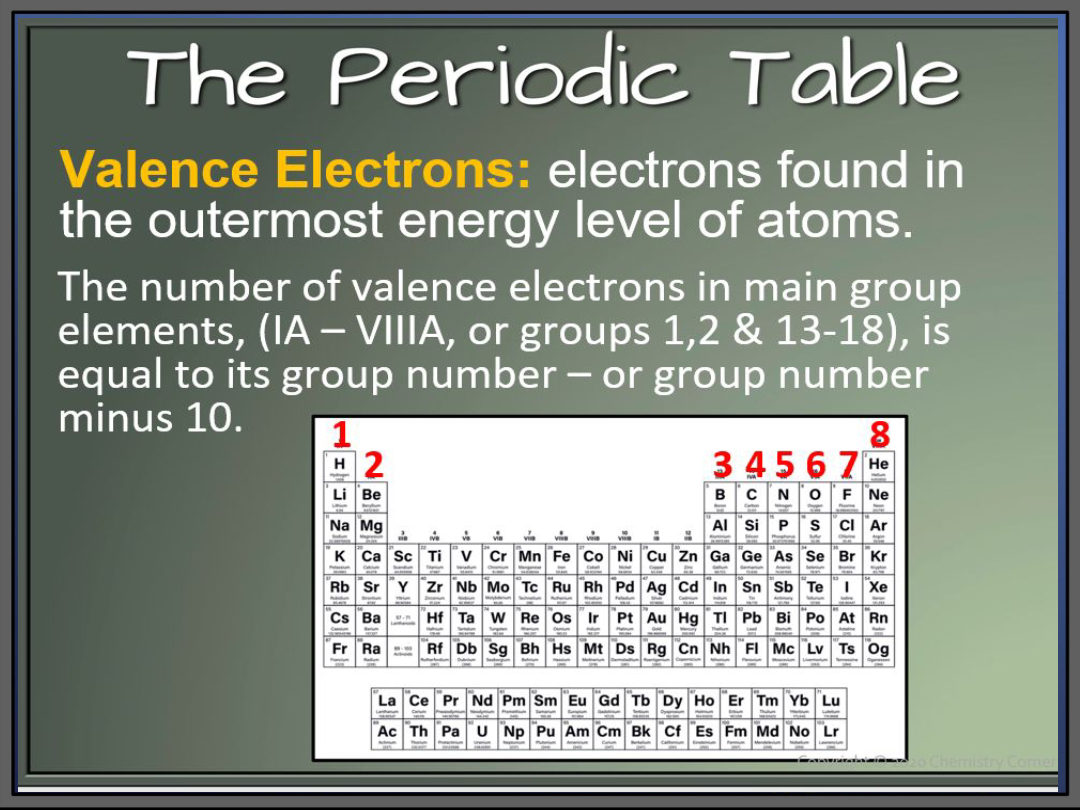
Which group has 2 valence electrons?
9
Open Ended
Explain how the number of valence electrons is determined for main group elements using the periodic table.
10
11
Multiple Select
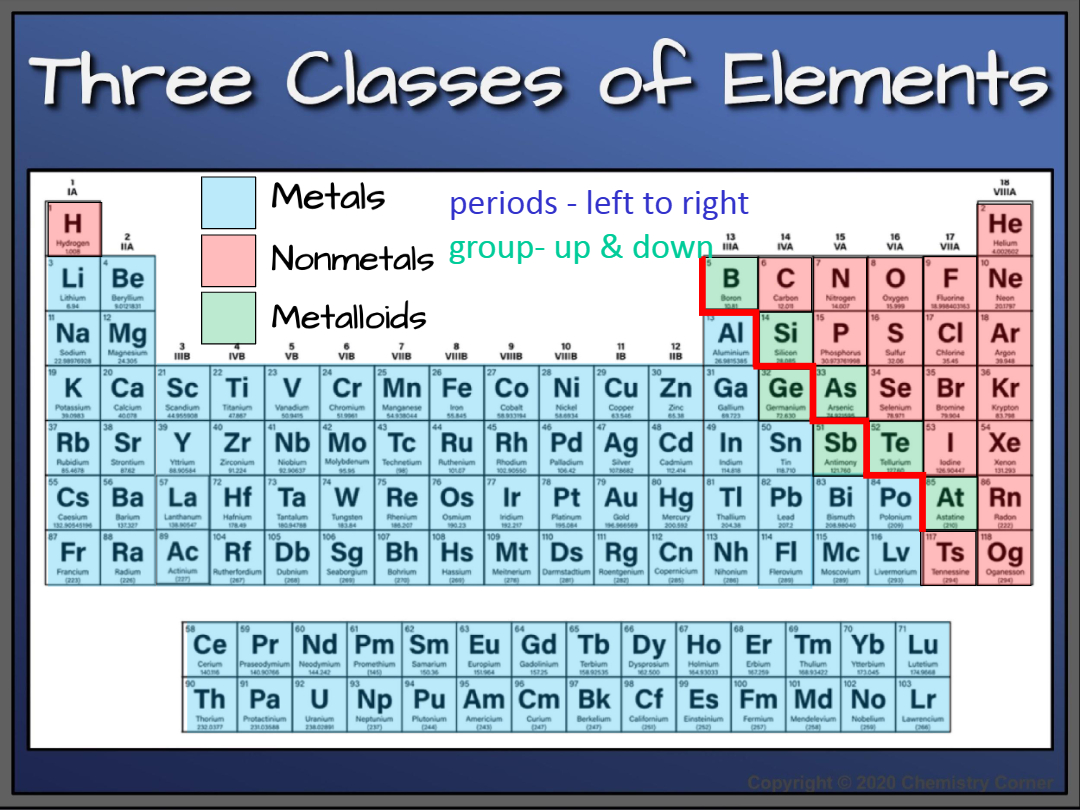
Select all correct statements about the classes of elements in the periodic table.
Metals are found on the left side of the periodic table.
Nonmetals are found on the right side of the periodic table.
Metalloids are found in the middle of the periodic table.
Metals are poor conductors of electricity.
12
13
Multiple Choice
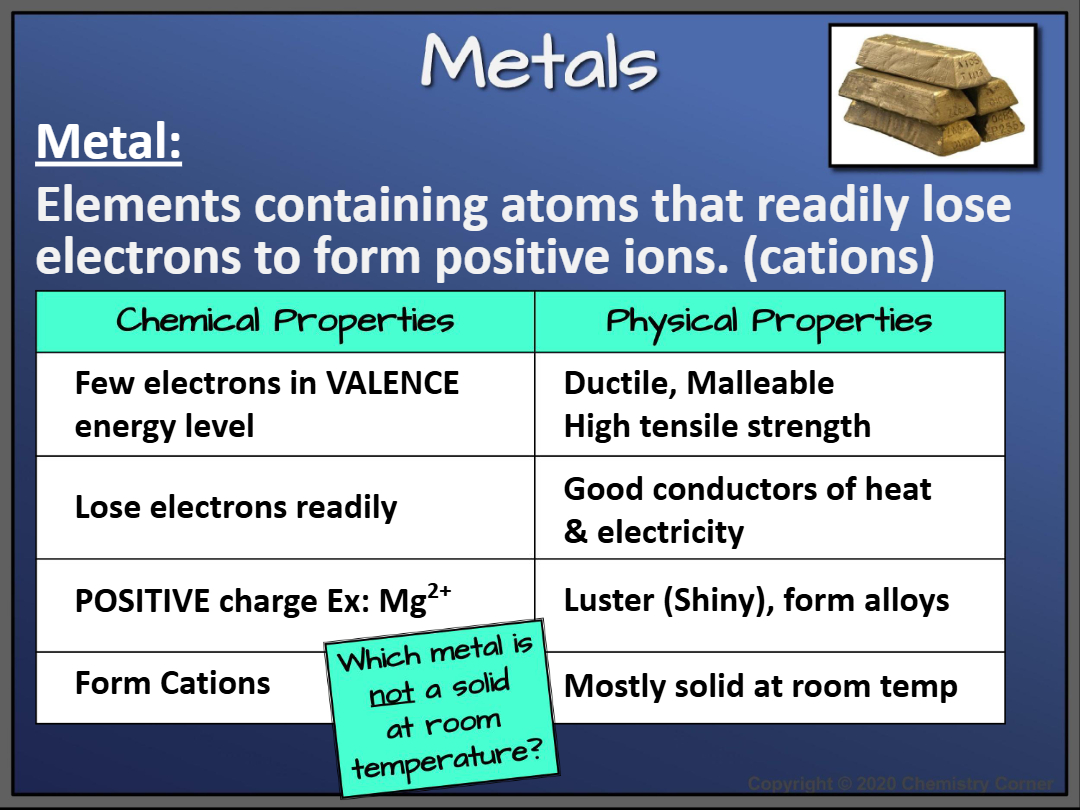
Which of the following statements about metals is correct?
Metals have many valence electrons and gain electrons easily.
Metals have few valence electrons and lose electrons readily.
Metals are poor conductors of heat and electricity.
Metals form negative ions (anions).
14
Multiple Choice

Form anions
Break easily
Do not conduct electricity
15
16
Multiple Select

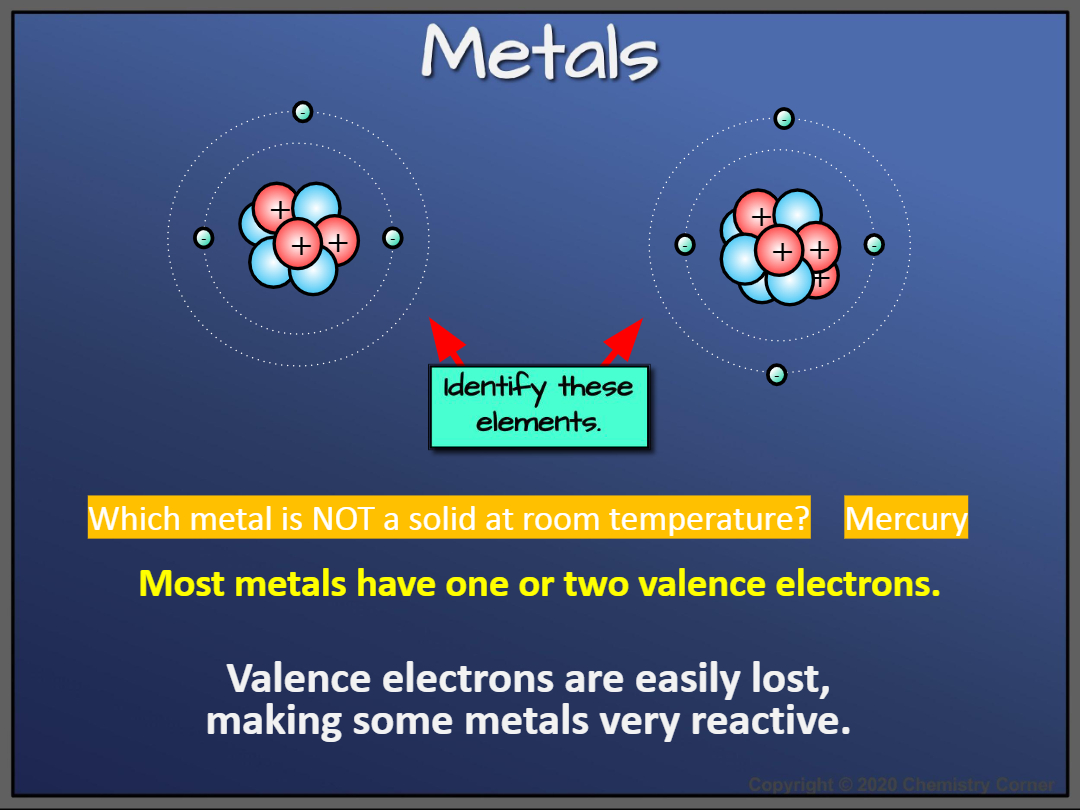
Referring to the image, which statement below are correct?
The element to left is lithium because it has 3 total electrons but 1 is a valence electron
The element to left is lithium because it has 1 total electrons but 3 is a valence electron
The element to right is beryllium because it has 4 total electrons but 2 are valence electrons
The element to right is beryllium because it has 2 total electrons but 4 are valence electrons
17
18
Multiple Choice
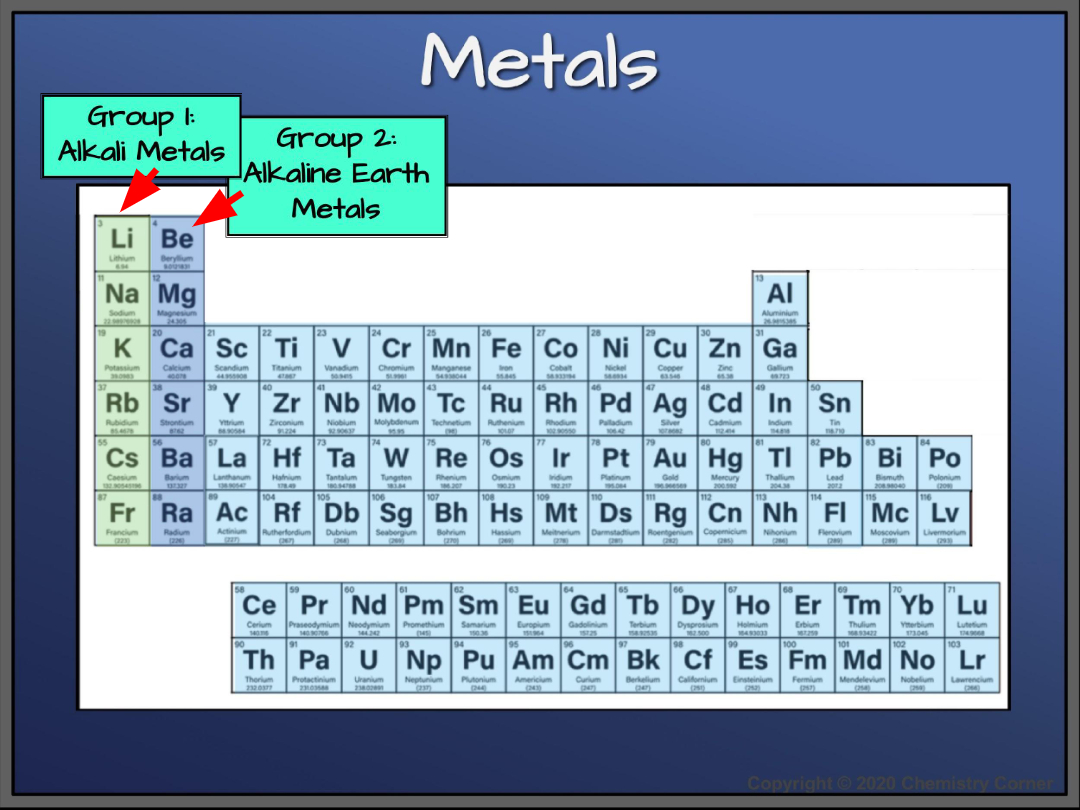
Which group in the periodic table contains alkali metals?
Group 1
Group 2
Group 3
Group 4
19
20
Multiple Select
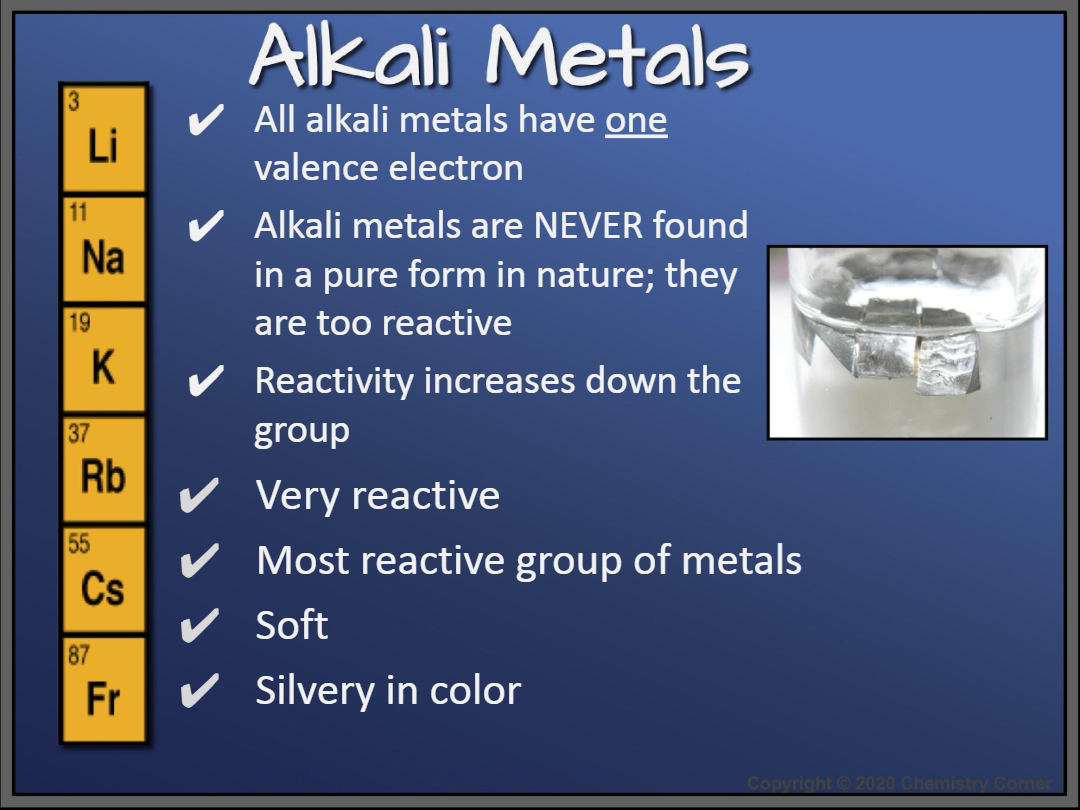
Which of the following are properties of alkali metals?
Soft
Silvery in color
Have two valence electrons
Most reactive group of metals
21
22
Fill in the Blanks
Type answer...
23
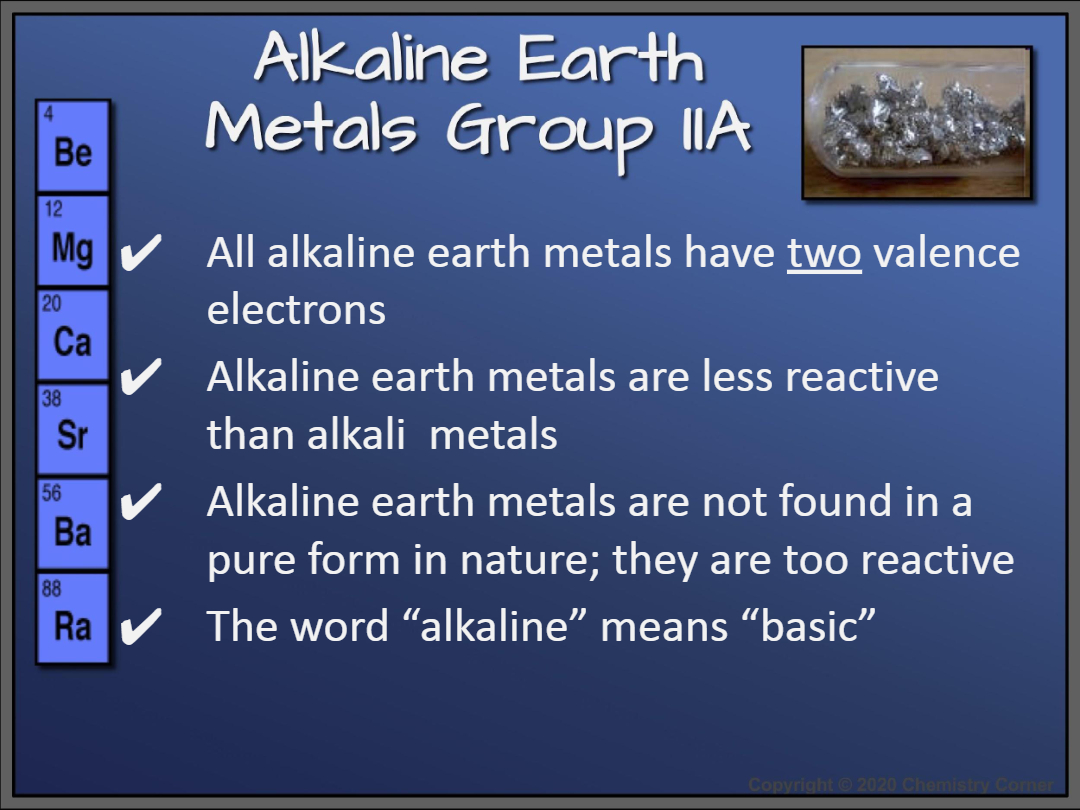
Open Ended
Compare the reactivity of alkali metals and alkaline earth metals. Which group is more reactive?
24
25
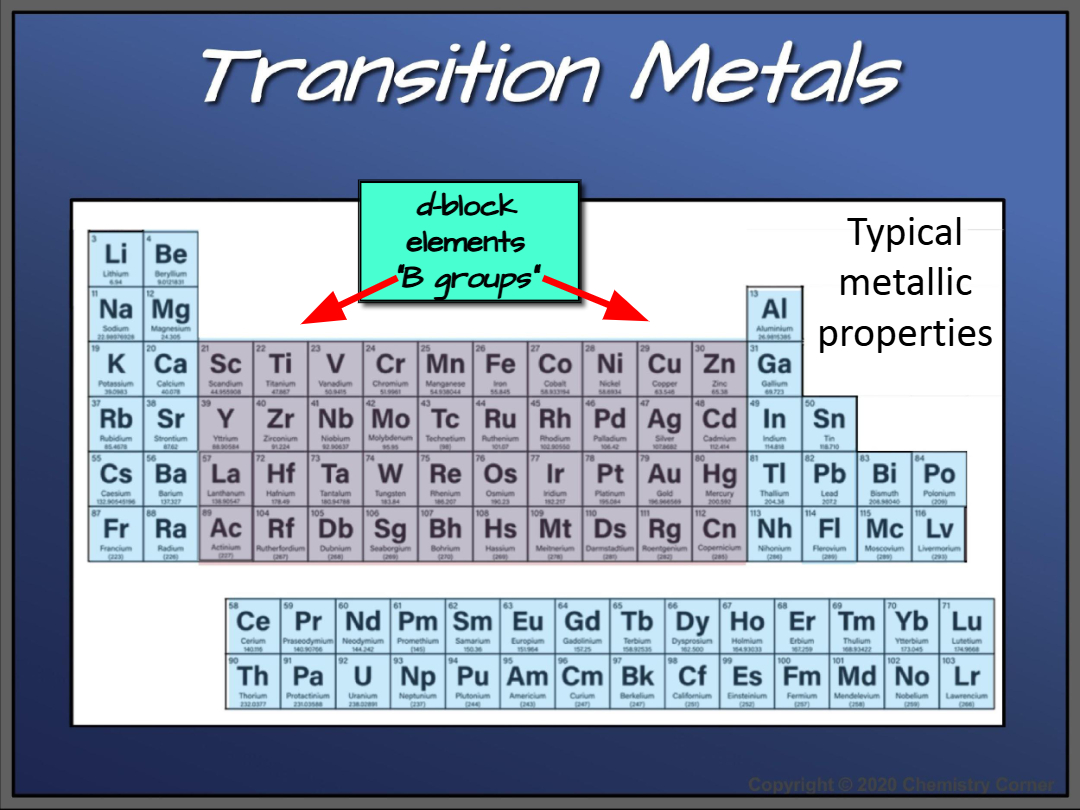
Multiple Choice
Which elements are classified as transition metals in the periodic table?
Scandium, Titanium, Iron
Lithium, Sodium, Potassium
Beryllium, Magnesium, Calcium
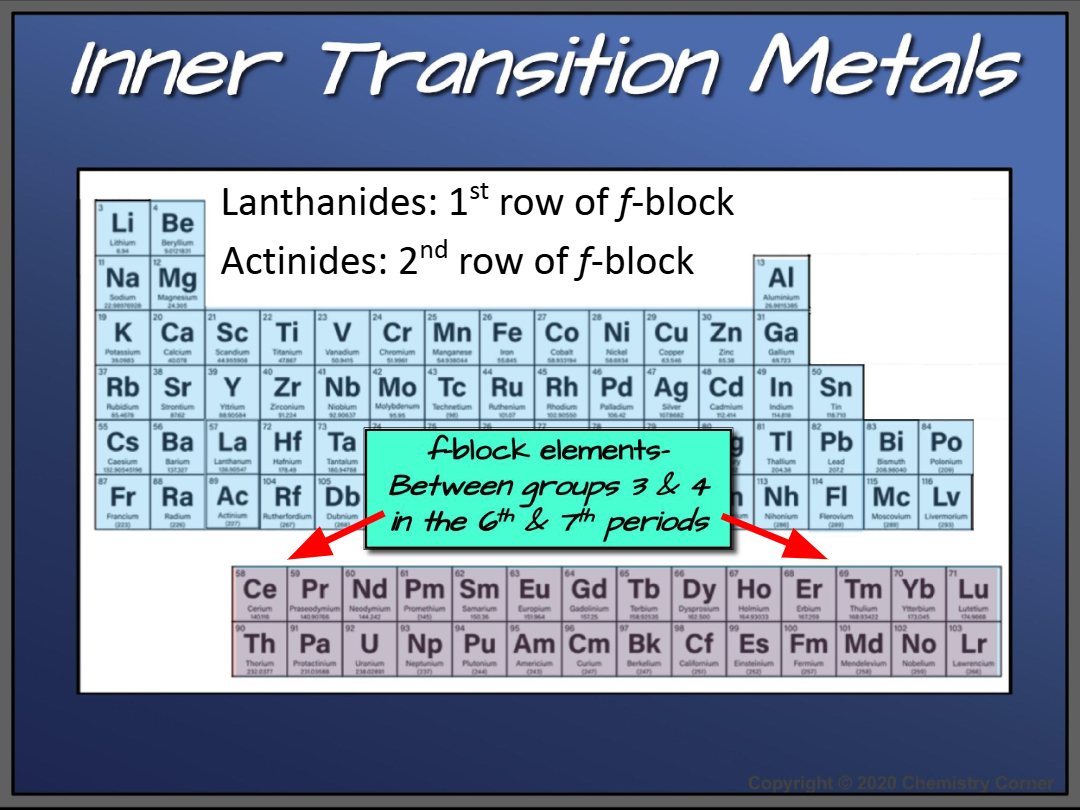
Cerium, Praseodymium, Neodymium
26
27
28
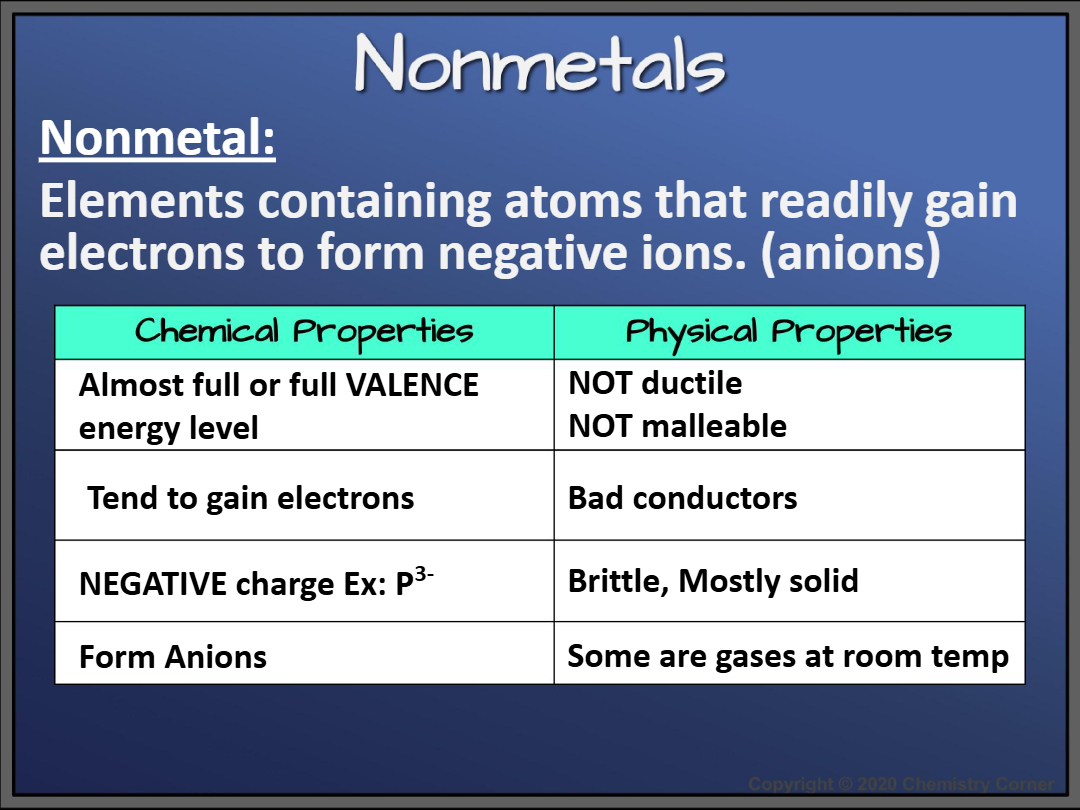
Open Ended
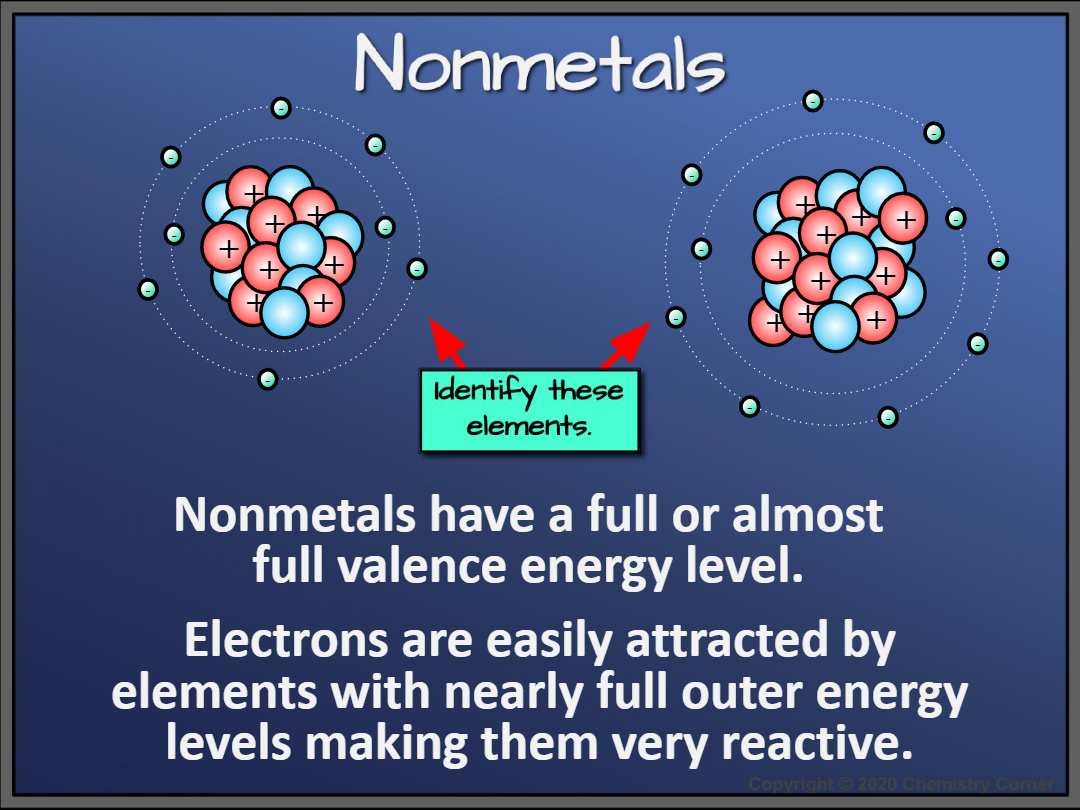
List two chemical properties and two physical properties of nonmetals.
29
30
31
32
Multiple Choice
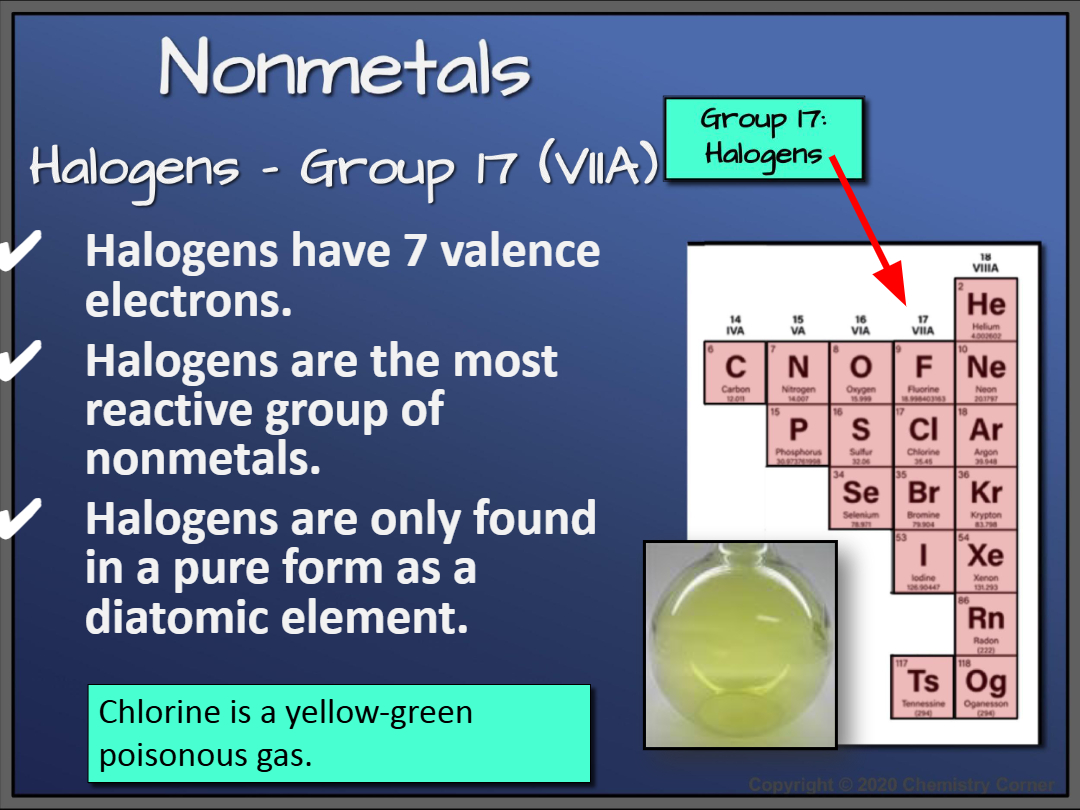
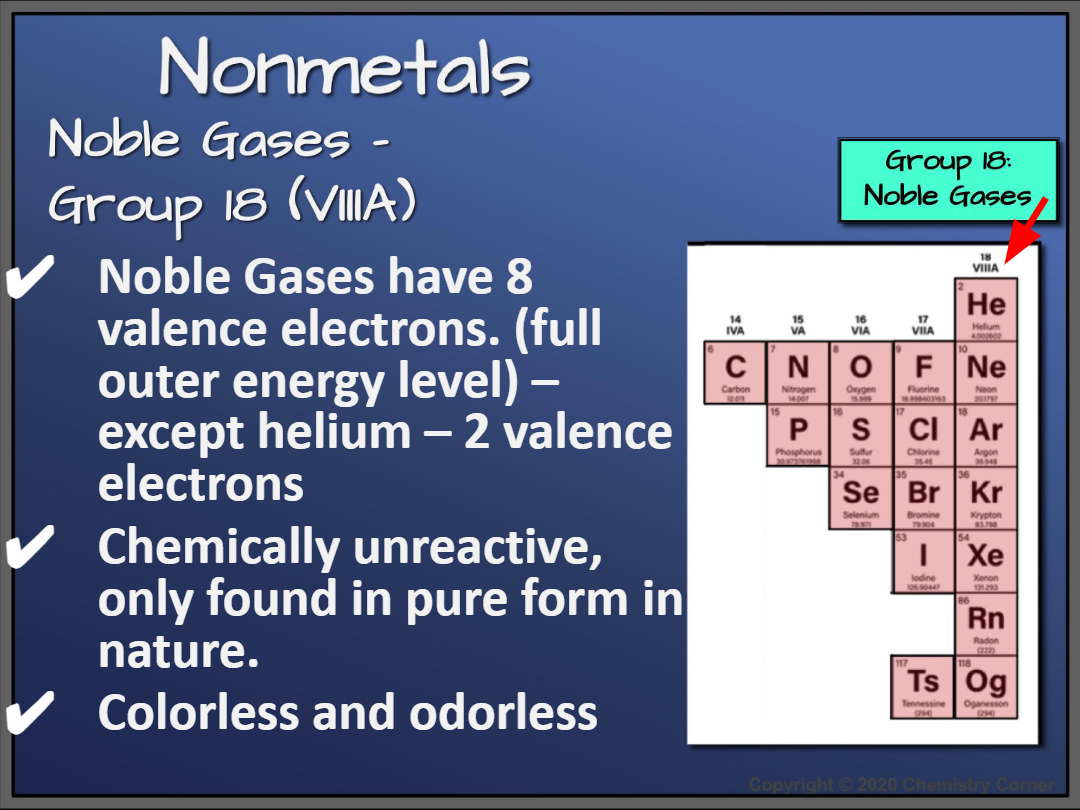
Compare the reactivity of halogens and noble gases and answer the question below
Both the halogens and noble gases are metals with the halogens being more reactive
Both the halogens and noble gases are nonmetals with the noble gases being more reactive
Both the halogens and noble gases are nonmetals with the halogens being more reactive
Both the halogens and noble gases are metals with the noble gases being more reactive
33
Multiple Choice
Which group of nonmetals is the most reactive and why?
Halogens, because they have 7 valence electrons
Noble gases, because they have a full valence shell
Metalloids, because they have properties of both metals and nonmetals
Alkali metals, because they have 1 valence electron
34
35
Open Ended
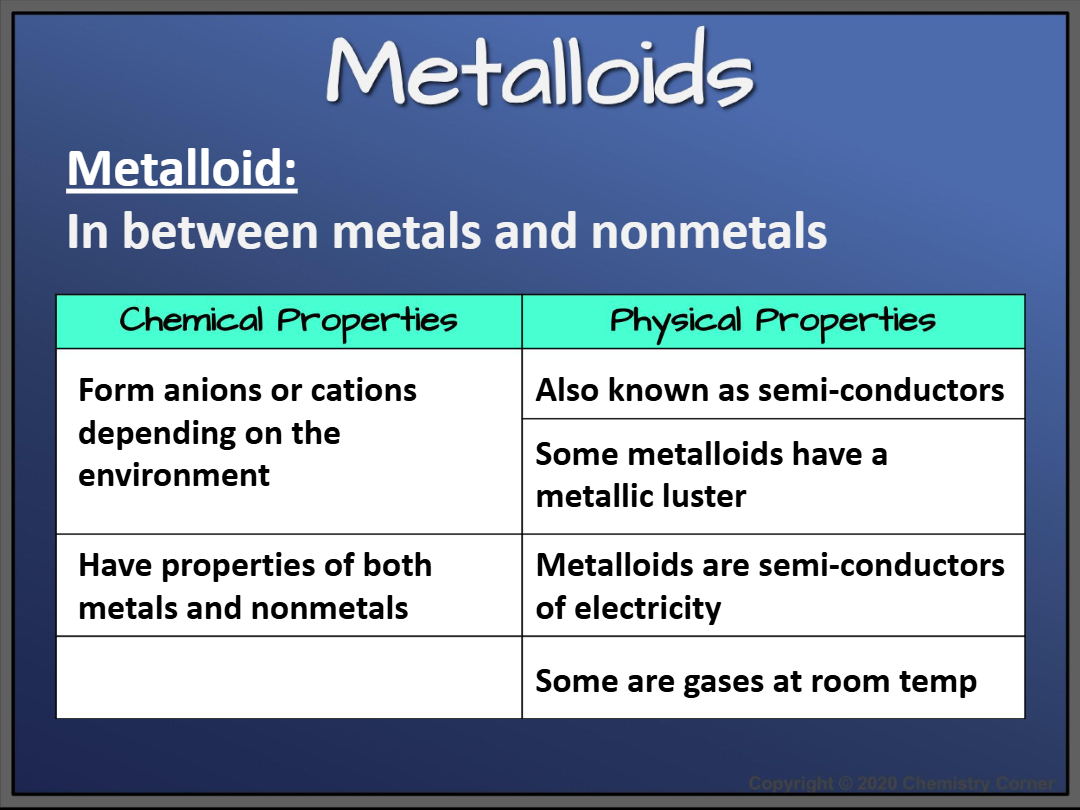
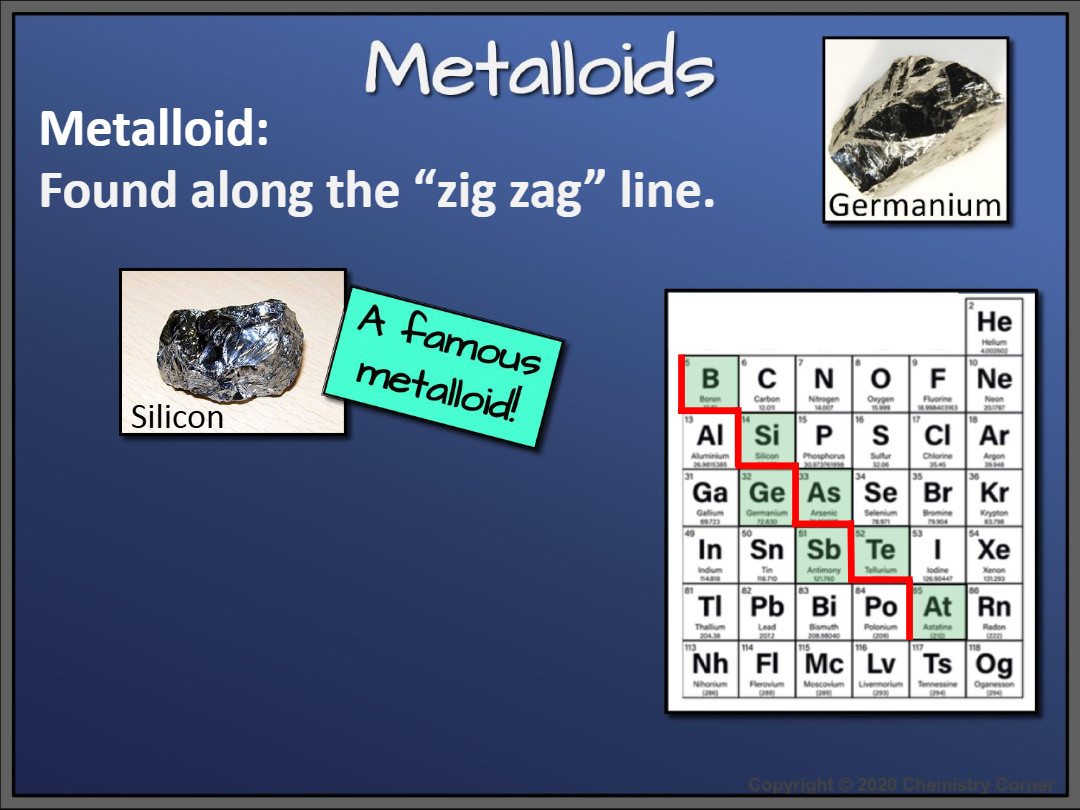
Explain how the chemical and physical properties of metalloids make them useful in technology.
36
37
Multiple Choice
Which of the following elements are classified as metalloids?
Silicon, Germanium, Arsenic, Antimony
Oxygen, Nitrogen, Fluorine, Neon
Sodium, Magnesium, Aluminum, Calcium
Chlorine, Bromine, Iodine, Helium
38
39
Multiple Choice
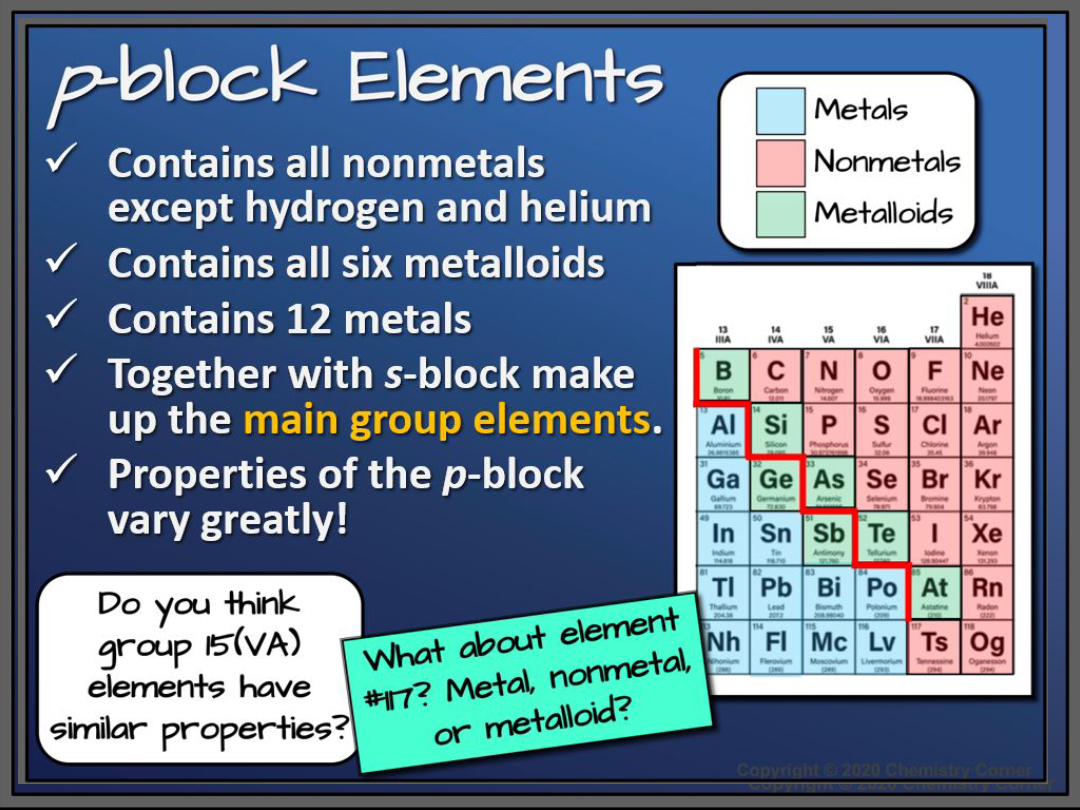
What about element #17? Metal, nonmetal, or metalloid?
Metal
Nonmetal
Metalloid
Transition metal
40
Fill in the Blanks
Type answer...
41
42
Multiple Choice
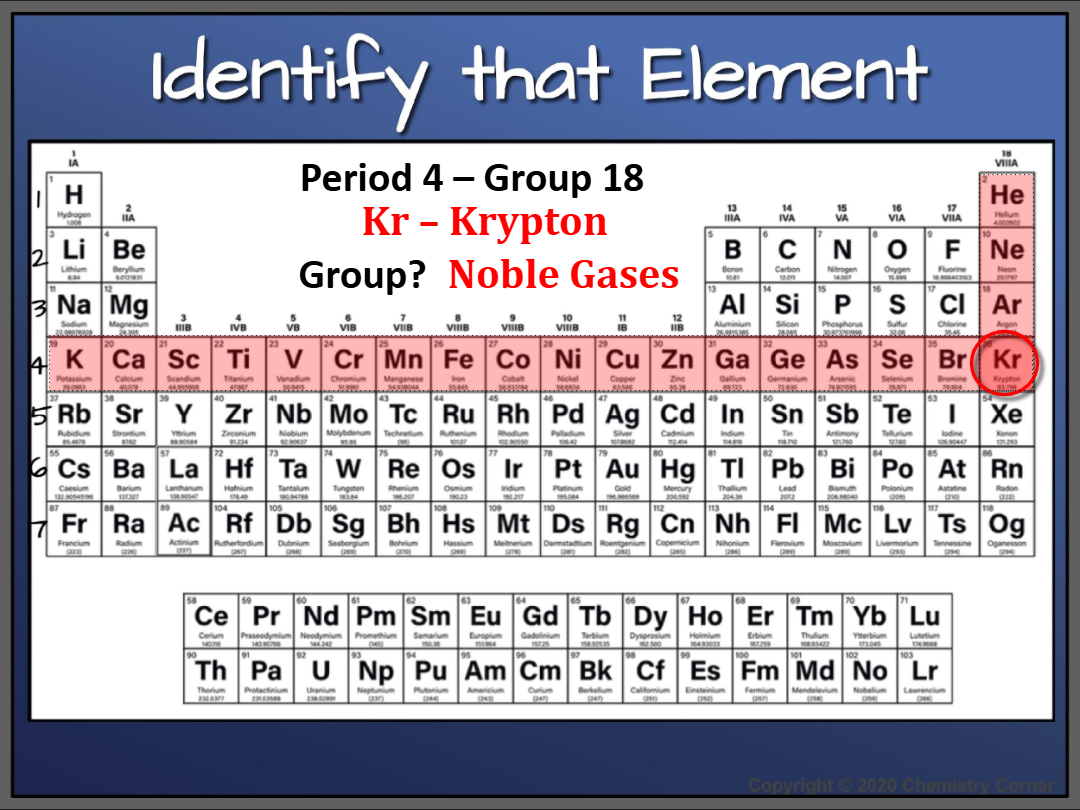
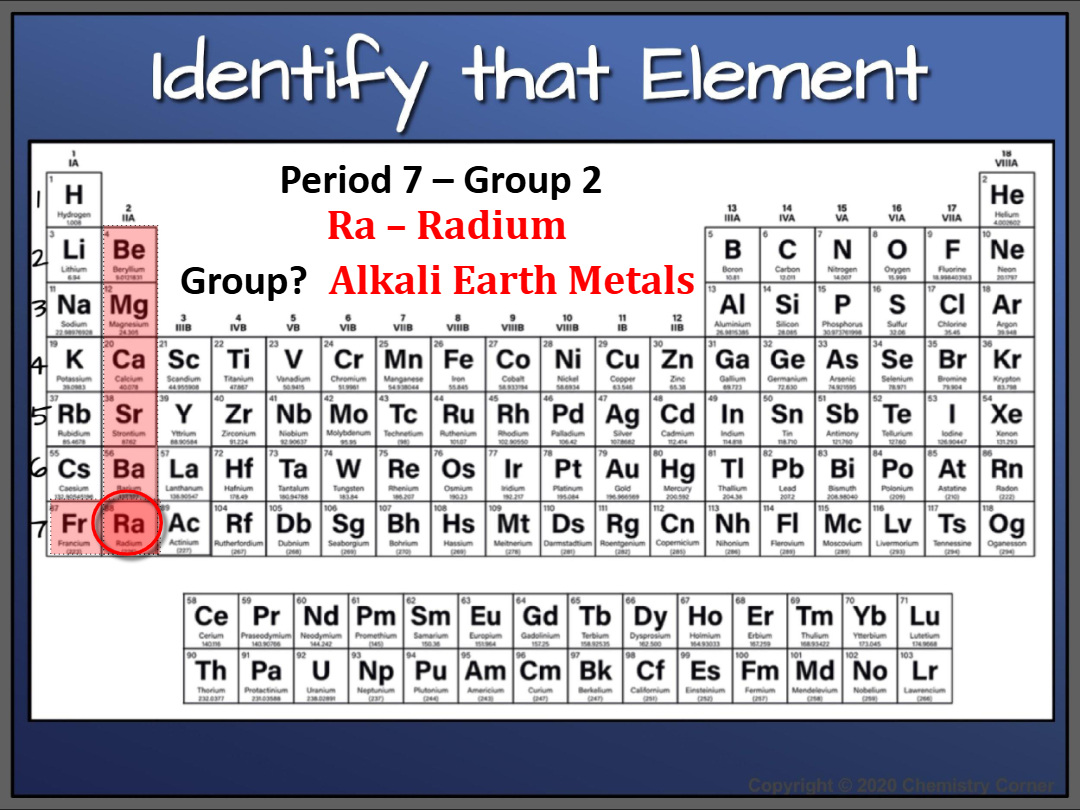
Which element belongs to Group 18 and is classified as a noble gas?
Krypton
Iodine
Radium
Argon
43
44
45
Multiple Choice
Would you like to learn more about how elements are grouped in the periodic table or how their properties differ across classes?
Yes, I want to learn more about element groups.
Yes, I want to learn more about element properties.
No, I feel confident about my understanding.
I have other questions.
46
Open Ended
Reflecting on today's lesson about periodic structure and element classes, what is one thing you learned that surprised you or changed your understanding of the periodic table?
47
Fill in the Blanks
Type answer...
48
Open Ended
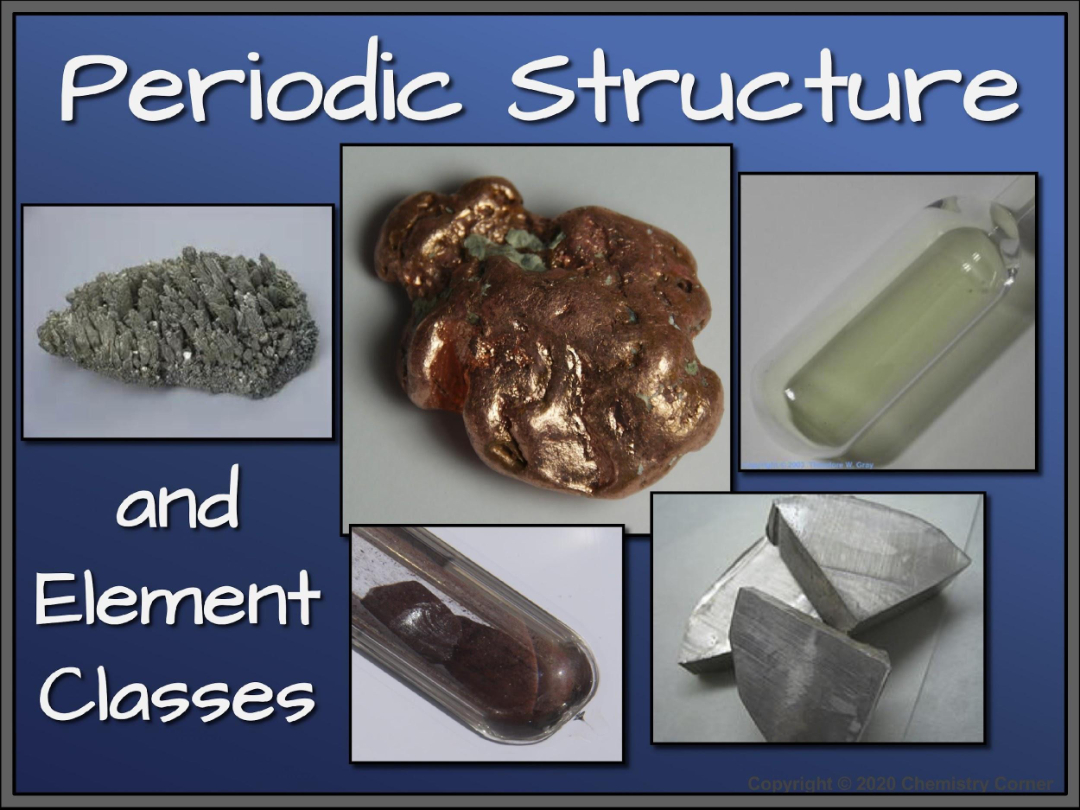
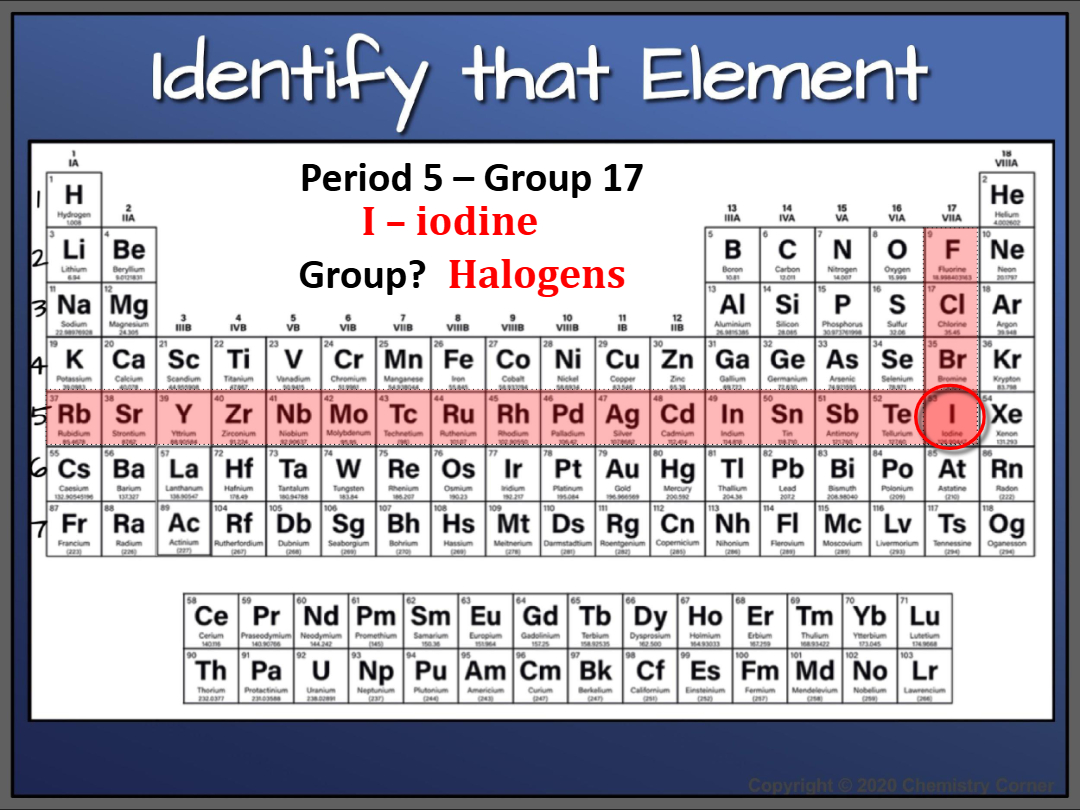
Compare the properties of the elements highlighted in images 1, 2, and 3. How do their group classifications influence their chemical behavior?
Show answer
Auto Play
Slide 1 / 48
SLIDE
Similar Resources on Wayground

44 questions
Unit 2 Lesson 4 Atomic Theory and PEN
Presentation
•
10th - 12th Grade
39 questions
Electron Configuration
Presentation
•
10th Grade
44 questions
Major Cell Organelles-Eukaryotic Cells
Presentation
•
10th Grade
45 questions
Last Chem Test Review!
Presentation
•
10th Grade
42 questions
Atomic Theory
Presentation
•
10th Grade
43 questions
Ionic Radius Trends and Multiple Ionization Energies
Presentation
•
10th - 11th Grade
42 questions
Factors of Production ECON
Presentation
•
10th Grade
45 questions
Mitosis & Meiosis Review
Presentation
•
9th - 10th Grade
Popular Resources on Wayground
11 questions
Hallway & Bathroom Expectations

Quiz
•
6th - 8th Grade
10 questions
HCS SCI 03 Summer School Assessment 2
Quiz
•
3rd Grade
11 questions
Home Scope
Quiz
•
7th - 8th Grade
12 questions
2026 TAP Technology in the Classroom
Presentation
•
Professional Development
15 questions
HCS SCI 05 Summer School Assessment 2 Review
Quiz
•
5th Grade
15 questions
HCS SCI 04 Summer School Review 2
Quiz
•
4th Grade
59 questions
Geometry Unit 3 Review
Quiz
•
9th - 12th Grade
14 questions
FAST ELA READING SMAPLE TEST MATERIALS

Passage
•
3rd Grade