

THerapeutic Equipment

Presentation
•
Health Sciences
•
9th - 12th Grade
•
Practice Problem
•
Medium

JESSICA Lynn THIEL WEBB
Used 3+ times
FREE Resource
38 Slides • 13 Questions
1

2

3
Multiple Choice
Which of the following is NOT typically considered a therapeutic exercise technique?
Continuous passive motion machine
Aquatic therapy
Manual therapy
Cardiopulmonary resuscitation
4

5
Multiple Choice
Which of the following is NOT one of the principles of exercise equipment and techniques?
Progression
Overload
Flexibility
Specificity
6

7

8
Multiple Choice
Which of the following are important considerations when choosing therapeutic equipment for rehabilitation programs?
Low starting speed
Handles and grab bars for safety
Larger/brighter screens for visually impaired
All of the above
9
10
Multiple Choice
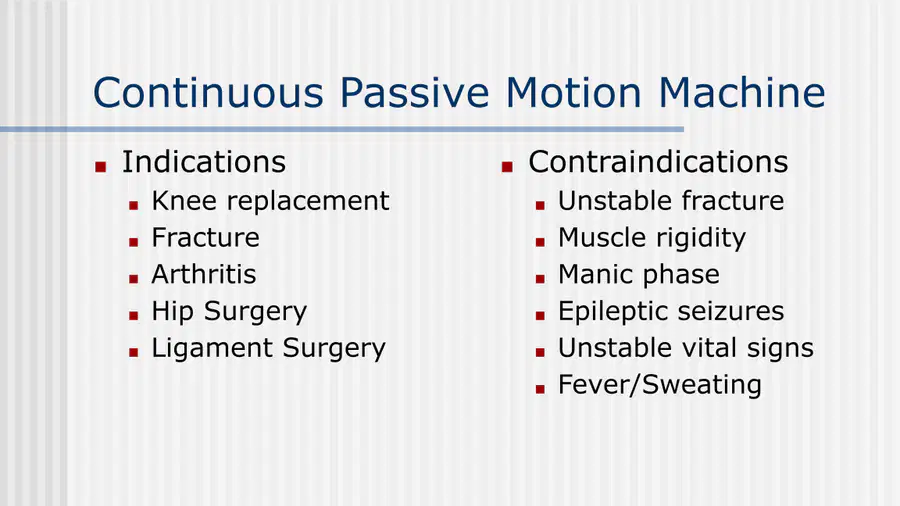
Continuous Passive Motion Machines are indicated for all of the following EXCEPT:
Knee replacement
Arthritis
Unstable fracture
Ligament surgery
11
12

13
14
Multiple Choice
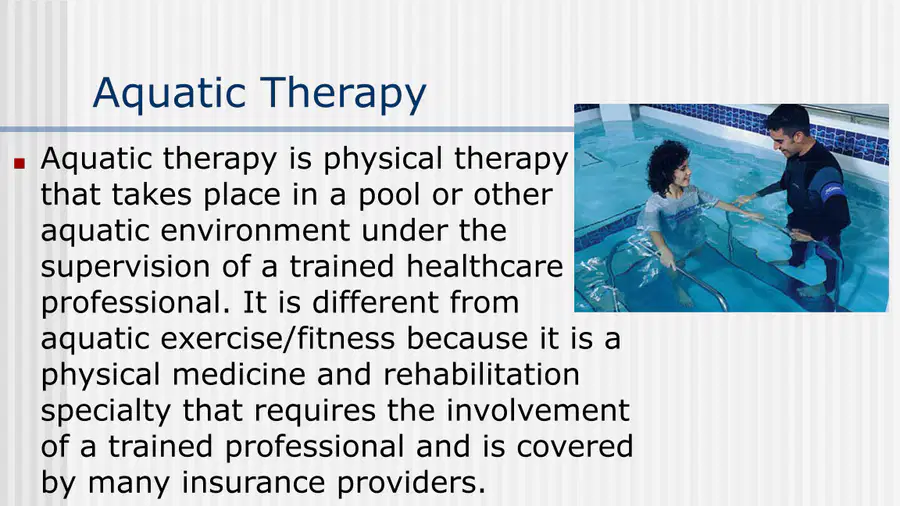
Which of the following best describes aquatic therapy?
Physical therapy conducted in a pool under supervision of a healthcare professional
Swimming for fitness without supervision
Water aerobics classes for general health
Unsupervised exercise in water
15
16

17
18
Multiple Choice
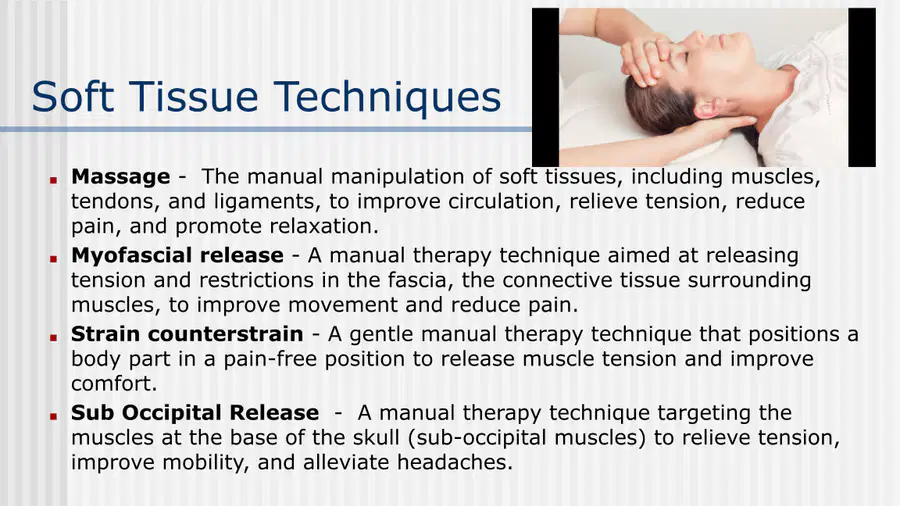
Which of the following soft tissue techniques is primarily aimed at releasing tension and restrictions in the fascia?
Massage
Myofascial release
Strain counterstrain
Sub Occipital Release
19
20
Multiple Select
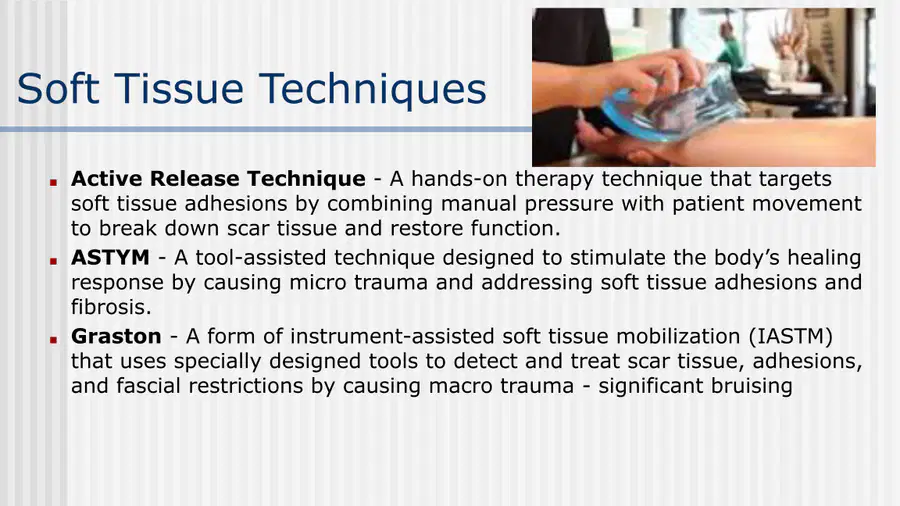
Select all that apply: Which of the following techniques are instrument-assisted soft tissue mobilization methods?
Active Release Technique
ASTYM
Graston
Massage
21
22
23
Multiple Choice
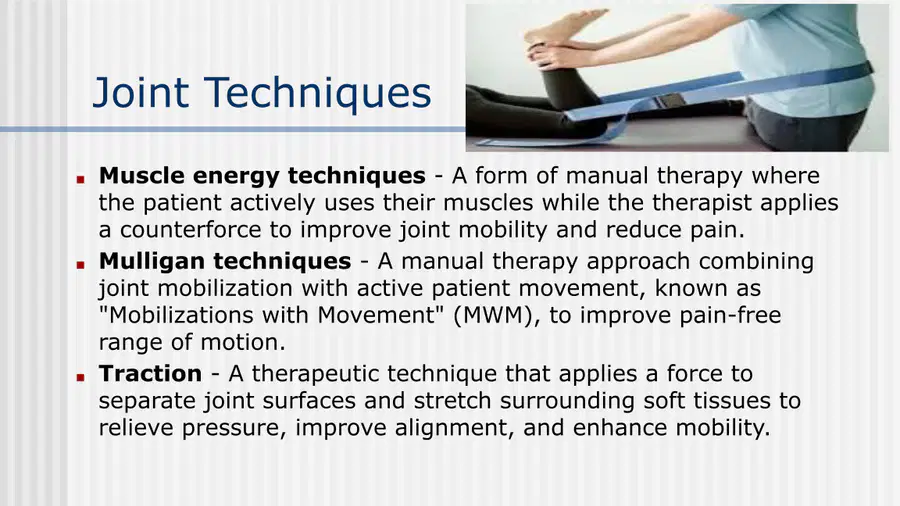
Which joint technique involves the patient actively using their muscles while the therapist applies a counterforce to improve joint mobility and reduce pain?
Muscle energy techniques
Mulligan techniques
Traction
Passive stretching
24
25
26
27
Multiple Select
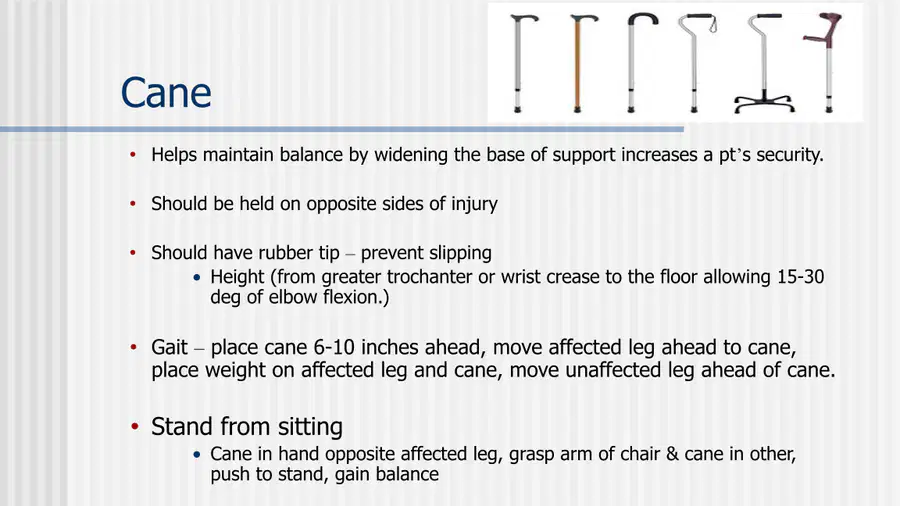
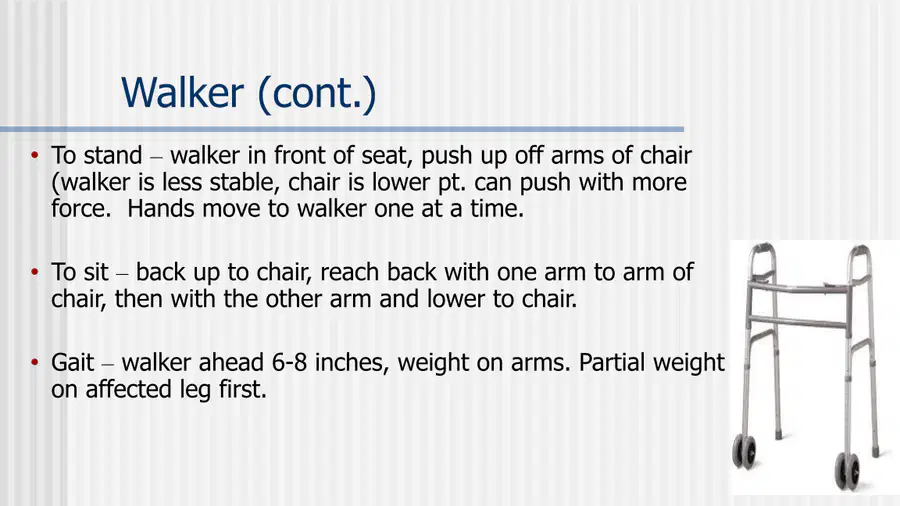
Which of the following are important considerations when using a cane for mobility?
Hold cane on opposite side of injury
Ensure cane has a rubber tip
Place cane 6-10 inches ahead when walking
Use cane on same side as injury
28
29
30

31
Multiple Choice
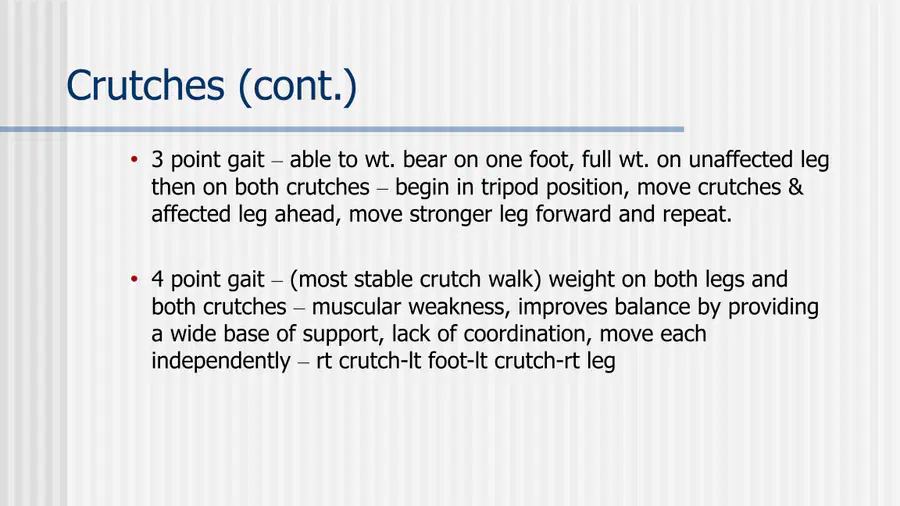
Which of the following is a possible consequence of resting on top of crutches?
Crutch paralysis due to pressure on axilla nerves
Improved balance
Increased walking speed
Reduced risk of injury
32
33

34
Multiple Select
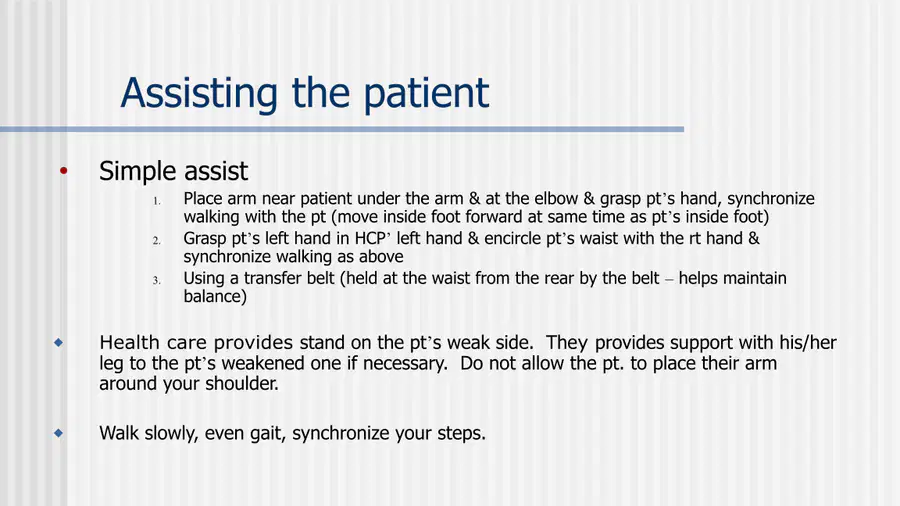
Which of the following are functions of assistive devices in ambulation?
Increase stability
Support a weak extremity
Reduce the load on weight bearing structures
Increase muscle mass
35
36
37
Multiple Choice
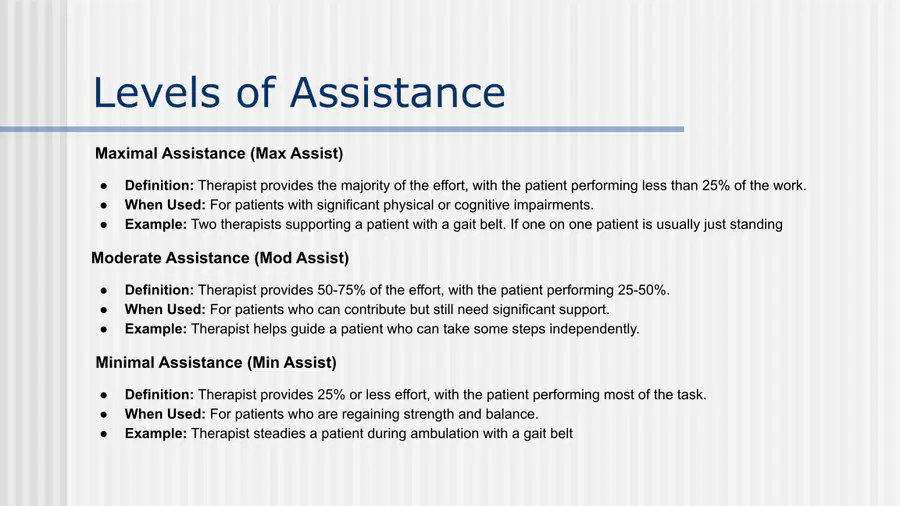
A therapist provides 50-75% of the effort, with the patient performing 25-50% of the work. What level of assistance is this?
Maximal Assistance
Moderate Assistance
Minimal Assistance
Contact Guard Assist
38
39
40
41
42
43
44
45
46
47
48
49
50
51
Open Ended
Reflecting on today's lesson, what is one principle or theory behind the use of therapeutic exercise equipment and techniques that you found most interesting or important?
Show answer
Auto Play
Slide 1 / 51
SLIDE
Similar Resources on Wayground

50 questions
Web Development Review
Presentation
•
9th - 12th Grade
46 questions
Matrices; 11.2
Presentation
•
9th - 12th Grade
45 questions
Synthetic Materials Tutorial
Presentation
•
9th - 12th Grade
47 questions
The Periodic Table
Presentation
•
10th - 12th Grade
46 questions
Español 2 - U4.2 Preterite Grammar Review
Presentation
•
9th - 12th Grade
43 questions
Poetry, Prose, and Drama
Presentation
•
9th - 12th Grade
45 questions
Commonly Confused Words
Presentation
•
10th - 11th Grade
44 questions
STAAR review vocabulary terms 2
Presentation
•
9th - 12th Grade
Popular Resources on Wayground
24 questions
PBIS-HGMS Day 10

Quiz
•
6th - 8th Grade
10 questions
HCS SCI 03 Summer School Review 3
Quiz
•
3rd Grade
11 questions
Home Scope
Quiz
•
7th - 8th Grade
15 questions
HCS SCI 05 Summer School Assessment 3 Review
Quiz
•
5th Grade
35 questions
Lufkin Road Middle School Student Handbook & Policies Assessment
Quiz
•
7th Grade
18 questions
Geo 11.3 Area of Circles and Sectors
Quiz
•
9th - 11th Grade