

Analyzing Wartime Restrictions

Presentation
•
Social Studies
•
11th Grade
•
Practice Problem
•
Hard

Magaly Portillo [Del Sol HS]
FREE Resource
14 Slides • 16 Questions
1
2
Multiple Choice
Why is it important to study the impact of wartime restrictions on civil liberties during World War I?
To understand how laws can affect personal freedoms during times of crisis
To learn about military strategies used in World War I
To compare different countries' approaches to war
To focus on technological advancements during the war
3

4
Open Ended
How did the Espionage Act of 1917 affect freedom of speech and civil liberties in the United States during World War I?
5
6
Multiple Choice
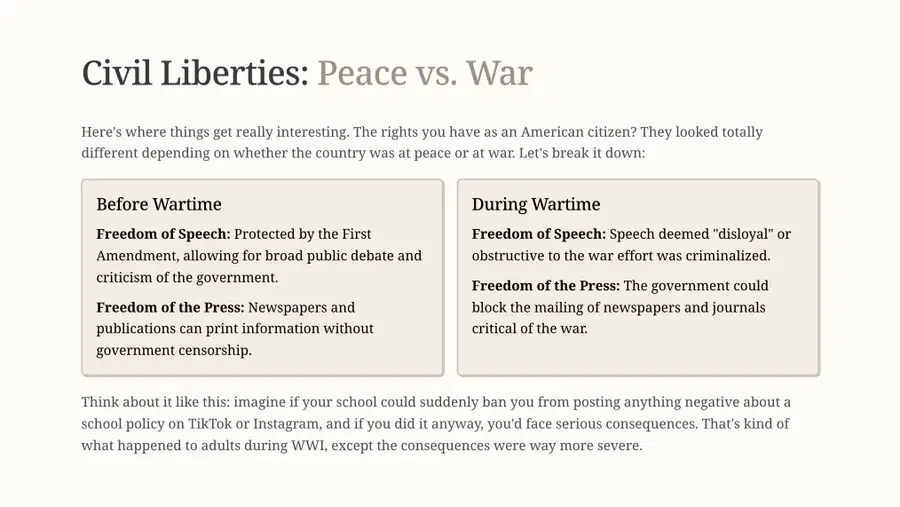
Which of the following best describes the difference in civil liberties between peacetime and wartime in the United States during World War I?
Freedom of speech and press were protected at all times.
Freedom of speech and press were restricted only during peacetime.
Freedom of speech and press were restricted during wartime to support the war effort.
Freedom of speech and press were never protected.
7
8
Open Ended
How did government surveillance change during World War I, and what impact did it have on American society?
9
10
Fill in the Blanks
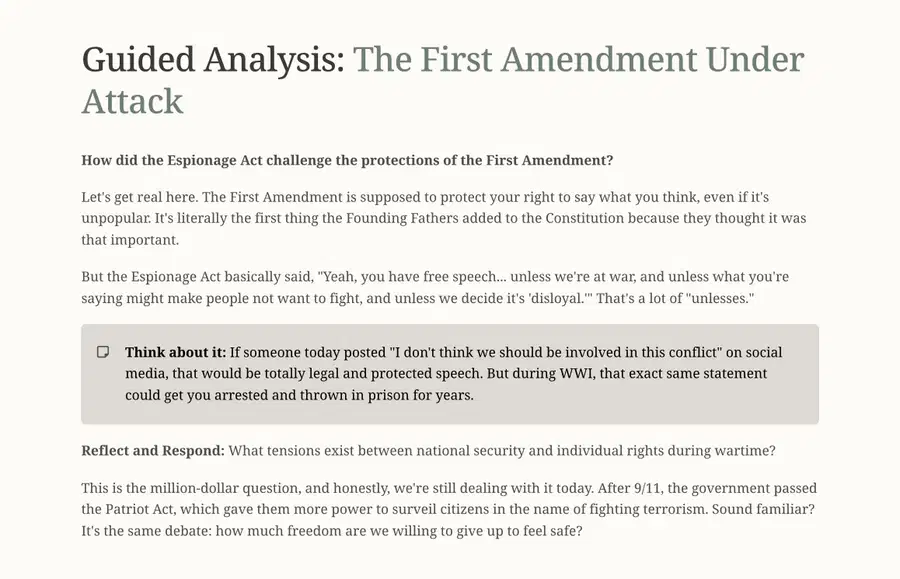
How did the Espionage Act challenge the protections of the First Amendment?
Type answer...
11
12
Multiple Choice
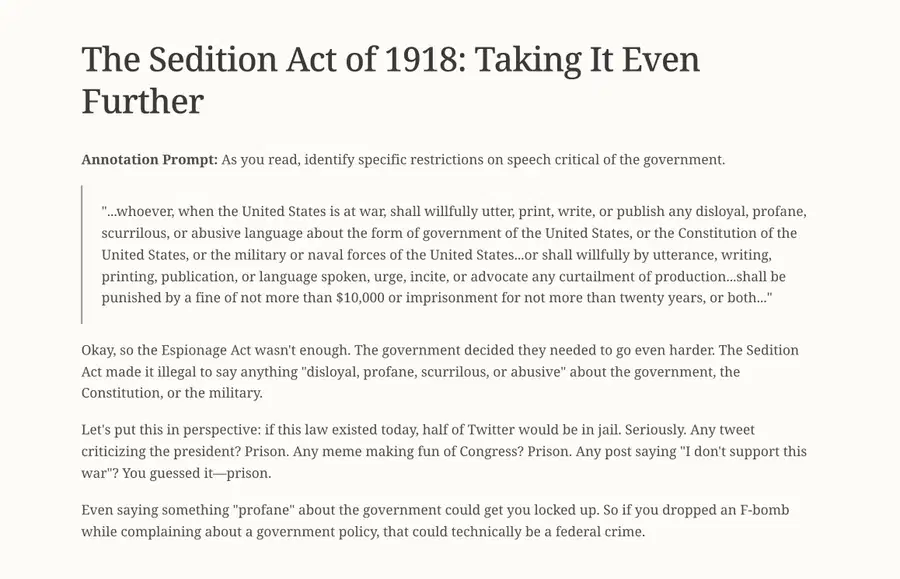
Which of the following were made illegal under the Sedition Act of 1918?
Criticizing the government or military during wartime
Supporting the war effort
Praising the Constitution
Writing positive articles about the president
13
14
Multiple Choice
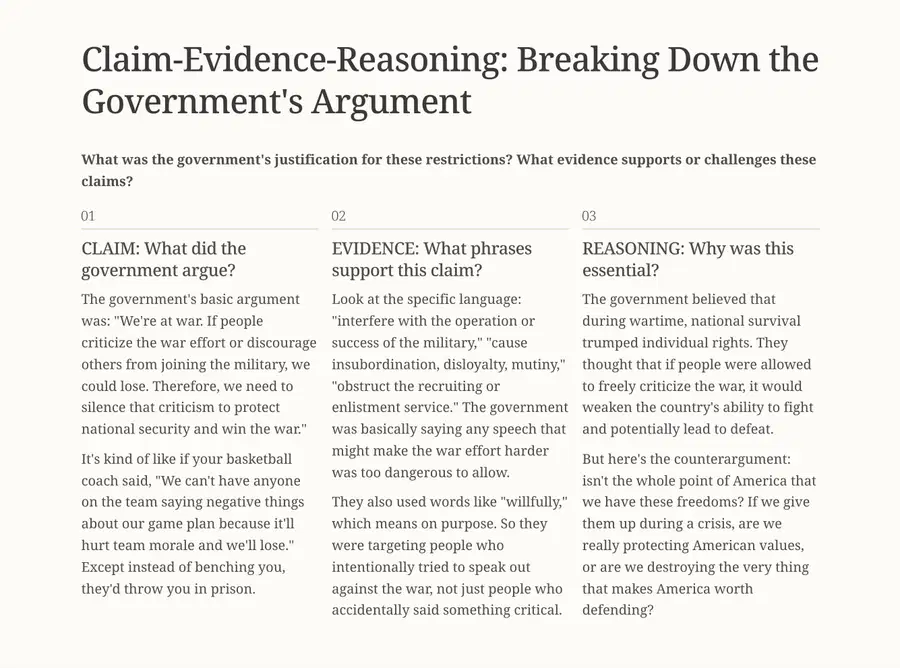
What was the government's main justification for restricting free speech during wartime, according to the claim-evidence-reasoning breakdown?
To protect individual rights
To encourage public debate
To protect national security and win the war
To allow criticism of the government
15
16
Open Ended
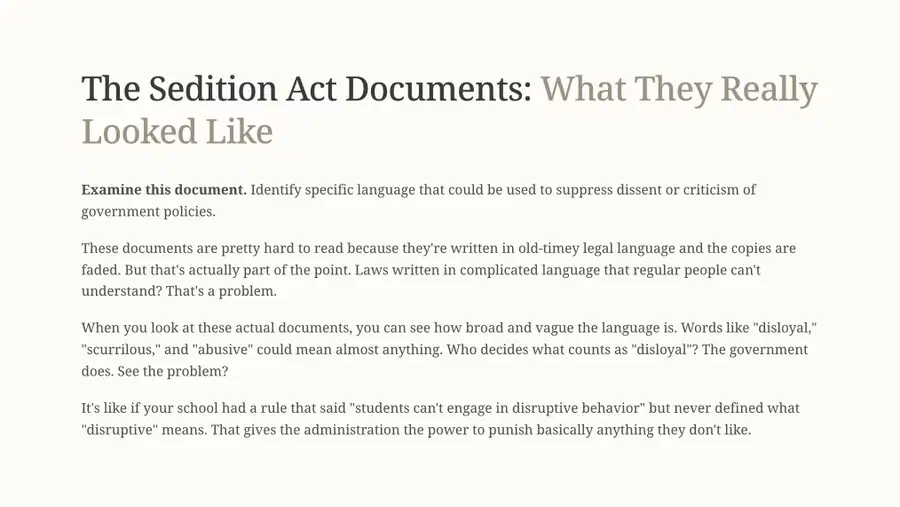
Why is the vague language in the Sedition Act considered problematic for protecting civil liberties?
17
18
Multiple Choice
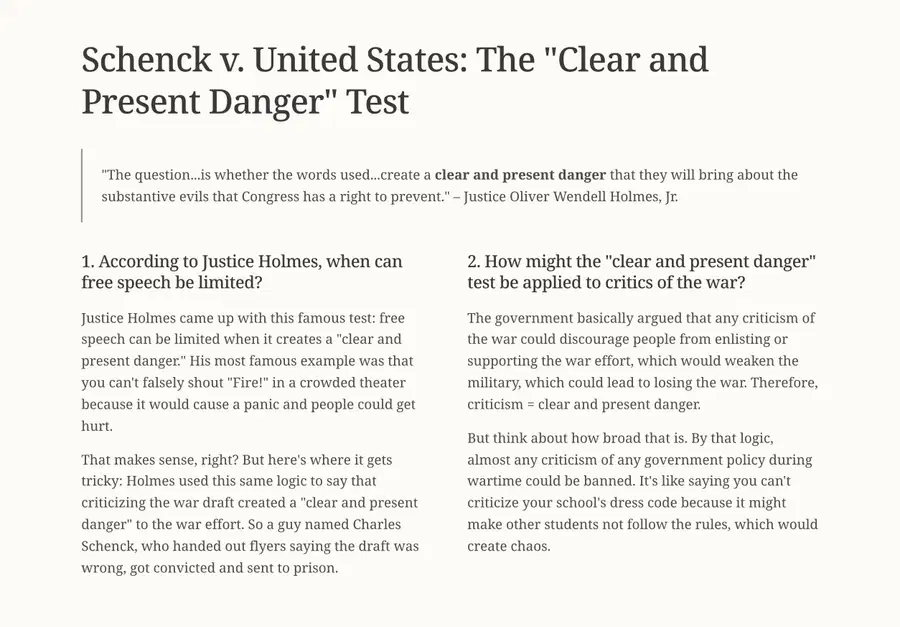
According to Justice Holmes, when can free speech be limited?
When it creates a clear and present danger
When it is unpopular
When it criticizes the government
When it is during wartime
19

20
Multiple Select
How does wartime mobilization lead to suppression of dissent, according to the flowchart?
It increases national unity, which discourages dissent
It promotes propaganda techniques that justify restricting civil liberties
It encourages emotional appeals that make dissent unpopular
It demonizes the enemy, making dissent seem unpatriotic
21
22
Open Ended
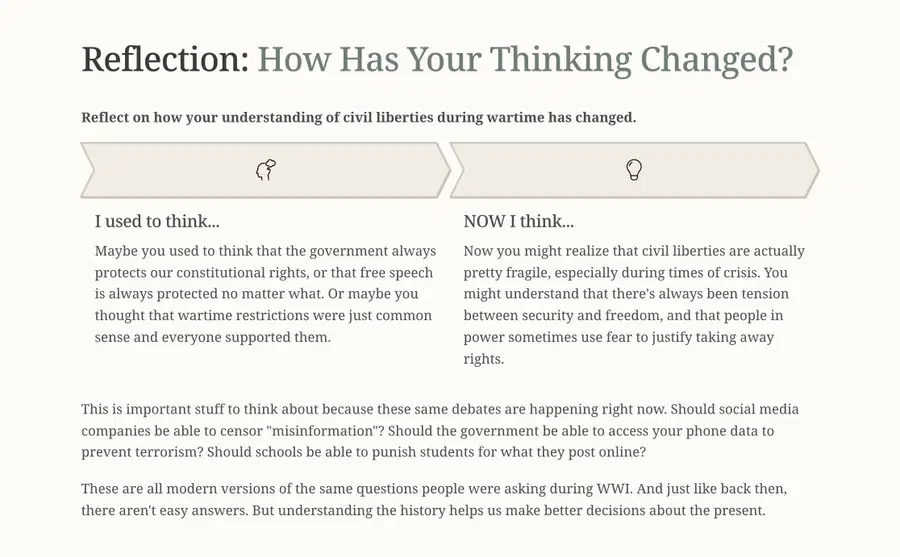
Reflecting on the lesson, how has your understanding of civil liberties during wartime changed?
23
24
Fill in the Blanks
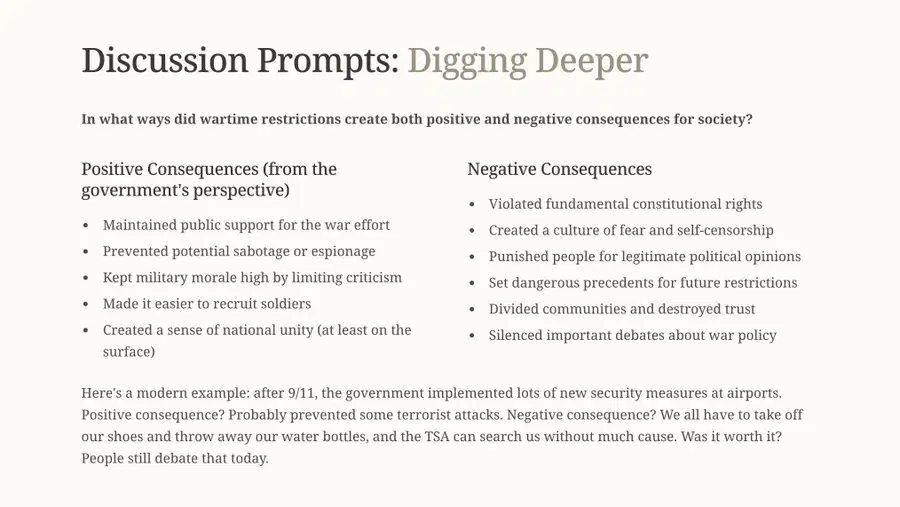
Wartime restrictions created both positive and negative consequences for society. Fill in the blank: One negative consequence was the violation of fundamental
Type answer...
25
26
Multiple Choice
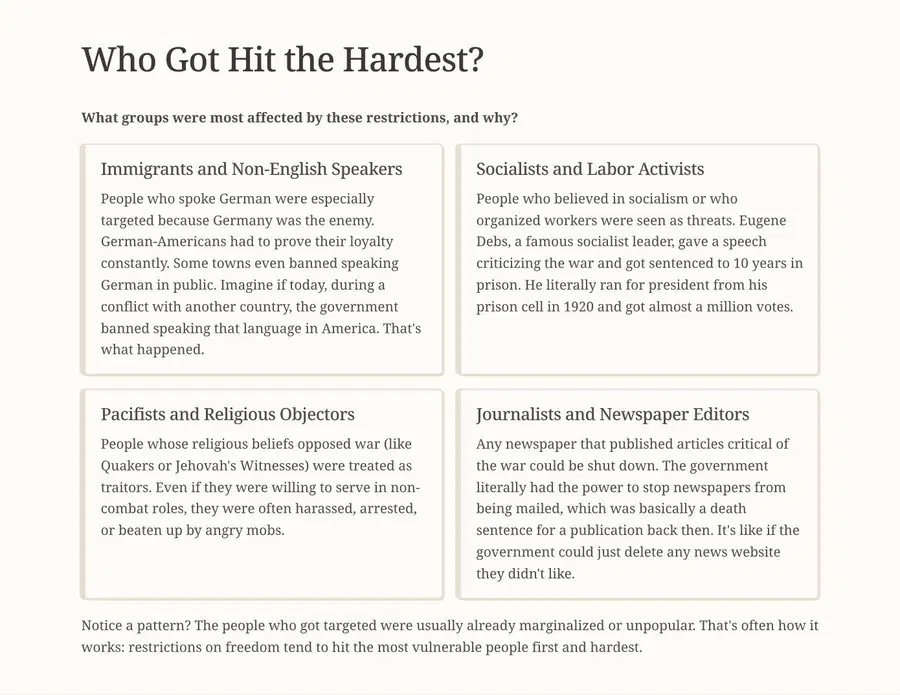
Which of the following groups were most affected by wartime restrictions?
Immigrants and Non-English Speakers
Journalists and Newspaper Editors
Pacifists and Religious Objectors
All of the above
27
28
Open Ended
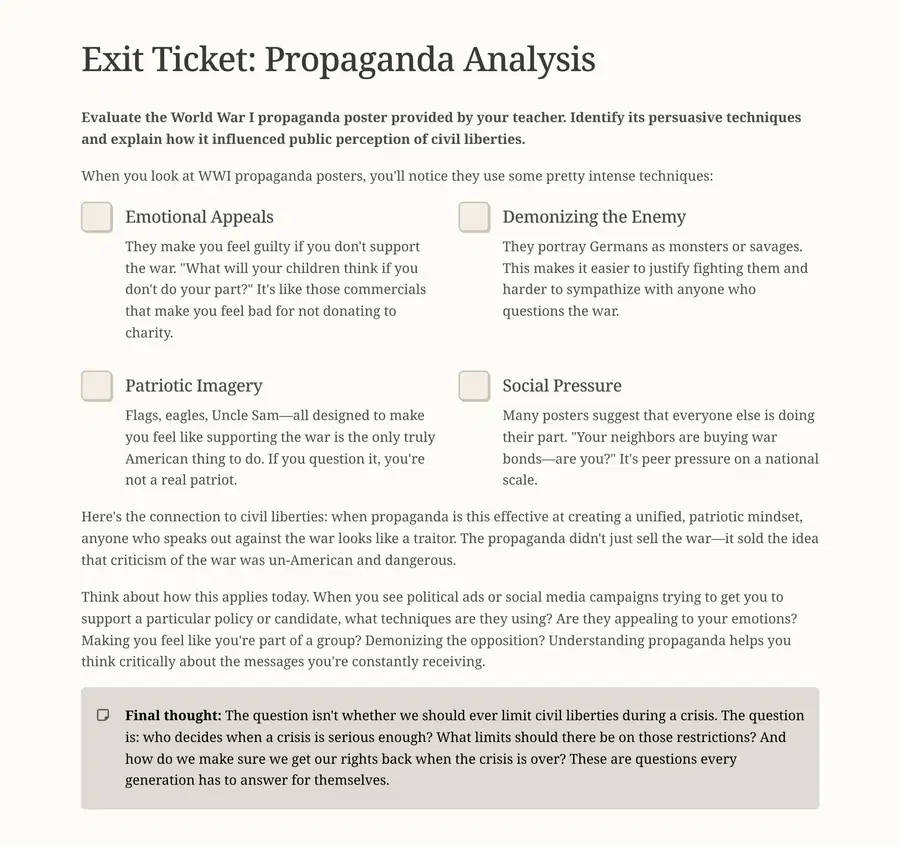
Identify two persuasive techniques used in World War I propaganda posters and explain how they influenced public perception of civil liberties.
29
Open Ended
Reflecting on what you learned about wartime restrictions and the Espionage Act, do you think such laws are justified during times of war? Why or why not?
30
Multiple Choice
How did the Espionage Act of 1917 impact civil liberties in the United States during World War I?
It protected freedom of speech for all citizens.
It made it illegal to criticize the government or discourage military enlistment.
It encouraged public debate about the war.
It reduced penalties for insubordination in the military.
Show answer
Auto Play
Slide 1 / 30
SLIDE
Similar Resources on Wayground

20 questions
Industrialization
Presentation
•
11th Grade
19 questions
SSUSH8B: Manifest Destiny
Presentation
•
11th Grade
24 questions
PENDAPATAN NASIONAL XI IPS
Presentation
•
11th Grade
23 questions
Waves Review
Presentation
•
11th Grade
23 questions
Wave Mechanics
Presentation
•
11th Grade
24 questions
Government Response to the Great Depression
Presentation
•
11th Grade
26 questions
Introduction to the Cold War
Presentation
•
11th Grade
23 questions
1960s Cold War
Presentation
•
11th Grade
Popular Resources on Wayground
10 questions
Safety Day 2026 – Student Review

Quiz
•
9th Grade
21 questions
Continents and Oceans
Quiz
•
6th Grade
20 questions
Parts of Speech
Quiz
•
5th Grade
16 questions
Subject & Predicate
Quiz
•
5th Grade
25 questions
Multiplication Facts
Quiz
•
5th Grade
12 questions
Map Skills
Quiz
•
3rd Grade
22 questions
Continents and Oceans
Quiz
•
5th Grade
15 questions
Rounding Decimals
Quiz
•
5th Grade
Discover more resources for Social Studies
39 questions
Unit 7 Key Terms
Quiz
•
11th Grade - University
38 questions
Unit 6 Key Terms
Quiz
•
11th Grade - University
38 questions
The Progressive Era
Quiz
•
11th Grade
25 questions
Progressive Era
Quiz
•
11th Grade
25 questions
Gilded Age Gallery Walk
Presentation
•
9th - 12th Grade
20 questions
How The Constitution Has Changed
Quiz
•
11th Grade
25 questions
Mastery Quiz SSUSH 11-14
Quiz
•
11th Grade
30 questions
Q1 US History Check
Quiz
•
11th Grade