Search Header Logo
Ionic Bonds

Ionic Bonds

Assessment

Presentation

Chemistry

9th - 12th Grade

Practice Problem

Easy

NGSS
HS-PS1-1, HS-PS1-3, HS-PS3-5

+3

Standards-aligned

Created by

Rory O'Neill

Used 2+ times

FREE Resource

30 Slides • 27 Questions

1
media

2

Multiple Choice

Why are ionic bonds significant in chemistry?

1

They help explain the formation of salts and minerals.

2

They are only found in organic compounds.

3

They do not affect the properties of substances.

4

They are weaker than covalent bonds.

3

media

4

media

5

Fill in the Blanks

6

media

7

media

8

Multiple Choice

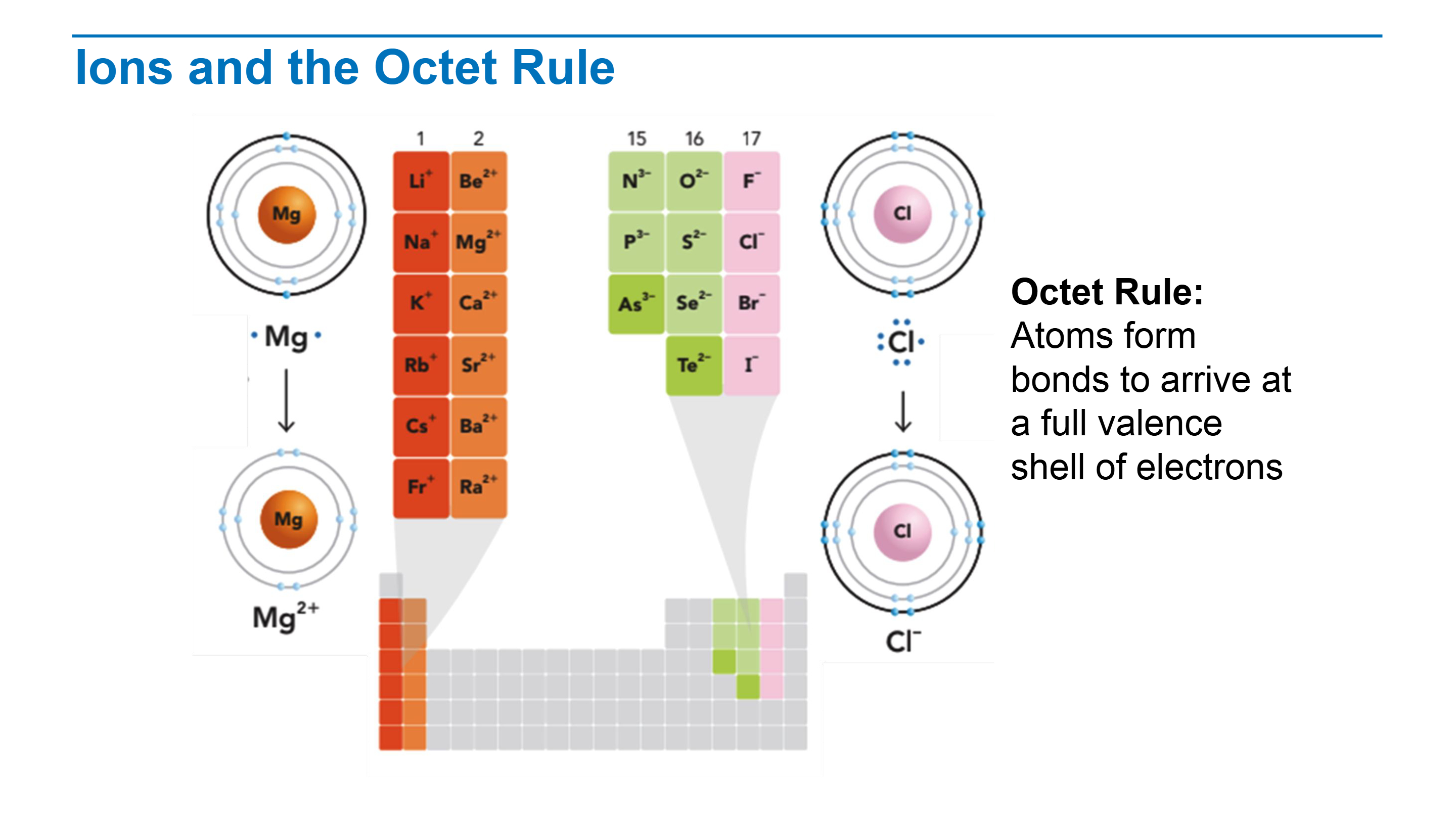
Which of the following elements are likely to form anions according to the periodic table and octet rule?

1

Chlorine (Cl)

2

Magnesium (Mg)

3

Sodium (Na)

4

Calcium (Ca)

9

media

10

Multiple Choice

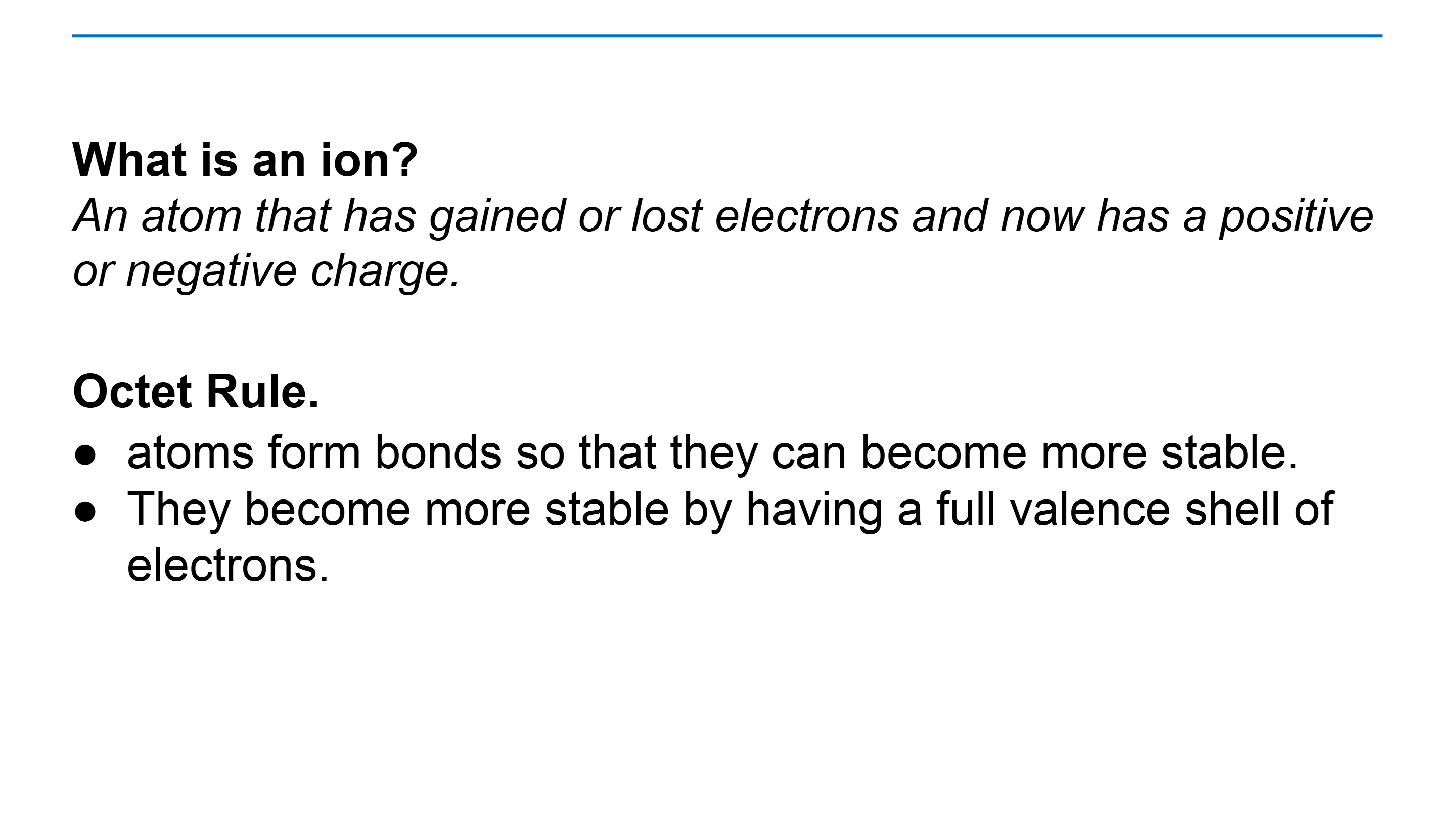
Which of the following statements best describes an ion?

1

An atom that has gained or lost electrons and now has a positive or negative charge.

2

An atom with a full valence shell of electrons.

3

An atom that only shares electrons with other atoms.

4

An atom that cannot form bonds.

11

media

12

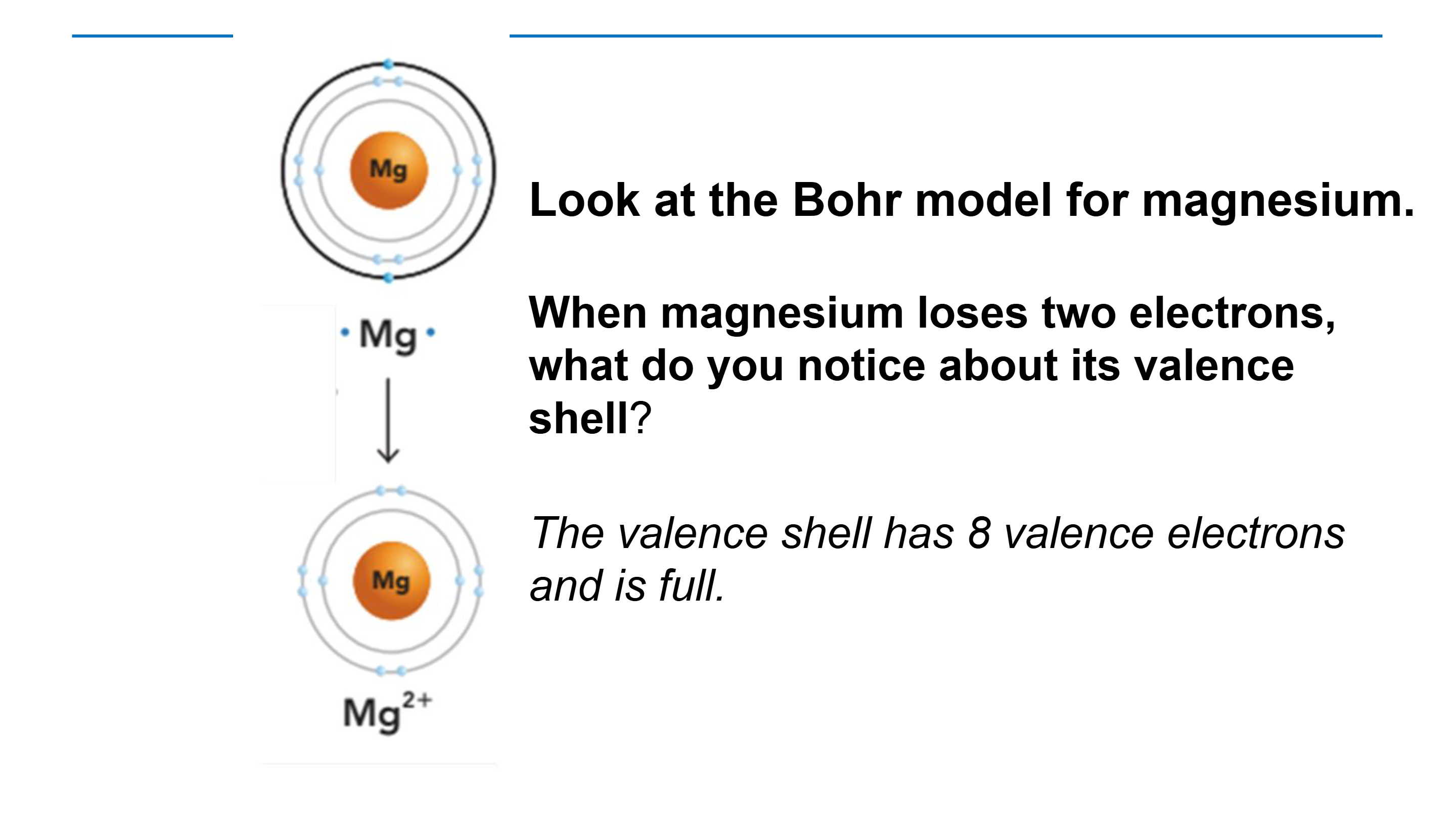
Multiple Choice

What happens to the valence shell of magnesium when it loses two electrons?

1

It becomes empty.

2

It has 8 valence electrons and is full.

3

It gains two electrons.

4

It remains unchanged.

13

media

14

Open Ended

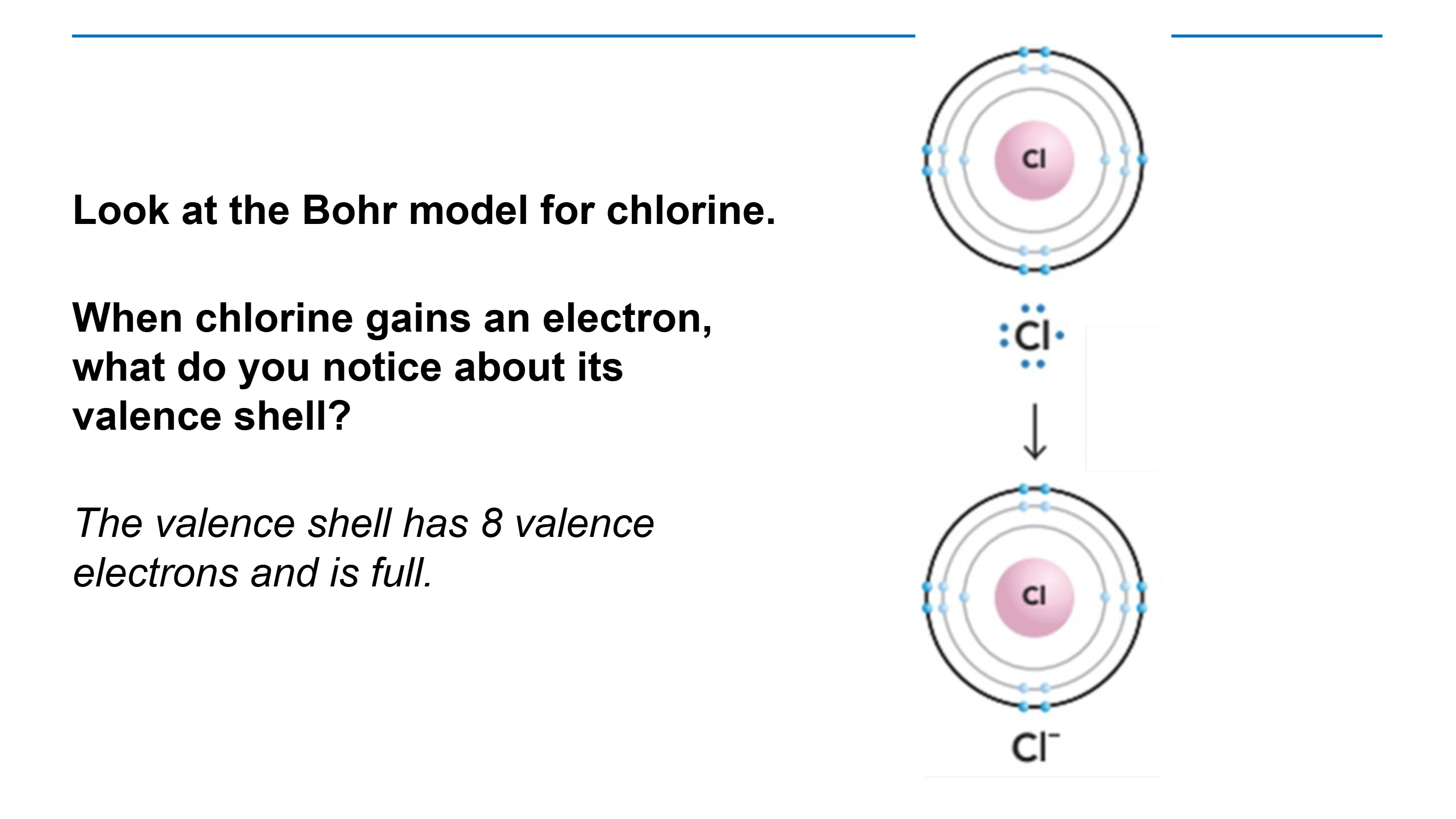
Describe the change in the valence shell of chlorine when it gains an electron.

15

Open Ended

Explain how the octet rule influences the formation of ions, using magnesium and chlorine as examples.

16

media

17

media

18

Open Ended

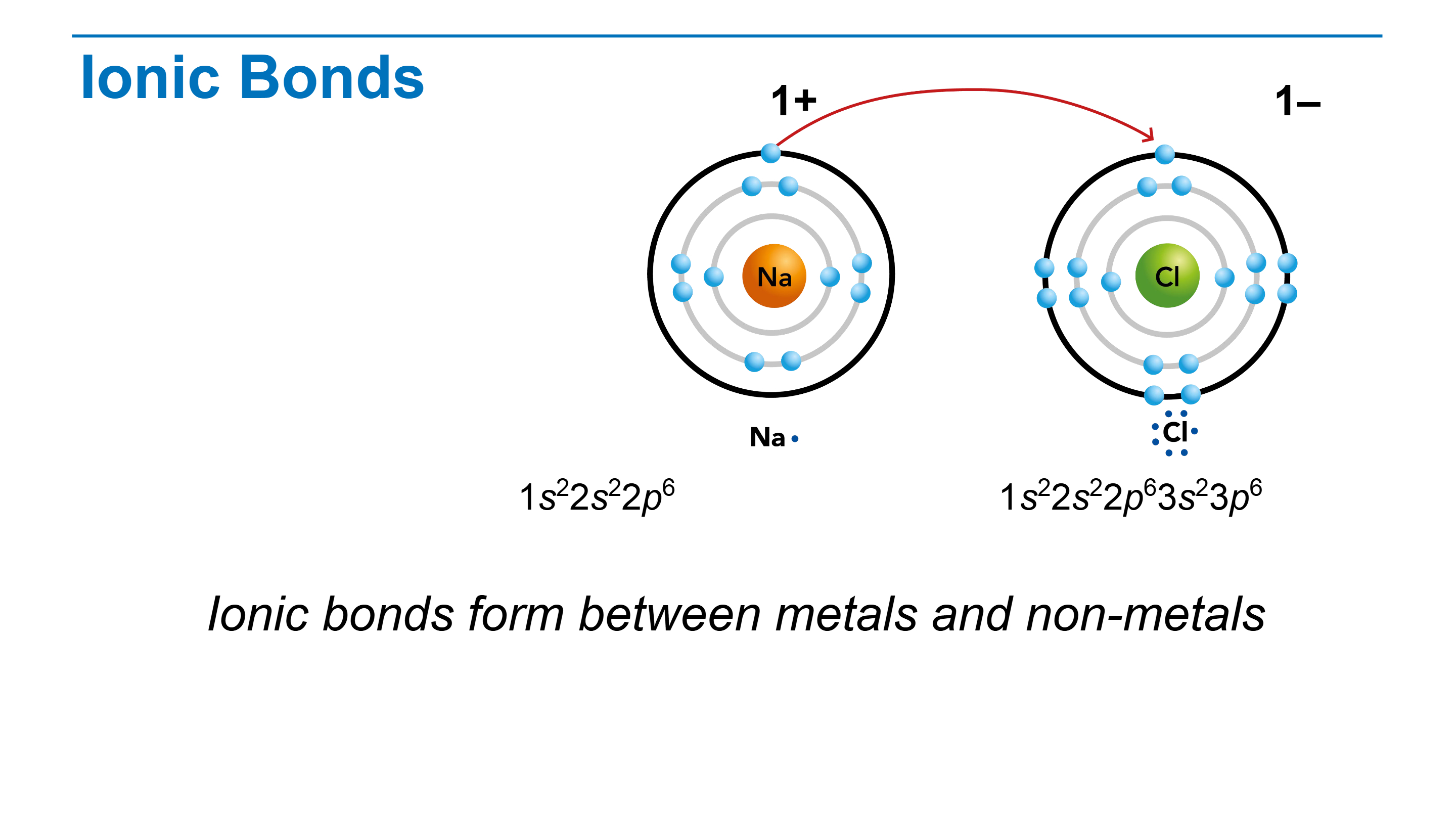
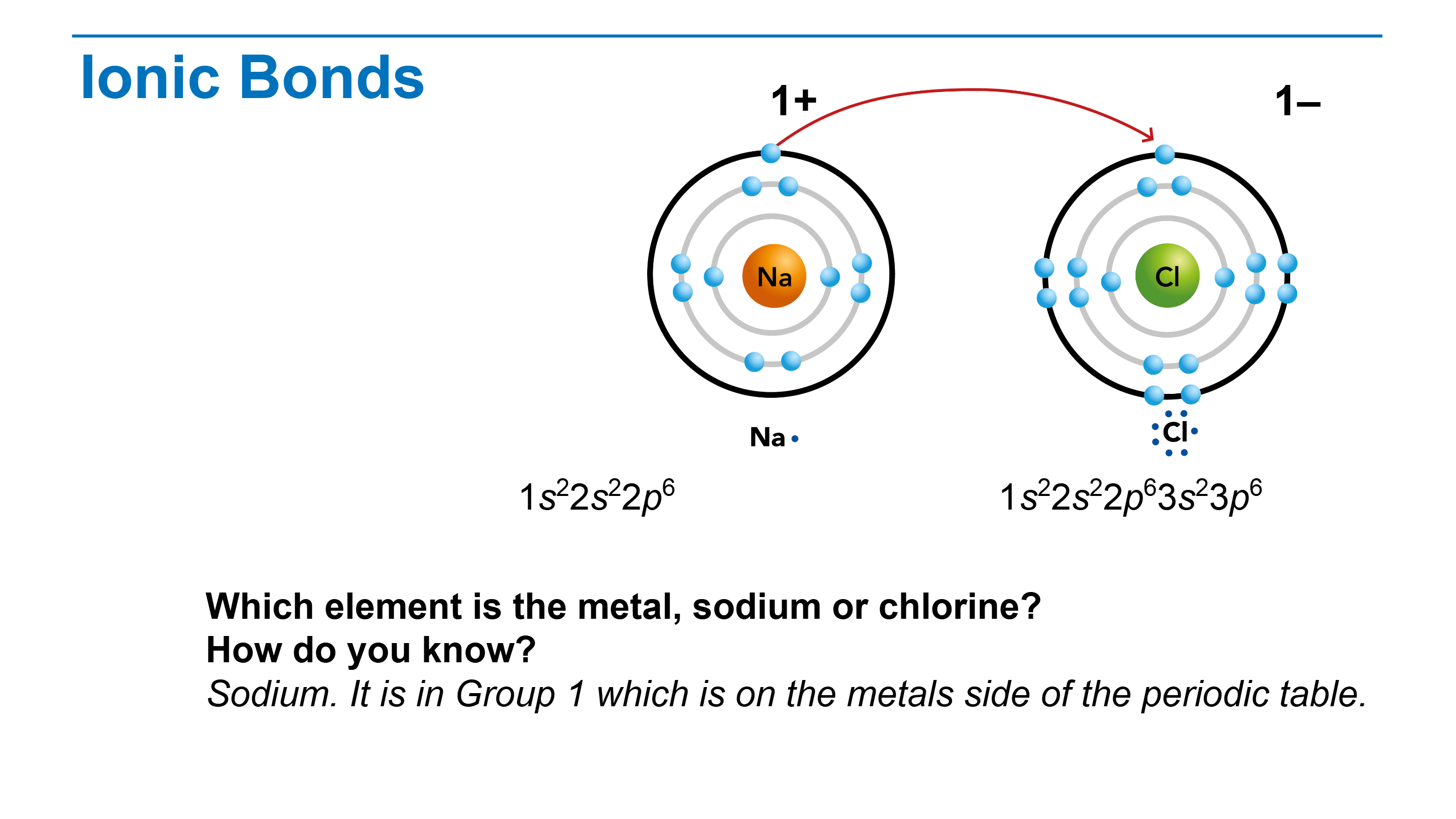
Which element is the metal, sodium or chlorine? How do you know?

19

media

20

Open Ended

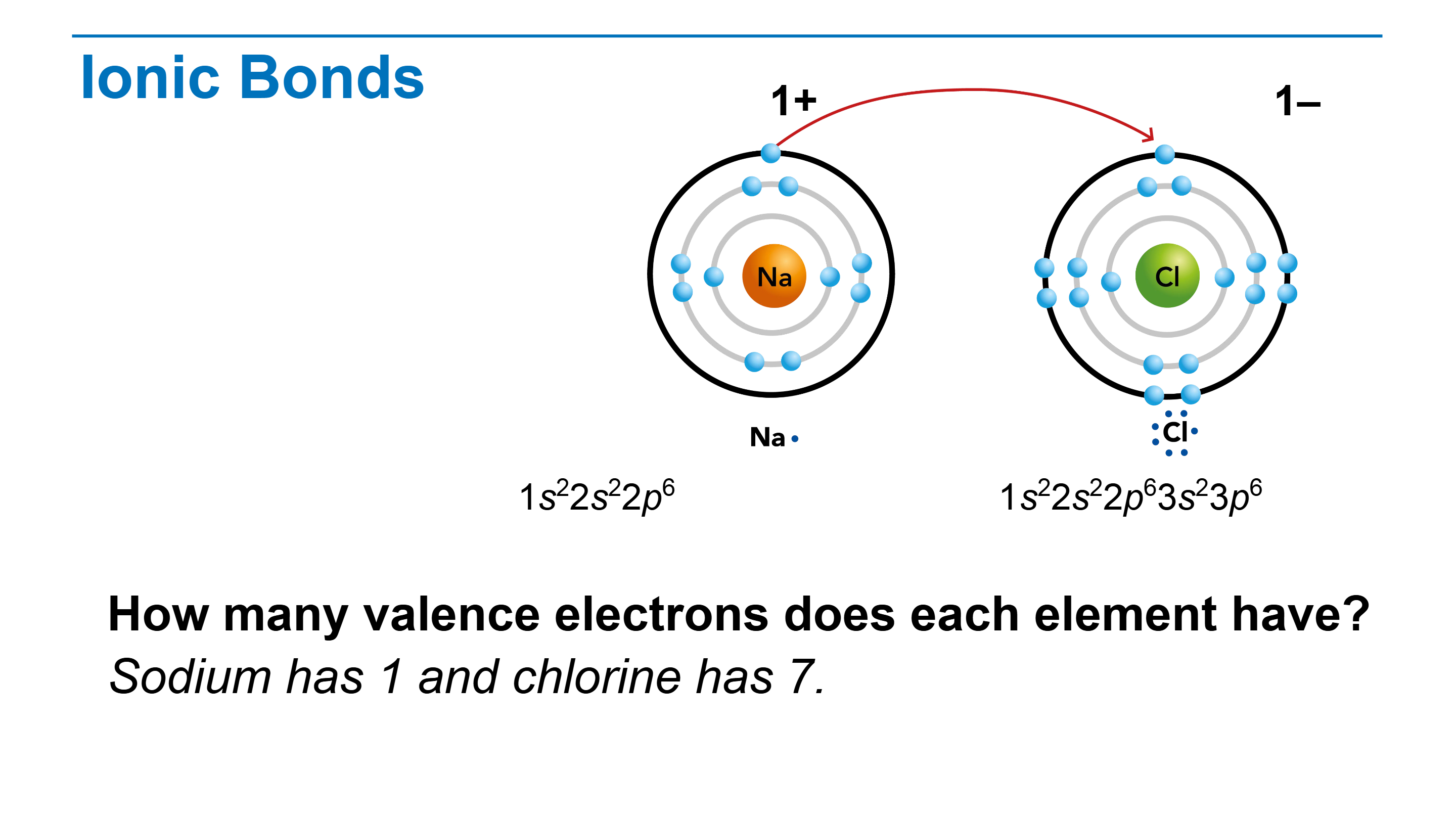
How many valence electrons does each element have?

21

media

22

Open Ended

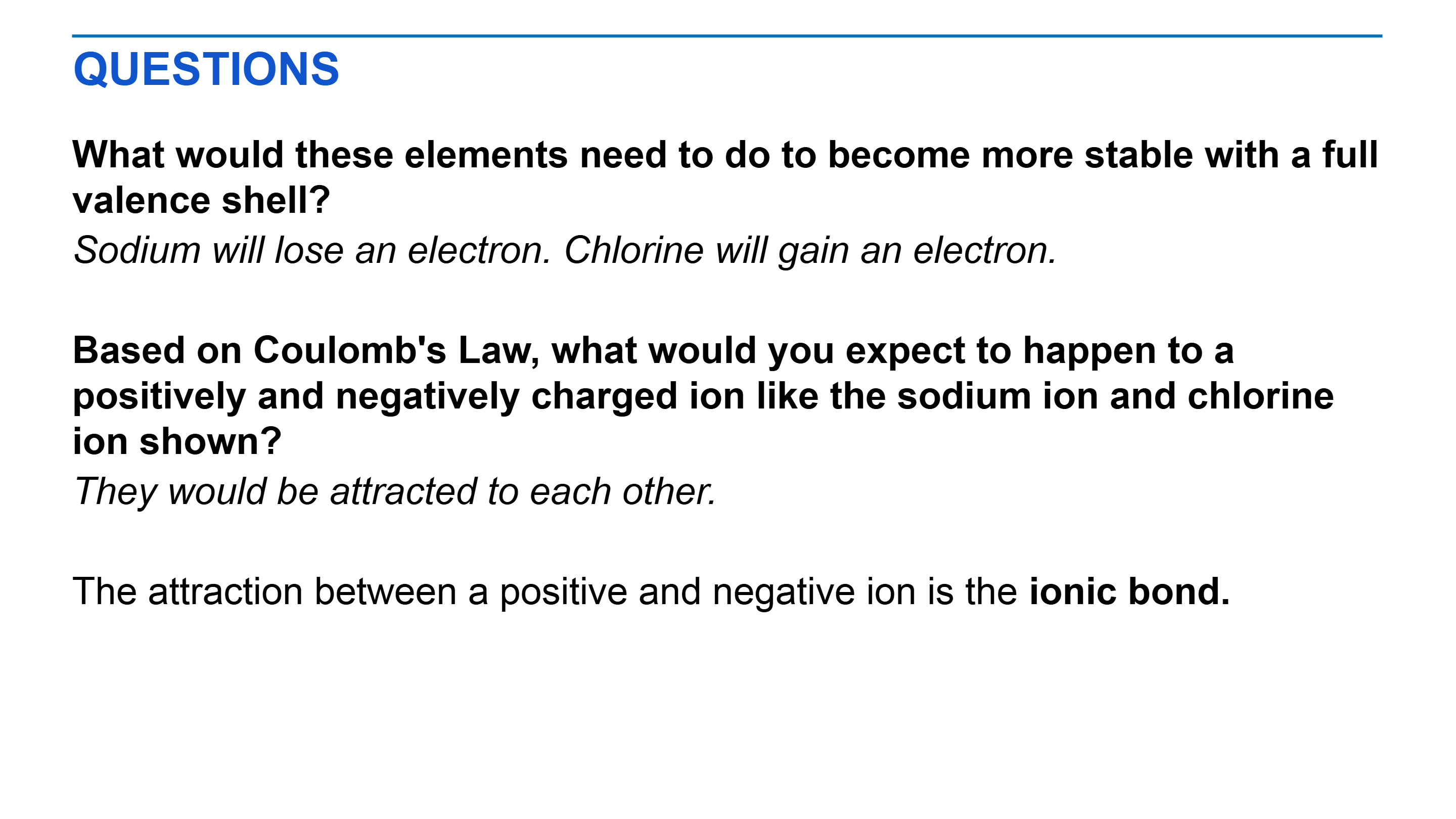
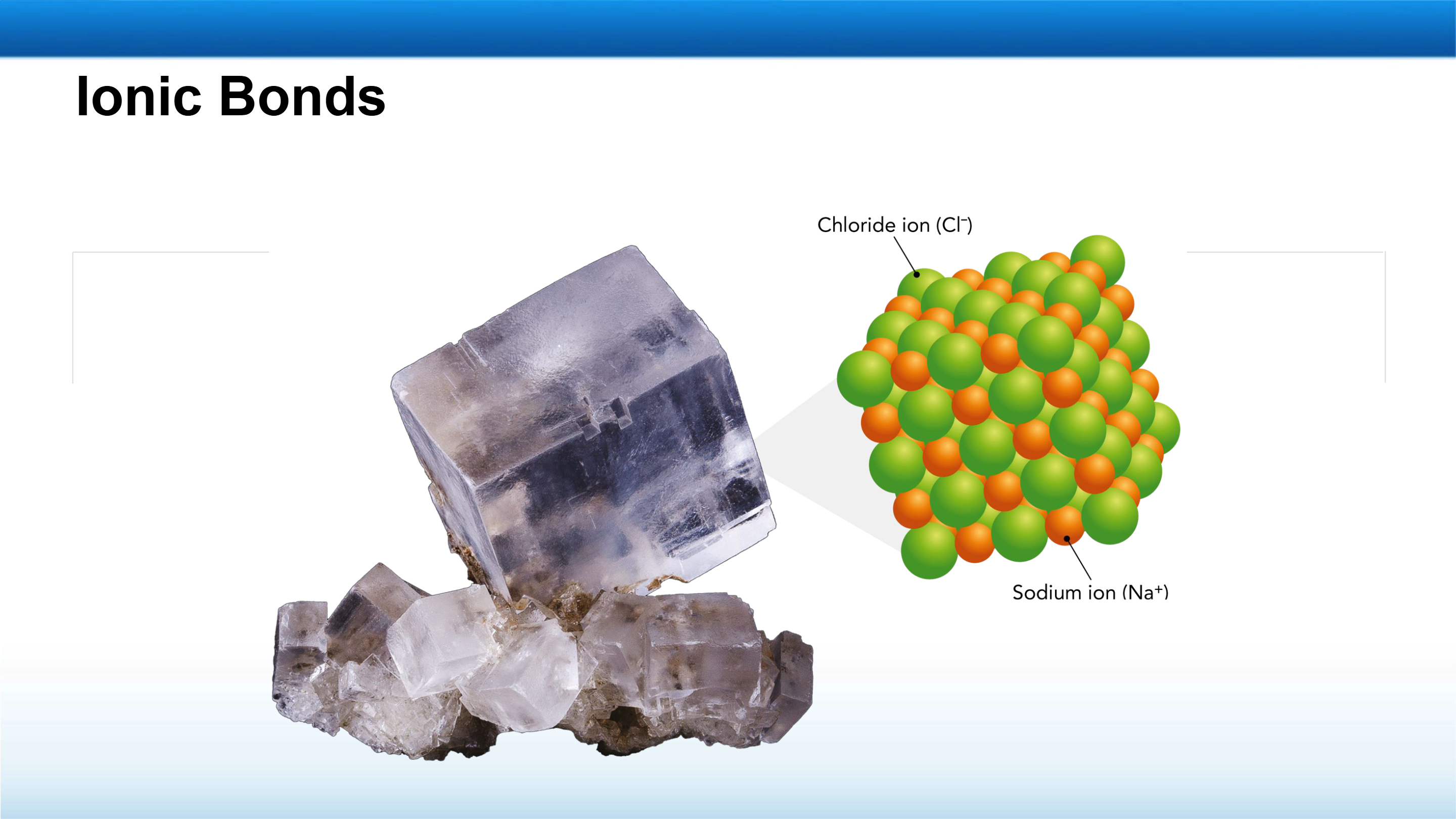
Based on Coulomb's Law, what would you expect to happen to a positively and negatively charged ion like the sodium ion and chlorine ion shown?

23

Open Ended

What would these elements need to do to become more stable with a full valence shell?

24

media

25

Open Ended

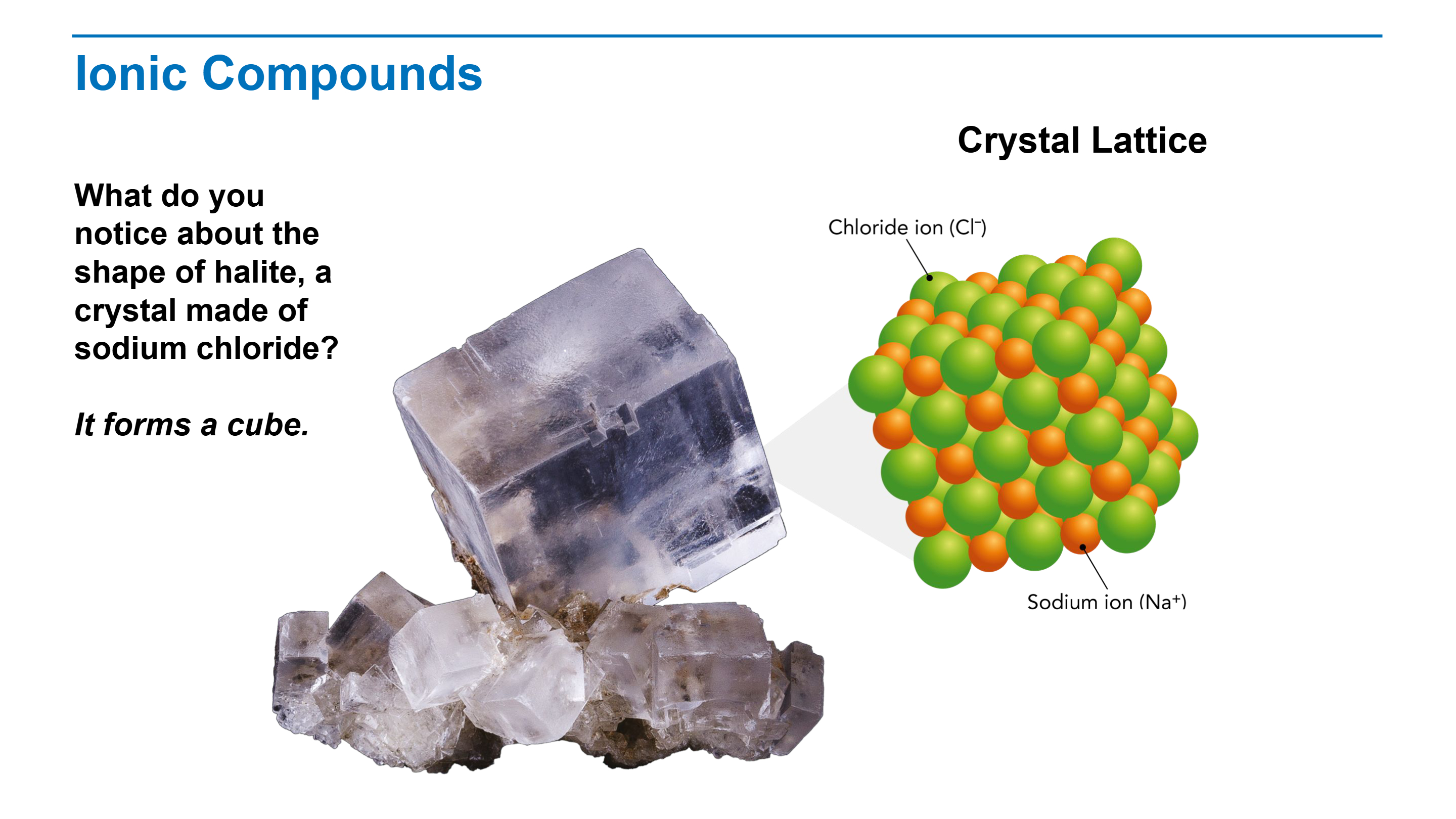
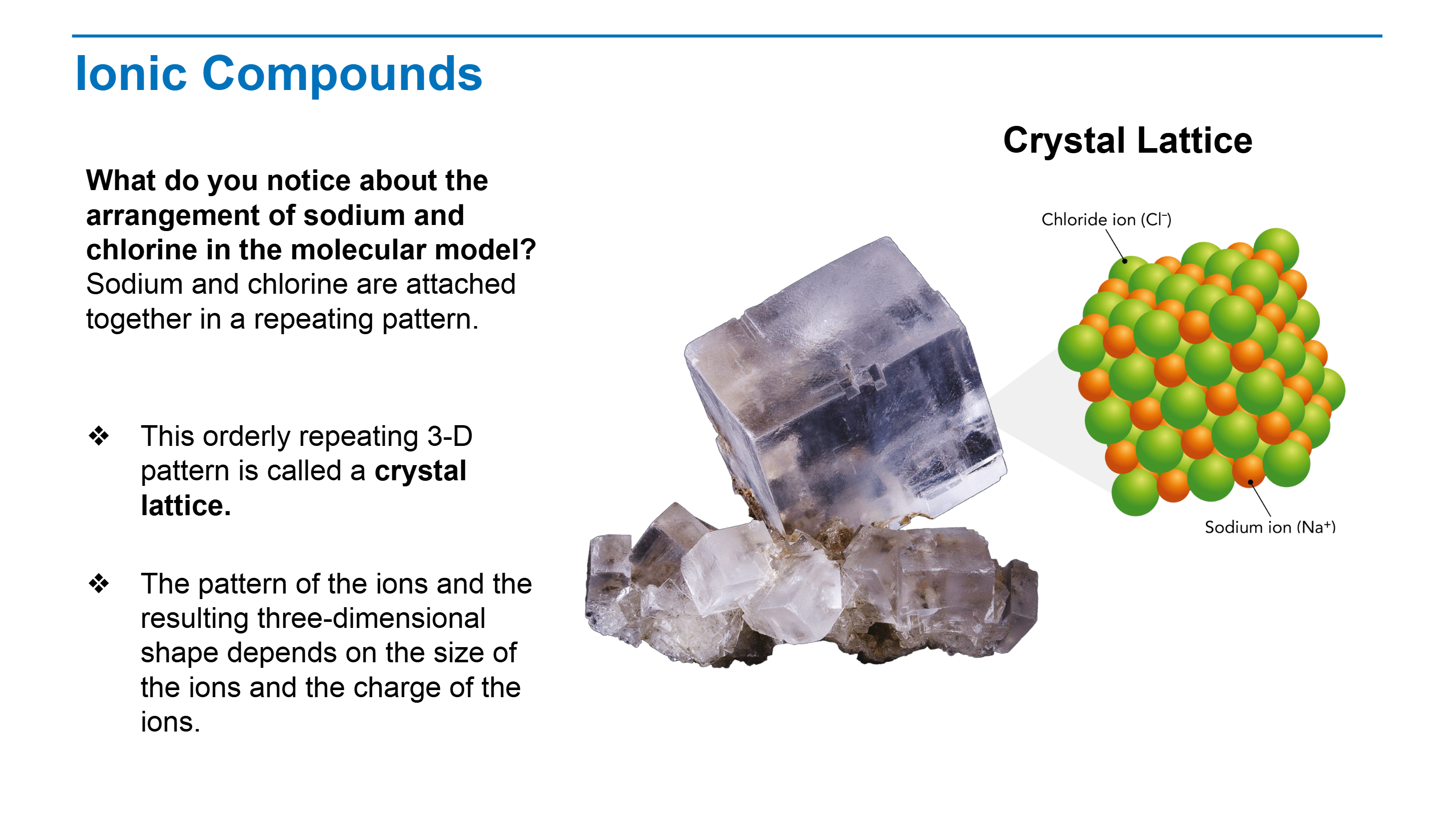
What do you notice about the shape of halite, a crystal made of sodium chloride?

26

media

27

Open Ended

What do you notice about the arrangement of sodium and chlorine in the molecular model?

28

media

29

Open Ended

What type of bonding would you expect to be found in most gems? Why?

30

media

31

Multiple Choice

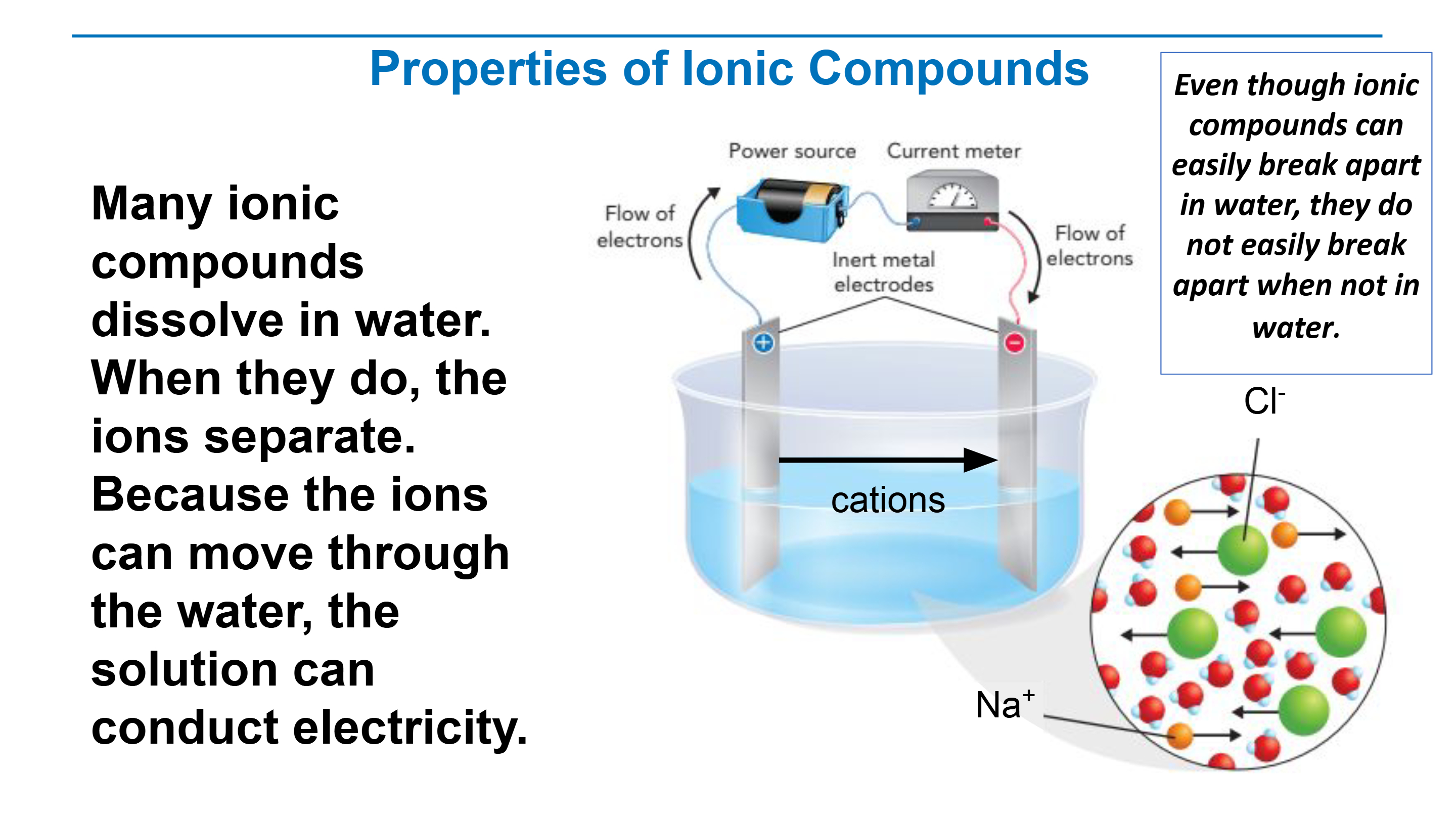
Which property allows ionic compounds to conduct electricity when dissolved in water?

1

The ions can move through the water

2

The solution becomes acidic

3

The water molecules break apart

4

The temperature increases

32

media

33

Open Ended

If ionic compounds are held together by strong attractive forces and therefore have a high melting point, would you expect most ionic compounds to be solids, liquids, or gases at room temperature? Why?

34

Open Ended

Would you expect anions or cations to be attracted to the negatively charged electrode? Why?

35

media

36

media

37

media

38

Multiple Select

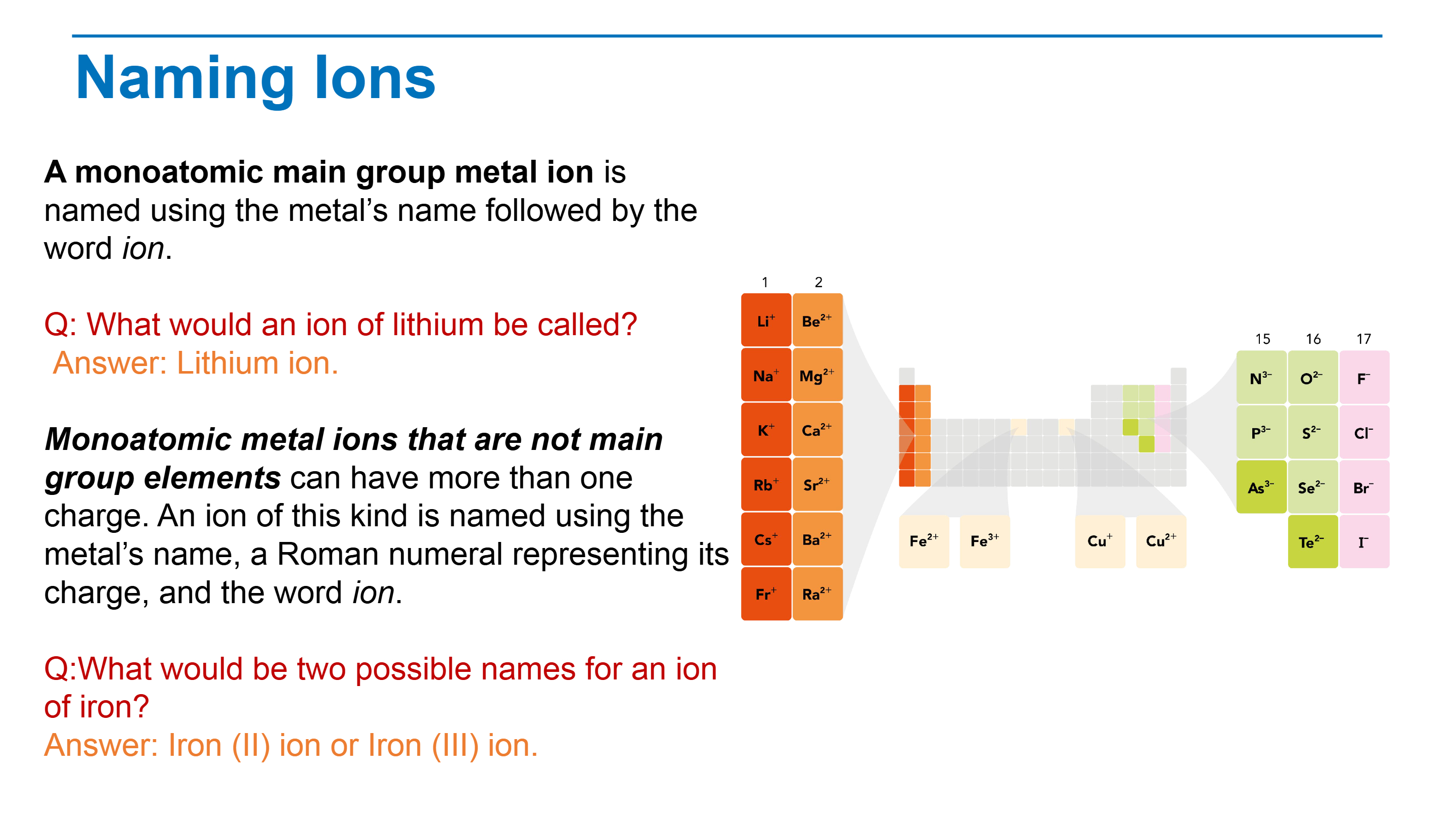
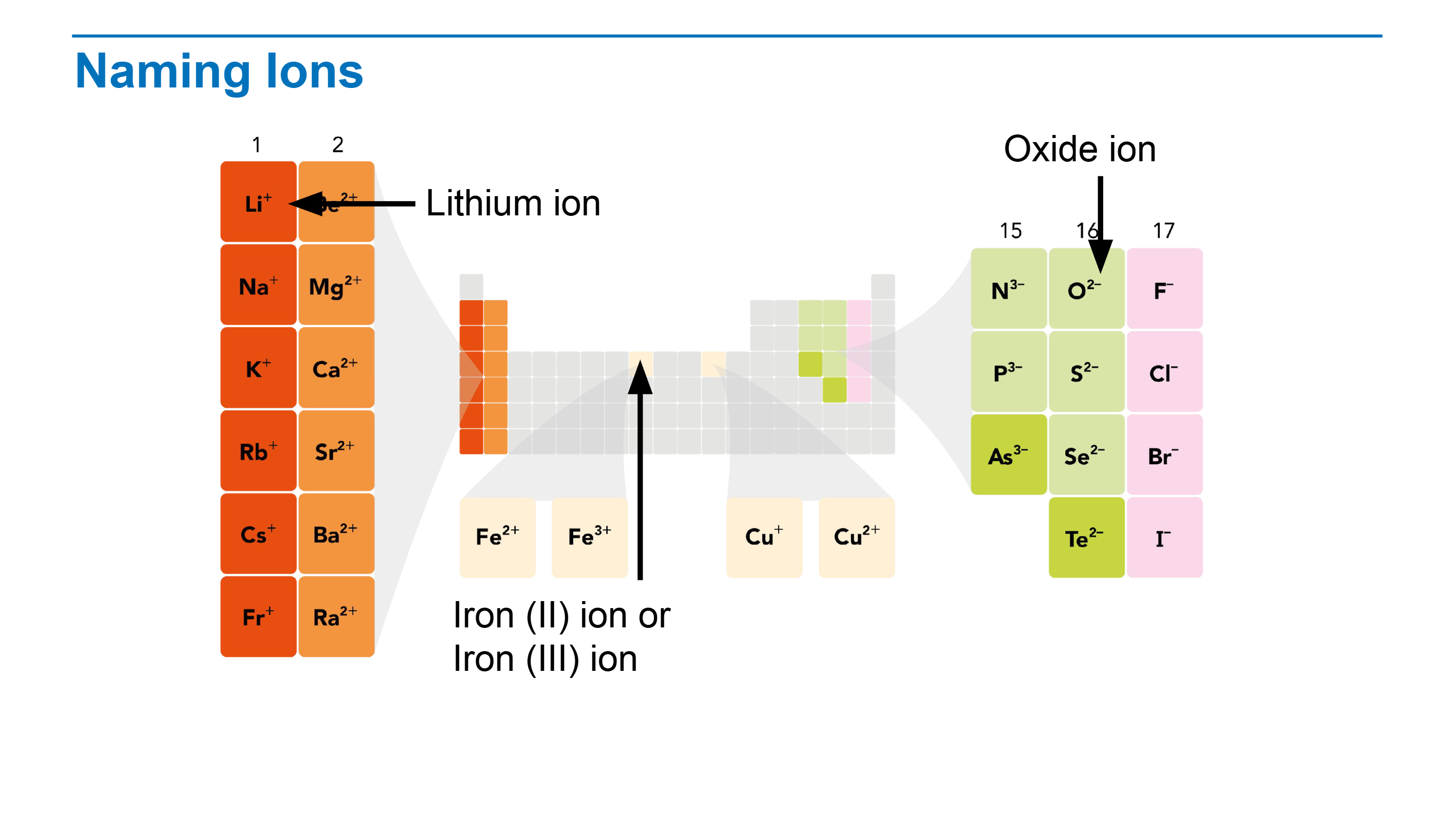
Which of the following are correct names for ions of iron?

1

Iron (II) ion

2

Iron (III) ion

3

Iron (IV) ion

4

Iron (I) ion

39

Fill in the Blanks

Type answer...

40

media

41

media

42

Multiple Choice

Which of the following ions are main group metal ions?

1

Na⁺

2

Fe²⁺

3

Cu²⁺

4

NH₄⁺

43

Multiple Choice

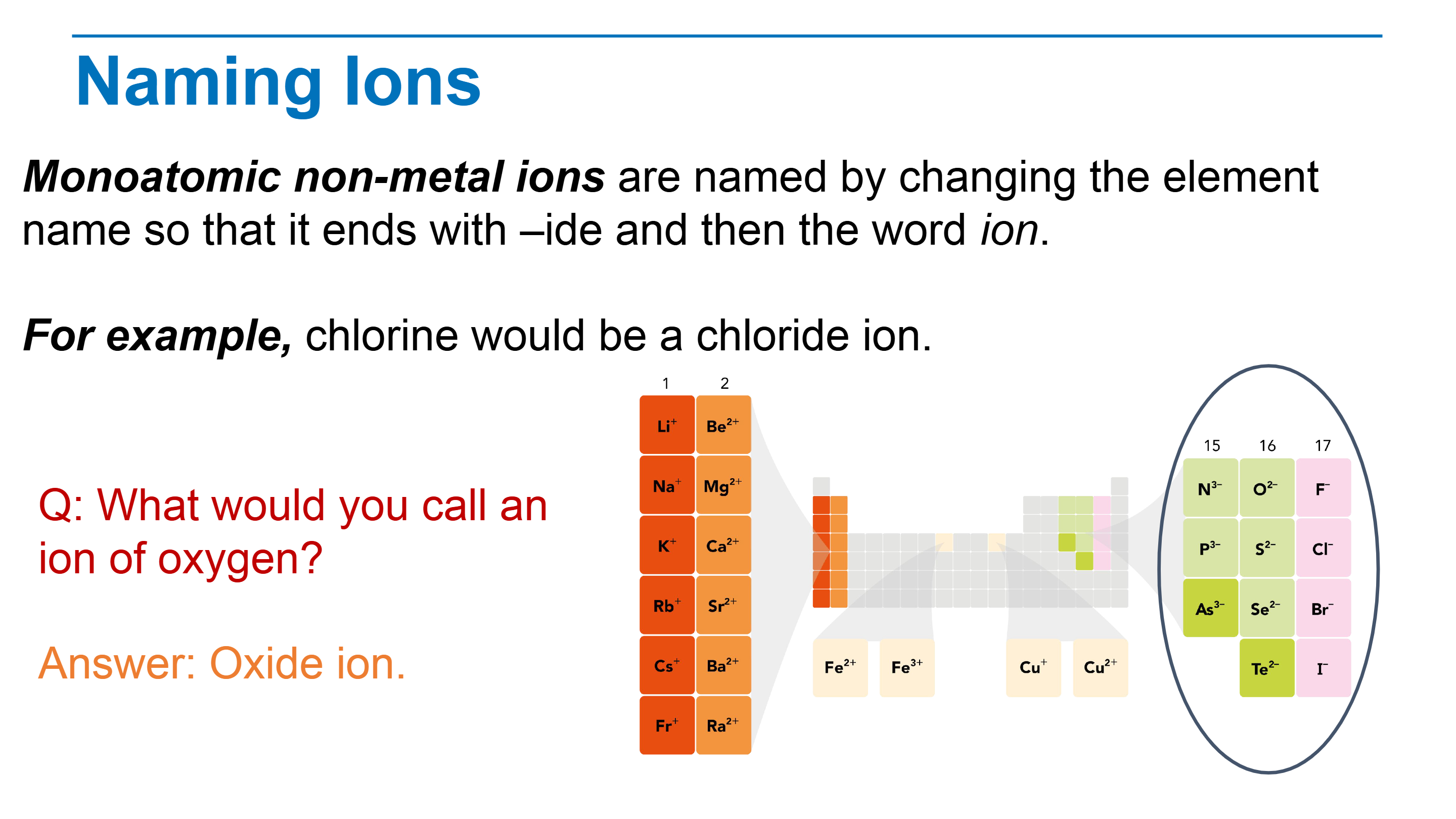
What is the correct name for the ion Cl⁻?

1

Chloride ion

2

Chlorine ion

3

Chlorate ion

4

Chlorite ion

44

media

45

media

46

Open Ended

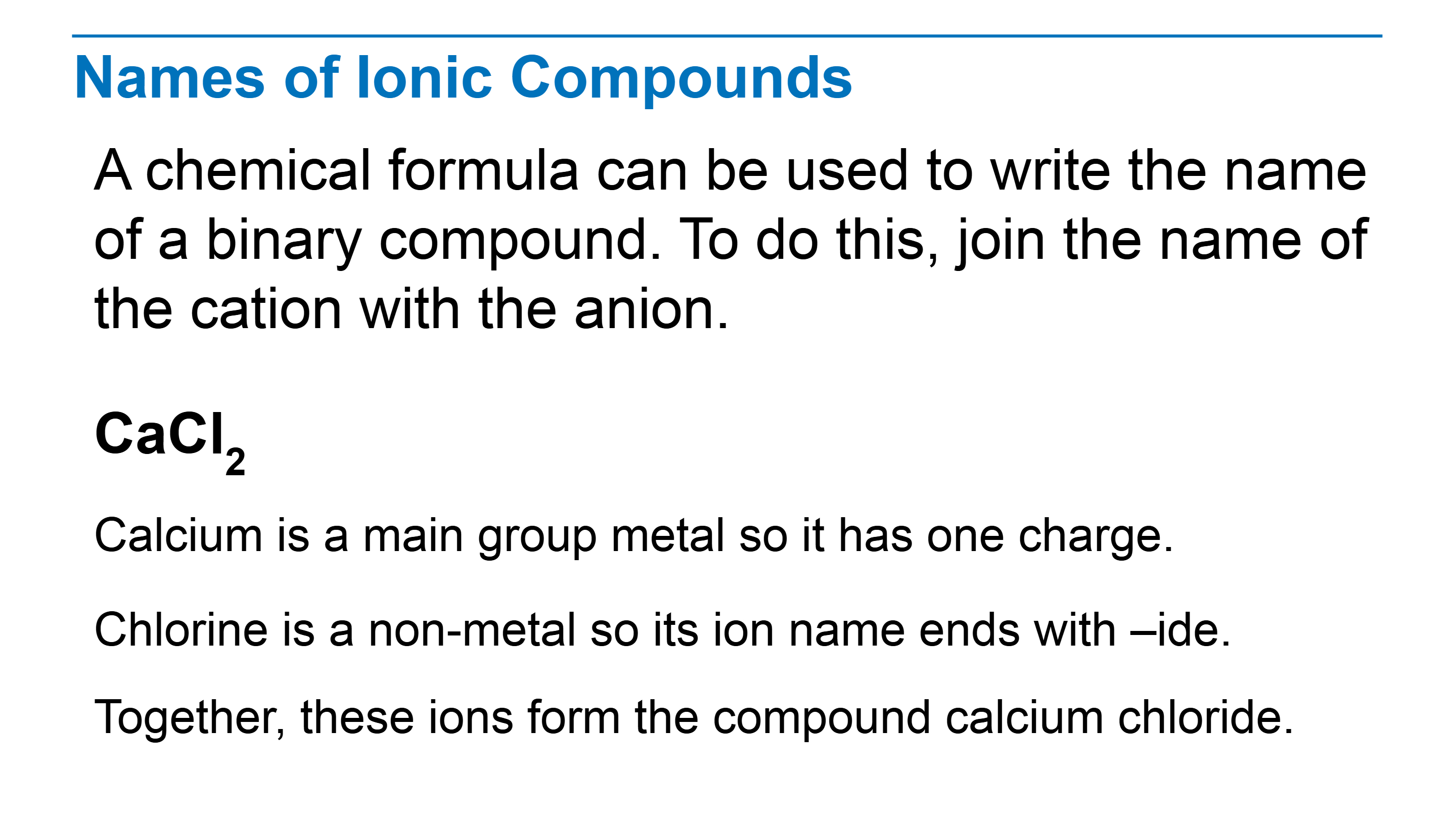
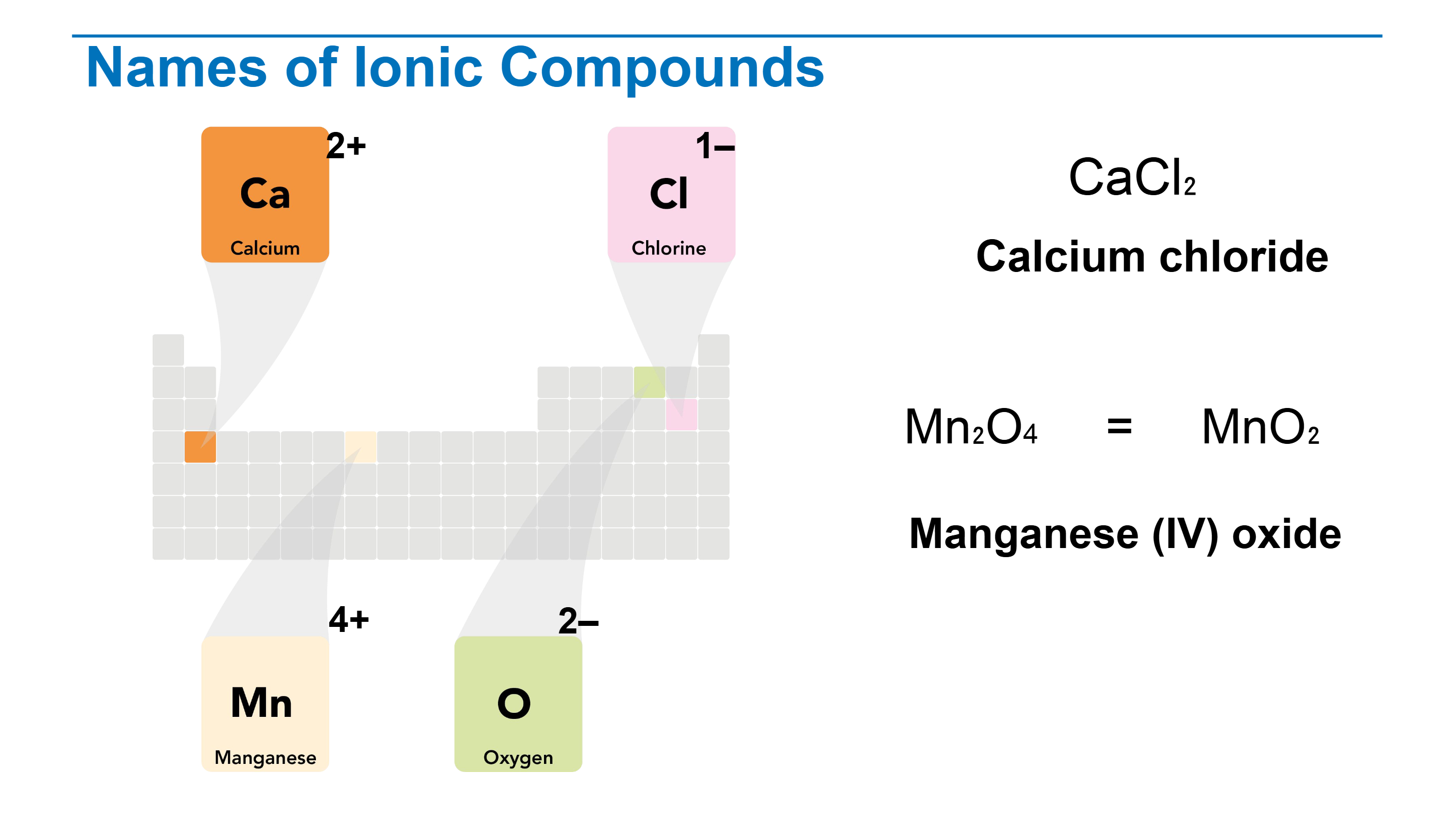
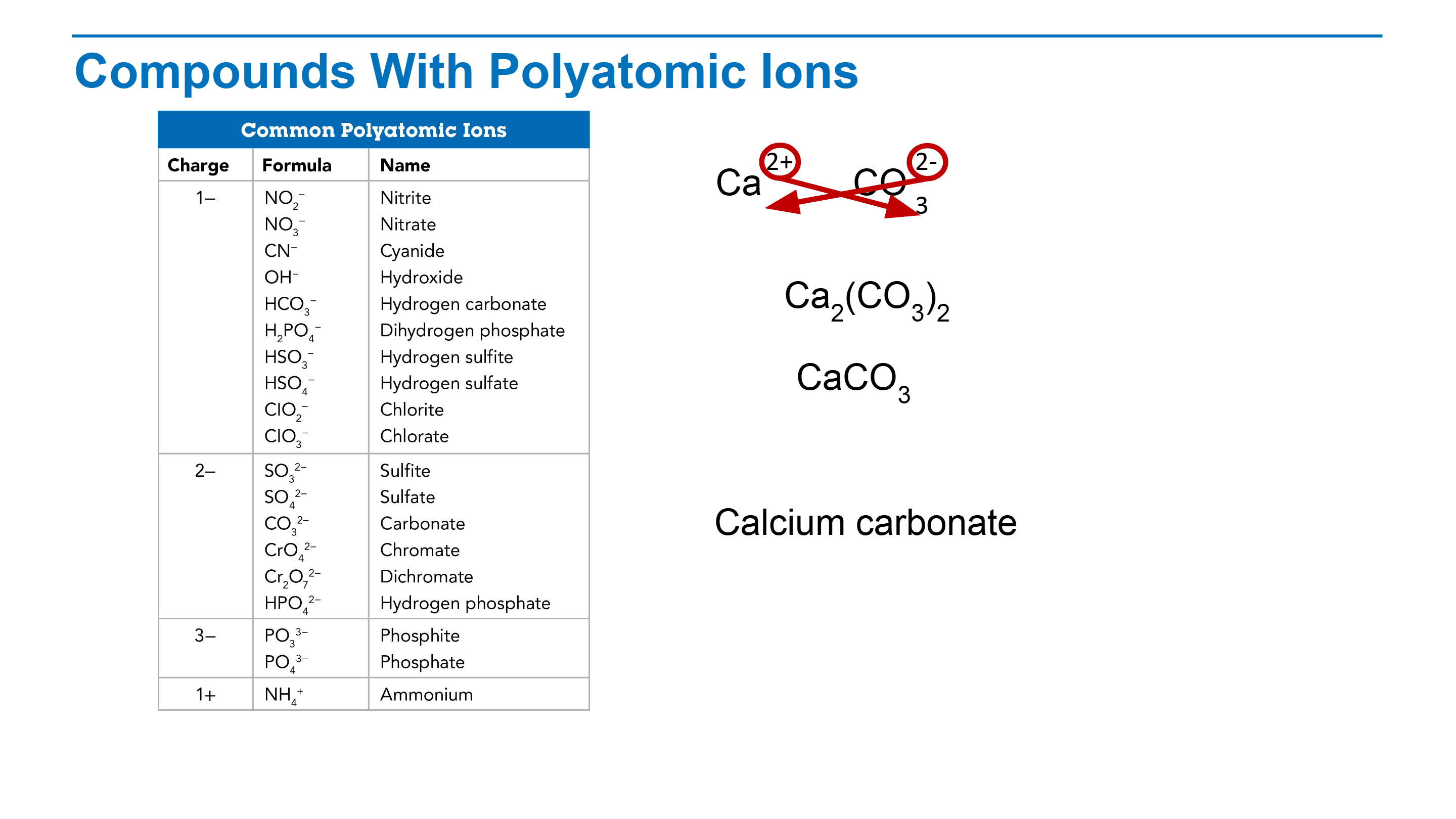
Explain how the names of binary ionic compounds are formed using the chemical formula and the names of the ions involved.

47

media

48

Fill in the Blanks

49

media

50

Multiple Choice

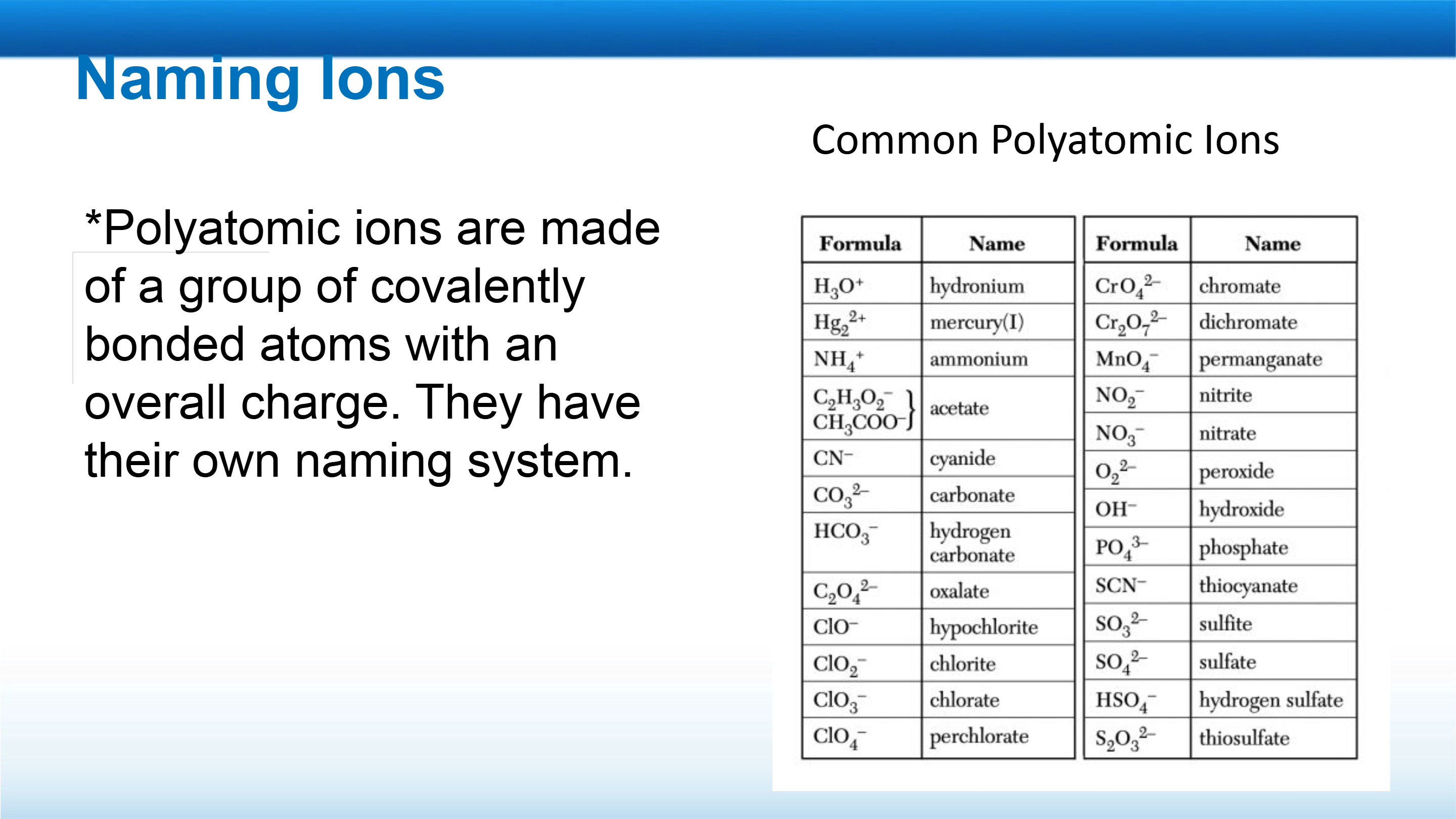
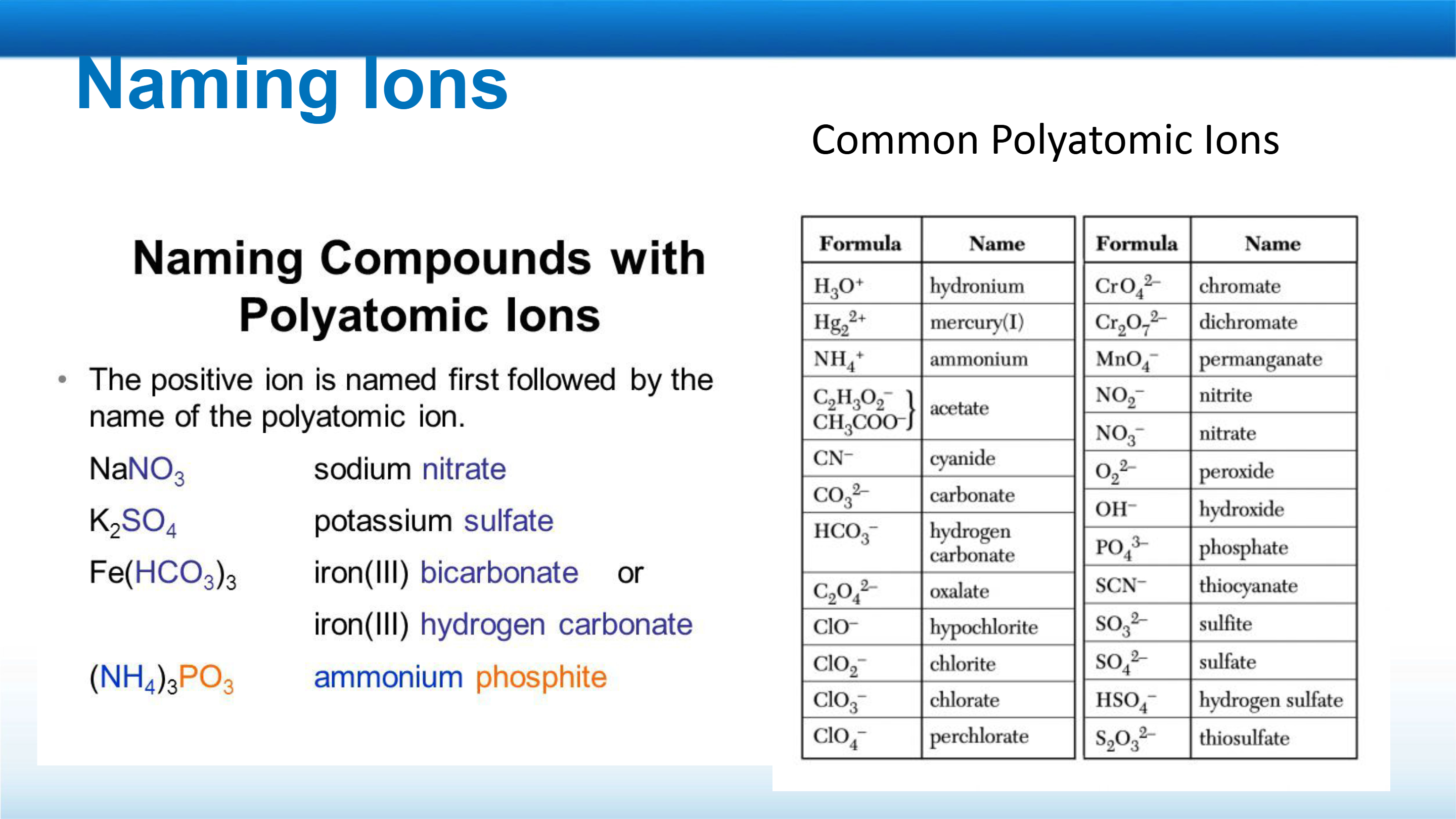
What is the name of the ion with the formula MnO₄⁻?

1

Permanganate

2

Manganate

3

Manganese oxide

4

Manganese (IV) oxide

51

Multiple Select

Which of the following are polyatomic ions?

1

N³⁻

2

NO₃⁻

3

SO₄²⁻

4

Cl⁻

52

media

53

media

54

media

55

media

56

Open Ended

Reflecting on what you learned about ionic bonds and ions, what questions do you still have or what would you like to explore further about this topic?

57

Multiple Choice

What is the difference between a cation and an anion?

1

A cation is a positively charged ion, while an anion is a negatively charged ion.

2

A cation is a negatively charged ion, while an anion is a positively charged ion.

3

Both cations and anions are positively charged ions.

4

Both cations and anions are negatively charged ions.

media

Show answer

Auto Play

Slide 1 / 57

SLIDE