

STAAR TEST practice

Presentation
•
English
•
4th Grade
•
Practice Problem
•
Hard
+39
Standards-aligned

Maria Rodriguez Londono
Used 5+ times
FREE Resource
11 Slides • 21 Questions
1
2
3
4
5
6
7
Multiple Choice
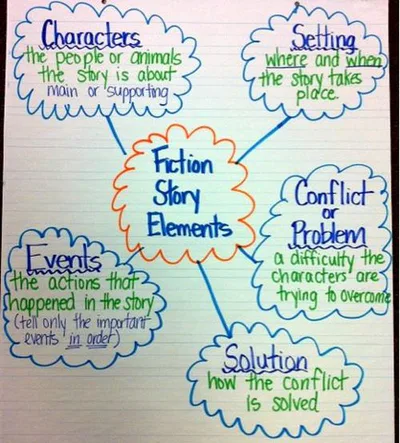
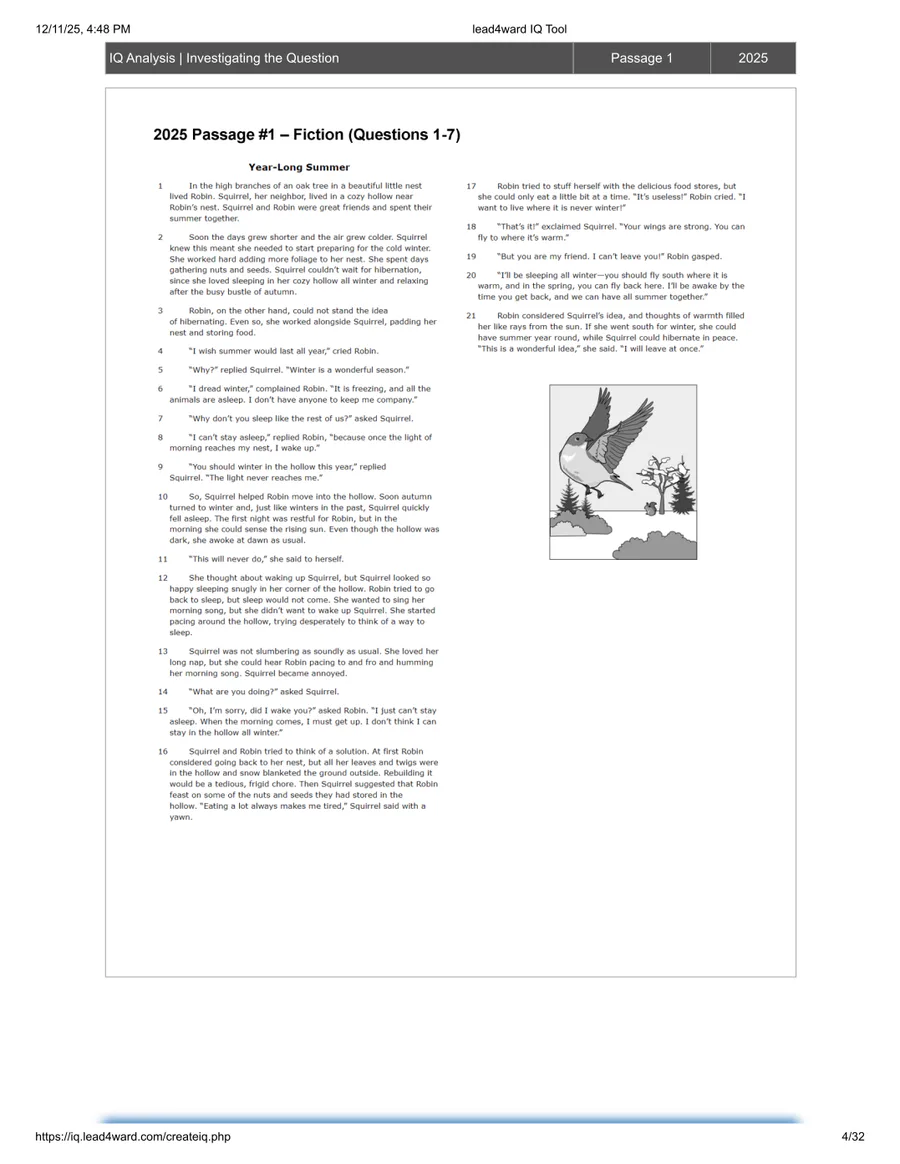
What did Squirrel suggest Robin do to solve her problem?
Build a new nest
Find more food
Stay awake all winter
Eat nuts and seeds
8
Multiple Choice
What does Robin want to do instead of hibernating?
Live where it is warm
Stay in the hollow
Gather food for winter
Sleep all winter
9
Multiple Choice
What does Squirrel love to do during her nap?
Humming her morning song
Eating nuts
Playing with Robin
Sleeping soundly
10
Multiple Choice
What is the main theme of the story 'Year-Long Summer'?
Friendship
Hibernation
Seasons
Adventure
11
Multiple Choice
What point of view does the author use in the story?
(¿Qué punto de vista utiliza el autor en la historia?)
third person limited
(tercera persona limitada)
first person
(primera persona)
second person
(segunda persona)
third person omniscient
(tercera persona omnisciente)
12
13
14
Open Ended
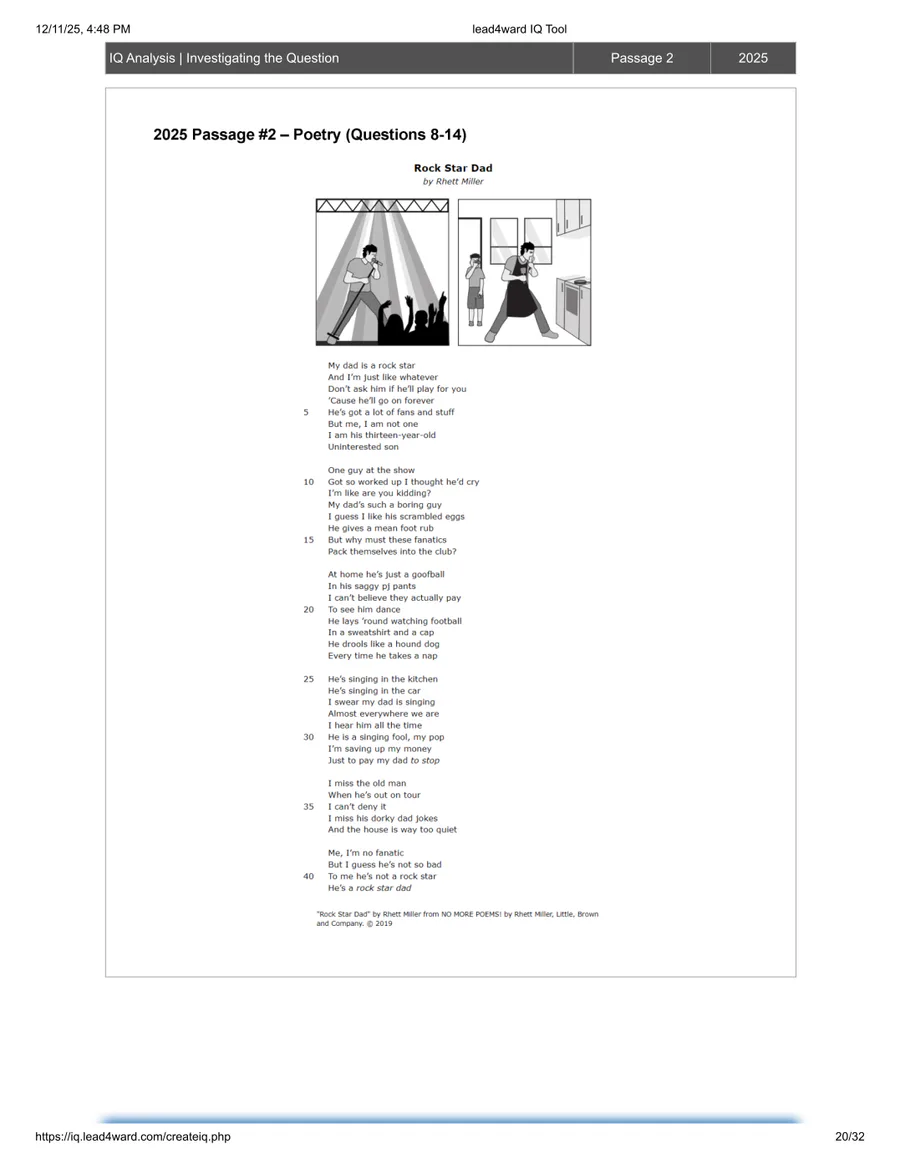
The speaker describes his dad as a 'goofball'. What does this imply about their relationship? Restate and answer the question.
15
Multiple Select
What activities does the speaker mention his dad doing at home?
Singing and cooking
Playing football and napping
Going to concerts
Writing songs
16
Multiple Choice
What does the speaker think about his dad being a rock star?
He is proud of him
He is indifferent
He is embarrassed
He is supportive
17
Multiple Choice
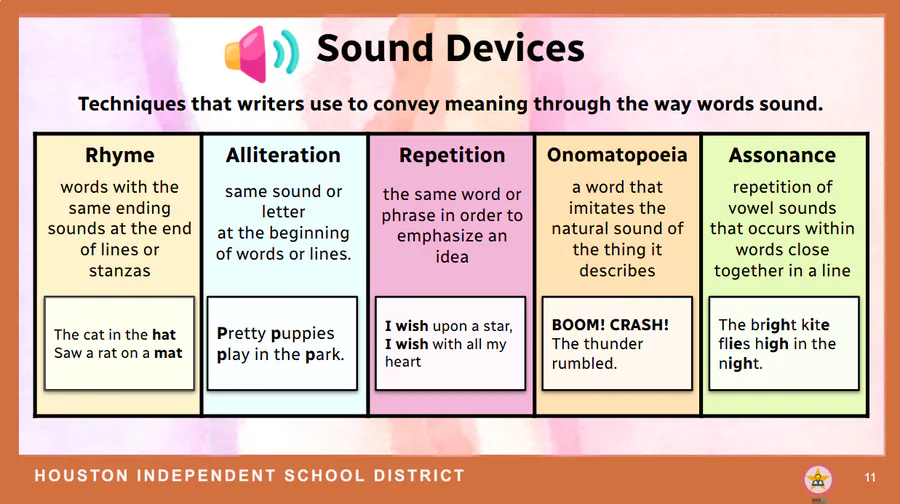
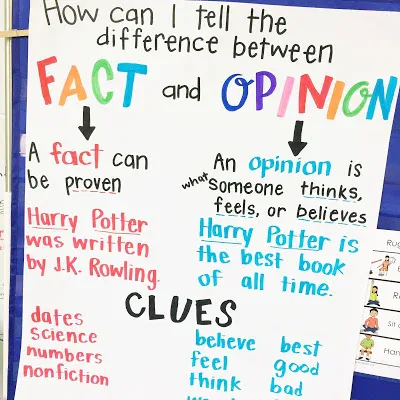
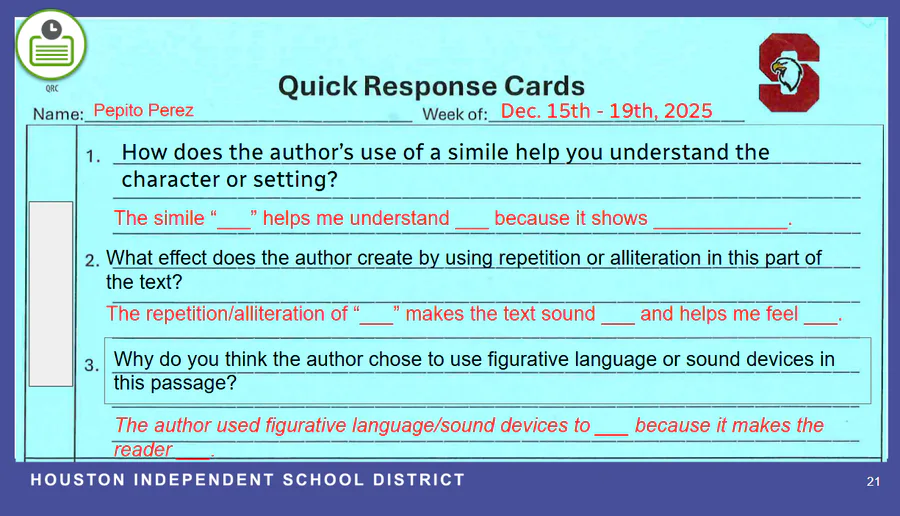
The simile "like a hound dog" in line 23 of the poem is used to show —
how the dad is noisy indoors
how the dad can look scary
how bored the dad feels during the day
how messy the dad is at home
18
Multiple Choice
Which sentence best expresses a theme in the poem?
Knowing someone well takes time.
It is helpful to turn to family in times of need.
It is important to recognize the good in people.
People often deserve a second chance.
19
Multiple Choice
Which point of view does the poet use in the poem?
First person, as told by the speaker
First person, as told by the dad
Third person, as told by both characters
Third person, as told by an outside observer
20
21
Multiple Choice
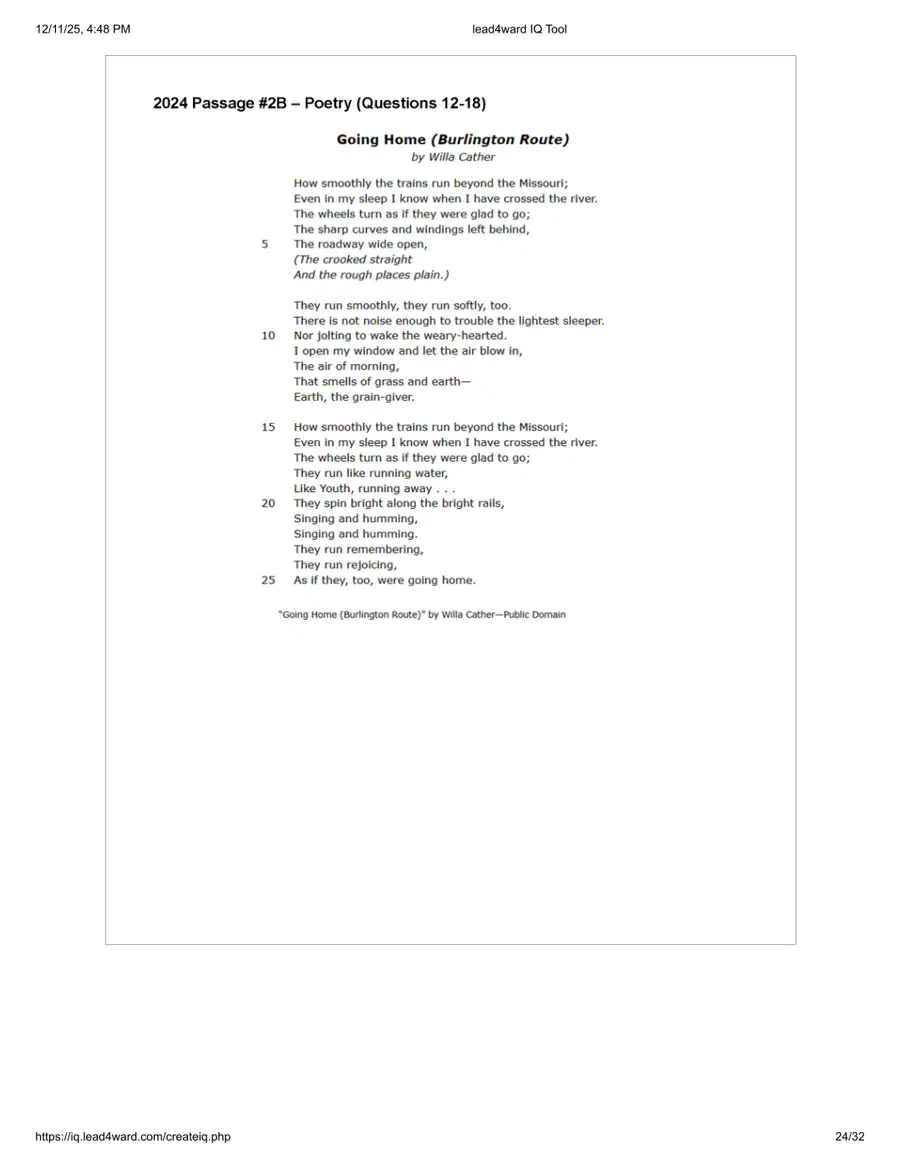
What do the trains symbolize in the poem?
Freedom and adventure
Chaos and noise
Isolation and loneliness
Fear and anxiety
22
Multiple Choice
The trains run smoothly, they run softly, too. What does this suggest about the trains?
They are old and rusty.
They are new and well-maintained.
They are loud and disruptive.
They are slow and unreliable.
23
Multiple Choice
What does the speaker open to let in the air of morning?
The door
The window
The roof
The vent
24
25
Open Ended
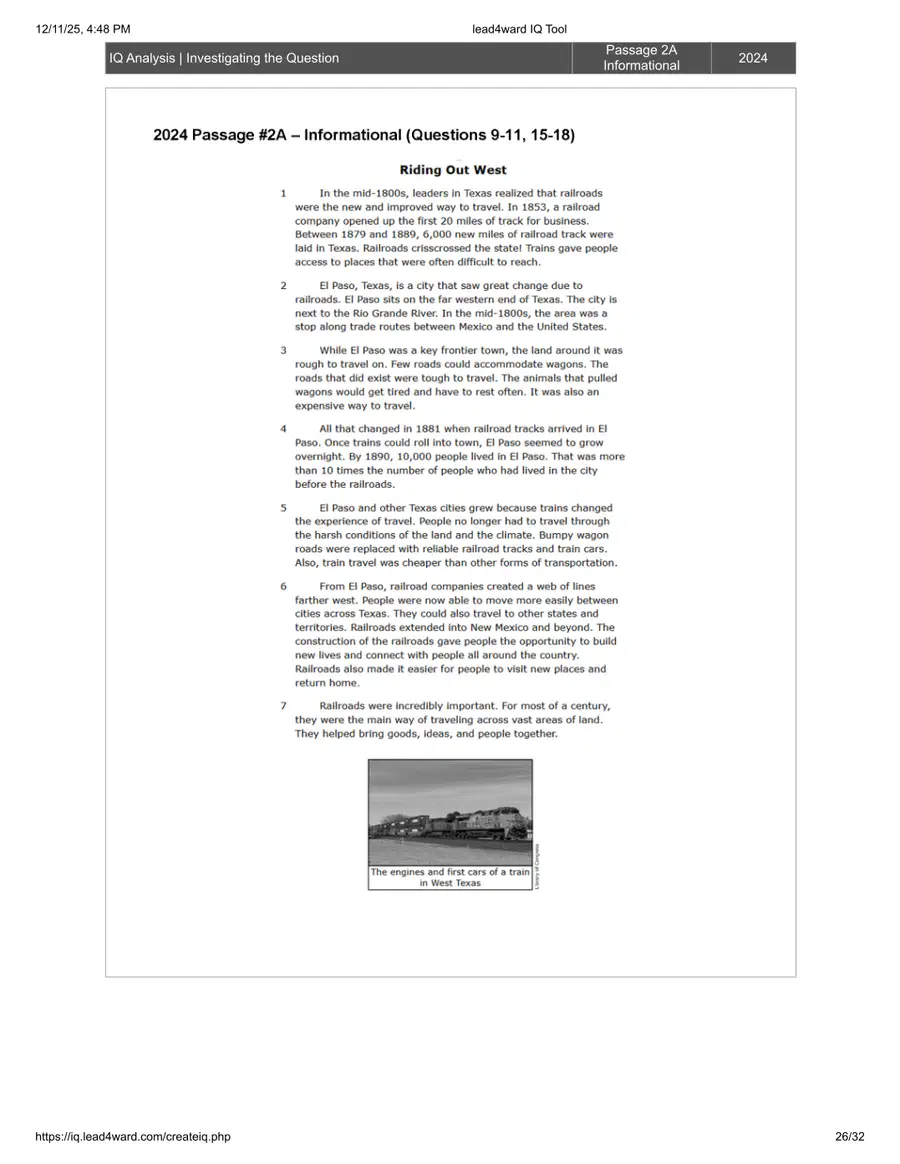
Explain how the arrival of railroads transformed the experience of travel in the mid-1800s.
26
Fill in the Blanks
Type answer...
27
Multiple Choice
What significant changes occurred in El Paso, Texas, due to the arrival of railroads in 1881?
Increased population
Improved travel conditions
Development of new trade routes
All of the above
28
29
Multiple Choice
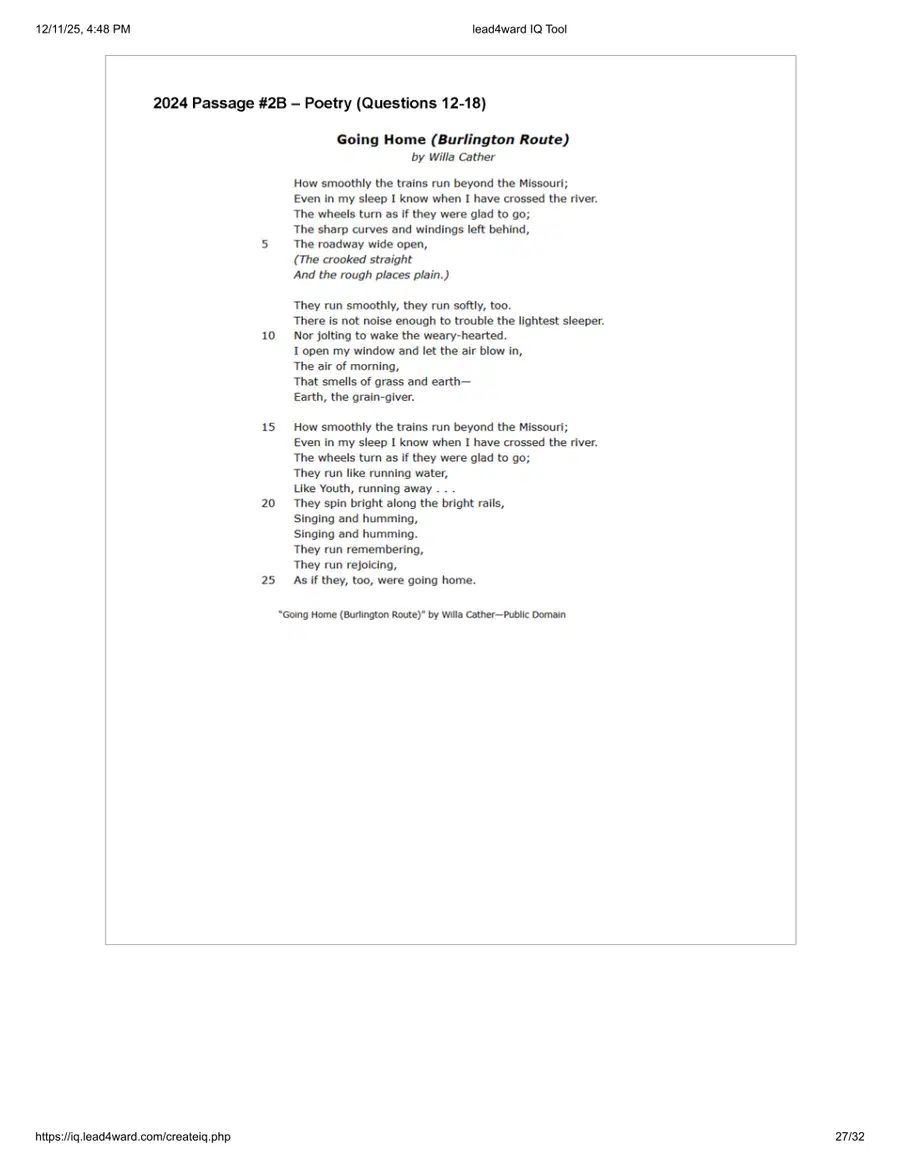
What emotions are expressed in the lines about singing and humming?
Joy and nostalgia
Sadness and regret
Anger and frustration
Fear and anxiety
30
Multiple Choice
In the poem, what do the trains symbolize?
Journey and homecoming
Speed and efficiency
Noise and disturbance
Isolation and loneliness
31
Multiple Choice
What does the air of morning smell like according to the poem?
Grass and earth
Smoke and fire
Flowers and rain
Dust and wind
32
Multiple Select
How is the idea of traveling in the selection "Riding Out West" DIFFERENT from the poem "Going Home (Burlington Route)"? Select TWO correct answers.
The selection describes traveling long distances, while the poem describes shorter trips, such as going home.
The selection covers many reasons to travel, while the poem covers one goal, going home.
The selection talks about old ways of traveling, while the poem talks about finding new ways of traveling.
The selection shows a broad picture of travel by train, while the poem is a personal travel experience.
Show answer
Auto Play
Slide 1 / 32
SLIDE
Similar Resources on Wayground

30 questions
FIGURATIVE LANGUAGE
Presentation
•
3rd Grade
25 questions
Ancient Egypt Review
Presentation
•
4th Grade
22 questions
Reading Comprehension_Grade 4
Presentation
•
4th Grade
22 questions
Drama
Presentation
•
4th Grade
29 questions
Figurative Language 4th Grade
Presentation
•
4th Grade
21 questions
Prepositions and Prepositional Phrases
Presentation
•
4th Grade
24 questions
Past Progressive
Presentation
•
4th Grade
23 questions
Punctuating Dialogue
Presentation
•
4th Grade
Popular Resources on Wayground
10 questions
GPA Lesson
Presentation
•
9th - 12th Grade
7 questions
Albert Einstein

Quiz
•
3rd Grade
31 questions
Bridge A Review
Quiz
•
3rd Grade
6 questions
Blue Sue and Red Ruth
Quiz
•
3rd Grade
8 questions
(Day12 HW) Inverse Trig Ratios
Quiz
•
9th Grade
20 questions
Summer Geometry QUIZ (Week3)
Quiz
•
9th Grade
16 questions
Theme Practice
Quiz
•
7th Grade
20 questions
Taxes
Quiz
•
9th - 12th Grade