
Post WW1 events
Presentation
•
English
•
9th - 12th Grade
•
Practice Problem
•
Hard
nourhan ahmed
FREE Resource
31 Slides • 25 Questions
1
2
Multiple Choice
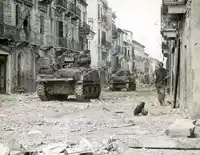
What were the major impacts of World War I on the cities depicted in the image?
Economic decline
Population growth
Cultural renaissance
Political stability
3
4
Multiple Choice
By 1918, the nations involved in World War I agreed to stop fighting. the war officially ended in 1919 with the Treaty of Versailles. Allied leaders used this treaty to
give colonies to Germany and Japan
return land in France to Germany.
Force Germany to pay reparations to France and Britain
Free China from imperialism
5
6
Open Ended
What are the major changes described by the term geopolitical shift?
7
Fill in the Blank
What does instability refer to in the context of post-WWI nations?
8
Multiple Choice
What is hyperinflation and how did it affect people in 1920s Germany?
A rapid increase in prices
A decrease in money supply
A stable economy
A form of government control
9
Multiple Choice
Which of the following events occurred in Germany in 1923?
The signing of the Treaty of Versailles
Hyperinflation
The start of World War II
The fall of the Berlin Wall
10
Multiple Choice
What is hyperinflation?
Rapid and excessive increase in the general price level of goods and services in an economy.
Decrease in the general price level of goods and services in an economy.
Stable and controlled increase in the general price level of goods and services in an economy.
A situation where prices remain stagnant in an economy.
11
12
Multiple Choice
What was the significance of the Paris Peace Conference in shaping the post-war world?
It established the League of Nations
It ended World War I
It created new nations
It was attended by 32 nations
13
14
15
Categorize
France
Serbia
Russia
Belgium
Great Britain
Germany
Austria-Hungary
Bulgaria
Ottoman Empire
Ottoman Empire
United States
Organize the countries onto their correct side during WWI...
16
17
Multiple Choice
Which of the following statements best represents a nationalistic interpretation of the collapse of the Ottoman and Russian empires during an immediately after the First World War?
Military weakness and political instability were primary reasons for the collapse of these empires.
The growing demands of various ethnic groups within these multiethnic empires were the primary reasons for the collapse.
The slow pace of industrialization in these empire left them unable to compete militarily and politically with more developed countries.
Religious differences
18
19
Multiple Choice
What were the main ethnic groups included in Czechoslovakia after its formation?
Czechs and Slovaks
Germans and Hungarians
Serbs and Croats
Poles and Russians
20
21
Open Ended
Give a REAL-LIFE example of the League of Nations. Why would that be considered an example. Justify your answer.
22
23
Multiple Choice
What factors contributed to the economic collapse mentioned in the image?
Factories closing
Increase in savings
Rise in employment
Government confidence
24
25
26
27
Multiple Choice
What were the long-term effects of colonial discontent as mentioned in the image?
Increased colonial control
Fueled anti-colonial movements
Strengthened empires
Promoted independence
28
29
Multiple Choice
What were the main factors contributing to political instability in Germany during the early 20th century?
Political violence
Economic prosperity
Strong government
Public support for democracy
30
31
Multiple Choice
What were the main causes of post-war instability as illustrated in the images?
Harsh Peace Treaties
Economic Collapse
Political Chaos
Colonial Tensions
32
33
Multiple Choice
What were the long-term consequences of WWI as mentioned in the text?
Increased colonial control
Rise of isolationism in the USA
Aggressive expansion by Japan
All of the above
34
35
Open Ended
In your own words, summarize the Treaty of Versailles and what it entails.
36
37
38
39
40
Multiple Choice
Why did Germany accept the Treaty of Versailles?
a) Germany accepted the treaty calmly because its leaders agreed with the war guilt clause and believed the reparations were fair compensation for the damage caused.
b) Germany did not willingly accept the Treaty of Versailles; it was forced to sign under threat of renewed war and was widely seen in Germany as a humiliating 'Diktat' or dictated peace.
41
42
Multiple Choice
Put these key post-WWI events in chronological order from earliest to most recent: Treaty of Versailles, Armistice signed, Start of Great Depression, Hyperinflation in Germany.
Treaty of Versailles
Armistice signed
Start of Great Depression
Hyperinflation in Germany
43
44
Multiple Choice
Put these key post-WWI events in chronological order from earliest to most recent: Armistice signed, Treaty of Versailles, Hyperinflation in Germany, Start of Great Depression.
Armistice signed, Treaty of Versailles, Hyperinflation in Germany, Start of Great Depression
Treaty of Versailles, Armistice signed, Start of Great Depression, Hyperinflation in Germany
Hyperinflation in Germany, Start of Great Depression, Armistice signed, Treaty of Versailles
Start of Great Depression, Hyperinflation in Germany, Treaty of Versailles, Armistice signed
45
46
47
Multiple Choice
What were the main political challenges faced by the Weimar Republic between 1919 and 1923?
Weakness of the Weimar Republic
Economic stability
Social harmony
Strong leadership
48
49
Multiple Choice
What were the major geopolitical shifts mentioned in the text?
Power Shifts
New Borders
Rise of Ideologies
All of the above
50
51
52
53
54
55
Poll
How confident do you feel about this topic now?
56
Poll
How confident do you feel about this topic now?
Show answer
Auto Play
Slide 1 / 56
SLIDE

Similar Resources on Wayground
52 questions
TSIA2 Boot Camp - Analyzing Supporting Details
Lesson
•
9th - 12th Grade
50 questions
UNIT 2: I AM AN EXCHANGE STUDENT
Lesson
•
9th - 12th Grade
50 questions
Photosynthesis vs Cellular respiration (regular biology)
Lesson
•
9th - 12th Grade
51 questions
Theme Interactive Notes
Lesson
•
9th - 12th Grade
50 questions
E2 Fall Semester Review - STAAR Revising & Editing Practice
Lesson
•
9th - 12th Grade
51 questions
Resiliency lesson 2
Lesson
•
9th - 12th Grade
52 questions
Lesson 5 - Using Communication Skills
Lesson
•
9th - 12th Grade
52 questions
Los Quehaceres (Pre-song story)
Lesson
•
9th - 12th Grade
Popular Resources on Wayground
15 questions
Fractions on a Number Line
Quiz
•
3rd Grade
14 questions
Boundaries & Healthy Relationships
Lesson
•
6th - 8th Grade
13 questions
SMS Cafeteria Expectations Quiz
Quiz
•
6th - 8th Grade
20 questions
Equivalent Fractions
Quiz
•
3rd Grade
25 questions
Multiplication Facts
Quiz
•
5th Grade
12 questions
SMS Restroom Expectations Quiz
Quiz
•
6th - 8th Grade
20 questions
Main Idea and Details
Quiz
•
5th Grade
10 questions
Pi Day Trivia!
Quiz
•
6th - 9th Grade
Discover more resources for English
20 questions
Figurative Language Review
Quiz
•
10th Grade
10 questions
Exploring Context Clues in Vocabulary
Interactive video
•
6th - 10th Grade
15 questions
ACT Reading Practice
Quiz
•
11th Grade
28 questions
DPM2 Review for BHS
Quiz
•
10th Grade
20 questions
Grammar
Quiz
•
9th - 12th Grade
10 questions
Identifying Participles and Participle Phrases
Interactive video
•
6th - 10th Grade
10 questions
Test Taking Strategies for State Reading Assessments
Interactive video
•
6th - 10th Grade
5 questions
Author's Purpose
Lesson
•
9th Grade