

The Senses

Presentation
•
Science
•
9th - 12th Grade
•
Practice Problem
•
Easy
Standards-aligned

Barbara White
Used 13+ times
FREE Resource
12 Slides • 12 Questions
1

The Senses
High School
2
Learning Objectives
Describe the five steps of sensory perception, from stimulus to brain interpretation.
Differentiate between general and special senses based on the location of their receptors.
Explain how the special senses of taste, smell, sight, hearing, and balance work.
Identify different types of sensory receptors and their specific functions in the body.


3
Key Vocabulary
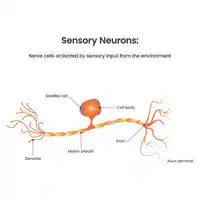
Sensory Receptors
Specialized neurons that respond to various stimuli by generating nerve impulses in the body.
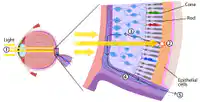
Retina
The layer at the back of the eye containing light-sensitive rods and cones.
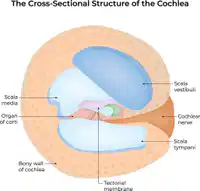
Cochlea
A snail-shaped organ in the inner ear that helps convert sound vibrations into neural messages.
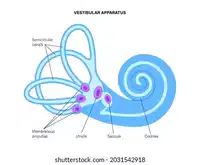
Semicircular Canals
Three fluid-filled canals in the inner ear responsible for the sense of balance and equilibrium.
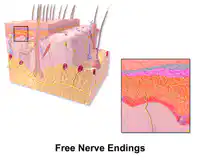
Nociceptors
Sensory receptors found throughout the body that respond to pain and physical injuries.
4
What is Sensory Perception?
Sense perception helps us interpret our environment through specialized sensory receptors.
A stimulus causes a receptor to create an action potential impulse.
The impulse travels to the CNS and is interpreted as perception.
Sensory adaptation decreases sensitivity to a continuous stimulus over time.

5
Multiple Choice
According to the process of sensory perception, what happens immediately after a sensory receptor detects a stimulus?
The brain experiences sensory adaptation.
The impulse is interpreted as awareness in the CNS.
The stimulus strength is increased.
An action potential is created and conducted to the CNS.
6
Types of Senses and Receptors
General senses, like touch, have receptors distributed throughout the body.
Special senses, such as sight, have receptors in a specific organ.
Chemoreceptors detect chemicals (taste) and photoreceptors respond to light (sight).
Mechanoreceptors feel pressure, nociceptors sense pain, and thermoreceptors detect temperature.

7
Multiple Choice
Which type of sensory receptor is responsible for detecting light?
Thermoreceptors
Mechanoreceptors
Chemoreceptors
Photoreceptors
8
The Chemical Senses: Taste and Smell
Sense of Smell
Specialized chemoreceptors high in the nose detect chemicals that are present in the air.
These receptors send nerve impulses to the olfactory bulb in the brain for interpretation.
The brain combines smell and taste signals to create a unified perception of flavor.

Sense of Taste

Taste buds on the tongue are specialized chemical receptors that detect five basic tastes.
These tastes are sweet, sour, salty, bitter, and a savory taste known as umami.
Each receptor type alerts the brain to a specific taste by starting an action potential.
9
Multiple Choice
Why does food lose much of its flavor when you hold your nose?
Because the olfactory bulb can only process one sense at a time.
Because holding your nose blocks sweet and salty tastes.
Because the brain combines signals from both taste and smell receptors.
Because taste buds stop working without airflow.
10
The Path of Light in the Eye
Light enters the eye through the cornea, which begins focusing the light.
The iris controls the pupil’s size, regulating how much light enters.
The lens projects an inverted image onto the retina at the back.
The image travels through the gel-like vitreous humor to the retina.
The retina’s rods detect low light, and its cones detect bright color.
The optic nerve sends these signals to the brain to form an image.


11
Multiple Choice
What are the roles of rods and cones in the retina?
Rods control the size of the pupil, and cones focus the light.
Rods are excited by low light, and cones function in bright light to provide color information.
Rods invert the image, and cones project it onto the retina.
Rods detect color in bright light, and cones detect low levels of light.
12
The Sense of Hearing
Sound waves cause the eardrum to vibrate upon entering the ear.
Vibrations are amplified by three bones: the malleus, incus, and stapes.
The stapes pushes the oval window, creating fluid waves in the cochlea.
Hair cells generate nerve impulses that are sent to the auditory nerve.

13
Multiple Choice
What is the primary function of the cochlea in the process of hearing?
To convert fluid vibrations into nerve impulses via hair cells.
To transmit vibrations from the malleus to the stapes.
To amplify sound waves from the eardrum.
To separate the middle ear from the inner ear.
14
How Your Inner Ear Controls Balance
Your sense of balance is managed by organs located in your inner ear.
The key structures are the three semicircular canals, which contain fluid and hair cells.
When you move your head, the fluid moves and causes the hair cells to bend.
This sends nerve impulses to the brain about your body's position and motion.

15
Multiple Choice
How do the semicircular canals help maintain balance?
By responding to chemicals that indicate motion.
By amplifying sound waves to the brain.
By detecting movement of fluid that bends hair cells when the head's position changes.
By detecting light and sending signals about body position.
16
The Sense of Touch: Receptors in the Skin
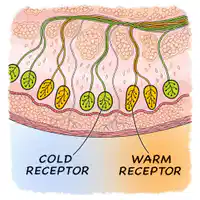
Thermo-receptors
These sensory cells are specifically designed to respond to heat and cold.
They are responsible for allowing your body to perceive different temperatures.
This allows you to react to potentially harmful temperature extremes.
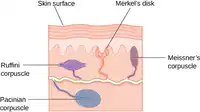
Pressure Receptors
There are seven types of receptors that respond to mechanical pressure.
These receptors can detect different levels of pressure on your skin.
This ranges from a very light touch to much deeper pressure.
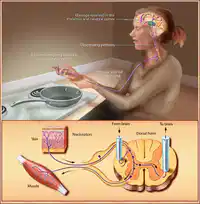
Pain Receptors
Pain receptors, also known as Nociceptors, are found throughout your body.
They respond to physical injuries like cuts, scrapes, and bruises.
They also signal pain from chemicals released during body inflammation.
17
Multiple Choice
Which type of receptor is responsible for detecting pain from a physical injury like a cut?
Photoreceptors
Nociceptors
Thermo-receptors
Pressure receptors
18
Common Misconceptions
Misconception | Correction |
|---|---|
Different parts of the tongue detect different tastes ('taste map'). | All taste buds across the tongue can detect all five basic tastes. |
Humans only have five senses. | Humans possess many senses, including balance, temperature, and pain. |
Your ears are only for hearing. | The ears are responsible for both hearing and maintaining your sense of balance. |
19
Multiple Choice
How do the functions of the cochlea and the semicircular canals differ, despite both being in the inner ear?
The cochlea detects balance, while the semicircular canals detect sound and pitch.
The cochlea is filled with air, while the semicircular canals are filled with fluid.
Both detect sound, but the cochlea is for low pitches and semicircular canals are for high pitches.
The cochlea detects sound, while the semicircular canals detect body position and balance.
20
Multiple Choice
What is the correct sequence of structures that light passes through to reach the retina?
Lens -> Cornea -> Pupil -> Retina
Cornea -> Pupil -> Lens -> Retina
Cornea -> Lens -> Pupil -> Retina
Pupil -> Lens -> Cornea -> Retina
21
Multiple Choice
A person has an infection that damages the nociceptors in their hand. What would be the most likely consequence of this damage?
They would have a reduced ability to feel pressure on their hand.
They would not be able to distinguish between hot and cold temperatures.
They would not feel pain from a cut or burn on their hand.
They would be unable to feel the texture of objects.
22
Multiple Choice
Analyze the process of hearing. What is the direct role of the three bones in the middle ear (malleus, incus, stapes)?
They transmit and amplify vibrations from the eardrum to the oval window.
They convert sound waves into fluid waves inside the cochlea.
They generate nerve impulses and send them to the auditory nerve.
They detect the pitch and volume of the sound waves.
23
Summary
Sensory perception is a five-step process, and senses are general or special.
Taste and smell are chemical senses that combine to create flavor.
Sight involves light focused through the cornea and lens onto the retina.
The ear handles hearing with the cochlea and balance with the semicircular canals.
24
Poll
On a scale of 1-4, how confident are you about the concepts covered in today's review?
1
2
3
4
The Senses
High School
Show answer
Auto Play
Slide 1 / 24
SLIDE
Similar Resources on Wayground

17 questions
Bone fractures, breaks, & joints
Presentation
•
9th - 12th Grade
20 questions
Anatomical Directional Terms
Presentation
•
9th - 12th Grade
16 questions
Observations and Inferences
Presentation
•
9th - 12th Grade
18 questions
GPA Lesson
Presentation
•
9th - 12th Grade
15 questions
ES.4 Minerals
Presentation
•
9th - 12th Grade
18 questions
Ecology 4.02 Community Characteristics
Presentation
•
9th - 12th Grade
19 questions
Layers & Convection Review
Presentation
•
9th - 12th Grade
19 questions
Intro to Ecology
Presentation
•
9th - 12th Grade
Popular Resources on Wayground
11 questions
Hallway & Bathroom Expectations

Quiz
•
6th - 8th Grade
10 questions
HCS SCI 03 Summer School Assessment 2
Quiz
•
3rd Grade
11 questions
Home Scope
Quiz
•
7th - 8th Grade
12 questions
2026 TAP Technology in the Classroom
Presentation
•
Professional Development
15 questions
HCS SCI 05 Summer School Assessment 2 Review
Quiz
•
5th Grade
15 questions
HCS SCI 04 Summer School Review 2
Quiz
•
4th Grade
59 questions
Geometry Unit 3 Review
Quiz
•
9th - 12th Grade
14 questions
FAST ELA READING SMAPLE TEST MATERIALS

Passage
•
3rd Grade