

Reptiles handling Voc pathways

Presentation
•
Other
•
10th Grade
•
Easy

Courtney Sweet
Used 1+ times
FREE Resource
14 Slides • 10 Questions
1
By Courtney Sweet


2
Objectives:
Identify four common reptile species and their natural habitats.
Describe the basic dietary and lifespan requirements for each species.
Explain the difference between "handling" and "restraint."
Demonstrate (or describe) the safe way to support a reptile’s body to prevent injury.

3
The Why & How of Handling
Handling: Daily interaction to build trust and move the animal safely.
Restraint: Firm (but gentle) control used for specific reasons.
Reasons for Restraint:
1. Health Checks: Checking for mites, scale rot, or injuries.
2. Medical Care: Giving eye drops or oral medicine.
3. Safety: Moving an aggressive animal without getting bitten.

4
Multiple Choice
In what scenarios do we need to restrain a reptile?
Restrain a reptile during veterinary care, health checks and safety (aggressive reptiles)
5
Drag and Drop
6
Open Ended

What species of reptile is this?
*Hint* it begins with C
7
Corn Snake-
Lifespan: 15–20 years
Diet: Carnivore (Mice)
Habitat: North American Woodlands
Size: 3–5 feet
Handling: Let them move through your hands like a "treadmill." Always support the middle and tail.
Restraint: Hold gently but firmly at the base of the head (thumb and forefinger) while the rest of the body is supported by your arm.

8
Open Ended

What species of snake is this?
*Hint* It begins with a B...
9
Ball Python (also known as a Royal Python)
Lifespan: 20–30+ years
Diet: Carnivore (Rats/Mice)
Habitat: African Grasslands
Size: 3–5 feet (Heavy-bodied)
Handling: Support the heavy mid-section. They are slow, so move slowly with them.
Restraint: Usually unnecessary as they "ball up," but if needed, support the full weight with one hand and hold the base of the head (thumb and forefinger)

10


11
Open Ended

What species is this?
*Hint* It begins with B
12
Bearded Dragon
Lifespan: 10–15 years
Diet: Omnivore (Greens & Insects)
Habitat: Australian Deserts/Woodlands
Size: 16–24 inches
Handling: Scoop from underneath. Ensure all four feet are resting on your hand/arm.
Restraint: Place a hand over the shoulders to keep them still during an exam. Never grab the tail!

13


Lizard restraint (Varies on size)
14
Open Ended

What species is this?
*Hint* It begins with U
15
Uromastyx
Lifespan: 15–25 years
Diet: Herbivore (Seeds, lentils, leafy greens)
Habitat: North African/Middle Eastern Deserts
Size: 10–18 inches
Handling: Support the belly. Keep fingers away from the "spiky" tail.
Restraint: Use a firm grip around the pectoral (shoulder) girdle. You may need to shield your hand from tail-swiping.

16
Health checking- The "Nose-to-Tail" Checklist
Nose & Mouth:
Check for: Clear nostrils (no bubbles or crust).
Healthy: Mouth should close properly. Gums should be pink (not red or purple).
Warning: Thick "cottage cheese" saliva or swelling (signs of Mouth Rot).

17
Eyes:
Healthy: Bright, clear, and alert.
Warning: Sunken eyes (dehydration) or discharge/swelling (infection).
Note: Cloudiness in snakes is normal if they are about to shed ("in blue").

18
Skin & Scales:
Check for: Any "stuck shed" (especially on toes and tail tips).
Warning: Look for "moving black dots" (Mites) or burns from heat lamps.
Feel: Muscles should feel firm and strong, not limp or "squishy."

19
Body Condition (Weight):
Lizards: Look at the base of the tail and the "hips." You shouldn't see prominent hip bones.
Snakes: They should be a rounded "lozenge" shape. A visible, sharp spine (triangular shape) means they are underweight.

20
Multiple Choice
Which of these reptiles is a strict herbivore, primarily eating seeds, lentils, and leafy greens?
Bearded Dragon
Balll Python
Uromastyx
Corn Snake
21
Multiple Choice
Why is it important to support a reptiles full body weight when handling?
It is important to support a reptile's body weight to prevent skeletal stress.
22
Multiple Choice
When performing a health check on a Bearded Dragon, what should you specifically check on their feet?
Old skin that doesn't fall off can become very tight around small limbs.
Look for color changes.
23
Multiple Choice
In a 'Nose-to-Tail' health check, what does a 'sunken eye' usually indicate?
24
Summary & Safety Tips
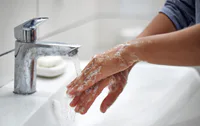
Wash your hands: Always before and after (Salmonella risk).
Low and slow: Handle reptiles close to the ground or a table so they don't get hurt if they jump.
Read the body language: If they are puffing up, hissing, or "S-ing" (snakes), they are stressed! Do not handle if not necessary.
By Courtney Sweet
Show answer
Auto Play
Slide 1 / 24
SLIDE
Similar Resources on Wayground

19 questions
TPCAST Foldable Lesson
Presentation
•
10th Grade
19 questions
passive voice
Presentation
•
10th Grade
19 questions
Neolithic / Early Civilizations Review
Presentation
•
10th Grade
19 questions
DNA and DNA Replication
Presentation
•
10th Grade
19 questions
Library Media Class Syllabus Lesson
Presentation
•
10th Grade
20 questions
Naming and Writing Acids
Presentation
•
10th Grade
20 questions
Memoir Intro
Presentation
•
10th Grade
20 questions
ATP Photosynthesis Cellular Respiration Review
Presentation
•
10th Grade
Popular Resources on Wayground
10 questions
Safety Day 2026 – Student Review

Quiz
•
9th Grade
21 questions
Continents and Oceans
Quiz
•
6th Grade
20 questions
Parts of Speech
Quiz
•
5th Grade
16 questions
Subject & Predicate
Quiz
•
5th Grade
25 questions
Multiplication Facts
Quiz
•
5th Grade
12 questions
Map Skills
Quiz
•
3rd Grade
22 questions
Continents and Oceans
Quiz
•
5th Grade
15 questions
Rounding Decimals
Quiz
•
5th Grade
Discover more resources for Other
26 questions
SLIME!!!!!
Quiz
•
KG - 12th Grade
20 questions
Cell organelles and functions
Quiz
•
10th Grade
10 questions
Exploring Chemical and Physical Changes

Interactive video
•
6th - 10th Grade
20 questions
Cell Transport
Quiz
•
9th - 12th Grade
10 questions
Exploring the Basics of Exponents
Interactive video
•
6th - 10th Grade
20 questions
Budgeting
Quiz
•
9th - 12th Grade
20 questions
Investing
Quiz
•
9th - 12th Grade
20 questions
Preterite vs. Imperfect
Quiz
•
10th Grade