

Notes- Alternate photosynthesis

Presentation
•
Biology
•
9th - 12th Grade
•
Practice Problem
•
Easy
Standards-aligned

Danielle LaBue
Used 1+ times
FREE Resource
9 Slides • 10 Questions
1

2
Open Ended
Why is it important for plants to have different types of metabolisms?
3
4
Multiple Choice
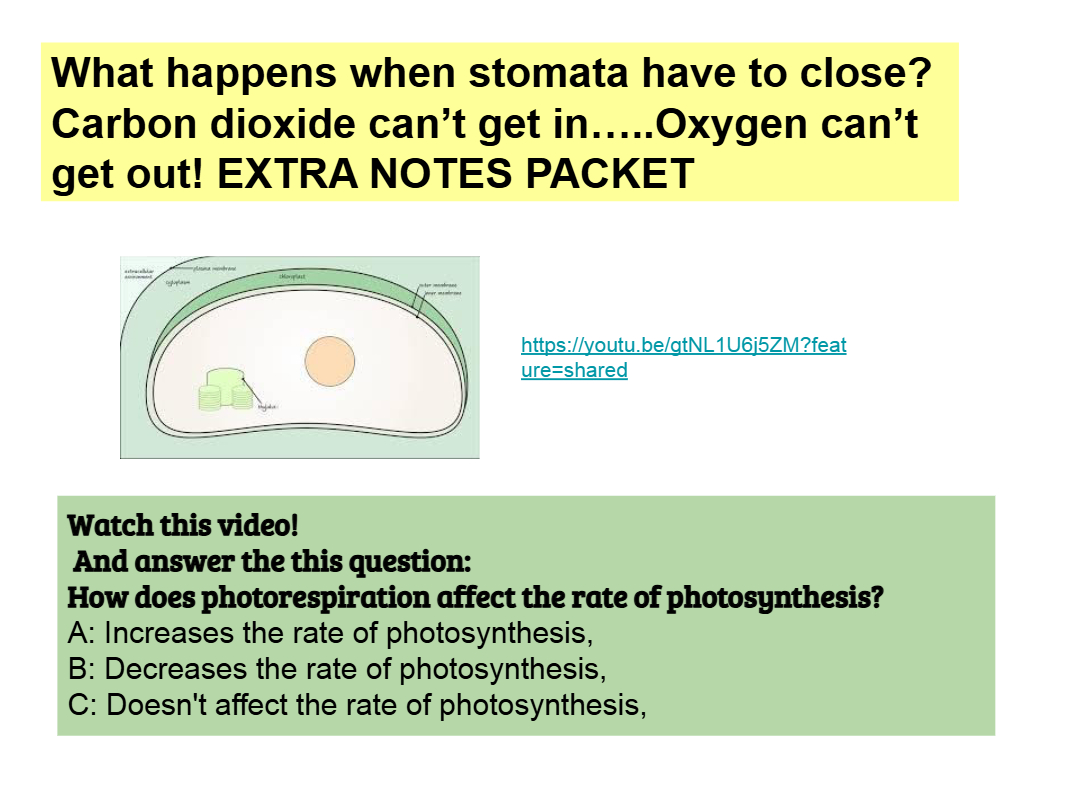
How does photorespiration affect the rate of photosynthesis?
Increases the rate of photosynthesis
Decreases the rate of photosynthesis
Doesn't affect the rate of photosynthesis
5
6
Multiple Choice
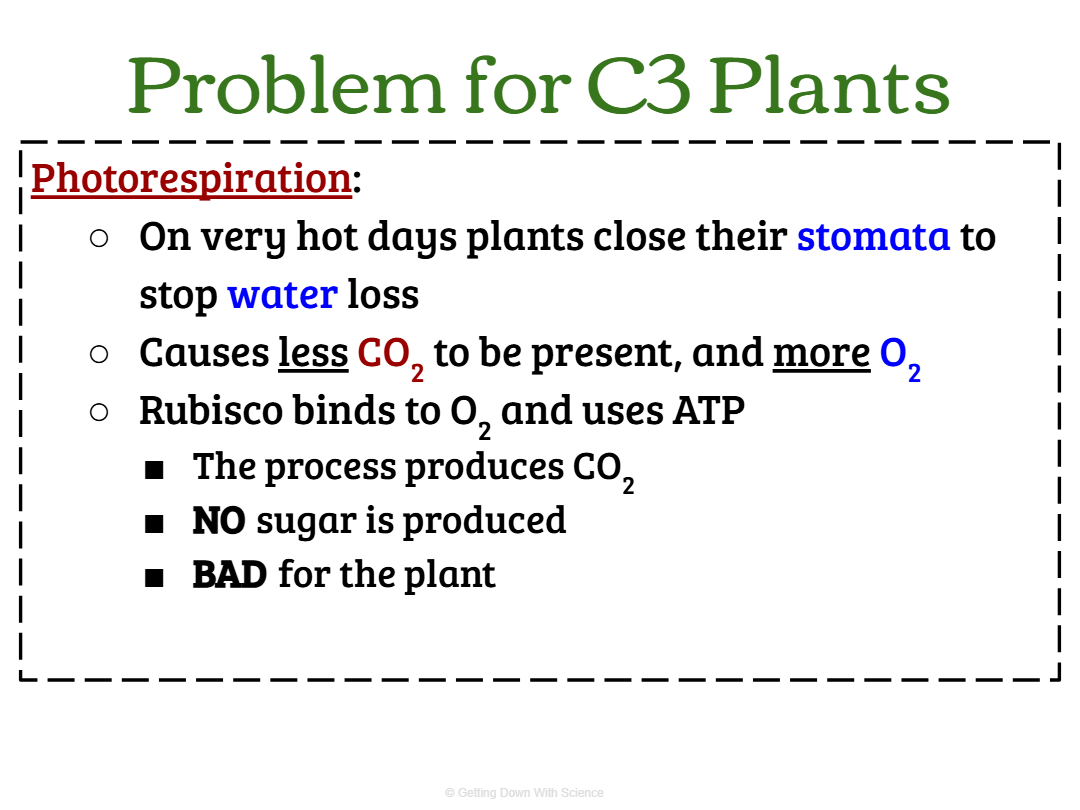
What is photorespiration and why is it considered bad for C3 plants?
It produces sugar and is beneficial for the plant
It produces CO2 and sugar
It produces CO2 but no sugar, which is bad for the plant
It produces oxygen and sugar
7
8
Open Ended
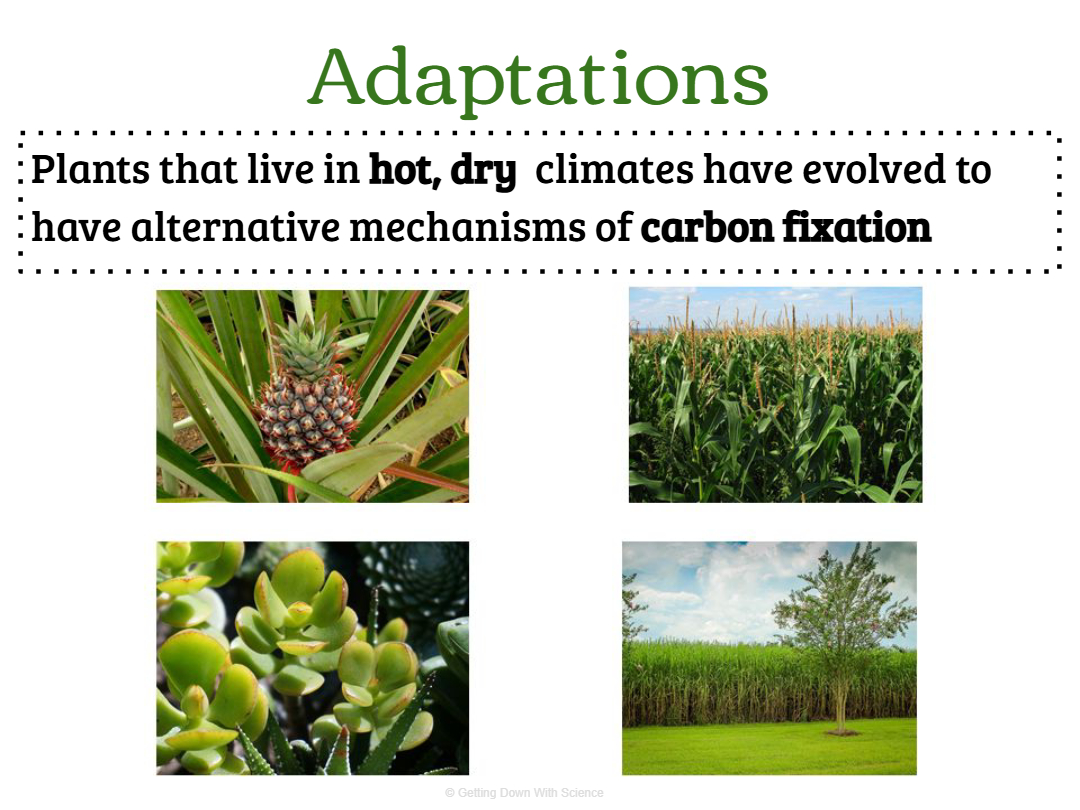
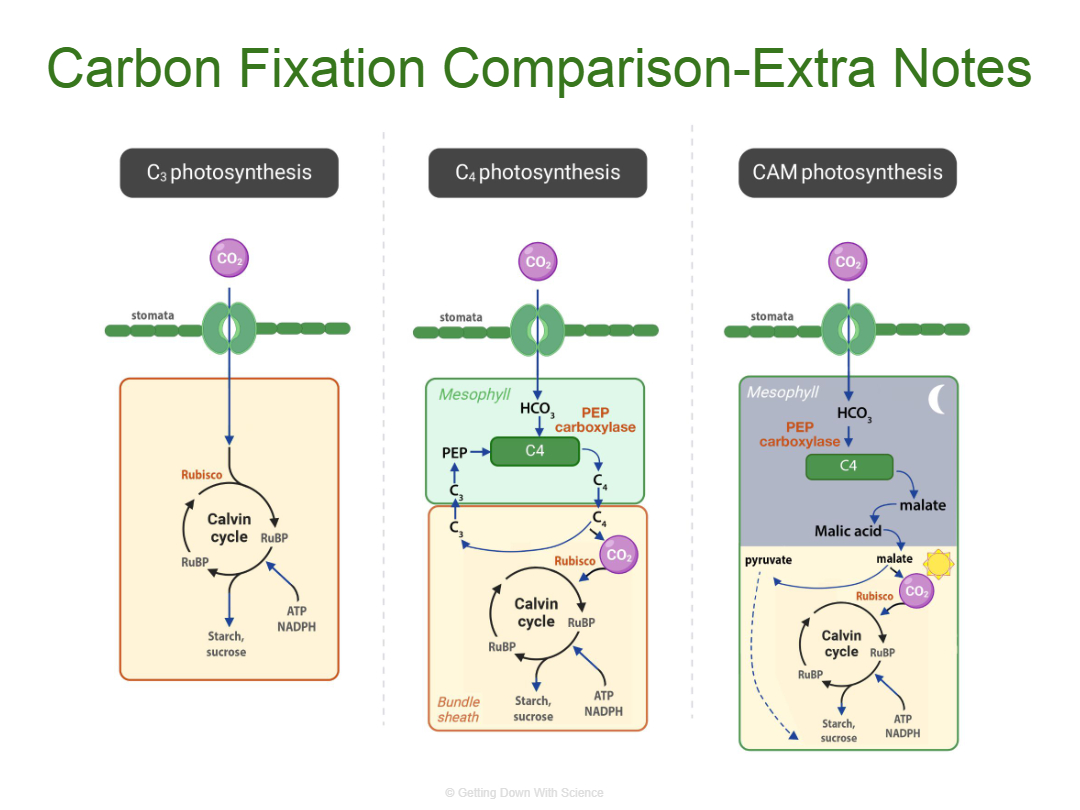
Explain how plants in hot, dry climates have adapted their carbon fixation mechanisms to survive.
9
10
Fill in the Blanks
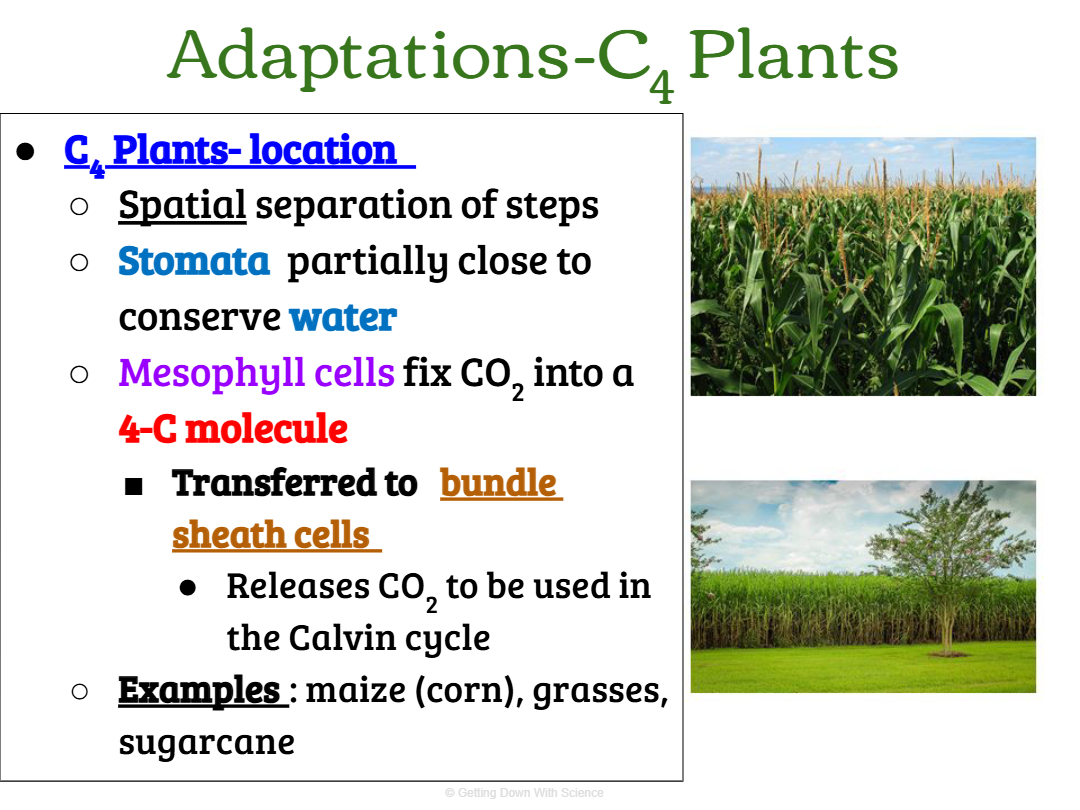
The spatial separation of steps in C4 plants involves fixing CO2 in the
Type answer...
11
Multiple Select
Which of the following are examples of C4 plants?
Pineapple
Maize (corn)
Jade
Sugarcane
12
13
Open Ended
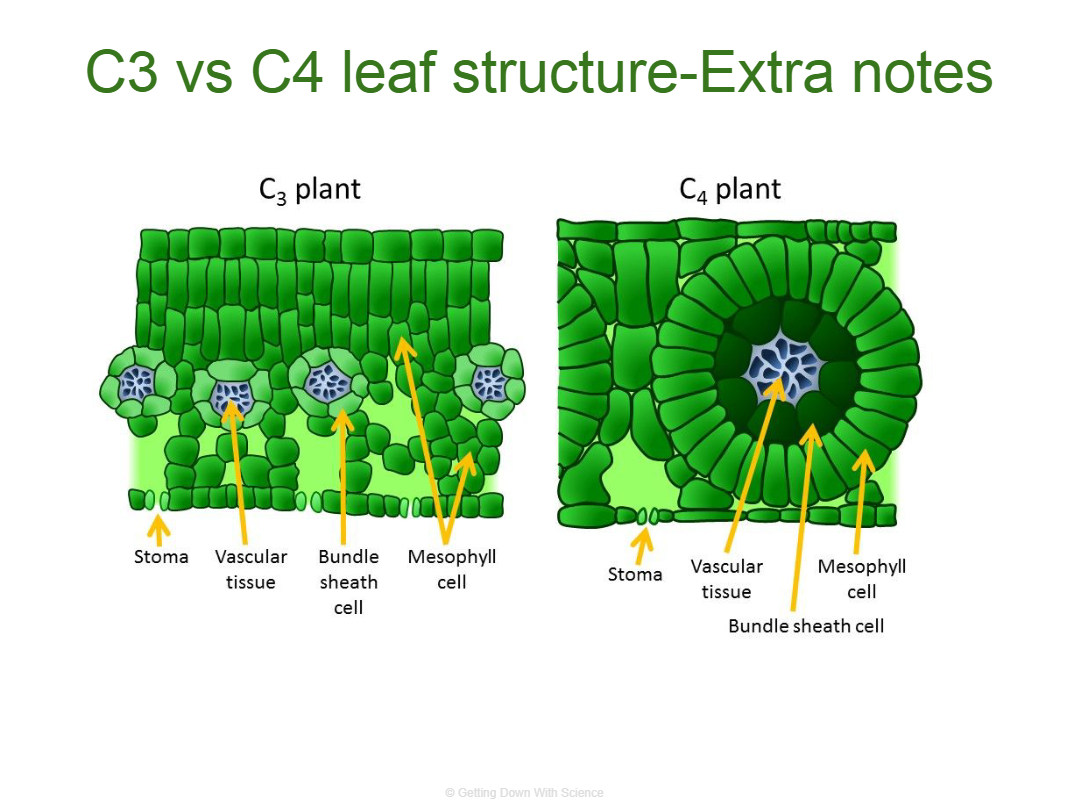
Compare the leaf structure of C3 and C4 plants as shown in the diagram. What is the main difference in the arrangement of bundle sheath cells?
14
15
Multiple Choice
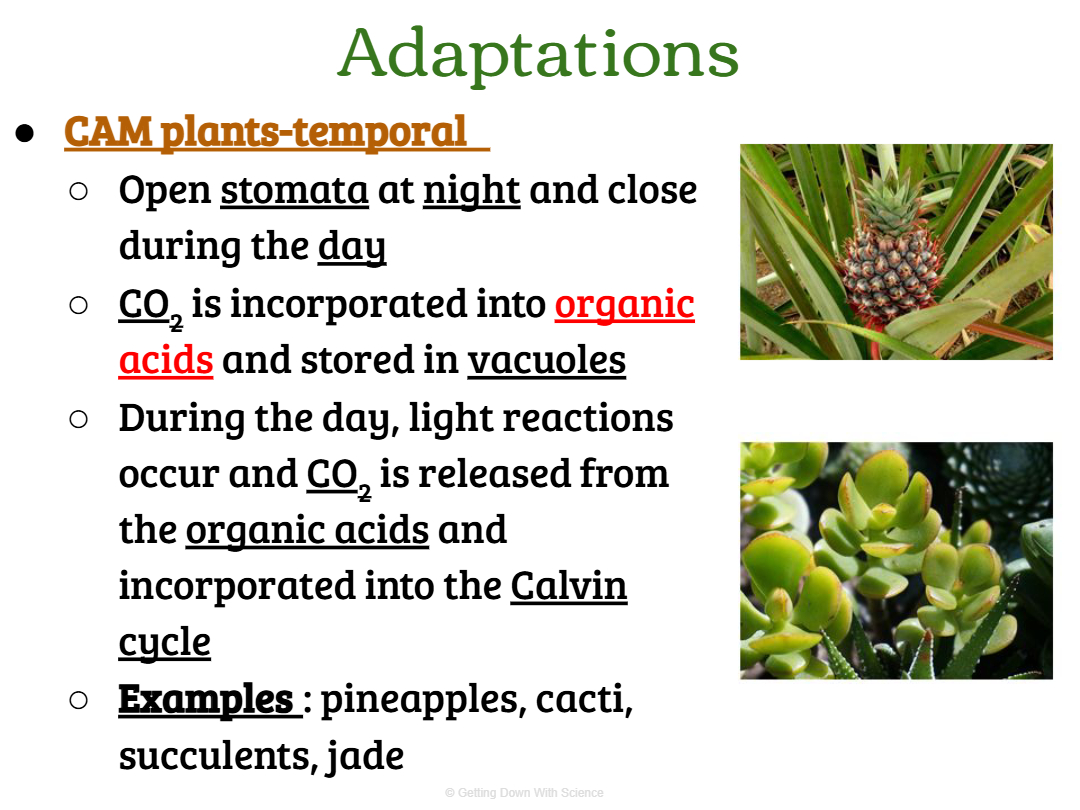
Which process in CAM plants allows them to conserve water in arid environments?
Opening stomata during the day
Storing CO2 in organic acids at night
Fixing CO2 in bundle sheath cells
Releasing CO2 during the night
16
17

18
Open Ended
Reflecting on today's lesson about plant metabolism and stomata, what is one question you still have or one concept you would like to explore further?
19
Multiple Choice
What is the primary function of the Calvin Cycle in photosynthesis?
To produce G3P, a precursor to glucose and other organic molecules
To absorb sunlight for energy
To break down glucose into ATP
To transport water through the plant
Show answer
Auto Play
Slide 1 / 19
SLIDE
Similar Resources on Wayground

14 questions
Exploring Triangles: Sides and Angles
Presentation
•
9th - 12th Grade
14 questions
Allusion
Presentation
•
9th - 12th Grade
14 questions
Geometric Sequences
Presentation
•
9th - 12th Grade
14 questions
Plant and Animal Cell Tonicity
Presentation
•
9th - 12th Grade
17 questions
Factors affecting bloodflow
Presentation
•
9th - 12th Grade
11 questions
Regional Terms
Presentation
•
9th - 12th Grade
17 questions
3.3.1 Gel Electrophoresis & DNA Fingerprinting
Presentation
•
9th - 12th Grade
Popular Resources on Wayground
10 questions
Safety Day 2026 – Student Review

Quiz
•
9th Grade
21 questions
Continents and Oceans
Quiz
•
6th Grade
20 questions
Parts of Speech
Quiz
•
5th Grade
16 questions
Subject & Predicate
Quiz
•
5th Grade
25 questions
Multiplication Facts
Quiz
•
5th Grade
12 questions
Map Skills
Quiz
•
3rd Grade
22 questions
Continents and Oceans
Quiz
•
5th Grade
15 questions
Rounding Decimals
Quiz
•
5th Grade
Discover more resources for Biology
20 questions
Cell organelles and functions
Quiz
•
10th Grade
20 questions
Cell Transport
Quiz
•
9th - 12th Grade
25 questions
photosynthesis and cellular respiration
Quiz
•
9th Grade
20 questions
Cell Cycle
Quiz
•
9th Grade
8 questions
DNA vs. RNA
Presentation
•
9th - 12th Grade
14 questions
Ecological Succession: Primary and Secondary
Quiz
•
9th Grade
20 questions
Macromolecules
Quiz
•
10th Grade
20 questions
Characteristics of Life
Quiz
•
9th - 10th Grade