

Lab Safety

Presentation
•
Science
•
7th - 12th Grade
•
Easy
Standards-aligned

Erin Hannan
Used 14+ times
FREE Resource
8 Slides • 11 Questions
1
Year 7
2
General Rules:
Always follow teacher instructions
Wear appropriate PPE (personal protective equipment)
Understand the experiment and complete Risk Assessment
Know where the lab safety components are
Report all accidents, spills, breaks, and injuries immediately to the teacher
Never ingest or inhale anything in the lab
Experiments are not the time to play around
Clean yourself and your equipment well after use
3
PPE
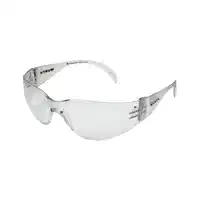
Lab coat and safety goggles are required for most pracs
Use when glassware, heat, or chemicals are being used
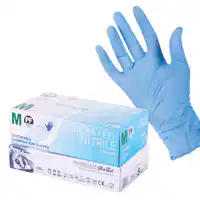
Gloves are sometimes needed for certain experiments
Long hair must be tied back


4
Understand the experiment
Read and comprehend the experiment's aim before starting
Read the entire method, so you know what you need and what you are doing
This prevents any misunderstanding or errors
Also makes the experiment easier and more enjoyable!
Completing the Risk Assessment is essential for ensuring a safe and informed experiment
5
Lab Safety Components
Fire extinguisher and blanket
Chemical shower
Eye wash station
Fume hood
6
No ingesting or inhaling
Nothing must be consumed in the lab - even if it is regularly something you may consume (i.e. water, sugar, ice etc.)
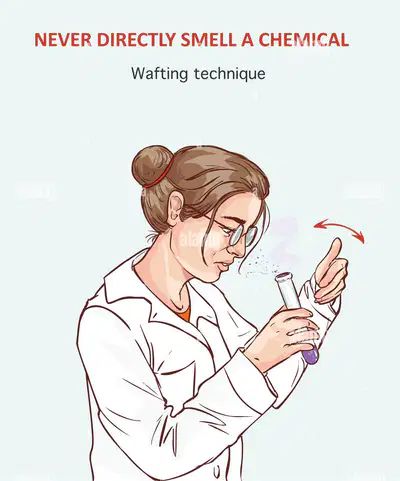
If you need to smell something, you must waft
7
Cleaning!
Important to put away equipment where you found it
Clean all glassware properly and leave to dry
Wipe down lab bench
We will always have 5 minutes tidy time at the end of a prac
8
Multiple Choice
9
Multiple Choice
10
Multiple Choice
11
Multiple Choice
12
Multiple Choice
13
Multiple Choice
14
Multiple Choice

15
Multiple Choice

16
Multiple Choice

17
Multiple Choice

18
Multiple Choice

19
More to come!
We will be doing loads of experiments this year, and each has their own specific safety concerns. We will do risk assessments for each relevant experiment.
Year 7
Show answer
Auto Play
Slide 1 / 19
SLIDE
Similar Resources on Wayground

11 questions
Macromolecules of Life
Presentation
•
7th - 12th Grade
14 questions
GESTIONE DELLA SICUREZZA A BORDO V F LOG
Presentation
•
5th Grade
12 questions
Simple Machines - Pulleys
Presentation
•
10th Grade
16 questions
HR Diagram Review
Presentation
•
6th - 12th Grade
17 questions
Balancing chemical equations
Presentation
•
8th - 12th Grade
13 questions
Argumentative Conclusions
Presentation
•
7th - 12th Grade
15 questions
Adaptation
Presentation
•
KG
15 questions
Crash Course Astronomy #26 - The Stars
Presentation
•
6th - 12th Grade
Popular Resources on Wayground
10 questions
How much do you know about our Portrait of an Eagle?

Quiz
•
10th Grade
10 questions
Fast Food Slogans
Quiz
•
6th - 8th Grade
21 questions
Continents and Oceans
Quiz
•
6th Grade
20 questions
Parts of Speech
Quiz
•
5th Grade
16 questions
Subject & Predicate
Quiz
•
5th Grade
25 questions
Multiplication Facts
Quiz
•
5th Grade
12 questions
Map Skills
Quiz
•
3rd Grade
22 questions
Continents and Oceans
Quiz
•
5th Grade
Discover more resources for Science
17 questions
7.6D Aqueous Solutions
Quiz
•
7th Grade
20 questions
Scientific Method and Variables
Quiz
•
8th Grade
20 questions
Scientific method and variables
Quiz
•
8th Grade
27 questions
Counting Atoms - Subscripts
Quiz
•
8th Grade
20 questions
Claim, Evidence and Reasoning (CER)
Quiz
•
6th - 8th Grade
18 questions
Counting Atoms
Quiz
•
7th - 8th Grade
20 questions
Elements, Compounds and Mixtures
Quiz
•
8th Grade
10 questions
Exploring Chemical and Physical Changes

Interactive video
•
6th - 10th Grade