Search Header Logo
KIP: Volcanoes

KIP: Volcanoes

Assessment

Presentation

Science

7th Grade

Practice Problem

Medium

NGSS
MS-ESS2-2, MS-ESS2-1, MS-ESS2-3

+3

Standards-aligned

Created by

Miricle Hawkins

Used 19+ times

FREE Resource

11 Slides • 9 Questions

1

media
media

2

media

3

media

4

Multiple Choice

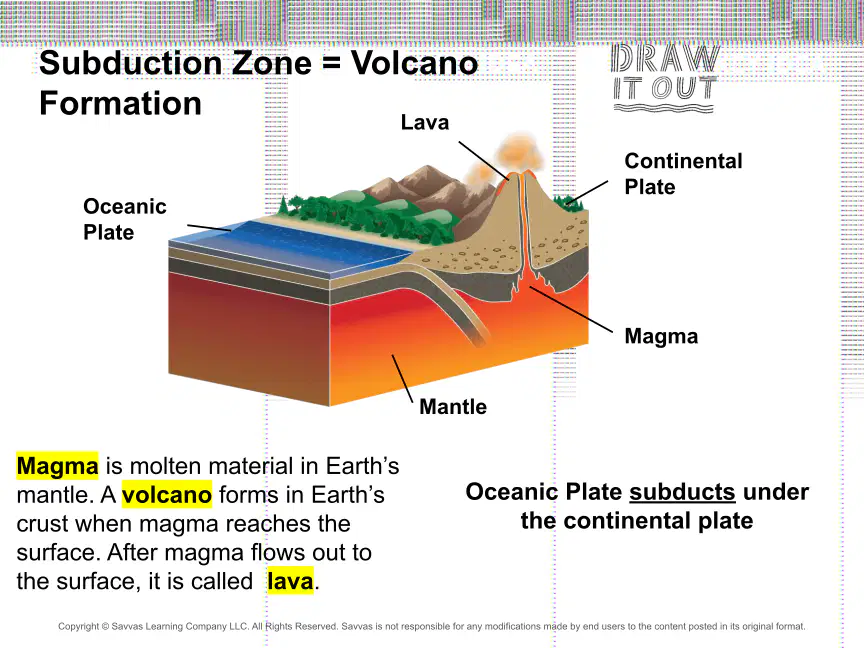
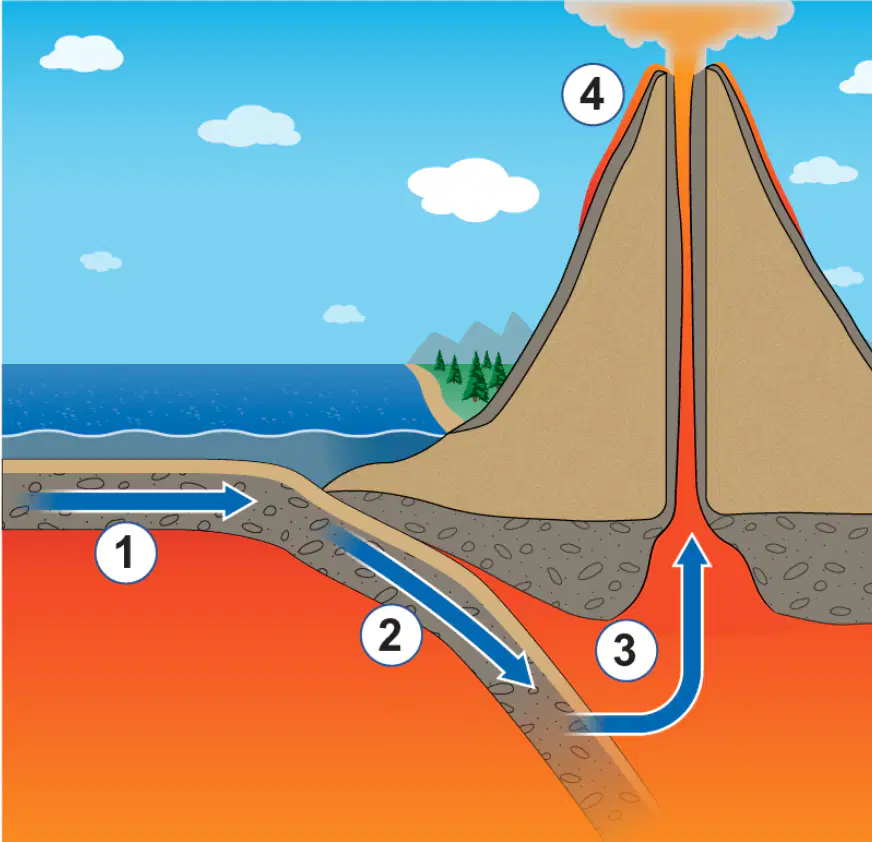
Which process leads to the formation of a volcano at a subduction zone?

1

The oceanic plate subducts under the continental plate, causing magma to rise.

2

The continental plate moves over the oceanic plate, causing lava to cool.

3

The mantle pushes the plates apart, forming a volcano.

4

The oceanic plate melts completely, creating a volcano.

5

media

6

Multiple Select

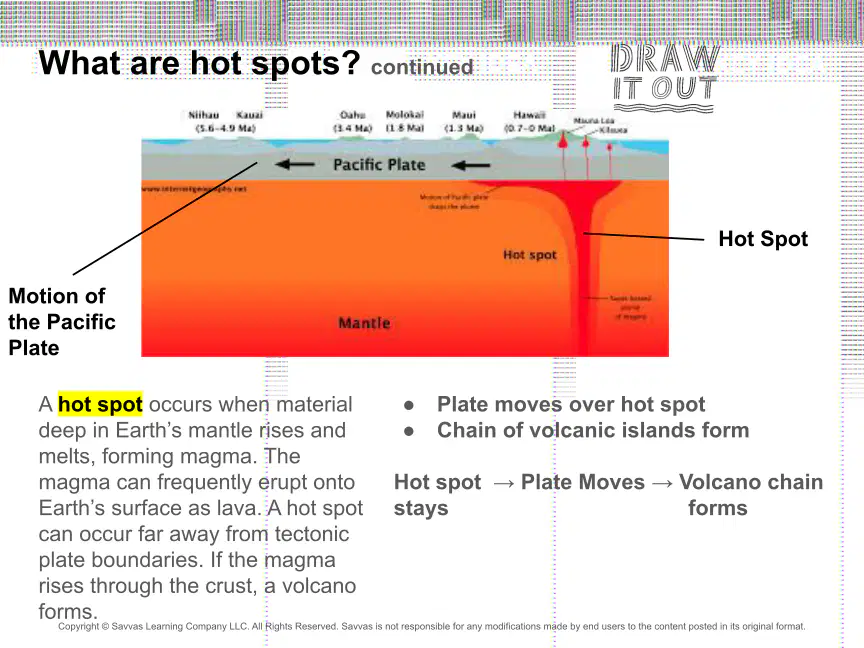
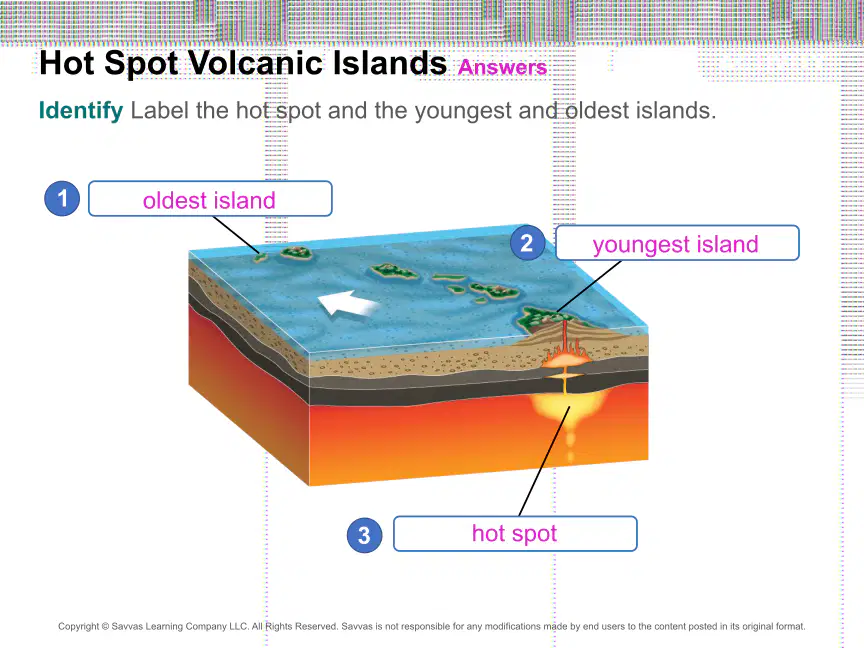
Which of the following statements about hot spots is/are correct? Select 2.

1

A hot spot can form volcanoes far from plate boundaries.

2

Hot spots are always located at the edges of tectonic plates.

3

Hot spots cause chains of volcanic islands as plates move over them.

4

Hot spots only form on continental plates.

7

media

8

Labelling

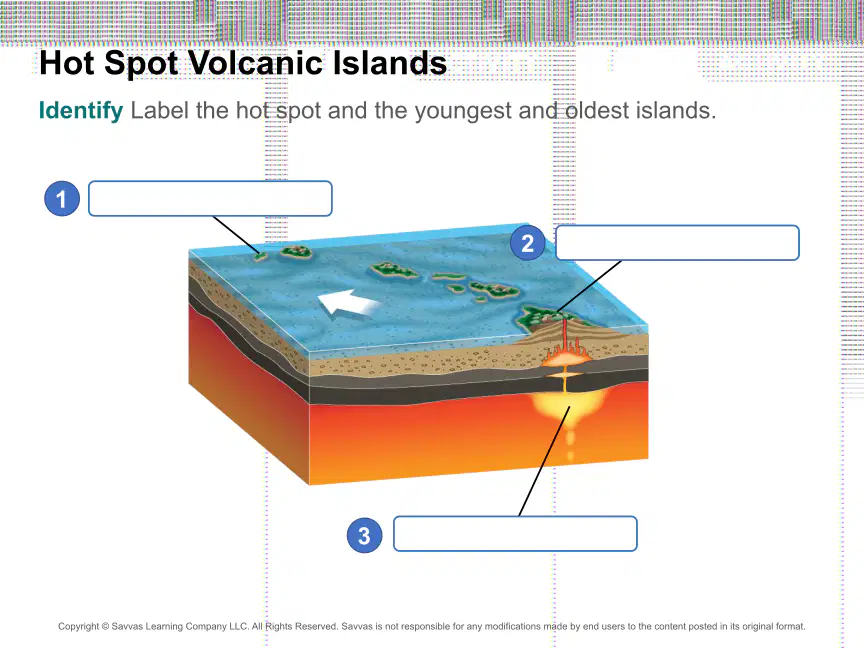
Label the hot spot and the youngest and oldest islands

Drag labels to their correct position on the image

oldest island

youngest island

hot spot

9

media

10

Open Ended

Explain how a hot spot can create a chain of volcanic islands, even if it is far from tectonic plate boundaries.

11

media

12

Fill in the Blanks

13

media

14

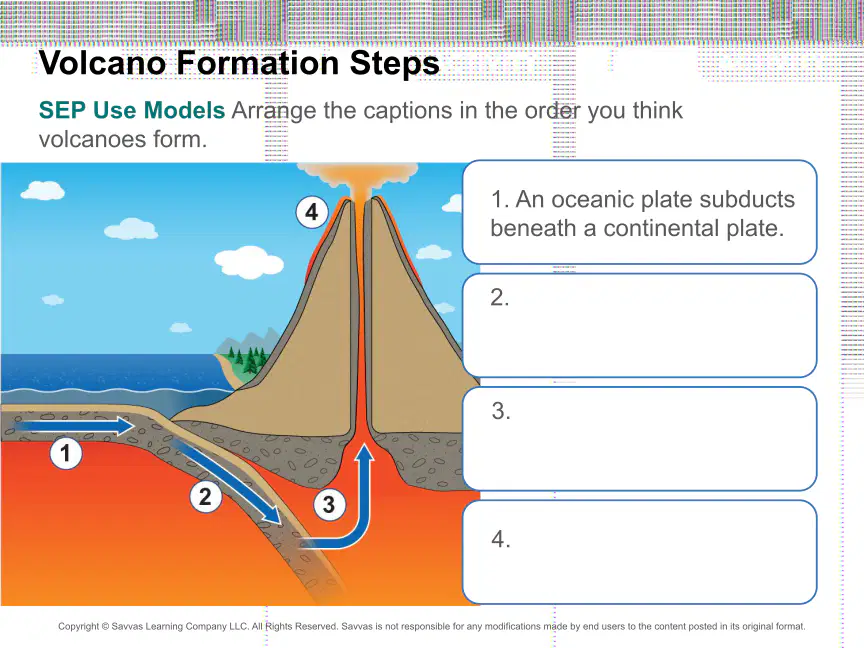
Reorder

Question image

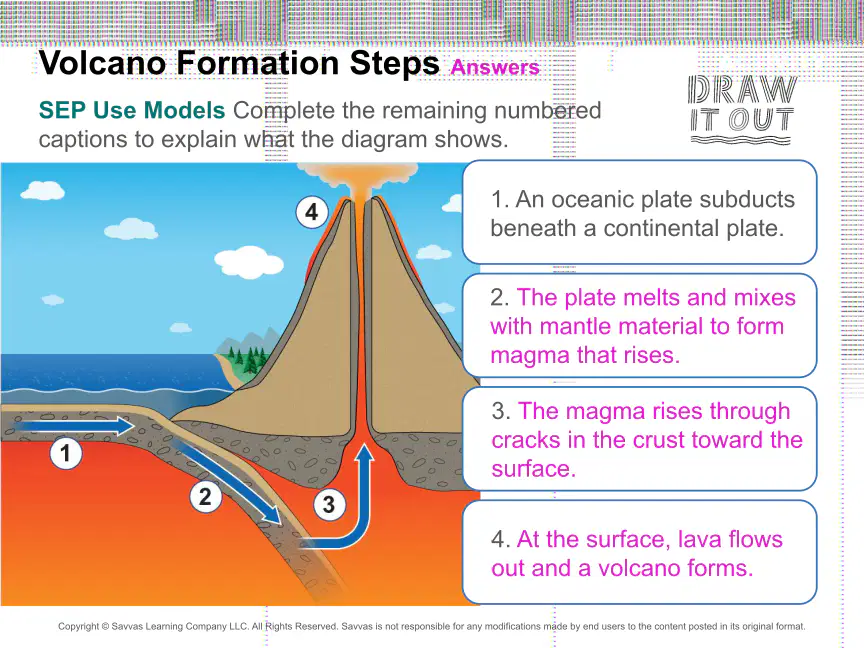
Arrange the captions in the order you think volcanoes form.

1. An oceanic plate subducts beneath a continental plate.

An oceanic plate subducts beneath a continental plate.

The plate melts and mixes with mantle material to form magma that rises.

The magma rises through cracks in the crust toward the surface.

At the surface, lava flows out and a volcano forms.

1
2
3
4

15

media

16

Multiple Choice

Which step comes immediately after an oceanic plate subducts beneath a continental plate in volcano formation?

1

Magma rises from the mantle.

2

Lava erupts onto the surface.

3

Pressure builds up beneath the crust.

4

The continental plate melts.

17

media

18

Multiple Choice

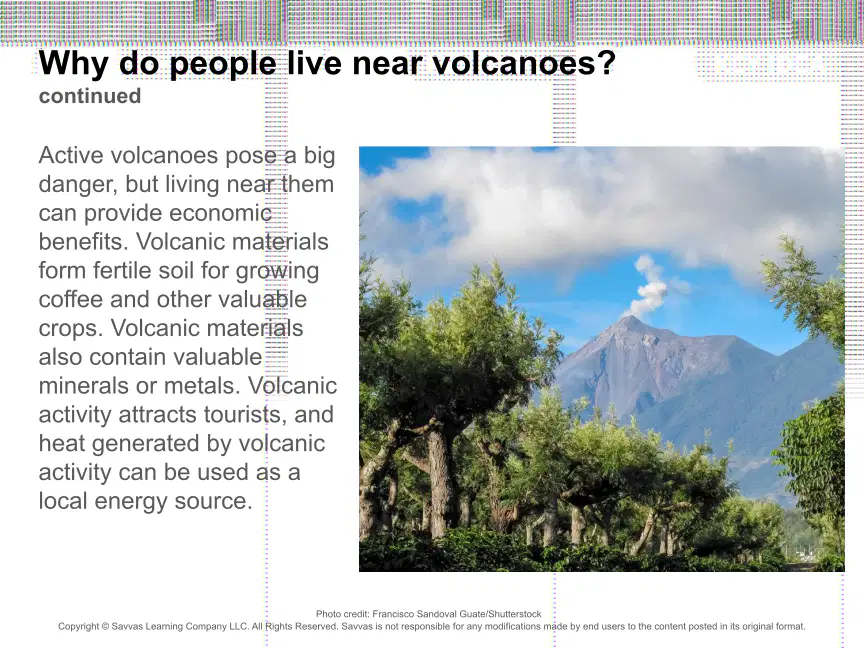
Which of the following is a benefit of living near volcanoes?

1

Volcanic materials form fertile soil for growing valuable crops.

2

Volcanic eruptions always destroy nearby land.

3

Volcanoes never provide any useful resources.

4

Living near volcanoes is always dangerous.

19

Multiple Choice

What is one significant benefit of living near a volcano?

1

Fertile soil for crops

2

Constant earthquakes

3

Lack of water sources

4

Frequent tornadoes

20

media
media
media

Show answer

Auto Play

Slide 1 / 20

SLIDE