

L2 - Y9 Computer systems

Presentation
•
Computers
•
8th Grade
•
Practice Problem
•
Hard

Peter Hyland
Used 6+ times
FREE Resource
41 Slides • 22 Questions
1
2
Use your whiteboard
Convert the binary number 0001 1001 to a denary (decimal) number.
A.19
B.17
C.29
D.25
Which of the following best defines an 'embedded system'?
A. A supercomputer designed for complex scientific calculations.
B. A computer system with a dedicated function within a larger mechanical or electrical system.
C. A personal computer used for a wide variety of tasks like gaming and word processing.
D. A software program that runs inside a web browser.
In MakeCode Arcade, what is the primary purpose of a 'Sprite'?
A. To keep track of the high score.
B. To represent a character or object that interacts within the game.
C. To play sound effects when a button is pressed.
D. To change the background color of the screen.
How does an embedded system typically compare to a general-purpose computer?
A. Embedded systems always have more processing power than general-purpose computers.
B. Embedded systems are easier to upgrade with new hardware.
C. Embedded systems generally require less power and are cheaper to manufacture.
D. Embedded systems can run a much wider variety of software applications.
3
4
Open Ended
What prior knowledge do you have about how a CPU works or its main components?
5
Multiple Choice
Why is understanding the components of the CPU important for learning about computer systems?
Because the CPU controls all operations in a computer
Because the CPU is only used for gaming
Because the CPU is not important for computers
Because the CPU is only used for storage
6
7
8
Open Ended
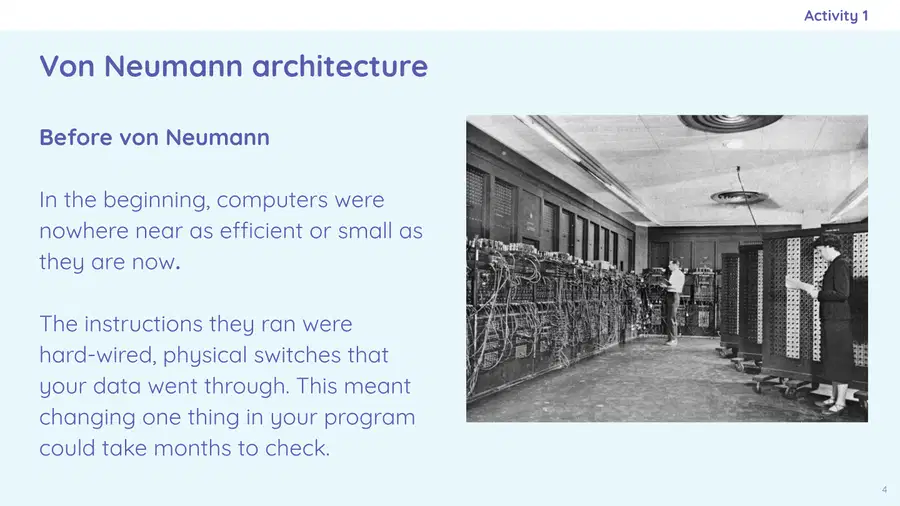
Describe how computers operated before the introduction of the Von Neumann architecture.
9
10
Multiple Choice
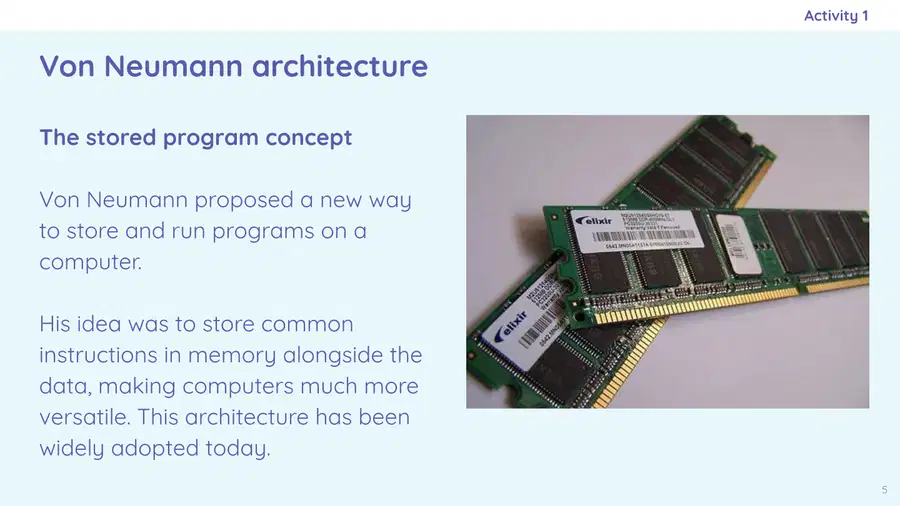
What is the main idea behind the Von Neumann architecture that made modern computers more versatile?
Storing instructions in memory alongside data
Using only physical switches for instructions
Making computers larger and less efficient
Eliminating the need for memory
11
12
Multiple Select
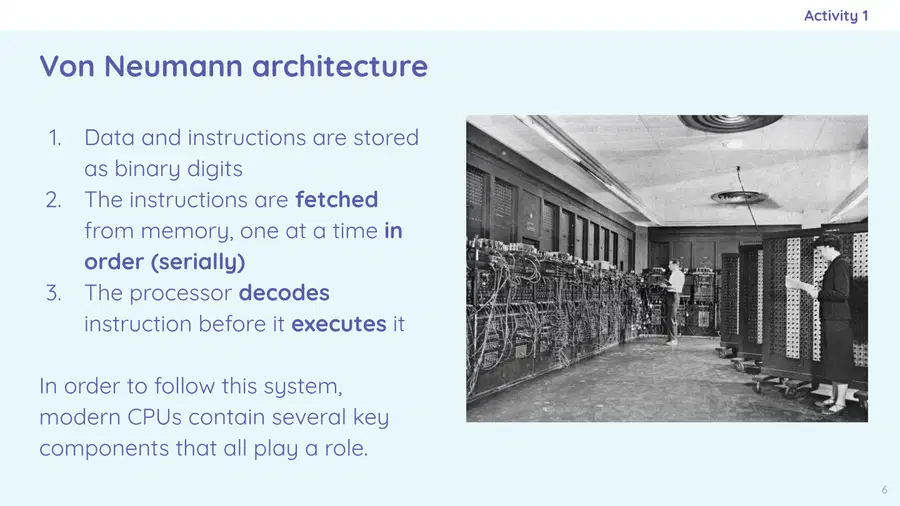
Which of the following are key steps in the Von Neumann architecture for processing instructions?
Instructions are fetched from memory one at a time
Data and instructions are stored as binary digits
Instructions are executed before being decoded
The processor decodes instructions before executing them
13
14

15
Multiple Select
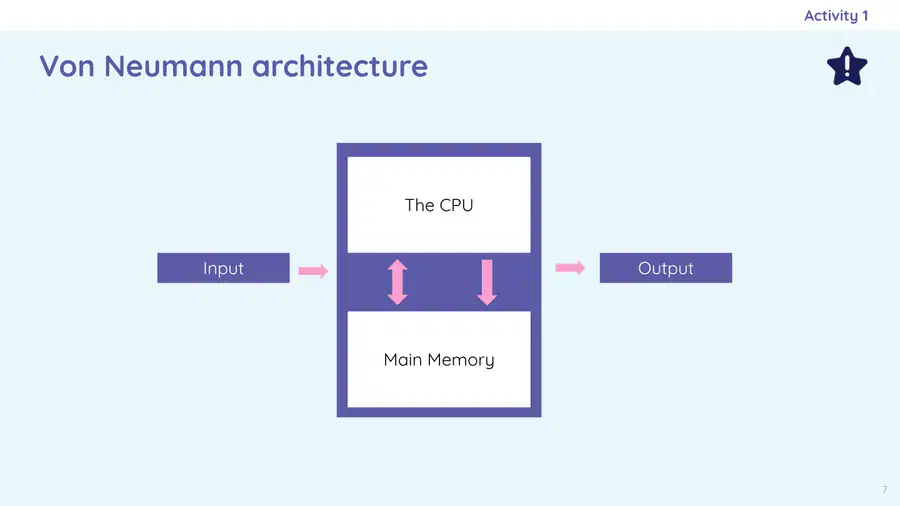
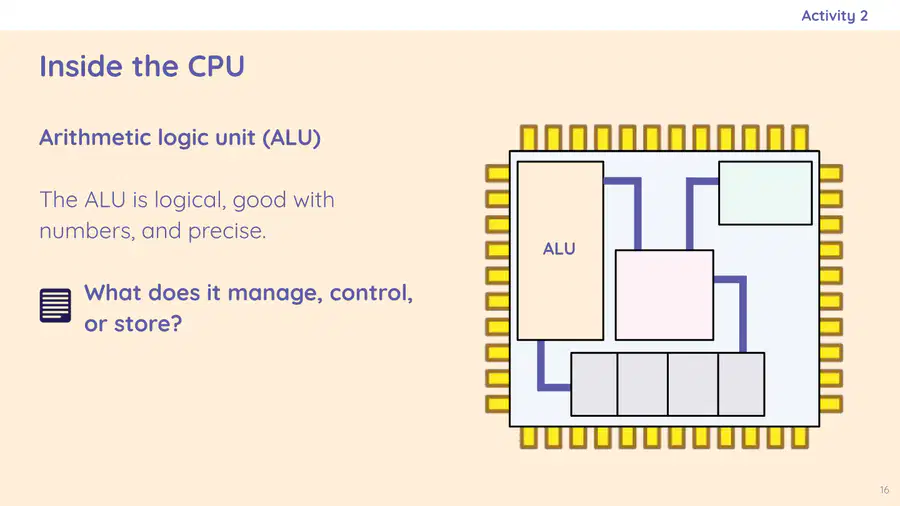
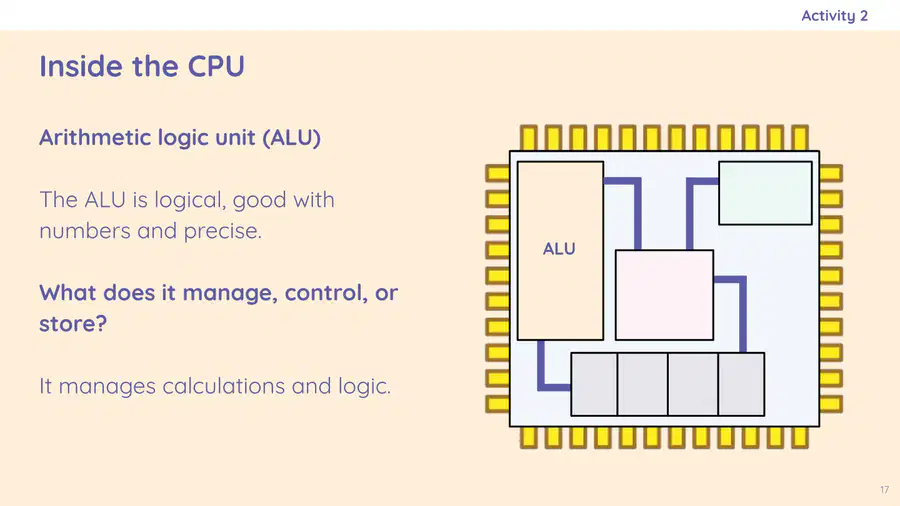
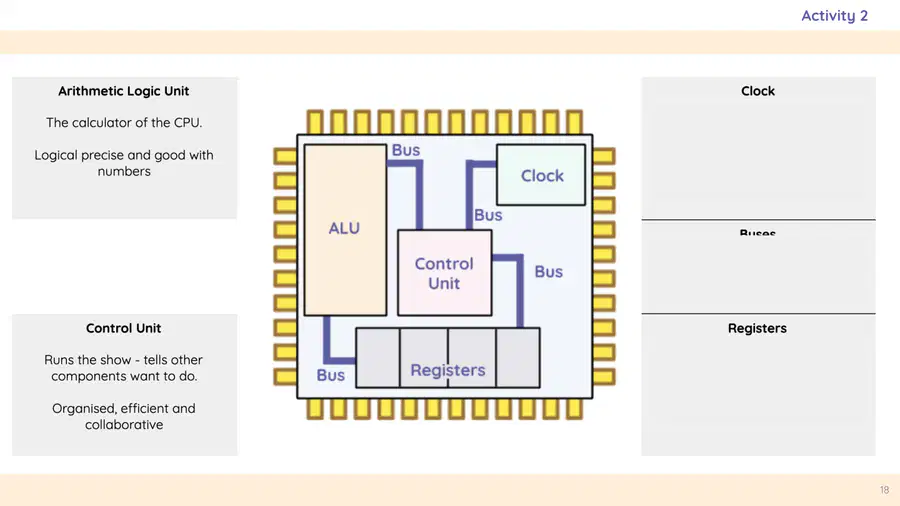
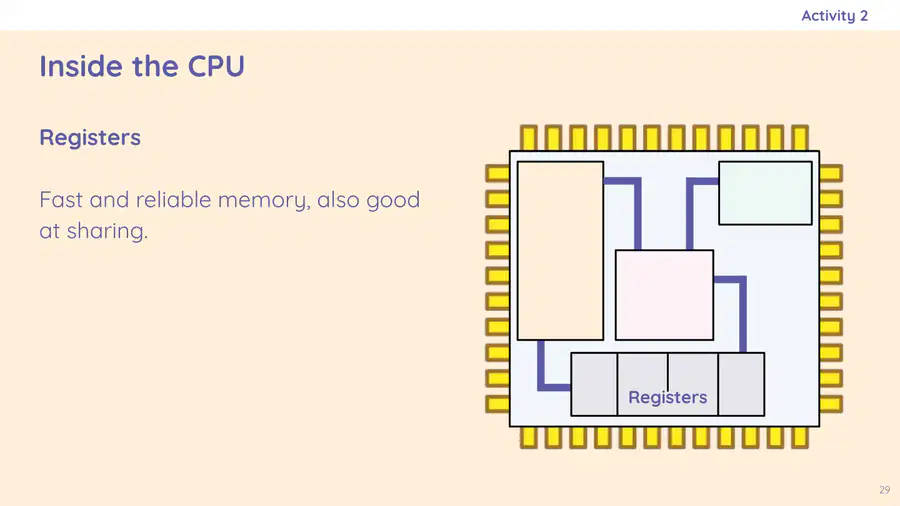
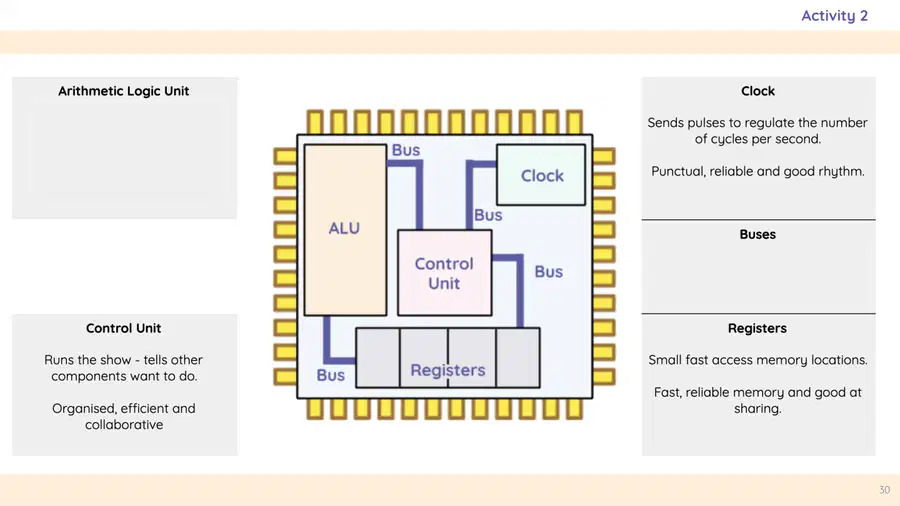
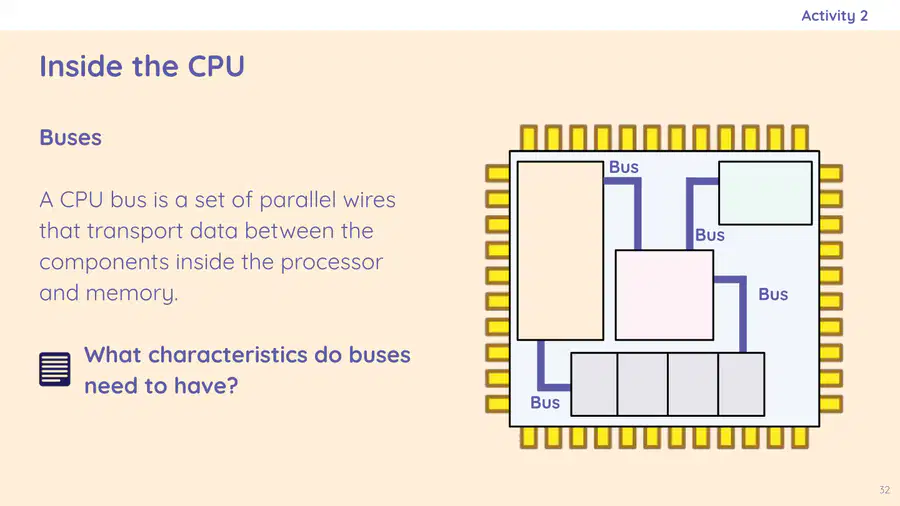
Which components are typically found inside a CPU?
Control unit
Arithmetic logic unit
Main memory
Registers
16
Open Ended
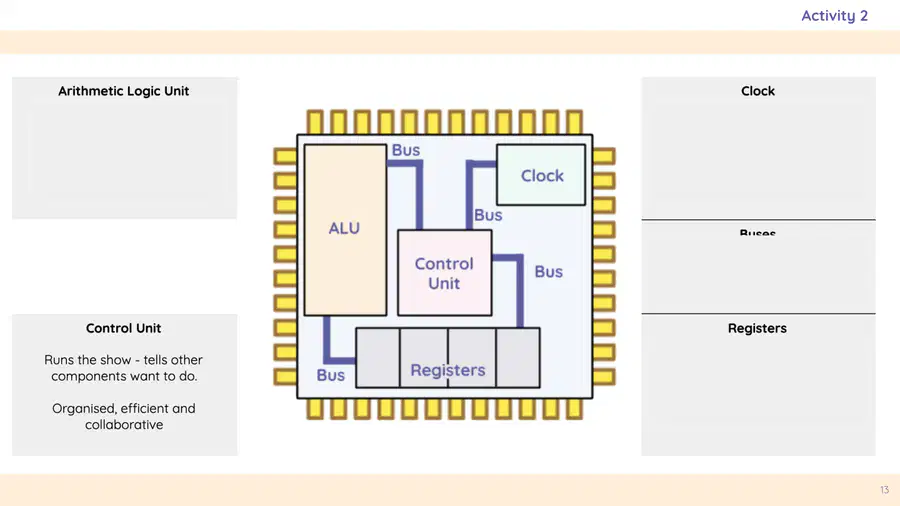
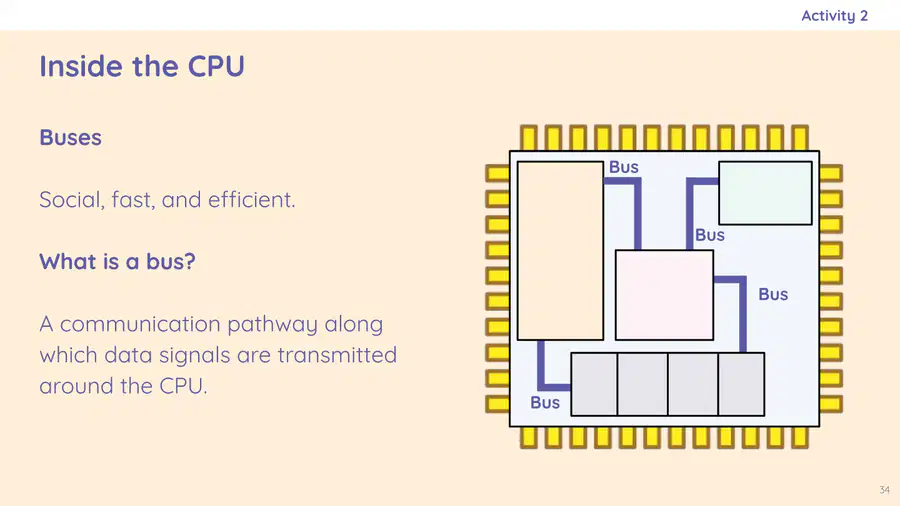
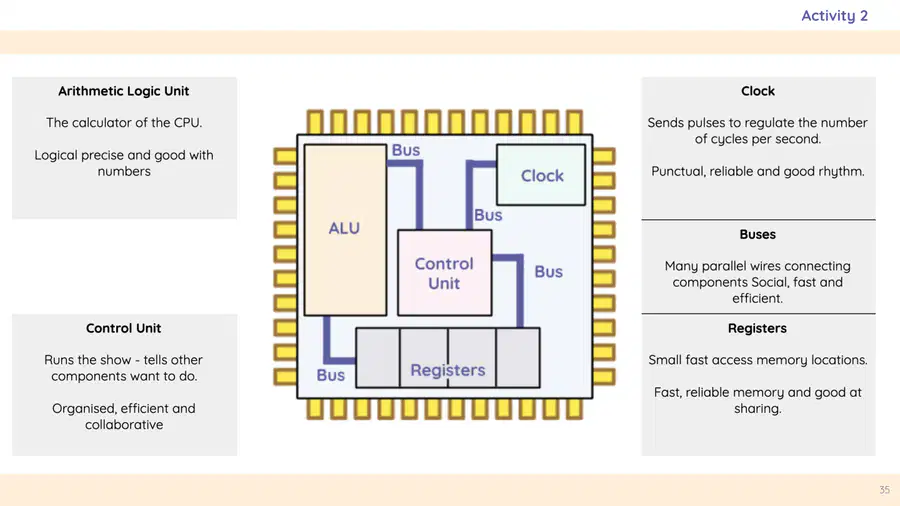
List and briefly explain the key components found inside a CPU.
17
Fill in the Blanks
The CPU stands for central
18

19
20
21
Open Ended
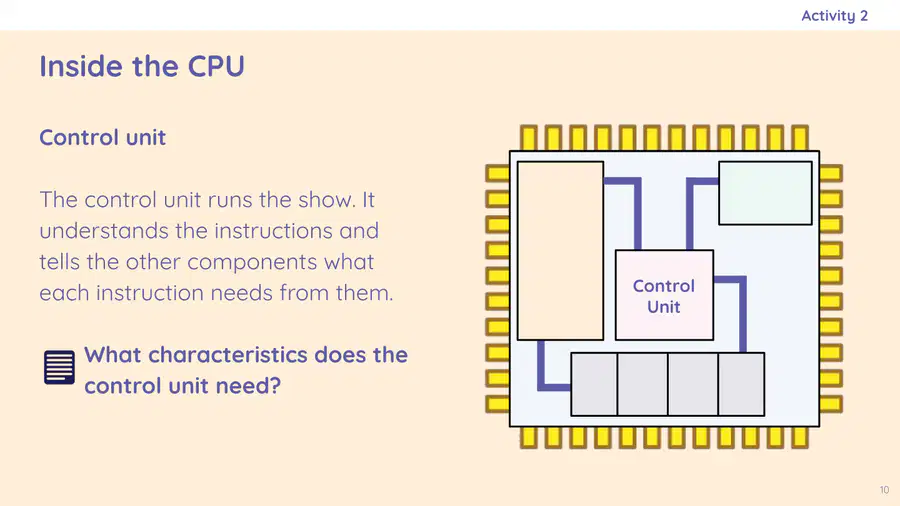
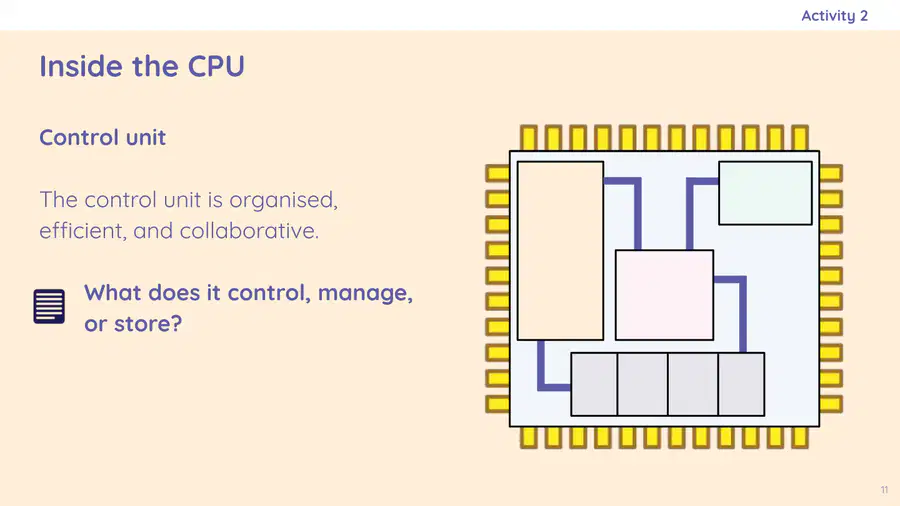
Describe the characteristics that the control unit of a CPU needs to be effective.
22
23
Multiple Select
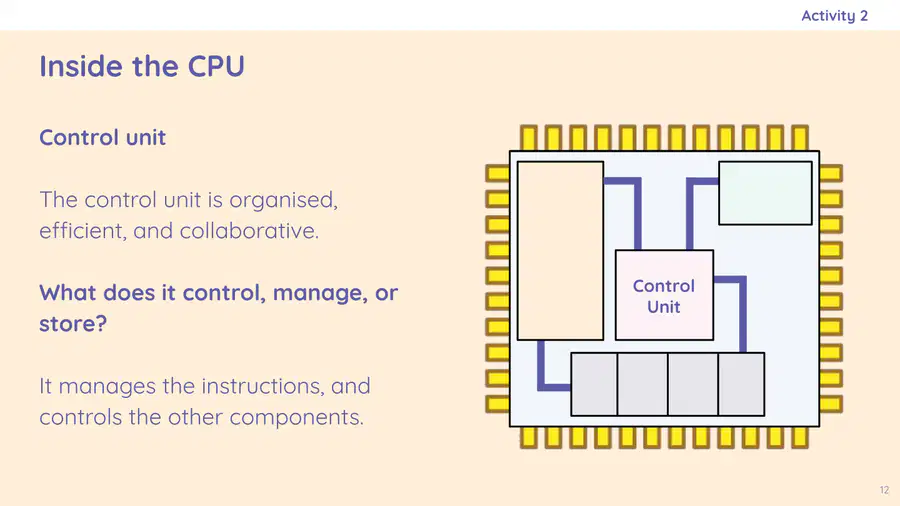
Which of the following are managed or controlled by the control unit in a CPU?
Instructions
Arithmetic operations
Other components
Data storage
24
Fill in the Blanks
The control unit in a CPU is
25
Multiple Choice
Which component of the CPU is responsible for managing instructions and controlling other components?
Arithmetic Logic Unit
Registers
Control Unit
Clock
26
27
Open Ended
Explain how the different components of the CPU work together as a team to process instructions.
28
29
Multiple Choice
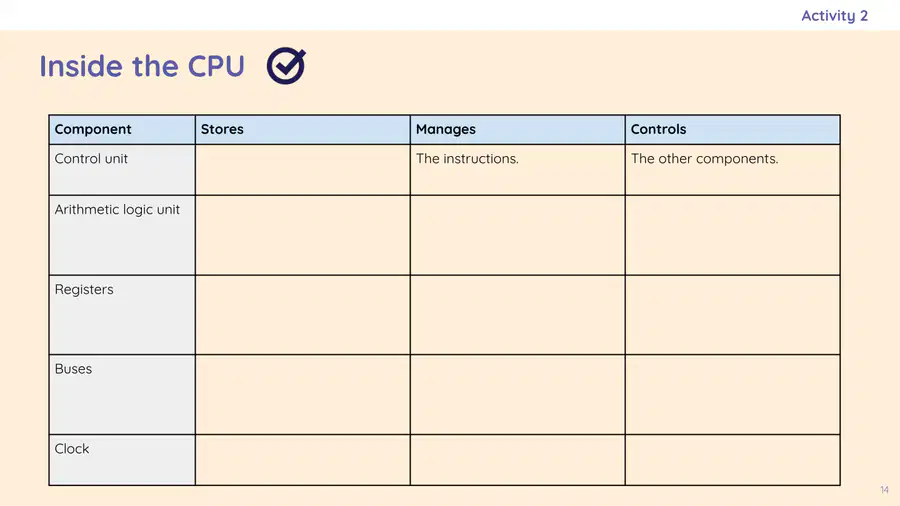
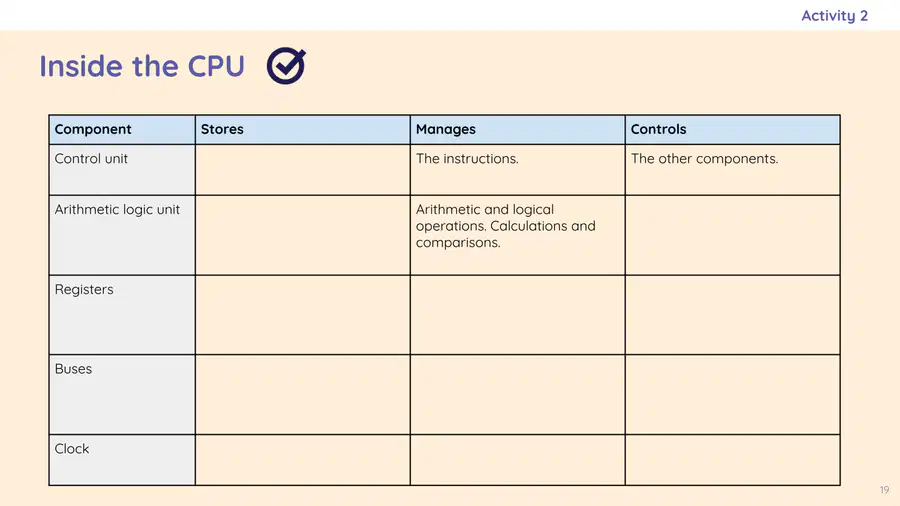
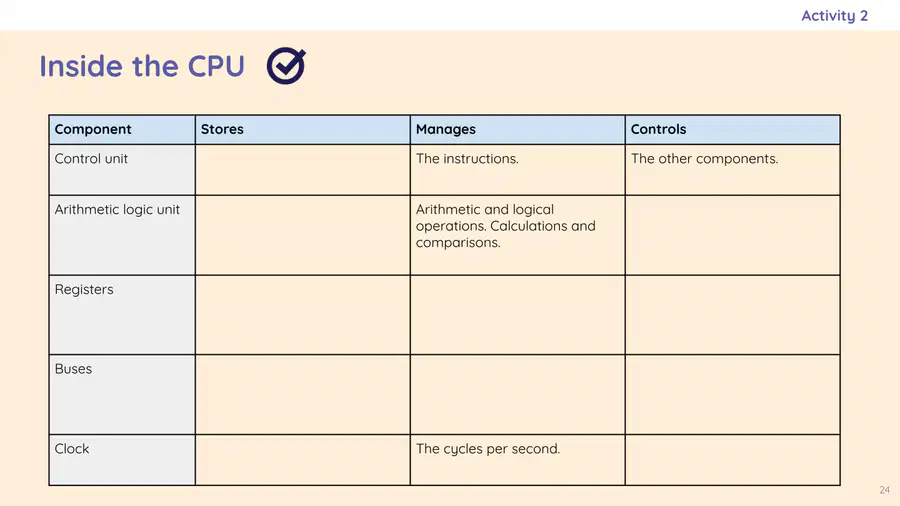
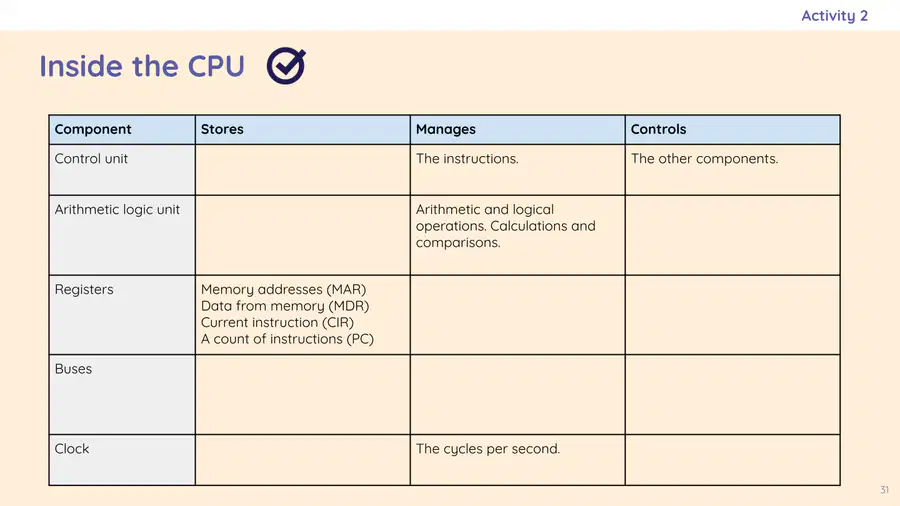
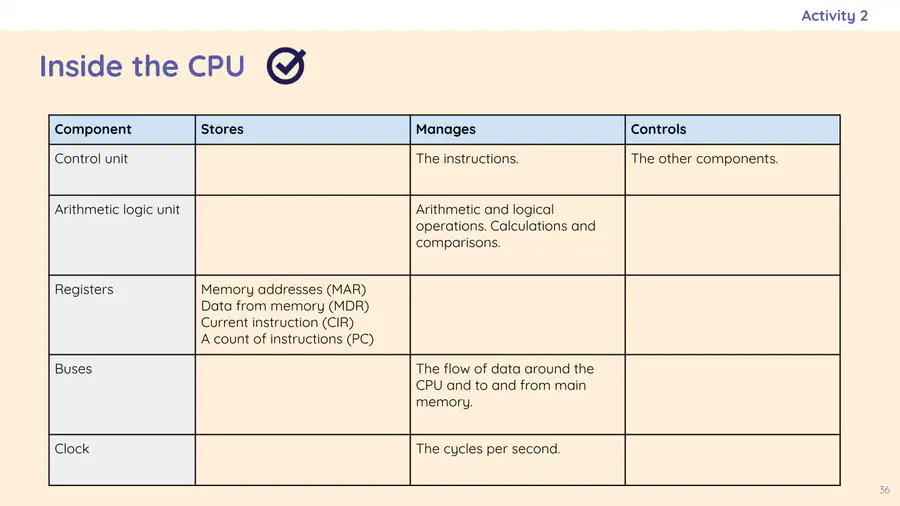
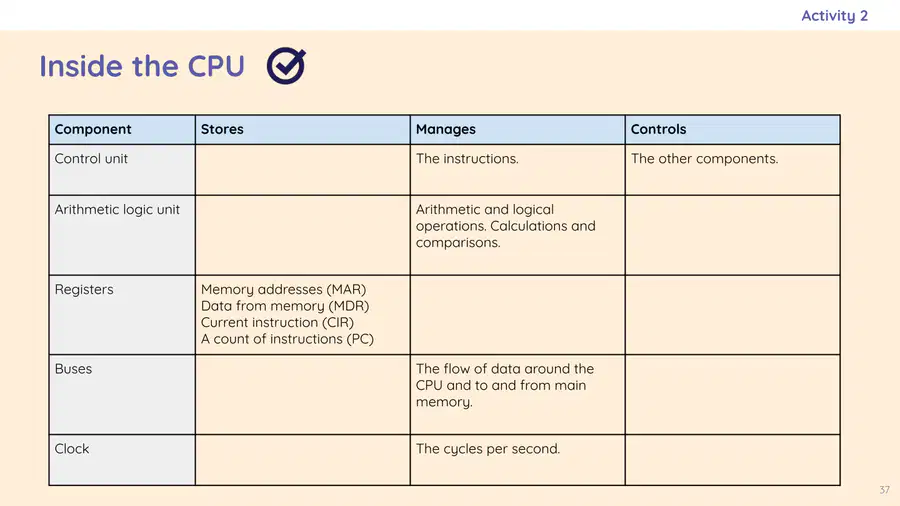
Based on the table, what does the control unit manage and control?
Manages instructions, controls other components
Manages data, controls arithmetic operations
Manages registers, controls buses
Manages clock, controls registers
30

31
32
33
34
35

36
37
Multiple Choice
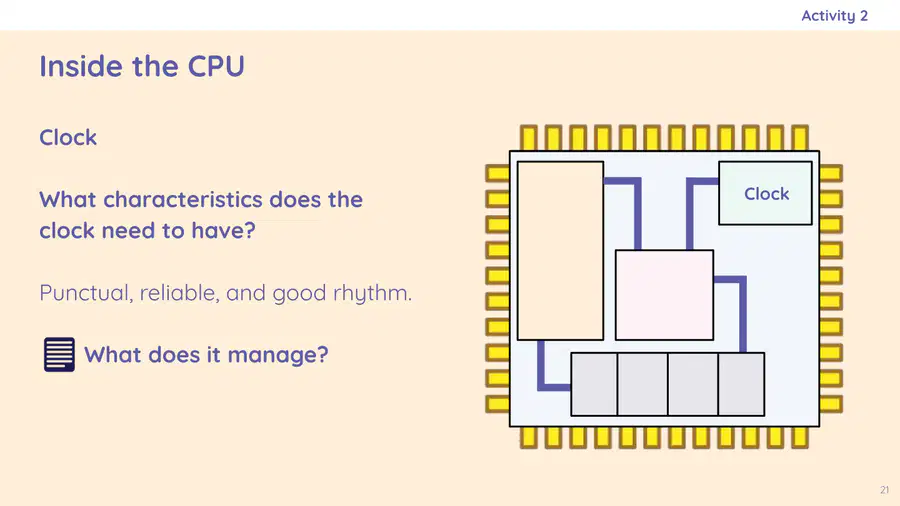
What characteristics does the clock in a CPU need to have?
Punctual, reliable, and good rhythm
Fast and random
Large and powerful
Silent and hidden
38
39
Fill in the Blanks
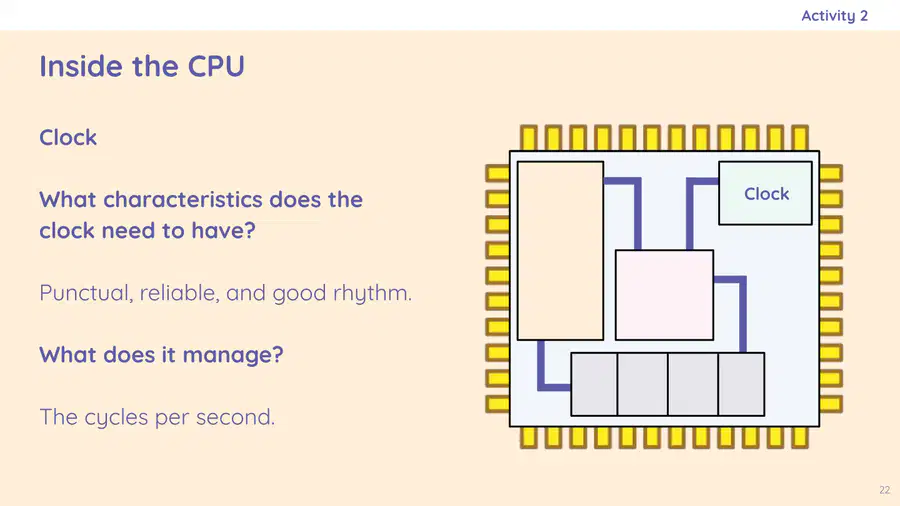
What does the clock manage inside the CPU?
40
41
Multiple Choice
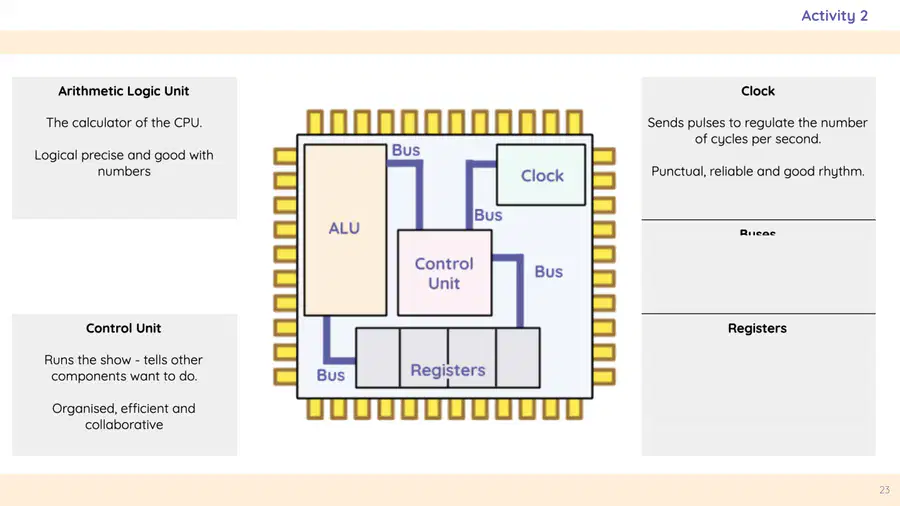
Which components are found inside the CPU and what are their main functions?
Arithmetic Logic Unit: calculations; Control Unit: manages instructions; Registers: store data; Clock: regulates cycles
Arithmetic Logic Unit: stores data; Control Unit: regulates cycles; Registers: calculations; Clock: manages instructions
Arithmetic Logic Unit: manages instructions; Control Unit: calculations; Registers: regulates cycles; Clock: stores data
Arithmetic Logic Unit: regulates cycles; Control Unit: stores data; Registers: manages instructions; Clock: calculations
42
43
Open Ended
Describe how the control unit and arithmetic logic unit (ALU) work together inside the CPU.
44
45
Multiple Select
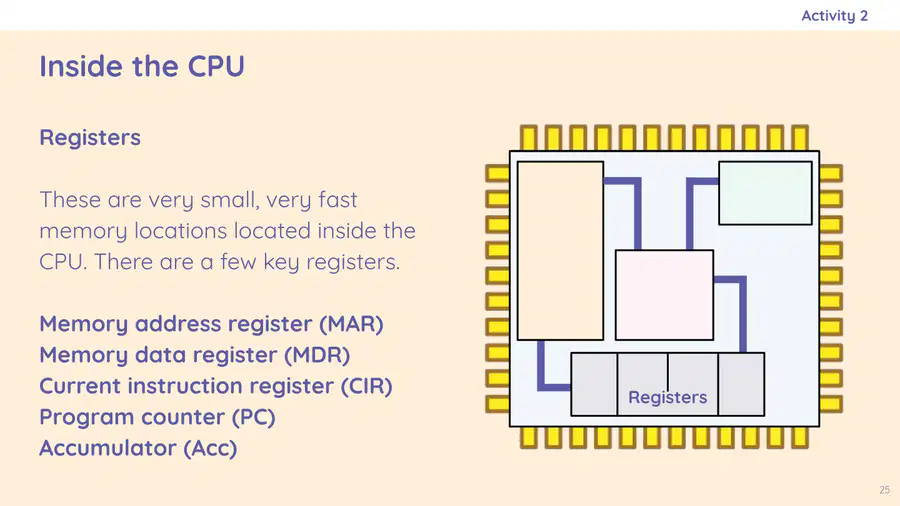
Which of the following are types of registers found inside the CPU?
Memory address register (MAR)
Memory data register (MDR)
Current instruction register (CIR)
Program counter (PC)
46
47
Fill in the Blanks
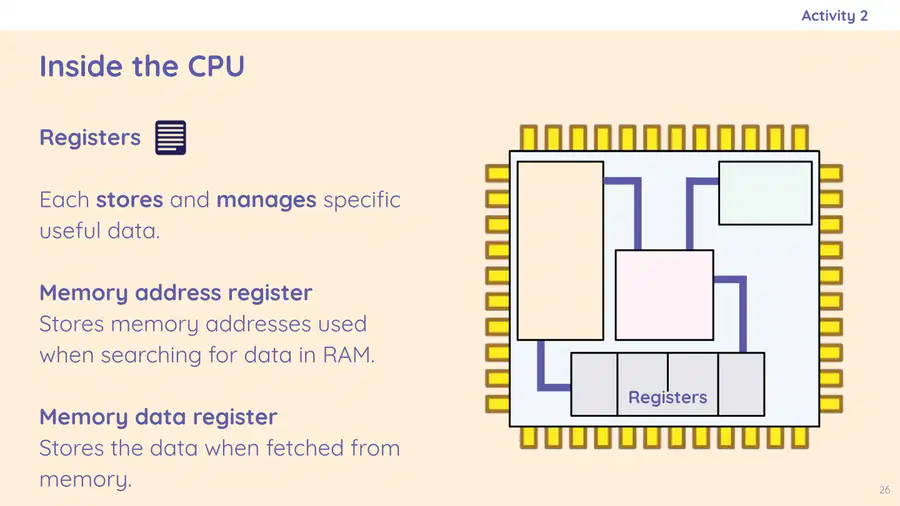
The memory address register stores
48
49
50
51
52
53
54

55
56
57
58
59

60
61
62
Open Ended
After learning about the CPU and its components, what is one question you still have or something you would like to know more about?
63
Multiple Choice
What are the two main objectives of this lesson on the CPU?
Describe the basic components of the CPU and their roles in computation
Explain the history of the CPU and its inventors
List different types of computer memory
Describe how to build a computer from scratch
Show answer
Auto Play
Slide 1 / 63
SLIDE
Similar Resources on Wayground

60 questions
8-и13-2 язык Питон. ввод-вывод, линейные алг.
Presentation
•
8th Grade
57 questions
10.4 Lesson - Two-Way Tables
Presentation
•
8th Grade
60 questions
Electromagnetic Waves
Presentation
•
8th Grade
57 questions
8.4B
Presentation
•
8th Grade
56 questions
Earth's History
Presentation
•
8th Grade
53 questions
EM Spectrum
Presentation
•
8th Grade
59 questions
REVISION FOR MID-TERM TEST
Presentation
•
8th Grade
Popular Resources on Wayground
10 questions
Safety Day 2026 – Student Review

Quiz
•
9th Grade
21 questions
Continents and Oceans
Quiz
•
6th Grade
20 questions
Parts of Speech
Quiz
•
5th Grade
16 questions
Subject & Predicate
Quiz
•
5th Grade
25 questions
Multiplication Facts
Quiz
•
5th Grade
12 questions
Map Skills
Quiz
•
3rd Grade
22 questions
Continents and Oceans
Quiz
•
5th Grade
15 questions
Rounding Decimals
Quiz
•
5th Grade