

An Introduction to DNA

Presentation
•
Science
•
9th - 12th Grade
•
Easy
+1
Standards-aligned

Tracy Picquelle
Used 6+ times
FREE Resource
13 Slides • 11 Questions
1

2

3
Multiple Choice
Which of the following best describes the role of DNA in living organisms?
It stores genetic information that determines traits
It provides energy for cellular processes
It helps organisms move
It protects cells from viruses
4
5
Multiple Choice
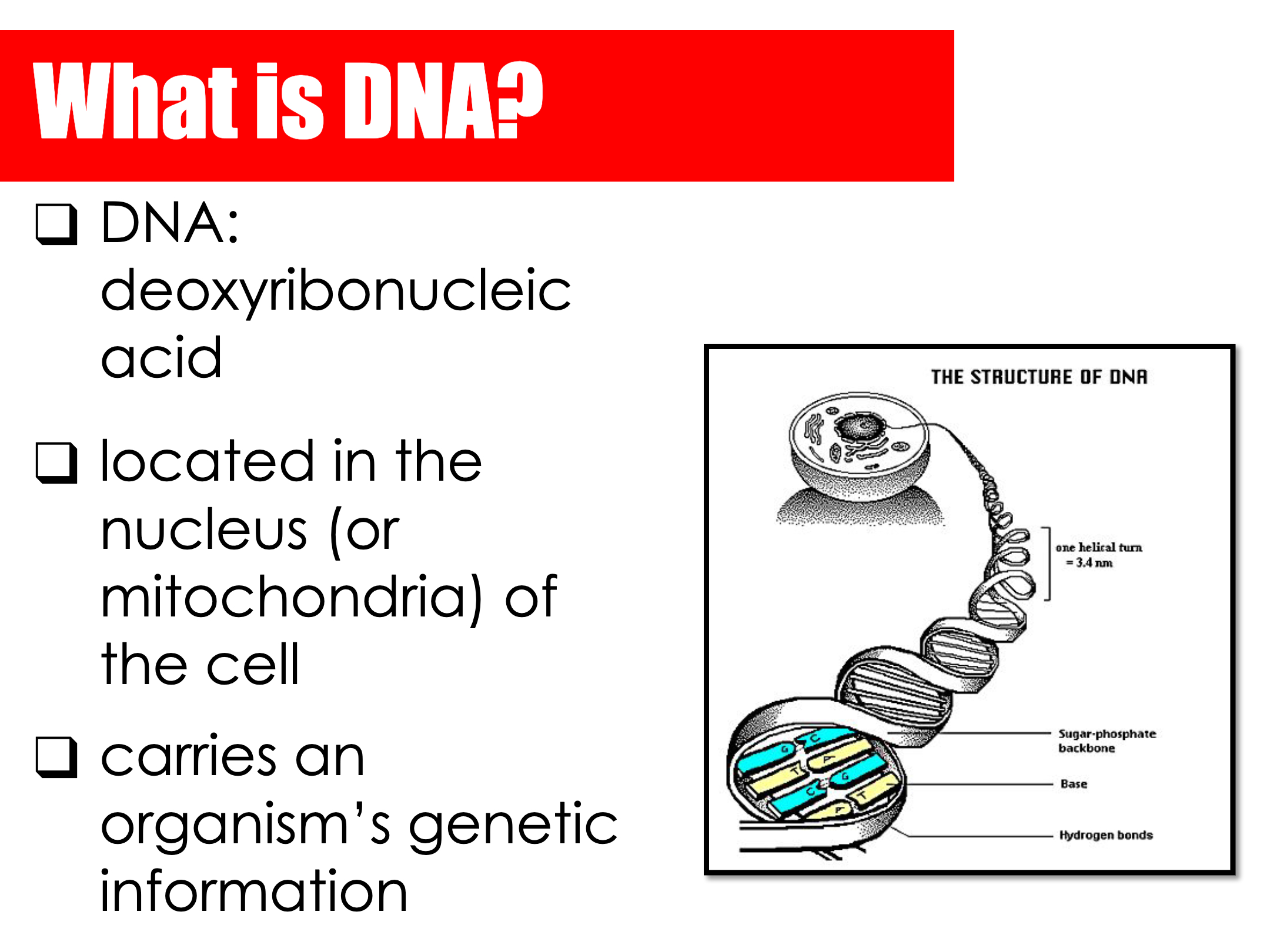
Which part of the cell contains DNA, and what is its primary function?
Nucleus; stores energy
Mitochondria; produces proteins
Nucleus (or mitochondria); carries genetic information
Cytoplasm; controls cell division
6
7
Multiple Choice
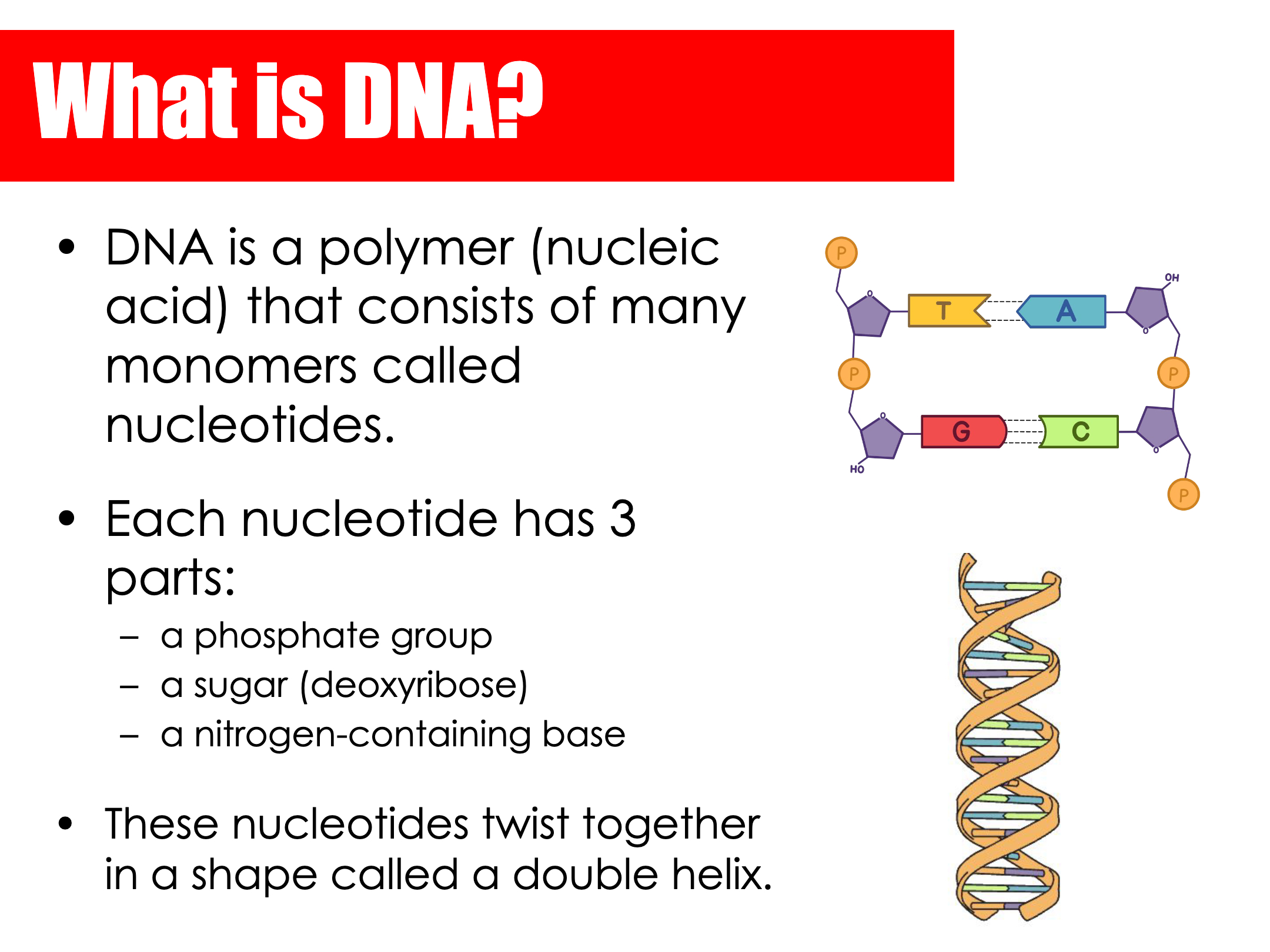
Which of the following are the three components of a DNA nucleotide?
Phosphate group, ribose sugar, nitrogen base
Phosphate group, deoxyribose sugar, nitrogen base
Phosphate group, glucose, nitrogen base
Phosphate group, deoxyribose sugar, uracil
8

9
Multiple Choice
The four nitrogenous bases found in DNA are ___, ___, ___, and ___.
10

11
12
Multiple Choice
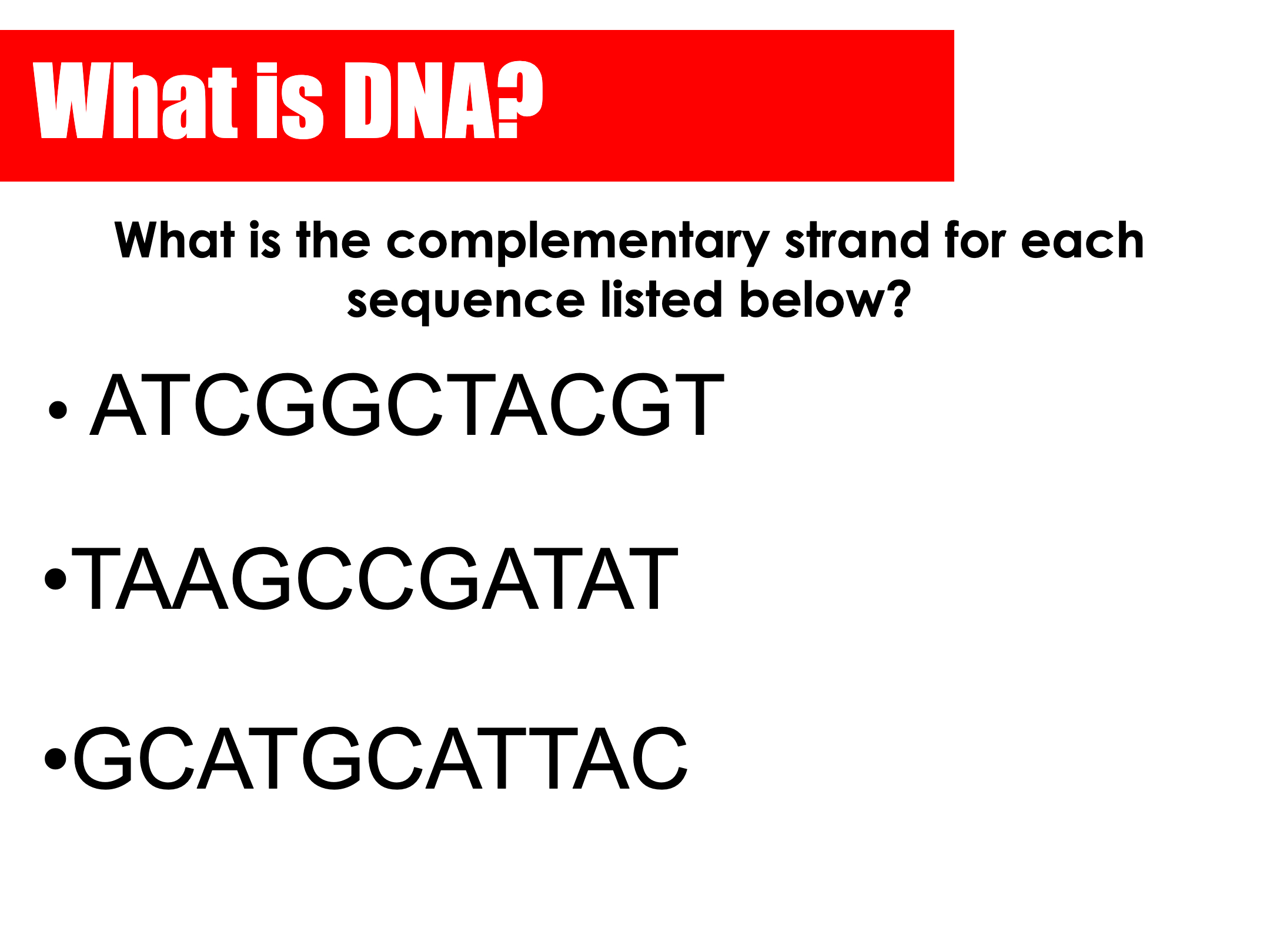
What is the complementary strand for the DNA sequence ATCGGCTACGT?
TAGCCGATGCA
TACGGCTAGCT
ATCGGCTACGT
TAGCCGATGCT
13

14

15
Multiple Choice
Which of the following is NOT a bodily source from which DNA can be extracted?
Blood
Saliva
Platelets
Hair
16
17
Multiple Choice
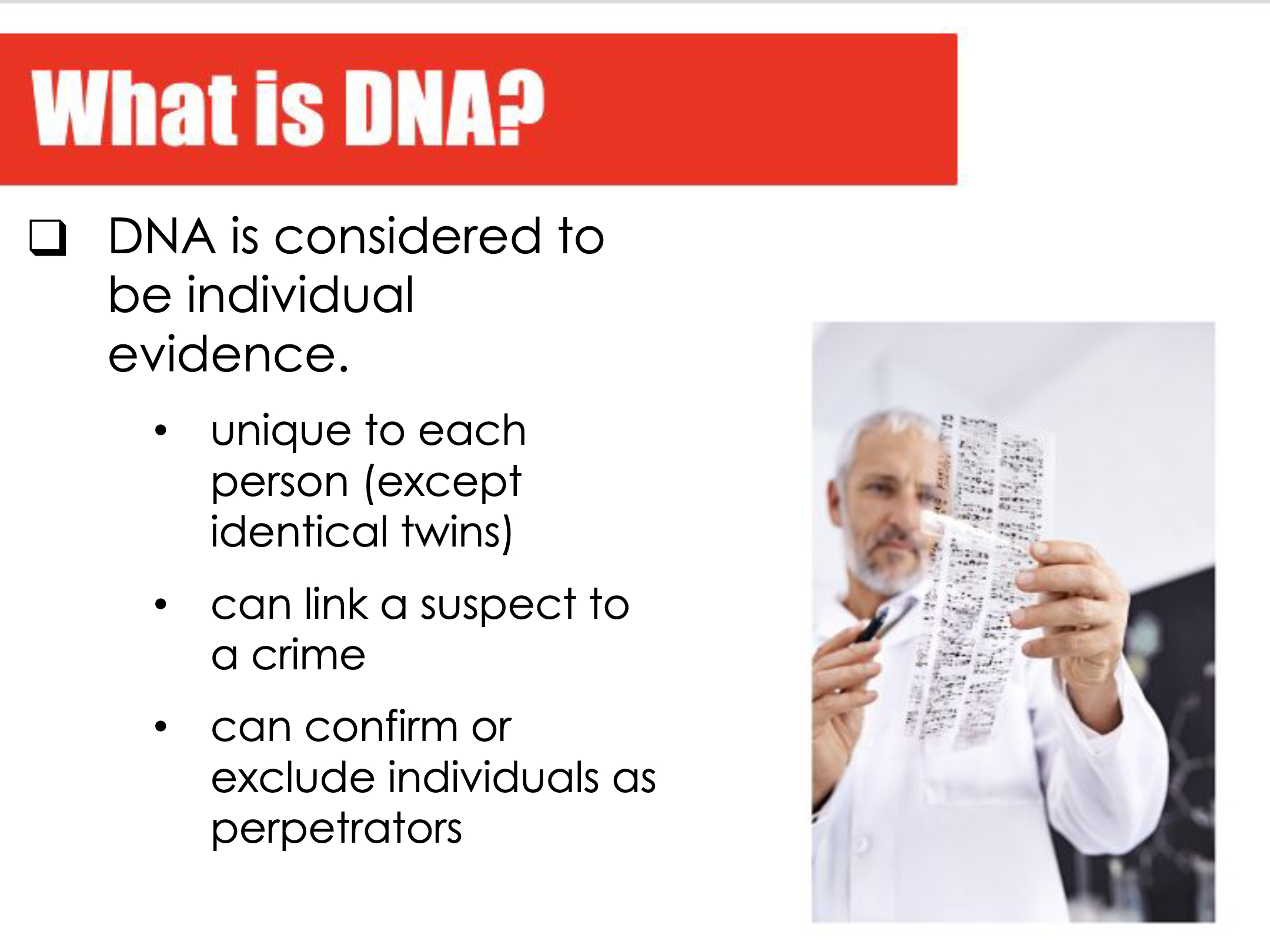
What type of evidence is DNA considered to be?
class evidence
direct evidence
individual evidence
useless evidence
18
19
Multiple Choice
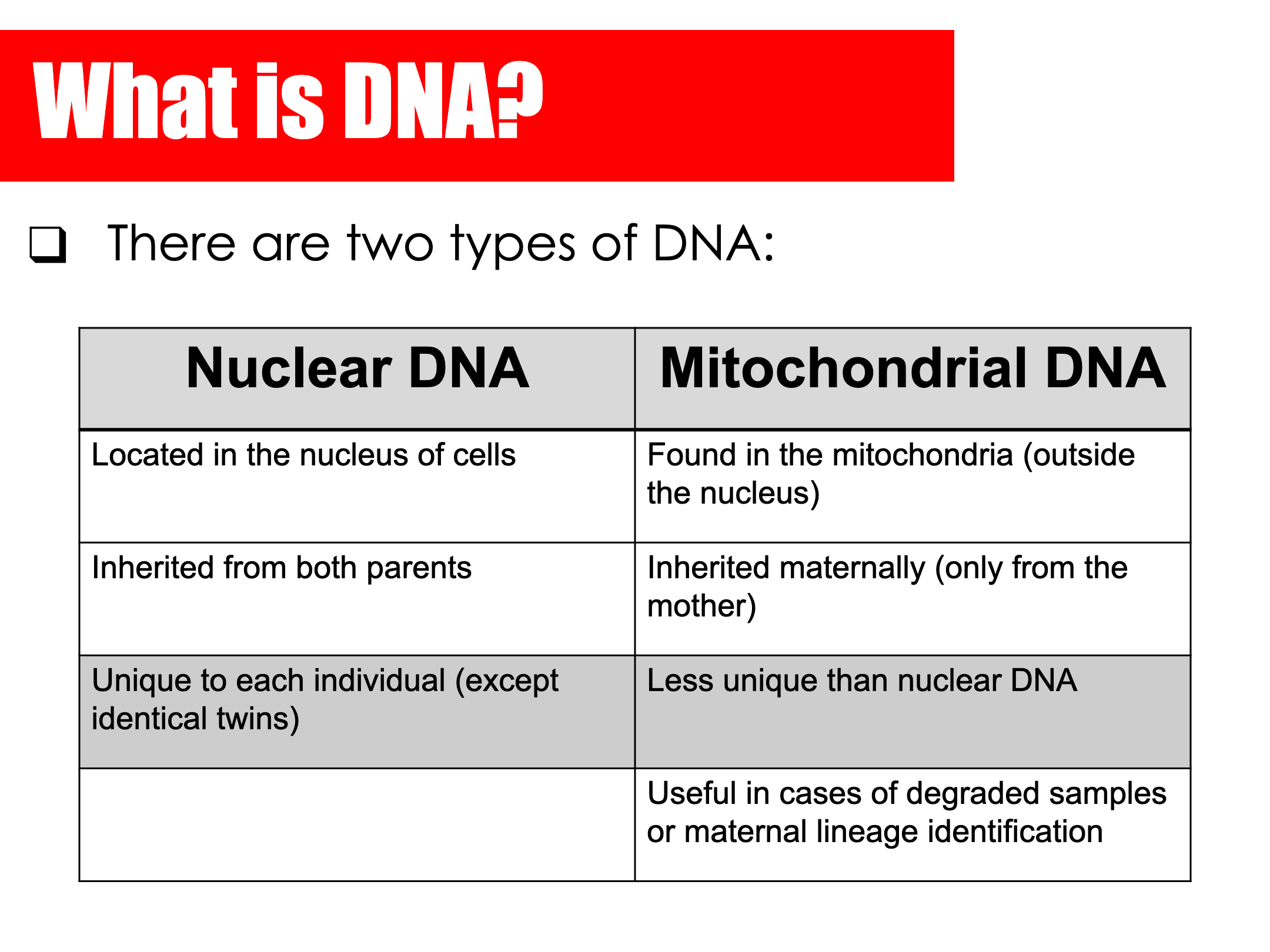
Mitochondrial DNA is found in the ___ of the cell.
20
Multiple Select
Which of the following statements about Nuclear DNA and Mitochondrial DNA are correct?
Nuclear DNA is inherited from both parents.
Mitochondrial DNA is inherited only from the mother.
Nuclear DNA is less unique than mitochondrial DNA.
Mitochondrial DNA is useful in cases of degraded samples.
21
22
23
Multiple Choice
What is one advantage of using mitochondrial DNA in forensic investigations compared to nuclear DNA?
It is inherited from both parents.
It is more unique than nuclear DNA.
It is useful in cases of degraded samples.
It cannot be used for maternal lineage identification.
24
Multiple Choice
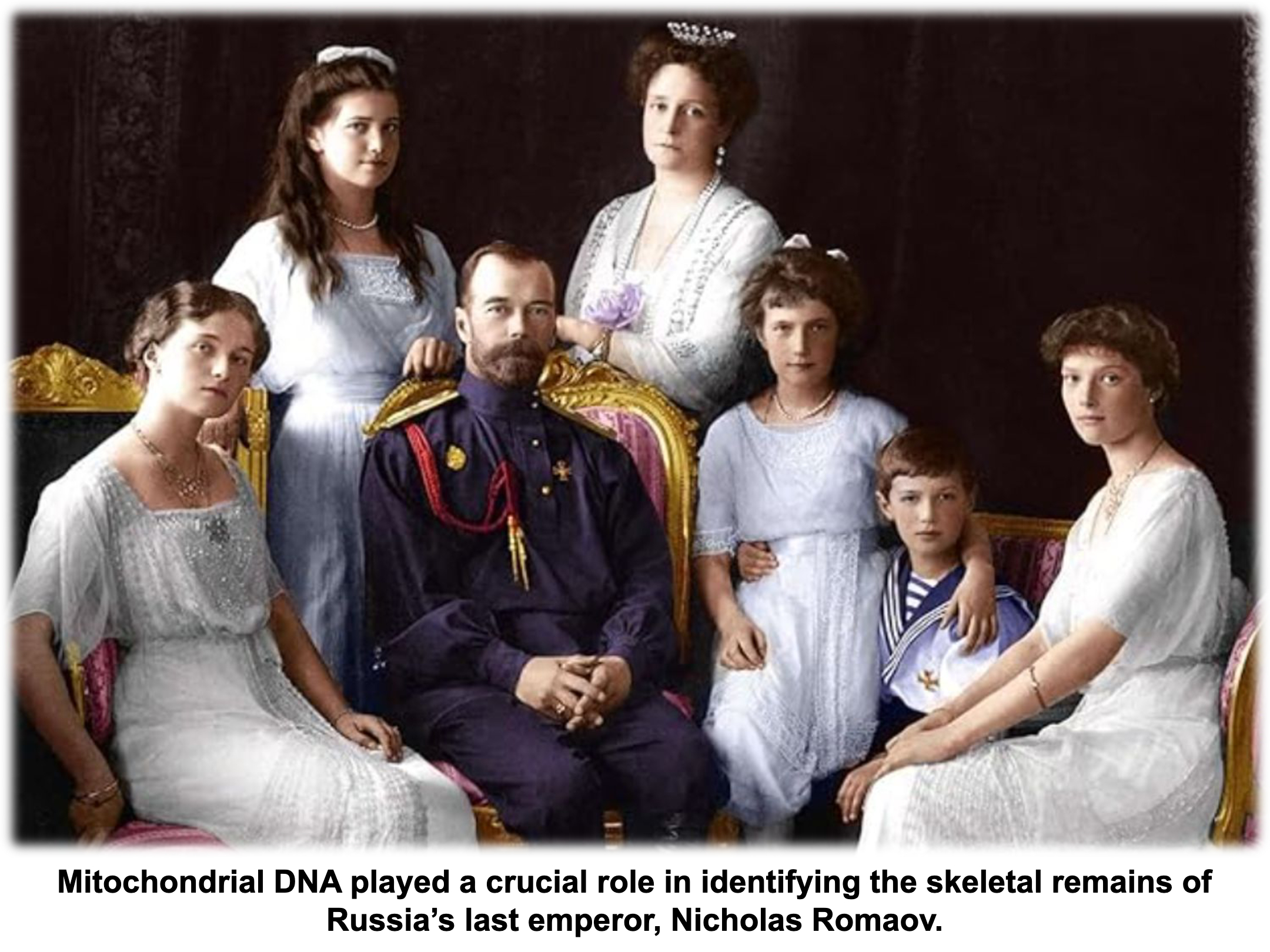
Describe a real-world example where mitochondrial DNA was used to solve a historical or forensic case.
Show answer
Auto Play
Slide 1 / 24
SLIDE
Similar Resources on Wayground

19 questions
What is photosynthesis?
Presentation
•
10th - 12th Grade
16 questions
Counterfeit Money
Presentation
•
9th - 12th Grade
18 questions
Flow of Energy in an Ecosystem
Presentation
•
10th - 12th Grade
17 questions
Seasons
Presentation
•
8th - 12th Grade
16 questions
3.6 Climate Change
Presentation
•
9th - 12th Grade
18 questions
Biodiversity Hotspots
Presentation
•
9th - 12th Grade
18 questions
Weather and Climate
Presentation
•
9th - 12th Grade
20 questions
Properties of Water
Presentation
•
9th - 12th Grade
Popular Resources on Wayground
10 questions
How much do you know about our Portrait of an Eagle?

Quiz
•
10th Grade
10 questions
Fast Food Slogans
Quiz
•
6th - 8th Grade
21 questions
Continents and Oceans
Quiz
•
6th Grade
20 questions
Parts of Speech
Quiz
•
5th Grade
16 questions
Subject & Predicate
Quiz
•
5th Grade
25 questions
Multiplication Facts
Quiz
•
5th Grade
12 questions
Map Skills
Quiz
•
3rd Grade
22 questions
Continents and Oceans
Quiz
•
5th Grade
Discover more resources for Science
10 questions
Exploring Chemical and Physical Changes

Interactive video
•
6th - 10th Grade
20 questions
Atomic Structure
Quiz
•
9th Grade
10 questions
Decoding the Periodic Table of Elements
Interactive video
•
6th - 10th Grade
10 questions
Exploring the Periodic Table
Interactive video
•
6th - 10th Grade
14 questions
Physical and Chemical Changes
Quiz
•
10th Grade
22 questions
Periodic Table Review
Quiz
•
9th - 12th Grade
20 questions
Observation vs. Inference
Quiz
•
7th - 9th Grade
14 questions
Periodic Trends
Interactive video
•
11th Grade